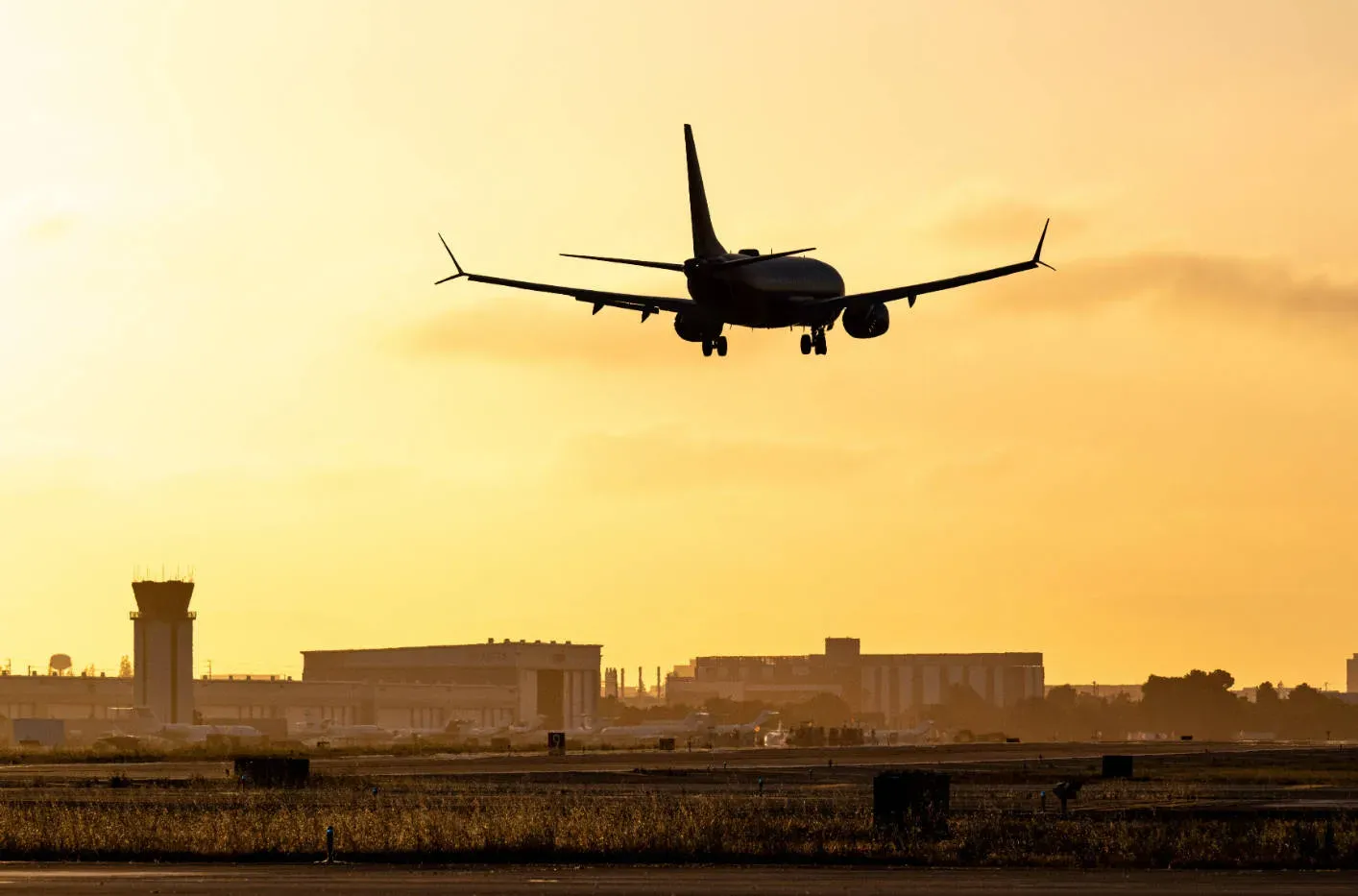
Planning a trip to the tech capital of the world? Whether you’re heading to Silicon Valley for an executive meeting at Apple Park, a software engineering interview at Googleplex, a pilgrimage to Nvidia, or just visiting family in the Sunnyvale suburbs, one major headache awaits you before you even book your ticket:
Which airport should you fly into? 🤔
The San Francisco Bay Area is served by three major airports:
-
SFO (San Francisco International Airport)
-
SJC (San Jose Mineta International Airport)
-
OAK (Oakland San Francisco Bay International Airport)
If you pick the wrong one, you might find yourself trapped in bumper-to-bumper Bay Area traffic on Highway 101, watching your precious time (and rideshare budget) melt away. 💸📉
Discover the best airport for Silicon Valley. We compare SFO, SJC, and OAK transit times, BART vs. Uber, and local traffic hacks.
📌 The "At-A-Glance" Silicon Valley Airport Showdown
Before diving into the gritty details of toll bridges, microclimates, and tech-shuttles, here is the quick-reference matrix to help you decide which runway aligns with your Silicon Valley itinerary.
| Feature | SFO(San Francisco International) | SJC(San José Mineta International) | OAK(Oakland San Francisco Bay) |
| Best For... | International routes, long-haul domestic, and North Bay/SF meetings. | Direct access to tech giants (Apple, Google, Nvidia) and South Bay. | Budget travelers, Southwest loyalists, and East Bay destinations. |
| Vibe | Massive, bustling tech-hub mega-terminal. | Efficient, compact, sun-drenched, and hyper-local. | Laid-back, straightforward, and commuter-friendly. |
| Traffic Traps | US-101 gridlock & the infamous "SFO fog delays." | I-880 rush hour (but minimal delay once you land). | The dreaded San Mateo or Bay Bridge toll bottlenecks. |
| Public Transit | BART (Directly from International Terminal) | VTA Light Rail / Caltrain (Via free shuttle) | BART (Direct connector from terminal) |
| Uber/Lyft to Palo Alto | $55 – $85+ (approx. 40–60 mins) | $35 – $55+ (approx. 20–30 mins) | $75 – $110+ (approx. 45–75 mins + Tolls) |
🏆 The Quick Verdict: Who Wins Which Crown?
- 🚀 The Efficiency Crown: SJC (San José) If your final destination is Mountain View, Sunnyvale, Cupertino, or San Jose, stop looking at other airports. SJC lands you right in the backyard of Big Tech. You can often get from the tarmac to a tech campus in under 25 minutes.
- 🌍 The Global Heavyweight: SFO (San Francisco) If you are flying in from London, Tokyo, or New York, SFO is likely your only choice. It offers the most lounges, the most direct flights, and the most premium cabins—just prepare a buffer for the unavoidable 101 traffic.
- 💰 The Budget & East Bay Hacker: OAK (Oakland) Renamed Oakland San Francisco Bay Airport, OAK is the ultimate secret weapon for domestic travelers looking to avoid SFO’s fog delays. If you're staying in the East Bay or heading to Berkeley, it’s a no-brainer. If you're heading to the South Bay, just keep an eye on the bridge tolls.
🔍 Deep Dive: The Pros, Cons, and Insider Secrets of Each Airport
To master your Bay Area arrival, you need to look past the glitzy airline ads. Each of these three transit hubs has its own personality, geographical quirks, and logistical traps. Let’s break them down one by one.
✈️ SFO: San Francisco International Airport
The Heavyweight Global Gateway
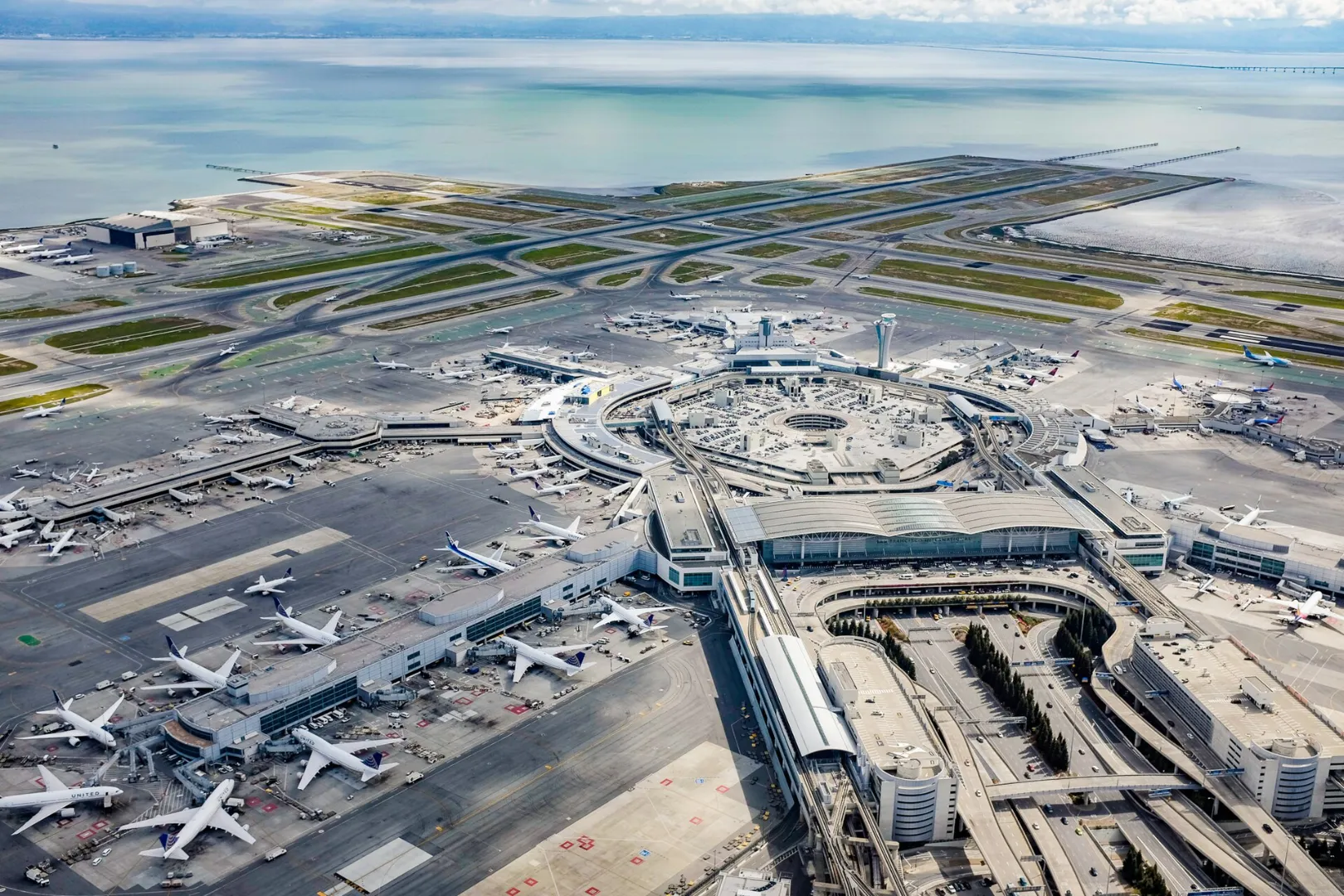
SFO is the crown jewel of Northern California aviation. It’s massive, beautiful, and handles almost all international flights coming into the region. If you are flying premium cabins, looking for elite airport lounges, or coming from across the Atlantic or Pacific, SFO is your default destination.
-
🟢 The Pros:
-
Unrivaled Connectivity: More direct flights, more airlines, and the best options for global travelers.
- Excellent Amenities: Home to the stunning Harvey Milk Terminal 1, world-class dining, and top-tier lounges (Centurion, Polaris, etc.)
-
Direct Rail Access: The BART train connects directly to the International Terminal, taking you straight to downtown SF.
-
-
🔴 The Cons:
-
The Microclimate Trap: SFO is notorious for its morning marine layer (fog). Because its parallel runways are spaced close together, heavy fog forces the airport to cut arrival rates in half, triggering massive ripple-effect delays.
-
The 101 Commute: If you land at 5:00 PM and need to head south to Palo Alto or Mountain View, you are driving straight into a brutal rush-hour bottleneck.
-
-
🤫 Insider Secret (2026 Update): Watch the Terminal 3 Mess! SFO is currently in the thick of its massive $2.6 billion Terminal 3 West Modernization project. Because of the construction, the T3 AirTrain station is entirely closed until 2027, and major curbside drop-off zones are blocked. If you’re flying United Airlines, give yourself an extra 30–45 minutes, or consider getting dropped off at Terminal 2 or the Rental Car Center ("Kiss & Fly") to bypass the curbside gridlock.
✈️ SJC: San José Mineta International Airport
The Frictionless Tech-Slicker
Located literally blocks away from major tech campuses, SJC is the ultimate choice for efficiency-focused travelers heading to the South Bay. It’s compact, incredibly easy to navigate, and gets you from the gate to the rideshare curb faster than any other airport in the region.
-
🟢 The Pros:
-
Location, Location, Location: If your meeting is at Apple (Cupertino), Google (Mountain View), or Nvidia (Santa Clara), SJC is practically in their backyard.
-
Weather-Proof: San Jose gets significantly more sunshine and less fog than San Francisco, meaning flight delays are exceptionally rare.
-
Fast Security: The airport is laid out in a straight line; TSA lines move quickly, and walking distances are minimal.
-
-
🔴 The Cons:
-
Limited Flights: Fewer international options (mostly Mexico, with limited transpacific/transatlantic service) and fewer cross-country non-stops compared to SFO.
-
Higher Flight Costs: Because it’s heavily trafficked by corporate travelers with expense accounts, flights into SJC can sometimes carry a premium.
-
-
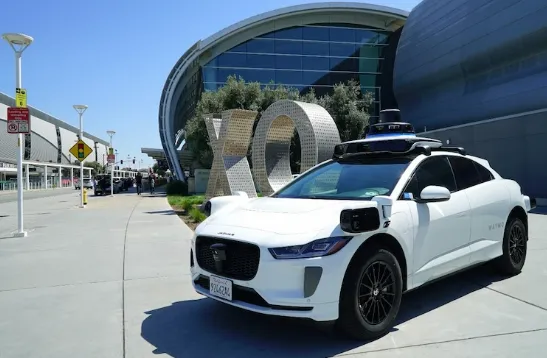
🤫 Insider Secret (2026 Update): Take Waymo Straight to the Curb! SJC has officially embraced the future of autonomous transit. Thanks to an expanded partnership, Waymo driverless cars can now drop you off directly at the terminal curbside for both Terminal A and B. It’s a seamless, uniquely "Silicon Valley" way to kick off your business trip without dealing with stressed rideshare drivers.
✈️ OAK: Oakland San Francisco Bay Airport
The Budget & East Bay Secret Weapon
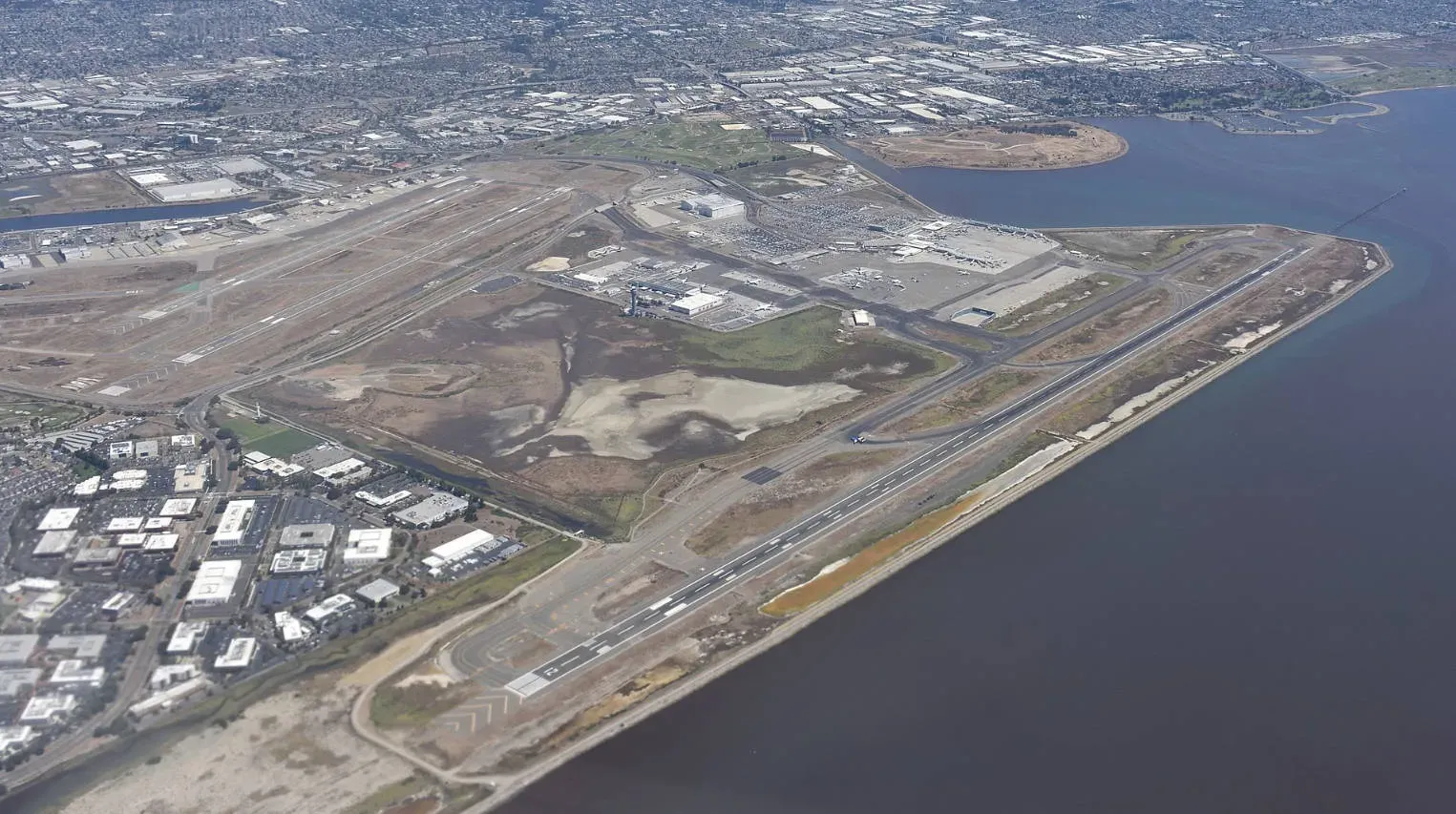
OAK is the low-cost carrier stronghold of the Bay Area, serving as a massive hub for Southwest Airlines. It’s a straightforward, no-nonsense airport that offers a surprisingly smooth alternative to SFO if you know how to play your cards right.
-
🟢 The Pros:
-
Budget-Friendly: Great deals on domestic flights, especially if you love Southwest’s open-seating, two-bags-fly-free policy.
-
Avoids the SFO Fog: When SFO is backed up due to weather, OAK is usually operating smoothly right across the bay.
-
Easy Parking & Access: It’s smaller, less chaotic, and easier to get in and out of than SFO.
-
-
🔴 The Cons:
-
The Toll Bridge Penalty: If you land at OAK but your destination is the Peninsula or South Bay, you will have to cross the San Mateo Bridge or the Dumbarton Bridge. During rush hour, these bridges become slow-moving parking lots, and you’ll be tacked with toll fees.
-
Sparse Premium Amenities: Don’t expect luxury lounges or fine dining here; OAK is built for commuters, not pampering.
-
-
🤫 Insider Secret (2026 Update): The Name Drama is Over. You might notice the airport's shiny new branding: Oakland San Francisco Bay Airport. Following a massive, years-long trademark lawsuit with San Francisco (who claimed the name would confuse tourists), both cities finally reached a legal settlement in April 2026. Oakland gets to keep the name, but don't let it fool you—geographically, you are still firmly in the East Bay. If you are heading to the South Bay, always check the estimated traffic on the San Mateo bridge before ordering your Uber.
🚗 Distance & Commute to Silicon Valley Tech Hubs
To survive a trip to the Valley, you must understand one thing: The tech titans did not build their campuses next to each other. "Silicon Valley" stretches over 50 miles of sprawling suburbs.
Let’s look at the exact travel logistics from SFO, SJC, and OAK to the four most iconic destinations in tech.
📍 Destination: Cupertino (Apple Park 🍏)
The spaceship campus at the southern end of the valley.
[SFO] ─── (I-280 South: Scenic but peak delays) ───► [Cupertino] ~35 miles
[SJC] ─── (Hwy 85 / Local Expressways) ─────────────► [Cupertino] ~11 miles
[OAK] ─── (I-880 South + Hwy 237 / Toll Bridge) ────► [Cupertino] ~46 miles
-
From SJC (The No-Brainer): 11 miles | Off-Peak: 15 mins | Rush Hour: 20–35 mins
-
Insider Track: Cupertino is SJC’s backyard. You can take local expressways (like Lawrence or San Tomas) to bypass highway gridlock entirely.
-
-
From SFO (The Scenic Route): 35 miles | Off-Peak: 40 mins | Rush Hour: 65–95 mins
-
Insider Track: Skip US-101. Take I-280 South instead. Known as the "World’s Most Beautiful Freeway," 280 cuts through the rolling Santa Cruz mountains. It still gets backed up during evening rush hour near Los Altos, but it is a far less stressful drive than the 101.
-
-
From OAK (The Marathon): 46 miles | Off-Peak: 55 mins | Rush Hour: 90–140+ mins
-
Insider Track: Unless you land at midnight, don’t do this. You will crawl down the grueling I-880 South freight corridor or pay a premium for toll bridges.
-
📍 Destination: Mountain View & Sunnyvale (Googleplex 🔍, LinkedIn)
The flat, bayside marshlands where algorithmic magic happens.
-
From SJC (The Speed Winner): 12 miles | Off-Peak: 15 mins | Rush Hour: 25–40 mins
-
Insider Track: You’ll head northbound on US-101. Since most morning commute traffic flows southbound into San Jose, you are actually driving against the grain.
-
-
From SFO (The Direct Spine): 26 miles | Off-Peak: 30 mins | Rush Hour: 55–85 mins
-
Insider Track: Googleplex sits right off US-101. The problem? The stretch of 101 between Redwood City and Mountain View is a legendary bottleneck.
-
🚈 The Public Transit Alternative: SFO shines here. You can take BART one stop to Millbrae, and transfer to the newly fully-electrified Caltrain system. With the 2026 schedule, high-speed electric trains run every 15–30 minutes, getting you to the Mountain View station in comfort with free Wi-Fi and power outlets.
-
-
From OAK (The Bridge Gamble): 32 miles | Off-Peak: 45 mins | Rush Hour: 75–110 mins
-
Insider Track: You’ll cross the Dumbarton Bridge (Hwy 84). The westbound toll plaza gets heavily caked between 7:30 AM and 9:00 AM.
-
How to Use One Card for BART, Muni, Cable Cars & Bay Area Transit
📍 Destination: Palo Alto (Stanford University 🌲, HP, Sand Hill Road VC Offices)
The historic, hyper-wealthy epicenter of venture capital and academia.
-
From SFO (The Closest Option): 22 miles | Off-Peak: 25 mins | Rush Hour: 45–75 mins
-
Insider Track: Geographically, SFO is closest. If you’re heading to Sand Hill Road to pitch a Venture Capitalist, take I-280 South and exit at Sand Hill Road directly. It puts you right at the doorsteps of Sequoia and Andreessen Horowitz without touching city traffic.
-
-
From SJC (The Stealth Pivot): 17 miles | Off-Peak: 22 mins | Rush Hour: 35–55 mins
-
Insider Track: SJC is only slightly further south than SFO is north. Because SJC is a smaller airport, the time you save walking through the terminal often makes up for the extra 5 miles of driving.
-
-
From OAK (The Straight Shot across the Bay): 28 miles | Off-Peak: 40 mins | Rush Hour: 65–100 mins
-
Insider Track: OAK sits almost directly across the water from Palo Alto. Taking the Dumbarton Bridge drops you right into East Palo Alto. It’s a viable alternative if SFO flights are sold out or delayed by fog.
-
📍 Destination: Menlo Park (Meta Headquarters 👤)
The sprawling hacker campus situated right at the edge of the bay waters.
-
From SFO (The Straight Descent): 18 miles | Off-Peak: 20 mins | Rush Hour: 40–70 mins
-
Insider Track: Meta HQ (1 Hacker Way) is located at the very foot of the Dumbarton Bridge on the Peninsula side. Driving down US-101 South from SFO is straightforward, but watch out for the Marsh Road exit bottleneck, which backs up severely around 5 PM.
-
-
From OAK (The Secret Gateway): 23 miles | Off-Peak: 30 mins | Rush Hour: 50–80 mins
-
Insider Track: OAK is the surprise dark horse for Meta. Because Meta is located right at the western terminus of the Dumbarton Bridge, flying into OAK, renting a car, and shooting straight across Highway 84 can sometimes be faster and cheaper than battling the 101 traffic down from SFO.
-
-
From SJC (The Northbound Trek): 22 miles | Off-Peak: 25 mins | Rush Hour: 40–65 mins
-
Insider Track: You will take US-101 North. It’s a predictable drive, but you'll encounter slow-downs as you approach the Willow Road exit in Menlo Park.
-
💡 The Ultimate "Where Am I Going?" Checklist
Before clicking "Book Flight," copy and paste your hotel or meeting address into Google Maps and follow this rule of thumb:
- If your zip code starts with 95xxx (San Jose, Cupertino, Santa Clara, Sunnyvale): Choose SJC.
-
If your zip code starts with 94xxx (Palo Alto, Mountain View, Redwood City, SF): Choose SFO for convenience, or OAK if you are trying to save cash and don't mind a bridge crossing.
🚦 Peak Rush Hour Survival Guide: The 101 vs. 280 Dilemma
If you rent a car at SFO or SJC and open Apple Maps or Google Maps during rush hour, you will almost always be presented with two parallel concrete ribbons running down the Peninsula: US-101 and I-280.
They both connect San Francisco to the South Bay, but choosing the wrong one during peak hours (7:00 AM – 9:30 AM and 3:30 PM – 6:30 PM) can ruin your entire day. Here is the ultimate playbook on how to decode the Valley’s highway dilemma.
🛣️ US-101: The Industrial, High-Stakes Spine
Often just called "The 101," this highway runs along the flat bayside of the Peninsula. It is the literal tech artery of the world, directly bordering Meta, Google, LinkedIn, and Yahoo.
-
The Reality: The 101 is crowded, narrow, and aggressive. It is packed with semi-trucks, airport shuttles, and thousands of stressed commuters.
-
The Traffic Pattern: * Morning: SFO southbound toward Mountain View gets heavily congested near Redwood City. SJC northbound toward Mountain View backs up around North San Jose.
-
Evening: The absolute worst. The southbound stretch from Palo Alto to San Jose turns into a parking lot, as does the northbound stretch from Mountain View back up to SFO.
-
-
The Secret Weapon (Express Lanes): 101 features HOV/Express Lanes. If you are carpooling (3+ people) or driving a rented EV with a Clean Air Vehicle decal, you can fly past traffic for free. If you are alone, you can pay a dynamic toll (via a FasTrak transponder in your rental car) that can range from $2 to $15+ depending on how bad the traffic is. If you are in a rush and have a corporate expense account, stay on the 101 and pay the toll.
🌲 I-280: The Scenic, Zen-Like Sanctuary
Known officially as the Junipero Serra Freeway, the 280 runs further west along the base of the Santa Cruz Mountains. It is widely considered one of the most beautiful interstate highways in America.
-
The Reality: 280 is wider, smoother, and infinitely more scenic. Rolling green hills, reservoirs, and views of the Stanford dish replace the gray warehouses of the 101. Because it has fewer corporate exit ramps directly on the highway, it tends to flow much faster.
-
The Traffic Pattern: While it does experience slowdowns—particularly in the evening where the 85 splits off toward Cupertino and near the I-380 junction by SFO—it rarely grinds to a complete, dead halt like the 101.
-
The Strategy: If your destination is nestled closer to the foothills (like Stanford University, Sand Hill Road, or Apple Park), 280 is almost always the superior choice, even if the GPS says it is 2 or 3 miles longer. The lack of mental stress alone is worth the extra mileage.
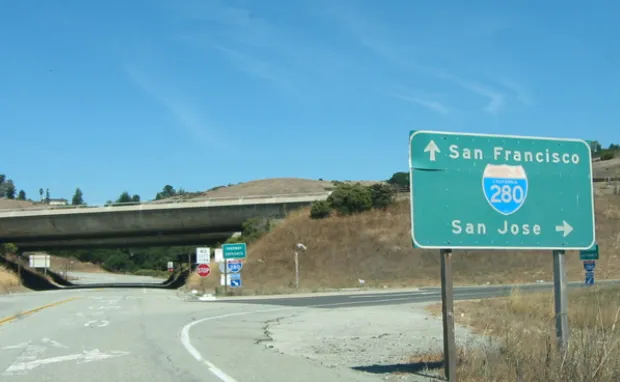
⚔️ Head-to-Head: The Commuter’s Matrix
| Feature | US-101 | I-280 |
| Vibe | High stress, concrete walls, billboards. | Zen, scenic vistas, mountain views. |
| Lane Count | Narrower lanes, tighter merges. | Wide lanes, sweeping curves, fewer trucks. |
| Best For... | Google, Meta, Palantir, Downtown San Jose. | Apple, Stanford, Sand Hill Road VCs. |
| Rush Hour Hack | Pay for the Express Lanes to bypass traffic. | Take it by default for a smoother, steadier cruise. |
| Predictability | Low. One minor fender bender causes a 5-mile ripple delay. | High. Even when slow, it usually keeps moving. |
💡 The Insider’s Golden Rules for Rush Hour Survival
-
The "10-Minute Rule": When departing SFO or SJC, check your GPS. If 280 is estimated to take less than 10 minutes longer than 101, take 280. The 101 estimate is volatile and can spike instantly if an accident occurs, whereas 280 is far more stable.
-
Beware the "Sun Glare" on 280: If you are driving northbound on I-280 during the morning commute, or southbound during the evening commute, the highway’s sweeping mountain curves can occasionally blind you with direct sunlight. Pack sunglasses in your carry-on!
-
The Rental Car Toll Trap: If you choose to use the 101 Express Lanes, make sure you understand your rental car company's FasTrak policy. Some companies charge a hefty administrative fee per day just for activating the toll pass, turning a $3 toll into a $20 charge.
🚆 Public Transit Showdown: Car-Free to the Valley
For years, the consensus on Silicon Valley travel was simple: Rent a car, or prepare to go broke on Uber. Public transit was historically slow, clunky, and dismissed by corporate travelers.
But things have changed. Thanks to the massive, fully-completed Caltrain Electrification Project, the Bay Area's rail system has entered the modern era with sleek, high-speed electric trains, faster travel times, and free onboard Wi-Fi.
If you want to skip the US-101 gridlock entirely, here is how the three airports stack up for a car-free journey into the tech hubs.
🚇 SFO: The Rail Transit Champion
SFO is, without a doubt, the easiest airport for car-free travelers. It serves as a direct gateway to both the urban North Bay and the suburban South Bay.
-
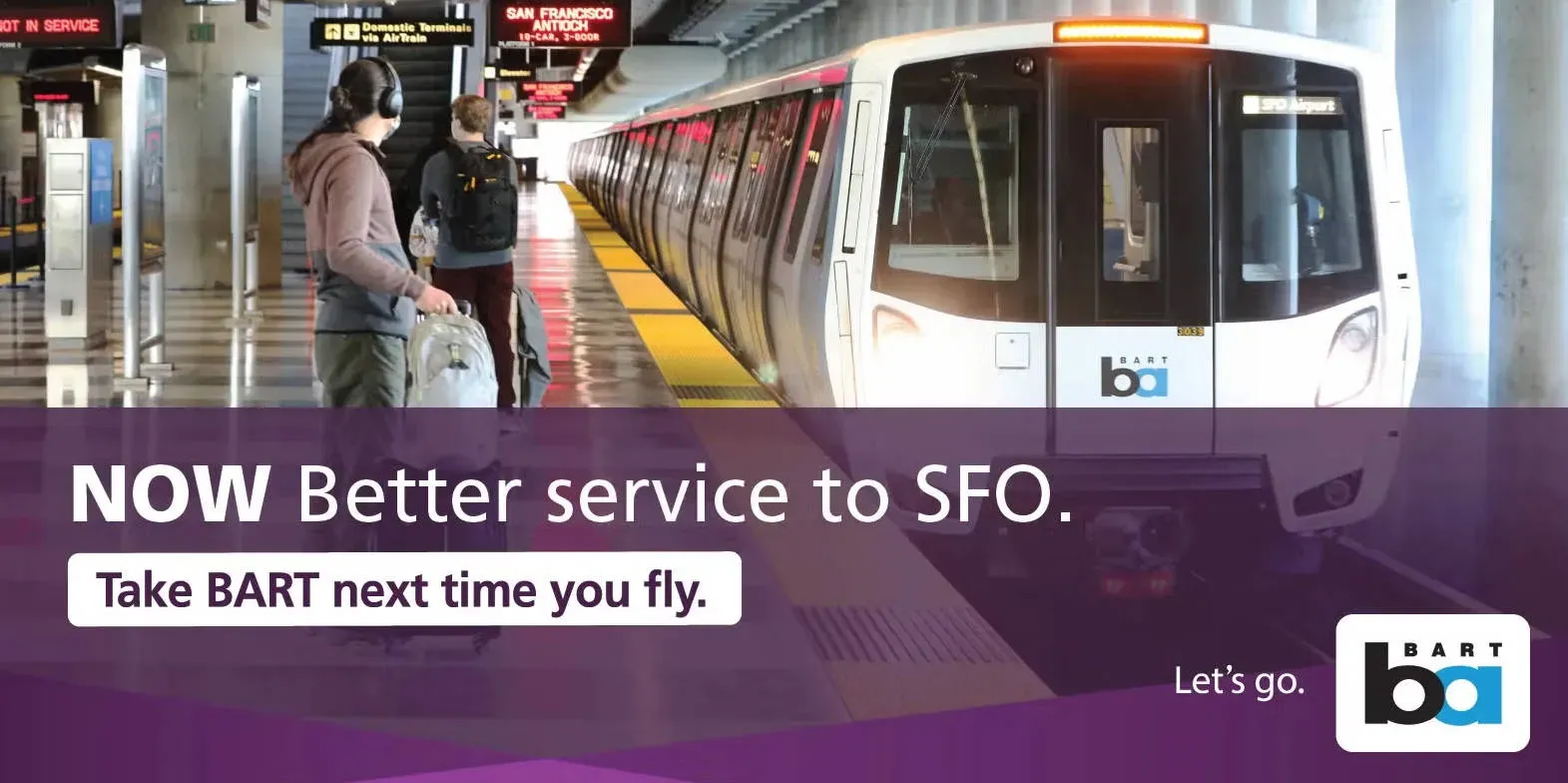
The Connection: You don't even have to step outside. Hop on the airport’s free AirTrain to the International Terminal, and walk straight into the SFO BART Station.
-
Heading to San Francisco (Downtown/AI Hubs): Take the BART Yellow Line. It deposits you at Market Street (Powell, Montgomery, or Salesforce Transit Center) in about 30 minutes for around $10. No traffic, no stress.
-
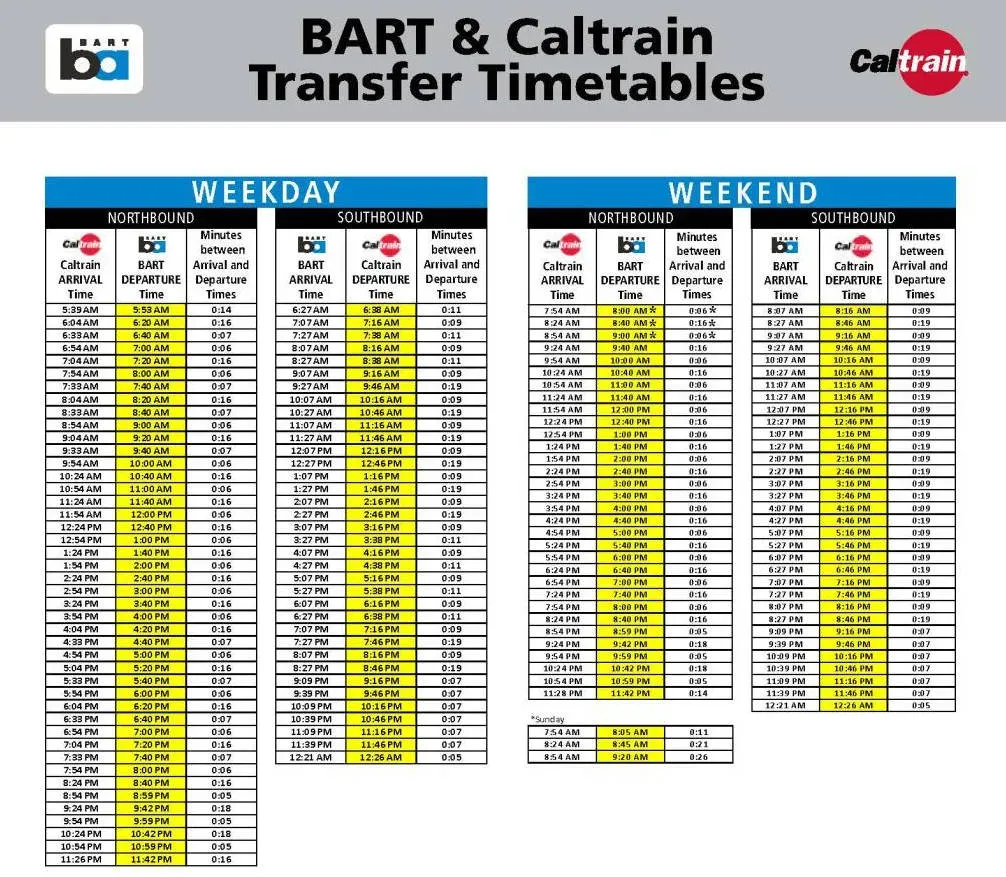
Heading to Silicon Valley (Palo Alto / Mountain View / San Jose): Take BART just one stop to the Millbrae Transit Center. Walk across the platform and transfer to Caltrain Southbound.
-
The Transit Hack: With the current electric train schedule, express trains run frequently. You can get from SFO to Palo Alto in under an hour, or all the way to San Jose Diridon in about 75 minutes.
🚌 SJC: The Local, Multi-Modal Commuter
SJC sits geographically right next to the train tracks, but ironically, it lacks a train station right inside the terminal. However, the connection is smooth if you know the drill.
-
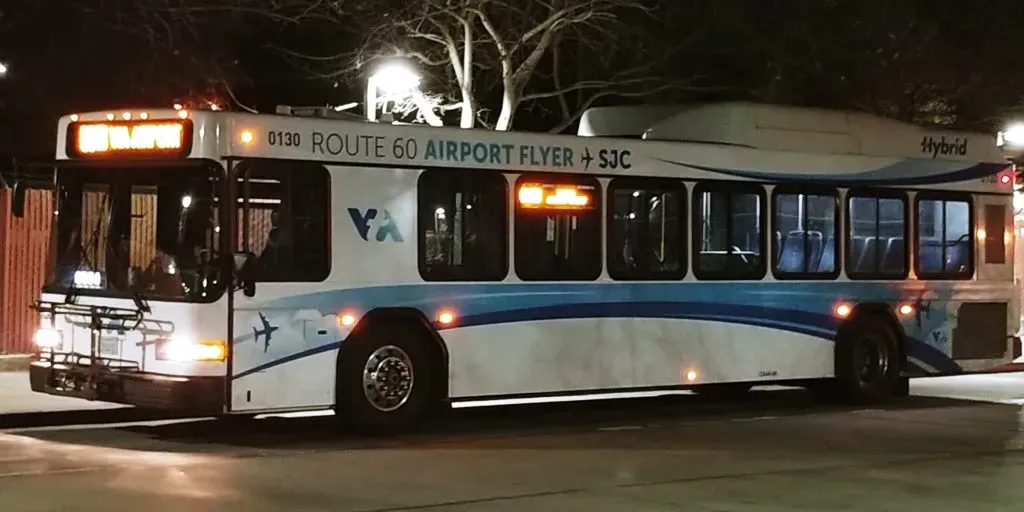
The Connection: Walk out of Terminal A or B baggage claim and hop onto the VTA Route 60 Bus (it’s a free airport shuttle).
-
Heading to the South Bay Tech Core: The free shuttle takes you straight to the Santa Clara Caltrain Station in 10 minutes. From there, you can catch a northbound Caltrain to Sunnyvale, Mountain View, or Palo Alto.
-
Heading to Downtown San Jose / Adobe HQ: Stay on the VTA Route 60 bus in the opposite direction, and it will drop you at the Metro/Airport Light Rail Station, connecting you directly to downtown.
-
The Verdict: It requires one bus-to-train transfer, but because the physical distances are so short, it’s highly reliable and incredibly cheap (under $5 to get almost anywhere in the South Bay).
🚆 OAK: The Multi-Layered Trek
While OAK has great transit into downtown Oakland or Berkeley, trying to get to the South Bay tech hubs via public transit from here is a true logistical test.
-
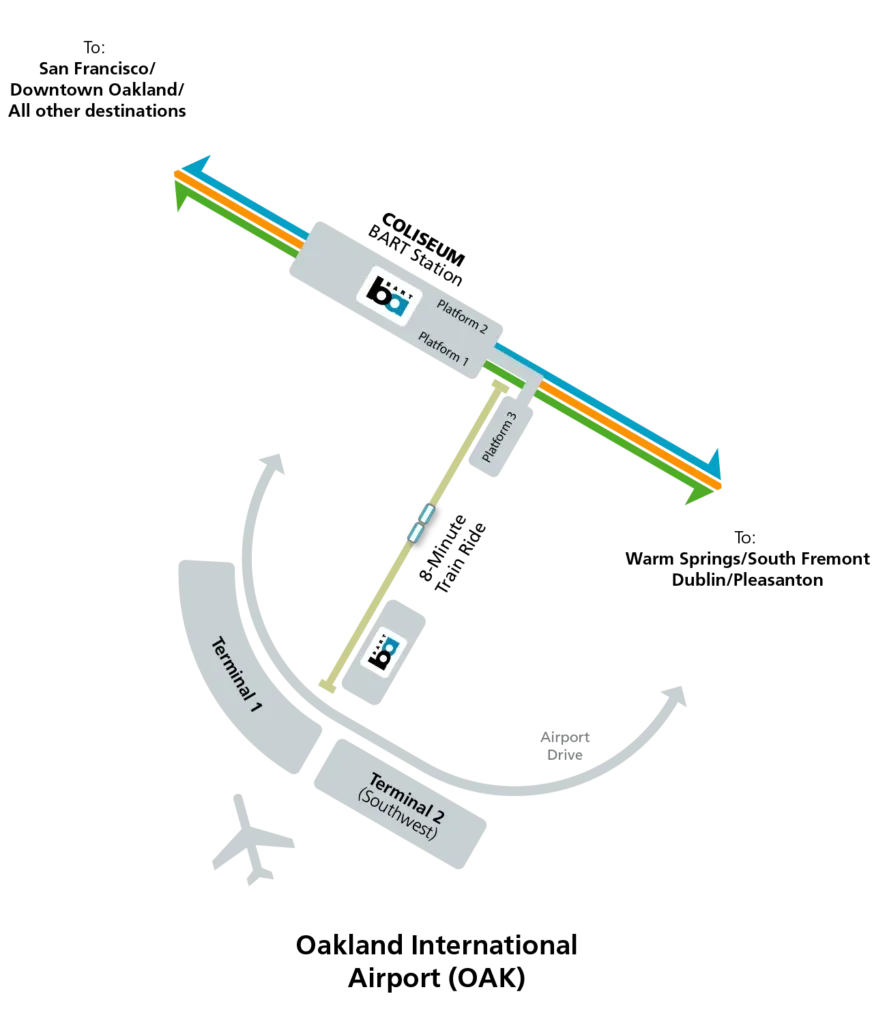
The Connection: OAK features a sleek, automated people mover (BART to OAK line) that takes you from the terminal to the Coliseum BART Station in 9 minutes.
-
Heading to San Francisco: From Coliseum station, hop on a northbound BART train, and you’ll cross under the bay into downtown SF in about 25 minutes.
-
Heading to Silicon Valley (The Grind): To get to Palo Alto or San Jose from OAK without a car, you have to take BART south to the Milpitas Station, transfer to the VTA Light Rail, and head into San Jose. It involves multiple transit agencies, mismatched schedules, and can easily take 2 hours+.
-
The Verdict: Great for getting to San Francisco or the East Bay. If you are heading south to Apple or Google, avoid OAK unless you plan on ordering a hefty rideshare.
📊 Public Transit vs. Rideshare: The Showdown Matrix
To give you a sense of scale, here is a comparison for a traveler heading to Palo Alto (Stanford/VC Hub) landing at 5:00 PM on a weekday:
| Airport | Transit Method | Est. Time | Est. Cost (Per Person) | Traffic Risk |
| SFO | Uber / Lyft | 60–90 mins | $65 – $95 (Surged) | Extreme (US-101 Gridlock) |
| SFO | BART + Caltrain | 55 mins | ~$14 | Zero (Bypasses roads) |
| SJC | Uber / Lyft | 30–45 mins | $40 – $55 | Low-Medium |
| SJC | Free Shuttle + Caltrain | 40 mins | ~$6 | Zero |
| OAK | Uber / Lyft | 75–110 mins | $85 – $120+ (Plus Tolls) | High (Bridge Bottlenecks) |
| OAK | BART + VTA Transfer | 110+ mins | ~$16 | Zero |
💡 Pro-Tips for Navigating Bay Area Transit Like a Local
-
Ditch the Paper Tickets, Use Apple Wallet: Do not waste time buying paper tickets at station kiosks. Open Apple Wallet on your iPhone or Google Wallet on Android, add a Clipper Card, load $20 via Apple Pay, and just tap your phone at the BART gates or Caltrain station poles. One card works across all Bay Area transit systems.
-
The Caltrain "Tap On, Tap Off" Rule: Unlike BART, which has physical fare gates, Caltrain uses open-air platform validators. You must tap your Clipper card BEFORE boarding, and tap it again AFTER exiting. If you forget to tap off, the system assumes you rode to the end of the line and will charge you the maximum possible zone fare.
-
Power & Productivity: The electric Caltrain units feature power outlets under every seat and stable onboard Wi-Fi. If you need to answer Slack messages or polish a slide deck, taking the train from SFO isn't just cheaper—it turns wasted commute time into a mobile office.
✈️ Flight Options, Speed & Airport Efficiency
When comparing airports, it’s easy to focus only on the highway commute. But your time inside the terminal matters just as much. What good is a short drive if you end up stuck in a 45-minute security line, or if your airline only flies to that airport once a day?
To give you the complete picture, let’s look at how SFO, SJC, and OAK stack up when it comes to airline availability, terminal navigation, and pure processing speed.
🌎 Flight Availability & Route Network
The battle between global reach and domestic convenience.
-
SFO (The Unrivaled Giant): SFO is the undisputed king of routes. It is a massive premier hub for United Airlines and a primary West Coast gateway for Alaska Airlines. If you are flying internationally (London, Tokyo, Frankfurt, Taipei) or need a transcontinental flat-bed business class seat (like JetBlue Mint or United Premium Transcon), SFO is often your only realistic choice.
-
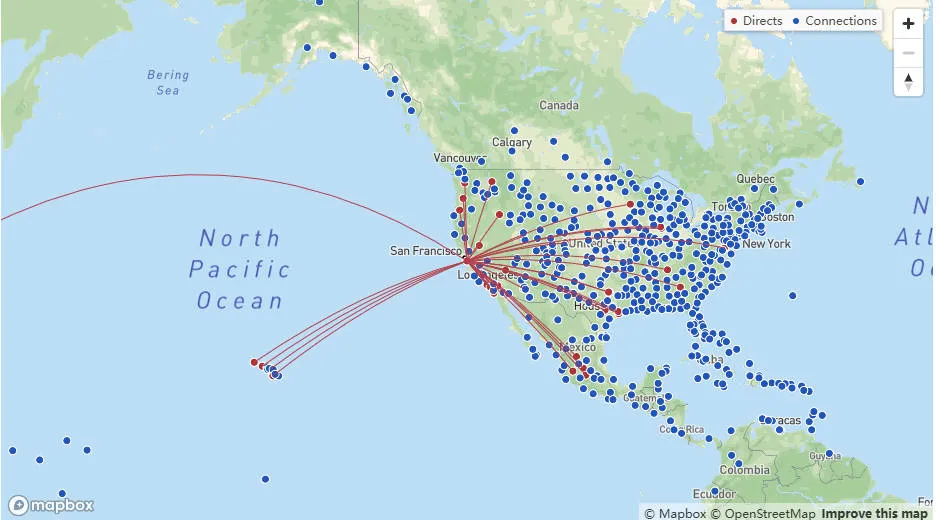
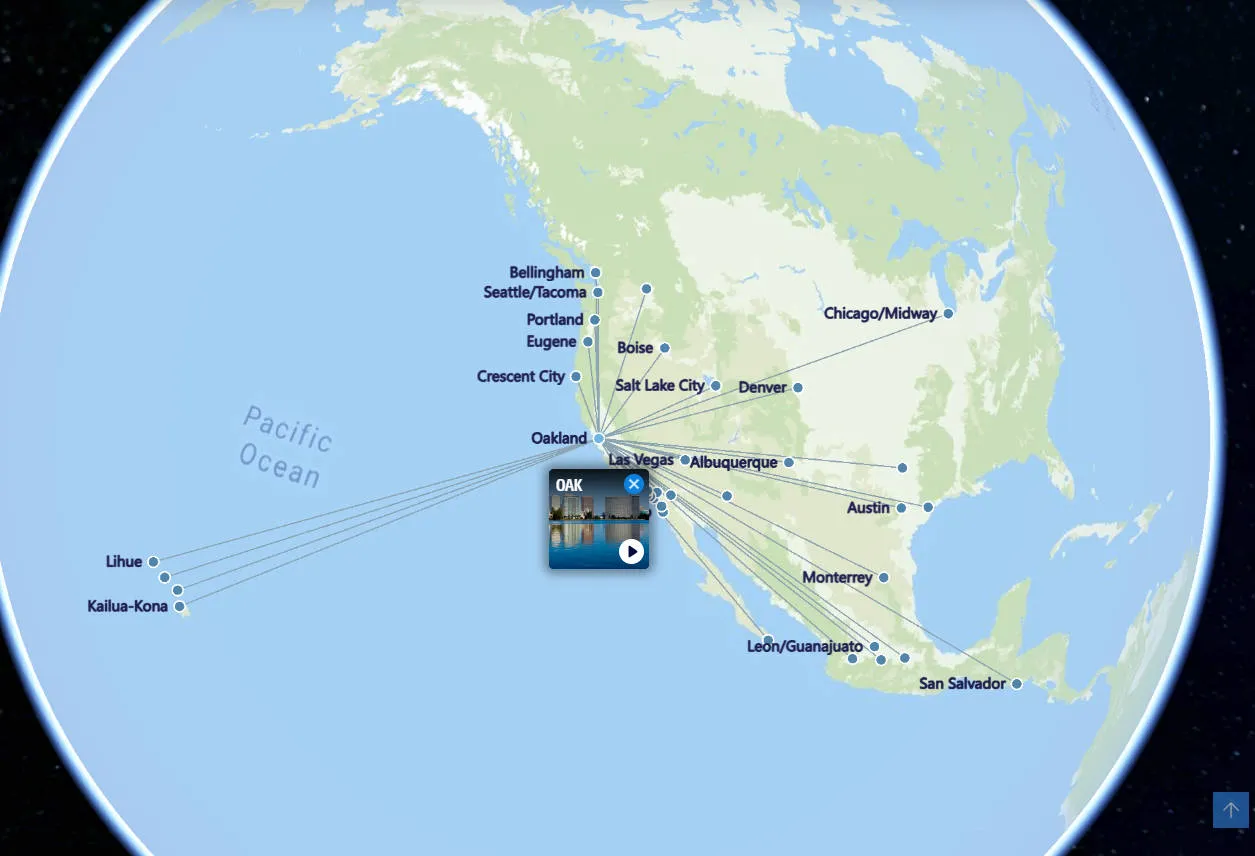
OAK (The Southwest Fortress): OAK is heavily dominated by low-cost carriers, specifically Southwest Airlines, which commands over 60% of the airport’s traffic. If you are jumping around the West Coast (Los Angeles, San Diego, Seattle, Las Vegas, Phoenix), OAK offers an incredible frequency of flights at highly competitive prices.
-
SJC (The Corporate Workhorse): SJC strikes a pragmatic middle ground. It features a robust network of domestic business routes served by Delta, American, Southwest, Alaska, and United. While it has limited international service (mainly Mexico), it offers excellent, frequent point-to-point domestic flights tailored perfectly for the business traveler schedule.
⏱️ TSA Security & Processing Speed
How fast can you get from the curb to the gate?
[SJC Curb] ── (5-10 Mins TSA) ──► [The Gate] 🏃♂️💨 (Frictionless)
[SFO Curb] ── (20-40 Mins TSA) ─► [The Gate] 🚶♂️... (Massive Footprint)
-
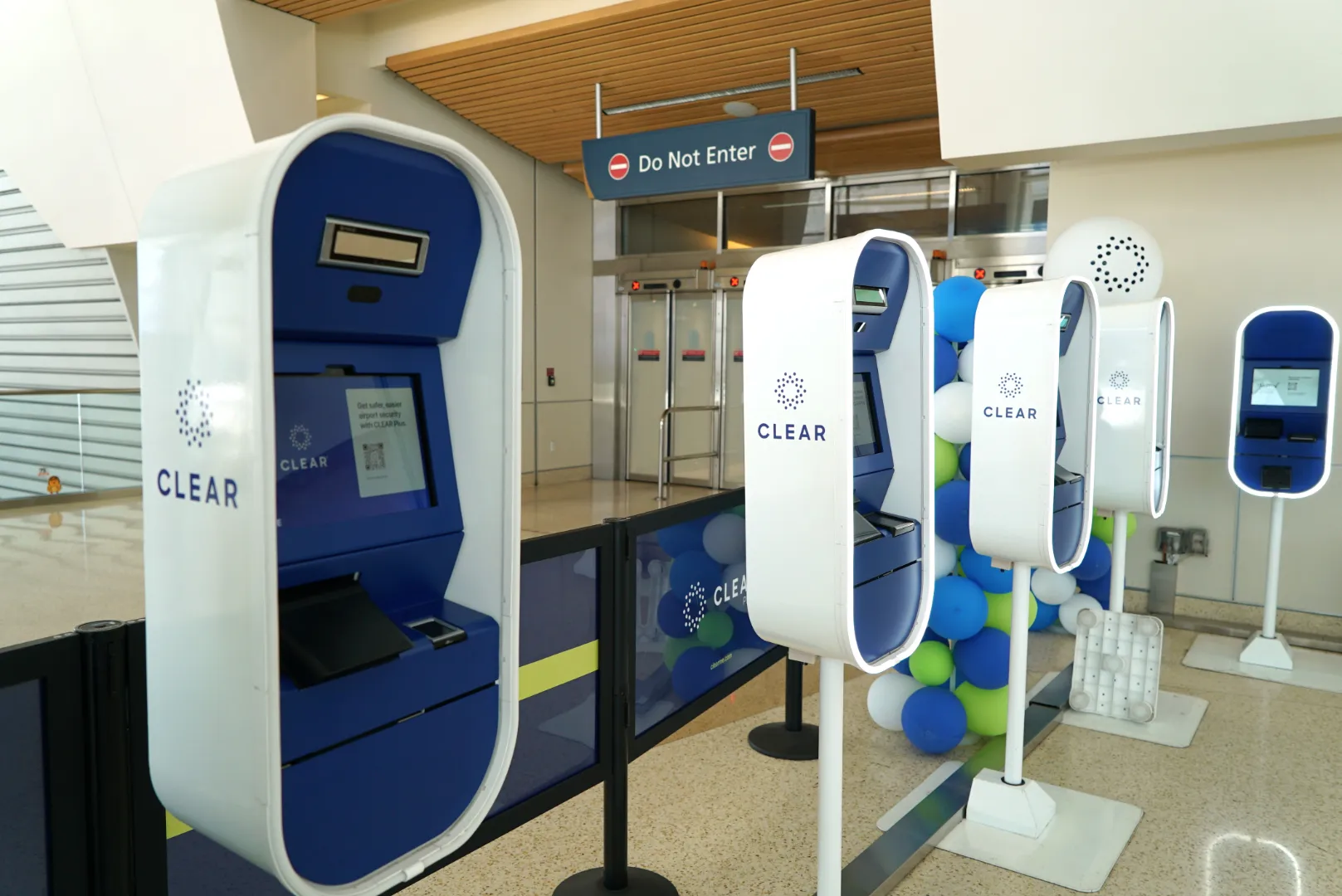
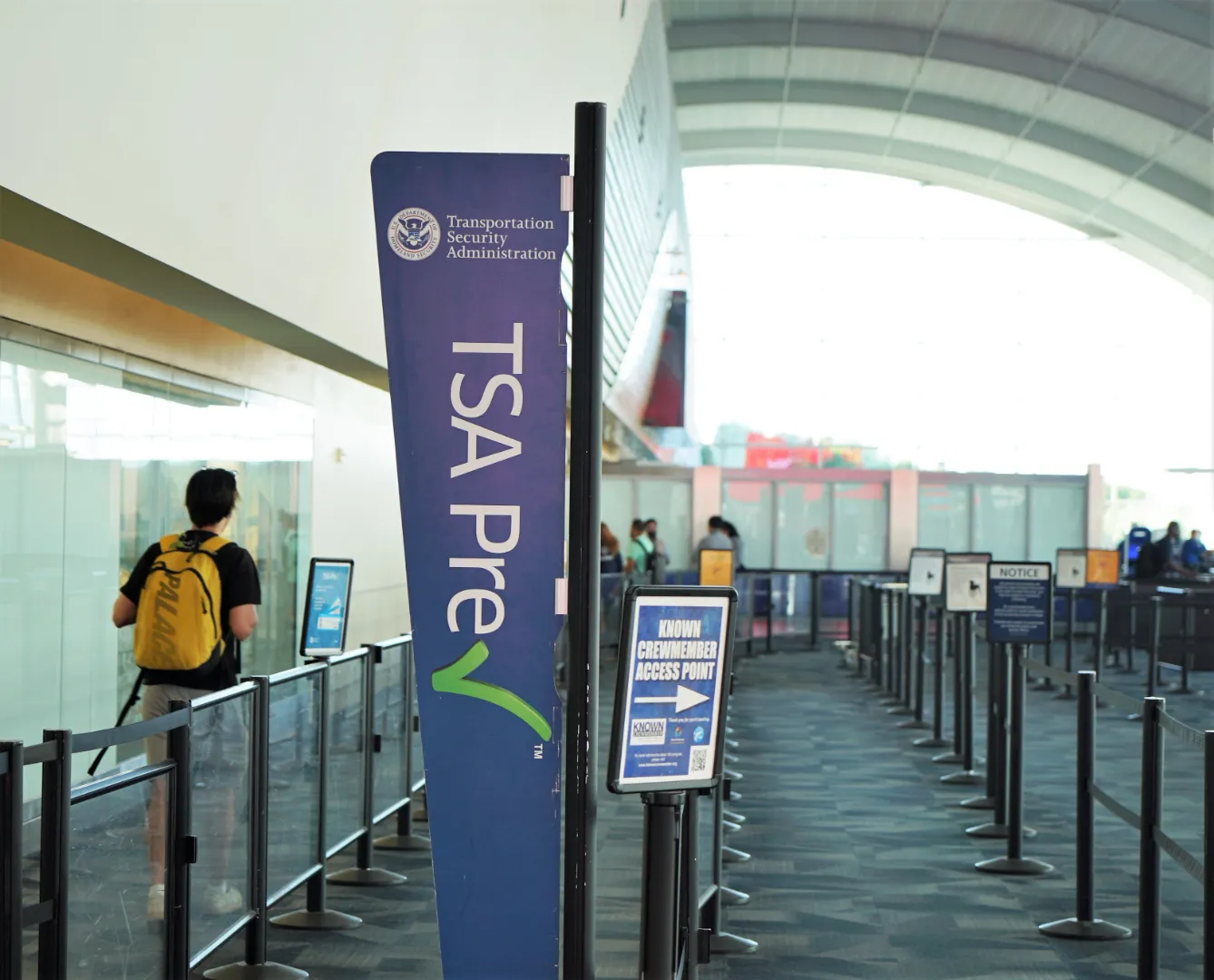
SJC (The Speed Demon): San José Mineta is built like a long, straight line, making it incredibly efficient. Under normal conditions, standard TSA lines take less than 15 minutes, and if you have TSA PreCheck or CLEAR, you can routinely breeze through in under 3 minutes. Even when early-morning corporate banks create winding queues, the staff moves travelers with impressive speed.
-
OAK (The Hassle-Free Alternative): OAK features two main terminals that are compact and easy to master. Security lines rarely experience the massive surges seen at SFO, making it highly predictable for a quick drop-off and dash.
-
SFO (The Mega-Terminal Congestion): SFO is enormous. Because it handles wide-body international jets carrying hundreds of passengers at once, the regular TSA checkpoints can back up heavily during morning and evening international banks. Even with PreCheck and CLEAR, walking distances at SFO are vast—getting to the far end of the International Terminal or Terminal 3 can take a solid 15-minute walk after security.
🏗️ Terminal Amenities & Infrastructure
Where do you actually want to have a flight delay?
-
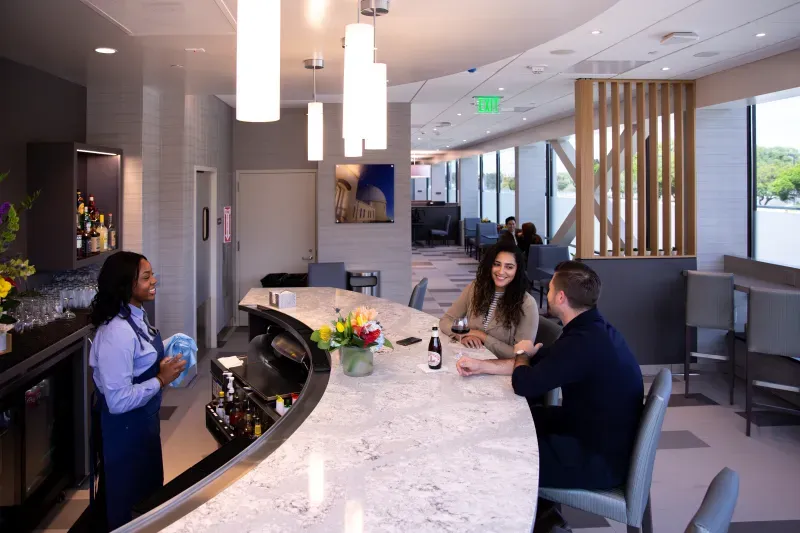
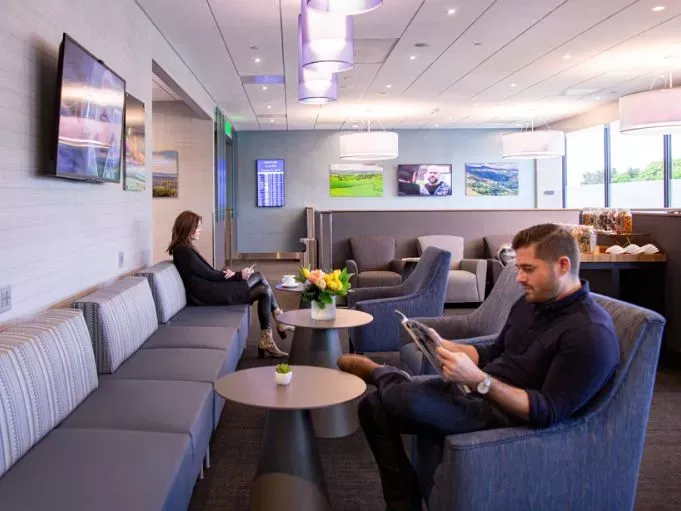
SFO (The Luxury Lounge Mecca): If you have airport lounge access or a corporate expense account, SFO is a paradise. The stunning Harvey Milk Terminal 1 stands as a global gold standard for airport design (sporting LEED Platinum and WELL certifications). Between world-class local dining options, high-end shopping, and flagship lounges like the United Polaris Lounge or the Centurion Lounge, SFO turns an airport wait into a premium experience.
-
SJC (The Tech-Forward Commuter): SJC is clean, modern, and bathed in natural California sunlight. It features solid power-connectivity at every seat and has officially embraced the future by letting Waymo autonomous vehicles drop off and pick up passengers directly at the terminal curbs. However, its lounge game is weak—limited to basic Priority Pass lounges.
-
OAK (The No-Frills Transit Stop): OAK is highly functional but showing its age. Don’t expect fine dining or luxury lounges here. It is built for the grab-and-go traveler who just wants to buy a coffee, hop on a Southwest flight, and get moving.
📊 The Terminal Efficiency Scorecard
| Feature | SFO | SJC | OAK |
| Route Variety | 🏆 Excellent (Global) | Good (Domestic/Regional) | Fair (Low-Cost/Domestic) |
| Avg. Security Wait | 15 – 40 mins | 🏆 5 – 15 mins | 5 – 20 mins |
| Lounges & Dining | 🏆 World-Class | Basic / Functional | Minimal / Commuter |
| Tech Integration | Great Wi-Fi | 🏆 Waymo Curb Access | Standard |
| Best Strategy | Arrive 2–2.5 hours early. | Arrive 60–90 mins early. | Arrive 60–90 mins early. |
⚠️ Pro Tips & Traps to Avoid
Navigating the Silicon Valley aviation landscape requires more than just looking at a map. To ensure your trip goes as smoothly as a flawless code deployment, you need to bypass a few legendary local traps. Here are the insider secrets and critical warnings for traveling the Bay Area.
🛑 The Traps to Avoid
1. The 2026 SFO Runway Construction Trap (Expect Delays!)
🚨 Critical Alert: SFO has officially closed Runway 1 Right for a massive, six-month repaving and modernization project (stretching until October 2, 2026). Because the FAA has restricted side-by-side parallel landings during this construction, SFO’s hourly arrival capacity has dropped significantly. Data shows up to 25% of arriving flights are experiencing delays, especially during peak windows (9:00 AM and 8:00 PM – 9:00 PM). If you have a non-negotiable meeting on the day you land, book an early morning flight, or pivot entirely to SJC to completely bypass this runway bottleneck.
2. The SFO Terminal 3 "Drop-Off" Gridlock
SFO is in the middle of its $2.6 billion Terminal 3 West Modernization. Because of this, the AirTrain station at Terminal 3 is completely closed, and the upper-level departure curbside (Doors 6–13) is walled off.
-
The Trap: If you let your Uber driver drop you off at the standard T3 departures curb, you will get stuck in a massive, slow-moving line of cars.
-
The Hack: Have your driver drop you off at Terminal 2, or at the Arrivals Level (lower curb) near Doors 10–12, which are much less congested. If you have no bags to check, you can also use the "Kiss & Fly" zone at the Rental Car Center and take the AirTrain in.
3. The Rental Car "Bridge Toll" Sticker Shock
If you fly into OAK or SFO and rent a car, you will likely cross one of the Bay Area’s major toll bridges (like the San Mateo, Dumbarton, or Bay Bridge) to get to your destination.
-
The Trap: As of 2026, Bay Area bridge tolls have increased to $8.50 for standard cars. If you drive through the automated FasTrak toll lanes without planning, your rental car company will slap you with a "convenience fee" that can easily add $5 to $15 per day on top of the toll cost.
-
The Hack: When picking up your rental car, ask to opt out of their toll program, and manually pay your toll online within 48 hours of crossing via the Bay Area FasTrak "One-Time Payment" website using your rental car's license plate.
💡 Pro Tips for Smooth Travel
🧳 1. The Baggage Claim "Stealth Move" at SJC
If you land at SJC Terminal B (Southwest/Alaska) with only a carry-on and need a rideshare, do not walk out to the main Terminal B pickup curb, which gets heavily congested. Instead, follow the signs to the crosswalks and head directly over to the main garage/island. SJC’s app-based rideshare pickup zones (Zones 1-9) are highly organized, but waiting at the far end (Zones 7–9) usually gets you matched with an Uber or Lyft much faster because drivers hate waiting in the cluster at Zone 1.
EV 2. Rent an EV to Unlock the Carpool Lanes
When renting a car at SFO or SJC, try to book a Tesla or another Electric Vehicle (EV). California allows clean-air vehicles with proper decals to use the HOV (Carpool) Lanes and 101 Express Lanes even if you are driving completely solo. During a 5:00 PM gridlock, this single choice can slice 45 minutes off your commute down to Palo Alto.
🗺️ 3. The Mid-Day Airport Pivot
If you are booking a flight and notice that SJC or OAK is $50 cheaper than SFO, check your landing time. If you land between 10:00 AM and 2:00 PM (the sweet spot between morning and evening rush hours), the highway traffic across the bridges and down the 101 is virtually non-existent. Go ahead and book the cheaper secondary airport—you’ll pocket the savings and still get to your hotel in under 45 minutes.
💬 Frequently Asked Questions (FAQ)
Q1: I am flying directly from China/Asia. Which airport should I choose?
A: 100% SFO. SFO offers multiple daily direct flights from major Asian hubs like Beijing, Shanghai, Guangzhou, Shenzhen, Hong Kong, Taipei, Tokyo, and Seoul. Neither SJC nor OAK offers direct passenger flights to/from mainland China.
Q2: I hate walking long distances after a 12-hour flight. SFO or SJC?
A: Choose SJC if you have a domestic layover. As mentioned, SFO is notoriously huge. If you are traveling with elderly parents or very young children, SJC's compact footprint is a lifesaver. You can go from the aircraft gate to your Uber/rental car in under 15 minutes! SFO easily requires 30–45 minutes of walking and riding trains just to exit.
Q3: How do the airport lounges compare?
A: SFO has an absolute and crushing victory here. If you have elite airline status (Star Alliance Gold, OneWorld Emerald) or high-end travel credit cards (Amex Platinum, Capital One Venture X), SFO is a premium lounge playground. SJC only has standard, often-crowded Priority Pass lounges, and OAK has almost no premium lounge presence.
Q4: Which airport has the fastest Customs & Border Protection (CBP) wait times?
A: SJC is much faster, but SFO has improved with technology. Because SFO processes thousands of international passengers per hour during peak arrival blocks (usually midday and late evening), customs lines can get long. However, if you have Global Entry or use the Mobile Passport Control (MPC) app, you can breeze through SFO customs in less than 5 minutes. SJC has far fewer international arrivals, so its lines are naturally shorter, but the schedules are limited.
Q5: Is Oakland (OAK) actually called "San Francisco Bay Airport" now? I’m confused about where it is.
A: Yes! Following the resolution of a massive legal trademark dispute with San Francisco, the airport is officially named Oakland San Francisco Bay Airport. The Reality Check: Geographically, it has not moved an inch. It is still located firmly in the East Bay. Do not let the new name fool you into thinking it sits right next to the Golden Gate Bridge or Palo Alto. If your destination is the South Bay, you will still have to cross a toll bridge to get there.
Q6: How much does an Uber/Lyft actually cost from SFO vs. SJC to Palo Alto?
A: Price varies wildy depending on rush hour surges, but here are the benchmarks:
-
From SJC: Usually a reliable $35 – $55. Because it’s a shorter distance and suffers less gridlock, surge multipliers are rarely extreme.
-
From SFO: Typically $55 – $85, but during a heavy weekday evening rush hour (4:30 PM - 6:30 PM), it can easily surge past $120+.
Q7: Can I actually take a driverless Waymo car from the airport?
A: Yes, but only if you fly into SJC (San Jose)! SJC is the first commercial airport in California to officially integrate fully autonomous ride-hailing right at the terminal islands. You can open your Waymo app upon landing, walk to the Ground Transportation center (Terminal A or B), and have a driverless Jaguar pick you up.
Q8: I hear Caltrain has been "electrified." Does that mean I can rely on it to skip traffic?
A: Absolutely. Caltrain’s full electrification is a game-changer for car-free travelers. The sleek new electric trains run significantly faster, accelerate quicker, and offer quiet rides with free Wi-Fi and power outlets under every seat. If you land at SFO, taking BART one stop to Millbrae and hopping on a southbound Caltrain express is now one of the smartest, most predictable ways to reach Mountain View or San Jose during rush hour.
Q9: What is the biggest mistake first-time travelers make when flying into the Bay Area?
A: Trusting map distances instead of traffic windows. Booking a flight that lands at SFO at 5:00 PM because it was $40 cheaper than a flight into SJC is the ultimate rookie mistake. You will easily burn that $40 savings on an expensive, surged Uber ride while losing two hours of your life staring at brake lights on US-101. Always calculate your door-to-door total cost and travel time, not just the ticket price.
🏆 The Final Verdict: Which Airport Should You Book?
We have weighed the miles, analyzed the gridlock on the 101, crunched the rideshare costs, and mapped out the newly electrified train routes. Now, it’s time for the ultimate decision.
Picking the perfect Bay Area airport boils down to three simple metrics: Where are you going, when are you landing, and who is paying for the ride?
To make your life easier, skip the overthinking and use this 5-second decision tree to book your ticket.
🌲 The 5-Second Booking Decision Tree
                          Where is your final destination?
                                         │
         ┌───────────────────────────────┼──────────────────────────────┐
         ▼                               ▼                              ▼
  [ South Bay Core ]             [ Mid-Peninsula ]              [ San Francisco ]
(Cupertino/Sunnyvale/SJ)       (Palo Alto/Menlo Park)            (Downtown/SoMa)
         │                               │                              │
         ▼                               ▼                              ▼
    BOOK **SJC** Landing at Rush Hour?            BOOK **SFO**
(Zero contest. Hands down.)              │                     (Direct BART connection)
                                ┌────────┴────────┐
                                ▼                 ▼
                             [ YES ]           [ NO ]
                                │                 │
               ┌────────────────┴────────┐        ▼
               ▼                         ▼    BOOK **SFO** or **OAK**
         Are you solo?             Got corporate     (Choose based on
               │                   expense card?      flight price!)
        ┌──────┴──────┐                  │
        ▼             ▼                  ▼
    [ YES ]        [ NO ]           BOOK **SFO**
(Take Caltrain)  (Book SJC)    (Pay for 101 Express Lanes)
🎖️ The Final Report Card: Choosing Your Champion
🥇 The South Bay Champion: SJC (San José Mineta)
If your itinerary is tethered to Apple, Google, Nvidia, or any of the tech titans nestled in the South Bay, SJC is your undisputed winner. * Why it wins: It completely eliminates the soul-crushing traffic of the mid-Peninsula. It’s weather-proof, boasts lightning-fast TSA lines, and lets you hop into a driverless Waymo right at the curb.
-
The Caveat: It lacks massive international networks, so it’s best reserved for domestic corporate travel.
🥈 The Global Heavyweight: SFO (San Francisco International)
If you are crossing an ocean, hunting for premium lie-flat cabins, or heading straight into SF's thriving AI and SaaS hub in SoMa, SFO takes the crown.
-
Why it wins: Unmatched route availability, gorgeous premium lounges, and seamless direct BART access into the city.
-
The Caveat: With the massive Runway 1R construction project causing ripple delays and Terminal 3 undergoing heavy modernization, SFO requires a time buffer. Avoid landing here during evening rush hour if you have to drive south.
🥉 The Low-Cost Disruptor: OAK (Oakland San Francisco Bay)
If you are a Southwest Airlines loyalist, traveling on a tight budget, or staying in the East Bay, OAK is your secret weapon.
-
Why it wins: It bypasses SFO’s notorious fog delays, offers cheaper flights, and sits directly across the water from Menlo Park.
-
The Caveat: The name drama may be legally settled, but geography doesn't lie—you are still across the water. If you land during rush hour, the bridge tolls and bottleneck traffic will wipe out any money you saved on airfare.
💡 One Last Piece of Advice from a Local: "Never book a Bay Area flight based on ticket price alone."
A $150 flight into OAK that lands at 5:00 PM looks like a steal until it turns into a $95 surged Uber ride and two hours of staring at brake lights on a toll bridge. Conversely, paying a $50 premium to fly into SJC can land you on campus just 20 minutes after grabbing your bags.
Value your time the way Silicon Valley values innovation. Choose the airport that deposits you closest to your target, stay off the 101 during rush hour, and welcome to the tech capital of the world!
Have a wonderful and productive trip to Silicon Valley! Safe travels! 🌉💻✈️
Why Are Uber and Lyft So Expensive at Airports? Hidden Airport Fees & Ways to Save