Planning your arrival in San Francisco? Read our 2026 guide comparing BART, Uber, and taxis from SFO to Downtown based on price, travel time, and safety.
With the city's iconic hills, bustling streets, and tech-driven vibe, choosing the right transportation can make or break your start. In 2026, options abound, but two stand out for their popularity: BART (Bay Area Rapid Transit) and Uber. This ultimate guide dives deep into a comparison of prices, travel times, and safety, helping you decide what's best for your budget, schedule, and peace of mind. Whether you're a solo traveler, family, or business visitor, we'll break it down based on the latest data to ensure a smooth journey.
📌 SFO to Downtown SF at a Glance (2026)
-
Cheapest Option: BART (Bay Area Rapid Transit). Costs ~$10.55 one-way.
-
Fastest Option: Uber/Lyft or Taxi (outside of rush hour). Takes 25-35 minutes.
-
Best for Late Night Arrivals: Uber or Taxi. (BART stops running around midnight).
-
BART Travel Time: 30 minutes (direct from SFO International Terminal to Powell St / Union Square).
-
Average Uber Cost: $45 to $65+ depending on surge pricing and time of day.
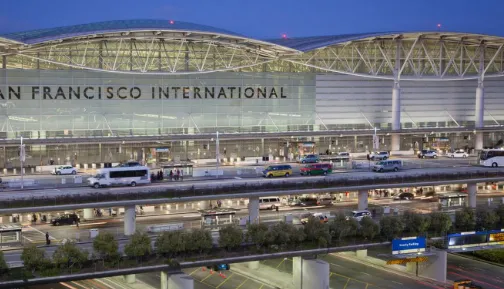
Overview of San Francisco International Airport (SFO)
San Francisco International Airport (SFO) is the primary international airport serving the San Francisco Bay Area and the largest in Northern California. Located approximately 13 miles (21 km) south of downtown San Francisco in unincorporated San Mateo County, it is owned and operated by the City and County of San Francisco.
Terminal Layout
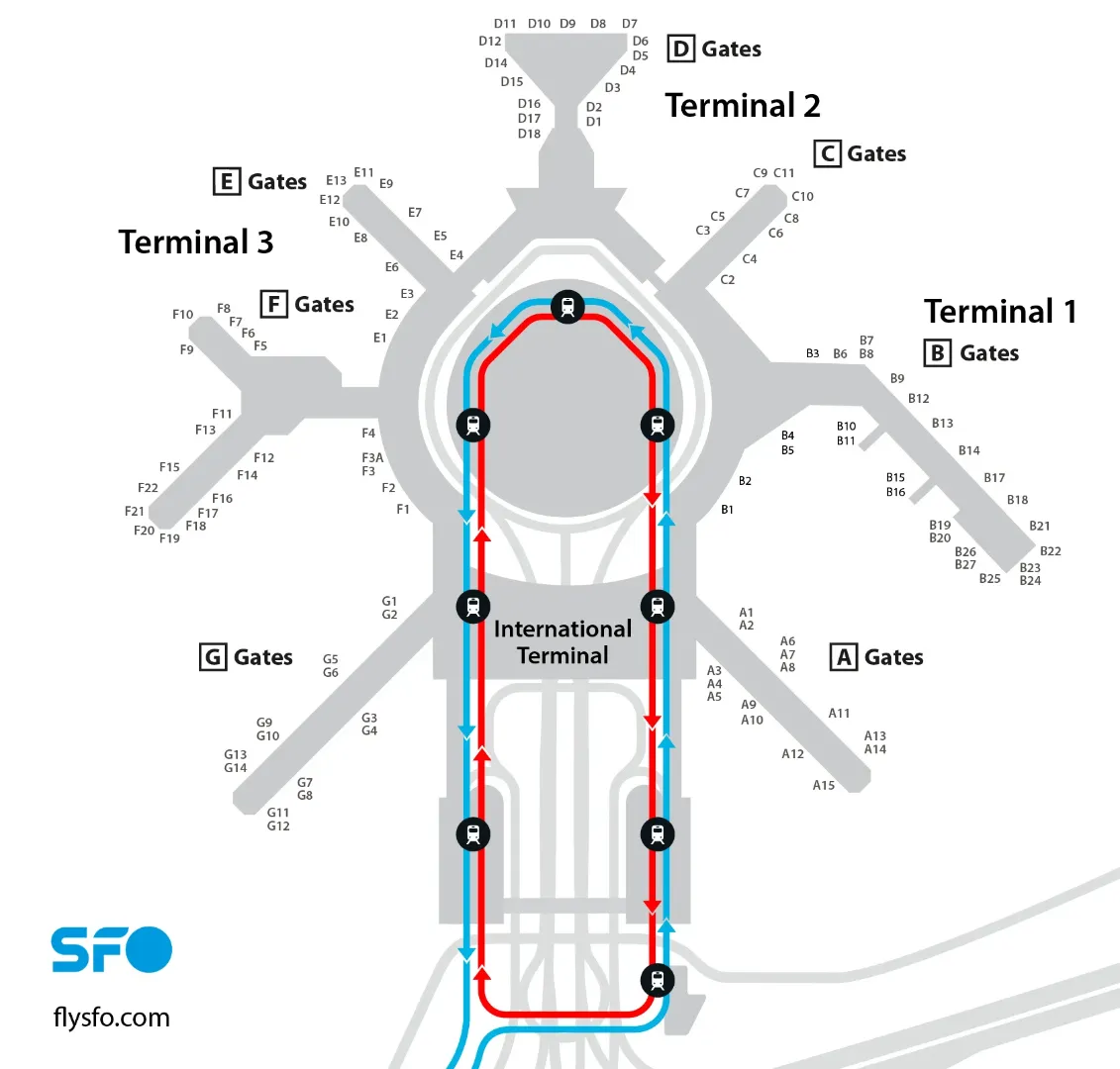
SFO is organized into a ring of four terminals connected by the AirTrain people mover.
-
Harvey Milk Terminal 1: Recently modernized, it serves Alaska, American, Delta, Frontier, JetBlue, and Southwest. It is world-renowned for its museum-quality art and sustainable design.
-
Terminal 2: The primary hub for Alaska (domestic) and Delta. It is famous for its "Zen" atmosphere and yoga room.
-
Terminal 3: The dedicated hub for United Airlines domestic flights. Note: United's international flights depart from International Terminal G.
-
International Terminal: Split into two boarding areas:
-
A-Gates: Most international carriers (e.g., Air France, Emirates, Cathay Pacific).
-
G-Gates: Primarily United (International) and Star Alliance partners like Lufthansa and Singapore Airlines.
-
Airport Internal Transportation: AirTrain
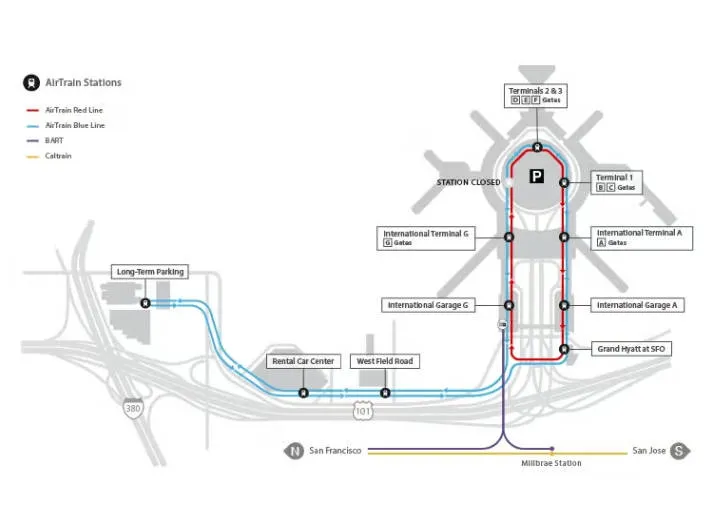
The SFO AirTrain is a free, 24/7 automated people mover that operates on two tracks. In 2026, navigating the AirTrain requires specific attention to the Terminal 3 closure.
Both lines run frequently (every 4–6 minutes) and are located on the Level 4 of the domestic terminals and the Mezzanine level of the International Terminal.
-
Red Line (Circular): Connects all terminals, terminal garages, the BART Station, and the Grand Hyatt at SFO. This is the fastest way to move between terminals.
-
Blue Line (Extended): Follows the same route as the Red Line but adds stops at the Rental Car Center and Long-Term Parking.
Tip: If you are heading to your car or a rental, ensure you are on the Blue Line. The Red Line does not stop at the Rental Car Center.
Unique Amenities
SFO distinguishes itself with "San Francisco-style" amenities:
-
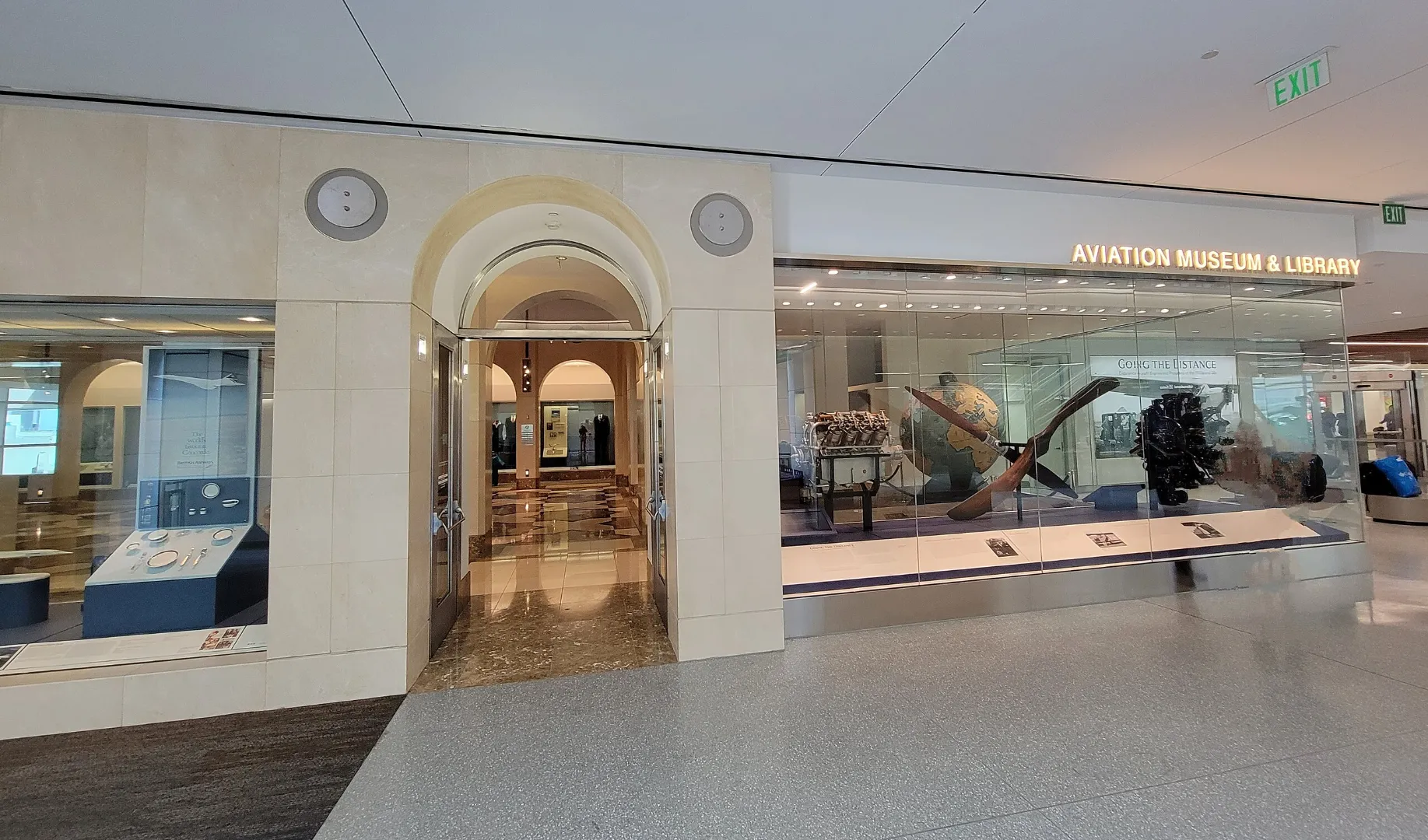
SFO Museum: Rotating art and history exhibits throughout all terminals.
-
Yoga Rooms: Located in Terminals 1, 2, and 3.
-
SkyTerrace: An outdoor observation deck (pre-security) in the International Terminal with 180-degree views of the airfield.
-
Local Dining: You’ll find local favorites like Boudin Bakery, Napa Farms Market, and The Slanted Door rather than typical fast-food chains.
Transportation Options from SFO to Downtown San Francisco
Getting from SFO to downtown San Francisco (typically the Union Square, Financial District, or SoMa areas) takes about 30–45 minutes, depending on your choice of transport.
As of January 2026, there have been slight fare increases for public transit, and specific pickup zones remain strictly enforced to manage airport construction.
| Method | Estimated Cost | Travel Time | Best For... |
| BART (Train) | $11.15 | ~30 min | Avoiding traffic & solo travelers |
| Uber / Lyft | $35 – $55 | 25 – 45 min | Door-to-door convenience |
| Taxi | $55 – $65 | 25 – 40 min | Immediate departure (no app) |
| Shared Shuttle | $18 – $25 | 45 – 60 min | Large luggage on a budget |
| SamTrans Bus | $2.50 – $5.00 | 60+ min | Extreme budget (Route 292) |
1. BART (Bay Area Rapid Transit) - Recommended for Most Travelers
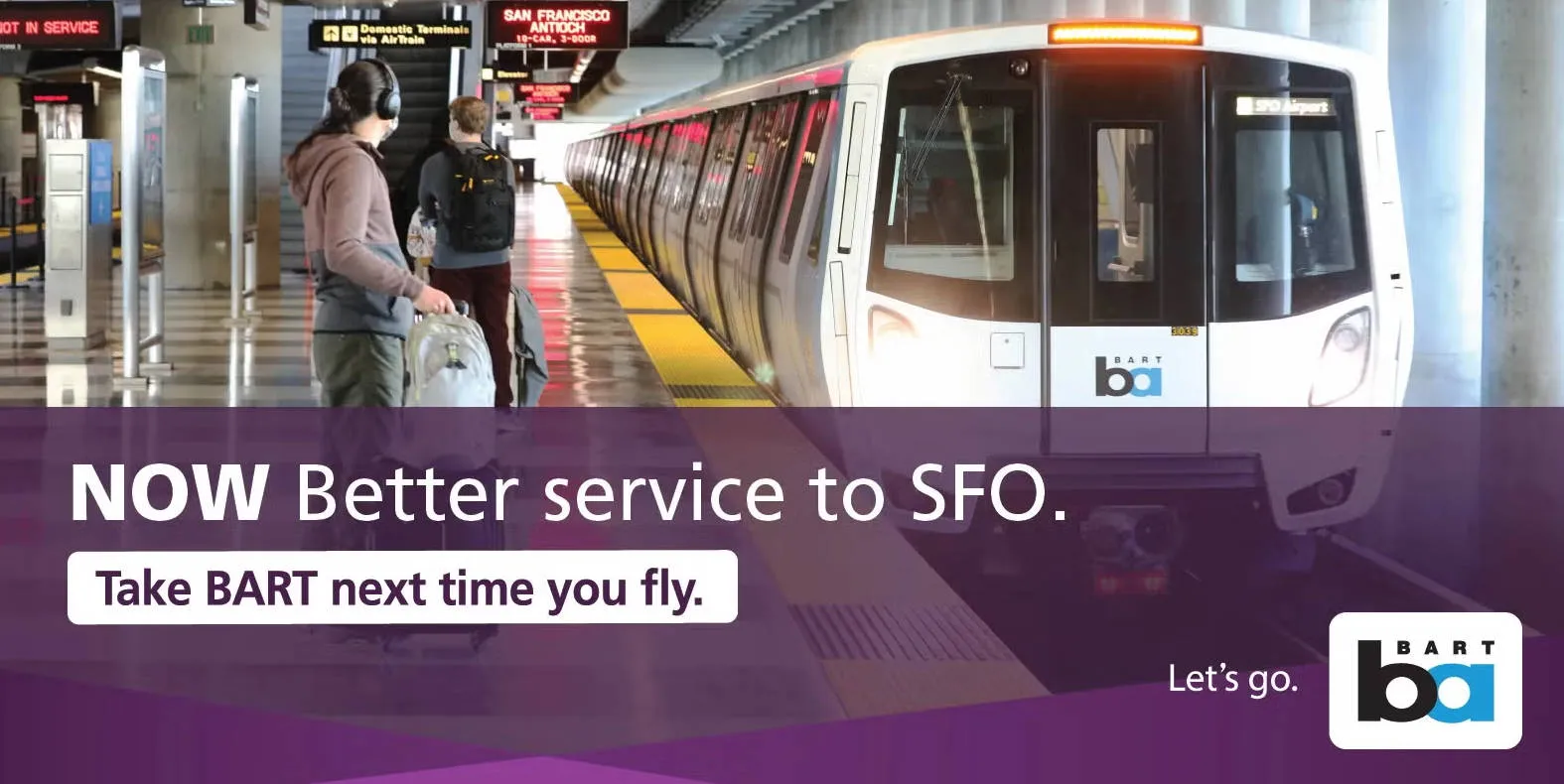
BART is generally the fastest way to avoid San Francisco's notorious highway traffic.
-
Description: Direct, reliable rail service avoiding traffic. Fastest and cheapest public option.
-
How to Access: Free AirTrain from any terminal to the BART station in the International Terminal (Garage G).
-
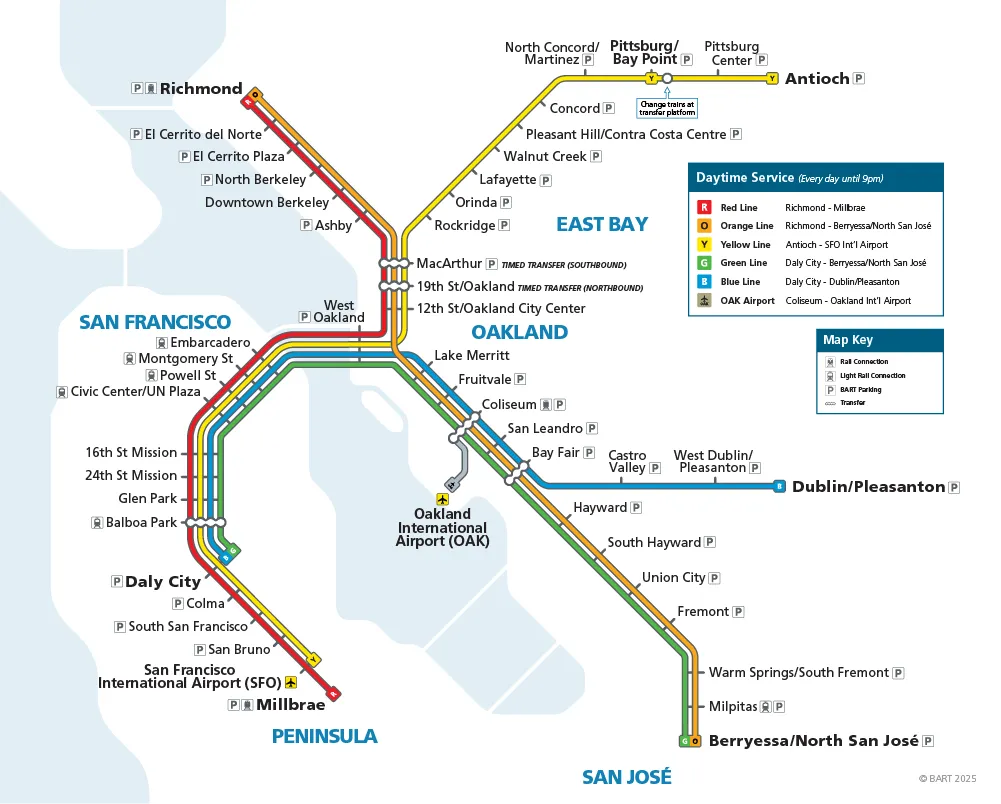
Route: Board a Yellow Line (Antioch) or Red Line (Richmond) train to downtown stations (Embarcadero, Montgomery, Powell, or Civic Center).
-
Travel Time: ~30 minutes.
-
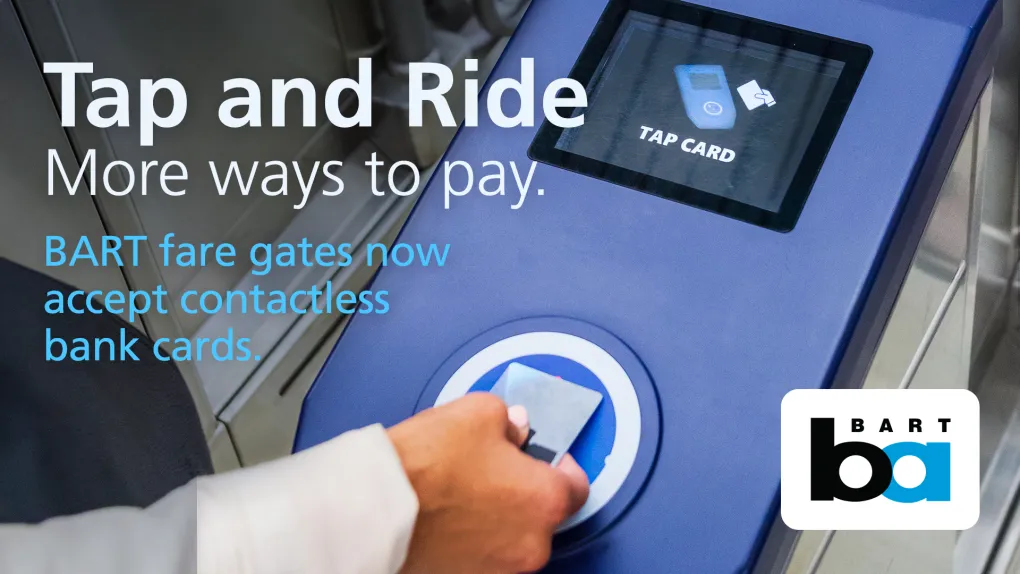
Fare: Approximately $11.85 one-way (after 6.2% increase effective Jan 1, 2026; previously ~$11.15). Pay with Clipper card, contactless credit/debit, Apple/Google Pay, or paper ticket at SFO.
-
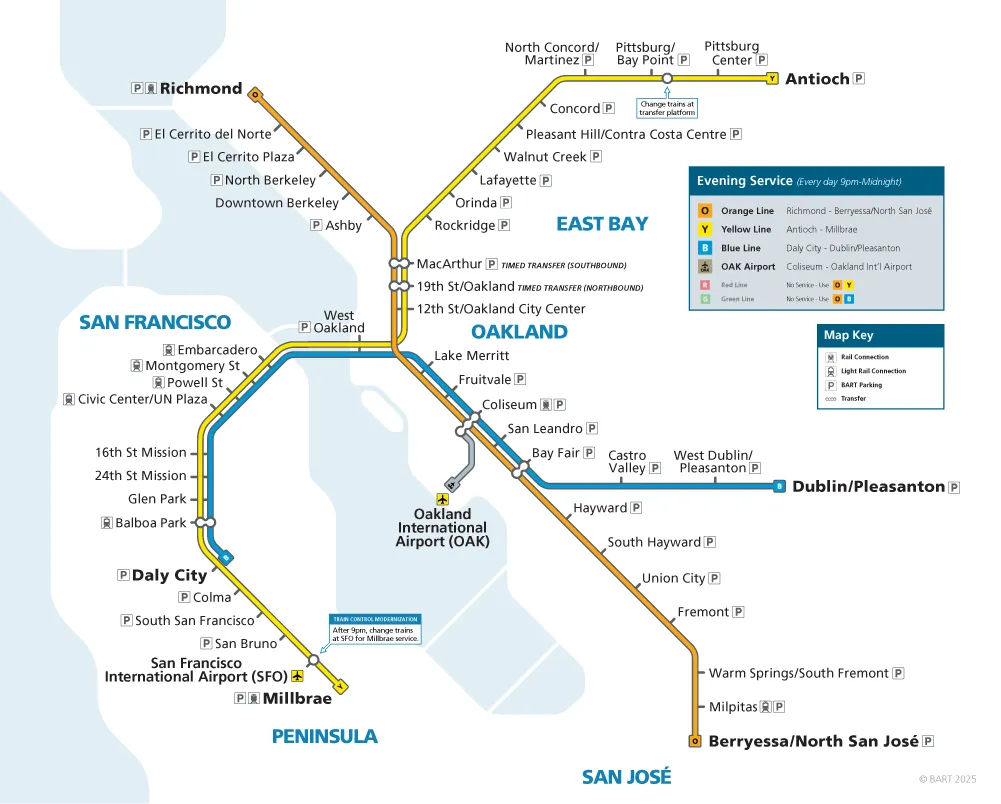
Frequency: Every 15-20 minutes; service ~5am-midnight weekdays, later start on weekends.
-
Pros: Affordable, frequent, no traffic delays.
-
Cons: Stairs/escalators (elevators available); may need short walk/transfer to final destination.
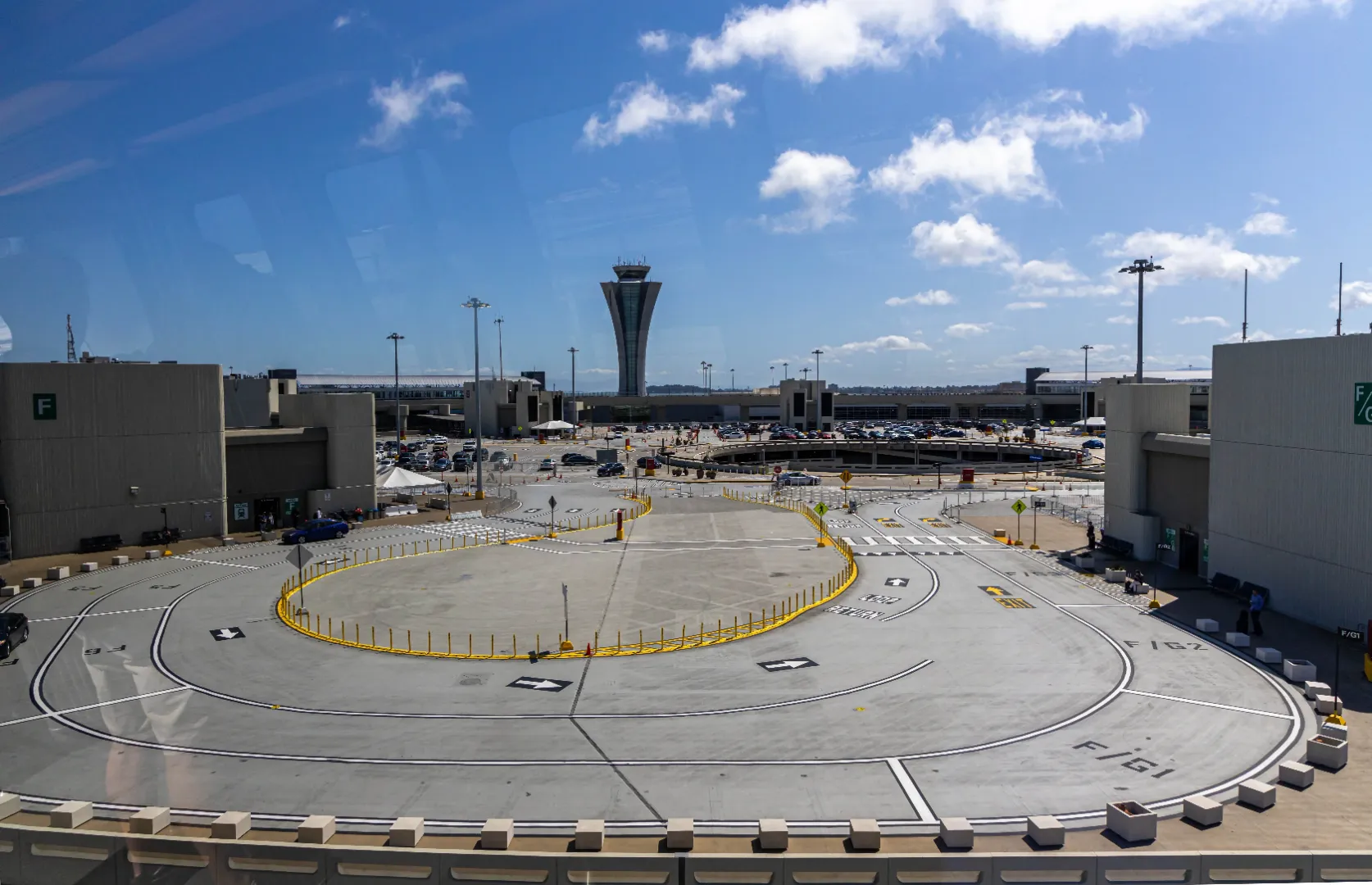
2. Rideshare (Uber/Lyft) – Door-to-Door
Rideshares are convenient but subject to surge pricing and traffic on Highway 101.
-
Description: Convenient door-to-door service via app.
-
Pickup: Domestic terminals: Level 5 of Domestic Garage. International: Departures level center island (zones 14-17).
-
Travel Time: 20-40 minutes (traffic-dependent).
-
Cost: $35-60 typical (includes ~$5.50 airport surcharge; higher during surge/peak hours).
-
Pros: Direct to hotel, comfortable with luggage.
-
Cons: Variable pricing, potential waits.
- Uber & Lyft Complaint Guide
3. Taxis – No App Required
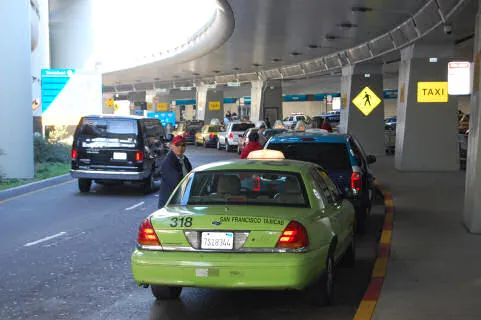
Taxis are always available at designated stands and often have shorter wait times than rideshares during busy periods.
-
Description: Metered cabs available curbside at all terminals (Arrivals level).
-
Travel Time: 25-45 minutes.
-
Cost: $55-70 (includes $6 airport exit surcharge; plus tip ~15-20%).
-
Pros: Immediate availability, fixed metered rate (no surge), accessible vehicles on request.
-
Cons: More expensive than rideshare/BART, traffic impacts time/cost.
4. Shared Ride Shuttles/Vans
-
Description: Door-to-door shared vans (e.g., services like GO Airport Shuttle, Airport Express, or similar providers). Book in advance online.
-
Cost: $20-40 per person (cheaper for groups; varies by provider).
-
Travel Time: 40-90 minutes (multiple stops).
-
Pros: Affordable alternative to private rides, good for hotels.
-
Cons: Longer due to shared stops; limited late-night options.
-
Note: Hotel courtesy shuttles are only for airport-area hotels (e.g., Burlingame), not downtown.
5. Other Options
-
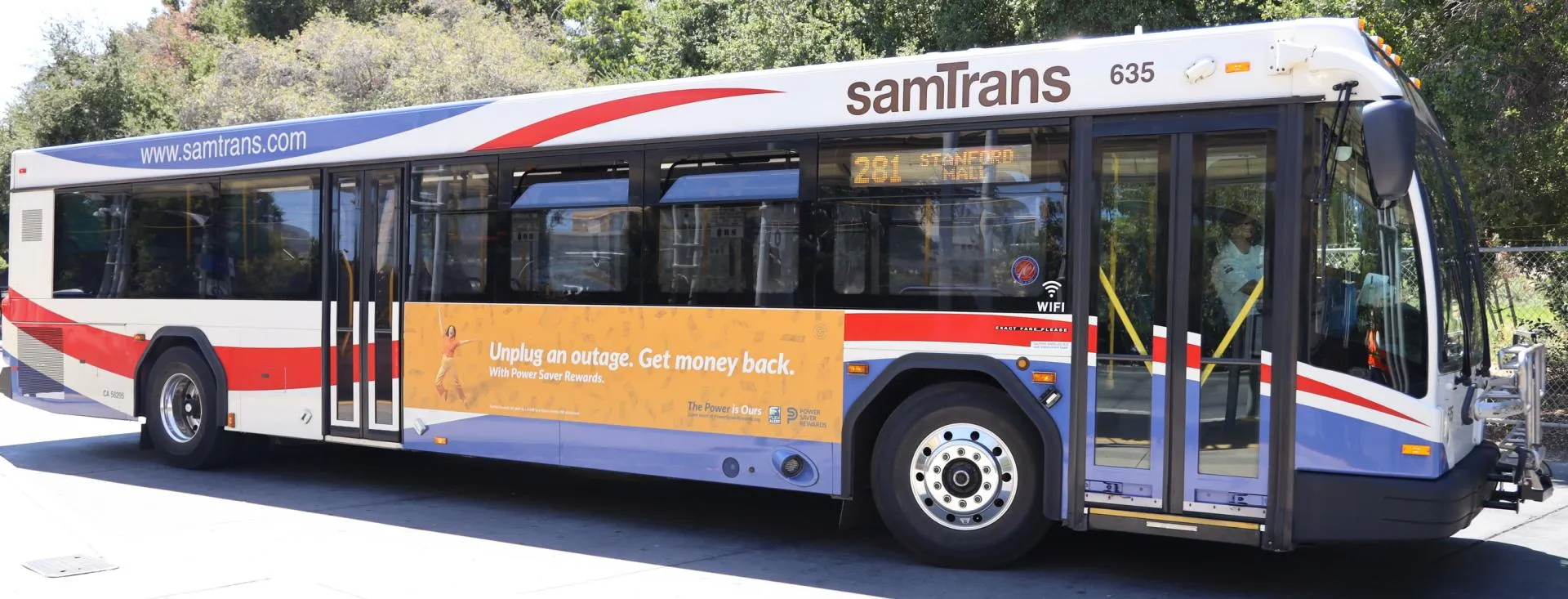
SamTrans Bus (Route 292): The cheapest option at $2.50–$5.00. It stops at all terminals but takes over an hour to reach downtown because it makes frequent local stops.
-
Private Car/Limo: $80+ for luxury/direct service.
Head-to-Head Comparison: BART vs. Uber
| Category | BART (Public Rail) | Uber/Lyft (Rideshare) | Winner |
|---|---|---|---|
| Price (one-way) | ~$11.85 (after 6.2% increase effective Jan 1, 2026) | $40–60 (average ~$50; surges can hit $80+) | BART (4-5x cheaper) |
| Travel Time | Fixed 30 minutes (plus 5-10 min AirTrain/walk) | 20-45 minutes (light traffic: 20 min; rush hour: 60+ min) | BART (predictable) |
| Frequency | Every 15-20 min (5am–midnight) | On-demand (wait <10 min usually) | Tie |
| Convenience | Direct to 4 downtown stations; short walk to many hotels | Door-to-door hotel drop-off; great for luggage | Uber |
| Luggage | Manageable but crowded; elevators available | Spacious trunk; driver helps | Uber |
| Comfort | Public train; seats vary, can be crowded | Private, quiet car with AC | Uber |
| Reliability | No traffic delays; rare maintenance issues | Traffic + surge pricing unpredictable | BART |
| Safety | Improved with more police presence in 2025-2026; generally safe daytime (low violent crime risk, but occasional disturbances/phone grabs) | Private ride; licensed drivers; app tracking | Tie (both safe; BART enhanced recently) |
| Eco-Friendly | Electric rail; low emissions | Higher per-passenger emissions | BART |
| Late Night | Ends ~midnight | 24/7 | Uber |
The Verdict: Which Should You Choose?
Choose BART if:
-
You are traveling solo or as a couple.
-
You are arriving during "Rush Hour" (weekdays 7-10 AM / 3-7 PM).
-
Your hotel is near Union Square, Market Street, or the Embarcadero.
Choose Uber/Lyft if:
-
You have 3+ people in your group (making the cost-per-person similar to BART).
-
You have more than one large suitcase per person.
-
Your destination is uphill (Nob Hill) or far from Market Street.
Frequently Asked Questions (FAQ)
Q1: Is BART safe at night?
A: Generally yes, but service is limited late at night and stations may be less crowded.
Q2: Is Uber cheaper than BART?
A: No. BART is significantly cheaper, especially for solo travelers.
Q3: How late does BART run from SFO?
A: Usually until around midnight (check current schedules).
Q4: What are the best options late at night?
A: Uber/Lyft (24/7). BART ends around midnight.
Q5: What if I have a lot of luggage or am traveling with a group?
A: Uber/Lyft or taxi for door-to-door convenience and luggage help. For 3+ people, splitting rideshare often beats BART per person.
Q6: Is it safe to take BART from SFO to Downtown at night?
A: During normal commuting hours and early evenings, BART is heavily populated with airport travelers and commuters, making it a very safe and efficient option. However, if your flight lands after 9:30 PM, or if you are traveling with a lot of heavy luggage that makes you a target for theft, taking an Uber, Lyft, or official Airport Taxi directly to your hotel door is highly recommended for peace of mind. Note that BART service ends entirely around midnight.
In 2026, BART edges out as the go-to for affordability and reliability, especially with its safety upgrades, while Uber wins for convenience and direct service. If budget and predictability matter most, hop on BART. For comfort or odd hours, Uber's your ride. Ultimately, factor in your group size, time of day, and luggage—use apps for instant quotes. Safe travels to the City by the Bay!