Is a $19 flight really $19? In 2026, the answer is almost always "No." As US carriers continue to unbundle their services, the gap between the "Base Fare" you see on Google Flights and the "Total Cost" you pay at the gate has never been wider.
Whether you are a student heading home for break, a remote worker seeking a new view, or a family planning a Disney getaway, navigating the landscape of Low-Cost Carriers (LCCs) and Ultra-Low-Cost Carriers (ULCCs) requires more than just a quick search—it requires a strategy.
The 2026 Quick Winners
-
Best Overall: Southwest Airlines (Flexibility & Reputation)
-
Best Comfort: JetBlue Airways (Legroom & High-speed WiFi)
-
Lowest Bare Fare: Spirit Airlines (If you can pack in a backpack)
-
Best for Tech-Savvy Travelers: Breeze Airways (Modern fleet & seamless App experience)
Chapter 1: The 2026 Tier List (Comprehensive Comparison)
Methodology: How We Ranked These Airlines
To provide an unbiased ranking in an era of shifting policies, we evaluated each carrier based on a weighted 100-point scale across five critical dimensions:
-
Ticket Affordability (30%): We analyzed average base fares across 50 high-traffic domestic routes over a 6-month period.
-
Baggage & Hidden Fees (25%): We calculated the standard cost of one carry-on vs. one checked bag, along with "nuisance fees" like boarding pass printing and gate penalties.
-
Seat Comfort & Amenities (20%): We measured standard seat pitch (legroom), padding quality, and the availability/cost of in-flight WiFi.
-
Operational Reliability (15%): Using 2025-2026 DOT (Department of Transportation) data, we factored in cancellation rates and on-time performance.
-
Network Reach (10%): We assessed the number of direct routes and accessibility to both major hubs and secondary airports.
The 2026 landscape is defined by a clear divide: airlines that sell "transportation" and airlines that sell "an experience."
Master Comparison Table
|
Rank |
Airline |
Base Price |
Free Personal Item |
Free Carry-on |
Free Checked Bag |
WiFi |
Comfort |
|---|---|---|---|---|---|---|---|
|
1 |
$$$ |
✅ Yes |
✅ Yes |
❌No Basic/Choice/Choice Preferred Fare ✅Choice Extra Fare 2 |
✅ Paid |
⭐⭐⭐⭐ |
|
|
2 |
$$$ |
✅ Yes |
✅ Yes |
❌ No |
✅ Free |
⭐⭐⭐⭐⭐ |
|
|
3 |
$$ |
✅ Yes |
❌ Nice fare;✅Nicer/Nicest fare 1 |
❌ No |
✅ Paid |
⭐⭐⭐⭐ |
|
|
4 |
$$$ |
✅ Yes |
✅ Yes |
❌ No |
✅ Paid |
⭐⭐⭐⭐ |
|
|
5 |
$ |
✅ Yes |
❌ No
|
❌ No |
❌ No |
⭐⭐⭐ |
|
|
6 |
$ |
✅ Yes |
❌ Value; ✅ Premium Economy & Spirit First |
✅ Spirit First 1,❌Others |
✅ Paid |
⭐⭐ |
|
|
7 |
$ |
✅ Yes |
❌ No |
❌ No |
❌ No |
⭐ |
|
|
8 |
$$ |
✅ Yes |
❌ No |
❌ No |
❌ No |
⭐⭐⭐ |
|
|
9 |
$ |
✅ Yes |
❌ No |
❌ No |
❌ No |
⭐⭐ |
|
|
10 |
$$$ |
✅ Yes |
✅ Yes |
❌ No |
✅ Free |
⭐⭐⭐⭐ |
*Note: As of 2026, Southwest has introduced fees for checked bags on its lowest "Wanna Get Away" fares, ending a decades-long tradition.
The 2026 "Red & Black" List
-
🔴 Winner's Circle: JetBlue (Unbeatable legroom), Southwest (Leading flexibility), Breeze (The quietest cabins with the A220).
-
⚫ The Danger Zone: Spirit (Aggressive gate agents and fees), Frontier (The "ironing board" seats), Allegiant (Landing in airports an hour away from your actual destination).
Chapter 2: Deep Dives — Standardized Airline Profiles
To help you make an informed choice, we’ve analyzed the top 10 budget-friendly carriers using a standardized rubric.
1. Southwest Airlines
-
Best For: Travelers prioritizing flexibility and those who hate hidden change fees.
-
Average Base Fare: $$$ (Mid-range)
-
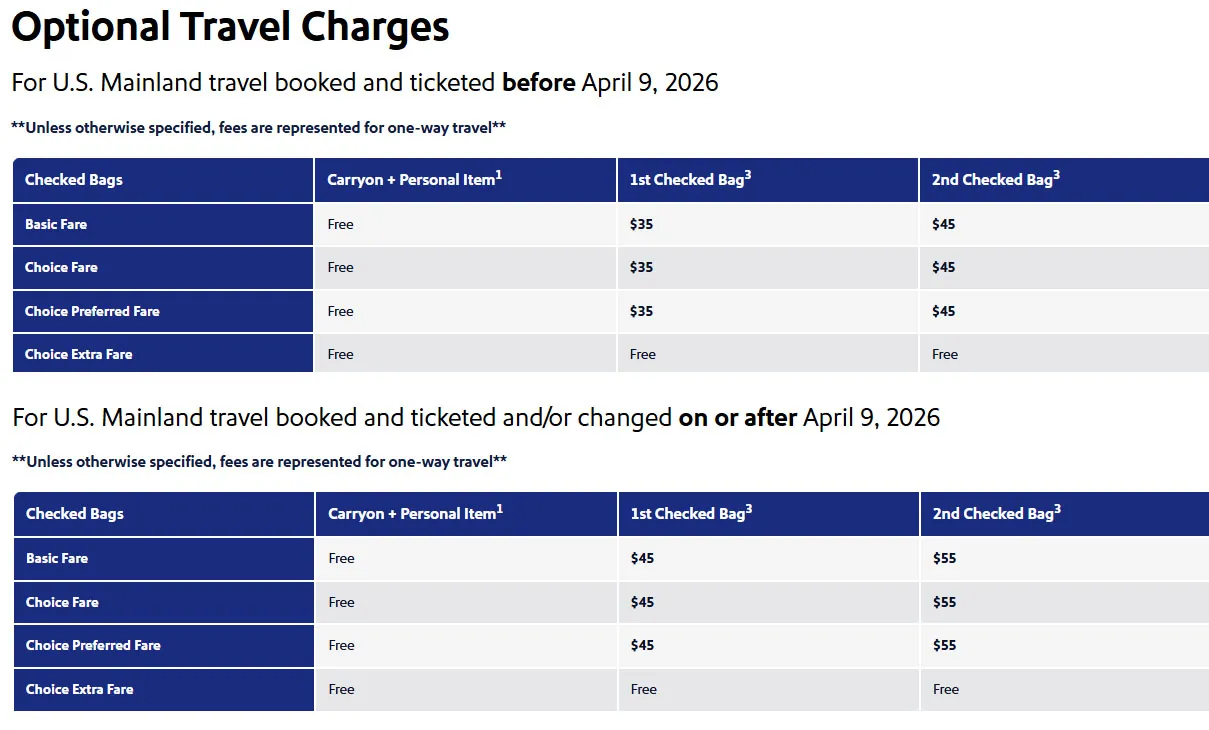
Baggage Policy: 1 Free Personal Item + 1 Free Carry-on. Checked bags start at $45 (New for 2026).
-
Seat Comfort: 31–32" pitch; no assigned seating (open boarding).
-
Pros: Unrivaled change/cancellation policy; generous carry-on rules.
-
Cons: Open seating can be stressful; new checked bag fees increase total travel cost.
-
Bottom Line: The safest bet for unpredictable schedules, provided you don't need a checked suitcase.
2. JetBlue Airways
-
Best For: Comfort-seekers and remote workers who need high-speed WiFi.
-
Average Base Fare: $$$ (Mid-range)
-
Baggage Policy: 1 Free Personal Item. Carry-on included in most fares.
-
Seat Comfort: 32–34" pitch (Industry leading); standard power outlets.
-
Pros: Most legroom in economy; free high-speed WiFi (Fly-Fi) and snacks.
-
Cons: Higher base fares; "Blue Basic" fare is very restrictive.
-
Bottom Line: The closest you’ll get to a premium experience on a budget budget.
3. Breeze Airways
-
Best For: Tech-savvy travelers and residents of mid-sized cities.
-
Average Base Fare: $$ (Budget-friendly)
-
Baggage Policy: 1 Free Personal Item. 1 Free Carry-on for Nicer/Nicest fare; Bundles (Nicer/Nicest) include checked-bags.
-
Seat Comfort: 30–31" pitch (Standard); 2-3 seating layout on A220s.
-
Pros: Many non-stop routes between secondary cities; brand-new, quiet planes.
-
Cons: Small fleet means limited rebooking options if a flight is canceled.
-
Bottom Line: A fresh, high-tech alternative to traditional regional LCCs.
4. Alaska Airlines
-
Best For: West Coast residents and mileage enthusiasts.
-
Average Base Fare: $$$ (Mid-range)
-
Baggage Policy: 1 Free Personal Item + 1 Free Carry-on. Checked bags: $45.
-
Seat Comfort: 31–32" pitch; USB power at every seat.
-
Pros: High operational reliability; excellent customer service.
-
Cons: Limited route network in the Eastern US.
-
Bottom Line: Solid and dependable, especially for transcontinental West Coast flights.
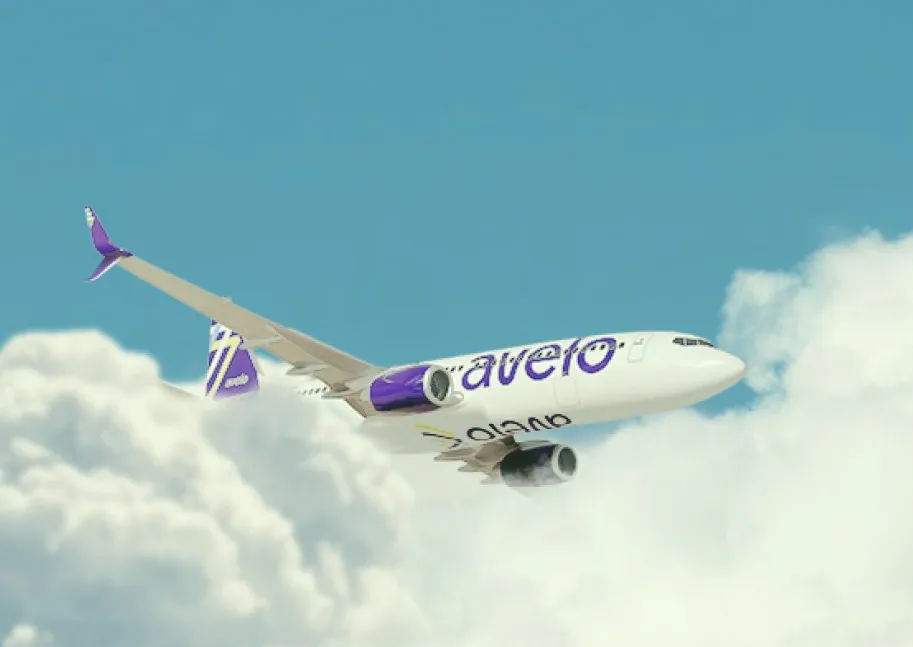
5. Avelo Airlines
-
Best For: Travelers flying out of very small, ultra-convenient regional airports.
-
Average Base Fare: $ (Ultra-low)
-
Baggage Policy: 1 Free Personal Item. Carry-on/Checked bags require a fee.
-
Seat Comfort: 29" pitch; slimline seats.
-
Pros: Extremely low fares; tiny airports mean 5-minute walks from gate to curb.
-
Cons: No WiFi; very infrequent flight schedules.
-
Bottom Line: Perfect for a quick, cheap getaway if you live near one of their niche hubs.
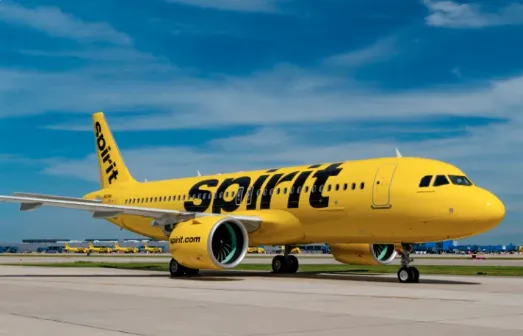
6. Spirit Airlines
-
Best For: Ultra-budget backpackers and short weekend trips.
-
Average Base Fare: $ (Ultra-low)
-
Baggage Policy: 1 Free Personal Item (Strictly enforced). 1 Free Carry-on for Premium Economy & Spirit First. 1 Free checked-bag for Spirit First. All other bags are expensive.
-
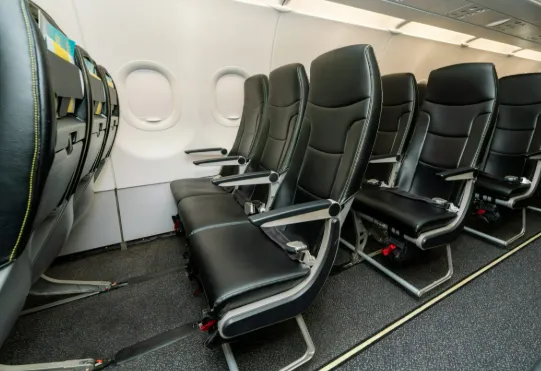
Seat Comfort: 28" pitch (Tight); "Big Front Seat" upgrade available.
-
Pros: Lowest bare fares in the market; "Big Front Seat" is a steal.
-
Cons: Numerous hidden fees; polarizing customer service; 2026 gate fees are high.
-
Bottom Line: Use it as a bus with wings—bring nothing but a backpack and expect no frills.
7. Frontier Airlines
-
Best For: Frequent flyers who can utilize the "GoWild!" Pass.
-
Average Base Fare: $ (Ultra-low)
-
Baggage Policy: 1 Free Personal Item. Heavy fees for carry-on/checked bags.
-
Seat Comfort: 28" pitch; non-reclining "pre-collapsed" seats.
-
Pros: Competitive pricing; GoWild! Pass offers unique value for spontaneous flyers.
-
Cons: Least comfortable seats in the industry; high cancellation risk.
-
Bottom Line: Hard on the back, easy on the wallet—best for short, sub-2-hour hops.
8. Sun Country Airlines
-
Best For: Travelers based in Minneapolis (MSP) or flying to sun-belt destinations.
-
Average Base Fare: $$ (Budget-friendly)
-
Baggage Policy: 1 Free Personal Item. Carry-on/Checked fees are moderate.
-
Seat Comfort: 29–30" pitch; free streaming entertainment to your device.
-
Pros: Friendly "Midwestern" service; reliable seasonal routes to Mexico/Caribbean.
-
Cons: Limited route frequency outside of Minnesota.
-
Bottom Line: A solid, no-nonsense choice for leisure travelers in the North Central US.
9. Allegiant Air
-
Best For: Direct flights from small towns to vacation hubs (Vegas, Florida).
-
Average Base Fare: $ (Ultra-low)
-
Baggage Policy: 1 Free Personal Item. Strict fees for all other luggage.
-
Seat Comfort: 30" pitch; seats do not recline.
-
Pros: Unique non-stop routes from underserved cities.
-
Cons: Often flies to secondary airports far from city centers; no WiFi.
-
Bottom Line: Great for getting from a small town to a beach, but watch the Uber costs from the airport.
10. Hawaiian Airlines
-
Best For: Travelers flying between islands or to the US mainland from Hawaii.
-
Average Base Fare: $$$ (Mid-range)
-
Baggage Policy: 1 Free Personal Item + 1 Free Carry-on.
-
Seat Comfort: 31" pitch; Starlink high-speed WiFi (Free).
-
Pros: Excellent in-flight culture; free meals on long-haul mainland flights.
-
Cons: High inter-island checked bag fees for non-members.
-
Bottom Line: The gold standard for Pacific travel, now upgraded with elite-tier WiFi.
Is the Bundle Worth It? (The Math of 2026 Bundling)
In 2026, budget airlines have moved away from selling individual add-ons toward "Bundling." Spirit has its Go Big/Go Comfy tiers, and Frontier offers The Works. But is the math in your favor?
Understanding "The Bundle"
Instead of paying a base fare and adding a bag later, these bundles pre-package a carry-on, a checked bag, and seat selection.
The "Magic Number" (Break-even Analysis)
Our research shows a clear pattern:
-
If you need BOTH a carry-on and a checked bag: The bundle is almost always 20-25% cheaper than buying them separately.
-
If you only need a backpack: "A-La-Carte" (the base fare) is the undisputed winner.
-
The "Middle Ground" Trap: If you only need one carry-on, the bundle usually costs $10-$15 more than the individual fee. Don't let the "free snacks" in the bundle fool you into overpaying.
The "Early Bird" Trap
The most expensive mistake you can make is waiting.
-
At Booking: A carry-on bag is usually $45-55.
-
At the Gate: That same bag jumps to $99.
-
Conclusion: If you think you might need a bag, buy the bundle at the initial checkout. Buying it later via the app is 30% more expensive, and buying it at the airport is a financial disaster.
Case Study: JFK to LAX (One-Way)
Let’s look at a typical transcontinental flight itinerary under the 2026 pricing structures:
-
Base A-La-Carte Ticket: $89
-
Add-ons purchased separately: Carry-on bag ($59) + Checked bag ($65) + Choice seat selection ($20) = $233 Total Cost
-
The Pre-packaged "Go Comfy" Bundle: Base fare + Carry-on + Checked bag + Seat selection + Blocked middle seat = $175 Total Cost
-
The Math: Choosing the bundle saves you $58 (a 33% discount).
-
The Lesson: If you are traveling heavy, never build your ticket item-by-item. Choose the tier at the start of your booking flow.
Chapter 3: Loyalty Programs & Credit Cards (Maximizing the 10 Carriers)
In 2026, the "budget" experience is defined by how well you shield yourself from fees. Here is which of the 10 airlines' loyalty programs are actually worth your time and the best card pairings for each.
1. The "Must-Join" Loyalty Programs
If you fly these airlines even once a year, join these programs for the following benefits:
-
-
Baggage/Change Perks: Free 1-2 checked-bags. Remains the only airline where everyone gets free changes. Status (A-List) adds free same-day standby and priority check-in.
-
Key Value: Revenue-based points mean no "award charts." If the ticket is cheap, the points cost is low.
-
-
-
Baggage/Change Perks: Mosaic members get two free checked bags (saving $140+ per round trip) and free Even More Space seats at check-in.
-
Refund Flexibility: Cancel flights for free and get credits back instantly, even on "Blue Basic" fares for high-tier members.
-
-
-
Baggage/Change Perks: MVP status holders get free checked bags and complimentary upgrades to Premium Class.
-
The "Partner" Hack: Use Alaska miles to book budget-friendly partner flights across the globe.
-
-
Frontier Miles (The 2026 Status Overhaul):
-
Baggage Perks: Reaching Elite 20k status now unlocks a free carry-on bag for every flight—essentially neutralizing Frontier's biggest hidden cost.
-
Family Value: Elite status allows for "Family Pooling" of miles, making it easier to earn free flights.
-
-
Free Spirit (Spirit Airlines):
-
Baggage Perks: Silver and Gold members get free seat selection and waived shortcut security/boarding fees. Gold members get a free carry-on AND checked bag.
-
2. The "Fee-Shield" Credit Card Strategy
Pairing the right card with these airlines can save you hundreds in baggage and seating fees annually.
|
Airline Pair |
Best Card Choice |
Top Perk for Budget Travelers |
|---|---|---|
|
Southwest |
Southwest Rapid Rewards Priority |
4 Upgraded Boardings per year (Skip the C-Group). |
|
JetBlue |
JetBlue Plus Card |
Free checked bag for you and 3 companions (Saves ~$360 per round trip). |
|
Alaska |
Alaska Airlines Visa® |
Companion Fare (Buy one, get one for $99+ tax) every year. |
|
Spirit / Frontier |
Spirit/Frontier World Mastercard |
Automatic Zone 2 boarding and waived "redemption fees" on award tickets. |
|
Allegiant |
Allways Rewards Visa® Card |
Buy one, get one free on airfare when you book a vacation package. |
3. The "Generic" Strategy: Best for the Other 5
For Avelo, Sun Country, Allegiant, Spirit, and Frontier, unless you are a weekly commuter, an airline-specific card might not be worth the annual fee. Instead, use a General Travel Card:
-
Chase Sapphire Preferred: Earn 2x points on travel. You can "pay" for those pesky $99 Spirit gate fees by erasing them with points later.
-
Capital One Venture X: Access to lounges that budget airlines don't provide, plus a $300 annual travel credit that effectively makes the card pay for itself while you fly the cheapest airlines.
Chapter 4: The 2026 Seat Comfort Rankings (The Battle for Your Knees)
When flying on a budget carrier, space is the ultimate luxury. Even a single extra inch of legroom can mean the difference between a relaxing flight and a painful trip to the chiropractor. We dug into the raw measurements of the 7 major US budget carriers to rank their seats.
1. Hard Seat Data Comparison
|
Airline |
Seat Pitch (Legroom) |
Seat Width |
Recline |
Comfort Verdict (The Hard Truth) |
|---|---|---|---|---|
|
JetBlue |
32" - 34" |
17.8–18.4" |
✅ Yes |
Basically a domestic first-class legroom cheat code disguised as economy. |
|
Southwest |
31–33" (standard) / 34–36" (extra legroom) |
17–17.8" |
✅ Yes |
Spacious and reliable, but boarding feels like a middle school fire drill. |
|
Breeze |
30–31" (Nice) |
18.8" |
✅ Yes |
Extra-wide seats on the whisper-quiet A220 make up for slightly shorter legroom. |
|
Alaska |
31" |
17.0" |
✅ Yes |
A solid, legacy-feeling seat with actual padding that won’t ruin your lower back. |
|
Avelo Airlines |
29-32" |
17.0-17.5" |
❌ No |
Pre-collapsed, stiff seats that remind you exactly how cheap your ticket was. |
|
Spirit |
28" |
17.7-18.5" |
❌ No |
Thin as cardboard and tight enough to make you intimate with your neighbor's elbows. |
|
Frontier |
28-29" |
17.0-18.0" |
❌ No |
Feels like sitting upright on a plastic ironing board—truly a test of human endurance. |
2. Who is the Undisputed Comfort King?
-
🏆 The Winner: JetBlue Airways JetBlue remains unmatched. Their standard 32-to-34-inch seat pitch easily beats what many legacy carriers (like Delta or United) offer in standard economy. Plus, with a generous 18-inch width on their Airbus A321s and A220s, you won't be rubbing shoulders with strangers.
-
💡 The Budget Upgrade Hack: Spirit’s "Big Front Seat" While Spirit's standard economy seats are notoriously cramped, they offer a genius upgrade option. For an extra $40 to $150, you can book the Big Front Seat. Located at the very front of the plane in a 2-2 layout, these are literally domestic first-class leather recliners with a 36" pitch and 18.5" width—easily the best value upgrade in the skies.
3. The 2026 Seat Conspiracy: The Rise of "Slimline" Seats
If you have flown on a budget airline recently, you might have noticed that despite the airline boasting "increased knee clearance," your lower back and tailbone were in agony after an hour. Welcome to the era of Slimline Seats.
Airlines market slimline seats as an engineering victory. By using ultra-thin materials and curving the seatback shell, they carve out an extra 1 to 2 inches of visual knee space. However, this is a calculated trade-off:
-
The Catch: To make the seats so thin, carriers stripped away almost all the traditional polyurethane foam padding.
-
The Reality: Sitting on a slimline seat (found on almost all Frontier, Spirit, and Allegiant planes) is essentially like sitting on a hard molded plastic bench with a thin layer of fabric draped over it. Your knees might not touch the seat in front of you, but your spine pays the ultimate price on flights longer than two hours.
Chapter 5: Passenger Rights & DOT Regulations (The Legal Shield)
In 2026, budget airlines are legally held to a higher standard than ever before, thanks to landmark federal consumer protections. When operational chaos hits, knowing your legal rights is your ultimate insurance policy. Here is how you can use the law as a shield to protect your time and wallet.
1. New DOT Refund Rules: Automatic Cash, No Excuses
For years, budget airlines used strategic friction to lock passengers into expiring "flight credits" or "travel vouchers" when flights were canceled or delayed. Under the federal DOT rules now fully in force:
-
Automatic Cash Refunds: If your airline cancels your flight for any reason and you choose not to accept their rebooking offer, you are entitled to a full cash refund to your original payment method.
-
Significant Delays: If your domestic flight is delayed by more than 3 hours (or more than 6 hours for international flights) and you choose not to travel, you are legally entitled to a cash refund.
-
No Bureaucracy: The refund must be issued automatically within 7 business days if paid by credit card, and 20 business days for other payment methods. You do not have to fill out endless contact forms to initiate this.
-
Delayed Baggage Fees: If your checked bag is not delivered within 12 hours of your domestic arrival (or 15–30 hours internationally), the airline must refund the baggage fee you paid.
-
Unserved Ancillaries: If you paid for add-ons like seat selection, priority boarding, or WiFi and the airline fails to provide them (due to aircraft swaps or cancellations), they must refund those specific fees.
2. How to File an Official DOT Complaint That Gets Results
If a budget airline attempts to bypass these rules by automatically issuing a travel voucher instead of cash, do not spend hours on hold waiting for their customer service.
-
The Portal: Head straight to the official DOT Aviation Consumer Protection Portal (secure.dot.gov/air-consumer-complaint).
-
The Enforcement Effect: Airlines are legally required to acknowledge written complaints within 30 days and provide a formal written resolution within 60 days. Because these metrics are logged federally and affect an airline's operational rating (carrying massive civil penalty risks), airlines handle DOT-routed complaints with maximum urgency.
-
What to document: Keep screenshots of your original itinerary, the delay/cancellation notification text or email, and any conversation transcripts where agents refused cash.
3. Delays and Canceled Flights: The "Interlining" Trap
One of the largest hidden risks of flying budget airlines (ULCCs) lies in their structural network limitations during systemic delays.
-
What is Interlining? Mainline carriers like Delta, United, and American have formal agreements to rebook stranded passengers onto each other's planes during cancellations. If a Delta flight is canceled, they can put you on a United flight to get you to your destination.
-
The Budget Carrier Reality: Ultra-low-cost carriers like Spirit, Frontier, and Allegiant do not participate in interlining. If your Spirit flight is canceled, Spirit cannot book you onto an American Airlines flight. Your only option is to wait for the next open seat on another Spirit flight.
-
The Frequency Threat: If you are flying a niche route that the budget carrier only services twice a week, a single cancellation can strand you for 3 to 4 days.
-
The Survival Strategy: Never fly a ULCC to a high-priority, time-sensitive event (like a wedding, cruise departure, or international connection) unless you have booked a backup option, have travel insurance with independent trip-interruption coverage, or are flying a high-frequency route (such as LGA to ORD) where multiple daily options exist.
Chapter 6: How to Find the Best Deals (Tools & Hacks)
Finding cheap tickets on budget airlines requires navigating beyond basic search algorithms. In 2026, carriers use advanced pricing software to dynamically shift fares by the hour. To secure the absolute lowest fare, you must counter their algorithms with your own tech stack and strategy. (How to Book Cheap Domestic Flights in the USA)
-
Google Flights (The "Explore" Weapon): The Hack: Use the "Explore" map with your destination set to "United States" and dates to "Flexible." You can instantly see nationwide non-stop budget flights under $50 on an interactive map. Toggle "Track Prices" to receive emails when fares reach their historical floor.
-
Skyscanner (The ULCC Aggregator): The Hack: Excellent for finding ultra-low-cost carriers (ULCCs). Skyscanner indexes minor online travel agencies (OTAs) that often undercut direct airline pricing on brands like Spirit or Frontier. Use the "Search Everywhere" tool to find the absolute cheapest getaway.
-
Kayak (The Bundle Hacker): The Hack: The undisputed king of "Hacker Fares." Kayak automatically stitches together two cheap one-way tickets on different airlines (e.g., flying outbound on JetBlue and returning on Southwest) to bypass round-trip price premiums.
-
Hopper (The AI Predictor): The Hack: Unmatched for timing. Hopper's AI tracks trillions of flight paths to tell you simply to "Buy Now" or "Wait" for a price drop. Use their "Price Freeze" feature to lock in a cheap fare for a small deposit while you finalize plans.
-
Southwest’s "Low Fare Calendar" (The Off-Grid Exception): The Hack: Southwest bans major search engines from scraping its real-time prices. You must check Southwest.com directly. Navigate to their "Low Fare Calendar" for an easy monthly grid view to spot $49–$79 base fare sweet spots.
2. The Core Booking Rules
-
The "21-Day Rule": Airlines program their reservation systems to automatically transition fares into higher "fare buckets" at key thresholds: 21 days, 14 days, 7 days, and 3 days prior to departure.
-
The Hack: Purchasing your flight on Day 22 before departure can save you up to 50% compared to Day 20. Once you cross the 21-day mark, you enter corporate and last-minute travel pricing tiers.
-
-
Mid-Week vs. Weekend Travel Costs:
-
The Cheapest Days: Tuesdays and Wednesdays are statistically the cheapest days to fly within the US. Because business commuters travel on Mondays and Fridays, and vacationers travel on Thursdays and Sundays, mid-week flights often have empty middle seats and rock-bottom base fares.
-
The Weekend Premium: Flying on a Sunday or Thursday afternoon can add a premium of $100+ to a standard domestic route.
-
-
Hacker Fares (Mixing and Matching Carriers): Never assume that a round-trip ticket with a single airline is your cheapest option.
-
The Strategy: Search for your journey as two separate one-way tickets on different carriers. For example, you might fly outbound from New York (LGA) to Chicago (ORD) on JetBlue for $59, and return from Chicago to New York on Southwest for $64.
-
Why it Works: Standard OTAs like Kayak and Skyscanner automate this under labels like "Hacker Fares" or "Self-Transfer," allowing you to bypass a single airline's round-trip premium pricing.
-
Chapter 7: Persona-Based Recommendations (The Best Airline for Your Travel Style)
No single budget carrier fits every kind of traveler. Depending on your lifestyle, priorities, and what you carry, your perfect airline match will vary. Here is our customized breakdown for 2026:
1. 🎒The Spring Break Crowd: Best for Groups and Partying
-
Your Match: Frontier Airlines or Spirit Airlines
-
Why: If you are traveling in a large group of college students where the only goal is to get to Miami, Cancun, or Las Vegas as cheaply as possible, ULCCs are unbeatable.
-
The Hack: Split luggage costs. Have one person purchase a single checked bag for the entire group’s heavy items, while everyone else travels with just a strictly sized personal backpack.
- U.S. Spring Break Ultimate Guide
2. 👔 The Remote Worker: Best for On-the-Go Productivity
-
Your Match: JetBlue Airways or Alaska Airlines
-
Why: You need reliable infrastructure. JetBlue offers free gate-to-gate high-speed "Fly-Fi" and standard power outlets at every seat, while Alaska boasts highly reliable power grids and excellent West Coast networks.
-
The Hack: Book JetBlue’s standard economy instead of "Blue Basic" to ensure you board earlier and secure overhead bin space for your delicate laptop bag.
3. 👨👩👧👦Family Vacationers: Best for Disney and Beach Resorts
-
Your Match: Breeze Airways or Allegiant Air
-
Why: Families with young children need to minimize layovers and avoid sprawling, stressful hub airports. Breeze and Allegiant specialize in point-to-point direct routes from secondary airports (like Hartford or Provo) directly to vacation magnets like Orlando, Tampa, and Las Vegas.
-
The Hack: Spend the extra money on Breeze's "Nicer" bundle. It includes seat selection so your family is guaranteed to sit together, avoiding the stressful boarding scrambles of open-seating carriers.
4. 🐶Pet Owners: Ranked by Pet Cabin Fees
If you are traveling with a small dog or cat in the cabin, budget carrier fees can easily double the cost of your ticket. Here is how they stack up in 2026:
-
Southwest Airlines ($95 each way): The cheapest pet fee among LCCs, with a relatively generous under-seat area.
-
Alaska Airlines ($100 each way): Highly reliable service and clear rules.
-
JetBlue Airways ($125 each way): High-quality pet program (JetPaws) but slightly more expensive.
-
Spirit / Frontier ($125 each way): Extremely strict carrier size checks at the gate. If your pet carrier doesn't slide completely under the seat, they will deny boarding.
- Pet Travel Guide
Chapter 8: FAQ
Q1: Is Southwest still free for 2 checked bags in 2026?
A: No. Under their major 2026 policy overhaul, Southwest has introduced a $45 checked bag fee for their lowest "Wanna Get Away" fare class. To get free checked bags, you must now purchase their higher "Wanna Get Away Plus" or "Anytime" fares. However, they remain the only LCC that offers a free carry-on and free seat selection for all ticket tiers.
Q2: Can I fit a standard school backpack into Spirit’s personal item sizer?
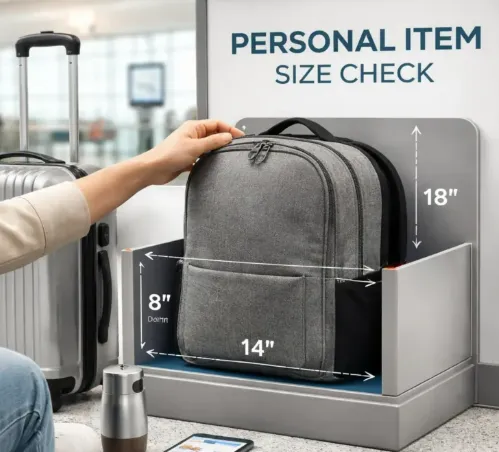
A: Yes, but only if you don't overpack it. Spirit’s personal item dimensions are 18 x 14 x 8 inches (45 x 35 x 20 cm). A standard, moderately packed school backpack will fit easily. However, if you pack it so tightly that it bulges, or if it has external wheels and rigid frames, it will fail the sizer test, resulting in an immediate $99 gate penalty.
Q3: What happens if I miss my connecting flight on an ultra-low-cost airline?
A: Because ULCCs (like Spirit, Frontier, and Allegiant) do not have "interline agreements" with legacy carriers, they cannot put you on a Delta or United flight. If you miss your connection, you will be placed on the next available flight of that specific airline, which might not be for another 24 to 72 hours depending on their weekly schedule.
Q4: Which US budget airline has the fastest and most reliable in-flight WiFi?
A: JetBlue is the undisputed champion, offering free high-speed "Fly-Fi" to every single passenger. Hawaiian Airlines is a close second, offering free high-speed Starlink satellite WiFi on their transpacific flights.
Q5: Are there hidden fees for checking in at the airport?
A: Yes! Spirit and Frontier charge $10 to $25 just to have an agent print your boarding pass at the airport desk. To completely bypass this fee, always check in on the airline’s mobile app 24 hours prior to departure and use the digital boarding pass on your phone.
Q6: How do I avoid hidden fees on budget airlines?
A: The easiest way to avoid hidden fees on carriers like Spirit or Frontier is to travel with only a small "personal item" (like a backpack that fits under the seat in front of you), decline advance seat selection, and print your boarding pass at home or use the airline's mobile app.
Q7: Are budget airlines safe to fly?
A: Yes. All commercial airlines in the United States, including Ultra-Low-Cost Carriers (ULCCs) like Allegiant, Spirit, and Frontier, must adhere to the exact same strict Federal Aviation Administration (FAA) safety regulations and maintenance standards as major carriers like Delta or United.
Conclusion: Final Checklist Before You Click "Buy"
Before you finalize your booking and enter your credit card number on any budget airline website, go through this rapid-fire 3-step checklist to ensure your cheap flight doesn't turn into an expensive nightmare:
-
Measure Your Bag: Literally pull out a tape measure. Make sure your backpack fits within the personal item dimensions (especially on Spirit and Frontier) to avoid the dreaded $99 gate fee.
-
Download the App Now: Do not wait until you get to the airport. Download the airline's app, check in exactly 24 hours prior, and pre-purchase any bags you absolutely need to secure the lowest rate.
-
Check the Arrival Airport: Confirm the distance of the destination airport from your final landing spot. Saving $30 on a ticket to secondary airports like Orlando Sanford (SFB) or Phoenix-Mesa (AZA) is not worth it if you end up spending $90 on an Uber to get into the city center.