Traveling internationally with a beloved pet can be both exciting and stressful. For many pet parents, the thought of flying a dog or cat to the United States raises dozens of questions: What paperwork is required? How do airlines handle pets? What health regulations must be met? And most importantly, how can you ensure your furry friend’s journey is safe and comfortable?
This guide is designed to answer all of these questions and more, providing a step-by-step roadmap for 2026. Whether you are relocating, returning from an extended stay abroad, or bringing your new puppy or kitten home, this guide will help you navigate the complex intersection of federal regulations, airline policies, and practical travel tips.
📌 Quick Checklist for Flying Pets to the USA (2026)
-
Microchip First: All dogs must have a 15-digit ISO-compliant microchip implanted before their rabies vaccination.
-
Age Requirement: Dogs entering the U.S. from any country must be at least 6 months old.
-
CDC Dog Import Form: Mandatory for all dogs. You must submit this digital form online and receive a receipt before boarding.
-
High-Risk Countries: If your dog has been in a high-risk rabies country in the past 6 months, you need a valid Rabies Serology Titer test or face a 28-day quarantine.
-
Airline Embargoes: Many airlines will not transport pets in the cargo hold if temperatures exceed 85°F (29°C) at any point during the journey.
Why 2026 Is Different
The rules for bringing pets to the U.S. are constantly evolving. In 2026, several updates make compliance more critical than ever:
-
CDC (Centers for Disease Control and Prevention) updated dog import rules and now requires digital submissions.
-
USDA (United States Department of Agriculture) oversees International Health Certificates (IHC) with official endorsements.
-
Airlines have stricter temperature and seasonal embargoes, especially during summer.
-
Digital microchip scanning and updated documentation processes are changing how pets travel.
Who This Guide Is For
This guide is specifically tailored for:
-
Privately owned dogs and cats traveling on passenger flights to the continental United States.
-
Pet parents who want a safe, legal, and stress-free travel experience.
-
Anyone seeking clear instructions on CDC and USDA compliance, airline rules, and practical tips for crate training, pre-flight prep, and airport navigation.
CDC, Centers for Disease Control and Prevention — the US federal agency that regulates dog import health requirements.
USDA, United States Department of Agriculture — oversees official health certificate (IHC) endorsements for pets.
This guide is for privately owned dogs and cats flying to the continental United States. It is not for commercial shipments, exotic pets, military moves, or travel to territories like Hawaii or Guam.
As a pet parent who has navigated these rules firsthand, I’ve designed this guide to help you plan, prepare, and travel safely with your pet, from booking flights to the first 24 hours in a new home.
Chapter 1: Flying with Pets to the USA: Cabin vs Checked Baggage vs Cargo Explained
Understanding the distinction between these three transport modalities is critical for both animal safety and logistical success.
1.1 Comparison: In-Cabin vs. Checked Baggage
|
Feature |
1.1 In-Cabin (Carry-On Pets) |
1.2 Checked Baggage (Excess Baggage) |
|---|---|---|
|
Placement |
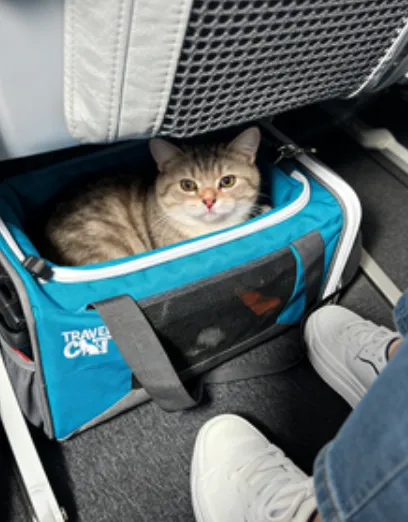
Under the seat in front of you. |
Climate-controlled section of the cargo hold. |
|
Pet Size |
Small pets only (must stand/turn in carrier). |
Medium to large pets (up to ~100 lbs total). |
|
Weight Limit |
Combined ~20–25 lbs (9–11 kg). |
Varies by airline (often up to 100 lbs). |
|
Carrier Type |
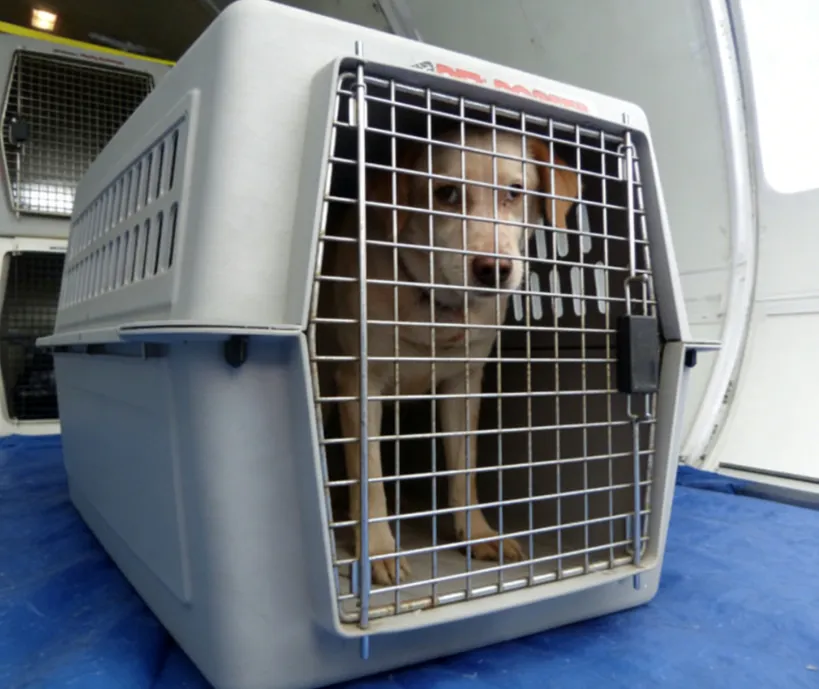
Soft-sided (leak-proof, ventilated, Sherpa), e.g., 18" x 11" x 11" |
Hard-sided (IATA-compliant, metal bolts). |
|
Availability |
Most major and budget airlines. |
Increasingly restricted (restricted on regional jets). |
|
Climate Risks |
Low (cabin is climate-monitored). |
High (subject to "Heat Embargoes" May-Sept). |
|
Breed Limits |
Usually few restrictions for small breeds. |
Strictly banned for snub-nosed breeds. |
|
Supervision |
Direct supervision by owner. |
No access during flight. |
1.2 Non-Negotiable Rules for Checked Baggage and Cargo Pets
The rules below combine regulatory minimum requirements and airline enforcement realities. Failure to meet either category may result in denial of transport.
| Category | Requirement | What It Means in Practice |
|---|---|---|
| Regulatory Minimums(Legal Baseline) | Minimum age & weaning | Dogs and cats must be at least 8 weeks old and weaned for at least 5 days before transport. |
| Crate & container standards | Transport containers must meet minimum standards for size, ventilation, strength, sanitation, and safe handling.(Exact specifications depend on airline and IATA rules.) | |
| Feeding & watering (under 16 weeks) | Puppies or kittens under 16 weeks must receive food and water if total transport time exceeds 12 hours. | |
| Feeding & watering (adults) | Adult pets must be fed at least once every 24 hours and watered at least once every 12 hours. Written (paper) instructions must be attached to the crate. | |
| CDC dog import rules (U.S.) | Dogs entering the U.S. must be 6 months or older, microchipped, and have a valid rabies vaccination administered after microchip implantation. | |
| Enforcement Realities(Common Denial Triggers) | Hard-sided crate only | Soft-sided carriers are never accepted for checked baggage or cargo, regardless of size. |
| One pet per crate | Adult dogs and cats must travel individually. Exceptions for young littermates are rare and airline-specific. | |
| No sedation allowed | Sedated pets may be denied boarding. Most airlines prohibit tranquilizers under AVMA guidance. | |
| Breed, size & physical limits | Snub-nosed breeds and oversized pets are often restricted or banned, especially in cargo. | |
| Temperature & ground handling limits | Typical thresholds are around 85°F (29°C) max and 45°F (7°C) min. Conditions are checked on the day of travel, including transit airports. | |
| Document validity at check-in | All documents must be original, accurate, and valid on the travel date, not the booking date. | |
| Approval ≠ acceptance | Prior approval does not guarantee transport. Airlines re-evaluate pets, crates, aircraft, and conditions at the airport. |
1.3 Manifest Cargo
The pet travels as a formal shipment under an Air Waybill (AWB), often on a separate flight or through a dedicated cargo terminal.
-
When Cargo is Mandatory: Cargo is required if the pet is traveling alone, if the pet and crate exceed 100 lbs (45 kg), or if the airline's policy mandates it for specific international routes (e.g., arrivals into certain high-scrutiny POEs).
-
Unaccompanied Pets & Large Breeds: This is the only viability option for giant breeds (Great Danes, Mastiffs) that require custom-built crates.
-
Cargo Agents vs. Airline Divisions: You can book directly through an airline's cargo department (e.g., AA Cargo) or use a Third-Party IPATA Agent. Professional agents are highly recommended for cargo shipments as they handle the complex terminal-to-terminal handoffs and customs brokerage.
1.4 Service Dogs vs. Emotional Support Animals (ESAs)
The legal definition of assistance animals has stabilized under strict DOT guidelines.
-
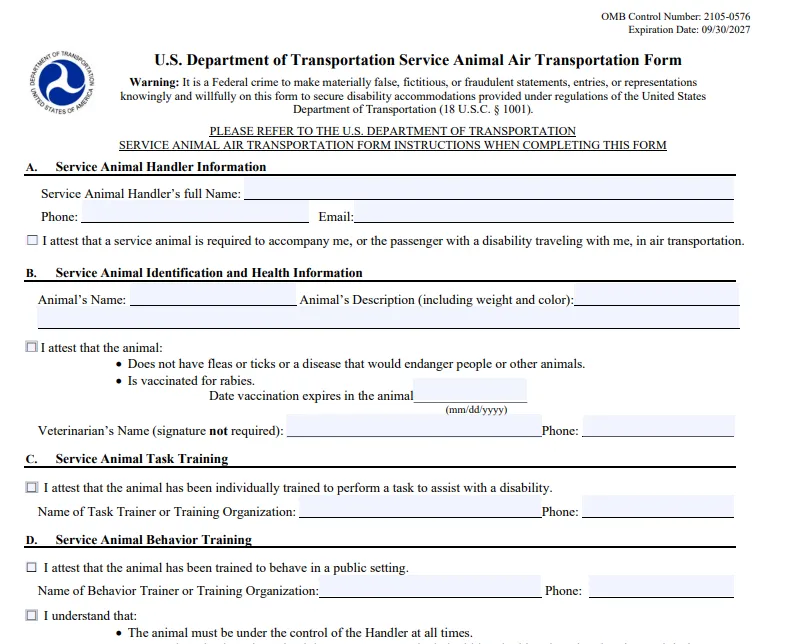
DOT Legal Definition: A "Service Dog" is defined solely as a dog individually trained to do work or perform tasks for the benefit of an individual with a disability.
-
The End of ESAs: As of 2021, and reinforced in 2026, Emotional Support Animals (ESAs) are no longer recognized as service animals under the Air Carrier Access Act. They must travel as regular pets subject to all fees, size limits, and crate requirements.
-
Required Documentation: For service dogs, airlines require the U.S. DOT Service Animal Air Transportation Form. This form attests to the dog's health, training, and behavior. For flights over 8 hours, a DOT Service Animal Relief Form may also be required to certify the dog can "hold it" or relieve itself in a sanitary manner.
Chapter 2: CDC and USDA Pet Import Requirements & Timeline for the USA (2026 Updates)
The regulatory landscape for pet importation is divided into two distinct streams: canine and feline. While the CDC focuses heavily on rabies prevention in dogs, the USDA ensures the general health and welfare of all animals. While Dogs face rigorous CDC digitized screening, Cats are governed primarily by general health and safety standards.
2.0 The Compliance Foundation
Regardless of your destination, successful pet transport is built on three pillars. Failure in one often invalidates the others.
-
Identity (The Microchip): A 15-digit ISO-compliant chip. Crucial Rule: The chip must be implanted (or at least scanned/verified) before the rabies vaccine is administered.
-
Protection (Rabies Vaccination): Mandatory for all Dogs. For Cats, while not federal mandatory by CDC, it is effectively mandatory because most airlines and US State Laws require it.
-
Authentication (The Health Certificate): A government-endorsed document (IHC or CVI) verifying the pet's fitness for travel.
Species-Specific Regulatory Differences (2026)
|
Requirement |
Dogs |
Cats |
|---|---|---|
|
Mandatory (Digital Receipt) |
Not Required |
|
|
Rabies Vaccination |
Mandatory (Federal Law) |
Mandatory (Airline/State Law) |
|
FAVN (The Fluorescent Antibody Virus Neutralization) Titer Test |
Required from High-Risk Countries |
Generally Not Required |
|
Port of Entry (POE) |
Limited to specific CDC airports (for high-rick countries) |
Open to any International Airport |
2.1 Scenario A: International Import (Entering the USA)
Governed by the CDC (for Dogs) and USDA/CBP (for Cats & Dogs).
Understanding CDC Risk Classifications
Before examining document requirements, you must determine your dog's classification based on the CDC's updated 2026 country list:
-
No-Risk or Low-Risk Countries: Countries where dog rabies is controlled or eliminated (e.g., Canada, Mexico, EU nations, Japan). Entry requires the CDC Dog Import Form and general health certification.
-
High-Risk Countries: Countries where canine rabies is still endemic. Examples of high-risk regions include China, Brazil, Vietnam, Thailand, Egypt, and South Africa. This classification depends on where the dog has been in the past 6 months. If your dog has spent any time in a high-risk country within the last 180 days, you must follow the "High-Risk" protocol regardless of the dog's origin or citizenship.
To find out if a country is dog rabies-free or low-risk, check this website. Only high-risk countries are listed on the website. If the country is not listed on the website, it is considered a dog rabies-free or low-risk country.
Table 1: Entry Requirements for Dog & Cat
Use the table below to identify which documents apply to your dog and when each must be prepared.
| Requirement / Document | Species | Low-Risk or Rabies-Free Countries | High-Risk Countries(U.S.-Vaccinated Dogs) | High-Risk Countries(Foreign-Vaccinated Dogs) | Timeline / Validity | Key Notes / Common Pitfalls |
|---|---|---|---|---|---|---|
| CDC Dog Import Form | Dog only | Required | Required | Required | Valid for 6 months from issuance, provided dog details (microchip, photo & more) and arrival airport remain unchanged | Must be completed online. Changes to route, airport, or dog info require a new form. |
| Minimum age | Dog | No CDC minimum | ≥ 6 months | ≥ 6 months | Age assessed on the day of U.S. entry | Airlines may impose stricter age limits regardless of CDC rules. |
| Microchip | Dog & Cat | Required | Required | Required | Permanent; must be implanted before rabies vaccination | Vaccines given before microchipping are considered invalid for U.S. entry. |
| Rabies vaccination proof | Dog | Not required by CDC | U.S.-issued rabies certificate (USDA-endorsed) [Check USDA-accredited veterinarian]] | Foreign rabies certificate (government-endorsed) [Check Documents for Veterinarians to Complete for Importing a Dog into the U.S.] | Must be valid on the date of entry | Must be administered after microchipping. Initial dose must be at least 28 days before entry. Dogs must be at least 6 months old. |
| International Health Cert (IHC) |
Cats & Dogs | Required | Required |
Required |
Issued within 10 days | Must be signed by an officially recognized vet and include ISO microchip number. Essential to avoid quarantine for symptomatic pets.[Check U.S. Department of Agriculture (USDA)-accredited veterinarian] |
| Rabies serology (titer) | Dog | Not required | Not required | Required unless quarantining. [Check CDC-approved laboratory] | Blood draw ≥ 30 days after first valid rabies vaccine and ≥ 28 days before entry | Only CDC-approved laboratories are accepted. |
| CDC-registered animal care facility reservation | Dog | Not required | Not required | Required. [Reserve the dog’s spot at CDC-registered animal care facility] | Valid only for the listed arrival date and port | Airlines will deny boarding without proof of reservation. |
| Health status on arrival | Dog & Cat | Must appear healthy | Must appear healthy | Must appear healthy | Evaluated at time of arrival | Ill or injured animals may be denied entry regardless of paperwork. |
| Document language | Dog | English recommended | English | English or certified translation | Must be valid at time of travel | Airlines often reject documents they cannot read, even if CBP might accept them. |
Documents must be both correct and correctly timed.
A valid document issued too early—or too late—may be treated as invalid.CDC rabies import requirements apply to dogs only.
Cats are not subject to CDC dog rabies rules, but airlines and U.S. states may require proof of vaccination or health certificates.
USDA-endorsed export health certificates issued after July 31, 2025, are no longer accepted for re-entry into the United States.
The Certification of U.S.-Issued Rabies Vaccination form may no longer be issued retroactively after a dog has departed the United States.
Table 2: Travel Timeline by Dog Category
🟦 U.S.-Vaccinated Dogs Returning from High-Risk Countries
| Timeline | Required Actions |
|---|---|
| 60+ days before travel | Verify microchip → Ensure rabies vaccine is valid → Start airline booking |
| 30 days before leaving U.S. | USDA-accredited vet completes Certification of U.S.-issued Rabies Vaccination Form → Get USDA endorsement → Print 3 copies |
| Week of return | Finalize airline arrangements → Complete CDC Dog Import Form |
| Day of return | Arrive at CDC-approved port → Present CDC receipt + USDA-endorsed rabies form to airline & CBP |
🟨 Foreign-Vaccinated Dogs from High-Risk Countries
| Timeline | Required Actions |
|---|---|
| 60+ days before travel | Microchip → Rabies vaccination → Start airline booking → (Optional) Rabies titer (≥30 days post-vaccine) |
| 30 days before travel | Complete Certification of Foreign Rabies Vaccination & Microchip Form → Government vet endorsement → Reserve CDC-registered animal care facility |
| Week of travel | Finalize airline arrangements → Complete CDC Dog Import Form → Print 2–3 copies of all documents |
| Day of arrival | Present CDC receipt + vaccination form + facility reservation to airline & CBP |
| After arrival | Follow CDC facility instructions → Quarantine if required → Final release |
Three rules that cause most rejections:
-
Microchip must be implanted before rabies vaccination
-
Dogs from high-risk countries must be at least 6 months old
-
Foreign-vaccinated dogs without a valid titer must quarantine
[More information about bringing a pet from another country into the United States (Import)]
[Check details for other species]
Need more details? Scroll down to the Appendix at the end of the document: CDC Document Explanations (Plain English) section for more details.
2.2 Scenario B: Domestic Travel (Within the USA)
Governed by State Ag Departments and Airlines.、
Required Documents & Compliance
|
Core Document |
Species |
Risk Level |
Timeline / Validity |
Expert Tips & Notes |
|---|---|---|---|---|
|
Certificate of Vet Inspection (CVI) |
Cats & Dogs |
All |
Issued within 10 days of travel |
Standard interstate health form. Some states (e.g., CA) have specific entry laws. Note that airlines are often stricter than states—if CVI is on day 11, you may be denied boarding. [Find a USDA-Accredited Veterinarian To Complete My Animal's Health Certificate] |
|
Rabies Vaccination Certificate |
Cats & Dogs |
All |
Must be current |
While not always checked at state borders, it is mandatory for airline check-in. Keep the physical tag on the collar at all times during transit. Must be filled by USDA-accredited veterinarian [Check USDA-accredited veterinarian] |
|
Airline Pet Reservation |
Cats & Dogs |
All |
Reserve 30 days prior |
Limited pet slots per aircraft (usually 2-6). Must call to add pet to the PNR; cannot be reliably done online. |
|
Acclimation Certificate |
Cats & Dogs |
Baggage/Cargo |
Issued within 10 days |
Needed if traveling in the hold when temperatures are between 20°F and 45°F. Vets must certify the pet's ability to withstand lower temps. |
Timeline
-
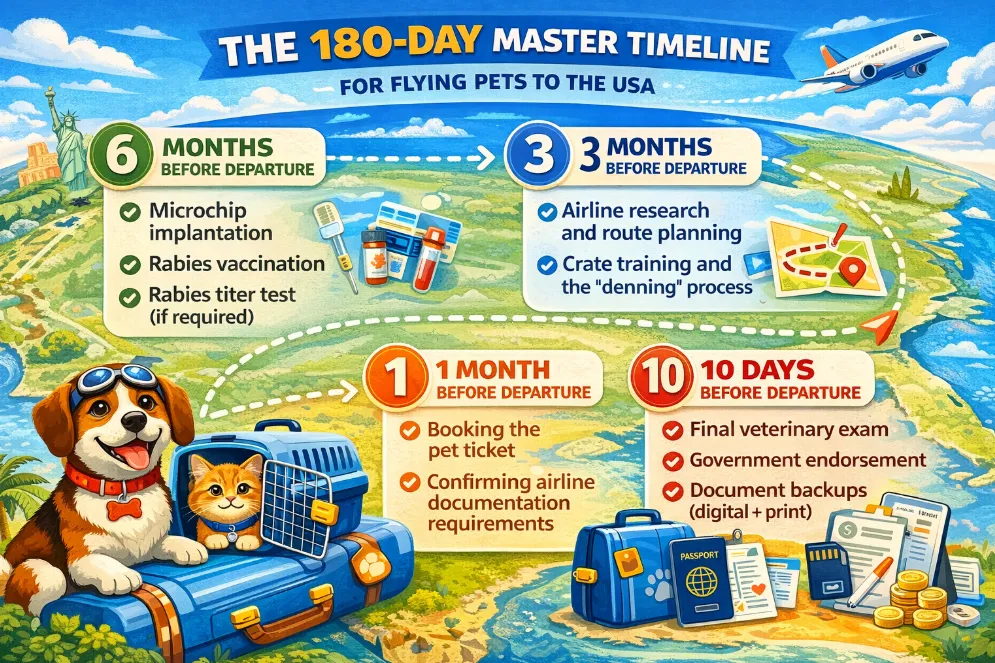
6 Months Out: Vaccination Check. Ensure Rabies and core "Distemper/Parvo" boosters are current. Airlines are strict; ensure records match microchip.
-
3 Months Out: Route & Slot Booking. Call the airline to add a "Pet Request" to your reservation. Slots fill up fast. "Cabin" slots are very limited.
-
30 Days Out: State Law Research. Check the Dept. of Ag website for your destination state. Special attention to Hawaii or California requirements.
-
10 Days Out: Veterinary Exam. Visit a USDA-accredited vet to obtain the CVI. Valid for 10 days only for most airlines.
-
3 Days Out: Equipment Verification. Confirm crate/carrier meets IATA or airline specs. Check for metal bolts and no-spill bowls.
-
Travel Day: Early Check-in. Arrive 3+ hours early. Present the CVI at the ticket counter. Mandatory for pets in the cargo hold.
[See APHIS interstate regulations for details]
[More information about bringing a pet cat (domestic) into the United States]
[Check details for other species]
2.3 Scenario C: International Export (Leaving the USA)
Governed by the Destination Country's Ministry and USDA APHIS Endorsement.
Required Documents & Compliance
|
Core Document |
Species |
Risk Level |
Timeline / Validity |
Expert Tips & Notes |
|---|---|---|---|---|
|
Rabies Vaccination Cert |
Cats & Dogs |
All |
Valid for 1-3 years |
Must be current and issued after microchipping. Most countries require the vaccine to be at least 21-30 days old before entry. Must be filled by USDA-accredited veterinarian [Check USDA-accredited veterinarian] |
|
Destination Health Cert |
Cats & Dogs |
All |
Defined by destination (often 10 days) |
Country-specific form (e.g., EU Annex IV). Often requires translation into the destination's official language. |
|
USDA APHIS Endorsement |
Cats & Dogs |
All |
Must be dated after health exam |
The mandatory federal "Blue Stamp." Most countries will deny entry without this physical or digital authentication. [Find a USDA-Accredited Veterinarian To Complete My Animal's Health Certificate] |
|
Import Permit |
Species Dependent |
Variable |
Valid for 30–90 days |
Required for many Asian, Oceanic, and Island nations. Must be applied for months in advance of the flight. |
|
FAVN Titer Test Results |
Cats & Dogs |
High (Rabies-Free) |
Usually valid for 1–2 years |
Crucial for "Rabies-Free" zones like Japan, UK, or Australia to avoid long mandatory quarantine periods. |
Timeline
-
6 Months Out: Export Research. Check if destination is "Rabies-Free" (e.g., Japan, UK). Start FAVN Titer tests immediately to avoid quarantine.
-
3 Months Out: Import Permit. Apply for a permit from the destination government. Can take 4-8 weeks to process.
-
30 Days Out: VEHCS Preparation. Ensure vet has access to the USDA digital portal. Verify microchip is ISO-compliant (15 digits).
-
10 Days Out: Official Health Exam. Have your vet issue the formal Export Health Cert. Timing is crucial; must be within the destination's window.
-
3-5 Days Out: USDA Endorsement. Submit the certificate to USDA APHIS. Use VEHCS for faster turnaround.
-
Travel Day: Document Portfolio. Carry original endorsed cert + 3 copies. Present to both airline and destination customs.
2.4 Service Animals (Legal Nuances & ADA Compliance)
Service dogs are afforded civil rights protections under the Americans with Disabilities Act (ADA) and the Air Carrier Access Act (ACAA), yet they must still comply with federal health and safety mandates.
|
Core Document |
Scope |
Requirement Detail |
Compliance Note |
|---|---|---|---|
|
Airline/Flight |
Attests to training, health, and behavior. |
Must be submitted at least 48 hours before departure. |
|
|
Federal Entry |
Mandatory digital filing (same as pets). |
No disability exemption for CDC health mandates. |
|
|
Relief Attestation |
Flights >8hrs |
Owner certifies dog can relieve itself sanitarily. |
Necessary to avoid being offloaded or restricted to cargo. |
-
Public Access Rights: Unlike pets, service dogs must be permitted in all areas of the airport and cabin without a fee, provided they are under control.
-
The CDC Exception: While airlines waive pet fees, the CDC does not waive health requirements. A service dog from a high-risk country must still follow the Titer test or quarantine protocols.
-
ESA Status Reminder: It is critical to note that Emotional Support Animals (ESAs) are no longer granted special status. Under current ACAA regulations, ESAs are legally classified as standard "Pets." They are subject to all standard airline fees, must fit within a carrier under the seat, or travel in the cargo hold, and enjoy no ADA/ACAA public access exemptions.
2.5 Essential Preparation Checklist for Pet Owners
Before heading to the airport, ensure these practical logistical details are finalized to prevent "operational failure" at the gate.
-
Nutritional Management: Fast your pet for 6–8 hours before the flight to prevent motion sickness, but maintain full access to water until boarding. For cargo pets, attach a small bag of their regular food to the outside of the crate for emergency delays.
-
Weather & Embargo Verification: Check the 24-hour forecast for your origin, hub, and destination. If temperatures exceed 85℉ (29°C), most airlines will trigger a "Heat Embargo," and your pet will be denied boarding in the hold.
-
The "10-Day" Health Window: Ensure your Certificate of Veterinary Inspection (CVI) or International Health Certificate (IHC) is issued within 10 days of your flight. Airlines are far stricter than state governments on this timeline.
-
USDA Endorsement Check: For international flights, the "Blue Stamp" from USDA APHIS must be physically present or digitally verified in VEHCS. A vet signature alone is insufficient for export.
-
Compliance Over Comfort: Prioritize a crate that meets IATA safety standards (metal bolts, no-spill bowls) over a "pretty" carrier. Safety at $35,000$ feet depends on structural integrity, not aesthetics.
Chapter 3: IATA Pet Crate and Carrier Requirements for US Flights
Structural compliance of the pet's container is a primary safety requirement. Airlines do not merely suggest these rules; they enforce them under IATA Live Animals Regulations (LAR).
IATA (International Air Transport Association) is a global organization for airlines. It helps make air travel safer, easier, and more efficient by setting industry rules, coordinating flights, and managing things like airport and airline codes. Basically, it’s the group that keeps the airline world running smoothly behind the scenes.
3.1 Hard-Sided Crates (Cargo & Checked Baggage)
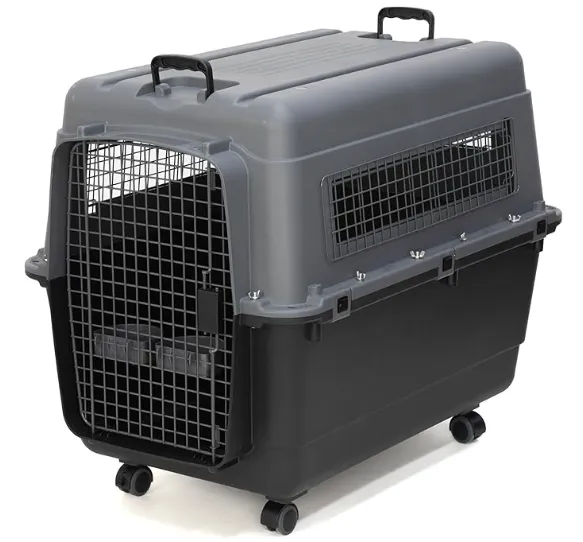
For pets traveling in the hold, the crate is the only protection against the hazards of transit.
-
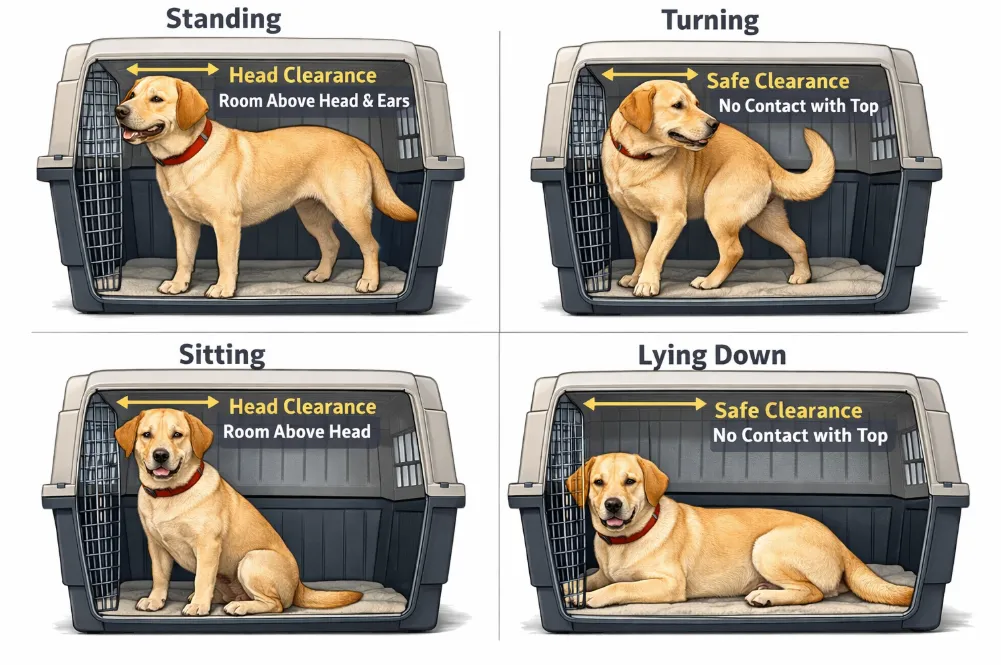
The Golden Rule of Sizing: The animal must be able to stand, turn 360 degrees, sit, and lie down in a natural position. Crucially, the pet’s head or ear tips must not touch the ceiling of the crate while standing.
-
Structural Fasteners: Only metal nuts and bolts are acceptable for joining the top and bottom halves of the crate. Plastic "snap" latches or simple twist-locks are prohibited as they can fail upon impact or vibration.
-
Ventilation: IATA requires ventilation on at least three sides for domestic flights and four sides for international transit. Total ventilation area must comprise at least 16% of the surface area of the four sides.
-
Mandatory Labeling: The crate must bear a bright green or red “Live Animal” sticker and “This Side Up” arrows. A duplicate of the owner's 24-hour emergency contact and the pet's final destination must be attached in a waterproof pouch.
3.2 Soft-Sided Carriers (In-Cabin)
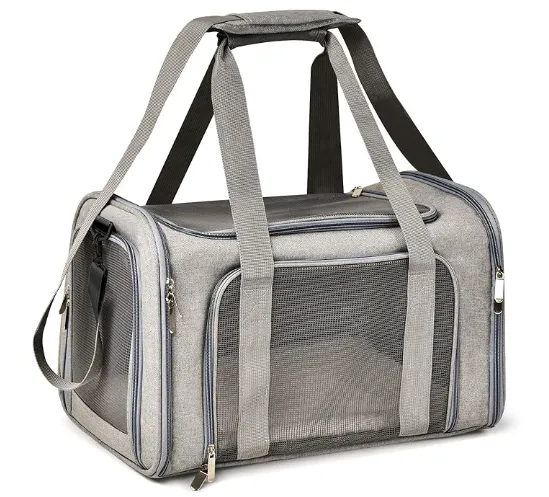
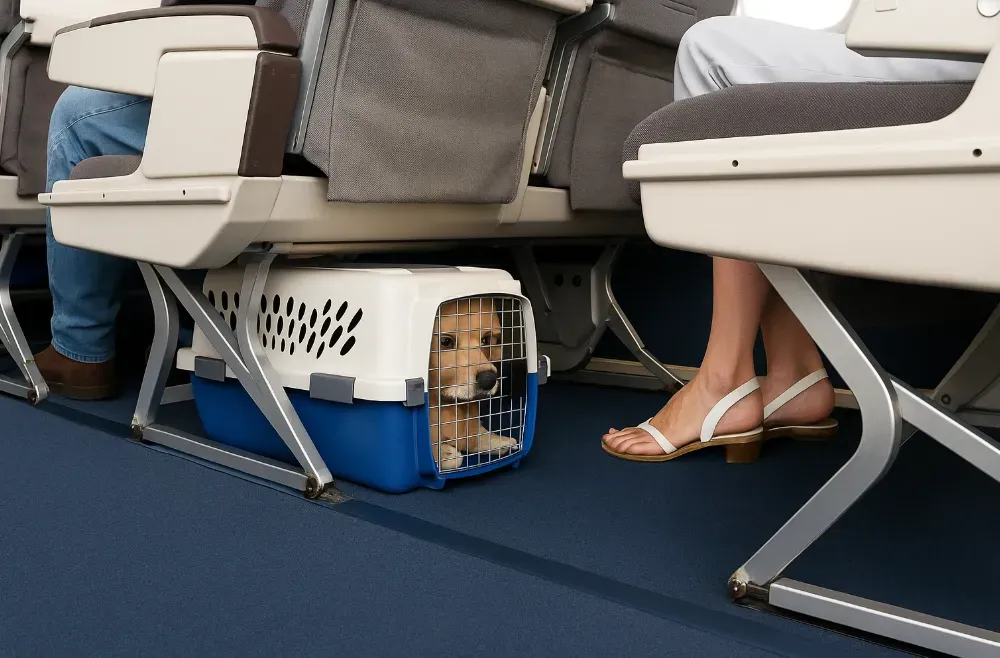
While less structurally rigid, soft-sided carriers are subject to intensive "visual fit" inspections at the gate.
-
Under-Seat Dimension Limits: These vary by aircraft. A typical limit is 18" x 11" x 11". Note that seats in "Economy Plus" or "Premium" sections often have less under-seat space due to footrests or larger entertainment boxes.
-
The “Box Test” Problem: Modern planes often have entertainment power boxes occupying 30-50% of the under-seat area. If your carrier hits this "box" and cannot be safely positioned, the airline may offload you for a safety violation.
-
Expansion Panels: While "expandable" carriers are popular, the panels must remain closed during taxi, takeoff, and landing. Do not rely on expansion panels to meet the basic sizing requirements of the airline.
3.3 Essential Accessories
Every container must be equipped with specific tools to maintain the animal's physiological stability.
-
No-Spill Water Bowls: Two bowls (one for food, one for water) must be attached to the inside of the door. They must be refillable from the outside (via a funnel or tube) so staff can provide hydration without opening the door.
-
Absorbent Bedding: The floor must be lined with absorbent material (puppy pads, shredded paper, or specialized vet-bedding). Loose blankets or towels are discouraged in the hold as they can bunch up and prevent the animal from standing or lying naturally.
-
Familiar Scent Items: * Allowed: A small t-shirt or cloth with the owner's scent, provided it is small enough not to pose a strangulation or ingestion risk.
-
Prohibited: Large toys, hard bones, or anything that could become a projectile or a choking hazard during turbulence.
-
Chapter 4: Choosing an Airline for Flying Your Dog or Cat to the USA
In 2026, airline selection is no longer about "perks" but about operational viability. Each carrier interprets federal safety standards differently.
4.1 Major US Airlines Comparison Matrix
|
Airline |
In-Cabin Species |
In-Cabin Fee |
Max Carrier Size (Sherpa Soft-Sided) |
Cargo/Checked Hold Policy |
Cargo/Checked Hold Fee |
Notes & Restrictions |
|---|---|---|---|---|---|---|
|
Alaska Airlines |
Small Dogs, House Cats, Rabbits, Household Birds |
$100 |
17" x 11" x 9.5" |
Checked Baggage & Cargo (Max 150 lbs) Weigh 151 pounds or more visit Pet Connect™ service |
$200 |
Most pet-friendly fee; highly reliable for West Coast routes.[More Details] |
|
Southwest Airlines |
Dogs, Cats |
$125(US Mainland) $35 (between Hawaiian Islands) |
18.5" x 13.5" x 9.5" |
Prohibited (In-cabin only) |
N/A |
Domestic USA Only; no international pet transport allowed. |
|
Delta Air Lines |
Dogs, Cats, Household Birds |
U.S/Canada/Puerto Rico/U.S. Virgin Islands - International - $200 USD/CAD/EUR Brazil - $75- $200 |
18" x 11" x 11" |
Manifest Cargo Only (via Delta Cargo) |
~$350+ (Variable) |
Strict standing-room enforcement; cabin slots are extremely competitive.[More Details] |
|
American Airlines |
Dogs, Cats |
$150 |
Soft-sided: 18" x 11" x 11" |
Checked (Active Military/Mainline) & Cargo Must not exceed maximum weight (combined pet and kennel) of 100 lbs. / 45 kgs. |
$200 (Checked) / ~$400+ (Cargo) |
Snub-nosed (Brachycephalic) breeds are banned from the hold.[More Details] |
|
United Airlines |
Dogs, Cats |
$150 |
Hard-sided carrier: H9" x L17.5" x W12" |
PetSafe® Cargo Program |
~$350+ (Variable) |
PetSafe® is high-end but has strict seasonal heat embargoes (May-Sept). [More Details] |
Pet Travel Notes (Flight/Cargo):
Airlines have additional requirements for pets traveling to Hawaii or international destinations. Please check the airline’s official website or contact customer service for details.
Military working dogs usually have lower fees than regular pets. For exact information, please consult the airline’s customer service.
4.2 Pet Reservation and Ticketing Process
Securing a "pet slot" is a race against time, and your sequence of actions determines your success.
-
The Mandatory Pre-Check Rule: CRITICAL: You must contact the airline to confirm pet space availability BEFORE you purchase your own flight ticket. Do not assume slots are available simply because the flight appears open.
-
Immediate Call Mandate: Once the agent confirms space, book your ticket and immediately have them link the pet reservation to your Record Locator (PNR). Most airlines do not allow pet bookings via their standard website for international or complex routes.
-
Pet Caps: Airlines typically limit cabins to 2–6 pets total depending on the aircraft size and cabin class. First Class/Business Class often have even stricter limits (1-2 pets) due to pod-style seating constraints. If the cabin is full, your pet will be denied boarding regardless of your own ticket status.
4.3 Temperature & Seasonal Embargoes
Airlines are legally liable for animal welfare; hence, they utilize "Hard Embargoes" to mitigate risk.
-
The 85℉ (29°C) Rules: If the forecast temperature at the origin, transit hub, or destination is above $85℉ (29°C) or below 45℉ (7°C), pets will not be loaded into the hold.
-
Acclimation Certificates: Some airlines accept a vet-signed "Acclimation Certificate" to bypass the 45℉ (7°C) rule, but there is no bypass for the $85℉ (29°C) heat rule.
-
Peak Summer Suspensions: Many carriers suspend all pet travel in the hold from May 15th to September 15th to avoid the high probability of heat-related ground delays.
4.4 Aircraft Changes & Equipment Mismatch Risks
This is the most dangerous "invisible" risk in pet travel.
-
Last-Minute Swaps: Airlines frequently swap aircraft for mechanical or logistical reasons.
-
The Mismatch: A Boeing 777 has large under-seat spaces, but a replacement Airbus A321 might have smaller spaces or seat-power boxes that invalidate your previously approved carrier.
-
Risk Mitigation: If an equipment swap occurs, immediately go to the gate agent. If your pet can no longer fit, the airline is generally required to rebook you on the next available flight with compatible seating at no extra cost, but your arrival will be delayed.
Chapter 5: Expert Tips for a Smooth and Stress-Free Pet Flight to the USA
In the high-stakes environment of international pet transport, "operational success" is often determined by the smallest tactical details. This chapter outlines expert strategies to manage the animal's physiological state and navigate the complexities of airport infrastructure.
5.1 Pre-Flight Feeding & Hydration
Managing the animal's digestive system is critical to preventing nausea and mess during the journey.
-
Food vs. Water Timing: * Food: Strictly withhold solid food for 6–8 hours prior to departure. A full stomach in a pressurized cabin can lead to motion sickness and vomiting, which is a choking hazard.
-
Water: Provide unlimited access to water until the moment of departure. Hydration is the most vital factor in preventing travel-induced organ stress.
-
-
Managing Long Layovers: If the itinerary includes a layover longer than 4 hours, you may provide a very small, high-protein snack (e.g., boiled chicken or a small portion of wet food) to maintain blood sugar, provided the pet has a chance to relieve themselves afterward.
5.2 The Sedation Warning: A Life-Saving Protocol
-
Why AVMA and Airlines Prohibit Tranquilizers: Sedatives like Acepromazine suppress the central nervous system and interfere with the pet's ability to balance and maintain an open airway. In the cargo hold, where temperatures and pressure fluctuate, a sedated pet cannot physically compensate for these changes, leading to cardiovascular collapse.
-
Acceptable Alternatives for Anxiety Management:
-
Pheromones: Use sprays like Feliway (for cats) or Adaptil (for dogs) on the bedding. These mimic natural calming scents and are non-chemical.
-
Nutraceuticals: Consult your vet about L-Theanine or Melatonin supplements, which promote relaxation without affecting blood pressure or respiratory function.
-
The "Denning" Anchor: The absolute best anxiety management is a pet that is 100% comfortable in its crate (see Chapter 3).
-
5.3 Airport Navigation: The SARA System
Navigating an international terminal with a pet requires pre-meditated routing.
-
Finding US Service Animal Relief Areas (SARA): Every major US airport (e.g., JFK, LAX, SFO) is legally required to have SARA (Service Animal Relief Areas). While named for service animals, they are open to all traveling pets. [List of Airport Relief Areas for Your Service Animal]
-
Pro Tip: Use the airport's digital map to locate the indoor SARA (post-security) so you don't have to exit and re-clear TSA for a bathroom break.
 Animal Relief Areas at SFO Image from usaservicedogregistration.com, Copyright by original author
-
-
International Terminal Considerations: When arriving from abroad, you will be in a secure "sterile" corridor. You cannot access a relief area until after you clear Customs (CBP). Prepare for your pet to wait an additional 1-2 hours after landing for their first chance to relieve themselves.
5.4 Insurance & Contingency Planning
"Plan for the best, prepare for the worst" is the pet parent’s mantra.
-
Pet Travel Insurance: Standard pet health insurance often excludes "Transit Coverage." Seek specialized travel insurance that covers emergency re-routing, hotel costs if a heat embargo is triggered, and emergency veterinary care during transit.
-
Emergency Veterinary Contacts in the US: Do not wait until you land to find a vet. Save the contact information for a 24-hour VEG (Veterinary Emergency Group) or a BluePearl hospital near your airport.
-
What Happens if Boarding or Entry is Denied?
-
Boarding Denied: This usually happens due to crate size or documentation errors. Have a "Backup Caretaker" on standby in your departure city who can take the pet if you are forced to fly without them.
-
Entry Denied: If the CDC deems your dog non-compliant, they may be deported back to the origin country at your expense. To prevent this, double-check your CDC Dog Import Form Receipt against your microchip number three times before boarding.
-
Chapter 6: What Happens When You Arrive in the USA with a Pet
The moment of arrival at a US Port of Entry (POE) marks the final hurdle in the compliance process. This stage is not merely a formality but a legal inspection conducted by Customs and Border Protection (CBP) to protect the domestic ecosystem and public health.
6.1 CBP Inspection Process: The "Red Channel" Mandate
US Customs and Border Protection (CBP) — the authority that inspects pets and documents at the US port of entry.
Upon landing and reclaiming your pet (if they traveled as checked baggage) or exiting the aircraft (if in-cabin), you must navigate the customs area.
-
Red Channel vs. Green Channel: You must enter the "Red Channel" (Goods to Declare). Even if you are a US citizen, a live animal is a "restricted item" that must be declared on your Customs Declaration form. Failure to declare the animal is a federal violation and can result in fines or seizure.
-
Document Checks and Microchip Scanning: * CDC Verification: The officer will ask for your CDC Dog Import Form Receipt (digital or print). In 2026, this is the primary document they will cross-reference with the CDC’s internal database.
-
IHC Review: The endorsed International Health Certificate will be scrutinized for the government stamp and dates.
-
Physical Scan: A CBP officer or a CDC specialist at the airport may perform a physical scan of the pet’s microchip. The number displayed on the scanner must be an exact match to the paperwork. If it does not match, the pet is legally "unidentified" and entry will be denied.
-
6.2 Port of Entry (POE) Differences
Not all airports handle pet imports with the same speed.
-
High-Volume Hubs (JFK, LAX, ORD): These airports have dedicated CDC quarantine stations on-site. If there is a minor documentation doubt, you may be sent to these stations for a secondary interview.
-
Secondary Airports: Smaller POEs may have fewer officers trained in animal import protocols, which can sometimes lead to longer wait times as they consult with off-site USDA specialists.
FAQ: Critical Compliance Queries
-
Q: Can my pet enter without a rabies vaccine?
-
A: No. Under 2026 CDC mandates, rabies vaccination is a mandatory condition of entry for all dogs. Even if the origin country is rabies-free, the dog must have a valid 15-digit microchip and documentation of vaccination.
-
-
Q: What if the airline changes my aircraft at the last minute?
-
A: This is a significant operational risk. Smaller planes may not have the ventilation capacity for cargo pets. If an equipment swap occurs, immediately notify the gate agent. You may be rebooked on a later flight or the next day's service.
-
-
Q: My dog had a layover in a high-risk country. Does the "High-Risk" rule apply?
-
A: Yes. If your pet has been in a high-risk country for any duration (including a layover where they left the plane) within the 6 months prior to entry, they must follow the high-risk protocol (CDC Dog Import Form + potential Titer test or quarantine).
-
-
Q: What should I do if my CDC Dog Import Form digital receipt hasn't arrived?
-
A: Check your spam folder first. If it's still missing 48 hours before the flight, resubmit the form. Most airlines will not allow you to board without showing the QR code on the receipt.
-
-
Q: Is there a weight limit for in-cabin pets on long-haul US flights?
-
A: Generally, the combined weight of the pet and carrier should not exceed 18–22 lbs (8–10 kg). For pets exceeding this limit, you must explore "Checked Baggage" or "Manifest Cargo" options.
-
-
Q: Can I use a used crate for my pet's first flight?
-
A: Yes, provided it is IATA-compliant and has no structural damage. Ensure you replace all plastic clips with metal nuts and bolts and sanitize the crate thoroughly to remove scents from previous animals.
-
-
Q: Is quarantine mandatory for all pets entering the USA?
-
A: No. Only if you fail to provide a valid Titer Test from a high-risk country or if the animal arrives showing clinical signs of disease. Most pets from low-risk countries clear customs in under an hour.
-
Appendix: CDC Document Explanations (Plain English)
CDC Dog Import Form: Complete the form online. A receipt will be emailed to you upon submission of the form. You can print the receipt or show it on your phone. Instructions on how to fill out the form. The receipt is valid for 6 months from when it’s issued unless the dog visits a high-risk country or a different dog rabies-free or low-risk country during that time. For example, if the dog travels frequently between the U.S. and Canada, the same form can be used for travel from Canada until the expiration date listed on the CDC Dog Import Form receipt. If the dog typically travels between Canada and the U.S. but you take another trip between the U.S. and France, you will need a new CDC Dog Import Form receipt listing France as the country of departure. The form can be submitted any time before travel, except for dogs less than one year of age whose photo should be taken within 15 days before travel to the U.S.
Certification of U.S.-issued Rabies Vaccination form: A USDA-accredited veterinarian must complete this document and submit it to the USDA for endorsement before the dog departs the United States. Veterinarians, please refer to the instructions for completing the documents. Costs are determined by the veterinarian and the USDA. Visit USDA’s website for a list of USDA costs. The veterinarian can visit Documents for Veterinarians to Complete for Importing a Dog into the U.S., where they will find the form instructions and a link to the system used to complete the form. If your dog is receiving its first rabies vaccine, your dog must be at least 12 weeks (84 days) old at the time of vaccination, and the form must be completed at least 28 days after the vaccine was administered. The form must be completed before the dog departs the United States.
Certification of Foreign Rabies Vaccination and Microchip form: The dog’s veterinarian can find the form and instructions by visiting: Documents for Veterinarians to Complete for Importing a Dog into the U.S. The form must be endorsed by an official government veterinarian before it can be used to bring a dog in the U.S. This form must be completed no more than 30 days before the dog travels to the U.S. The dog must meet specific requirements, like being microchipped and having a valid rabies vaccination, before the dog’s veterinarian can complete the form. If the dog is receiving its first rabies vaccine, your dog must be at least 12 weeks (84 days) old at the time of vaccination, and the vaccine must be administered at least 28 days before the dog enters the U.S. You can use this form only one time to enter the U.S. The form is valid for 30 days after it is signed by the dog’s veterinarian.
Valid Rabies Serology Titer or 28-day quarantine in a CDC-registered animal care facility: A veterinarian must draw the blood sample at least 30 days after the dog’s first valid rabies vaccination and at least 28 days before entry to the United States. Dogs with a history of multiple valid rabies vaccinations administered after their microchip was placed can have the sample drawn any time after a rabies booster vaccination if:
- the dog’s first vaccine was given at least 30 days before the blood sample was drawn and
- there has been no lapse in vaccine coverage. If a lapse occurred, the sample must be drawn at least 30 days after the valid booster vaccination was administered.
The veterinarian must send the blood sample to a CDC-approved rabies serology laboratory.
IMPORTANT: If the dog does not have a valid rabies serology titer, the dog can be admitted to the U.S. after it has been quarantined for 28 days at a CDC-registered animal care facility. The quarantine period can be shortened if certain criteria are met.
Reserve a spot at a CDC-registered animal care facility: All foreign-vaccinated dogs that have been in a high-risk country must have a reservation at a CDC-registered animal care facility for examination and revaccination. If the dog does not have a valid rabies serology titer, the reservation must also include a 28-day quarantine. We recommend you call the CDC-registered animal care facility before making a reservation to determine their requirements. Call the CDC-registered animal care facility at the port of entry where the dog will arrive to reserve a spot. An international flight arriving directly at an airport with a CDC-registered animal care facility.
Disclaimer: This document is for informational purposes only. Regulations be subject to change without notice. The pet owner assumes all risks, liabilities, and costs associated with the international transport of their animal.
Related guide: The Ultimate Guide to Uber Pet and Lyft Pet; Ultimate Guide to Baggage Policies of the 9 Major U.S. Airlines;