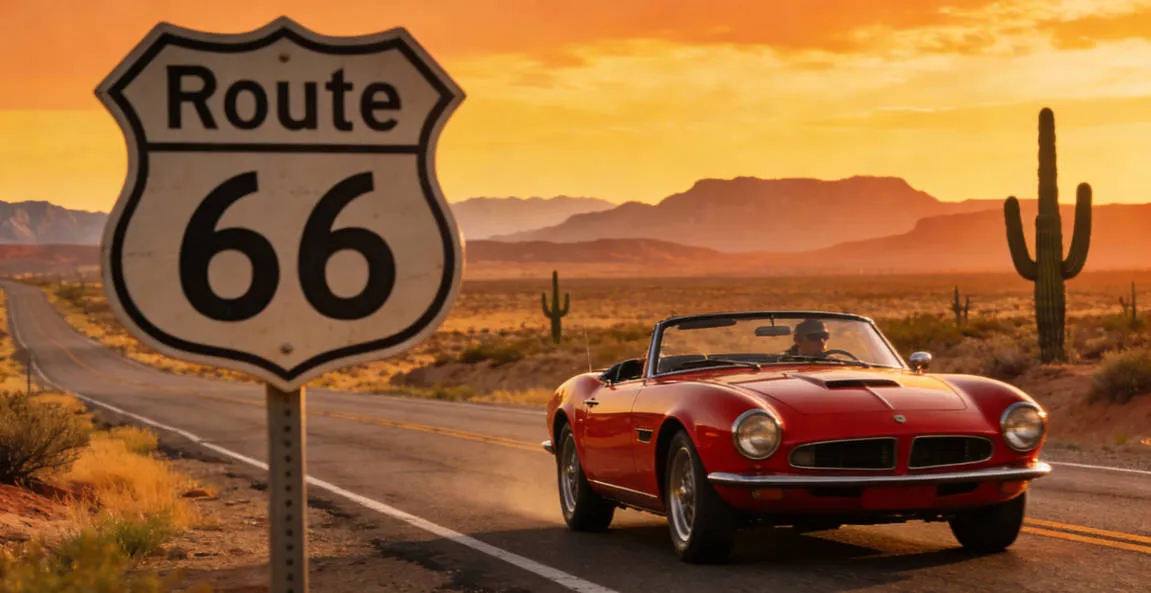
Route 66 is more than just a road—it’s a journey through American history, culture, and landscapes. Known as the “Mother Road,” Route 66 once connected the Midwest to the West Coast and played a crucial role in America’s westward expansion.
In 2026, Route 66 remains one of the most iconic road trips in the world, especially for international travelers, overseas Chinese visitors, and first-time U.S. road trippers. While the original highway is no longer fully intact, large portions are still drivable—and incredibly rewarding.
This guide provides a step-by-step driving itinerary from Chicago to Los Angeles, including distances, must-see stops, driving tips, and realistic planning advice.
Route 66 at a Glance
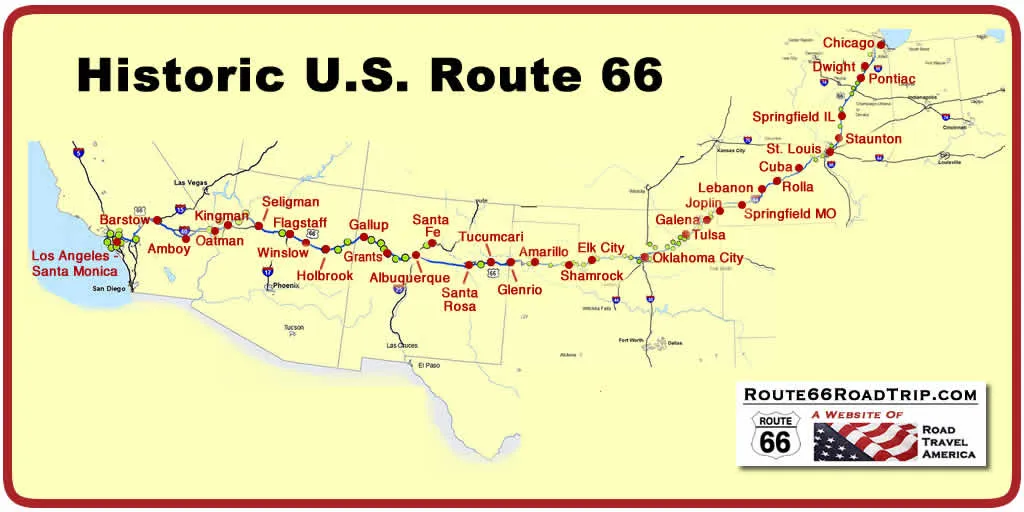
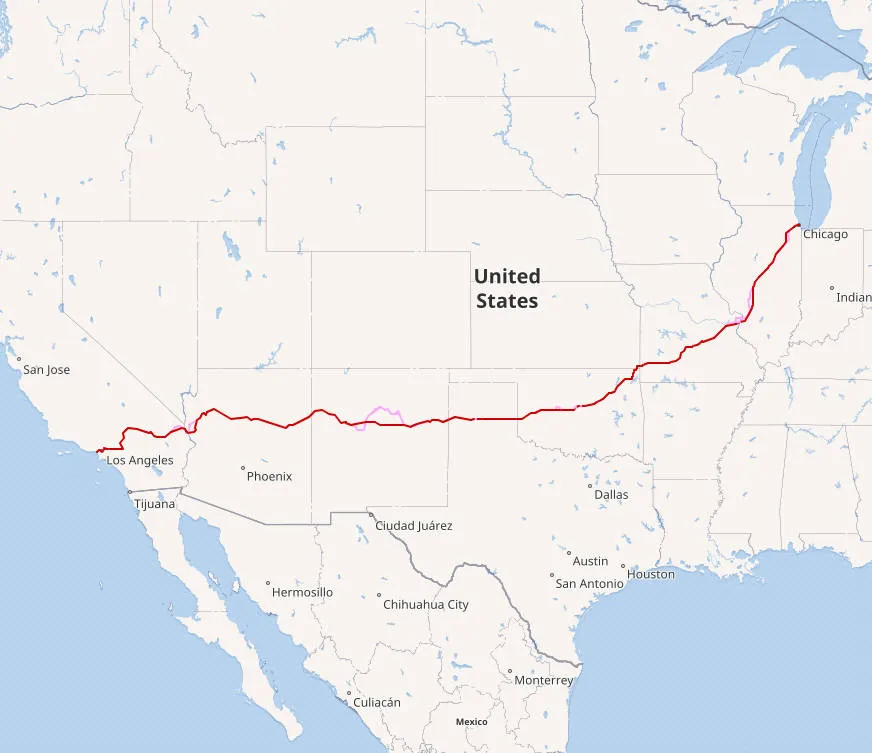
Route 66, famously known as the “Main Street of America” or the “Mother Road,” is one of the most iconic highways in the United States. Established in 1926, it originally ran 2,448 miles (3,940 km) from Chicago, Illinois to Santa Monica, California, connecting small towns, big cities, and diverse landscapes across eight states: Illinois, Missouri, Kansas, Oklahoma, Texas, New Mexico, Arizona, and California.
Key highlights of Route 66 include:
-
Cultural Heritage: Experience the nostalgia of classic diners, neon signs, and vintage motels.
-
Scenic Landscapes: Drive through the rolling plains of the Midwest, the deserts of the Southwest, and the iconic American West vistas.
-
Historic Landmarks: See famous stops like the Gateway Arch in St. Louis, Cadillac Ranch in Texas, Meteor Crater in Arizona, and the Santa Monica Pier in California.
-
Road Trip Adventure: Perfect for travelers seeking freedom, photography, quirky attractions, and an authentic slice of Americana.
Whether you’re chasing sunsets over the desert or snapping photos of retro roadside attractions, Route 66 offers a unique journey through history, culture, and landscapes that can’t be replicated on modern interstates.
Best Time to Drive Route 66
Planning your Route 66 adventure also means picking the right season to hit the road. Weather, crowds, and scenery all play a role in creating the perfect experience.
Spring (March – May)
-
Pros: Mild temperatures, blooming landscapes, fewer crowds in most states.
-
Cons: Some unpredictable rain, especially in the Midwest.
-
Highlights: Wildflowers in New Mexico and Arizona, comfortable driving through plains and deserts.
Summer (June – August)
-
Pros: Long daylight hours for sightseeing, all attractions fully open.
-
Cons: High temperatures in the Southwest deserts (can exceed 100°F / 38°C), crowded tourist spots in popular cities.
-
Tips: Start early in the day, carry plenty of water, and plan desert stretches carefully.
Fall (September – November)
-
Pros: Cooler temperatures, fall foliage in the Midwest and Missouri, fewer tourists than summer.
-
Cons: Shorter days may limit sightseeing time, some seasonal attractions may start closing by late fall.
-
Highlights: Golden landscapes across plains and forests, perfect for photography.
Winter (December – February)
-
Pros: Minimal crowds, lower accommodation costs, unique festive events in small towns.
-
Cons: Snow and ice possible in the Midwest (Illinois, Missouri, Kansas), some attractions closed, shorter daylight hours.
-
Tips: Check weather conditions, especially for northern states, and be prepared for slower driving.
Overall Recommendation
For most travelers, spring (April–May) and fall (September–October) offer the best balance of weather, scenery, and crowd levels. Summer is ideal if you want a full tourist experience, while winter is only recommended for experienced road-trippers comfortable with variable conditions.
Essential Pre-Trip Preparations
A successful Route 66 road trip starts before you even hit the highway. Here’s everything you need to consider to ensure a smooth, safe, and unforgettable journey.
1. Plan Your Route and Timeline
-
Decide if you want to drive the entire 2,448 miles from Chicago to Los Angeles or focus on specific sections.
-
Allocate 2–3 weeks for a full trip to enjoy stops without rushing.
-
Use GPS and maps, but also download offline maps—some stretches have limited cell service.
2. Choose the Right Vehicle
-
Rental cars: SUVs or sedans with good comfort for long drives are ideal.
-
Vintage or specialty cars: Great for classic road-trip vibes, but consider fuel costs and insurance.
-
Make sure the car is in excellent condition, especially brakes, tires, and AC for desert areas.
3. Book Accommodations in Advance
-
While some travelers enjoy spontaneity, popular stops can fill up quickly, especially in summer.
-
Mix classic motels, boutique inns, and modern hotels for a variety of experiences.
-
Check for parking availability, especially in small towns or historic areas.
4. Pack Smart
-
Clothing: Layered clothing for variable weather—cool mornings and hot afternoons in deserts.
-
Essentials: Sunglasses, sunscreen, hats, refillable water bottles, snacks, and a first aid kit.
-
Road trip gear: Phone chargers, power banks, travel pillows, cooler for drinks and snacks.
5. Prepare Your Documents
-
Driver’s license (international travelers may need an IDP).
-
Rental agreements and insurance papers.
-
Keep emergency contacts and a roadside assistance plan handy.
6. Know the Rules and Safety Tips
-
Familiarize yourself with state-specific traffic laws, speed limits, and cell phone usage rules.
-
Understand gas station etiquette, especially in remote stretches.
-
Keep an emergency kit: jumper cables, flashlight, basic tools, tire repair kit.
7. Budget and Money-Saving Tips
-
Estimate fuel costs, meals, accommodation, and entrance fees.
-
Bring a credit card accepted nationwide and some cash for rural towns.
-
Look out for discounts on attractions and motels along Route 66.
Pro Tip: The best road trips are a mix of planning and spontaneity. Plan the essentials but leave room for quirky roadside stops and local experiences—you’ll thank yourself later!
Route 66 Driving Itinerary (Segment by Segment)
Segment 1: Chicago, IL → Pontiac, IL
-
Distance: ~140 miles / ~2.5–3 hours
-
Highlights & Stops:
-
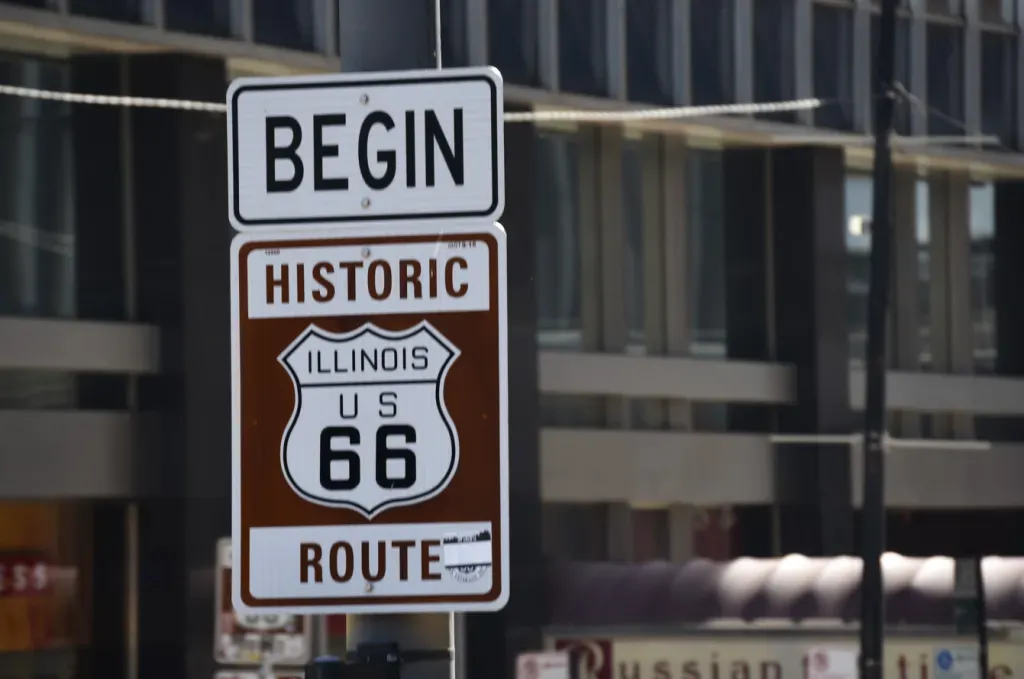
Route 66 Start Sign, Grant Park, Chicago – iconic photo op.
-
Lou Mitchell’s Restaurant – famous Route 66 breakfast.
-
Old Joliet Prison – small detour for history buffs.
-
Pontiac Route 66 Museum – murals, classic cars.
-
-
Driving Tips: Expect city traffic in Chicago; leave early to avoid peak hours.
-
Overnight: Pontiac, IL
Segment 2: Pontiac, IL → Springfield, IL
-
Distance: ~90 miles / ~1.5–2 hours
-
Highlights & Stops:
-
Odell, IL – historic gas station & Route 66 murals.
-
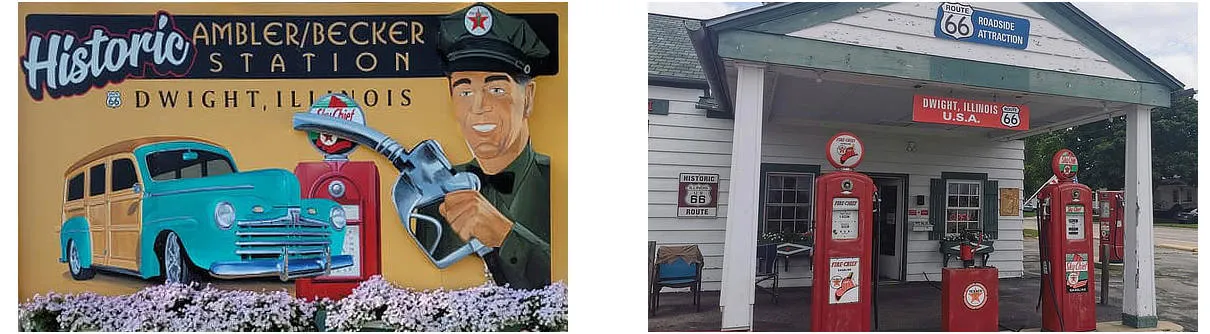
Dwight, IL – vintage Texaco station.
-
Springfield, IL – Abraham Lincoln Presidential Library & Museum, Cozy Dog Drive-In (Route 66 original corn dog).
-
-
Overnight: Springfield, IL
Segment 3: Springfield, IL → St. Louis, MO
-
Distance: ~100 miles / ~2 hours
-
Highlights & Stops:
-
Litchfield, IL – Ariston Café, one of the oldest diners.
-
Mount Olive, IL – Gemini Giant statue.
-
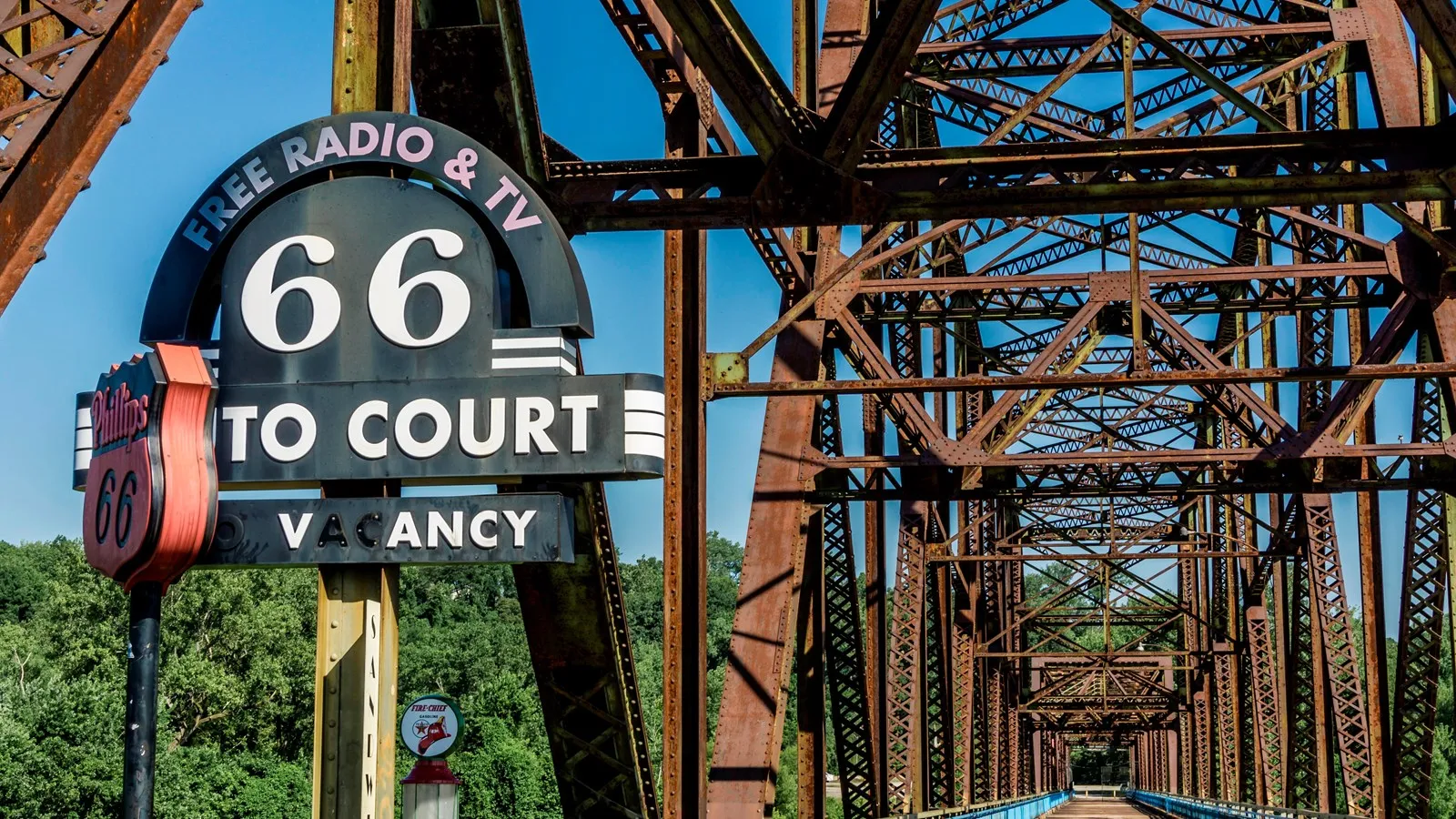
Chain of Rocks Bridge (St. Louis) – pedestrian-only now, historic photo spot.
-
St. Louis Arch & City Attractions
-
-
Overnight: St. Louis, MO
Segment 4: St. Louis, MO → Cuba, MO
-
Distance: ~200 miles / ~3.5–4 hours
-
Highlights & Stops:
-
Gray Summit, MO – classic Route 66 diners.
-
Cuba, MO – “Route 66 Mural City,” dozens of murals along Main Street.
-
-
Overnight: Cuba, MO
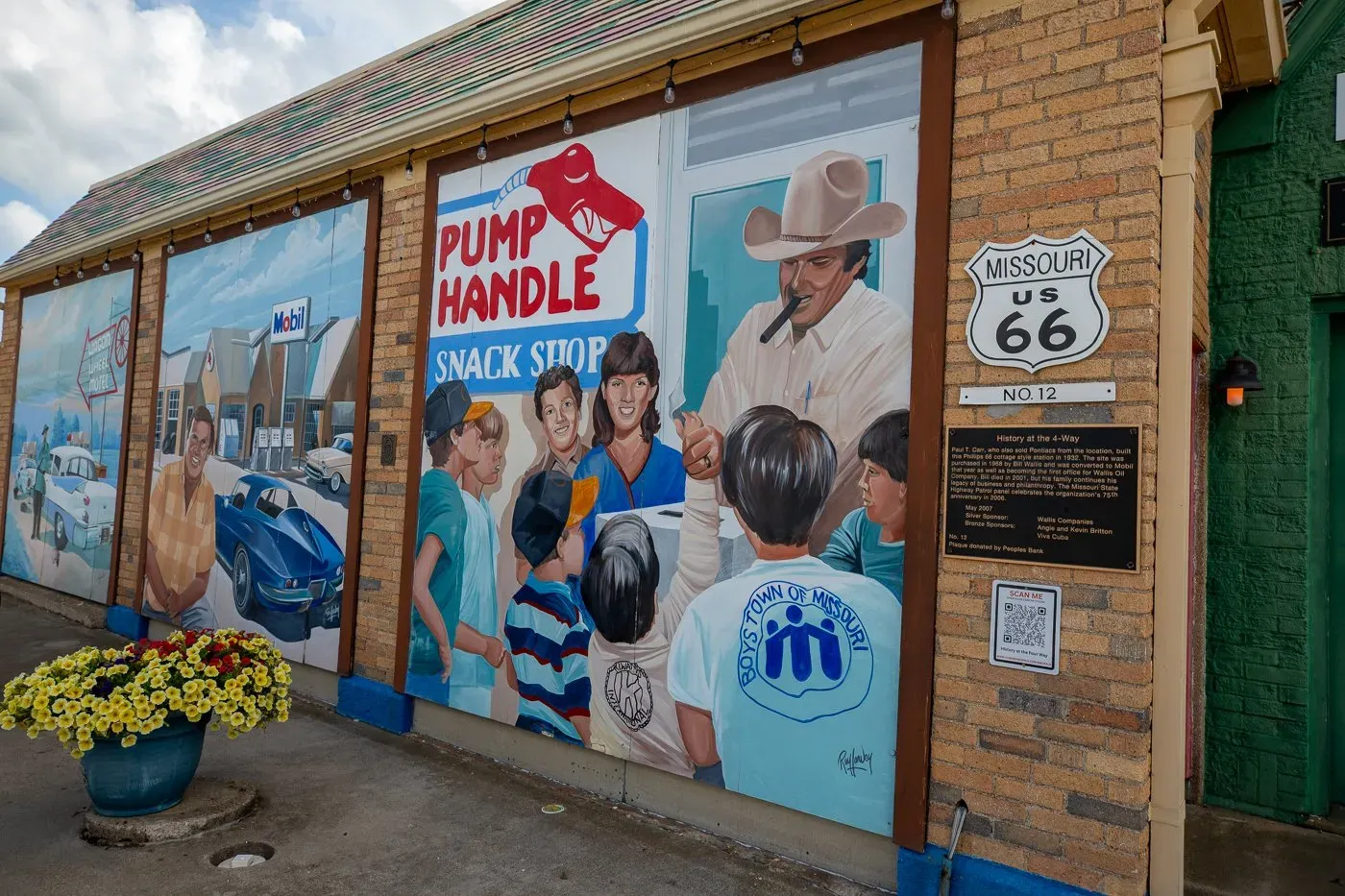
Segment 5: Cuba, MO → Tulsa, OK
-
Distance: ~280 miles / ~4.5–5 hours
-
Highlights & Stops:
-
Rolla, MO – Missouri University of Science & Technology campus.
-
Lebanon, MO – Route 66 Museum.
-
Oklahoma City – Oklahoma Route 66 Museum (if you detour slightly south).
-
Tulsa, OK – Blue Dome District, vintage architecture.
-
-
Overnight: Tulsa, OK
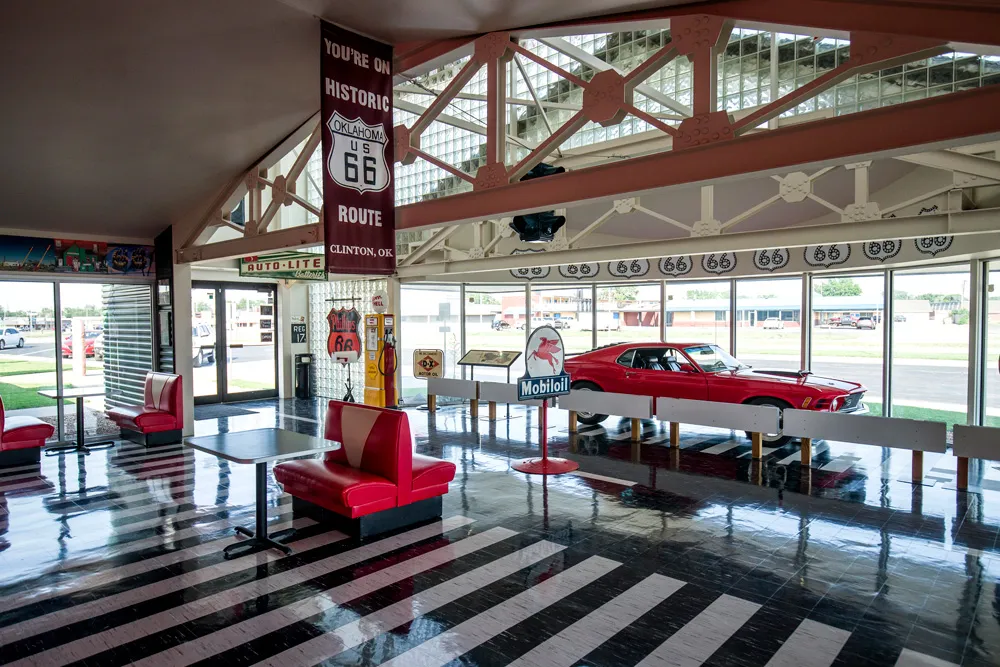
Segment 6: Tulsa, OK → Oklahoma City, OK
-
Distance: ~105 miles / ~1.5–2 hours
-
Highlights & Stops:
-
Stroud, OK – Rock Café (historic diner).
-
Arcadia, OK – Round Barn & pops candy shop.
-
Oklahoma City – Bricktown, National Cowboy & Western Heritage Museum.
-
-
Overnight: Oklahoma City, OK
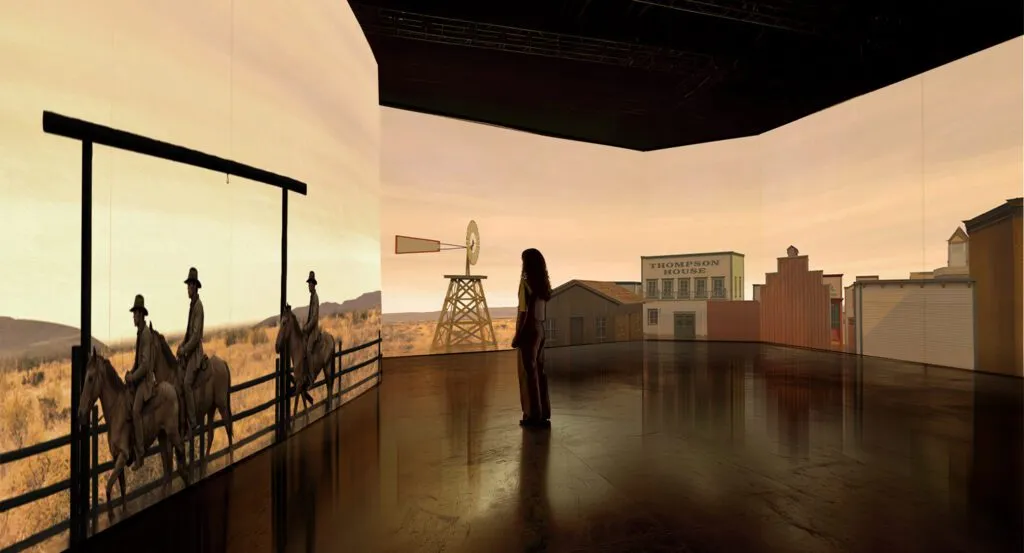
Segment 7: Oklahoma City, OK → Amarillo, TX
-
Distance: ~260 miles / ~4–5 hours
-
Highlights & Stops:
-
Elk City, OK – National Route 66 Museum.
-
Shamrock, TX – U-Drop Inn & Tower Station.
-
Amarillo, TX – Cadillac Ranch, Big Texan Steak Ranch.
-
-
Overnight: Amarillo, TX
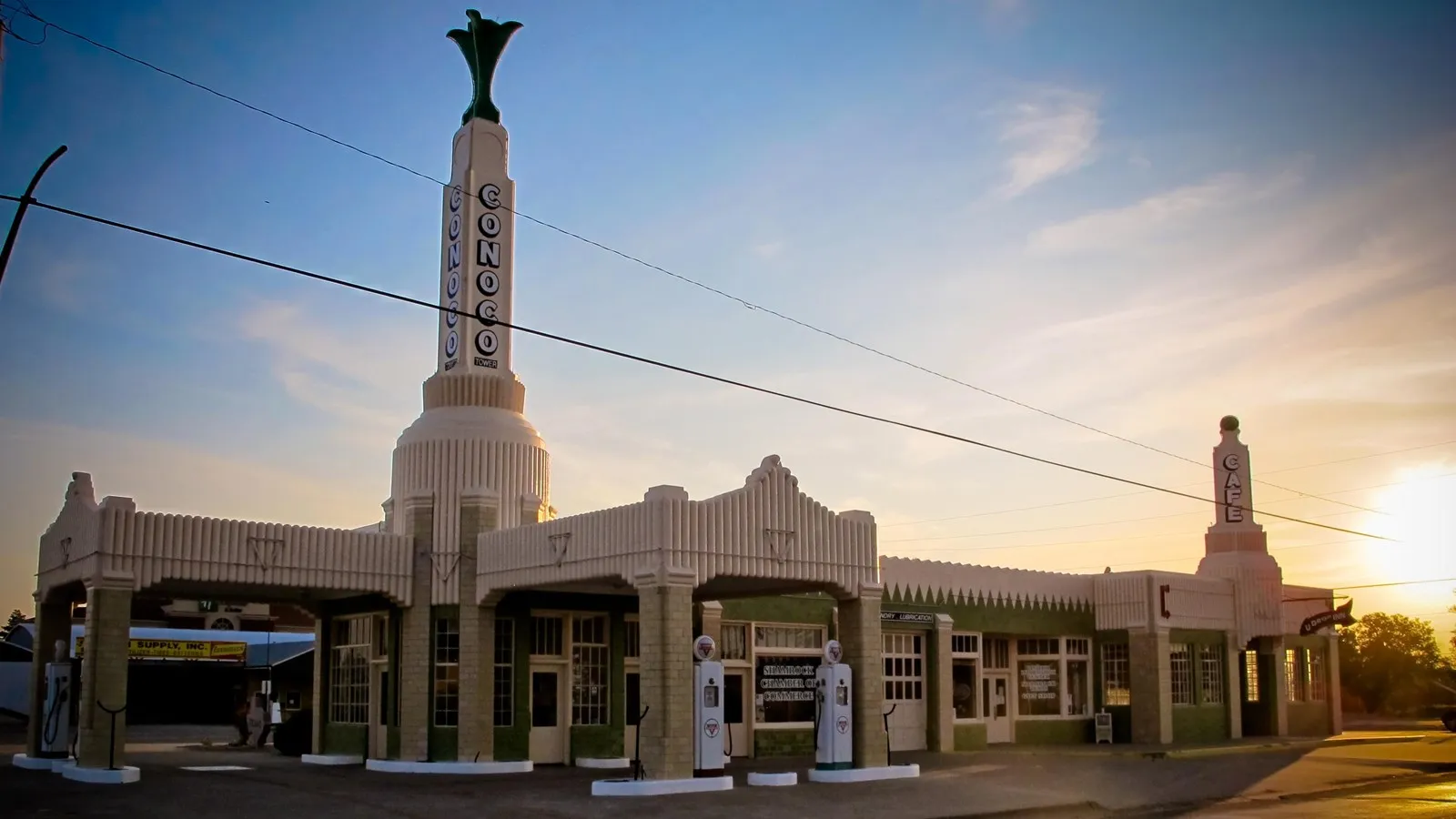
Segment 8: Amarillo, TX → Santa Fe, NM
-
Distance: ~280 miles / ~4–5 hours
-
Highlights & Stops:
-
Tucumcari, NM – neon signs, Murals, historic motels.
-
Santa Fe, NM – arts district, historic adobe architecture.
-
-
Overnight: Santa Fe, NM
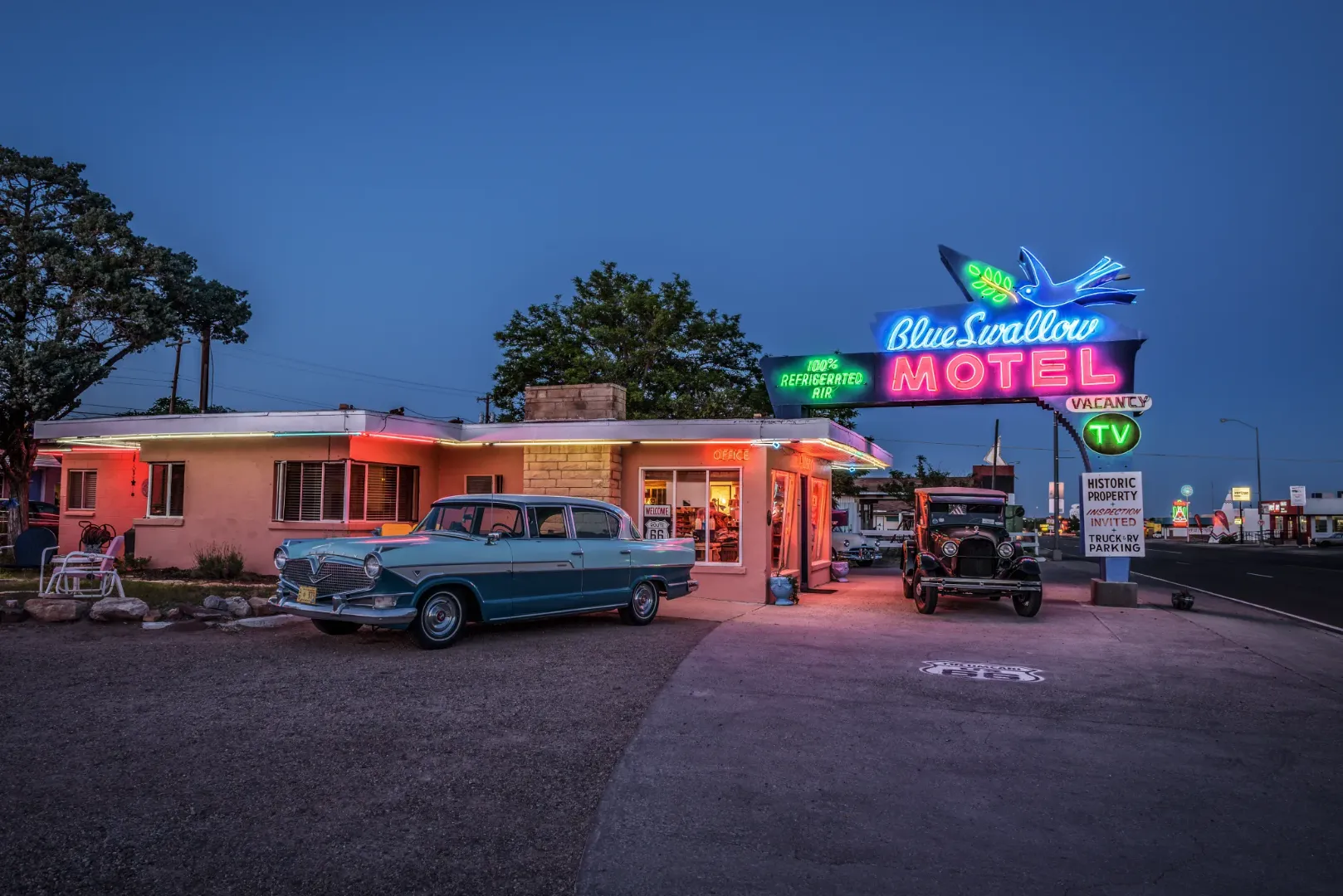
Segment 9: Santa Fe, NM → Holbrook, AZ
-
Distance: ~250 miles / ~4–5 hours
-
Highlights & Stops:
-
Albuquerque, NM – Old Town, Route 66 neon signs.
-
Gallup, NM – Indian trading posts, local souvenirs.
-
Holbrook, AZ – Wigwam Motel, Petrified Forest National Park.
-
-
Overnight: Holbrook, AZ
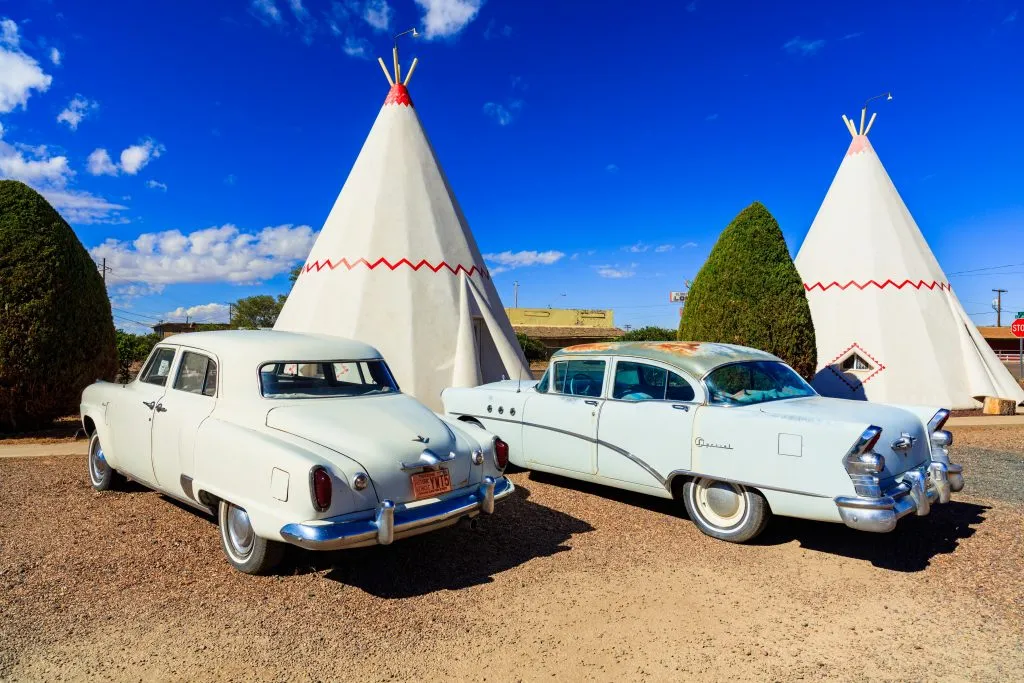
Segment 10: Holbrook, AZ → Flagstaff, AZ
-
Distance: ~90 miles / ~1.5 hours
-
Highlights & Stops:
-
Winslow, AZ – “Standin’ on the Corner” park.
-
Flagstaff, AZ – historic downtown, Lowell Observatory, gateway to Grand Canyon.
-
-
Overnight: Flagstaff, AZ
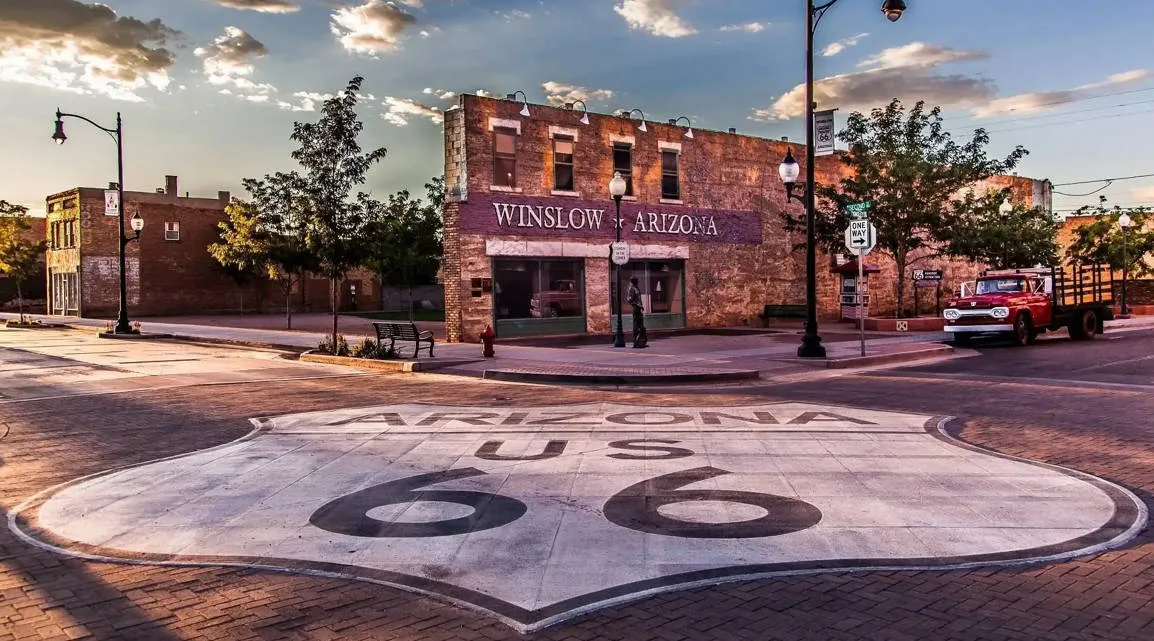
Segment 11: Flagstaff, AZ → Kingman, AZ
-
Distance: ~150 miles / ~2.5–3 hours
-
Highlights & Stops:
-
Seligman, AZ – vintage motels, Route 66 nostalgia.
-
Hackberry, AZ – iconic gas station & gift shop.
-
Kingman, AZ – Route 66 Museum.
-
-
Overnight: Kingman, AZ
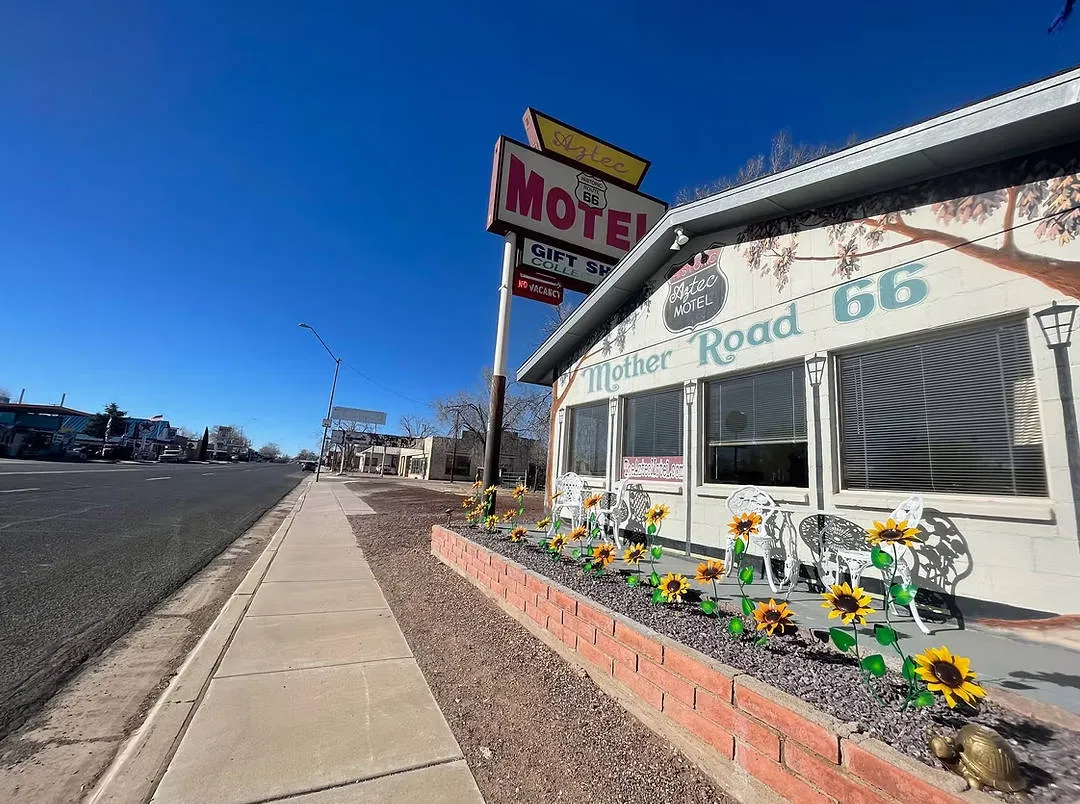
Segment 12: Kingman, AZ → Barstow, CA
-
Distance: ~200 miles / ~3–4 hours
-
Highlights & Stops:
-
Oatman, AZ – wild burros, historic mining town.
-
Needles, CA – entry into California desert.
-
Barstow, CA – Route 66 Mother Road Museum.
-
-
Overnight: Barstow, CA
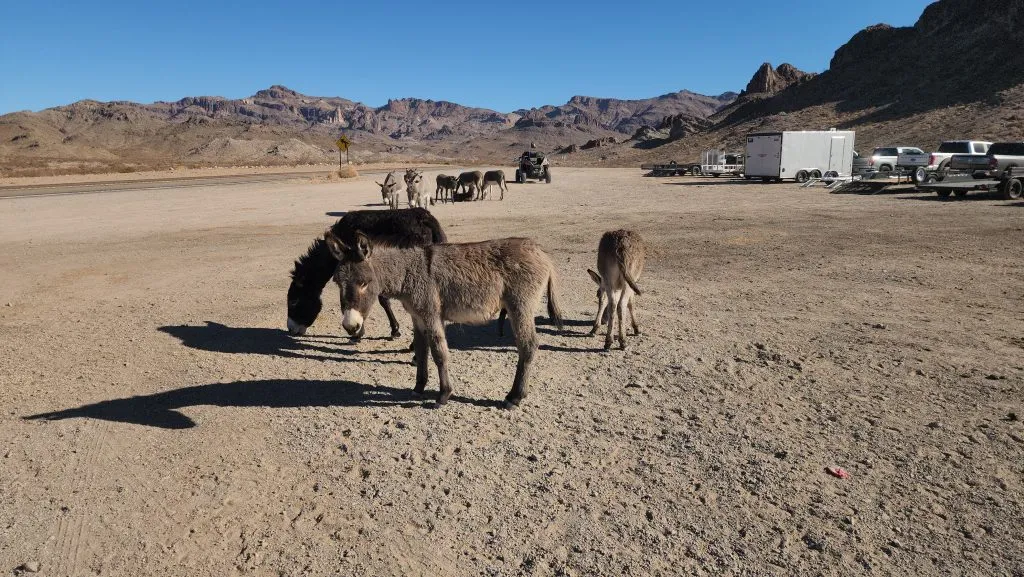
Segment 13: Barstow, CA → Los Angeles, CA
-
Distance: ~130 miles / ~2–3 hours
-
Highlights & Stops:
-
Victorville & San Bernardino – classic neon signs & historic motels.
-
Pasadena, CA – Old Town & iconic Route 66 landmarks.
-
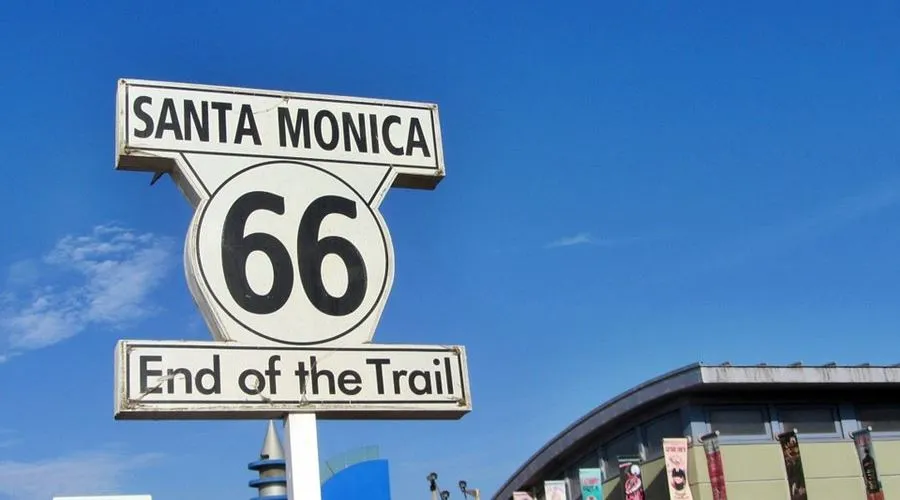
Los Angeles, CA – Santa Monica Pier, Route 66 endpoint.
-
-
Overnight: Los Angeles, CA
Suggested Route 66 Driving Schedules
Route 66 stretches roughly 2,400 miles (3,860 km) from Chicago to Los Angeles. How you break it up depends on your available time, travel pace, and interest in roadside attractions. Below are the most practical schedules for 2026 road trippers.
Option 1: 7-Day Route 66 Driving Schedule (Fast-Paced)
Best for: Limited vacation time, experienced U.S. drivers
Driving Time: Long daily drives (5–7 hours/day)
Day 1: Chicago → St. Louis
-
Focus: Illinois highlights, classic diners
-
Must-sees: Route 66 Begin Sign, Pontiac, Chain of Rocks Bridge
Day 2: St. Louis → Tulsa
-
Focus: Missouri Route 66 towns
-
Must-sees: Cuba murals, Lebanon Route 66 Museum
Day 3: Tulsa → Amarillo
-
Focus: Oklahoma heritage
-
Must-sees: Arcadia Round Barn, Cadillac Ranch
Day 4: Amarillo → Santa Fe
-
Focus: Texas Panhandle & New Mexico scenery
-
Must-sees: Tucumcari neon signs
Day 5: Santa Fe → Flagstaff
-
Focus: Southwestern landscapes
-
Must-sees: Albuquerque Old Town, Gallup
Day 6: Flagstaff → Barstow
-
Focus: Arizona classics
-
Must-sees: Winslow, Seligman, Oatman
Day 7: Barstow → Los Angeles
-
Focus: California desert to coast
-
Finish at: Santa Monica Pier
⚠️ Note: Minimal time for museums and detours. Expect fatigue.
Option 2: 10-Day Route 66 Driving Schedule (Balanced)
Best for: First-time Route 66 travelers
Driving Time: 4–6 hours/day
Day 1: Chicago → Springfield, IL
Day 2: Springfield → St. Louis
Day 3: St. Louis → Springfield, MO
Day 4: Springfield, MO → Tulsa
Day 5: Tulsa → Oklahoma City
Day 6: Oklahoma City → Amarillo
Day 7: Amarillo → Santa Fe
Day 8: Santa Fe → Gallup / Holbrook
Day 9: Holbrook → Kingman
Day 10: Kingman → Los Angeles
✅ Good balance of driving and sightseeing
❌ Limited time for Grand Canyon or major detours
Option 3: 14-Day Route 66 Driving Schedule (Classic & Relaxed)
Best for: Photography lovers, culture-focused travelers
Driving Time: 3–5 hours/day
Day 1: Chicago → Pontiac
Day 2: Pontiac → Springfield, IL
Day 3: Springfield → St. Louis
Day 4: St. Louis → Cuba
Day 5: Cuba → Springfield, MO
Day 6: Springfield, MO → Tulsa
Day 7: Tulsa → Oklahoma City
Day 8: Oklahoma City → Amarillo
Day 9: Amarillo → Tucumcari
Day 10: Tucumcari → Santa Fe
Day 11: Santa Fe → Albuquerque
Day 12: Albuquerque → Holbrook
Day 13: Holbrook → Kingman
Day 14: Kingman → Los Angeles
⭐ Most recommended schedule for first-timers
Option 4: 21-Day Route 66 Driving Schedule (Ultimate Experience)
Best for: Slow travelers, retirees, content creators
Driving Time: 2–4 hours/day
Key Additions:
-
Grand Canyon National Park (1–2 nights)
-
Sedona detour from Flagstaff
-
Petrified Forest National Park
-
Extra nights in Santa Fe & Los Angeles
This schedule allows you to:
-
Stay in historic Route 66 motels
-
Explore museums without rushing
-
Photograph neon signs at night
Accommodation Tips Along Route 66
Choosing the right accommodation along Route 66 can make or break your road trip experience. From legendary neon-lit motels to modern highway hotels, here’s how to sleep well, stay safe, and control costs while driving the Mother Road.
1. Historic Route 66 Motels (For the Authentic Experience)
Staying in classic Route 66 motels is a big part of the nostalgia—but expectations should be realistic.
Why Stay in Historic Motels
-
Original Route 66 atmosphere & neon signs
-
Often family-run with strong local character
-
Excellent for photography and storytelling
Things to Watch Out For
-
Smaller rooms and older bathrooms
-
Limited soundproofing
-
Fewer modern amenities (elevators, gyms, USB outlets)
Famous Route 66 Motels
-
Wigwam Motel (Holbrook, AZ / San Bernardino, CA)
-
Blue Swallow Motel (Tucumcari, NM)
-
Munger Moss Motel (Lebanon, MO)
-
El Rancho Hotel (Gallup, NM)
📌 Tip: Many historic motels sell out months in advance, especially in spring and fall.
2. Modern Chain Hotels (Comfort & Reliability)
For travelers prioritizing comfort, consistency, and safety, national hotel chains are the safest option.
Recommended Chains Along Route 66
-
Best Western (very common on Route 66)
-
Holiday Inn Express
-
Hampton Inn
-
Comfort Inn / Quality Inn
-
La Quinta
Why Choose Chain Hotels
-
Clean, standardized rooms
-
Free breakfast & parking
-
Reliable Wi-Fi
-
24-hour front desks (important for late arrivals)
📌 Best Strategy: Alternate historic motels with chain hotels to balance experience and rest.
3. Booking Timing & Strategy (Very Important)
When to Book
-
Peak season (May–June, Sept–Oct): Book 2–3 months ahead
-
Small towns: Fewer hotels → book early
-
National park gateways: Book ASAP
Where to Book
-
Booking.com (most Route 66-friendly)
-
Hotels.com (reward nights)
-
Direct hotel websites (sometimes cheaper)
⚠️ Avoid walking in at night in desert towns—options may be full or closed.
4. Safety Tips for Overnight Stays
Route 66 passes through remote areas where planning matters.
Safety Checklist
-
Choose hotels near town centers or highway exits
-
Avoid isolated roadside motels with no reviews
-
Read recent reviews, not just star ratings
-
Park near your room and remove valuables
📌 Red Flags
-
Broken exterior lights
-
No front desk at night
-
Cash-only payment requests
Budget Estimate
The budget for a Route 66 road trip in 2026 varies widely based on group size (solo vs. couple vs. family sharing costs), travel style (budget motels vs. mid-range hotels), itinerary length (14 vs. 21 days), vehicle type, and extras like side trips (Grand Canyon, Las Vegas) or attractions.
Current data (as of mid-January 2026) shows favorable conditions: national gas prices are low (~$2.81–$2.91/gallon, with many Route 66 states like Oklahoma, Texas, and Missouri under $2.50), making fuel one of the cheapest components recently. Car rental one-way fees (Chicago to LA) remain significant but average daily rates for economy/mid-size cars hover around $50–$90, plus drop-off fees ($100–$500+ for long distances). Motels average $80–$150/night, with classic Route 66 spots often in the $90–$120 range.
Daily Budget Ranges (Per Person, Sharing Costs)
-
Ultra-Budget ($50–$100/day): Basic motels/camping, fast food/picnics, minimal attractions. Ideal for solo or strict savers.
-
Budget ($100–$150/day): Comfortable motels, mix of diner meals and groceries, key sights.
-
Mid-Range ($150–$225/day): Nice motels/hotels, restaurant meals, more activities/souvenirs.
-
Luxury ($225+/day): Upscale stays, fine dining, extras like guided tours.
Detailed Breakdown for 14-Day Itinerary (Classic/Efficient Plan)
Total per person (assuming 2 people sharing car/room; adjust down for more sharers):
-
Budget Traveler: ~$1,500–$2,500 total (~$107–$179/day).
-
Mid-Range Traveler: ~$2,500–$4,000 total (~$179–$286/day).
Key Cost Categories (estimates updated for 2026 trends):
- Car Rental (One-Way, Chicago to LA, 14 days) Mid-size/SUV: $700–$1,200 base (daily $50–$90). One-way drop fee: $200–$600 (common for cross-country). Insurance/CDW: $15–$40/day extra if not covered. Total shared: $1,000–$2,000 (split: $500–$1,000/person). Tip: Book early; avoid young driver fees if under 25.
- Fuel ~2,400–2,500 miles + side trips (~3,000 miles total). Average MPG (mid-size car): 25–30. Gas: ~$2.80–$3.00/gallon average (lower in Midwest/Southwest states). Total: $350–$500 (split: $175–$250/person). Current low prices make this cheaper than recent years!
- Accommodation (13 nights on route + Chicago/LA) Classic motels: $80–$150/night (e.g., Wigwam Motel ~$100–$120). Total shared: $1,200–$2,000 (split: $600–$1,000/person). Many include breakfast; book via Booking.com for deals.
- Food Diners/fast food: $30–$50/day. Mix groceries/picnics: $20–$40/day. Total: $400–$700/person.
- Attractions & Entertainment Museums/parks (e.g., Petrified Forest, Cadillac Ranch free; Grand Canyon ~$35/car). Souvenirs, neon photos, optional shows: $200–$500/person.
- Miscellaneous (tolls, parking, emergencies): $100–$300/person.
21-Day Itinerary Adjustments
Add ~7 nights: Extra lodging (~$600–$1,000 shared), more food/activities. Total per person: +$800–$1,500 (mid-range). Longer pace allows more free/low-cost stops, but higher overall due to time.
Money-Saving Tips for 2026
-
Share everything: 4 people = huge savings (e.g., car/accommodation ~$1,000–$1,500/person total dividable costs).
-
Travel off-peak: Spring/fall (your guide's recommendation) avoids summer crowds/price spikes.
-
Fuel smart: Fill up in cheap states (Oklahoma/Texas ~$2.25–$2.45/gallon); use apps like GasBuddy.
-
Free attractions: Many Route 66 icons (Cadillac Ranch, Blue Whale, neon signs) are free.
-
Book ahead: Motels fill fast in centennial year; aim for historic ones with deals.
Frequently Asked Questions (FAQ)
Q1: Is Route 66 fully drivable?
A: No, but most key segments are well-marked and accessible.
Q2: Is Route 66 safe?
A: Yes, with basic precautions and planning.
Q3: Do I need a special vehicle to drive Route 66?
A: No special vehicle is required. A standard sedan or midsize SUV is sufficient.
Q4: Is Route 66 suitable for families with kids?
A: Yes. Route 66 is family-friendly and full of quirky roadside attractions, museums, and national parks.
Q5: Is Route 66 worth it if I’ve already visited major U.S. cities?
A: Definitely. Route 66 offers a completely different side of America—small towns, historic diners, neon signs, deserts, and local culture you won’t find in New York or Los Angeles.
Q6: How long is Route 66?
A: The original route was about 2,448 miles (3,940 km) from Chicago to Santa Monica. The current drivable historic sections are roughly 2,278 miles (3,665 km), depending on alignments chosen.
Q7: Where does Route 66 start and end?
A: Start: Chicago, Illinois (historic sign near the Art Institute or Michigan Avenue). End: Santa Monica Pier, California (the famous "End of the Trail" sign).
Driving Route 66 in 2026 is more than a road trip; it is a pilgrimage through the American century. From the deep dish pizzas of Chicago to the salty air of Santa Monica, every mile tells a story.
Happy 100th Anniversary, Route 66. We'll see you on the road!