San Diego is known for its sunny beaches, vibrant neighborhoods, and laid-back California vibe—but many visitors assume that exploring the city without a car is difficult, if not impossible. With buses, trolleys, bikes, and rideshares, getting around the city is easier than you might expect. Whether you’re hitting the beach, checking out Balboa Park, or wandering downtown, there are plenty of ways to see it all—without ever renting a car.
1. Introduction: Visiting San Diego Without a Car — Is It Really Possible?
San Diego often gets lumped into the category of "car-dependent Southern California cities," but this is a half-truth. While it isn't New York or London, San Diego is significantly more transit-friendly than most U.S. cities of its size. The downtown core is compact, and the "Trolley" light rail system has seen massive expansions recently, making many tourist hubs accessible without a steering wheel.
Who this guide is for:
-
First-time visitors staying in central areas like Downtown, Little Italy, or Old Town.
-
Budget travelers looking to avoid $40/night hotel parking fees and high rental insurance.
-
Solo travelers who prefer not to navigate unfamiliar highways alone.
The Reality Check: Public transportation here can realistically cover the "Tourist Triangle" (Downtown, Balboa Park, Old Town) and the South Bay. However, it cannot efficiently reach deep hiking trails in the East County or certain secluded North County beaches.
You must understand that San Diego's transit is split between two agencies: the MTS (Metropolitan Transit System), which handles the city and southern regions, and the NCTD (North County Transit District), which handles the northern coastal towns. While they share a payment system, their schedules and areas of operation differ.
2. Do You Really Need to Rent a Car in San Diego?
When Public Transportation Works Well — and When It Doesn't
San Diego’s ecosystem is a hub-and-spoke model. If your activities are concentrated near the "spokes" (Trolley lines), you are fine. If you need to travel "across" spokes (e.g., from a northern suburb to an eastern suburb), transit becomes cumbersome.
Situations where skipping a rental car makes sense:
-
You are staying in Downtown, Little Italy, Old Town, or Mission Valley.
-
Your itinerary consists of Balboa Park, the San Diego Zoo, the Waterfront, and Old Town.
-
You want to visit UCSD or La Jolla Village (now connected by the Blue Line Trolley).
-
You want to avoid the stress of finding (and paying for) parking in crowded coastal areas.
Situations where renting a car is still the better choice:
-
You have a large family with small children and significant gear (strollers, coolers).
-
You plan to visit Legoland (Carlsbad) or Safari Park (Escondido) multiple times.
-
Your accommodation is in a residential Airbnb far from a Trolley station or a major bus line.
Quick Self-Check: Open Google Maps, set it to "Transit" mode, and pin your hotel and top three destinations. If any one-way trip exceeds 60 minutes or requires more than two transfers, consider a car.
3. How San Diego Public Transportation Works (Quick Overview)
Navigating San Diego's transit requires understanding that the city is served by two distinct systems that mesh together at key hubs.
Who Runs Public Transportation in San Diego
-
MTS (Metropolitan Transit System): This is the primary agency for the City of San Diego. It operates the Trolley and the vast majority of bus routes. If you are staying Downtown, visiting Balboa Park, or heading to the Mexican border, you are dealing with MTS.
-
NCTD (North County Transit District): This agency serves the coastal and inland areas north of the city (Del Mar, Solana Beach, Carlsbad, Oceanside). They run the COASTER commuter train and BREEZE buses.
-
Why the distinction matters: While both use the PRONTO payment system, MTS runs frequent "urban" service (every 15 mins), while NCTD follows "commuter" schedules that can have 1-2 hour gaps during the day.
| Operator | Main Responsibility | Transportation Modes | Coverage Area |
|---|---|---|---|
| MTS | Downtown & city transit | Trolley (light rail), Bus | Central, South, and East San Diego |
| NCTD | North County transit | COASTER (commuter train), SPRINTER (light rail), BREEZE Bus | Coastal cities in North County |
Types of Public Transportation
-
San Diego Trolley (Light Rail):
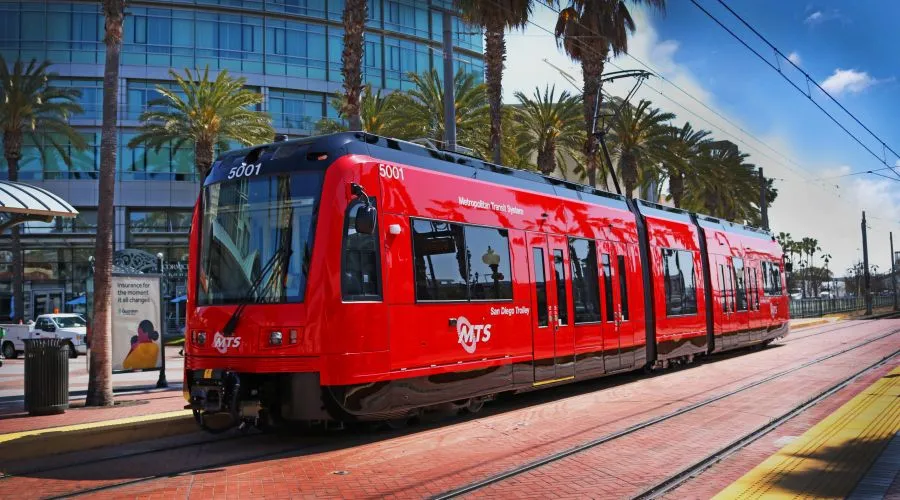 Image from SDMTS, Copyright by original author
-
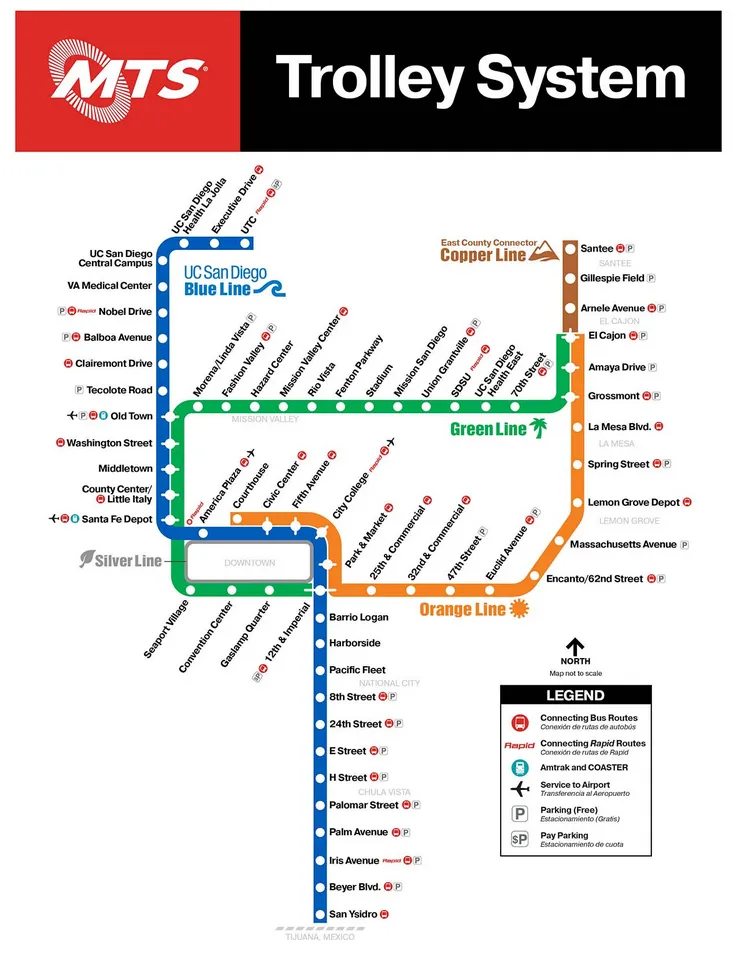
The Blue Line: Your lifeline to the north and south. It connects the border (San Ysidro) to Downtown, and recently expanded all the way to UTC/La Jolla.
-
The Green Line: The "Tourist Line." It connects Downtown to the Convention Center, Seaport Village, Little Italy, Old Town, and the hotel hubs in Mission Valley.
-
The Orange Line: Primarily serves East County residential areas; less used by tourists unless staying in Lemon Grove or El Cajon.
-
-
MTS Bus System:
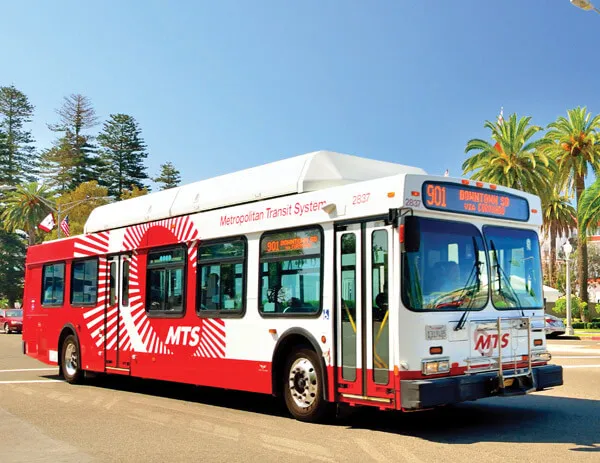 Image from SDMTS, Copyright by original author
-
Local Buses: Standard city buses. Useful for getting into the heart of neighborhoods like Hillcrest or North Park.
-
Rapid & Rapid Express: High-frequency routes with fewer stops. Rapid 215 is particularly essential for getting from Downtown to the museums in Balboa Park.
-
-
Regional Rail (COASTER & SPRINTER):
-
COASTER:
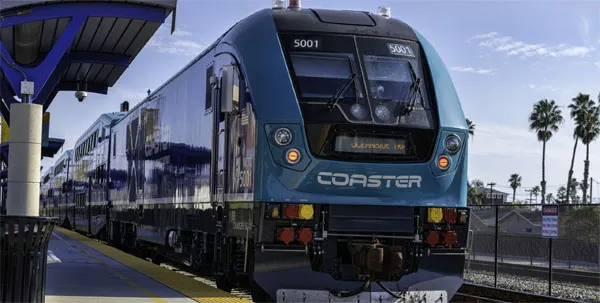 Image from GONCTD, Copyright by original authorA heavy-rail train running along the stunning coastline. Perfect for a scenic day trip to Carlsbad or Oceanside.
 -
SPRINTER:
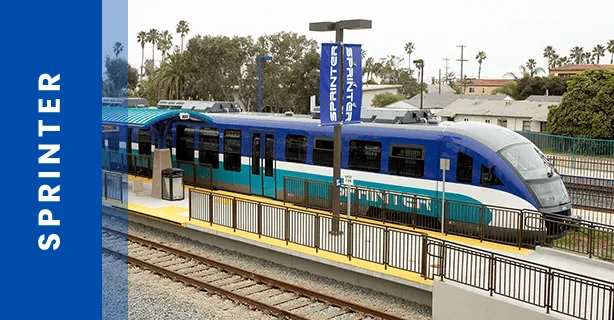 Image from GONCTD, Copyright by original authorA light rail line that runs east-west only in the North County (Oceanside to Escondido). Most city visitors will never see this line.
-
4. PRONTO Card Explained: How to Pay for Public Transportation
Forget paper tickets or cash. San Diego has transitioned entirely to the PRONTO system. It is a "stored value" system that handles all fares across MTS (Trolley & MTS Bus) and NCTD (COASTER & SPRINTER).
App vs. Physical Card
-
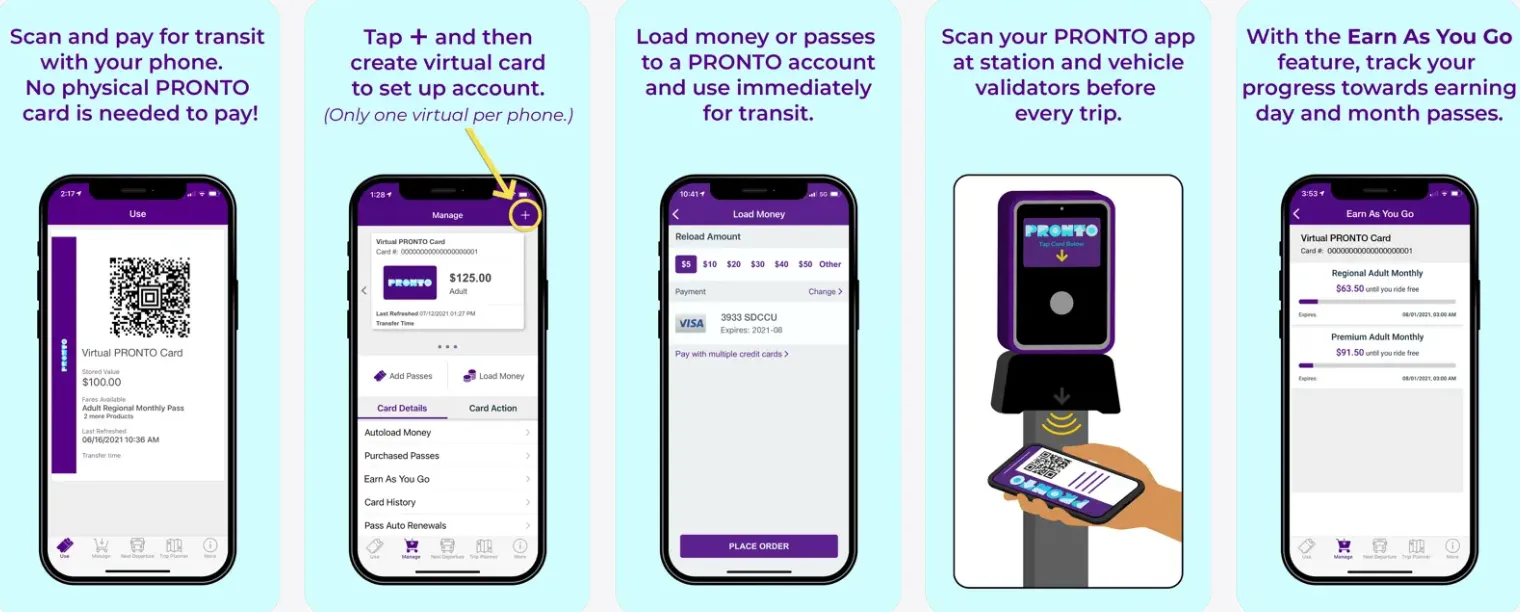
The PRONTO App: This is the most efficient option for tourists. Download the app, create an account, and load money via credit card. You simply scan the generated QR code at the purple station validators. [Download at Google Play] [Download at Apple Store]
-
Physical PRONTO Card: Available for $2 at all Trolley station vending machines. Once you have a card, you can register online here. PRONTO cards are $2 and available at retail outlets, the MTS Transit Store and NCTD Customer Service Centers, and ticket vending machines. Purchasing a card at ticket machines, the MTS Transit Store or NCTD Customer Service Centers will require a minimum load of $3, and purchasing at a retail network will require a load of $5. This is better if your phone battery is unreliable or if you prefer not to use an app.
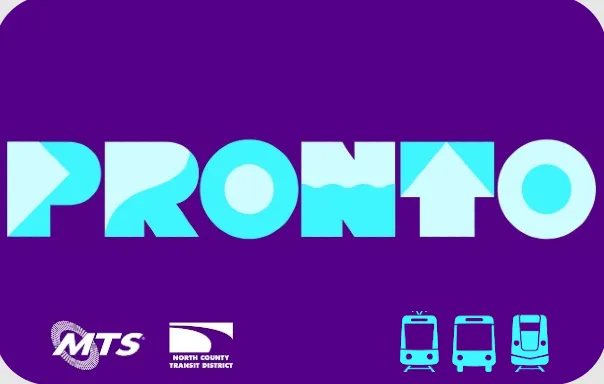 Image from Pronto Wikipedia, Copyright by original author
 -
Important: You cannot "share" a card or an app account. Each person in your group must have their own PRONTO app or card to tap in individually.
Understanding Fare Capping (The "Day Pass" Logic)
San Diego does not sell traditional "Day Passes" or "Weekly Passes" anymore. Instead, the system uses Fare Capping. You simply "Earn" your pass as you ride. However, you must distinguish between MTS Bus, Trolley & Local NCTD and COASTER Regional capping:
-
One-way fare: $2.50 (valid for unlimited transfers within 2 hours).
-
Daily Cap: $6.00. Once you tap for your third ride of the day, you have reached the cap. Any subsequent rides that calendar day are free.
-
Monthly Cap: $18.00 (Youth/Senior) or $72.00 (Adult). If you are visiting for more than a week, you will likely hit the monthly cap, making the rest of your month's travel free.
|
Feature |
Standard Fare Capping |
COASTER Regional Capping |
|---|---|---|
|
Coverage |
Trolley, MTS Bus, BREEZE, SPRINTER |
Everything in Standard PLUS COASTER Train |
|
Daily Fare Cap |
$6.00 (Unlimited daily rides) |
$15.00 (Unlimited daily rides) |
|
Monthly Fare Cap |
$72.00 |
$140 - $180 |
|
Best For |
Most urban & local tourist trips |
Day trips to North County (Carlsbad/Oceanside) |
Pro Tip: You never have to guess how many days you'll use transit. If you ride, you pay until you hit the cap; if you don't ride, you keep your money.
Crucial Note: Standard caps do NOT cover the COASTER; you must pay the higher Regional rate to include the commuter train in your capping logic.
Pass Tiers & Pricing
Passes (day passes/monthly passes) are divided into different tiers, the difference being whether they include COASTER, BRT, or rural services. You need to know which "Tier" your destination falls into, as regional trains like the COASTER have different pricing.
| Pass Tier | Price (Adult Daily / Monthly) | Included Transportation | Main Use & Notes |
|---|---|---|---|
| Regional | $6.00 / $72.00 | SPRINTER, BREEZE, MTS Bus, MTS Trolley, MTS Rapid | Ideal for most visitors. Covers daily transit in San Diego city and North County. Does not include COASTER. |
| Premium Regional | ~$12.00 / ~$100.00 | SPRINTER, BREEZE, FLEX, MTS Bus, MTS Trolley, MTS Rapid, MTS Rapid Express | For commuters needing Rapid Express buses or FLEX on-demand service. |
| COASTER Regional | $15.00 / $140–$182 (depending on zones) | COASTER, SPRINTER, BREEZE, FLEX, MTS Bus, MTS Trolley, MTS Rapid, MTS Rapid Express, MTS Rural | Essential for North County / coastal trips. Covers all MTS & NCTD services, including COASTER commuter rail and MTS rural buses. |
The "Tap" and "Scan" Rules
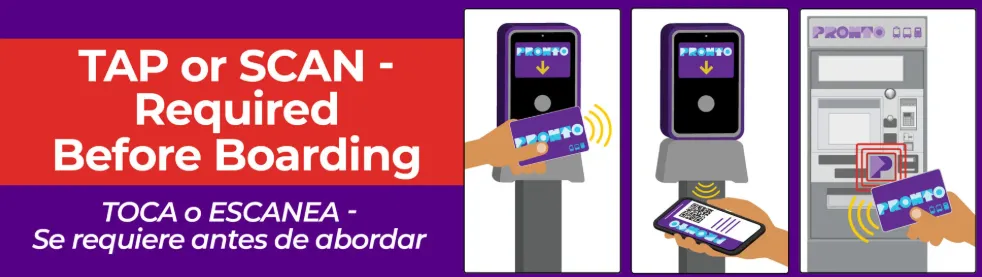
Getting around San Diego is easy with Tap On & Tap Off. Just tap your PRONTO card or app when you board. On distance-based services like SPRINTER, BREEZE, or COASTER, tap off when you get off so you pay the right fare. On most MTS buses and trolleys, you only need to tap on. It’s quick, simple, and helps track daily or monthly fare caps.
-
Trolleys: You must tap your card or scan your app before boarding. There are no turnstiles, but fare inspectors frequently check for "active" taps.
-
Buses: Scan your app or tap your card on the device near the driver as you enter.
-
Transfers: As long as you tap within 2 hours of your first ride, the system recognizes it as a transfer and will not charge you an additional fare (unless you’ve already hit the daily cap).
Notice: Forgetting to tap off will cause the system to assume you took the longest/most expensive route and deduct the maximum fare!
5. San Diego Public Transportation System Overview
To navigate like a local, you need to understand the "Hierarchy" of the lines. Some are built for speed (Rapid/Trolley), while others are built for local neighborhood access (Local Bus).
The Trolley System: The Backbone
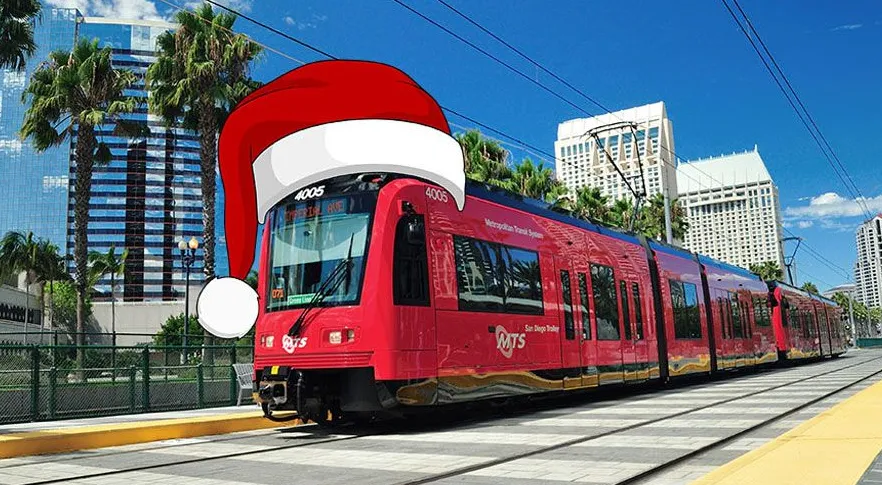
The San Diego Trolley runs on dedicated tracks free from traffic, making it fast and reliable for most visitors traveling across the city.
-
UC San Diego Blue Line (The Giant): This is now the most critical line for tourists. It runs from the San Ysidro Transit Center (at the Mexican Border) through Chula Vista and National City, into the heart of Downtown (Santa Fe Depot), and then north past Old Town, Mission Bay, and UCSD, ending at the UTC Transit Center. If you want to visit the upscale UTC mall or get close to La Jolla, this is your train.
-
Green Line (The Scenic Route): This line hugs the waterfront and historic sites. It connects the Convention Center and Gaslamp Quarter to Seaport Village, then turns north toward Old Town. From there, it heads east through Mission Valley (stopping at Fashion Valley Mall and Snapdragon Stadium) and ends at San Diego State University (SDSU) and Santee.
-
Orange Line: Running from Downtown to El Cajon in the east, this line is primarily used by local residents and students. Tourists rarely need this unless they are staying in more affordable residential neighborhoods in the East County.
-
Tourist Advantage: The Trolley is immune to San Diego's notorious freeway traffic. It provides the fastest link between the Cruise Ship terminal, the Convention Center, and the historical charm of Old Town.
North County Transit (NCTD): The Coastal Corridor (COASTER, SPRINTER & BREEZE)
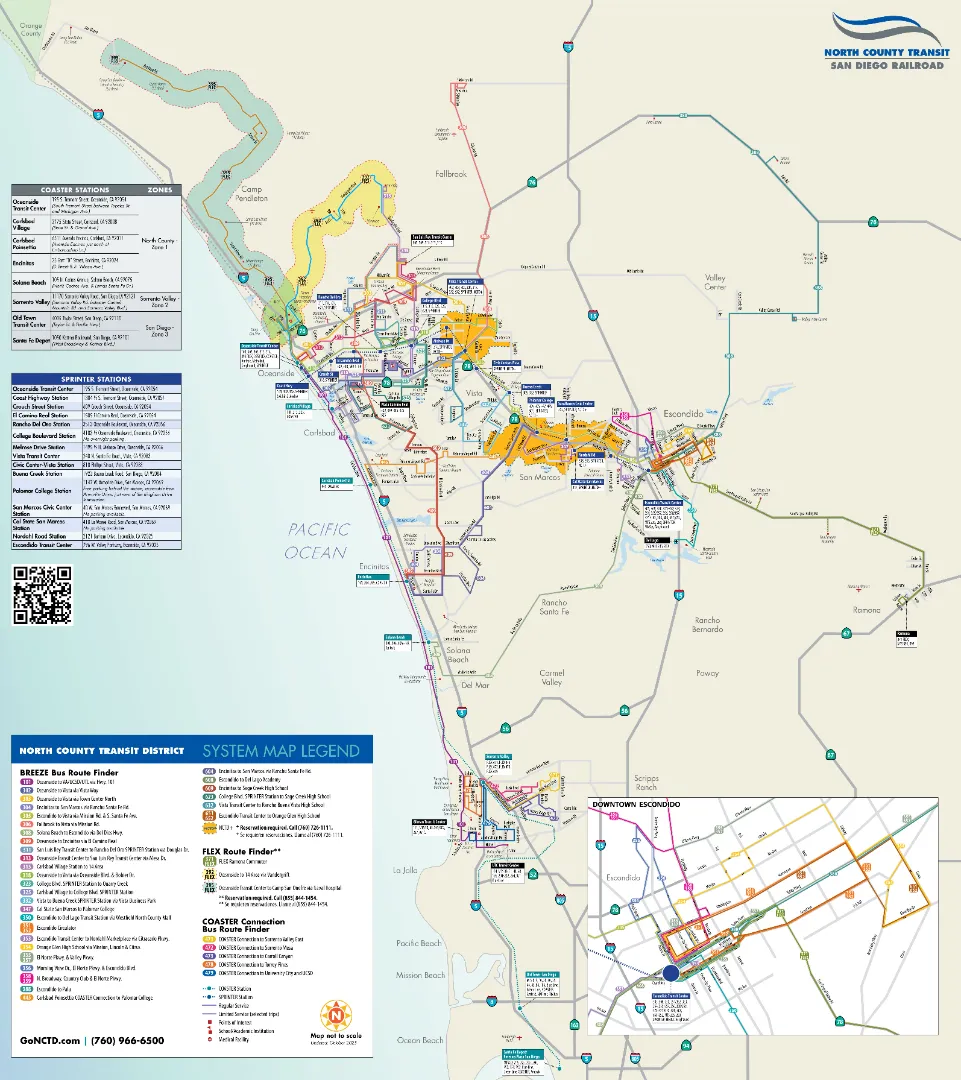
The North County Transit District (NCTD) connects San Diego’s northern communities with a mix of convenient options. COASTER commuter trains run along the coast from Oceanside to downtown San Diego, SPRINTER light rail links inland North County cities like Escondido and Oceanside, and BREEZE buses cover local routes throughout the region. Together, they make getting around North County and the coast simple and flexible.
- COASTER:
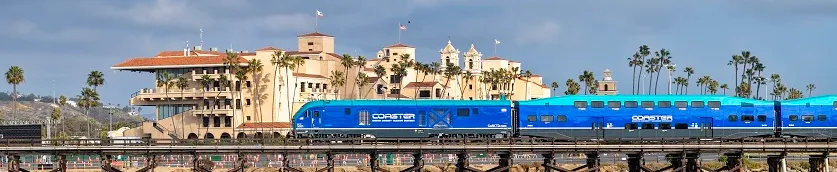 Image from GoNCTD, Copyright by original authorThis is a heavy-rail train with double-decker cars. It provides breathtaking views of the Pacific Ocean as it travels from Downtown San Diego to Oceanside. It stops at Solana Beach, Encinitas, and Carlsbad.
Unlike the Trolley, which runs every 15 minutes, the COASTER is a "service-limited" train. There are often 2-hour gaps between trains in the middle of the day. Always check the schedule before you head to the station.
- SPRINTER:
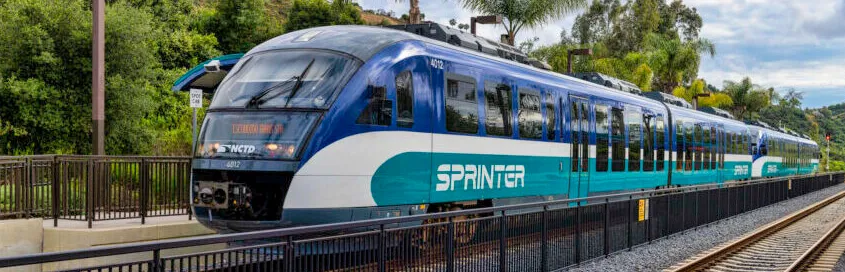 Image from GoNCTD, Copyright by original authorThis is a hybrid-rail line that runs east-west across the North County corridor. It connects Oceanside, Vista, San Marcos, and Escondido. It is particularly useful for visiting California State University San Marcos (CSUSM) or reaching inland North County attractions.
 - BREEZE:
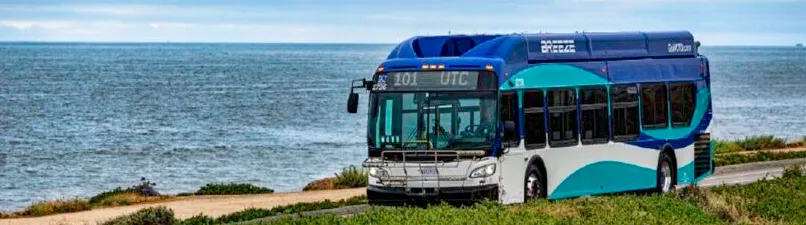 Image from GoNCTD, Copyright by original authorThese are the local buses serving North County. Once you arrive at a North County station via COASTER, you can use BREEZE buses to reach final destinations like the LEGOLAND California Resort or local business districts.
 - Tourist Advantage: The COASTER offers a "scenic cruise" on rails. Many sections of the track run directly along the bluffs, offering views you cannot see from the I-5 freeway. It is the most stress-free way to reach the Flower Fields or Legoland.
The Bus System: Filling the Gaps
The MTS Bus network covers most of San Diego’s city neighborhoods, providing frequent, reliable service for daily commuting or exploring popular spots without a car.
-
MTS Bus (Local Coverage):
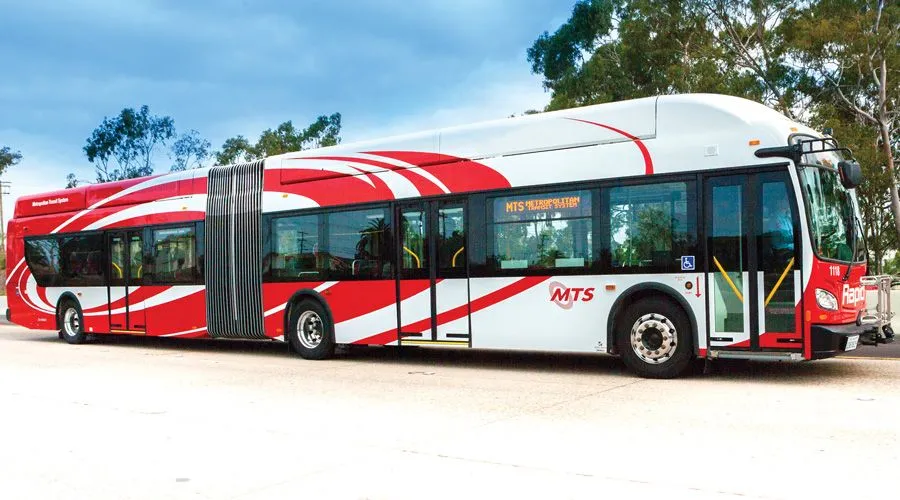 Image from SDMTS, Copyright by original authorSince the Trolley lines primarily run inland or along the I-5 corridor, tourists almost exclusively depend on the MTS Bus system to reach iconic coastal spots like Pacific Beach (Bus 8 or 30) and La Jolla Cove (Bus 30). These routes are essential for deep neighborhood access, though they can be slower due to frequent stops and city traffic.
 -
Rapid Bus (High Frequency): Easily identifiable by their red-and-silver livery, these buses have dedicated lanes and fewer stops. Rapid 215 is your primary gateway from Downtown to the heart of Balboa Park, while Rapid 235 provides a fast link to North County's Escondido.
-
Coronado Ferry: While technically a water taxi, it functions as a vital transit link between Downtown (Broadway Pier/Convention Center) and Coronado's Ferry Landing. It offers a unique perspective of the San Diego skyline.
-
Tourist Advantage: * MTS Bus: The only way to reach the city's vibrant beach communities and the hidden dining gems of North Park or Hillcrest without paying for expensive parking. Essential routes include Bus 7 (Zoo/Balboa Park) and Bus 30 (The "Beach Connector" from Old Town to La Jolla).
-
Rapid Bus: Provides "Express" travel to major attractions like Balboa Park and the Zoo with high-frequency service that rivals the Trolley.
-
Coronado Ferry: Offers a "scenic cruise" for a fraction of the price of a tour boat. It is the most beautiful way to arrive at Coronado, avoiding bridge traffic entirely.
-
6. Public Transportation vs. Rental Car in San Diego
Trolley vs. Bus
| Transit Mode | Speed / Efficiency | Reliability / On-time | Typical Wait Time | Best for / Short Trips | Mental Expectation / Tips |
|---|---|---|---|---|---|
| Trolley | High — dedicated tracks avoid traffic | Very stable — runs mostly on schedule | 5–15 min | Quick city travel, cross-district sightseeing | Expect smooth, predictable rides. Great for hopping between downtown, Old Town, and Balboa Park. |
| COASTER | Moderate — commuter train along coast | Mostly reliable, occasional delays | 30–60 min | Longer coastal trips (Oceanside ↔ Downtown SD) | Plan ahead for schedule; less frequent service means you may wait longer. Scenic ride, but not ideal for tight itineraries. |
| MTS Bus | Variable — affected by traffic | Moderate — can be delayed during rush hour | 10–20 min | Local neighborhood trips, short hops within the city | Flexible but expect possible delays in heavy traffic. Check real-time app info. |
Public Transportation vs. Rental Car
| Route | Public Transit Estimated Time (including walking/transfers) | Driving Estimated Time (pure driving) | Key Differences / Notes |
|---|---|---|---|
| Old Town → Downtown | 20 min (Trolley) | 15 min (plus parking time/costs) | Trolley is reliable and avoids parking hassles. |
| Downtown → Oceanside | 60–70 min (COASTER) | 60–90 min (I‑5 can be congested during peak) | COASTER is more predictable for longer trips, especially during rush hour. |
| Downtown → Pacific Beach | 45–60 min (Bus with transfer) | 20–25 min (but beach parking is difficult) | Bus takes longer, but driving may involve high parking cost and time searching for a spot. |
The "Hidden" Cost of Cars: Many tourists forget that even if a rental car is $40/day, parking at a hotel in Little Italy or Downtown hotel often costs another $40/night. In 3 days, you could spend $240 on a car versus $18 on transit.
7. How to Get Around San Diego Without a Car (Practical Routes)
To make your trip seamless, you need to know the specific "transfer points" for the most popular spots. San Diego's transit layout means some destinations require a bit of strategy.
From San Diego Airport (SAN) to Your Destination
-
To Downtown: Use MTS Bus 992 (The Airport Flyer). It picks up at both terminals and drops you at the Santa Fe Depot, which is the hub for all Trolley lines and the COASTER. It runs every 15 minutes.
-
To Old Town or La Jolla: Take the free Old Town Flyer shuttle from the airport terminals directly to the Old Town Transit Center. From there, hop on the Blue Line (for La Jolla/UCSD) or Green Line (for Mission Valley). This is often faster than going Downtown first.
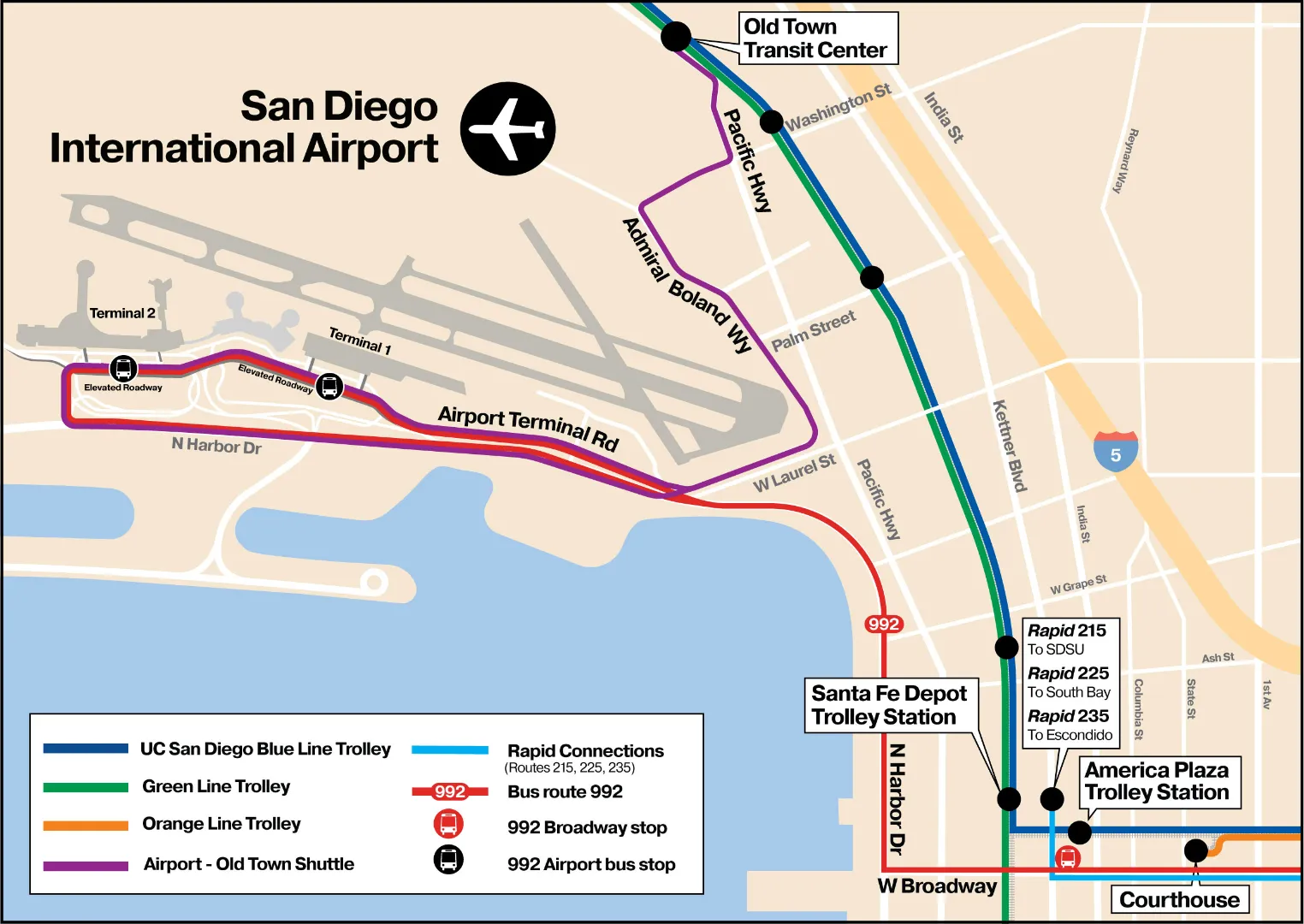
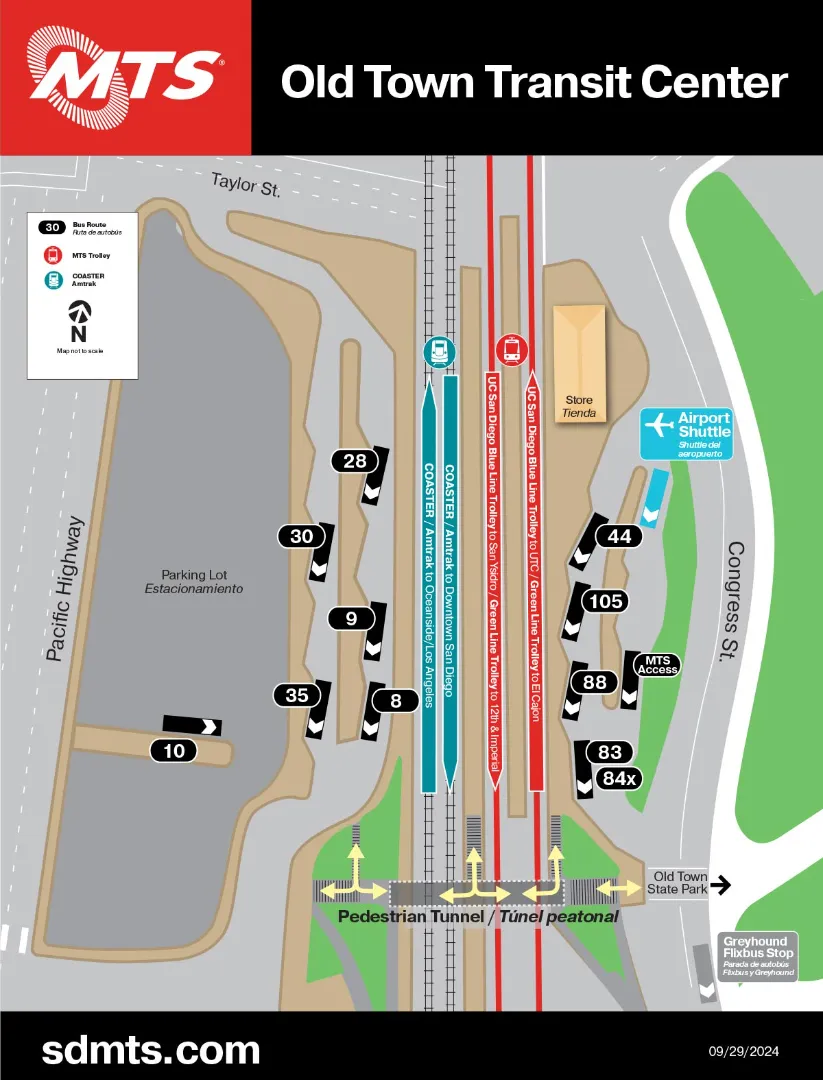 Image from SDMTS, Copyright by original author
Visiting World-Class Museums & The Zoo
-
Balboa Park: Take Rapid 215 from Downtown. It drops you off at the Park Blvd & Village Pl stop, right next to the Fleet Science Center and a short walk to the San Diego Zoo.
-
The San Diego Zoo: In addition to the 215, Bus 7 also runs frequently from Downtown and City Heights, dropping you right at the Zoo's main entrance.
Reaching the Best Beaches Without a Car
-
La Jolla Cove: Take the Blue Line Trolley to the UTC Station, then transfer to Bus 30. Alternatively, take the Blue Line to Nobel Drive Station and take a 10-minute Uber/Lyft to the Cove to save time.
-
Pacific Beach (PB): Take the Blue Line to the Balboa Avenue Station, then transfer to Bus 8. This is a high-frequency route that takes you straight to the heart of PB's nightlife and boardwalk.
-
Coronado Island: Take the 901 Bus from Downtown (Broadway) which goes across the bridge and down the main street. For a more scenic route, take the Coronado Ferry from Broadway Pier or the Convention Center for $8—it's a mini-cruise with a view!
Sample Day Trip: The Coastal Expedition
-
Morning: Board the COASTER at Santa Fe Depot.
-
Midday: Hop off at Encinitas for brunch and a walk through the Self-Realization Fellowship Gardens.
-
Afternoon: Continue on the COASTER to Carlsbad Village for shopping and the beach.
-
Evening: Return to Downtown via the COASTER, enjoying the sunset over the ocean from the upper deck.
Traveling with Luggage: Dos and Don’ts
-
Dos: Use the Santa Fe Depot or Old Town Transit Center as your primary hubs; they have the most space and easiest boarding. Elevators are available at all elevated or underground Trolley stations.
-
Don'ts: Avoid the 992 Bus during peak morning hours (8 AM) if you have more than two large suitcases. While allowed, it can be extremely cramped. Note: San Diego transit stations generally do not have luggage lockers. If you need to store bags, look for "Bounce" or "Stasher" locations in local shops Downtown.
8. Tips for Using San Diego Transit Safely and Efficiently
Navigating a new city's transit system can be daunting. These practical tips will help you minimize wait times and maximize personal safety.
Essential Digital Tools
-
Real-Time Tracking: Do not rely solely on printed schedules. Use Google Maps (integrated with live MTS data) or the OneBusAway app. If the app shows a bus is "Delayed" or "Gone," trust it—San Diego traffic can be unpredictable.
-
The PRONTO App Check: Always ensure your phone is charged. If your phone dies, you cannot show your scan to a fare inspector. Carrying a small power bank is a "pro tip" for transit travelers.
Managing Transfers and "Buffer" Time
-
The 15-Minute Rule: Most Trolleys run every 15 minutes. However, buses can vary from every 10 to every 30-60 minutes. When Google Maps says a transfer takes 5 minutes, give yourself 15.
-
The "Two-Hour" Window: Remember that your $2.50 fare allows for free transfers for 2 hours. If you are doing a quick errand (e.g., picking up a coffee in Little Italy), you might not be charged for the ride back if it’s within that window.
Safety and Night Travel Realities
-
Daytime: The system is very safe and used by commuters, students, and tourists.
-
Nighttime (After 9 PM): While major hubs like Gaslamp and Little Italy remain busy, some Trolley stations (notably 12th & Imperial and City College) can attract a large homeless population and feel less comfortable.
-
Proactive Safety: Sit in the first car of the Trolley, closest to the operator. If you are a solo traveler at night, waiting for a bus at a dark stop can feel vulnerable; this is the time to consider a short Uber/Lyft ride instead.
When to Abandon Public Transit for Rideshare
Public transit is great for "A to B" travel, but becomes inefficient in these cases:
-
Group Travel: If you are 4 people, a $12 Uber is often cheaper and faster than four $2.50 bus tickets.
-
Late Night Returns: After 10 PM, bus frequency drops significantly. Don't wait 45 minutes at a bus stop to save $10.
-
Specific Landmarks: Places like Mt. Soledad, Cabrillo National Monument, or Torrey Pines State Reserve have very limited or no direct transit. Use the Trolley to get "close," then take an Uber for the final leg.
9. Final Verdict: Is San Diego Worth Visiting Without Renting a Car?
You will enjoy San Diego without a car if:
-
You are staying in a central neighborhood.
-
You enjoy walking (San Diego is very walkable in the urban core).
-
You want to save money for better dining and experiences.
You may feel limited if:
-
You want to go "beach hopping" from Coronado to Del Mar in a single day.
-
You have a tight schedule and cannot afford an extra 20–30 minutes of travel time.
-
You are staying in a suburban area like North County or the East County hills.
Final Tip: Don't feel pressured to choose only one. Use the Trolley for 80% of your trip and rent a car for a single day (Zipcar or a local rental agency) to visit the distant sights like Mount Soledad or the Safari Park. It is the most logical and cost-effective way to see the city.