In 2026, subway systems in major US cities remain the go-to choice for efficient, affordable travel for both tourists and locals. Among them, the subways in New York City (NYC), Washington D.C., and Los Angeles (LA) stand out for their extensive networks and potential for cost savings through smart strategies. NYC's subway pulses through the city's veins with 24/7 service, while D.C.'s system offers clean, distance-based rides, and LA's integrates seamlessly with buses for sprawling coverage.
Planning to use public transit in the US? Read our 2026 guide to navigating the NYC Subway, DC Metro, and LA Metro, including payment apps and money-saving tips.
This comprehensive guide draws on the latest updates to help you navigate these systems, buy tickets wisely, ride efficiently, and avoid common pitfalls—all while keeping your wallet happy. Whether you're a first-timer or a seasoned commuter, these tips will help you master the metros and redirect savings toward experiences like food and attractions.
The US boasts around 15 subway systems, including those in NYC, Chicago, D.C., Boston, San Francisco (BART), Philadelphia, Atlanta, LA, Miami, and San Juan. But we'll zoom in on the big three: NYC, D.C., and LA.
📌 2026 US Metro Systems at a Glance
|
Feature |
NYC Subway (MTA) |
Washington DC (WMATA) |
Los Angeles (Metro) |
|---|---|---|---|
|
Base Fare |
$2.90 |
$2.25 - $6.00 (Distance-based) |
$1.75 |
|
Payment App/System |
OMNY (Tap-to-pay credit card/phone) |
SmarTrip (Card or Mobile Wallet) |
TAP (Card or Mobile Wallet) |
|
Best Money-Saving Tip |
OMNY fare capping (Free rides after 12 taps/week) |
Buy a 1-Day or 3-Day Unlimited Pass |
LA Metro Fare Capping ($5/day max) |
|
Hours of Operation |
24/7 |
5 AM to Midnight (Varies by day) |
~4:30 AM to Midnight |
I. New York City Subway (MTA Subway)
Money-Saving Hack: Embrace OMNY for Fare Caps and Skip the Old MetroCard!
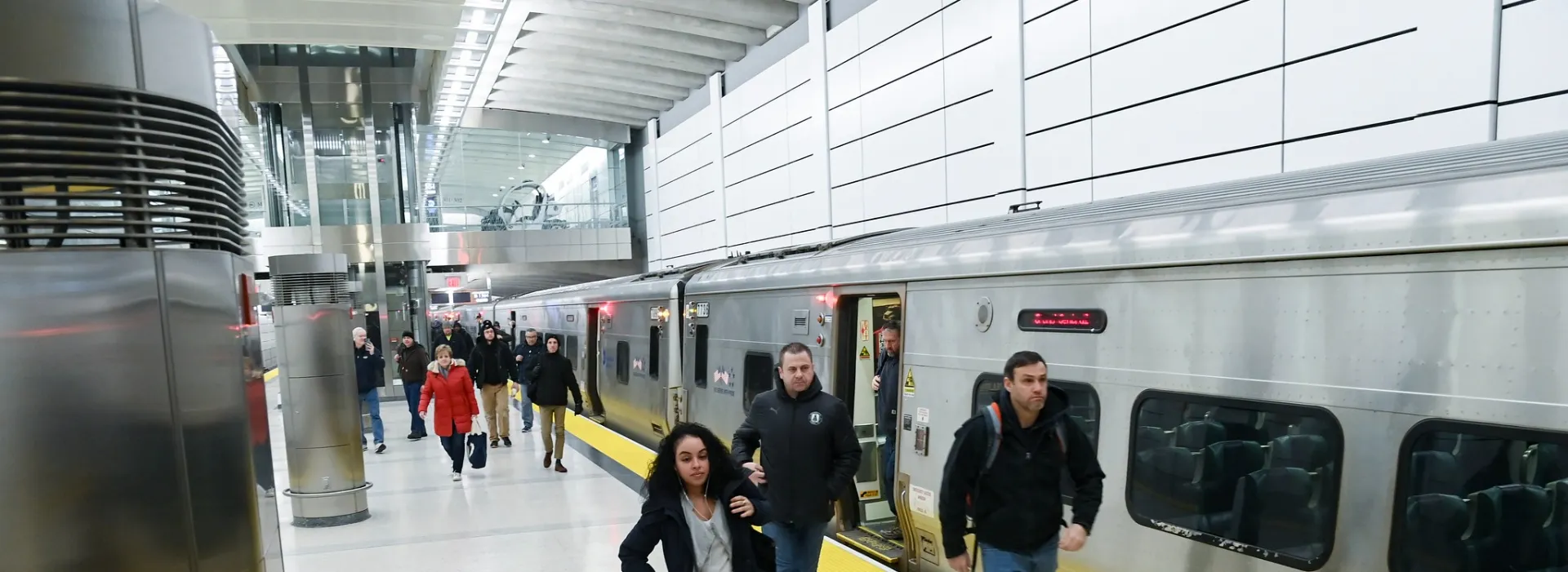
NYC, the largest and most bustling city in the US, has a complex transit system where driving is often a nightmare due to traffic and high parking fees. The subway is the lifeline, with over 100 years of history, 472 stations, 27 lines, and 660 miles (1,060 km) of track serving the Bronx, Manhattan, Queens, Brooklyn, and Staten Island. It's the world's only 24/7 subway, though some lines or stations close at night. Stations can feel dated—small, stuffy, and sometimes dirty—but the coverage is unmatched.
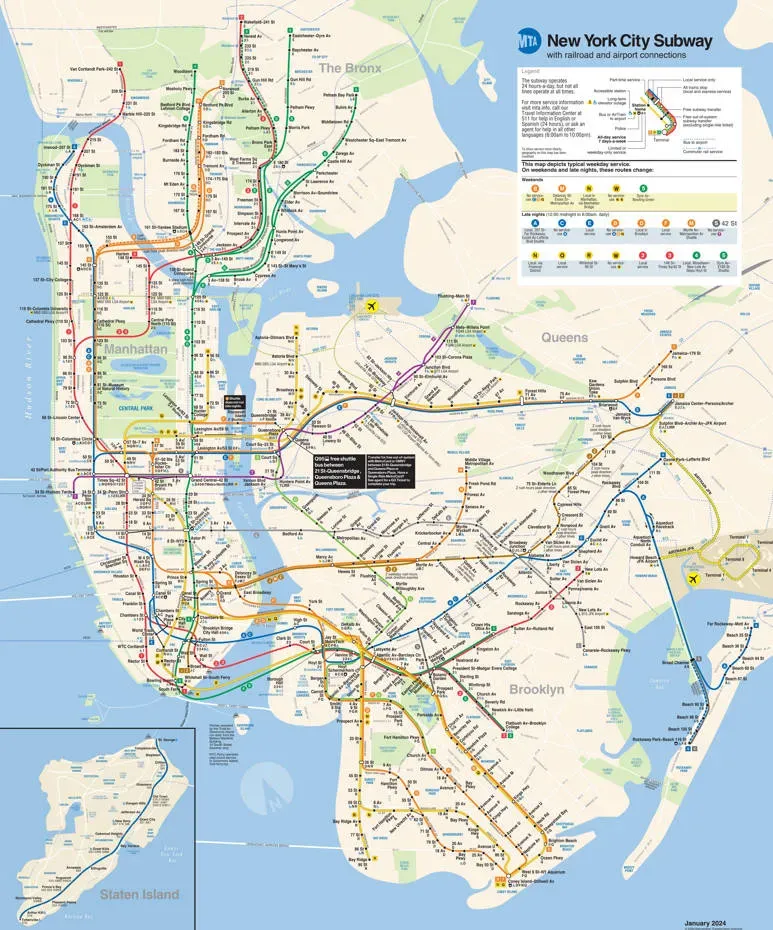
To navigate the NYC Subway effectively, it helps to understand that the system is organized by "Trunk Lines" (the shared tracks under major Manhattan avenues). Trains are grouped by color based on the avenue they travel through in Midtown Manhattan.
Key Lines
🔴 The West Side (Broadway–7th Ave)
These lines serve the Upper West Side, Chelsea, and the West Village.
-
1 (Local): Runs from the Bronx (242nd St) down to South Ferry. It is the "workhorse" for Columbia University and Lincoln Center.
-
2 & 3 (Express): High-speed lines connecting the Bronx/Upper West Side to Brooklyn. They skip many stops in Manhattan.
🟢 The East Side (Lexington Ave)
The busiest corridor in the U.S., serving Grand Central and the Upper East Side.
-
4 & 5 (Express): Fast service from the Bronx through the East Side into Brooklyn.
-
6 (Local): The primary local service for the East Side; it terminates at Brooklyn Bridge–City Hall.
🔵 The 8th Avenue Line
Connects the West Side and Harlem to Brooklyn and Queens.
-
A (Express): The longest line in the system. Runs from Inwood (Upper Manhattan) all the way to JFK Airport/Far Rockaway.
-
C (Local): Local version of the A; stops at every station through Manhattan and Brooklyn.
-
E (Local): Connects the World Trade Center to Midtown and Queens (Jamaica Center).
🟠 The 6th Avenue Line
Crucial for reaching the "heart" of Midtown and parts of Brooklyn.
-
B & D (Express): Fast connections between the Bronx and Brooklyn via 6th Avenue.
-
F & M (Local): The F is a major link from Queens to Coney Island; the M serves Queens and the Lower East Side.
🟡 The Broadway Line
Primary service for Times Square, Union Square, and Lower Manhattan.
-
N & Q (Express): Quick transit from Astoria (Queens) or the Upper East Side (Q) to Brooklyn.
-
R & W (Local): R serves the tunnel to Brooklyn; W is weekday-only service to Whitehall St.
🟣 The Flushing & Crosstown Lines
-
7 (Purple): The "International Express." Connects Hudson Yards to Flushing, Queens (Citi Field).
-
L (Grey): The 14th St Line. The main artery for Williamsburg and Bushwick.
-
G (Lime): The only major line that does not enter Manhattan. It connects Brooklyn and Queens directly.
As of January 4, 2026, the New York City Subway has fully transitioned into its new fare structure. The iconic yellow MetroCard has been officially retired from sales, making OMNY the primary way to pay.
Current Fare Prices (2026)
| Service | Full Fare | Reduced Fare | Notes |
|---|---|---|---|
| Subway / Local Bus / Limited / Select Bus Service | $3.00 per ride | $1.50 per ride | Applies to most riders; reduced for seniors (65+), people with qualifying disabilities, and eligible students |
| Single-Ride Ticket (from vending machines) | $3.50 | N/A | Valid for 2 hours; no transfers |
| Express Bus | $7.25 per ride | $3.60 (approx.) | Higher fare for premium service |
| Access-A-Ride (paratransit) | $3.00 | N/A | Matches subway/bus base fare |
Free transfers: Available between subway and bus (or bus-to-bus) within 2 hours using the same payment method.
How to Pay: The OMNY System
OMNY is a "tap-and-go" system. You no longer need to wait in line at a machine unless you want a physical OMNY card. You can pay by tapping:
-
Smartphones & Watches: Use Apple Pay, Google Wallet, or Samsung Pay.
-
Contactless Bank Cards: Any credit or debit card with the "wave" symbol.
-
OMNY Card: A reloadable plastic card available at station vending machines and local retailers (like CVS or 7-Eleven).
Note on MetroCards: While you can no longer buy or refill MetroCards at station booths, any unexpired cards with a remaining balance can still be used at the turnstiles until later in 2026 (exact sunset date to be announced).
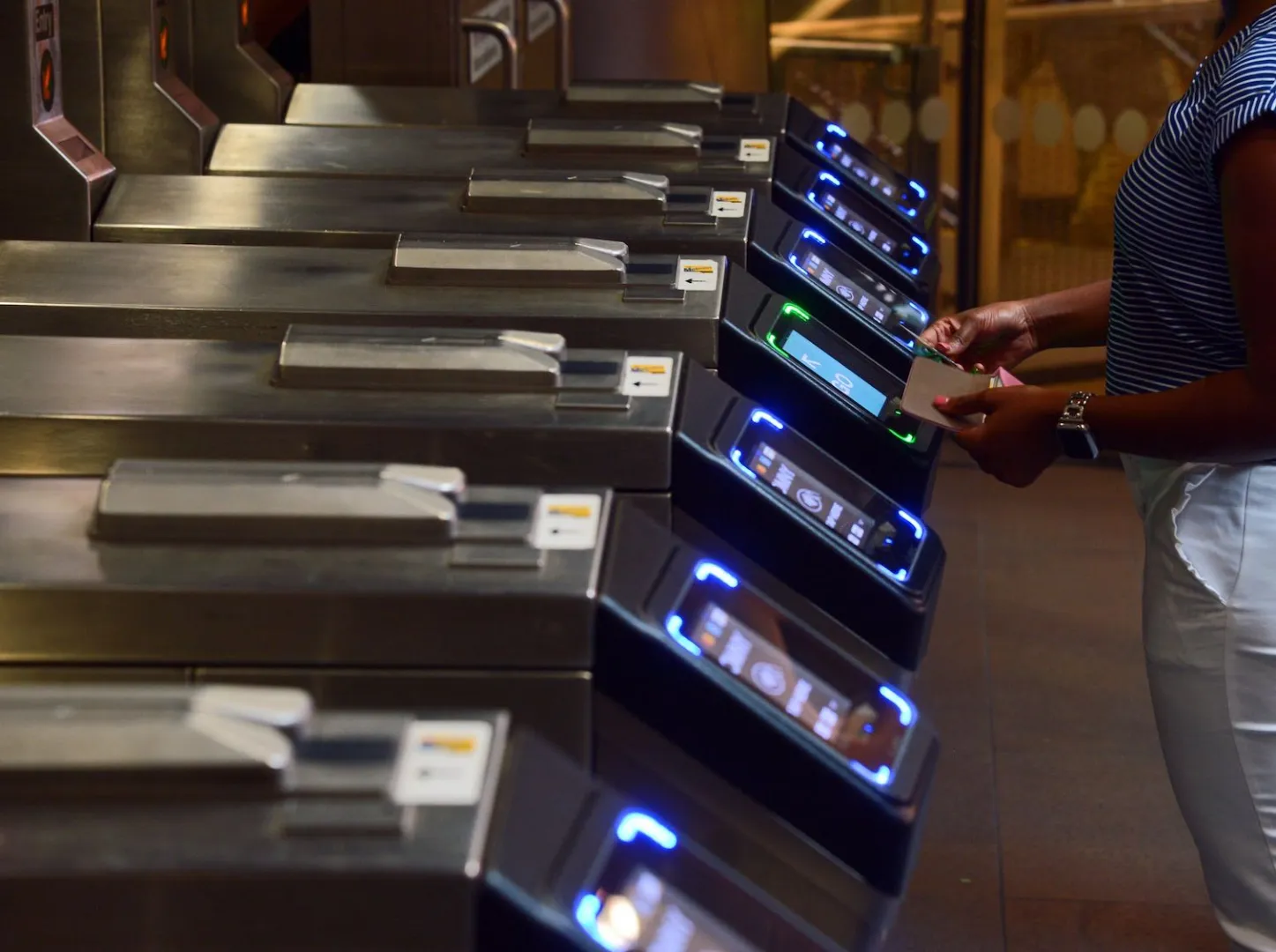
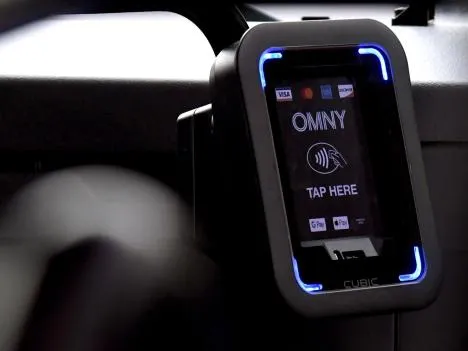
Automatic "Fare Capping" (The New Unlimited)
The MTA has replaced pre-paid "Weekly Passes" with automatic fare capping. You no longer have to decide upfront if you need an unlimited pass; the system calculates it for you.
-
The 7-Day Cap: Once you hit 12 paid rides ($35.00) in any rolling 7-day period using the same device or card, every subsequent ride for the rest of that week is free.
-
Reduced Fare Cap: Eligible riders hit their cap after 12 rides at the discounted rate, totaling $17.50.
-
Express Bus Cap: A new $67.00 weekly cap now exists for riders who mix express buses with subways and local buses.
Student & Low-Income Fares
-
Fair Fares NYC: Eligible low-income New Yorkers can still receive a 50% discount. This program has been fully integrated into OMNY for 2026.
-
Student OMNY: NYC public school students now use specialized Student OMNY cards that provide four free rides daily, 365 days a year.
How to Ride the NYC Subway: A Complete Beginner’s Guide (OMNY, Lines, Stations & Signs)
II. Washington D.C. Metro (WMATA Metro)
Money-Saving Hack: Ride Off-Peak for Cheaper Fares on Short Trips!
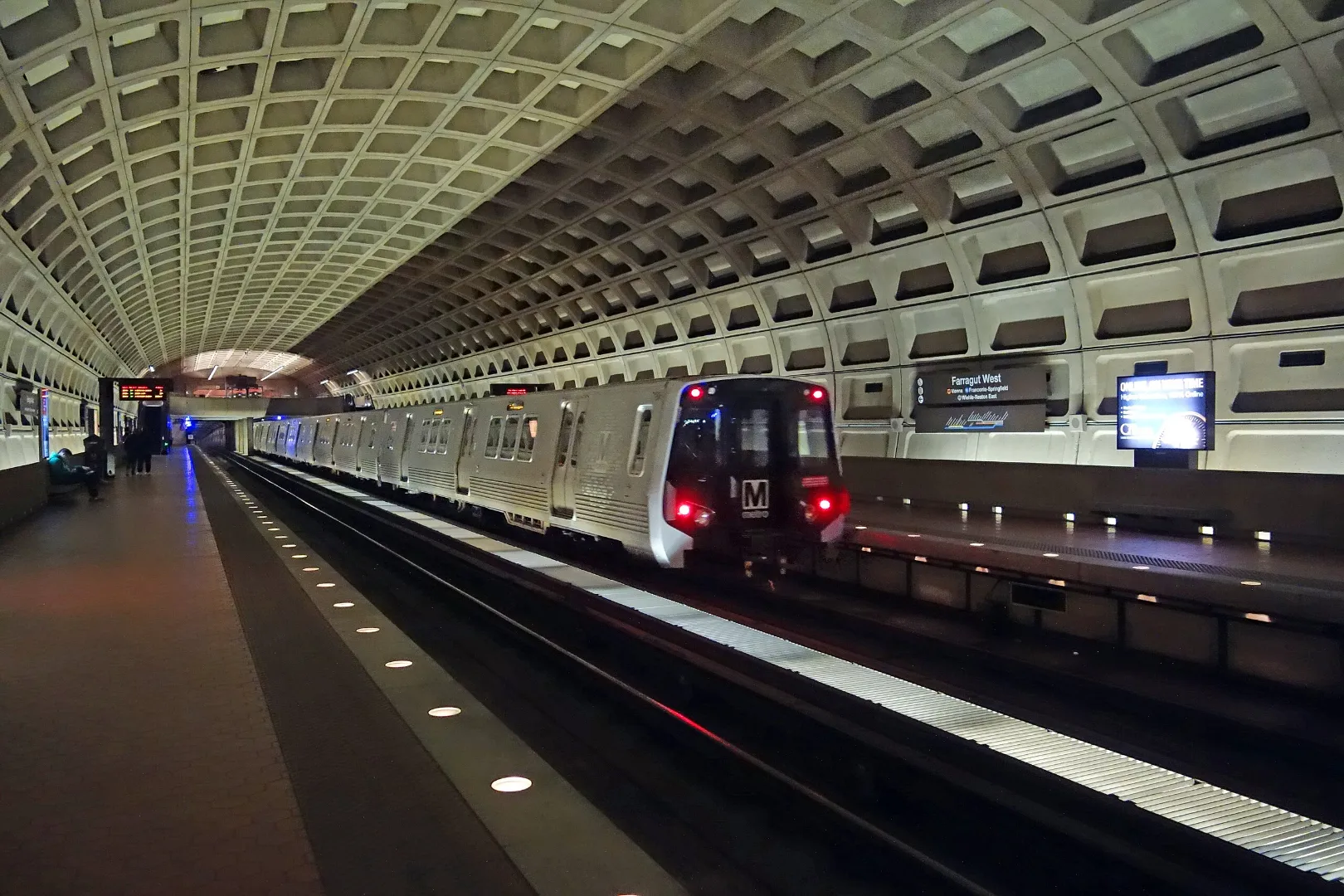
The Washington D.C. Metro (Metrorail), operated by the Washington Metropolitan Area Transit Authority (WMATA), is the second-busiest rapid transit system in the United States. In 2026, it continues to emphasize distance-based pricing and high-tech contactless payment.
The Six Color-Coded Lines
The system is designed so that any two stations can be reached with no more than one transfer.
-
🔴 Red Line: A "U-shaped" line connecting Montgomery County, MD, through downtown D.C. (Union Station, Metro Center).
-
🟠 Orange Line: Connects Fairfax County, VA, through D.C. to Prince George’s County, MD.
-
🔵 Blue Line: Runs from Franconia-Springfield (VA) through the city to Downtown Largo (MD).
-
🟡 Yellow Line: A vital link between Huntington (VA) and Mt. Vernon Square (D.C.) via the Potomac River bridge.
-
🟢 Green Line: Connects Prince George’s County (MD) through the heart of D.C. to Branch Ave.
-
⚪ Silver Line: The newest line, providing a direct link from Dulles International Airport (IAD) to downtown D.C. and Largo (MD).
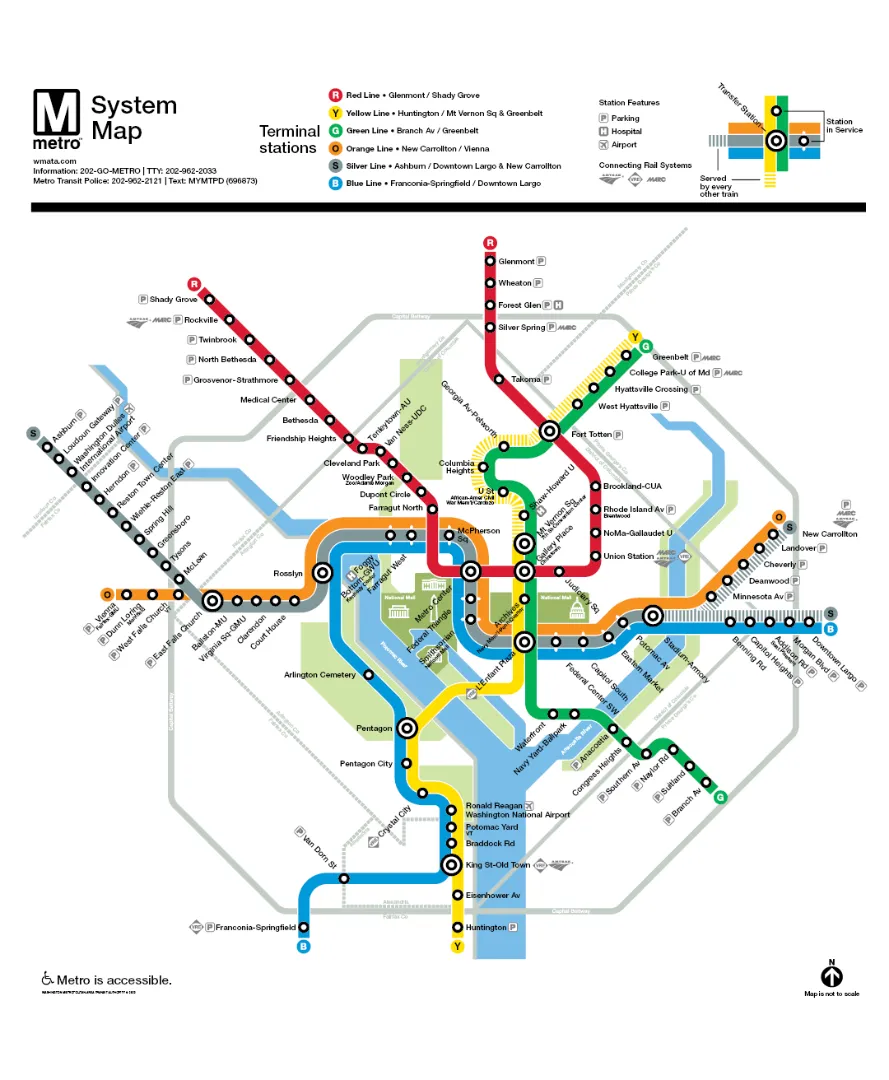
Washington D.C. Metro System Map
2026 Fares & Payment
Unlike NYC's flat fare, D.C. Metro fares are variable based on the distance traveled and the time of day.
Current Pricing Structure:
-
Weekdays (Peak): $2.25 minimum – $6.00 maximum.
-
Weekdays (After 9:30 PM) & Weekends: Flat rates or lower maximums (typically $2.00 – $2.50).
-
Unlimited Passes:
- 1-Day: $13.50
- 3-Day: $33.75
- 7-Day: $60.75
- 1-Day: $13.50
"Tap. Ride. Go." (Contactless Pay): New for the 2025–2026 era, WMATA has fully launched Tap. Ride. Go. You can now tap any contactless credit/debit card or mobile wallet (Apple/Google Pay) directly at the faregate.
Important: While contactless cards work for full fares, you still need a SmarTrip card (physical or digital in your phone's wallet) for reduced fares, senior discounts, or long-term passes.
Operating Hours
| Day | Hours |
| Mon – Thu | 5:00 AM – 12:00 AM |
| Friday | 5:00 AM – 2:00 AM |
| Saturday | 6:00 AM – 2:00 AM |
| Sunday | 6:00 AM – 12:00 AM |
Key Commuter Tips
-
The "Farragut Crossing": You can transfer between Farragut West (Blue/Orange/Silver) and Farragut North (Red) for free by walking above ground and re-entering within 30 minutes.
-
Escalator Etiquette: A local "law": Stand on the right, walk on the left.
-
No Food or Drink: Metro is strictly "no eating or drinking." This is why D.C. stations are famously cleaner (and have fewer rodents) than NYC's.
Washington, D.C. Public Transportation Guide: Metro, Buses, Airports & Travel Tips
III. Los Angeles Metro (LA Metro)
Money-Saving Hack: TAP Card Daily Caps + Free Transfers for Bus-Rail Combos!
Los Angeles Metro (LA Metro) has undergone a massive transformation in the lead-up to the 2028 Olympics. As of January 2026, the system has expanded significantly, finally connecting major hubs like Beverly Hills and LAX to the wider rail network.
The Rail System (Subway & Light Rail)
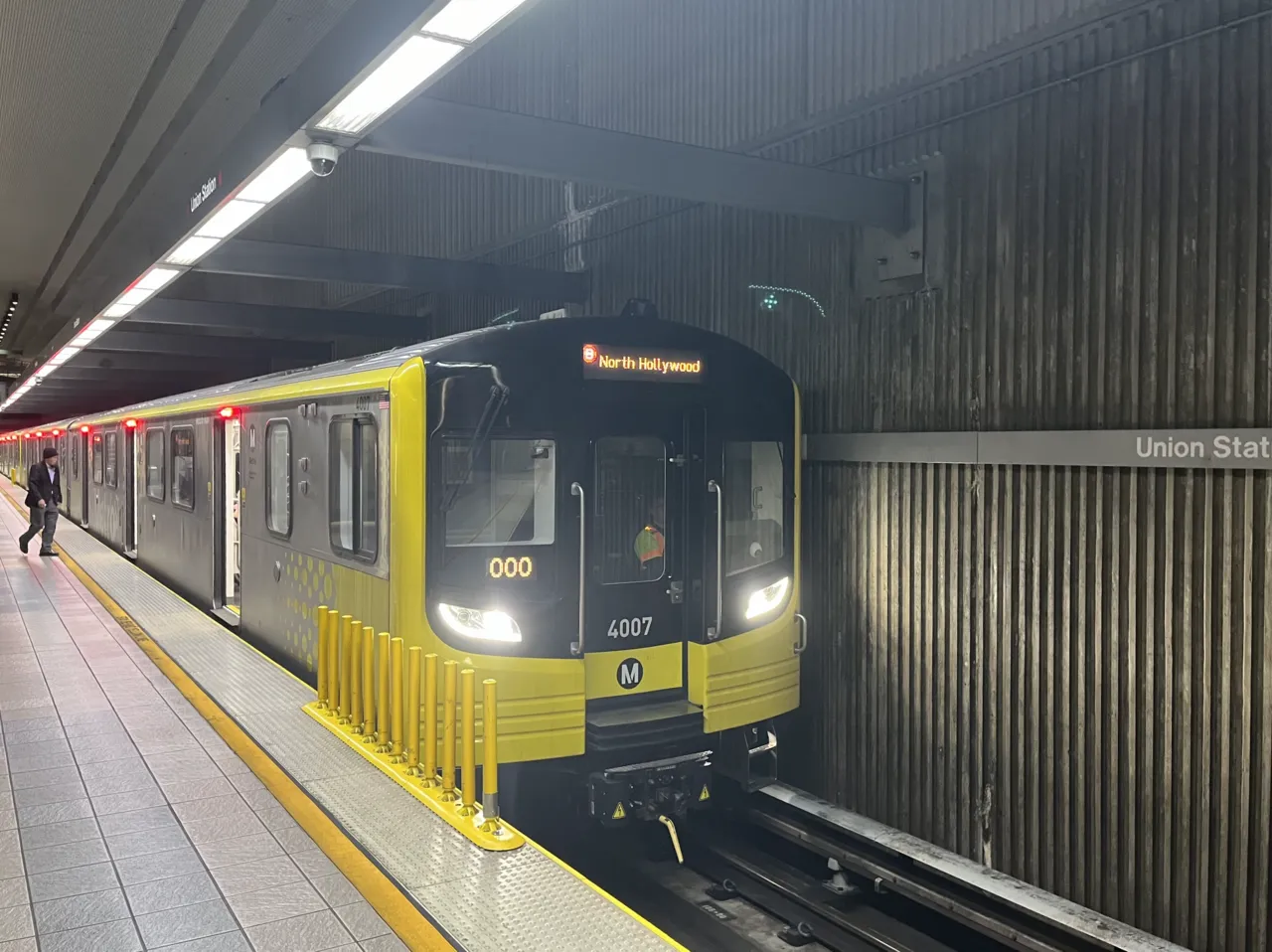
LA Metro uses a letter-naming system (e.g., A Line, B Line) to help riders navigate.
-
B Line (Red) & D Line (Purple): The two heavy-rail subway lines.
-
Major 2026 Update: The D Line Extension (Section 1) has just opened, adding new underground stations at Wilshire/La Brea, Wilshire/Fairfax (LACMA), and Wilshire/La Cienega. This finally brings subway service into the heart of Beverly Hills.
-
-
A Line (Blue): The "Longest Light Rail in the World," running from Long Beach through Downtown LA (DTLA) and out to Pomona.
-
E Line (Expo): Connects Santa Monica beach to DTLA and East Los Angeles.
-
K Line (Crenshaw) & C Line (Green):
-
The LAX Link: The LAX/Metro Transit Center is now fully operational. Passengers can take the K or C lines to this station and transfer to the LAX Automated People Mover (opening early 2026) for a direct train ride to airport terminals.
-
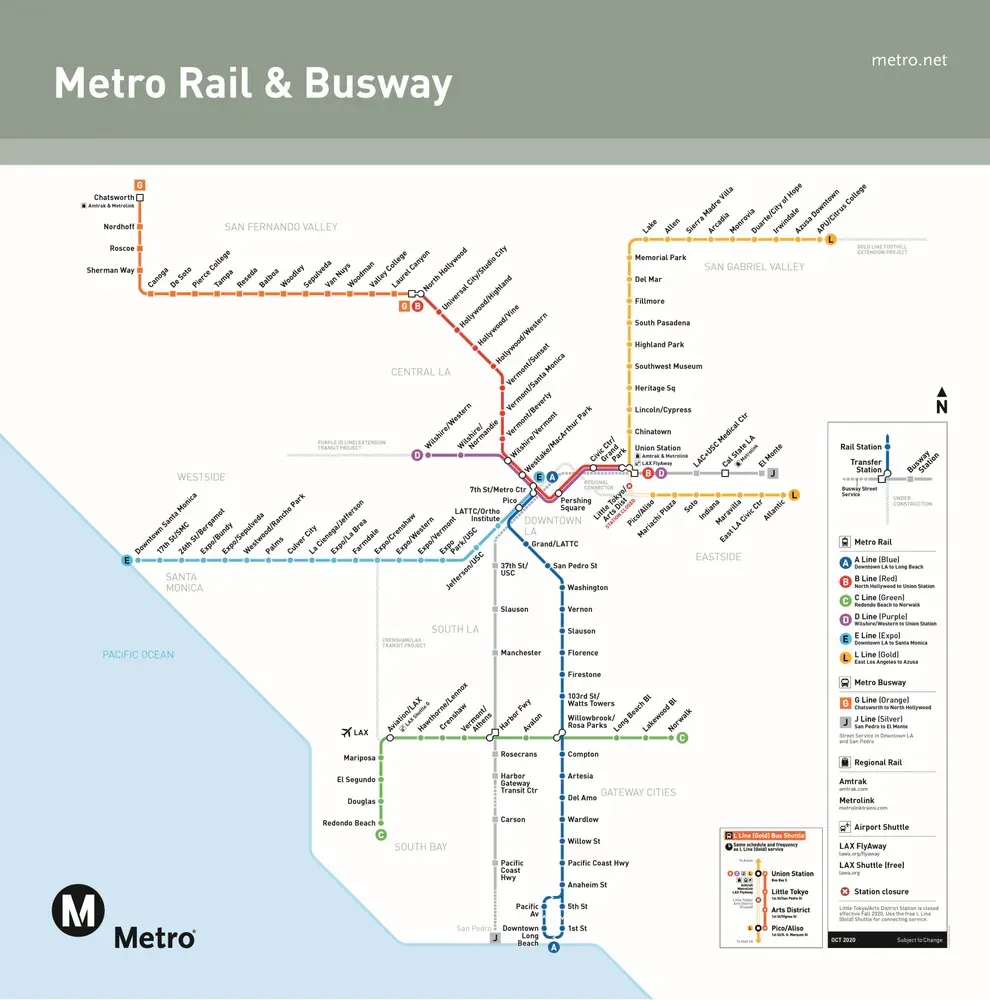
Los Angeles Metro Rail & Busway Map
Fares & "TAP Plus" (2026)
LA Metro remains one of the most affordable systems in the U.S., using a TAP Card (physical or digital).
| Fare Type | Price |
| Standard Base Fare | $1.75 |
| Seniors (62+) / Disabled | $0.75 (Peak) / $0.35 (Off-Peak) |
| K-12 & College Students | Free (via GoPass program) |
| Transfer Window | 2 Hours Free (must use TAP) |
Fare Capping (The "No-Pass" Model): You no longer buy daily or weekly "passes." Instead, the system automatically stops charging you once you hit a certain limit:
-
Daily Cap: $5.00 (Ride for free after your 3rd tap of the day).
-
Weekly Cap: $18.00 (Ride for free after your 11th tap of the week).
New for 2026: LA Metro has launched TAP Plus, allowing riders to pay by tapping their contactless credit/debit cards or Apple/Google Pay directly at the fare gates. Note: To benefit from fare capping, you must consistently use the same card/device.
Metro Busway (BRT)
LA also operates "trains on wheels" known as Bus Rapid Transit:
-
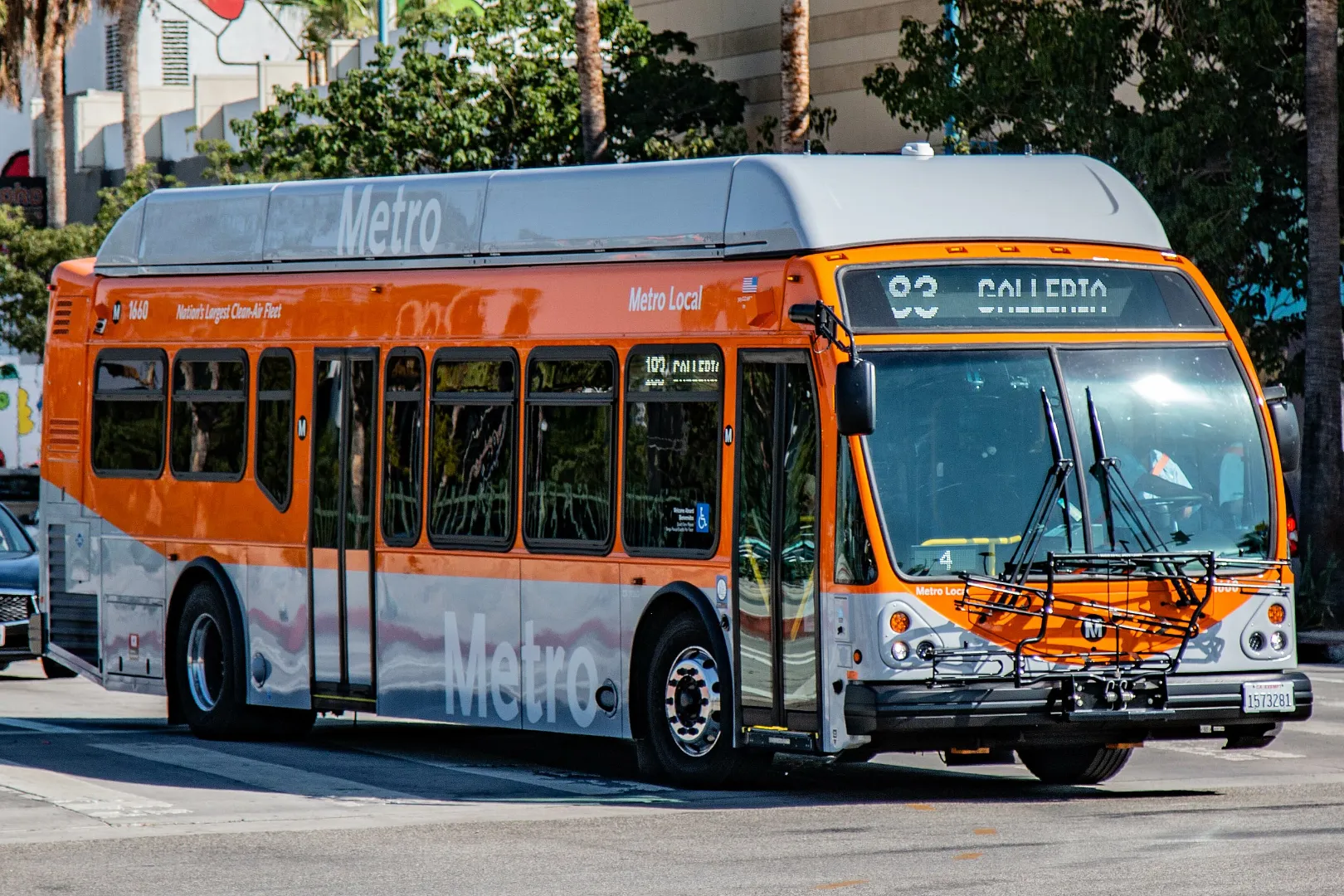
G Line (Orange): High-speed busway across the San Fernando Valley.
-
J Line (Silver): Uses the express lanes on the I-10 and I-110 to connect El Monte, DTLA, and San Pedro.
Safety & Riding Tips
-
"Stand Behind the Yellow Line": Unlike D.C., LA light rail lines often run at street level. Be extremely cautious around tracks.
-
Ambassador Program: You will likely see "Metro Ambassadors" in green vests. They are there to provide directions, help with fare machines, and report safety issues.
-
Transit App: This is the officially recommended app for real-time bus and train tracking in Los Angeles.
The Ultimate Los Angeles Car-Free Travel Guide: Metro, Buses, Bikes & More
General Tips for All Cities
-
Avoid Card Fees: Load cards into phone wallets (Apple/Google Pay) to skip physical fees.
-
Ditch Paper Tickets: More expensive or restrictive—go digital/rechargeable.
-
Apps First: Download NYC Transit, SmarTrip, or TAP apps for real-time info, balances, and alerts.
-
Safety: Avoid late-night solo rides (post-10 PM); wait in well-lit areas.
-
Transfers: NYC: Free in-station. D.C./LA: Free within 2 hours—maximize for savings.
💡 The Secret to Saving: Understand "Fare Capping"
In 2026, the best way to save money on US transit is to take advantage of "Fare Capping." You no longer need to buy expensive weekly passes upfront.
-
In NYC: Use the same contactless card or device for every tap. After your 12th paid ride in a 7-day period (starting Monday), all subsequent rides that week are free.
-
In LA: The TAP system automatically caps your daily spending at $5 and your weekly spending at $18. Once you hit that amount, you ride free.
Frequently Asked Questions (FAQ)
Q1: Can I still use MetroCard in NYC in 2026?
A: No—MTA phased it out by end-2025. Use OMNY only.
Q2: Have fares increased? How to save most?
A: NYC single rides rose to $3 on Jan. 4, 2026. Use fare caps everywhere.
Q3: Riding tips?
A: Distinguish local/express (NYC); wait at yellow-marked areas at night.
Q4: Is LA tap-to-ride easy?
A: Yes—via TAP app or wallet. $1.75/ride with 2-hour transfers.
Q5: How are D.C. fares calculated?
A: By distance/time—peak/off-peak/weekend rates vary.
The 2026 US subway landscape is more digital and user-friendly than ever. By leveraging Fare Capping and Contactless Payments, you can save significant money while skipping the gridlock of city traffic. Download your digital cards today and explore the best of New York, D.C., and L.A. from beneath the streets!