If you live in the United States, you’ve likely heard about the REAL ID requirement—but many people are still unclear about what it actually means and whether they truly need one. With federal enforcement approaching, confusion around REAL ID, standard state IDs, and other acceptable forms of identification has become increasingly common.
REAL ID is a federally compliant form of identification issued by state DMVs, designed to meet enhanced security standards for domestic air travel and access to certain federal facilities. However, not everyone needs a REAL ID, and in many cases, a valid U.S. passport or other documents may already be sufficient.
This guide provides a clear, practical explanation of what REAL ID is, how it differs from other IDs, and how to apply for one, with special attention to common pitfalls and considerations for non-citizens. Whether you are a U.S. citizen, permanent resident, or visa holder, this article will help you decide if—and when—getting a REAL ID makes sense for your situation.
TL;DR / Quick Summary:
Deadline: May 7, 2025 (Full Enforcement).
Travel: REAL ID is required for domestic flights unless you use a Passport.
Non-Citizens: Be cautious of "Limited-Term" IDs and SAVE system delays.
The Choice: If you always carry a passport, a REAL ID might not be necessary.
1. Introduction: What Is REAL ID and Why It Matters Now
1.1 Brief Overview of the REAL ID Act
Passed by Congress in 2005 as a direct recommendation from the 9/11 Commission, the REAL ID Act was designed to close security loopholes in state-issued identification. Historically, driver’s licenses were a "messy" patchwork of different state standards. The REAL ID Act created a federal "gold standard" for security features and documentation checks. It’s not a national ID card, but a federal mandate: "If a state ID doesn't meet these specific criteria, federal agencies cannot accept it."
1.2 Latest Enforcement Timeline and Deadlines
-
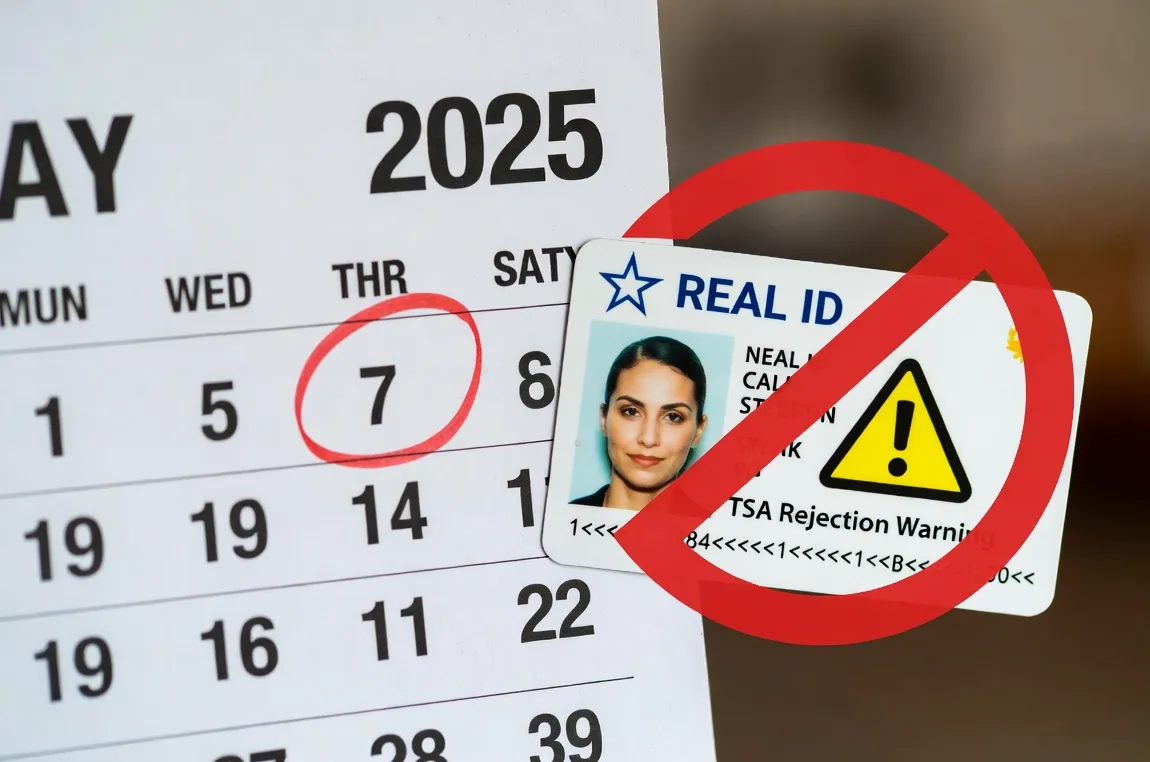
May 7, 2025: The "Full Enforcement" Cliff. Starting this day, you must present a REAL ID-compliant license or another acceptable form of ID (like a passport) for domestic flights.
-
February 1, 2026: The $45 "Stupidity Tax" (TSA ConfirmID). For those who show up without a REAL ID, the TSA has introduced TSA ConfirmID. This is a modernized verification process that costs $45 (non-refundable) and grants a 10-day travel window. It is intentionally slow and expensive to nudge travelers toward compliance.
TSA (Transportation Security Administration) is a U.S. federal agency responsible for airport security and passenger screening. It is the authority that enforces the REAL ID requirement for domestic air travel at airport security checkpoints.
1.3 Scope of Acceptance: Where REAL ID is Required (and Where it Isn't)
Understanding the scope of the REAL ID Act is crucial for daily life. It is primarily a "Federal Access" requirement, not a general identity requirement.
You WILL need a REAL ID (or an alternative) for:
-
Domestic Air Travel: Boarding any federally regulated commercial aircraft.
-
Federal Facilities: Entering military bases and specific federal high-security buildings (e.g., nuclear power plants).
-
Federal Courthouses: In many jurisdictions, a compliant ID is required for entry beyond public areas.
You DO NOT need a REAL ID for:
-
Voting or Registering to Vote: Standard state IDs remain valid.
-
Driving: A standard driver's license is still legal for operating a vehicle.
-
Applying for Federal Benefits: Social Security, Veterans' benefits, etc.
-
Entering Post Offices or Libraries: General public federal areas do not require it.
-
Healthcare: Accessing hospitals or emergency services.
1.4 What REAL ID is NOT Used For
-
International Travel: You cannot use it to enter Canada or Mexico. You still need a passport.
-
Immigration Status: It doesn't grant or change your legal status; it only verifies it.
1.5 Quick Decision Guide: Do You Actually Need One?
-
Apply if: You fly domestically 3+ times a year and hate carrying your passport.
-
Skip if: You always travel with your passport book/card anyway, or if your immigration status is currently "Pending" (see Section 4).
2. Legal Background and ID System Explained
2.1 Federal Law, State Implementation
The REAL ID Act is federal, but implementation is state-level. This "dual-layer" system explains why California (CA DMV) feels like a different country compared to Texas (TX DPS). States control the user experience and the specific list of accepted residency proofs.
2.2 REAL ID vs. Other Documents: Choosing Your Shield
In the current US identification landscape, not all cards are created equal. Use the table below to determine which "shield" best fits your travel needs and legal situation.
|
Document Type |
Key Marking |
Domestic Flying (Post-2025) |
International Land/Sea Border |
Cruise Travel (Closed-Loop) |
Best For... |
|---|---|---|---|---|---|
|
Standard License |
"Federal Limits Apply" |
❌ No |
❌ No |
❌ No* |
People with valid Passports or those not flying. |
|
REAL ID |
Gold/Black Star ⭐ |
✅ Yes |
❌ No |
❌ No* |
US Citizens & Green Card holders for all-in-one use. |
|
Enhanced License (EDL) |
US Flag 🇺🇸 |
✅ Yes |
✅ Yes (CA/MX/Carib) |
✅ Yes |
Citizens only in border states (NY, WA, etc.). |
|
Passport Card |
"Passport Card" |
✅ Yes |
✅ Yes (CA/MX/Carib) |
✅ Yes |
People who want REAL ID benefits without the DMV hassle. |
*Note: For closed-loop cruises (starting and ending at the same US port), a Standard ID or REAL ID may be used only when accompanied by an original birth certificate, but a Passport or EDL is always recommended.
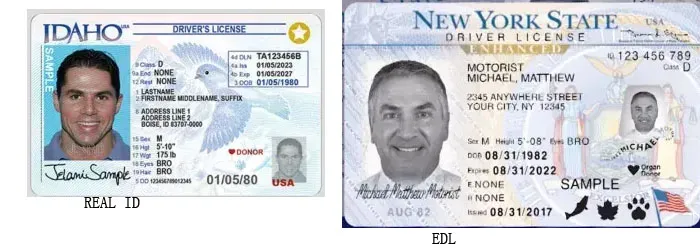
An EDL, or Enhanced Driver’s License, is a special type of state-issued driver’s license available in a limited number of U.S. states. It can be used for land and sea border crossings between the U.S., Canada, Mexico, and some Caribbean countries.
EDLs are REAL ID–compliant, but not all REAL IDs are EDLs.
Critical Nuances to Consider:
The EDL "Citizens Only" Warning: Extreme Risk for Non-Citizens. Enhanced Driver's Licenses (EDL) are strictly reserved for US Citizens. If a non-citizen accidentally applies for an EDL, it can be flagged by USCIS as a "False Claim to US Citizenship"—a permanent, non-waivable ground for deportation.
Standard License Strategy: For non-citizens with pending cases, the Standard License is often the safest bet. It is easiest to get and doesn't require constant "Limited-Term" renewals tied to visa end-dates.
The Passport Card Loophole: If you already have a Passport Card, you technically never need a REAL ID. You can use the card for TSA and keep a Standard License for driving.
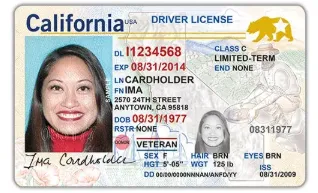
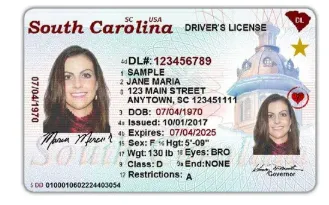
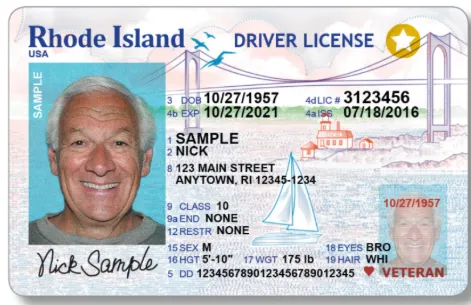
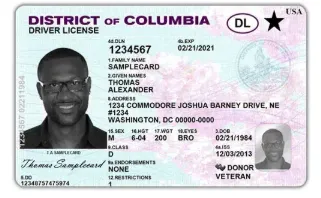
2.3 How do I know if my license or identification card is REAL ID compliant?
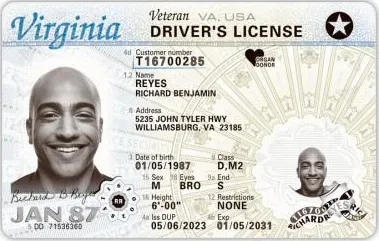
REAL ID-compliant cards will have of one of the following markings on the upper top portion of the card. If the card does not have one of these markings, it is not REAL ID-compliant and won’t be accepted as proof of identity in order to board commercial aircraft.
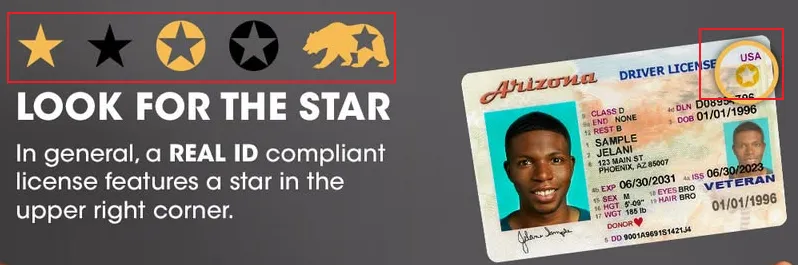
Examples of REAL IDs:
2.4 Approved Alternatives: Flying and Accessing Federal Sites Without a REAL ID
If you choose not to get a REAL ID, or your card hasn't arrived in time, the federal government accepts a wide variety of "compliant" alternatives. These documents are valid for both boarding domestic flights (TSA) and entering secure federal facilities/military bases.
You do not need a REAL ID if you have one of the following:
-
U.S. Passport or U.S. Passport Card (The most common alternative).
-
Permanent Resident Card (Green Card).
-
DHS Trusted Traveler Cards (Global Entry, NEXUS, SENTRI, FAST).
-
U.S. Department of Defense ID (Including CAC and IDs for dependents).
-
Border Crossing Card.
-
Federally Recognized, Tribal-Issued Photo ID.
-
Foreign Government-Issued Passport.
-
Transportation Worker Identification Credential (TWIC).
-
U.S. Merchant Mariner Credential.
2.5 Common Misunderstandings
-
Not a National ID: Your data isn't in a central federal master-file.
-
Optional: No one is "forced" to get one. The only penalty is the inconvenience at TSA.
3. How to Apply: The DMV Minefield
The DMV clerk is not a detective; they are a box-checker. If your paperwork has even 1% "friction," the system will lock, and you will be rejected. Navigating this requires more than just a stack of papers—it requires a tactical approach.
DMV (Department of Motor Vehicles) refers to a state-level government agency responsible for issuing driver’s licenses and state identification cards. Each U.S. state operates its own DMV (or equivalent agency), which is why REAL ID application procedures and requirements may vary by state.
3.1 Required Documents Checklist: The "Golden Four" (Plus One)
You must present original or certified copies. Laminated Social Security cards or photocopies of birth certificates will result in an immediate "No."
-
Proof of Identity:
-
For US Citizens: An original U.S. Birth Certificate or a valid U.S. Passport.
- For Non-Citizens: A valid Permanent Resident Card (Green Card), a valid Foreign Passport with a valid I-94, or a valid Employment Authorization Document (EAD).
-
-
Social Security Documentation: Your actual Social Security Card is the safest bet. Some states accept a W-2 or a 1099 form, but it must display your full name and full 9-digit SSN (not just the last four).
-
Proof of State Residency (The "Double Check"): You need two different documents (e.g., a utility bill and a lease agreement). They must be dated within the last 60–90 days.
-
Proof of Name Change (If Applicable): If the name on your identity document does not match your current name, you must provide a "trail" of legal documents, such as:
-
Certified Marriage License/Certificate.
-
Certified Divorce Decree.
-
Court-ordered Name Change Document.
-
🚨 Important Reminder: All submitted documents must be original documents. Ordinary photocopies will not be accepted. You must bring the original documents to the DMV for processing; otherwise, your application will be rejected.
3.2 The DMV Application Process: A Tactical Timeline
-
Location: Your State of Residency. You must apply for a REAL ID in the state where you legally reside. You cannot cross state lines to apply at a "faster" DMV in a neighboring state, as they cannot verify your local residency documents.
-
Step 1: The Appointment Hunt (Appointment vs. Walk-in).
-
Mandatory Appointment States: Some states (like NJ or parts of CA) have moved to an "Appointment Only" model for REAL ID. Showing up without one will result in immediate rejection at the door.
-
The Lead Time: In high-density areas, appointments can be booked 6–8 weeks in advance. Do not wait until the month of your flight.
-
Walk-in Strategy: If your state allows walk-ins, arrive at least 30–60 minutes before the office opens. Be prepared for 3–5 hour wait times.
-
-
Step 2: Pre-Verification (If Available). Many DMVs now offer an "online portal" where you can upload photos of your documents before you arrive. Use this! It allows a remote agent to flag errors before you drive to the office.
-
Step 3: The In-Person Gauntlet. Even with an appointment, expect to spend 1–3 hours. You will be fingerprinted and your photo will be retaken—ensure your "look" is something you want to keep for 5+ years.
-
Step 4: The Temporary Wait. You will receive a paper temporary ID on-site. Critically, TSA does not accept paper temporary licenses for air travel. Your permanent plastic card will arrive by mail in 2–4 weeks.
3.3 Common DMV Pitfalls: Where You’ll "Flip"
-
The Name Mismatch Nightmare: If your birth certificate says "Jane Marie Doe" but your Social Security card says "Jane Smith" (due to marriage), you must bring the marriage license. If you've been married twice, you need both marriage licenses and the divorce decree in between. The "Paper Trail" must be unbroken from birth to now.
-
The "Digital Printout" Rejection: Some clerks will reject a utility bill printed from your computer because it lacks the "indicia of a mailed document." If you use paperless billing, try to bring a lease or a bank-certified statement instead.
-
Outdated Addresses: If your documents show your old apartment, the DMV cannot issue the card. Address verification is about where you sleep tonight.
-
Inconsistent Guidance: You might hear one thing from the DMV website and another from the clerk. Pro Tip: Print the state's official "REAL ID Document Checklist" and bring it with you. If a clerk denies a document that is on the list, politely ask for a supervisor to review the manual.
3.4 State-by-State Differences: Why Rules Feel Random
The "Federal Standard" is just a baseline. States have broad discretion:
-
The "Two-Proof" vs. "One-Proof" States: Some states are more lenient with residency, while others (like PA) are notoriously rigid.
-
Fee Variation: REAL ID fees vary wildly, often ranging from $30 to $80 depending on whether it’s a new issue or an upgrade.
-
System Integration: Some DMVs are directly linked to the SSA and USCIS databases; others rely on manual verification, which can lead to weeks of "secondary review" delays.
4. REAL ID Strategies for Non-Citizens (Hidden Risks)
This section is the most high-stakes for F-1 students, H-1B workers, and Green Card holders. For non-citizens, the REAL ID is not just a card—it is a live reflection of your legal standing in the U.S.
4.1 Who Qualifies? (The Lawful Presence Spectrum)
To be eligible for a REAL ID, you must prove you are in the U.S. legally. This includes:
-
Permanent Residents: Green Card holders.
-
Visa Holders: Anyone with a valid I-94 (F, J, H, L, O, etc.).
-
Pending Status: Those with a valid Employment Authorization Document (EAD) or an I-797 Receipt Notice for Adjustment of Status or Asylum.
-
TPS/DACA Recipients: Based on current federal guidelines.
4.2 Limited-Term REAL ID Explained: The Expiration Link
For almost all non-citizens (except Green Card holders in some states), your card will be marked "Limited-Term" or "Temporary."
-
The Validity Trap: Your ID’s expiration date will be hard-coded to the expiration date of your immigration document (e.g., your I-20 or I-797).
-
The Cost-Benefit Failure: If your visa expires in 6 months, the DMV will issue an ID that only lasts 6 months, but you will still pay the full 5-year application fee. You are essentially paying a "premium" for a disposable document.
4.3 Risks and Considerations: The "DMV Limbo"
-
The SAVE System Nightmare: DMVs use a federal tool called SAVE (Systematic Alien Verification for Entitlements) to check your status. If your status has recently changed (e.g., OPT to H-1B), the system often lags.
-
Secondary Verification: If the clerk cannot verify you instantly, they will initiate a "Secondary Review." This sends your case to a federal backlog that can take 20 to 40 business days. During this time, your application is frozen, and you may be left without a valid license if your old one has expired.
-
The Gap Period Risk: If you are in your 180-day or 540-day automatic EAD extension, many DMV clerks will flatly refuse you because they don't understand the complex federal extension rules. You will need to bring the official USCIS Federal Register notice to "educate" the clerk, which often results in a supervisor confrontation.
4.4 Alternative Strategies: When to Skip REAL ID
For many non-citizens, the smartest decision is to not apply for a REAL ID.
-
The "Passport & Standard ID" Combo: 1. Apply for a Standard License (labeled "Federal Limits Apply"). These are often easier to renew and sometimes have longer validity periods regardless of visa end-dates. 2. Use your Foreign Passport (with valid visa/I-94) or Green Card as your identification for domestic flights.
-
Why this works: It "decouples" your ability to drive from the administrative delays of USCIS. If your visa is being renewed, you can still drive with your Standard License while using your passport for travel.
-
When to Delay: If your current visa document expires in less than a year, do not waste time at the DMV for a REAL ID. Wait until your extension is approved and you have the physical I-797 or Green Card in hand.
5. Practical Tips and FAQ
As we move closer to full enforcement, the "theoretical" rules of the REAL ID Act will become very real daily hurdles. Here is how to navigate the post-deadline world.
5.1 Travel and Daily Use Scenarios
-
Flying Domestically: The TSA Reality Check. After May 7, 2025, if you show up with a Standard License, you will be flagged. While TSA has a secondary identity verification process, it is not a "loophole"—it is a fallback for emergencies. You may miss your flight due to the time required for questioning and physical screening.
-
Entering Federal Buildings. If you work as a contractor for the federal government or need to visit an inmate in a federal prison, a Standard ID will no longer be enough for entry. You will be required to show a Passport or a REAL ID at the security gate.
5.2 Renewal, Replacement, and Upgrades
-
Upgrading from Standard to REAL ID. This is always an in-person transaction. Even if your state allows online renewals for standard licenses, you must go to a physical office, have your documents scanned, and take a new photo to "upgrade" to the star.
-
Replacing a Lost or Damaged REAL ID. If you already had a REAL ID and lost it, most states allow you to order a duplicate online provided your address hasn't changed. If you've moved, you must return to the DMV with new residency proofs.
-
Updating After Life Changes. If you get married or move, your REAL ID must be updated within 30 days. Failing to update your address on your REAL ID can technically lead to it being "invalidated" for federal use in some jurisdictions.
5.3 Frequently Asked Questions (FAQ)
Q1: Do I need a REAL ID to fly domestically in the United States?
A: Starting from the federal enforcement date, travelers must present a REAL ID–compliant driver’s license or another acceptable form of identification, such as a valid U.S. passport, to board domestic flights.
Q2: What happens if I don’t have a REAL ID by the deadline?
A: If you do not have a REAL ID by the enforcement deadline, you will not be able to use a standard state ID or driver’s license to pass TSA security for domestic flights unless you present an alternative acceptable ID.
Q3: Is a REAL ID mandatory for everyone in the U.S.?
A: No. REAL ID is not mandatory for all residents. If you do not plan to fly domestically or enter federal facilities requiring identification, you may not need a REAL ID.
Q4: What is the difference between a REAL ID and a standard driver’s license?
A: A REAL ID meets federal security standards under the REAL ID Act, while a standard driver’s license does not. Only REAL ID–compliant licenses can be used for domestic air travel after the enforcement date.
Q5: Is a passport better than a REAL ID for domestic flights?
A: A valid U.S. passport is always accepted for domestic flights and offers broader use than a REAL ID, but many travelers prefer a REAL ID for convenience when flying within the United States.
Q6: How do I apply for a REAL ID at the DMV?
A: You must apply for a REAL ID in person at your state DMV (or equivalent agency) and bring original documents proving your identity, lawful presence, Social Security number, and state residency.
Q7: Can I upgrade my existing driver’s license to a REAL ID?
A: Yes. In most states, you can upgrade a standard driver’s license to a REAL ID by visiting the DMV with the required documents and completing the application process.
Q8: Does a REAL ID affect my immigration status?
A: No. A REAL ID does not grant, change, or extend immigration status. It is solely a form of identification.
Q9: Should I get a REAL ID now or wait?
A: Whether you should get a REAL ID now depends on your travel habits, document availability, and whether you already have a valid passport.
Q10: Can I use a REAL ID to travel internationally?
A: No. A REAL ID cannot be used for international travel. You must use a valid passport for international flights.
Q11:Do I need a REAL ID if I have a valid Passport?
A: No. A passport is considered the "gold standard" of identification and is 100% compliant with the REAL ID Act for flights and federal sites.
Q: Can REAL ID be used to cross international borders?
A: No. A REAL ID is not a substitute for a passport when traveling to Canada, Mexico, or overseas. (The only exception is the Enhanced Driver's License (EDL) for land/sea crossings, as discussed in Section 2.2).
Conclusion: Making the Right Choice
The REAL ID is a trade-off between security convenience and bureaucratic overhead.
-
Citizens: It’s a one-time annoyance for long-term ease.
-
Non-Citizens: It is often a trap. The "Limited-Term" expiration and SAVE system delays create a cycle of DMV visits.
Final Advice: If your immigration status is in flux or your paperwork has name discrepancies, stick with a Standard ID and use your Passport. Disclaimer: This guide is for informational purposes and does not constitute legal or immigration advice. Always consult your official state DMV website.