📌 At a Glance: Seattle to Bainbridge Ferry (2026)
-
Departure Terminal: Seattle Pier 52 (Colman Dock)
-
Crossing Time: 35 minutes
-
Distance: 8.6 miles
-
Vehicle Reservations: NOT accepted (First-come, first-served only)
-
Walk-On Fares: ~$11.35 (Westbound only). Return trip to Seattle is FREE.
-
Youth Fares: Passengers 18 and under ride FREE (ticket still required).
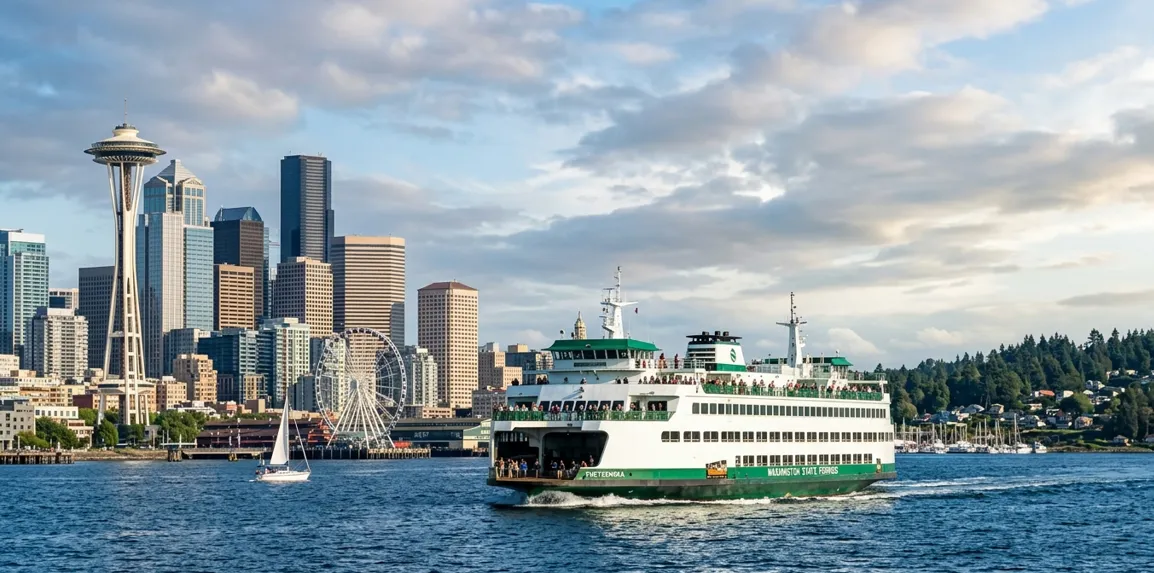
The Seattle skyline is best viewed not from the top of a skyscraper, but from the salt-sprayed deck of a Washington State Ferry. The route from Downtown Seattle to Bainbridge Island is the quintessential Pacific Northwest experience—a 35-minute voyage that transports you from the tech-fueled bustle of the city to the charming, artisan-filled streets of Winslow Way.
Editor’s Note: Why this 2026 Guide matters? Navigating the ferry system in 2026 is different than it was just two years ago. With the final completion of the Colman Dock multi-modal terminal, new credit card surcharges, and updated youth fare policies, this guide ensures you spend your time enjoying the view rather than troubleshooting at the ticket kiosk.
I. Quick Navigation: Distance, Duration, and the 2026 Layout
Seattle - Bainbridge Island Ferry Basic Information
-
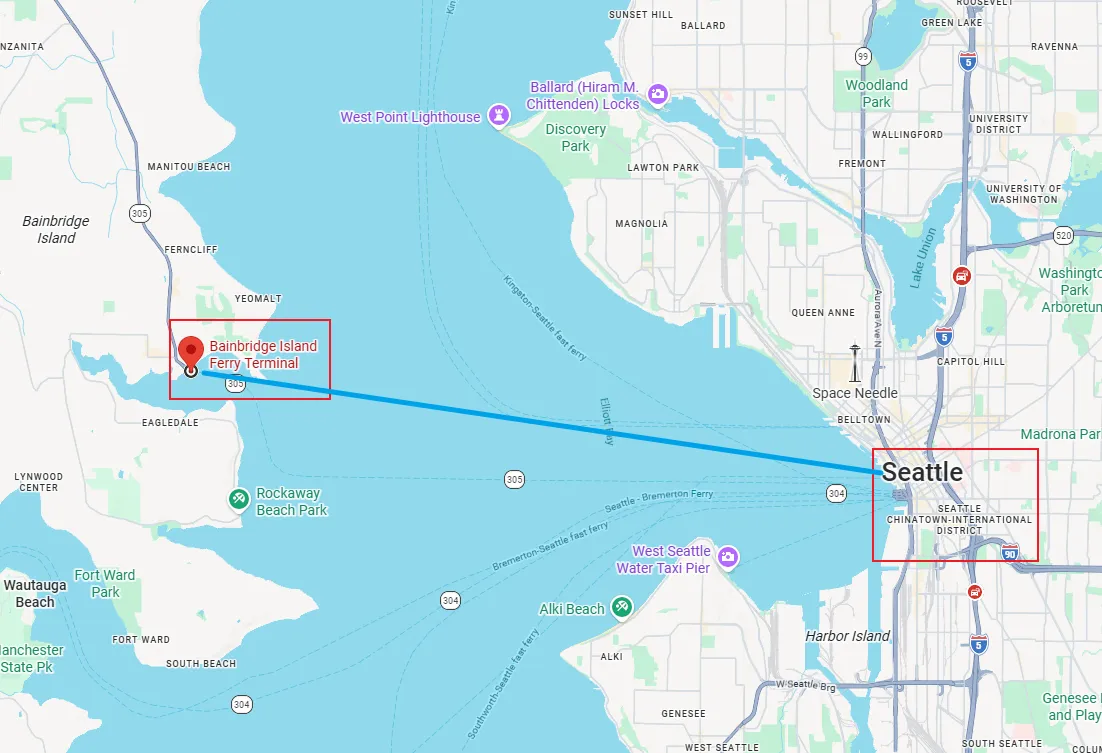
Departure: Seattle Pier 52 (Colman Dock)
-
Arrival: Bainbridge Island Ferry Terminal
-
Distance: ~8.6 miles across Puget Sound
-
Crossing Time: 35 minutes (Expect 45 minutes on foggy days or during heavy maritime traffic)
-
Vessel Type: Usually served by Jumbo Mark II-class ferries—the largest in the fleet, capable of carrying 200 vehicles and 2,500 passengers.
[2026 Essential] The "Pioneer Square" Connection
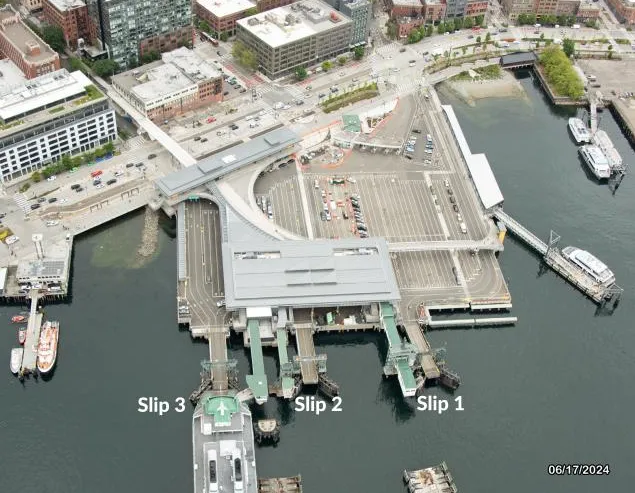
For those arriving via Link Light Rail, the trek to the ferry is now more seamless than ever:
-
Exit at Pioneer Square Station.
-
Walk west on Marion St toward the waterfront (about 3 blocks).
-
Cross the new Marion St Pedestrian Bridge at 1st Ave. This skybridge leads you directly into the second-floor ticketing hall of Colman Dock, bypassing all ground-level vehicle traffic.
2026 Essential Updates (The "Must-Knows")
Before you tap your card, be aware of these three critical changes for 2026:
-
The 3% Credit Card Surcharge: To offset processing costs, WSDOT now applies a 3% surcharge to all credit and debit card transactions made at kiosks, windows, or online.
-
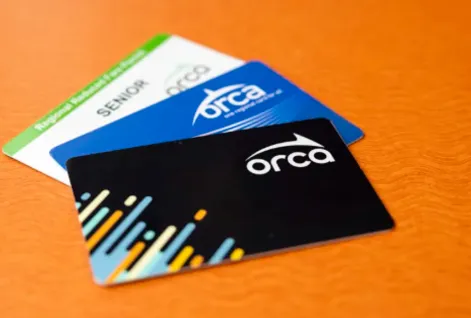
Zero-Fare for Youth: Passengers aged 18 and under ride for free! However, "free" doesn't mean "walk-on." Youth must still scan a valid Youth ORCA card or obtain a zero-fare paper ticket from the kiosk/window.
-
The "Digital Terminal" Experience: Colman Dock is now a fully digital-first terminal. Real-time displays show "Space Availability" for vehicles and precise boarding countdowns for foot passengers.
II. Fares, Ticketing, and the "Digital ORCA" Hack
Understanding the fare system is crucial to avoiding the "tourist tax" (unnecessary surcharges) and ensuring you don't get stuck at the turnstile.
1. 2026 Fare Structure (Estimated)
Washington State Ferries (WSF) operates on a seasonal pricing model. Prices typically increase by about 25% from May 1st to September 30th.
| Passenger Category | Seattle → Bainbridge (Paying) | Bainbridge → Seattle (Free*) |
| Adult (19-64) | ~$11.35 | $0.00 |
| Senior (65+) / Disability | ~$5.65 | $0.00 |
| Youth (0-18) | FREE | $0.00 |
| Vehicle & Driver (Standard) | ~$21.50 - $26.50 | Paying |
*Note: Foot passengers only pay for the westbound trip (Seattle to Bainbridge). The return trip to Seattle is free for pedestrians, but vehicles must pay in both directions.
2. The 2026 Credit Card Surcharge (3%)
Starting in 2026, WSDOT has implemented a 3% surcharge on all credit and debit card transactions (including online ticket purchase).
-
The Math: On a $25 vehicle fare, that’s an extra $0.75.
-
How to Bypass: Use Cash at the manned ticket booth or use a pre-loaded ORCA Card (E-purse balance). ORCA transactions currently bypass the surcharge at the gate.
3. The Digital ORCA Hack
The most "Pro" move in 2026 is avoiding physical lines entirely by using a digital transit card.
Apple & Google Wallet:
-
Setup: Open your Apple Wallet or Google Pay, select "Transit Card," and search for ORCA.
-
Funding: Add funds to the E-purse (Electronic Purse).
-
Warning: Do NOT buy a "Regional Pass" (Day/Monthly pass) for the ferry. The ferry system only accepts E-purse cash value.
-
Entry: Simply "Tap" your phone at the turnstile. It’s the fastest way to board, especially when the lines at the kiosks are 20 people deep.
The myORCA App:
Download the official myORCA App to manage your cards.
-
-
Instant Top-up: Add money to your E-purse (Electronic Purse) balance on the fly.
-
Autoload: Set it to automatically refill when your balance drops below $10 so you never miss a sailing due to a "Low Balance" error at the turnstile.
-
-
Crucial Tip: The ferry does NOT accept "Regional Passes" (Day/Monthly passes). You must have a Cash Value (E-purse) balance on your card.
4. Youth Zero-Fare Policy (Age 0-18)
While youth ride for free, they must possess a valid ticket.
-
If they have a Youth ORCA Card: Simply tap it at the turnstile; the system will register a $0.00 deduction.
-
If they do NOT have a card: You must visit a kiosk or ticket window to print a "Youth Zero-Fare" paper ticket. Do not attempt to walk through without one; the gate will not open.
5. Purchase Channels
-
WSDOT App / Website: Best for drivers to pre-purchase vehicle fares and scan a QR code at the toll booth.
-
Self-Service Kiosks: Located on the 2nd floor of Colman Dock. Fast, but subject to the 3% card fee.
-
Ticket Window: Best for cash payments and complex questions.
III. Mastering the Schedule & Timing
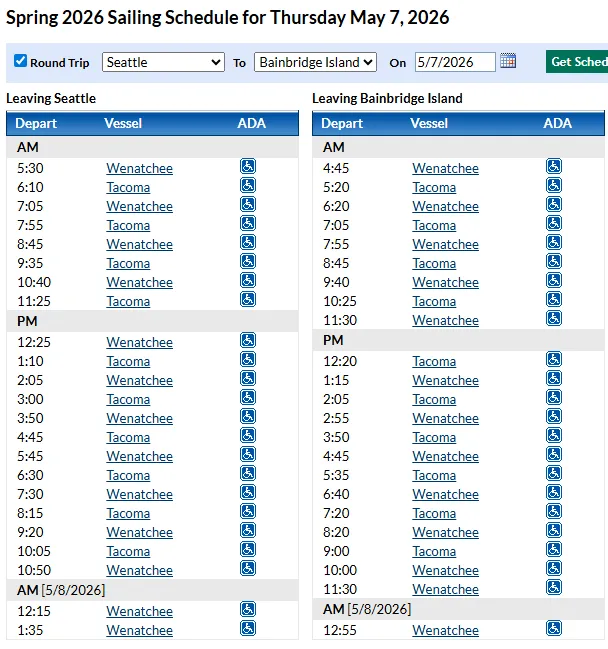
In Seattle, the ferry schedule is the heartbeat of the city. However, reading the grid is only half the battle—knowing how to track your boat in real-time is the true pro move.
1. Where to Find the Official Schedule
-
WSDOT Vessel Watch (Must-Use): This is the gold standard. It’s a real-time GPS map showing exactly where every ferry is in the Puget Sound. If your boat is running 10 minutes late due to heavy currents, you’ll see it here first.
-
The WSDOT App: Available on iOS and Android. It provides a digital grid of the day’s sailings and, more importantly, "Space Availability" alerts for drivers.
-
Terminal Displays: Large electronic boards at Colman Dock show the next three departures and their current boarding status.
- WSDOT Official Website Sailing Schedule
2. Understanding Peak vs. Off-Peak
The 2026 schedule is designed around the "Commuter Pulse."
-
The Rush Hour: Sailings between 6:30 AM – 9:00 AM (Inbound to Seattle) and 3:30 PM – 6:30 PM (Outbound to Bainbridge) are the most crowded.
-
The "Sweet Spot": For the best experience, aim for the 10:00 AM – 2:00 PM window. You’ll get shorter lines and better lighting for photos.
3. Seasonal Variations: Summer vs. Winter
-
Summer Schedule (May – September): More frequent sailings to accommodate the tourist influx. Expect the last boat to leave well after midnight.
-
Winter Schedule (October – April): Fewer sailings. This is also "Maintenance Season," meaning one of the two large boats might be replaced by a smaller vessel, significantly reducing vehicle capacity. Always check the app for "Service Bulletins" during these months.
4. Holiday "Sunday Schedule" Trap
On major U.S. holidays (Labor Day, Memorial Day, July 4th), the ferry often operates on a Sunday Schedule. This means fewer sailings than a typical Monday or Friday. If you are traveling on a holiday, double-check the "Holiday Service" tab on the WSDOT website.
5. Pro Tip: The "Sunset Sail"
In 2026, I recommend checking your weather app for the exact sunset time. Aim for a sailing 20 minutes before sunset. The transition of the Seattle skyline from golden hour to the "twilight glow" is the best free show in the city.
IV. The Boarding Masterclass: Walk-on vs. Drive-on
Boarding a ferry at Colman Dock is a tale of two very different experiences. Whether you are on foot or behind the wheel, timing is everything.
1. Foot Passengers: The Stress-Free Route
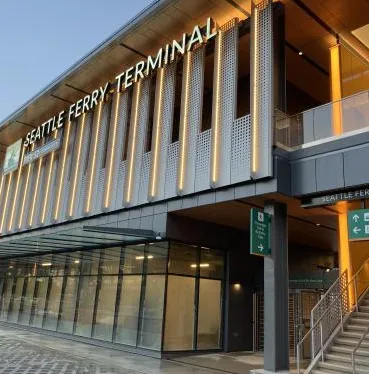
If you don't need a car to explore the island, walking on is the "Gold Standard" for a relaxing trip.
-
When to Arrive: Aim to be at the terminal 20 minutes before departure.
-
The New Navigation:
-
Avoid the ground level: Ground-level entries are primarily for vehicles and can be chaotic.
-
Use the Bridge: Use the Marion St Pedestrian Bridge (entry at 1st Ave & Marion St). It deposits you directly into the climate-controlled 2nd-floor waiting hall.
-
-
Boarding Process: Once the overhead speakers announce your sailing, scan your phone or ticket at the turnstile and walk through the glass-walled "Jetway" onto the boat.
-
Pro Tip: If the weather is nice, head straight for the Stern (the back of the boat) as you board. This provides the iconic, unobstructed view of the Seattle skyline shrinking as you pull away.
2. Vehicle Passengers: The "No Reservations" Challenge
The Seattle-Bainbridge route is one of the few that does NOT accept reservations. It is strictly first-come, first-served.
-
Entry Point: Set your GPS to "Colman Dock - Vehicle Entrance" (usually via Alaskan Way & Yesler Way).
-
The Toll Booth:
-
Have your QR code (from the WSDOT app) or payment ready.
-
The attendant will give you a receipt and tell you a Lane Number (e.g., "Lane 14").
-
-
Staging (The Wait): Follow the signs to your assigned lane, turn off your engine, and set your parking brake.
-
Timing the Lines:
-
Weekdays: Arrive 30-45 minutes early.
-
Weekends/Holidays: Arrive 60-90 minutes early. If the WSDOT app shows "Full" or a "1-Sailing Wait," you will likely miss the next boat.
-
-
Boarding: When signaled, drive slowly onto the car deck. Once parked, you are free to leave your car and head upstairs to the passenger cabin. Just be sure to return to your vehicle as soon as the arrival announcement is made (about 10 minutes before docking).
3. Bikes & Motorcycles: The Priority Perks
-
Priority Loading: Cyclists and motorcyclists usually board first and leave first.
-
Loading Area: Look for the designated bicycle entrance near the toll booths. Do not wait in the long line of cars; follow the "Bicycles" signage to the front.
4. [Pro Tip] The "Sunday Exodus" Warning
For English-speaking travelers, the biggest "trap" is trying to drive back to Seattle on a Sunday afternoon. The queue on the Bainbridge side can stretch for miles, often resulting in a 2-hour wait. If you must drive on a Sunday, try to leave before 11:00 AM or after 8:00 PM.
V. The Return Trip (Bainbridge to Seattle)
Navigating the return journey is not just a "reverse" of your trip out. From unique ticketing rules to the best vantage points for the city’s skyline, here is how to head back to the Emerald City like a local.
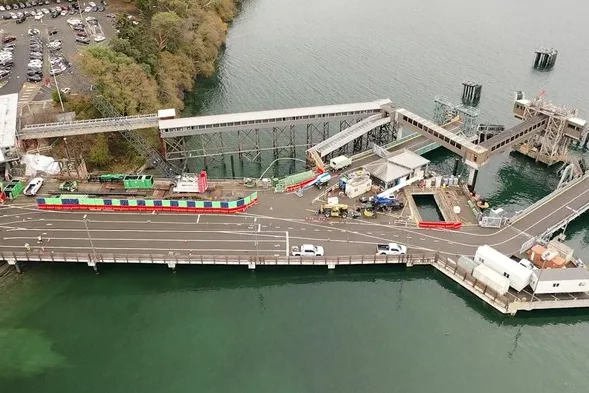
Bainbridge Island Ferry Terminal👇
1. Foot Passengers: The "Free" Return
One of the most common questions from international tourists is: "Where do I buy a ticket back?"
-
The "Zero-Fare" Secret: If you are walking on, you do not need a ticket to return to Seattle. There are no turnstiles at the Bainbridge terminal. You simply walk into the terminal building and wait in the seating area.
-
Why?: The system is designed to collect tolls in one direction only (Westbound) to speed up the boarding process.
2. Drive-ons: The Battle for a Spot
Unlike the walk-on experience, drivers must pay in both directions.
-
Payment: You will pull into the toll booths at the end of WA-305. Again, use Cash or the myORCA App to avoid the 2026 credit card surcharge.
-
The Sunday Warning: If you are trying to return to Seattle on a Sunday afternoon, the queue can be brutal.
-
The "Two-Sailing" Wait: It is common for the car line to spill out onto the highway (Hwy 305). If you see the "Wait Time" sign indicating 90+ minutes, consider grabbing a late dinner in Winslow and waiting for a night boat.
-
3. The "Golden Hour" Photo Op
The return trip is arguably more scenic than the departure because you are heading toward the skyscrapers.
-
Port Side (Left Side): Look for Mount Rainier (on a clear day) and the Starbucks Headquarters (the building with the giant green logo).
-
The Bow (Front): As the ferry approaches Pier 52, the Space Needle and the Great Wheel align perfectly for a "postcard" shot.
-
Pro Tip: In 2026, the new waterfront park (Overlook Walk) is fully visible from the water. It’s a great way to see how the city has transformed since the removal of the old viaduct.
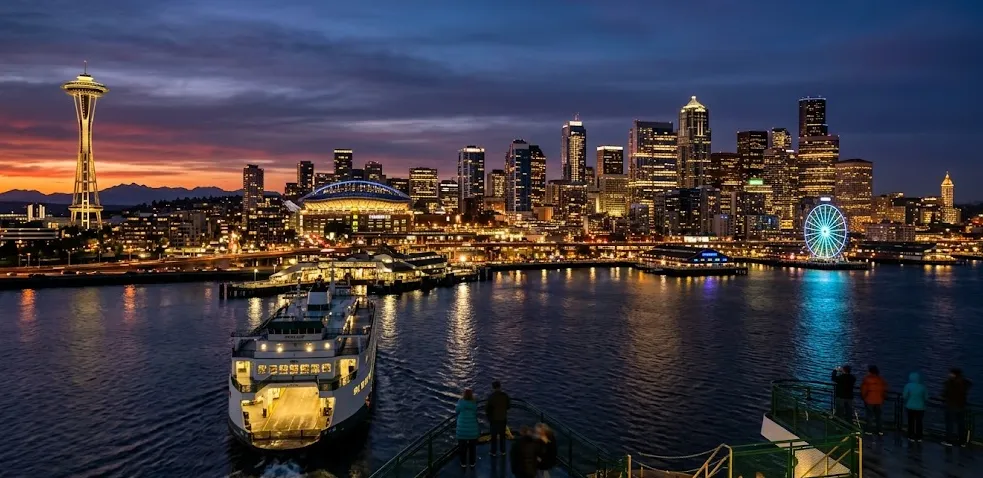
4. Arrival in Seattle (Disembarking)
-
Vehicles First: Per maritime safety, cars are unloaded first. If you are a driver, be in your vehicle as soon as you hear the "10 minutes to arrival" announcement.
-
Pedestrians: You will exit via the overhead ramp. Follow the signs for "Exit to City" which will lead you back onto the Marion St Pedestrian Bridge or down to Alaskan Way.
VI. Exploring Bainbridge Island (Food, Art, and Logistics)
Once you step off the ferry, you’ve entered Winslow, the heart of Bainbridge Island. The transition from the steel-and-glass of Seattle to the lush, wood-shingled charm of the island is instantaneous. Here is how to maximize your time on shore.
1. Navigation: Getting Around Without a Car
-
The "Winslow Walk": 90% of visitors stay within the Winslow Way corridor. It is a flat, easy 5-to-10 minute walk from the terminal.
-
BI Ride (On-Demand Bus): [2026 Pro Tip] If you want to see the sights further out (like the Bloedel Reserve), download the Kitsap Transit tracker app and use BI Ride. It’s a shared-ride service that costs only a couple of dollars—think of it as a public Uber for the island.
-
E-Bike Rentals: Look for the bike rental kiosks near the terminal. In 2026, electric bikes are the preferred way to tackle the island's notorious "Hilly" reputation.
2. The "Must-Visit" Arts & Culture
-
Bainbridge Island Museum of Art (BIMA): Located right at the corner of the ferry exit and Winslow Way. Admission is FREE. The building itself is a masterpiece of sustainable design, and the rotating exhibits feature world-class Pacific Northwest artists.
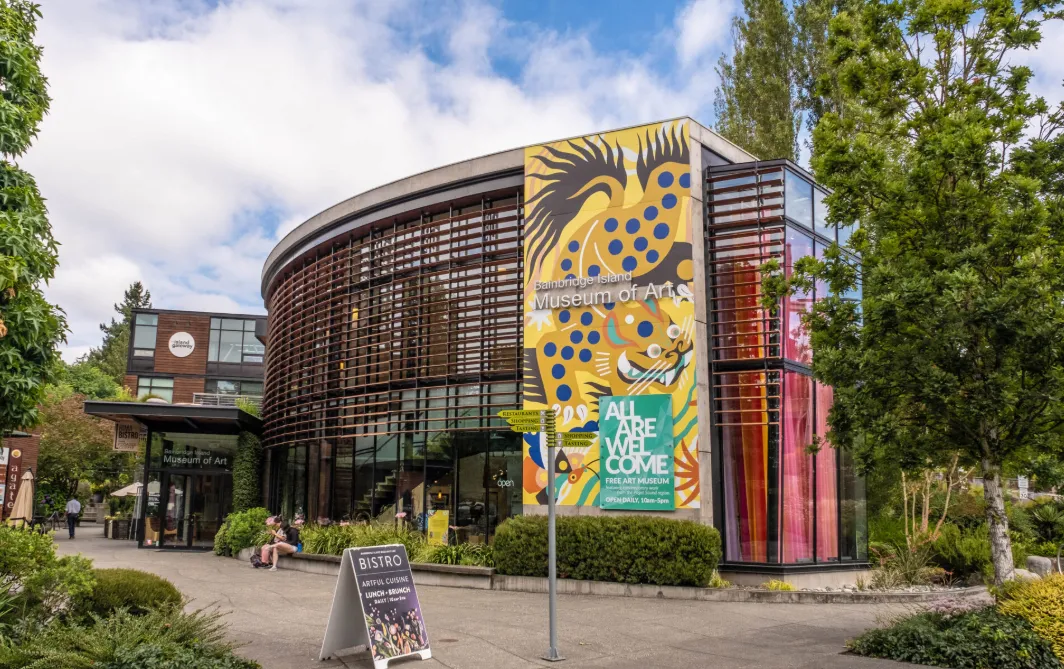 Image from biartmuseum, Copyright by original author
 -
Bainbridge Island Historical Museum: Housed in a charming 1908 schoolhouse, it provides deep context on the island’s Japanese-American history and its shipbuilding past.
3. Foodie Favorites: Where the Locals Eat
-
Mora Iced Creamery: You will see a line, and you should get in it. Their Blackberry and Lavender flavors are legendary.
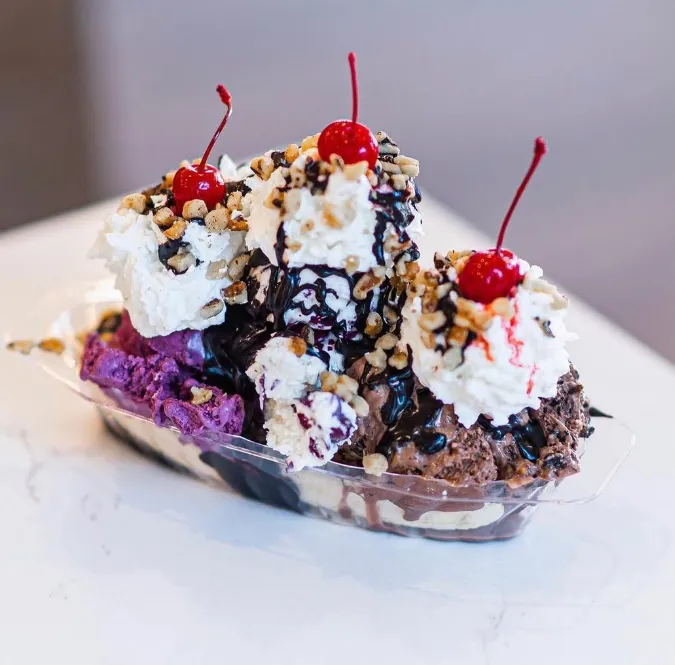 Image from Mora Iced Creamery Instagram, Copyright by original author
 -
Proper Fish: Arguably the best Fish & Chips in Washington State. It’s authentic, crispy, and the portions are massive.
-
Pegasus Coffee House: Located in a beautiful ivy-covered brick building down a small alley. It’s the perfect spot for a local roast and a quiet moment.
-
Bruciato: If you’re craving high-end wood-fired Neapolitan pizza, this is the island's top-tier dinner spot.
4. The "Deep Dive": Bloedel Reserve
If you have at least 4 hours on the island, take a shuttle or BI Ride to the Bloedel Reserve.
-
Why it’s famous: It’s a 150-acre forest garden that The New York Times called "one of the best in the world."
-
Important: In 2026, you must book timed-entry tickets online in advance. They rarely accept walk-ins during the peak summer season.

5. [Local Secret] The Waterfront Trail
Instead of walking the main street back to the ferry, take the Waterfront Trail. It loops through the marinas and parks, offering a peaceful view of the boats and the "Live-aboard" community that calls the harbor home.
VII. FAQ
Q: Can I bring my dog on the Seattle-Bainbridge ferry?
A: Yes! Washington State Ferry pet policy is very traveler-friendly. Leashed dogs are allowed on the car deck and in designated outdoor passenger areas. Only service animals are permitted inside the indoor cabins where food is served. If you are driving, your pet can stay in the car for free.
Q: Is there luggage storage or lockers at Colman Dock?
A: No. Due to security regulations, there are no luggage lockers at the Seattle or Bainbridge ferry terminals. If you are a foot passenger with heavy bags, we recommend using a third-party app like Bounce or Stasher to find a secure storage spot at a nearby hotel or shop in Pioneer Square before you head to the terminal.
Q: Is there free Wi-Fi on the ferry?
A: While WSDOT provides free public Wi-Fi at the terminal and on most vessels, it is notorious for being spotty once the boat moves into the middle of Elliott Bay. For 2026, don't rely on it for video calls. Most travelers find that their 5G cellular data works better throughout the crossing.
Q: What is the best parking near the Seattle Ferry Terminal?
A: If you want to walk on the ferry but need a place for your car, the Commuter Cut or the Lumi parking garage on Western Ave are popular choices. However, for the best 2026 rates, look for parking apps like SpotHero to find "Early Bird" specials in the Pioneer Square area (roughly a 5-10 minute walk to the Marion St bridge).
Q: Is the ferry wheelchair accessible?
A: Absolutely. ADA accessibility is a priority for the fleet. Both terminals have elevators and level boarding ramps for foot passengers. On the ferry, there are elevators connecting the car deck to the passenger cabin. If you are driving and need extra space to deploy a wheelchair lift, notify the toll booth attendant so they can place you in a wider parking lane.
Q: What happens if the ferry is cancelled or delayed?
A: Ferry service alerts are common during "King Tides" or heavy fog. If your sailing is cancelled, your ticket remains valid for the next available boat. For real-time updates, we highly recommend following @wsferries on X (Twitter) or enabling push notifications in the WSDOT mobile app.
Q: Is there food and drink available on the ferry?
A: Yes! The galley (cafeteria) on the Jumbo Mark II vessels is typically open during most daytime sailings. You can purchase local Pacific Northwest favorites, including Ivar's clam chowder, Uli's sausages, local craft beer, and wine. You are also welcome to bring your own food and non-alcoholic beverages on board.
Q: Do I need to book the Bainbridge ferry in advance?
A: No, you cannot book the Seattle-Bainbridge route in advance. Unlike the San Juan Islands routes, this specific route is strictly first-come, first-served for vehicles. Walk-on passengers rarely have to worry about capacity, but vehicles should arrive 45-60 minutes early during peak hours.
Q: Can I stay in my car during the ferry crossing?
A: Yes. You are allowed to remain in your vehicle on the car deck for the entire 35-minute crossing. However, you must turn off your engine and disable your car alarm. Be aware that the views are much better from the upper passenger decks!
VIII. Final Chapter: The 2026 Travel Checklist & Wrap-up
As your voyage across the Puget Sound approaches, it’s time to double-check your preparations. The Bainbridge ferry is more than just a transit link; it is a quintessential Pacific Northwest ritual. To ensure your trip is defined by the views rather than the logistics, follow this final checklist.
🏁 Your 2026 Pre-Departure Checklist
-
[ ] Payment Ready: Have your Digital ORCA card added to your Apple/Google Wallet with at least $12 in the E-purse to avoid the 3% credit card fee.
-
[ ] Apps Downloaded: Ensure the WSDOT App (for vessel tracking) and myORCA App (for balance management) are on your home screen.
-
[ ] The "Marion Entry": Remember to enter via the Marion St Pedestrian Bridge at 1st Ave if you are walking on.
-
[ ] Youth Tickets: If traveling with kids under 18, make sure they have their ORCA cards or that you've grabbed their free paper tickets at the kiosk.
-
[ ] Layer Up: Even on a sunny 75°F day in Seattle, the wind on the outer decks can be 20 degrees cooler. Pack a light windbreaker.
-
[ ] Photography Prep: Clear your phone’s storage. Between the Seattle skyline, the Olympic Mountains, and the occasional orca sighting, you will be taking more photos than you think.
Final Thoughts
Whether you’re a local showing off the city to visiting relatives or a global traveler crossing the Sound for the first time, the Seattle-Bainbridge route remains the crown jewel of Washington’s marine highways.
In 2026, the ferry system is smarter, the terminals are sleeker, and the island is as charming as ever. So, grab a coffee, head to the stern as the boat pulls away, and watch the Emerald City sparkle against the backdrop of the Cascades.
Safe travels, and enjoy the ride!