Is your 90-minute morning gridlock draining your bank account and your mental health? You aren't alone. As we move through 2026, the American dream of suburban living has hit a financial roadblock—the soaring cost of the daily drive.
Between sky-high insurance premiums that seem to reset every quarter and "dynamic" downtown parking rates that rival a nice steak dinner, driving to work has become a luxury many professionals are no longer willing to afford. Coupled with the solidified "3-day-in" hybrid work model, the daily grind is being redefined.
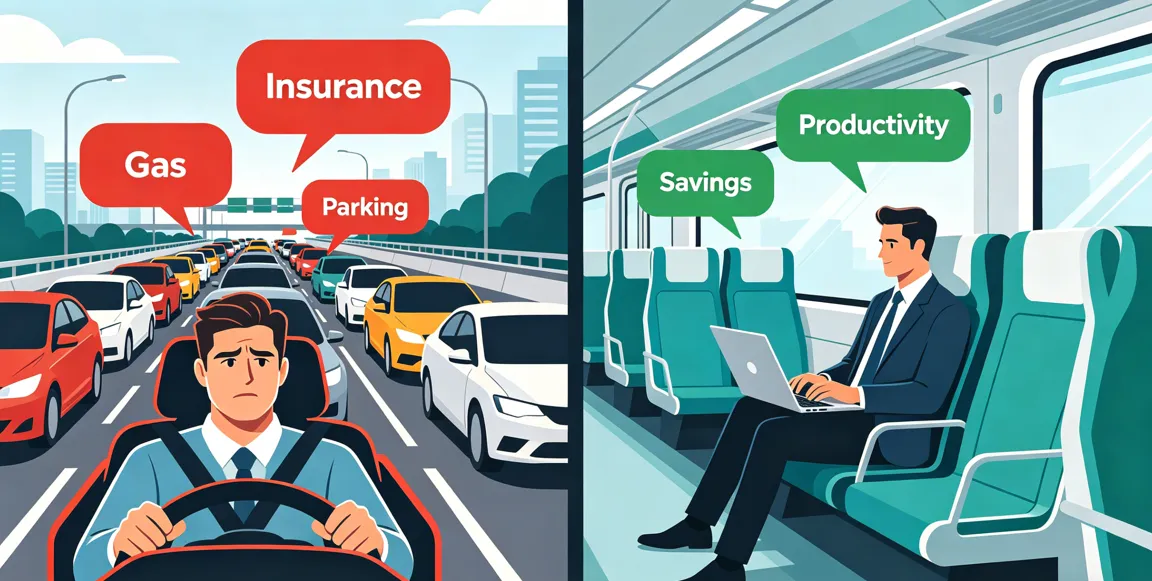
Commuter rail is no longer just "the train." In 2026, it has evolved into a productivity hack and a financial lever. For the savvy modern professional, those 45 minutes on the rails aren't lost time—they are a "Third Space" to clear your inbox, listen to a podcast, or simply decompress before hitting the front door.
This guide breaks down why switching to the rails is the smartest financial move you can make this year. From the IRS Section 132(f) tax hacks to the best "hidden gem" suburbs in NYC, Chicago, and the Bay Area, we’ll show you how to reclaim your hours and protect your peace.
TL;DR: The 2026 Commuter Snapshot
|
Metric |
The Drive |
Commuter Rail |
|---|---|---|
|
Annual Cost |
$15,000 - $22,000 |
$3,000 - $5,000 |
|
Daily Stress |
High (Gridlock/Road Rage) |
Low (Quiet Cars/Reliability) |
|
Primary Benefit |
Door-to-door (In theory) |
Massive Tax Savings & Extra "Deep Work" Hours |
|
Top 2026 Hubs |
N/A |
NYC, Chicago, SF, Boston, Philly, DC, LA |
I. Decoding the Rail: Commuter Rail vs. Everything Else
To the untrained eye, any vehicle on a track is "the train." However, in 2026, understanding the technical and service distinctions between different rail systems is the first step to optimizing your suburban life.
What Exactly is Commuter Rail?
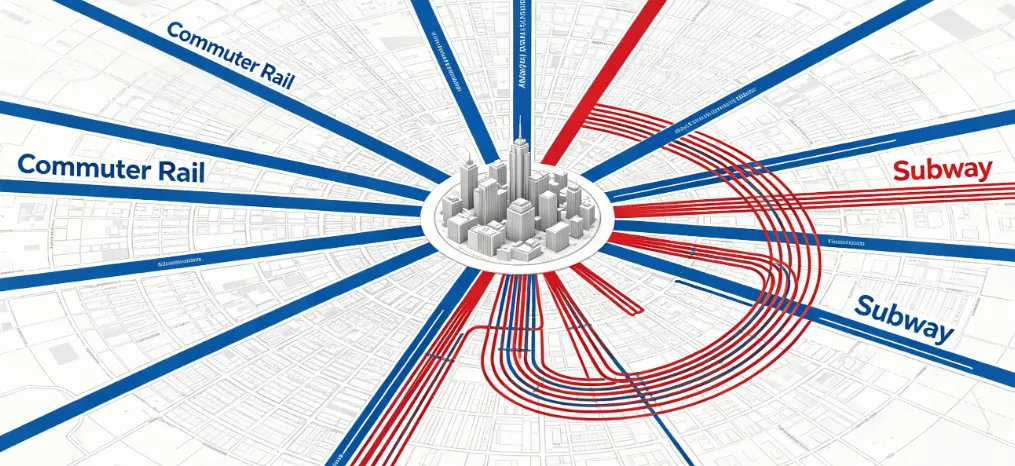
In the U.S., Commuter Rail (often called "Regional Rail") is a heavy-rail system designed to carry passengers long distances—typically 15 to 60 miles—between suburban bedroom communities and central business districts.
The 2026 Breakdown: How They Differ
1. Commuter Rail vs. Subway (The "Heavy" Advantage)
-
Speed & Distance: While subways (like the NYC 'L' or Chicago 'L') stop every few blocks, commuter rails (like LIRR or Metra) skip entire neighborhoods to reach distant suburbs quickly.
-
Comfort: Subways are built for standing capacity; commuter rails are built for seating. In 2026, expect bi-level cars with ergonomic headrests and dedicated laptop tables.
2. Commuter Rail vs. Amtrak (Service vs. Travel)
-
Frequency: Amtrak is for intercity travel (e.g., NYC to DC). Commuter rail is for the daily grind, with high frequency during peak "Rush Hours."
-
Cost: Amtrak is priced like an airline (dynamic pricing). Commuter rail uses predictable Zone-based fares, making it significantly more budget-friendly for daily use.
3. Commuter Rail vs. Light Rail (Capacity vs. Flexibility)
-
Weight: Light rail (like the systems in Seattle or San Diego) often shares the road with cars. Commuter rail runs on exclusive "Heavy Rail" corridors, allowing for higher speeds and much larger passenger loads.
Pro-Tips: The 2026 Onboard Etiquette
As more professionals migrate to the rails, a new set of social norms has solidified in 2026:
-
The Quiet Car® Protocol: Most systems now strictly enforce "Quiet Cars." In these zones, phone calls are a social taboo, and headphones must be used at low volumes. It is the ultimate sanctuary for Deep Work.
-
The "Seat-Saving" Rule: With hybrid work schedules varying, trains are often at 80% capacity. Saving a seat for a friend who "might" get on at the next stop is generally frowned upon during peak hours.
-
Digital Boarding: Physical tickets are relics. Use your system’s app (e.g., MTA TrainTime or Ventra) to activate your ticket just before boarding to avoid "Activation Anxiety" at the gate.
II. The Financial Breakdown: Driving vs. Rail (The $15k Question)
In 2026, the question is no longer "How much does a train ticket cost?" but rather "How much is my car cost-bleeding my savings?" For the average suburban professional, the financial gap between driving and rail has reached a historic tipping point.
The Head-to-Head Comparison (Annual Estimates)
Based on a standard 40-mile round-trip commute, 3–4 days per week in a major U.S. metro area.
|
Expense Category |
Driving to Work (The True Cost) |
Commuter Rail (The Optimized Way) |
|---|---|---|
|
Fuel / Electricity |
$2,400 - $3,600 |
$0 |
|
Downtown Parking |
$4,800 - $9,600 |
$0 (or minimal station fees) |
|
Maintenance & Wear |
$1,500 - $2,500 |
Minimal |
|
Insurance Premiums |
$600 - $1,200 (Commuter Tier) |
$0 (Standard/Pleasure Tier) |
|
Tolls / Congestion Fees |
$500 - $3,000 |
$0 |
|
Pass / Fare Cost |
$0 |
$2,400 - $4,200 |
|
Total Annual Cost |
$9,800 - $19,900 |
$2,400 - $4,500 |
The "Tax Alpha": IRS Section 132(f)
The secret weapon of the savvy rail commuter is the Qualified Transportation Fringe Benefit. In 2026, the IRS allows you to use pre-tax dollars for your transit expenses, effectively giving you a massive discount.
-
The Mechanism: You can divert up to $315/month (2026 estimated limit) from your gross salary into a dedicated commuter account.
-
The Math: Since this money is taken out before taxes, you don't pay federal, state, or FICA taxes on it. For someone in a 30% combined tax bracket, a $300 monthly pass effectively costs only $210.
-
Pro-Tip: Most major employers in NYC, SF, and Chicago use platforms like Edenred or WageWorks. Check your HR portal for "Commuter Benefits"—it’s essentially a 25-30% off coupon for life.
The "Invisible" Savings: Car Longevity
When you switch to rail, your primary vehicle becomes a "weekend car."
-
Depreciation: By cutting 10,000+ miles of stop-and-go traffic per year, you preserve your car’s resale value by thousands.
-
Insurance: Call your provider and update your usage to "Pleasure" or "Low Mileage." Many commuters save an additional $40-$80 per month just by making this 5-minute phone call.
Case Study: The 2026 NYC "Congestion" Factor
With the full implementation of lower Manhattan’s congestion pricing, driving a car into the CBD (Central Business District) has become financially irrational for most. Between the $15 toll and $65/day parking, a single day of driving can cost more than a weekly LIRR or NJ Transit flex-pass.
How to Claim Your IRS Section 132(f) Commuter Benefits:
-
Check with HR: Ask your employer if they offer a transit benefit program (like Edenred, WageWorks, or Navia).
-
Enroll in Pre-Tax Deductions: Elect to withhold up to $315 per month (the 2026 limit) directly from your paycheck.
-
Receive Your Transit Card: Your employer will issue a dedicated debit card or fund your digital transit app (like Ventra or OMNY) automatically.
-
Buy Your Pass & Save: Purchase your monthly or flex-pass using these tax-free dollars, effectively saving you 25% to 30% depending on your tax bracket.
III. The National Commuter Rail Landscape
Before diving into specific cities, it’s essential to understand the "Macro Map" of American rail. In 2026, commuter rail has evolved from a fragmented service into a sophisticated network connecting massive suburban "bedroom communities" to the nation's economic engines.
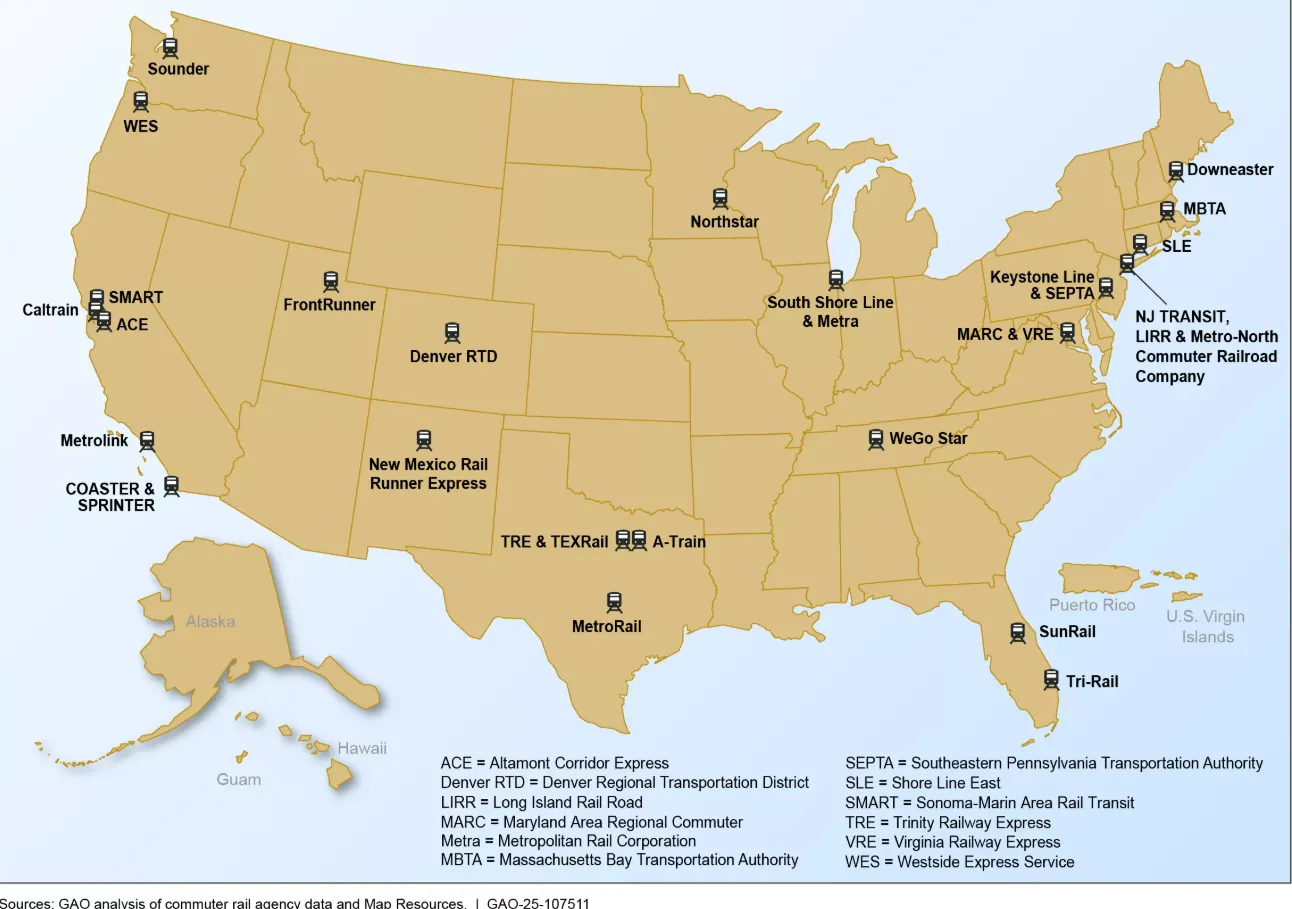
The Macro Map: America’s Rail Corridors
The U.S. commuter rail landscape is primarily clustered into three high-density regions:
-
The Northeast Corridor (NEC): The gold standard of US rail, stretching from Boston through NYC and Philly to DC. It’s a near-continuous ribbon of iron.
-
The Great Lakes Hub: Centered around Chicago, the "Metra" system is a radial fan covering the vast Illinois and Wisconsin prairies.
-
The Coastal West: Rapidly growing systems in the San Francisco Bay Area and Greater Los Angeles, now prioritizing electrification and high-speed regional connectivity.
IV. The Top 7 Hubs: A Deep Dive (2026 Edition)
We have analyzed each hub using a consistent professional template to help you evaluate your next move.
| City | Major Commuter Rail System | Popular Suburb | Travel Time to Downtown | One-Way Fare | Monthly Pass | Car-Free Friendliness |
|---|---|---|---|---|---|---|
🗽New York City |
NJ Transit / Long Island Rail Road (LIRR) | Hoboken, NJ | 20–45 mins | $5–$18 | $150–$450 | High |
🌬️Chicago |
Metra | Naperville, IL | 35–60 mins | $4–$10 | $100–$250 | Moderate |
🎓Boston |
MBTA Commuter Rail | Worcester, MA | 45–75 mins | $7–$14 | $200–$400 | Moderate |
🌉San Francisco |
Caltrain | San Mateo, CA | 25–50 mins | $5–$12 | $130–$250 | High |
🔔Philadelphia |
SEPTA Regional Rail | Paoli, PA | 30–55 mins | $4–$11 | $120–$220 | Moderate |
🏛️Washington, D.C. |
MARC / Virginia Railway Express (VRE) | Alexandria, VA | 20–50 mins | $4–$13 | $120–$300 | High |
🌴Los Angeles |
Metrolink | Irvine, CA | 45–90 mins | $8–$18 | $200–$400 | Low |
1. 🗽New York City (The Rail Capital)
-
Core Systems & Coverage:
-
LIRR (Long Island Rail Road): Radiates from Penn Station and Grand Central Madison to Nassau and Suffolk Counties. Key branches serve Great Neck, Port Washington, Hicksville, Huntington, Babylon, and the far reaches of Montauk.
-
NJ Transit (New Jersey Transit): Connects NY Penn Station to almost every major hub in New Jersey. Key lines serve Jersey City, Newark, Hoboken, Trenton, Princeton, and the Jersey Shore (Asbury Park).
-
Metro-North Railroad: Primarily serves the northern suburbs. The Hudson, Harlem, and New Haven lines connect Manhattan to Westchester, Putnam, and Dutchess Counties in NY, as well as Fairfield and New Haven Counties in Connecticut (Greenwich, Stamford).
-
-
2026 Fare Details: Zone-based pricing. A Monthly Pass from Zone 7 (e.g., Hicksville) to Manhattan is approx. $310-$340. New for 2026: The "CityTicket" offers $5.00 flat fares for intra-city trips.
-
Recommended Suburbs & Lines:
-
White Plains (Metro-North Harlem Line): 35-min express to Grand Central. Ideal for urban-suburban balance.
-
Princeton (NJ Transit Northeast Corridor): High-end academia vibe; 65 mins to NY Penn Station.
-
-
Essential Apps: MTA TrainTime, NJ Transit Mobile, OMNY.
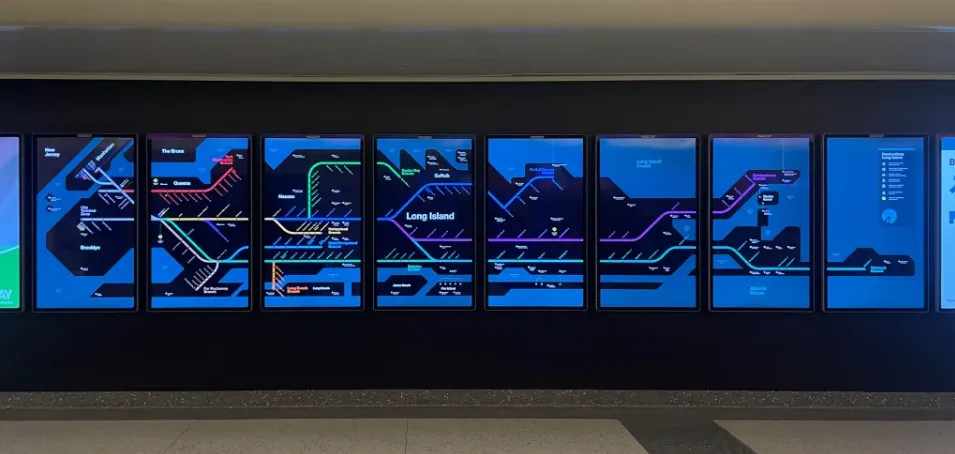
2. 🌬️Chicago (The Efficiency King)
-
Core Systems & Coverage:
-
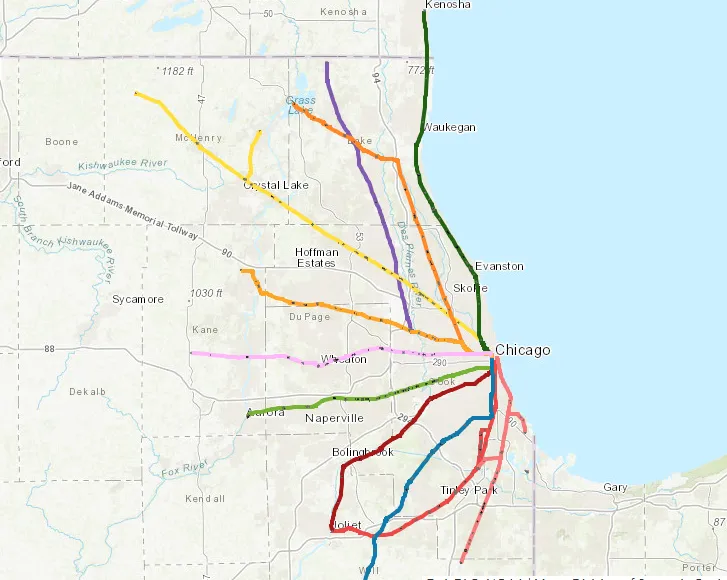
Metra: Operating 11 radial lines from four downtown terminals (Union Station, Ogilvie, LaSalle Street, and Millennium Station).
-
Key Lines:
-
BNSF Railway: The busiest line, serving the western suburbs including Berwyn, Downers Grove, Naperville, and Aurora.
-
Union Pacific North (UP-N): Connects to the affluent North Shore, including Evanston, Wilmette, Winnetka, Highland Park, and up to Kenosha, WI.
-
Union Pacific Northwest (UP-NW): Serves Park Ridge, Arlington Heights, and Crystal Lake.
-
Milwaukee District West (MD-W): Reaches Elgin and surrounding western communities.
-
Electric District: Serves the South Side and south suburbs like Hyde Park and University Park.
-
-
-
2026 Fare Details: Simplified 4-Zone structure. The "Regional Connect Pass" ($135/mo) allows unlimited Metra and CTA (Subway/Bus) travel—the best value in the US.
-
Recommended Suburbs & Lines:
-
Naperville (BNSF Line): 40-min express. Consistently rated the best place to raise a family.
-
Evanston (UP-N Line): College-town vibe (Northwestern) with dual Rail/Subway access.
-
-
Essential Apps: Ventra (The all-in-one payment/tracking tool).
3. 🌉San Francisco Bay Area (The Tech Arteries)
-
Core Systems & Coverage:
-
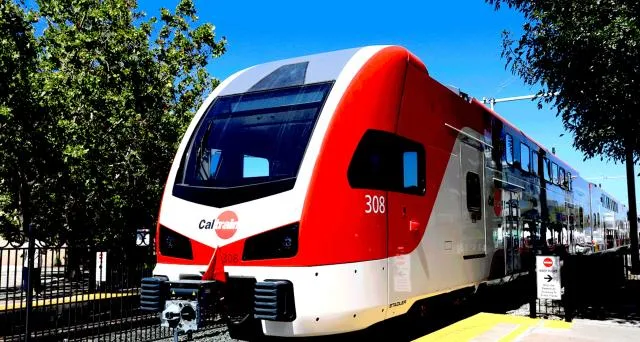
Caltrain: The lifeblood of the Silicon Valley commute, stretching from San Francisco (4th & King/Salesforce Transit Center) down the Peninsula to San Jose and Gilroy. Key stops include tech hubs like South San Francisco, San Mateo, Redwood City, Palo Alto (Stanford), Mountain View, and Sunnyvale. [Route Map]
-
BART (Bay Area Rapid Transit): A high-speed regional network connecting San Francisco to the East Bay and beyond. [Schedule & Route Map]
-
Yellow/Blue Lines: Serve Oakland, Berkeley, Walnut Creek, Lafayette, Concord, and Antioch/Dublin/Pleasanton.
-
Orange/Green Lines: Connect the East Bay directly to Fremont, Milpitas, and North San Jose (Berryessa).
-
Red/Yellow Lines: Connect SF to SFO Airport and Millbrae.
-
-
ACE (Altamont Corridor Express): Connects the Central Valley (Stockton, Tracy) to Pleasanton and San Jose for long-distance super-commuters.
-
-
2026 Fare Details: Zone-based. With 2026 electrification, Caltrain now offers "Peak-Hour Caps" via Clipper 2.0. A monthly commute from San Mateo to SF is approx. $210.
-
Recommended Suburbs & Lines:
-
San Mateo (Caltrain): The "sweet spot" of the Peninsula with 30-min connectivity to both SF and Silicon Valley.
-
Walnut Creek (BART): A walkable, upscale East Bay suburb with high-frequency service.
-
-
Essential Apps: Clipper, Caltrain Mobile.
4. 🎓Boston (The Academic Web)
-
Core Systems & Coverage:
-
MBTA Commuter Rail: Operated by Keolis, this system fans out from two major hubs in Boston: North Station and South Station. [HD Route Map]
-
Key Lines from North Station: Serves the North Shore and Merrimack Valley, including Salem, Beverly, Gloucester (Rockport Line), Lowell, and Fitchburg.
-
Key Lines from South Station: Serves the south and west, including Worcester, Needham, Franklin, and the Providence/Stoughton Line which reaches into Rhode Island (Providence, Wickford Junction).
-
Old Colony Lines: Provides access to the South Shore, including Quincy, Hingham, and Plymouth.
-
-
2026 Fare Details: Zone 1 to Zone 10. A Zone 6 (e.g., Salem) pass is approx. $290/mo.
-
Recommended Suburbs & Lines:
-
Newton (Framingham/Worcester Line): Ultra-fast 20-min commute; top-tier public schools.
-
Salem (Newburyport/Rockport Line): Perfect for those seeking historic seaside charm.
-
-
Essential Apps: mTicket, Transit App.
5. 🔔Philadelphia (The Neighborhood Connector)
-
Core Systems & Coverage:
-
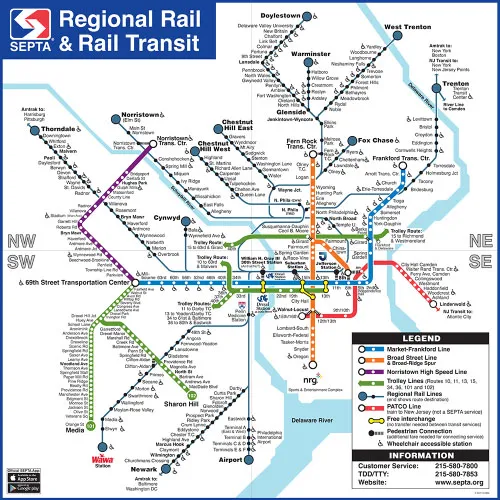
SEPTA Regional Rail: 13 lines that integrate at Center City's core (Jefferson, Suburban, and 30th Street Stations). [HD Route Map]
-
Key Lines & Areas:
-
Paoli/Thorndale Line: The legendary "Main Line" serving affluent suburbs like Bryn Mawr, Villanova, Wayne, Ardmore, and Malvern.
-
Lansdale/Doylestown Line: Connects to Montgomery and Bucks Counties, serving Ambler, Fort Washington, and the historic Doylestown.
-
Manayunk/Norristown Line: Follows the Schuylkill River, serving the trendy Manayunk neighborhood and Conshohocken.
-
Wilmington/Newark Line: Provides interstate service to Delaware, stopping at Chester, PA and Wilmington, DE.
-
Media/Wawa Line: Connects to Delaware County, reaching Swarthmore and the newly extended station at Wawa.
-
Airport Line: A direct shuttle between Center City and Philadelphia International Airport (PHL).
-
West Trenton Line: Connects to Bucks County and provides a gateway to Central New Jersey.
-
-
-
2026 Fare Details: Distance-based. Monthly "Anywhere" passes around $200 via the SEPTA Key card.
-
Recommended Suburbs & Lines:
-
Ardmore (Paoli/Thorndale Line): The heart of the "Main Line"—classic architecture and elite shops.
-
Media (Media/Wawa Line): Known as "Everybody's Hometown," offering a vibrant, walkable downtown.
-
-
Essential Apps: SEPTA App.
6. 🏛️Washington D.C. (The Capital Link)
-
Core Systems & Coverage:
-
MARC (Maryland Area Regional Commuter): Connects DC Union Station to Maryland and West Virginia.
-
Penn Line: The fastest line, serving BWI Airport and Baltimore (Penn Station).
-
Camden Line: Runs between DC and Baltimore (Camden Yards), serving College Park and Laurel.
-
Brunswick Line: Connects DC to Silver Spring, Rockville, Frederick, and reaches Martinsburg, WV.
-
-
VRE (Virginia Railway Express): Connects DC (Union Station/L'Enfant) to Northern Virginia.
-
Fredericksburg Line: Serves Alexandria, Woodbridge, and Fredericksburg.
-
Manassas Line: Connects to Burke Centre and Manassas.
-
-
-
2026 Fare Details: Heavily subsidized for federal employees. Public monthly rates average $180-$250.
-
Recommended Suburbs & Lines:
-
Alexandria (VRE): A 15-min "hop" into DC; historic charm with modern amenities.
-
Silver Spring (MARC): Efficient gateway for Maryland-based professionals.
-
-
Essential Apps: SmarTrip (Integrated payment for Rail/Metro).
7. 🌴Los Angeles (The Rising Star)
-
Core Systems & Coverage:
-
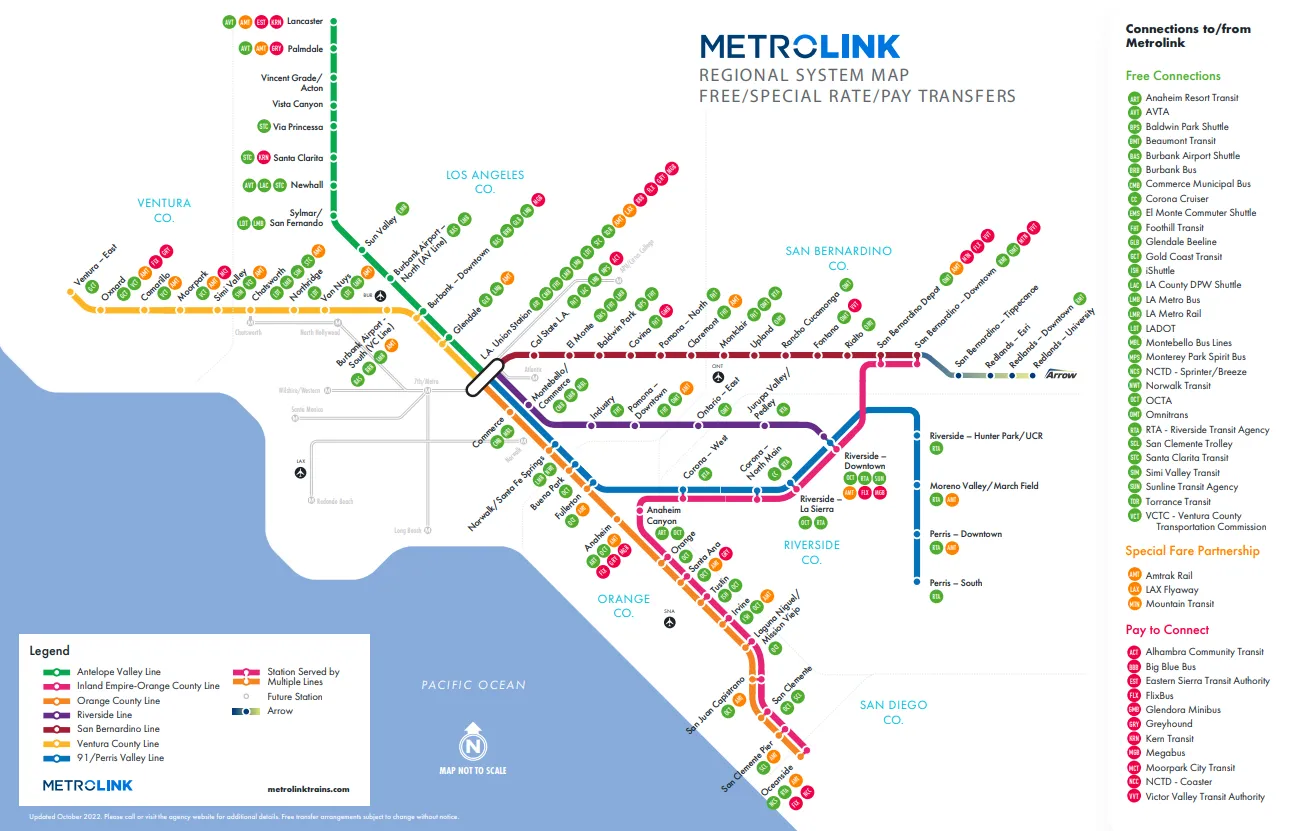
Metrolink: A massive 7-line system connecting LA Union Station to six Southern California counties. [HD Route Map]
-
Key Lines & Areas:
-
Orange County Line: Connects LA to Anaheim, Santa Ana, Irvine, and San Juan Capistrano, stretching down to Oceanside.
-
San Bernardino Line: A high-frequency line serving the Inland Empire, including El Monte, Covina, Pomona, and San Bernardino.
-
Ventura County Line: Connects to the north, serving Burbank, Van Nuys, Chatsworth, Simi Valley, and Oxnard.
-
Antelope Valley Line: Reaches the high desert, including Santa Clarita, Palmdale, and Lancaster.
-
Riverside Line: Serves Ontario, Pomona, and Riverside.
-
91/Perris Valley Line: Connects LA to Fullerton, Corona, Riverside, and Perris.
-
-
-
2026 Fare Details: Distance-based. The 2026 "Olympic Prep Pass" offers flat-rate discounts for hybrid workers.
-
Recommended Suburbs & Lines:
-
Irvine (Orange County Line): Clean, safe, and avoids the nightmare of the I-5 freeway.
-
Burbank (Antelope Valley Line): Perfect for the entertainment and media crowd.
-
-
Essential Apps: Metrolink App.
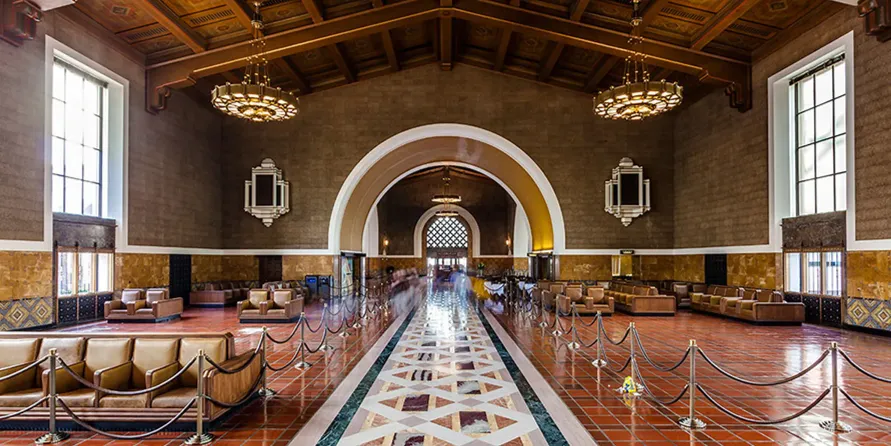
Best Suburbs for Rail Commuters Who Want to Live Car-Free
| City | Recommended Suburb | Monthly Commuting Cost | Average One-Way Commute Time |
|---|---|---|---|
| New York City | White Plains, NY | $320–$350 | 35–45 mins |
| New York City | Princeton, NJ | $450–$480 | 60–70 mins |
| Chicago | Naperville, IL | $180–$210 | 45–55 mins |
| Chicago | Evanston, IL | $120–$150 | 25–30 mins |
| Boston | Newton, MA | $210–$240 | 25–35 mins |
| San Francisco Bay Area | San Mateo, CA | $190–$230 | 30–40 mins |
| Washington, D.C. | Alexandria, VA | $150–$180 | 15–25 mins |
V. The Digital Commuter’s Toolkit: Mastering 2026 Transit Tech
In 2026, a successful rail commute is no longer just about showing up at the platform on time. It is about leveraging digital tools to optimize cost, time, and comfort. This chapter breaks down the essential hardware and software for the modern "Super-Commuter."
1. The Unified Payment Stack
By 2026, major US commuter rail systems have fully transitioned from paper tickets and legacy magstripe cards to seamless, contactless payments.
-
Clipper 2.0 (SF Bay Area): Fully integrated with Apple Wallet and Google Pay. It automatically applies "Fare Capping" and Caltrain’s new peak-hour electrification discounts without user intervention.
-
OMNY (New York/New Jersey): Now ubiquitous across the MTA (Subway/Bus) and expanded into LIRR and Metro-North zones. It supports "cross-system transfers," significantly lowering the cost of reaching the final office destination.
-
Ventra (Chicago): The gold standard for regional integration. The 2026 update allows users to manage "Regional Connect Passes" and purchase Metra "Flex Passes" (bundle of 10 or 20 discounted rides) with one tap.
2. Real-time Tracking & Smart Routing
Relying on a static PDF schedule is a thing of the past. Today’s commuter thrives on predictive data.
-
Transit App: Utilizing advanced crowdsourced data, it predicts "micro-delays" caused by weather or track maintenance more accurately than official agency feeds.
-
Citymapper: Features the "Car Crowding Indicator." In 2026, it tells you which specific train car has the most empty seats or is closest to the station exit at your destination.
-
Google Maps (AI-Grounding Enabled): Deeply integrated with real-time rail APIs. If your train is delayed by more than 10 minutes, it automatically suggests alternative rideshare or express bus routes to keep your schedule intact.
3. Automating Pre-tax Benefits (The 25% Discount)
This is the "secret weapon" for saving money in 2026.
-
IRS 2026 Limits: Federal law allows you to set aside up to $325 per month in pre-tax income for transit expenses.
-
Seamless Integration: Platforms like Edenred and WageWorks now sync directly with transit apps. Your monthly pass is automatically funded from your paycheck before taxes are even calculated.
-
The Math: For an individual earning $100k/year, using pre-tax benefits is equivalent to getting a 25%–30% discount on every single train ride.
4. Hardware: Turning the Train into Your Mobile Office
Since 2026-era rolling stock (like the LIRR M9 or Caltrain EMUs) features ubiquitous Wi-Fi 6 and USB-C power, your "Everyday Carry" (EDC) should include:
-
Noise-Canceling Headphones (ANC): Essential for "Deep Work" or catching a quick nap before the morning meeting.
-
Magnetic Laptop Stand: Necessary for maintaining ergonomic posture on tray tables during the commute.
-
High-Wattage Power Bank (100W+): While most seats have outlets, older "legacy" cars on some routes still lack power. A high-speed power bank ensures your MacBook Pro stays charged.
5. Solving the "Last Mile"
-
Smart Parking Apps: Tools like SpotHero (Rail Edition) allow you to reserve a parking spot at busy suburban hubs like Naperville or Princeton Junction 24 hours in advance.
-
Micro-Mobility Hubs: Most 2026 railway apps feature a "Last Mile" button to instantly unlock an e-scooter or book an autonomous shuttle waiting right outside the station exit.
VI. The Hybrid Strategy: Flex-Passes and Productivity
As we move further into 2026, the "5-day grind" has become a relic for millions of office professionals. The rise of the 3-Day In / 2-Day Out hybrid model has forced a total redesign of how commuters purchase tickets and value their time.
1. The "3-Day In" Model: Why Monthly Passes Might Be Dead for You
In the pre-pandemic era, the "Monthly Pass" was the undisputed king. Today, the math has shifted. If you are only commuting 10 to 12 days a month, a monthly pass—often priced for 20+ days of travel—is a sunk cost.
-
The 20-Trip Bundle Economy: Most agencies, including Metra (Chicago) and MBTA (Boston), have introduced the "Flex Pass" or "20-Trip Bundle." These tickets typically offer a 20%–25% discount over one-way fares but remain valid for 90 days.
-
The Breakeven Point:
-
Monthly Pass: Best if you commute 15+ days per month.
-
Flex/Bundle: Best for the 8–12 days per month crowd.
-
-
Dynamic Fare Capping: In the SF Bay Area, Caltrain uses "Tap-and-Go" caps. Once you spend a certain amount in a day or week, the rest of your rides are free. This removes the "commitment anxiety" of buying a pass upfront.
2. The "Third Space" Concept: Mobile Office vs. Digital Detox
In 2026, the commute is no longer "lost time." It has been reclaimed as a Third Space—an environment between the distractions of home and the pressures of the office.
-
The Mobile Office: With high-speed Wi-Fi 6 now standard on lines like the Northeast Corridor (NEC), many commuters use the morning train to clear their inbox. By the time they hit the office at 9:00 AM, they have already completed their "shallow work," leaving the day open for meetings and deep collaboration.
-
The Digital Detox: Conversely, many are choosing to make the train a "No-Screen Zone." Utilizing the Quiet Car, commuters use the 45-minute ride for meditation, reading physical books, or mental decompression. This ritual helps prevent the "blur" between work and home life that often plagues remote workers.
3. Last-Mile Solutions: TODs and Micro-Mobility
Getting from the station to the office is no longer a barrier thanks to integrated 2026 infrastructure:
-
Station TODs: Hubs like Stamford (CT) and Walnut Creek (CA) have built "mini-cities" on top of tracks, allowing residents to live and shop within 500 feet of the platform.
-
Autonomous Shuttles: Tech campuses in Silicon Valley and Northern Virginia now run synchronized shuttles that sync with your train's arrival via app.
-
E-bike Integration: Expanded "Bike Cars" and docked e-bikes at stations allow a 3-mile trek to the office in under 8 minutes.
4. The "Hybrid Perk": Corporate Subsidies
Many 2026 employers have swapped "Free Parking" for "Commuter Stipends" to support hybrid teams:
-
The Shift: Companies are redirecting savings from smaller office footprints to fund your Flex Passes or rideshare connections.
-
Pro-Tip: Check for "Lifestyle Accounts"—many now allow you to expense e-bike rentals or station parking as a wellness benefit.
VII. Conclusion: Defining the 2026 American Dream
The American Dream has evolved. It is no longer about being isolated in a distant cul-de-sac with a three-car garage. In 2026, the "New American Dream" is defined by Freedom and Connectivity.
It is the ability to live in a quiet, green suburb with top-tier schools while maintaining a high-powered career in the city—all without the soul-crushing experience of a highway commute.
By choosing the right hub (Chapter IV), mastering the digital tools (Chapter V), and optimizing your hybrid schedule (Chapter VI), the commuter rail becomes your personal "time machine."
Safe travels, and welcome home.
Author's Note: This guide was compiled using 2026 transit data and urban planning projections. Always check local transit agency websites for the most current schedules and fare structures before making a moving decision.
Q: Is taking the train actually cheaper than driving?
A: Yes. When factoring in hidden costs like downtown parking, fuel, tolls, accelerated vehicle depreciation, and high insurance premiums, driving to work costs the average American $10,000 to $20,000 annually. In contrast, an annualized commuter rail pass ranges from $2,400 to $4,500.
Q: Does commuter rail have Wi-Fi and power outlets?
A: Most modernized US commuter rail systems in 2026, including the LIRR, Caltrain, and the Northeast Corridor, offer high-speed Wi-Fi 6 and USB-C power outlets, allowing you to use your commute as a mobile office.
Q: What is the best ticket to buy if I only work in the office 3 days a week?
A: If you are on a hybrid schedule (2-3 days in the office), avoid the standard Monthly Pass. Instead, purchase a "Flex Pass" or "20-Trip Bundle." These offer a 20-25% discount over single-ride tickets and are valid for up to 90 days.