In 2026, New York City remains the "City That Never Sleeps," and its pulse—the Metropolitan Transportation Authority (MTA) subway system—continues to be the lifeblood for millions. While the latest 2026 safety reports show that overall transit crime has hit a 16-year low thanks to AI surveillance and LED lighting upgrades, the reality for a solo woman navigating the tunnels after 10:00 PM requires more than just statistics; it requires strategy.
Whether you are a local professional, an international student at NYU/Columbia, or a tourist visiting the Big Apple for the first time, this comprehensive guide will teach you how to master the 2026 NYC Subway system with confidence and poise.
Part 1: Understanding the NYC Subway System in 2026
In early 2026, the New York City Subway has entered a new era of modernization. Most notably, the legendary MetroCard is in its final "sunset" phase, and the system is brighter and cleaner than it has been in decades due to the completion of several massive refurbishment projects.
1. Fares and Payment (2026 Update)
The way you pay for the subway changed significantly on January 4, 2026.
-
Base Fare: The fare is now $3.00 for subways and local buses (up from $2.90).
-
The End of the MetroCard: As of January 1, 2026, you can no longer buy or refill physical MetroCards at station vending machines. While the MTA still accepts existing cards for entry, they are being phased out entirely by mid-year.
-
OMNY is Mandatory: Tap-to-pay is now the standard. You can use a contactless credit/debit card, a smartphone (Apple/Google Pay), or a physical OMNY card ($2.00).
-
Fare Capping: The "Weekly Pass" has been replaced by a permanent $35 weekly cap. Once you hit 12 taps in a 7-day period (Monday–Sunday) using the same device, every ride for the rest of that week is free.
2. Infrastructure: The "Brighter & Cleaner" Milestone
The system has undergone a physical transformation over the last two years:
-
LED Overhaul: All 472 stations are now fully outfitted with high-intensity LED lighting. This has eliminated the dim "yellow" atmosphere and improved the clarity of the 15,000+ security cameras.
-
"Revive" Projects: In 2025, the MTA completed "deep cleans" at over 40 major hubs, removing 2,600 tons of trash from the tracks to reduce fire risks and rodent sightings.
-
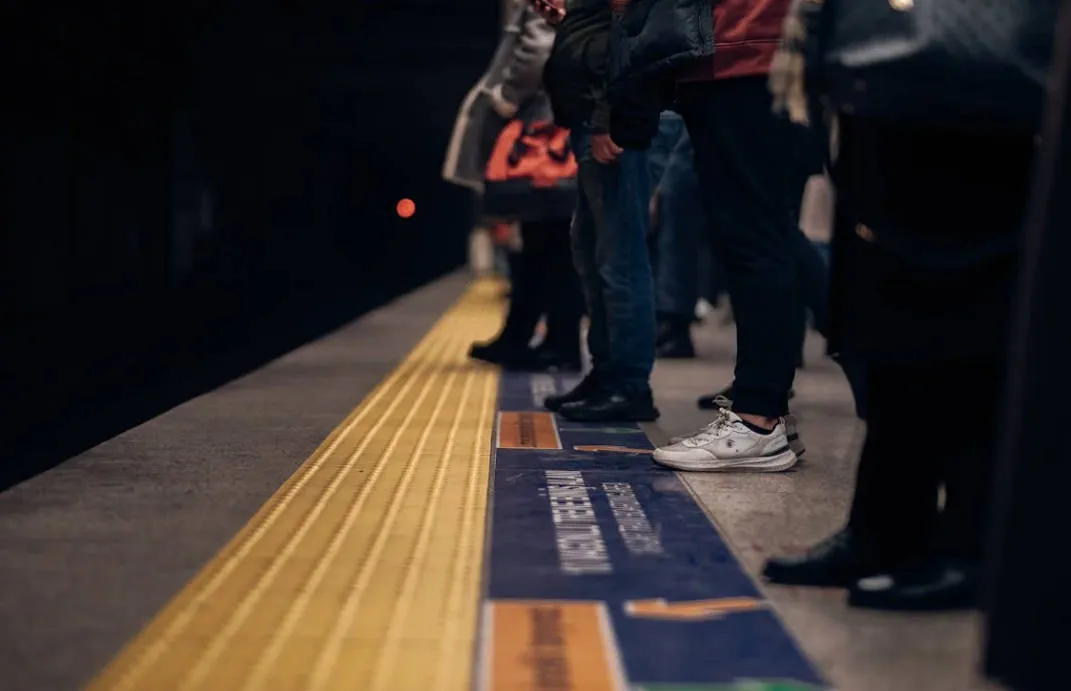
Platform Safety: Yellow safety barriers have been installed at 115 high-traffic stations to prevent track intrusions and falls.
3. Safety & Realistic Risk Assessment
-
Crime Trends: Major subway crime fell by 4% in 2025. Statistically, the system is at its safest level in 16 years (excluding the pandemic).
-
Police Presence: The state recently committed an additional $77 million for NYPD subway patrols. Expect to see two uniformed officers on almost every train between 9 p.m. and 5 a.m.
-
Personal Safety Tip: Despite the new barriers, most stations are still open to the tracks. Always stand behind the yellow line and keep your back to a pillar or wall if you feel uneasy.
NYC Subway 2026 Snapshot
| Feature | Status |
| Single Fare | $3.00 |
| Weekly Cap | $35.00 (Permanent via OMNY) |
| Payment | OMNY Tap-to-Pay |
| Operational Hours | 24/7 |
| Best App | MTA (Official) or TrainTime |
Part 2: The "Red & Black" Line List (2026 Rankings)
In a system as vast as the NYC subway, not all lines feel the same at night. Some run like clockwork and feel safer through consistency; others are more prone to delays, crowding, or unpredictability. Below is a practical ranking to help you plan smarter—not fearfully.
🟢 Green Lines — Most Reliable & Smoother Rides
These lines have some of the highest on-time performance and consistency — meaning fewer surprises, fewer long waits, and easier navigation at night.
Top Green Lines in 2025 Performance (carried into 2026):
✅ L Train — Best overall punctuality in recent ranking, ~90%+ on-time rate.
✅ 7 Train — Close behind with strong reliability.
✅ 6 Train — Very solid performance, high ridership and frequency.
✅ 1 Train — Known for consistent intervals, heavy weekday usage.
💡 What makes these lines feel more predictable:
-
Frequent dispatch even at night
-
Shorter waits between trains
-
Strong rider familiarity among locals
🟡 Amber Lines — Average Reliability, Plan Ahead
These lines are generally fine to ride — but they’re more susceptible to maintenance work, shared trackage issues, or delayed schedules.
Common Amber Lines:
⚠️ J/Z, R, N, A, C, 2 — On-time averages typically under 85–87%, with variability by season and time.
⚠️ M Line — Sometimes decent but less consistent overall.
Typical Challenges:
-
Frequent transfers or track overlaps
-
Shared infrastructure that amplifies delays
-
Service patterns that change at night
Strategy: If you must take these at night, pre-check schedules, anticipate longer waits, and keep app alerts on.
🔴 Red Lines — Most Challenging & Unpredictable
These lines tend to have lower reliability, more delays, and a higher service-impact profile — not inherently unsafe, but more frustration risk, which can affect your nighttime experience.
Notable Red Lines:
🔺 B Train — One of the least reliable lines in 2025 data, with significant delays compared to others.
🔺 D / Q / F Lines — Lower on-time percentages and more frequent disruptions.
Why they feel riskier at night:
-
Frequent delays can leave platforms quieter for longer
-
Changing service patterns confuse even seasoned riders
-
Interlocking or shared sections amplify disruption impact
Nighttime Tip: On these routes, plan an alternative or know your exit station before boarding — that way you’re never stuck waiting in a quieter, hard-to-navigate area.
🚧 2026 Service Disruption Alert: The "Switch Burst"
If your commute involves the Lexington Avenue Express (4/5), your reality changed this month.
-
The Project: Replacing 37-year-old switches north of 125th St.
-
The Impact: Weeknights (11:45 PM – 5:00 AM) and weekends, there is no 4/5 service between 149 St-Grand Concourse and 125 St.
-
The Workaround: The MTA is cross-honoring subway fares on Metro-North at Bronx stations (like Fordham or University Heights) for travel into Grand Central. This is often 20 minutes faster than the subway shuttle buses.
2026 Insider Tip: The C train is no longer the "runt of the litter." Due to new timetable adjustments and the rollout of R211 cars, it saw the single biggest reliability jump in the system this past year.
Part 3: Pre-Entry Checklist & Psychological Training
Nighttime safety isn’t just about where you go—it’s about how you enter the system mentally.
Before you swipe in, pause. This is your last moment of full control.
What follows is a short checklist plus the psychological framework experienced NYC women use—often unconsciously—to move through the subway with confidence at night.
1. The Pre-Entry Checklist: "Hardware & Software"
Before you step onto the stairs, verify these four things.
-
The Payment Protocol: The $3.00 fare is now the law of the land. Verify that your OMNY Express Mode is active on your phone. If you are a "Reduced Fare" rider, ensure your 2026 digital certification is linked; you should only be paying $1.50 per tap.
-
The 4/5 "Split" Awareness: If your route involves the Lexington Avenue line, you are in the middle of a major switch replacement.
-
Tonight's Reality: Late-night 4 trains are running in two sections (Woodlawn to 149 St, and 125 St to New Lots Av).
-
The Bridge: You must use the free shuttle bus between 149 St and 125 St.
-
-
Battery & Connectivity: All 472 stations now have 5G/Wi-Fi, but the deep tunnels between the Bronx and Manhattan still have dead zones. Open your MTA App before you lose signal so your route is cached.
-
The "Two-Officer" Search: Glance at the platform. The state has funded a surge of 2,000 extra officers for 2026. If you don't see two uniformed officers within 60 seconds of arriving on a platform tonight, move closer to the "Help Point" (the pillar with the blue light).
2. Psychological Training: The "Situational Fluency" Method
New York transit in 2026 requires a specific mental posture. Use the A.C.E. method:
A — Acknowledge, Don't Absorb
You will encounter individuals in crisis. As of 2026, 10 SCOUT Teams (clinician-led outreach) are patrolling the system.
-
The Training: If someone is acting erratically, acknowledge their presence in your peripheral vision, but do not make sustained eye contact. Eye contact can be interpreted as a challenge or an invitation.
C — Controlled Disengagement
Modern noise-canceling headphones are a double-edged sword.
-
The Training: Use "Transparency Mode." You need to hear the conductor's voice. In 2026, the MTA has moved to more frequent, live (non-recorded) announcements to help with the ongoing construction reroutes. If you can't hear the environment, you are vulnerable.
E — Exit Strategy (The "Empty Car" Logic)
If a train pulls in and one car is nearly empty while the others are packed, do not enter it.
-
The Training: Your brain will tell you "Oh, a seat!" Your training must tell you "Biohazard or Safety Risk." In 2026, the primary reason for an empty car is a HVAC failure or a hygiene incident. Trust the "collective intelligence" of the crowd and stay in the populated cars.
3. 2026 Safety Tech Reference
| Feature | 2026 Reality | Best Use |
| Platform Barriers | Now at 115 stations | Stand directly behind the yellow barrier gate. |
| LED Lighting | 100% Completion reached | Stay in the "High-Lumen" center of the platform. |
| OMNY Fare Cap | $35 per week | Automatically hits after 12 rides; no need to buy "Unlimited." |
| Emergency Button | On all R211 cars | Use for immediate medical/safety issues; it alerts the conductor. |
Psychological Pro-Tip: If you feel an "odd vibe" on a platform tonight, leave. Your fare is capped at $35/week anyway, so the $3.00 cost of exiting and taking an Uber/Lyft to a different station or home is a small price for peace of mind.
Part 4: On-Platform & Boarding Tactics: Step-by-Step Survival
Once you’re past the turnstile, your positioning and timing matter more than your destination. Nighttime safety on the subway is less about reacting to danger and more about preventing exposure.
This section breaks down exactly what experienced NYC women do—step by step.
1. On-Platform Positioning: The "Zebra" Rule
In 2026, the safest place to stand on any platform is the "Conductor’s Hub."
-
Locate the Zebra Board: Look up at the ceiling in the center of the platform for a wooden board with black and white diagonal stripes.
-
Why it Matters: This is the exact spot where the conductor’s window aligns. When the train stops, the conductor is required to point at this board to verify they are properly aligned.
-
Tactical Advantage: Standing here ensures you board the car where an MTA employee is physically present. If an emergency occurs, you are only feet away from a radio-linked official.
2. Boarding Tactics: The "Yellow Line" Etiquette
With the 2026 expansion of Platform Safety Barriers to 115 stations, boarding has become more orderly, but there is still a "New York flow."
-
The Barrier Gap: At stations like Times Square or 14th St, the stainless steel waist-high barriers have specific openings. Line up to the side of these gaps.
-
The "Exit First" Rule: 2026 ridership is at a post-pandemic peak. Never block the door; wait for the "surge" of exiting passengers to finish.
-
The 9 PM–5 AM Surge: Remember, as of this month, the $77 million safety surge means a uniformed officer is on every train during these hours. If you don't see one on your platform, they are likely already on the train. Look for the "patrol car"—usually the first or last car.
3. Selecting Your Car: The "60-Second Scan"
Once the train doors open, you have about three seconds to make a decision.
-
Avoid the "Solo Car": If the platform is packed but one car is empty, ignore your instinct for a seat. In 2026, this usually signifies a "bio-event" or a failed HVAC system.
-
The R211 Advantage: If you are on the A, C, or G lines, look for the new R211 cars. These feature wider doors (58 inches) and interior security cameras. If you feel unsafe, these cars provide the clearest "line of sight" for the 32,000 cameras monitored by the NYPD.
-
The Open Gangway (R211T): If you board an "Open Gangway" train, you can walk through the bellows to another car while the train is moving. Use this if someone’s behavior makes you uncomfortable.
4. Emergency Fallback: The Blue Help Point
If someone follows you or you feel a "threat" developing on the platform:
-
Move to the Blue Light: Every station has a Help Point.
-
The Red Button: Pressing this in 2026 automatically triggers the station's AI-assisted cameras to zoom in on your location, alerting the Rail Control Center immediately.
-
The "Station Agent Hub": In early 2026, all station agents have been moved out of the booths and are patrolling the mezzanine with mobile devices. Look for the high-visibility vests.
Part 5: Emergency Response (2026 Protocols)
Emergencies underground can feel overwhelming — especially at night. But knowing the actual protocols and your role in them turns uncertainty into strategy. Below is a step‑by‑step guide based on the Metropolitan Transportation Authority’s emergency preparedness framework and common subway response features.
1. The "Golden Rule" of 2026: Stay on the Train
Unless there is an active fire in your specific car, the train is the safest place for you.
-
The Track Risk: In 2026, the 3rd rail remains energized even if the train isn't moving. Unauthorized track entry is currently the #1 cause of non-crime-related fatalities in the system.
-
Open Gangway Advantage: If you are on the newer R211T trains (the "open" trains), you can move between cars without stepping outside. If a car becomes unsafe, walk through the "soft shell" bellows to the next one.
-
The Emergency Brake Paradox: Do not pull the emergency brake in a tunnel unless a person is physically caught in the doors. Pulling the brake in a tunnel prevents the train from reaching the next station, where emergency responders (FDNY/NYPD) can actually reach you.
2. Platform Emergencies: The "Help Point" Protocol
If you see a crime or medical emergency on a platform:
-
The Blue Light: Every station now has Help Points.
-
Green Button: For non-emergency info.
-
Red Button: Direct line to the Rail Control Center. In 2026, these are equipped with 360-degree cameras that automatically turn on when the red button is pressed, giving dispatchers a live view of the scene.
-
-
Track Falls: If someone falls on the tracks and a train is approaching:
-
Do not jump in. 2. Run toward the end of the platform (away from the incoming train) while waving your phone flashlight. This gives the operator more time to see you and brake.
-
The Bench Niche: Most stations have a "niche" under the platform edge. If you fall and can't climb out, roll into that space and lie flat.
-
3. The 2026 SCOUT Response
If you encounter a mental health crisis that feels threatening:
-
The Clinician-Led Approach: As of January 2026, there are now 15 active SCOUT Teams (Subway Co-Response Outreach Teams). These consist of a clinician and an MTA police officer.
-
How to Summon: Do not engage. Use the MTA App's "Report an Incident" feature or text 911. Specify "Mental Health Crisis" so the dispatcher can route a SCOUT team rather than a standard patrol.
Emergency Reference: 2026 Tech Features
| Scenario | Action | 2026 Tech to Use |
| Medical Emergency | Notify Conductor / Press intercom | R211 Intercom: Now features two-way video at the car ends. |
| Active Crime | Move to next car / Text 911 | Car Cameras: All 6,000 cars now have active, recorded video. |
| Fire/Smoke | Move to "unaffected" car | Open Gangways: Move freely without opening heavy doors. |
| Track Intrusion | Do not enter tracks | Platform Barriers: Stand behind the gate at the 115 pilot stations. |
4. Evacuation: The "15-Second Rule"
A controversial change for 2026: At major hubs like 59th St (4/5/6) and Flushing-Main St (7), the emergency gates now have a 15-second delay to prevent fare evasion.
-
In a real emergency: If the alarm is triggered by the station agent, these gates will release instantly. If you are trying to exit during a panic, follow the green "Emergency Exit" signs—not all gates are delayed.
Part 6: Alternative Transportation Options
While the NYC subway is the fastest and most affordable way to get around, nighttime travel isn’t always straightforward. Knowing your alternatives can reduce stress, give you flexibility, and help you avoid riskier situations on quieter platforms or Red lines.
1. Rideshares: Uber, Lyft, and Local Apps
Rideshare apps are convenient but vary by safety features:
✅ Safety Features:
-
GPS tracking and sharing rides with friends
-
Driver profile & rating transparency
-
“Emergency” button in the app that connects to 911
⚠️ Considerations:
-
Surge pricing late at night can be high
-
Pick-up locations at subway exits can be crowded or poorly lit
-
Always verify the license plate and driver name before entering
Pro tip: Use rideshares for the last leg of your journey if your train stops at a station that feels isolated at night.
2. Taxis and Street Hails
Traditional yellow cabs remain a reliable alternative:
-
Regulated by NYC Taxi & Limousine Commission (TLC)
-
Can be flagged quickly from busy streets, hotels, or subway exits
-
Safer than hailing from extremely empty streets
Best practices:
-
Look for official TLC medallion cabs
-
Sit in the back seat
-
Keep your phone ready to share location
3. Shuttle Services & Microtransit
Several neighborhoods and airports offer late-night shuttles:
-
Airport Shuttles (JFK, LGA, EWR) for late arrivals/departures
-
Hotel shuttles in Manhattan and Brooklyn
-
Microtransit apps like Via and Bolt occasionally run shared rides in low-ridership areas
These are often underused but safer than walking long distances from subway stations at night.
4. Biking & Electric Scooters
Biking and e-scooters are increasingly common, but night use requires extra caution:
Safety Tips:
-
Stick to well-lit streets and bike lanes
-
Wear reflective clothing and a helmet
-
Lock your bike securely at both ends
-
Avoid routes with heavy traffic or limited lighting
Biking can be empowering for experienced riders, but solo female travelers may prefer it only on well-populated streets.
5. Walking: Strategic Street Navigation
Walking is sometimes unavoidable after subway travel:
-
Use main streets and lit sidewalks
-
Avoid shortcuts through parks, alleys, or isolated areas
-
Keep your phone in hand or on a crossbody bag for immediate use
Pro tip: Walking a few extra blocks on a populated avenue is safer than cutting through a dark alley.
6. Multi-Modal Travel: Combine Options Strategically
Sometimes the safest option is mixing transport modes:
-
Subway for the majority of your trip
-
Rideshare or shuttle for the last mile
-
Walking only along well-lit, busy streets
This approach reduces exposure to Red-line unpredictability and quiet stations, while keeping costs reasonable.
Alternative transportation isn’t about avoiding the subway—it’s about layering safety options. Combining awareness, preparation, and strategic choices ensures that you remain in control of your journey, no matter the hour.
Part 7: Advice for International Students & Tourists
If you’re new to New York—especially coming from a country with a very different public transit culture—the NYC subway can feel overwhelming at night. That doesn’t mean it’s unsafe. It means it operates under different social rules.
This section is about bridging that gap.
1. The OMNY "Cheat Sheet" for Travelers
If you are visiting from abroad, your biggest friction point will be the turnstile.
-
Avoid International Fees: If your home bank charges a "foreign transaction fee" for every swipe, do not tap your phone 12 times a day. Instead, go to an OMNY Vending Machine (now in all 472 stations) and buy a physical OMNY Card for $2.00. Load it with $30–$50 at once. This triggers only one bank fee while giving you unlimited "tap" convenience.
-
The "Multiple Tap" Rule: One OMNY card or phone can pay for up to four people at once. However, only the first tap counts toward the $35 weekly fare cap. If you are a group of students staying for a week, everyone should use their own device/card to ensure you all get free rides after your 12th trip.
-
Fare Capping: There is no "7-Day Unlimited" card to buy anymore. The system automatically stops charging you once you reach $35 in a 7-day period (Monday–Sunday).
2. Navigating Like a Local (The 2026 Standard)
-
Ignore the Colors: Never ask a New Yorker for "The Green Line." Lines are identified by letter or number (e.g., the 4, 5, or 6). Colors refer to the trunk line (Lexington Ave), but the 4 is an express while the 6 is a local—they go to very different places!
-
Uptown vs. Downtown: In Manhattan, "Uptown" always means North (toward the Bronx/Queens) and "Downtown" means South (toward Brooklyn).
-
Entrance Logic: Check the globe lights outside the station.
-
Green Globe: Entrance is open 24/7.
-
Red Globe: This is either an exit-only stair or a part-time entrance. Do not try to enter here late at night.
-
3. The 2026 "Tourist Trap" & Scam Alert
Scammers in 2026 have moved away from "fake tokens" and toward "digital confusion."
-
The "Broken Machine" Scam: A person may stand near a vending machine claiming it’s broken and offering to "tap you in" for $2.00 cash. Never do this. They are often using stolen credit cards, and if the NYPD "Two-Officer" patrol sees you, you could be detained for fare evasion.
-
The Staten Island Ferry is FREE: If anyone tries to sell you a "Subway + Ferry" combo ticket near Whitehall St, they are scamming you. The Staten Island Ferry has been free since 1897 and remains so in 2026.
-
The "Showtime" Distance: If you see a dance crew enter and yell "What time is it?!", move to the very end of the car. While usually harmless, their acrobatics involve swinging from poles; tourists often get accidentally bumped because they stay in the "splash zone" to watch.
4. Safety for the Solo Traveler
-
The "Middle Car" Rule: Late at night, stand near the Zebra Board (black and white striped sign) on the platform. This is where the conductor is. Board the car directly in front of them.
-
App Essentials: Download Citymapper or the MTA App. Google Maps is great, but in 2026, the official MTA app is the only one that accurately tracks the "Shuttle Bus" reroutes caused by the current 4/5 line switch project.
International Student/Tourist Checklist
| Item | Requirement | 2026 Tip |
| Payment | OMNY / Contactless | Buy a $2 physical OMNY card to avoid bank fees. |
| Fare | $3.00 | Free after 12 rides in a week ($35 total). |
| Reduced Fare | ID Required | Only for local students; tourists pay full fare. |
| Wi-Fi/Cell | Free in stations | Tunnels are still "dead zones" for some carriers. |
| Language | Multilingual App | The MTA App now supports 12+ languages. |
Cultural Note: New Yorkers are famous for being "rude," but they are actually just efficient. If you are lost, ask a question clearly and quickly ("Which way to the Uptown 6?"). They will point you in the right direction without stopping. It’s not a snub; it’s the city’s rhythm.
Part 8: Common NYC Subway Safety Myths (Debunked)
The NYC subway has a reputation that’s louder than reality. Much of what visitors fear comes from outdated advice, viral clips, or well-meaning warnings that miss the bigger picture.
Let’s clear the noise.
Myth 1: "Subway crime is higher than it’s ever been."
The Reality: Actually, 2025 was the safest year in nearly two decades (outside of the abnormal pandemic lockdown years).
-
The Data: Major felony crimes dropped by 5.2% in 2025 compared to 2024.
-
The Ratio: With ridership consistently hitting 4.6 million daily, the current risk is roughly 1.65 major crimes per million riders. Statistically, you are safer on the subway than you are walking in many American suburbs.
Myth 2: "The National Guard is still patrolling every station."
The Reality: The 2024 "Bag Check" surge was a temporary psychological measure. In 2026, the focus has shifted to the $77 million "Two-Officer" program.
-
The Change: Instead of National Guard in fatigues, you will see pairs of uniformed NYPD officers. They are now funded to be present on nearly every train car between 9:00 PM and 5:00 AM.
-
The Goal: The city has moved from "theater of safety" to "active patrol," focusing on deterring quality-of-life offenses before they escalate.
Myth 3: "Platform barriers are just a pilot and don't actually exist."
The Reality: While the 4,000-page feasibility study once said it was impossible, the MTA has proven it can be done "faster and cheaper" using in-house labor.
-
The Progress: As of January 2026, 115 stations are now equipped with yellow platform edge barriers.
-
The Priority: These aren't just in Manhattan. High-ridership hubs like Flushing-Main St (7) and Jamaica Center (E/J/Z) were prioritized to prevent the "pushing" incidents that fueled headlines in years past.
Myth 4: "If a car is empty, it’s because it’s a 'crime car'."
The Reality: This is partially a myth. An empty car is rarely "dangerous" in a criminal sense; it is almost always a sensory hazard.
-
The "Bio-Event": In 2026, the #1 reason a car is empty on a packed train is an HVAC failure (it's 100°F/38°C inside) or a severe hygiene incident (the "stinky car" phenomenon).
-
The Rule Still Stands: Even though the reason is usually a smell, not a weapon, do not enter it. The psychological stress of being trapped in a "bio-car" or with a single erratic individual is not worth the seat.
Myth 5: "The cameras in the cars are just for show."
The Reality: This was true in 2010; it is false in 2026.
-
Live Feeds: Every single car in the MTA fleet (over 6,000 cars) is now equipped with high-definition cameras.
-
The "R211" Integration: On the newest trains, these cameras are part of a live-monitored network. If a "Help Point" button is pressed, the Rail Control Center can pull up the live video feed of that specific car instantly.
2026 Safety vs. 2019 (Pre-Pandemic)
| Metric | 2019 | 2026 |
| Major Crime | Baseline | 14.4% Lower |
| Police Presence | Intermittent | Surge (Two-Officer Rule) |
| Platform Protection | 0 Stations | 115 Stations |
| Lighting | Dim/Yellow | 100% LED Brighter |
| Ridership Satisfaction | 46% | 71% (Safety Feeling) |
The NYC subway isn’t a danger zone—it’s a high-volume public system that rewards awareness and punishes complacency. Once you strip away myths, what’s left is manageable, predictable, and navigable—even at night. Fear fades when facts take over.
Part 9: Frequently Asked Questions (FAQ)
Q1: Is it safe to ride the NYC subway alone at night?
A: Yes, especially before midnight with smart precautions.
Q2: Which subway lines feel safest at night?
A: Busy lines serving Manhattan and major transit hubs.
Q3: Should I carry self-defense tools?
A: Follow NYC laws. Awareness and avoidance are usually more effective.
Q4: What time does the subway become “unsafe”?
A: There is no single unsafe hour. Risk increases during very late off-peak hours, typically after 12:30–2:00 AM, when trains are less frequent and platforms are quieter. Early evenings and late evenings are usually busy and well-lit.
Q5: Should I avoid the subway entirely at night?
A: No. Many women rely on the subway at night for work, school, and daily life.
Q6: Is it safe to use headphones at night?
A: Low volume or single-ear listening is fine. Avoid full noise cancellation. You should always be able to hear announcements and changes in your environment.
The New York City subway remains one of the most efficient ways to navigate the city at any hour. While safety concerns are valid, particularly for women traveling alone, the combination of personal strategies and systemic improvements in 2026 creates a significantly safer transit environment. The key is informed preparedness rather than avoidance.
Remember that your right to move freely through the city is unquestionable. By implementing these strategies, you reclaim nighttime mobility with confidence rather than fear. Each safe journey builds confidence for the next, gradually expanding your freedom in the city that never sleeps.
Stay aware, stay prepared, and most importantly—keep riding. New York City is yours to explore, day and night.