Driving in the United States, especially on highways, has become increasingly automated with electronic toll systems dominating the landscape. In 2026, cashless tolling is the norm across much of the country, making it easier for locals but a potential nightmare for international tourists, exchange students, or anyone renting a car for a road trip. The two most prominent systems—E-ZPass in the East and Midwest, and FasTrak in California—cover vast networks of highways, bridges, and tunnels. However, it's all too common to accidentally enter a dedicated toll lane due to confusing signage, missing transponders in rental cars, or simple navigation oversights.
If you've ever found yourself in an E-ZPass or FasTrak lane without the proper equipment, you might receive a toll notice or even a hefty violation fine in the mail. Ignoring it could lead to escalating penalties, suspended licenses, or dings on your credit score. But don't panic—this comprehensive guide, updated for 2026 regulations, will walk you through everything from immediate safety steps to paying missed tolls, appealing violations, and preventing future mishaps. Whether you're a first-time visitor from abroad or a seasoned driver hitting unfamiliar roads, we'll cover practical strategies to handle US toll systems like a pro.
By understanding these systems and acting proactively, you can avoid unnecessary fees and stress. Let's dive in.
I. Understanding the Systems: E-ZPass vs. FasTrak
Navigating toll roads in the U.S. can be confusing for drivers, especially when it comes to electronic toll collection systems like E-ZPass and FasTrak. Understanding how each system works is the first step to avoiding missed lanes, fines, or violations.
What is E-ZPass?
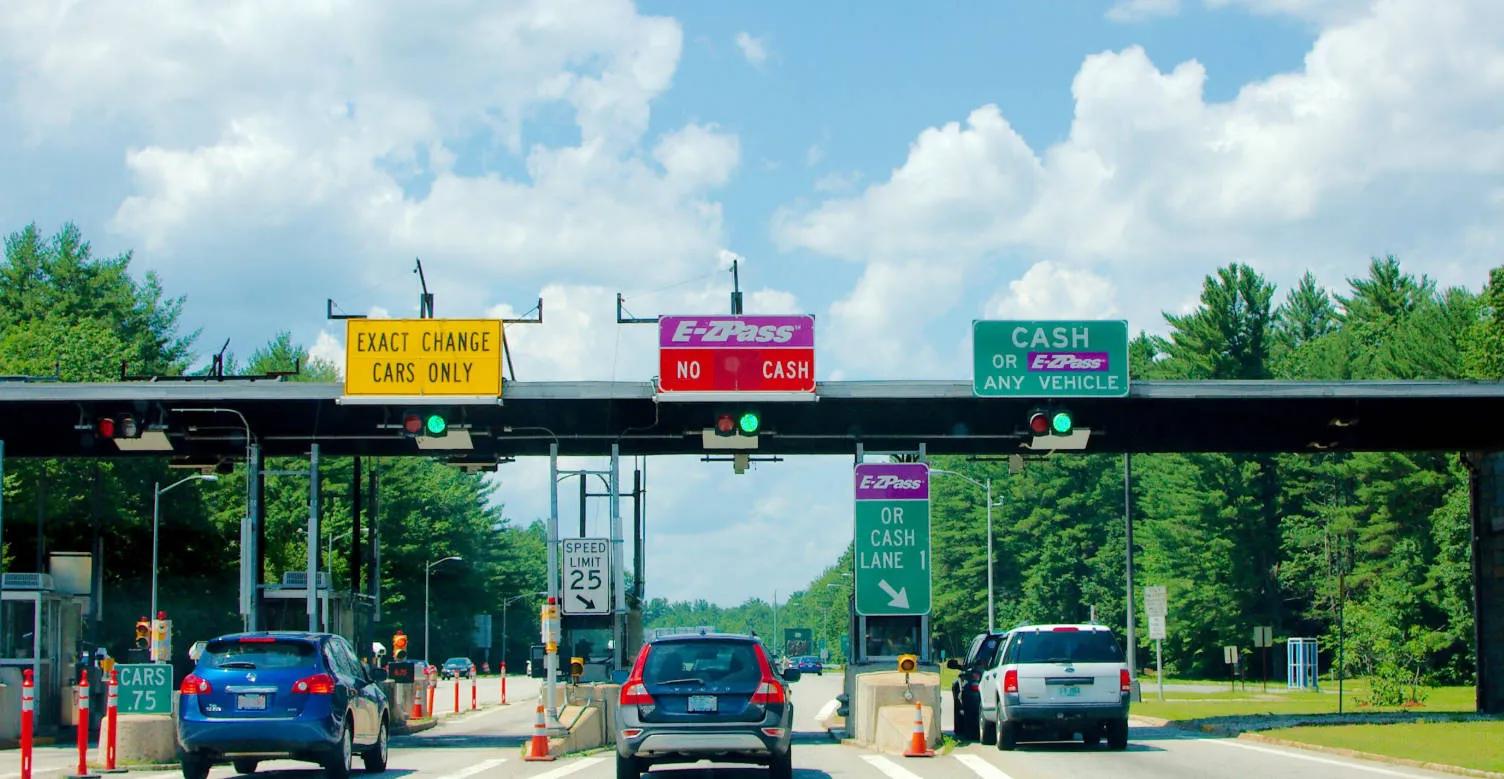
E-ZPass is a widely used electronic toll collection system across 17 states mostly in the eastern U.S., including New York, New Jersey, Pennsylvania, and Maryland. Drivers attach a small transponder to their windshield, which automatically deducts tolls from a linked account as they pass through designated lanes.
Key points about E-ZPass:
-
Accepted in multiple states; ideal for long-distance or interstate travel.
-
Offers discounted toll rates for registered users in some regions.
-
Works automatically—you don’t have to stop at toll booths.
-
Can be used on certain bridges and tunnels, not just highways.
What is FasTrak?
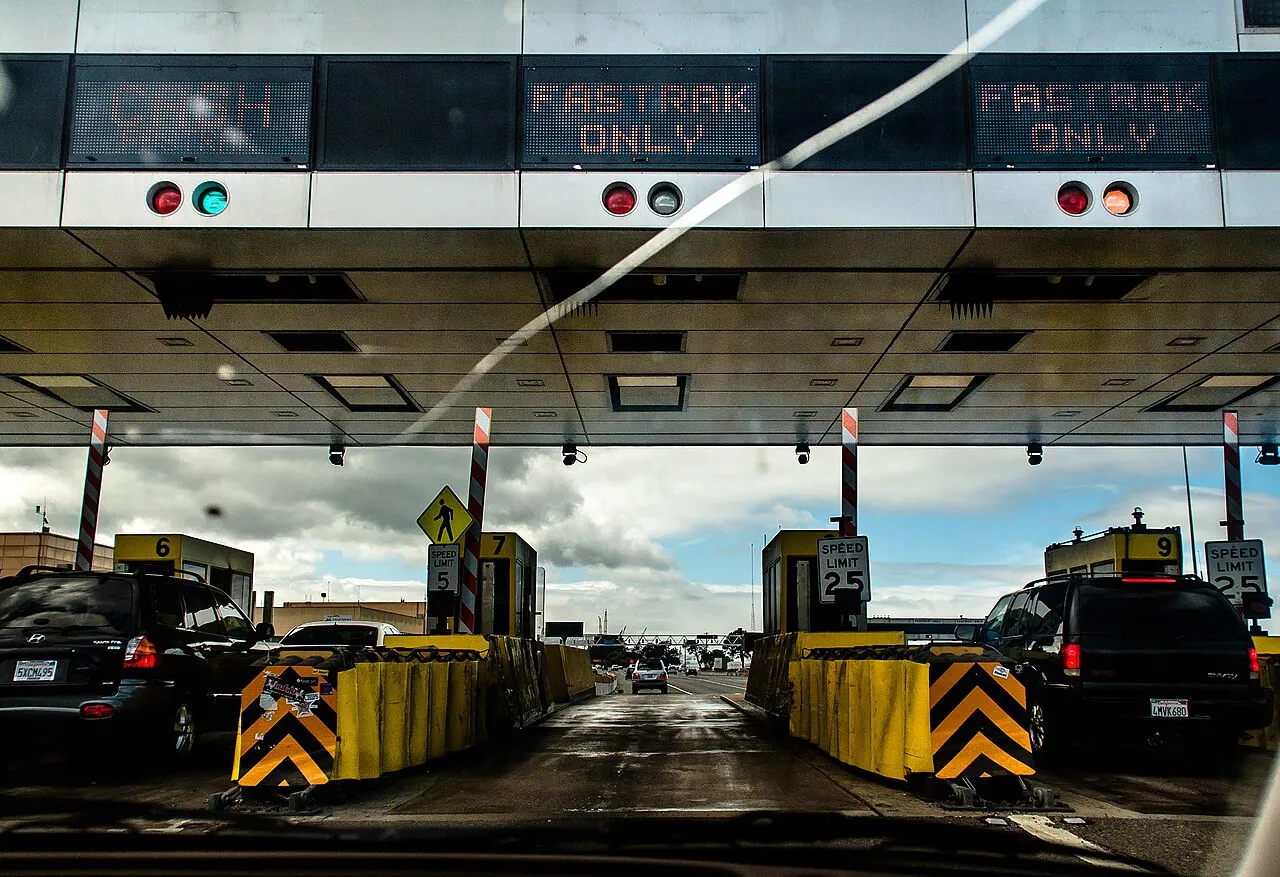
FasTrak is the electronic toll system used in California. Like E-ZPass, it relies on a windshield transponder to deduct tolls automatically. FasTrak is also compatible with high-occupancy toll (HOT) lanes in the state.
Key points about FasTrak:
-
Primarily California-focused, but recognized at certain bridges and toll roads outside the state.
-
Offers express lane access and discounts for carpools, clean-air vehicles, and registered accounts.
-
Drivers can manage payments via an online account, including adding vehicles temporarily.
Differences Between E-ZPass and FasTrak
| Feature | E-ZPass | FasTrak |
|---|---|---|
| Primary Region | Eastern U.S. (17 states) | California |
| Transponder Type | Windshield-mounted electronic tag | Windshield-mounted electronic tag |
| Discounts | Some toll discounts depending on state | Express lane, carpool, and clean-air vehicle discounts |
| Interstate Use | Works across multiple states | Mostly limited to California, limited reciprocity outside the state |
| Account Management | Online and via phone | Online and via app |
Why Understanding the Systems Matters
Knowing which system your car is registered with and which lanes accept it can prevent missed tolls, unnecessary fines, and stressful situations during your trip. For example, using an E-ZPass in a FasTrak-only lane—or vice versa—will usually result in a violation notice mailed to the vehicle owner.
By understanding the differences and how each system operates, you’ll be better prepared to navigate toll roads efficiently and legally.
II. Common Scenarios for Missing a Toll Lane
Even experienced drivers sometimes accidentally miss a toll lane. Understanding the common scenarios can help you prevent violations and know how to act if it happens.
1. Wrong Lane Entry
One of the most frequent mistakes is entering a lane that does not match your toll system:
-
E-ZPass driver in FasTrak lane → Automatic violation notice.
-
FasTrak driver in E-ZPass lane → Same result.
-
Toll lanes are often clearly marked, but signs may be missed during heavy traffic, poor visibility, or unfamiliar roads.
2. No Transponder or Account Issues
Even if you are in the correct lane:
-
Driving without a registered transponder or with a deactivated account will trigger a violation.
-
Low balance in the account can also cause missed payment notices.
-
Rental cars without proper toll devices often face automatic fines unless pre-registered.
3. Sudden Lane Changes or Missed Signage
-
Last-minute lane changes due to traffic congestion or construction can make drivers miss the correct toll lane.
-
Toll signs may be partially obscured or too close to the lane split, leaving little time to react.
4. Temporary or Out-of-State Vehicles
-
Visitors or tourists driving cars not registered in the toll system may unintentionally use a toll lane.
-
Rental vehicles sometimes include a pre-installed transponder, but drivers unaware of it may still face fines if the account isn’t properly linked.
5. Technical Glitches
-
Rarely, toll cameras fail to read transponders due to placement issues or device malfunction.
-
Road construction may temporarily reroute lanes, confusing drivers and causing unintentional misses.
Proactive Tips to Avoid Missing a Toll Lane
-
Always check toll lane signs well in advance.
-
Confirm that your transponder is active and your account balance is sufficient.
-
If driving a rental car, ensure the toll device is properly registered to your account.
-
Use navigation apps that indicate toll roads and lanes.
Understanding these common scenarios prepares drivers for real-world situations and reduces the likelihood of receiving a violation notice.
III. First Steps After Missing a Toll
Missing an E-ZPass or FasTrak lane can be stressful, but the key is acting quickly and correctly to minimize fines or penalties. Here’s what you should do immediately after realizing you’ve missed a toll lane.
1. Stay Calm and Assess the Situation
-
Avoid panicking. Missing a toll lane is a common occurrence, and most toll authorities provide a straightforward process for paying missed tolls.
-
Take note of the location, date, and time when the incident occurred. This information will be useful if you need to dispute a notice later.
2. Check Your Transponder Status
-
Ensure that your E-ZPass or FasTrak transponder is properly installed and functioning.
-
Confirm that your account is active and has sufficient funds. A low balance can sometimes trigger a missed toll notice even if you were in the correct lane.
3. Look for “Missed Toll” Instructions at the Exit
-
Many toll plazas or highway exits provide signs with instructions for drivers who missed a toll.
-
These signs usually include a website, phone number, or QR code where you can report and pay the missed toll.
4. Decide How to Pay
There are usually two main ways to handle a missed toll:
A. Online Payment
-
Visit the toll authority’s official website. Both E-ZPass and FasTrak have dedicated portals for “Missed Toll” or “Pay a Toll”.
-
Enter your vehicle license plate number, date, and location of the missed toll.
-
Pay the toll amount directly with a credit or debit card.
B. Phone Payment
-
Most toll authorities offer a customer service line for missed tolls.
-
Be prepared to provide license plate information, toll location, and date/time.
-
The representative can process payment over the phone and may provide a confirmation number.
5. Keep Records
-
Always save payment confirmations (email, receipt, or reference number).
-
This record may be essential if a violation notice is mistakenly issued after you’ve already paid.
6. Act Quickly
-
Timely payment can often avoid extra fines or violation fees.
-
Many toll systems offer a grace period of a few days to a few weeks depending on the state.
IV. How to Pay Missed Tolls (Step-by-Step)
Once you’ve realized you missed a toll, the next step is to pay it properly to avoid violation notices or additional fees. Here’s a detailed, step-by-step guide for both E-ZPass and FasTrak users.
A. Paying a Missed E-ZPass Toll
Step 1: Locate Your Toll Authority
-
Identify which state or agency manages the toll road you missed. Each E-ZPass region has its own portal.
-
Example: New York E-ZPass (www.e-zpassny.com) or New Jersey E-ZPass (www.ezpassnj.com).
Step 2: Access the Missed Toll Payment Section
-
Look for sections labeled “Missed Toll”, “Pay a Toll”, or “Pay a Toll by Plate”.
Step 3: Enter Vehicle and Toll Details
-
Provide your license plate number, date and time, and location of the missed toll.
-
Some systems may require your transponder number, if available.
Step 4: Review and Confirm
-
Verify the toll amount. Some agencies may add a small administrative fee, depending on timing.
Step 5: Complete Payment
-
Use a credit card or debit card to complete payment.
-
Save the confirmation number or receipt for your records.
Step 6: Monitor Your Account
-
Check your E-ZPass account after a few days to ensure the payment was properly applied.
-
If a violation notice is received after payment, contact the toll authority with your receipt.
B. Paying a Missed FasTrak Toll
Step 1: Access FasTrak’s Website or App
-
Go to www.bayareafastrak.org for California tolls, or open the FasTrak mobile app.
Step 2: Navigate to “Pay a Toll”
-
Look for the “Pay a Toll” or “Missed Toll Payment” option.
Step 3: Enter License Plate & Toll Info
-
Input your vehicle license plate, the date and location of the missed toll, and your transponder number if available.
Step 4: Confirm Payment
-
Review the toll amount, including any late fees if applicable.
Step 5: Submit Payment
-
Pay via credit card or debit card. You will receive a confirmation number via email or on the website.
Step 6: Keep Documentation
-
Save your confirmation in case a violation notice is issued erroneously.
C. Tips for Paying Missed Tolls Smoothly
-
Pay as soon as possible – Most toll authorities waive additional fees if payment is prompt.
-
Check rental car policies – If you’re using a rental, some companies automatically pay tolls but charge a service fee. Paying directly may save money.
-
Double-check license plate info – Mistyped plate numbers can result in violations.
-
Keep records – Screenshots, emails, or receipts can help in dispute situations.
By following these step-by-step instructions, drivers can resolve missed tolls efficiently and avoid unnecessary fines or complications.
V. What to Do if You Receive a Violation Notice
A "Notice of Toll Evasion" usually arrives 2–4 weeks after the incident. It will include a photo of your license plate and a breakdown of the toll plus an "Administrative Fee" (often $25–$50). Here is your 2026 battle plan.
1. Use the "One-Time Waiver" (The Easiest Win)
Most major systems (especially FasTrak in CA and E-ZPass in NY/VA) offer a First-Time Penalty Waiver.
-
The Strategy: Call the Customer Service number on the notice.
-
The Script: "This is my first time missing a toll. I would like to pay the original toll amount immediately. Could you please waive the administrative penalties as a one-time courtesy?"
-
2026 Update: Many automated phone systems and online portals now have a dedicated "First Time Waiver" button, allowing you to settle the bill at the base rate instantly.
2. The "Account Conversion" Method
If you don't have an E-ZPass or FasTrak account, agencies will often drop all fees if you open a new account and fund it with a minimum balance (usually $20–$35).
-
How it works: When you go to the "Pay Violation" website, look for a prompt that says "Open an account and save on penalties." The system will deduct the toll from your new balance and vanish the $50 fee.
3. Valid Reasons for a Formal Dispute
If the waiver isn't available, you can file a formal "Contest of Notice" (usually on the back of the bill) if:
-
Sold Vehicle: You no longer owned the car on that date (requires a Bill of Sale).
-
Stolen Plate: Your vehicle or plates were reported stolen (requires a police report).
-
Faulty Transponder: You have an active account but the tag didn't read (provide your account number).
-
Incorrect Plate Read: The camera misread a letter (e.g., "O" instead of "Q"). Compare your plate to the photo in the notice carefully.
4. Avoid the "Registration Hold"
In 2026, toll agencies have tightened their links with State DMVs. If a violation goes unpaid for more than 60–90 days:
-
Late Fees Double: A $25 fee often jumps to $100.
-
Collections: It may be sent to a private collection agency.
-
Registration Hold: The DMV will block your annual car registration renewal until the toll debt is cleared.
Appeal Success Checklist
| Scenario | Evidence Needed | Success Rate |
| First-Time Miss | None (just ask) | High (90%) |
| Dead Transponder | Active Account Statement | High (100%) |
| Rental Car Fee | Rental Agreement + Proof of Payment | Medium |
| Sold Car | Bill of Sale / DMV Transfer Form | High (100%) |
Pro Tip: If you are dealing with rental car fees, appeal to the toll agency first to pay the toll directly. Then, send that proof of payment to the rental company (Hertz/Avis/etc.) to get their "Administrative Fee" dropped.
VI. How to Appeal & Get Fees Reduced or Waived (Pro Tips)
If you’ve already received a notice with hefty administrative fees (which can reach $25–$50 per toll in 2026), don't just pay it. Use these "Pro-Level" strategies to get the penalties dropped.
1. The "First-Time Grace" Phone Call
Most agencies, including FasTrak (CA) and E-ZPass (NY/NJ/VA), have a non-publicized policy: they will waive the first penalty of the calendar year if you ask.
-
The Script: "I am calling regarding Notice #XXXX. This was an honest mistake, and I want to pay the toll immediately. Since this is my first violation this year, can we waive the administrative fees and settle for just the base toll?"
-
Why it works: It costs the state more to process a formal appeal or send you to collections than it does to just take the $5.00 toll and move on.
2. The "Account Conversion" Play
In 2026, agencies are desperate to get drivers onto transponder plans to reduce paperwork.
-
The Strategy: When you go to pay your violation online, look for an option that says "Open an account and save." * The Reward: Often, if you agree to open an E-ZPass or FasTrak account and pre-fund it with $25, the agency will instantly vanish all pending violation fees and just deduct the base toll from your new balance.
3. Low-Income Penalty Waivers (New for 2026)
California and several East Coast states have introduced "Equity Programs" in 2026 for drivers who meet certain income thresholds (e.g., 200% of the Federal Poverty Level).
-
The Benefit: If you qualify, you can have all accumulated penalties waived and enter into a payment plan for the base tolls.
-
How to apply: Search the agency website for "Payment Assistance" or "Low-Income Waiver."
4. For Rental Car Nightmares: The "Liability Transfer"
Rental companies (Hertz, Avis, etc.) often charge a "Convenience Fee" of $10–$25 per day on top of the toll.
-
Pro Tip: Instead of paying the rental company, go to the toll agency's website directly. Use the "Dispute" form to provide your rental agreement. Many agencies allow you to "Transfer Liability" to yourself, allowing you to pay the toll at the standard rate and bypass the rental company's predatory fees entirely.
5. The "Backdate" Fix for Existing Users
If you have an account but were driving a different car:
-
Log into your portal.
-
Add the new license plate to your account.
-
Crucial: Set the "Effective Date" to 48 hours before the violation occurred. The system's "Image Review" software will often re-run the plate, see the match, and automatically move the charge to your account while cancelling the violation.
Summary of Appeal Deadlines (2026)
| Agency | Deadline to Appeal | Required Evidence |
| FasTrak (CA) | 21–30 Days | Notice # + License Plate |
| E-ZPass (NY/NJ) | 30–120 Days | Account Statement or Bill of Sale |
| I-PASS (IL) | 14 Days | Proactive plate search |
| SunPass (FL) | 30 Days | Proof of payment/Transponder ID |
Final 2026 Warning: Watch out for "Toll Smishing" (SMS Phishing). Official agencies will never text you a link to pay a fine. Always go directly to the
.govor.orgwebsite listed on your physical mail.
Key Takeaway: Appealing a toll violation isn’t about arguing—it’s about demonstrating responsibility.
Paying promptly, communicating clearly, and submitting evidence can save you significant money and stress.
VII. How to Avoid Toll Violations in the Future
The best way to handle a toll violation is to never receive one. As the U.S. moves toward a 100% cashless highway system, use these "pro-driver" tools to stay protected.
1. Use "Third-Party" Toll Apps
If you don't want to manage multiple state-specific accounts, several apps have become "universal" lifesavers in 2026:
-
GoToll: Perfect for the occasional traveler. It allows you to pay as you go in CA, GA, IL, MD, NC, and VA. You just add your license plate and credit card, and the app handles the rest via "video matching."
-
TollGuru: The gold standard for planning. It calculates the exact cost of your trip across all transponder types (E-ZPass, FasTrak, SunPass) and shows you the cheapest route.
-
Ecotoll: A pay-as-you-go app that works in over 20 states, eliminating the need to "pre-load" accounts with $20+ balances.
2. The "BYOT" (Bring Your Own Transponder) Strategy
Did you know an E-ZPass issued in New York works in Florida? Or that SunPass PRO works in every E-ZPass state?
-
The 2026 Tip: If you travel frequently between the East Coast and Florida, get a SunPass PRO or Uni (by E-PASS). These single tags cover nearly 20 states.
-
FasTrak Users: Remember that California is still a "walled garden." If you leave CA, your FasTrak tag will not work. You will need a separate E-ZPass for the East Coast.
3. Mastering the Rental Car Maze
Rental agencies like Hertz, Avis, and Enterprise continue to charge "convenience fees" ($5–$15/day) just for the right to use their transponder.
-
The Opt-Out: Always physically close the shield box on the rental car's transponder.
-
The Plate Link: Log into your personal E-ZPass/FasTrak account and add the rental car’s license plate with a "Start" and "End" date.
-
The Backup: If you don't have an account, use the "Pay-by-Plate" website for that specific state within 48 hours of your first toll to pay the base rate before the rental agency processes it.
4. Tech Check: Is your Tag Expired?
In 2026, FasTrak is officially phasing out tags manufactured before 2019. If your tag is old:
-
It may not trigger the "Beep" at the gantry.
-
The battery might be too weak for "Express Lanes."
-
Action: Log in to your account and request a free replacement. Modern "sticker tags" don't have batteries and are much more reliable.
2026 Pre-Trip Checklist
-
[ ] Update Payment Method: Ensure your linked credit card isn't expired.
-
[ ] Add the Vehicle: If you are borrowing a car or renting, add the plate to your account before the trip.
-
[ ] Set to "HOV" (if applicable): If you have a "Flex" tag and 3+ people, slide the switch to "3" to get those 2026 carpool discounts.
Toll violations are rarely about bad intentions—they’re about missing details. With the right setup, alerts, and habits, you can drive toll roads across the U.S. confidently and violation-free.
Comprehensive List of 2026 Toll Payment Portals for Major Systems
| System Name | Primary Coverage States/Regions | Payment Portal (Pay Unpaid Tolls/Invoice/Violation) | Notes/Grace Period Suggestions | Customer Service Example |
|---|---|---|---|---|
| E-ZPass (General) | East Coast 20 states (NY, NJ, PA, etc.) | https://www.e-zpassiag.com/ → Select state (e.g., NY: https://www.e-zpassny.com/) → Pay Tolls / Tolls by Mail | 30 days typical; multi-state plate query. Common for NY/NJ/PA. | Varies by state, e.g., NJ: 888-288-6865 |
| E-ZPass New York | New York (Thruway, MTA bridges) | https://www.e-zpassny.com/ → Pay Your Tolls or Tolls NY App | 2026 rate hikes; Tolls by Mail online. | On website |
| E-ZPass New Jersey | New Jersey (Turnpike, Parkway) | https://www.ezpassnj.com/ → Invoice/Violation/Toll-by-Plate | Enter invoice + plate; App supported. | 888-288-6865 |
| E-ZPass Pennsylvania | Pennsylvania (PA Turnpike) | https://www.paturnpike.com/ → Toll By Plate or E-ZPass login | 2026 4% increase; Toll By Plate costlier. | On website |
| E-ZPass Virginia | Virginia (Express Lanes) | https://www.ezpassva.com/ → Missed Tolls and Violations → tollroadsinvirginia.com | Direct unpaid fee payment. | On website |
| E-ZPass Massachusetts | Massachusetts (EZDriveMA) | https://www.ezdrivema.com/ → Pay By Plate MA Invoice | Fully electronic; Quick pay. | Chat/phone on site |
| FasTrak (Bay Area) | California Bay Area bridges (Golden Gate, etc.) | https://www.bayareafastrak.org/ → Pay an Invoice or Violation Notice | 21 days for toll only; Overdue adds $5+. | 877-229-8655 |
| FasTrak (Statewide) | California (The Toll Roads, SoCal) | https://fastrak.org/ → Tolling in California → Local (e.g., The Toll Roads: https://thetollroads.com/) | Unified FasTrak; SoCal violation login. | Varies, Bay Area: 877-229-8655 |
| The Toll Roads (SoCal) | California Orange County/Southern highways | https://thetollroads.com/ → Toll Violation or App | App, walk-in, PayNearMe stores. | On website |
| SunPass / E-PASS | Florida statewide | https://www.sunpass.com/ → Pay Unpaid Tolls or Florida's Turnpike: https://floridasturnpike.com/tolls | E-ZPass compatible; Invoice payment. | On website |
| TxTag | Texas (CTTS, Grand Parkway) | https://www.txtag.org/ → Pay Tolls or TxDOT | 2026 no-tag surcharge 50%. | On website |
| NC Quick Pass | North Carolina | https://www.ncquickpass.com/ → Pay invoice online | App, online, retail. | On website |
| I-PASS | Illinois | https://agency.illinoistollway.com/ → Unpaid Tolls | Pay By Plate quick. | On website |
Frequently Asked Questions (FAQ)
Q1: Will out-of-state plates be caught?
A: Yes. Modern systems are interconnected. A New York toll violation will find its way to your California or Texas registration address.
Q2: What happens if I ignore the bill?
A: Fines will escalate (e.g., $5 becomes $100). Eventually, it can lead to a suspended registration, the inability to renew your driver's license, or a hit to your credit score.
Q3: Can international tourists appeal?
A: Absolutely. Use the same process. Explain that you are an international visitor. Documentation of your rental agreement or flight info can help.
Q4: What if I discover a missed toll months later and can't find the portal?
A: Call the state's toll customer service with your plate number—they can pull all unpaid records.
Q5: Do unpaid tolls just vanish if no notice arrives?
A: No, records persist; notices eventually come with added penalties.
Q6: Will rental companies handle violations?
A: Yes, but with $15-$50 fees. Pay directly to minimize.
Q7: Is it okay to use toll lanes in a rental without a transponder?
A: Yes, but choose between higher pay-by-plate costs or manual post-payment.
Q8: What if my transponder doesn't work?
A: Pay by plate ASAP; appeal any violation citing device failure.
Missing an E-ZPass or FasTrak lane can be stressful, but with the right approach, it is manageable. Immediate action, proper documentation, and timely payments can help you avoid fines. For international travelers, understanding the system before driving can prevent unnecessary penalties.