Las Vegas is a city of illusions—and that includes distance. What looks like a 5-minute stroll between two neighboring mega-resorts can easily turn into a 30-minute trek under the scorching desert sun. Whether you’re a budget-conscious traveler or a high roller, mastering the transit system is the key to a stress-free Vegas experience. Here is your comprehensive guide to getting around "The Entertainment Capital of the World."
0. Las Vegas Transportation Areas Explained
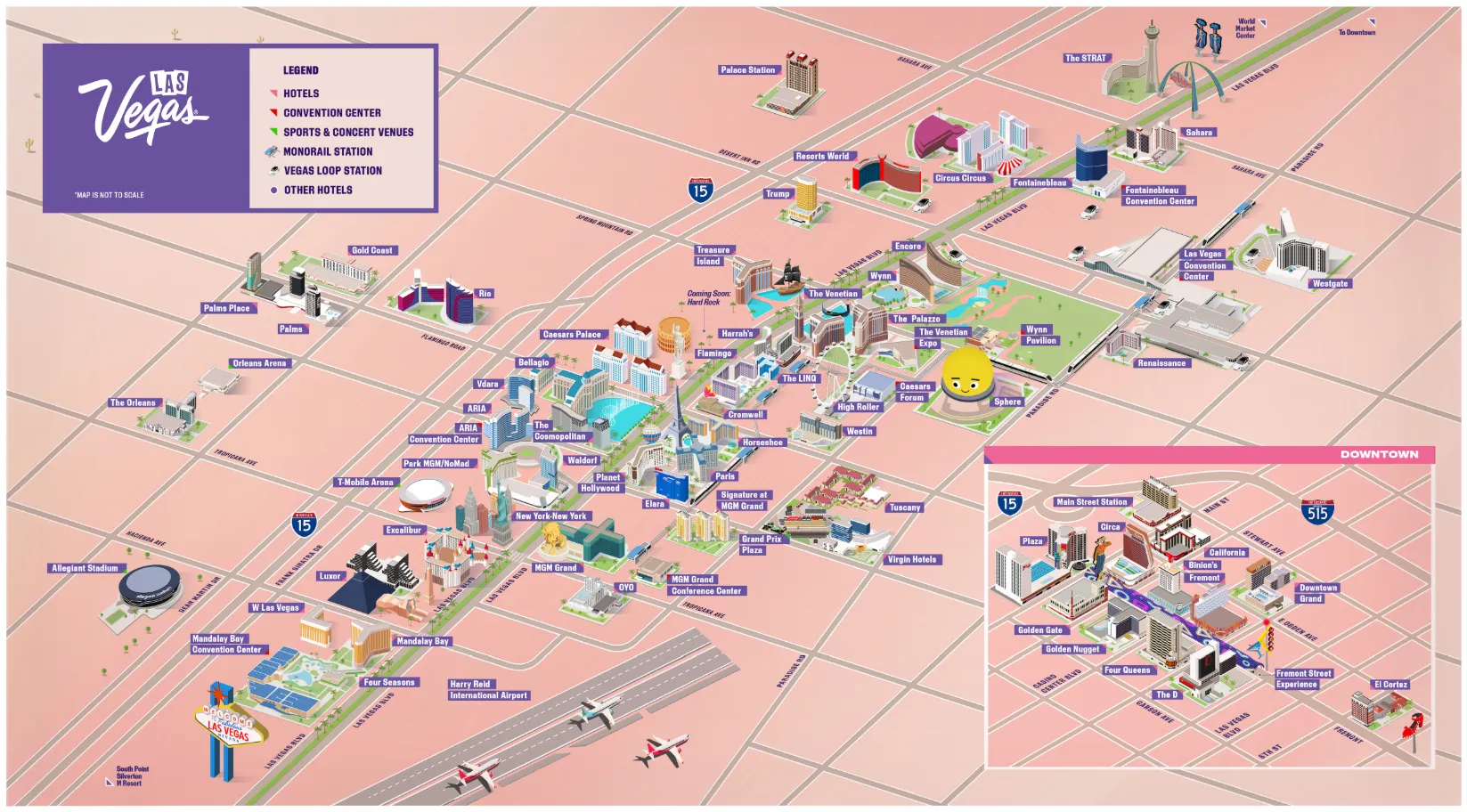
Before you step out of your hotel, it’s vital to understand the city's spatial logic. Las Vegas transit is not a "one-size-fits-all" system; your choice of transport will depend heavily on which of these four zones you are navigating:
0.1 The Las Vegas Strip
This 4-mile stretch of Las Vegas Blvd is where the world-famous mega-resorts are located. While it looks like a single continuous street, it is functionally divided into three clusters:
- South Strip: Centered around Mandalay Bay, Luxor, and MGM Grand. It’s the quietest end but features the longest gaps between properties.
-
Center Strip: The most dense area, home to Bellagio, Caesars Palace, and the Flamingo. Expect heavy foot traffic and frequent "visual traps" where buildings look closer than they are.
-
North Strip: Home to newer giants like Resorts World and the Strat. This area is currently undergoing massive development and has larger "dead zones" where walking is less pleasant.
-
The East-West Divide: Crucially, the West Side (e.g., Aria, Bellagio) is where the free hotel trams operate, while the East Side (e.g., Harrah's, Horseshoe) is serviced by the elevated, paid Monorail.
0.2 Downtown Las Vegas (Fremont Street)
Located about 5 miles north of the Strip, "Old Vegas" is where the city began. It is famous for the Viva Vision light canopy and historic casinos like the Golden Nugget.
The Commute: While Downtown itself is extremely walkable (only a few blocks wide), the journey from the Strip to Downtown can take 15-40 minutes depending on traffic. You will likely need a dedicated bus (The Deuce) or a rideshare to bridge this gap.
0.3 LAS Airport ↔ The Strip
Harry Reid International Airport (LAS) is uniquely positioned right at the edge of the tourist district.
- The Proximity: You can actually see the Mandalay Bay from the terminal windows. However, despite the proximity, you cannot walk to your hotel.
-
The Logistics: Transport here follows strict regulations. You'll choose between flat-rate taxis (grouped by zone), designated rideshare lounges (which require a short walk to the parking garage), or pre-booked private shuttles.
0.4 Beyond the Strip (When to Rent a Car)
The "Tourist Bubble" covers the three zones above, but the desert has much more to offer.
-
Day Trips: If your itinerary includes Red Rock Canyon, the Hoover Dam, the Seven Magic Mountains, or a trek to the Grand Canyon, a rental car becomes a necessity.
-
Suburban Shopping: For serious bargain hunters, the South Premium Outlets are best reached by car or rideshare, as the bus ride can be tedious with heavy shopping bags.
1. Public Transit: The RTC Deuce (24/7 Bus)
The Deuce is the iconic gold-colored double-decker bus that serves as the most affordable way to traverse the city.
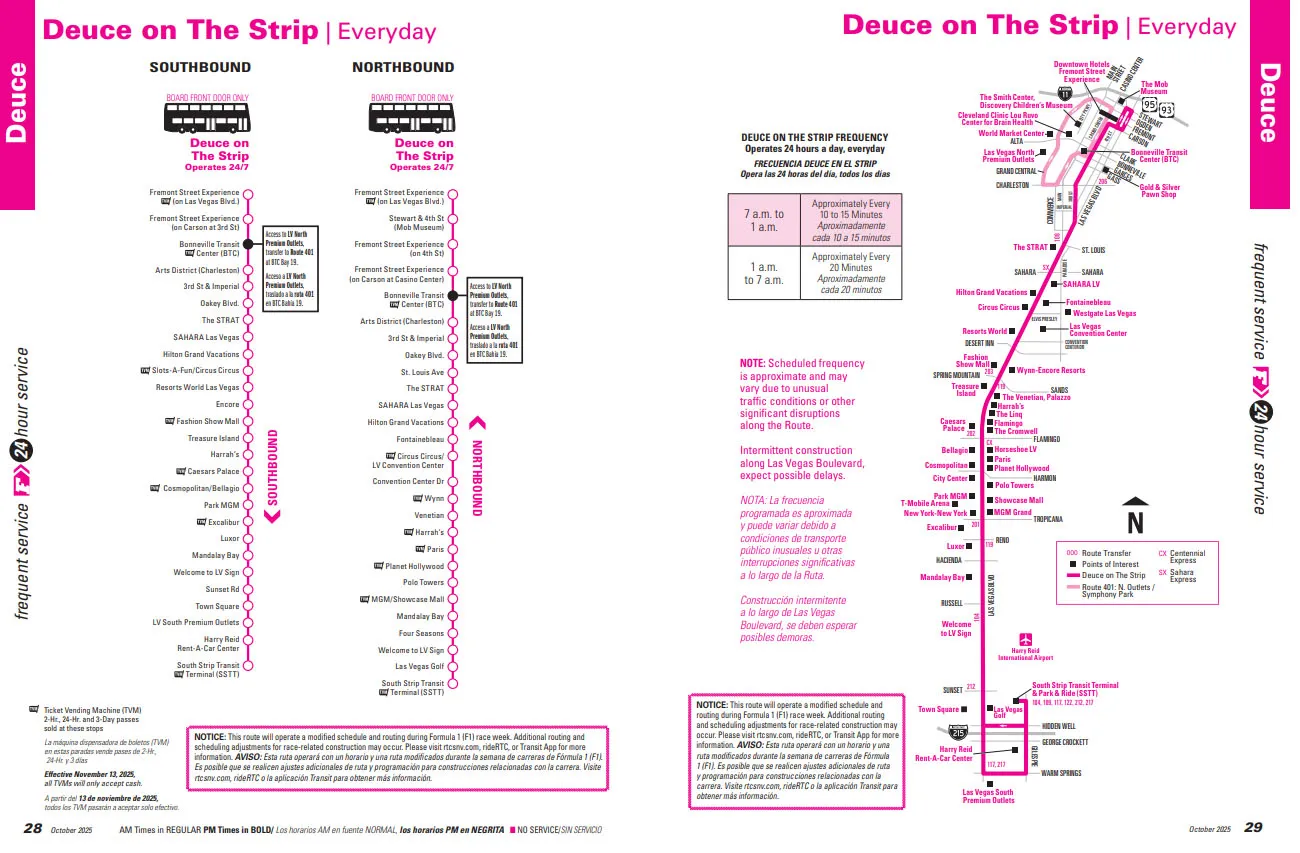
Operated by the Regional Transportation Commission (RTC), the Deuce is designed specifically for visitors, offering a scenic and wallet-friendly alternative to expensive taxis.
-
Route: It runs a continuous loop along Las Vegas Boulevard, connecting the South Premium Outlets (South) to the Fremont Street Experience (Downtown) in the north, stopping at nearly every major casino along the way.
-
Frequency: It operates 24 hours a day, 7 days a week. Buses typically arrive every 10–15 minutes during peak daytime hours and every 20 minutes late at night.
-
Pricing System:
- Single Ride: $4
- 2-Hour Pass: $6 (Best for a single round trip)
- 24-Hour Pass: $8 (Most popular; pays for itself in two rides)
- 3-Day Pass: $20 (Best value for weekend stays)
-
How to Buy Tickets:
-
Mobile App: Download the rideRTC app. It’s the fastest way to buy and activate passes.
-
TVMs: Use the "Ticket Vending Machines" located at major bus stops (accepts credit cards/cash).
-
On-Board: You can pay with cash, but you must have exact change as drivers do not provide change.
-
-
Pros & Cons:
-
✅ Pros: Cheapest way to see the lights; great views from the top deck; air-conditioned; safe and reliable.
-
❌ Cons: Extremely slow during dinner hours (traffic jams); can be very crowded; multiple stops mean a 2-mile trip can take 40 minutes.
-
-
Best For: Budget-conscious travelers, solo tourists, and those who want a "DIY sightseeing tour" of the Strip's neon lights.
-
Practical Tips: Head to the upper deck for the best photos, but be prepared for a bumpy ride. If the bus is full, wait for the next one; they come frequently.
-
The "Pro" Warning (Avoid the Trap): Never use the Deuce if you have a strict reservation (like a show or dinner) within the hour. The traffic on the Strip is unpredictable, and the bus is the first to get stuck in it.
2. Monorail & Free Trams (The "Heat-Savers")
When the desert heat hits 110°F, these indoor, air-conditioned options are literal lifesavers.
2.1 Free Hotel Trams (West Side - Free)
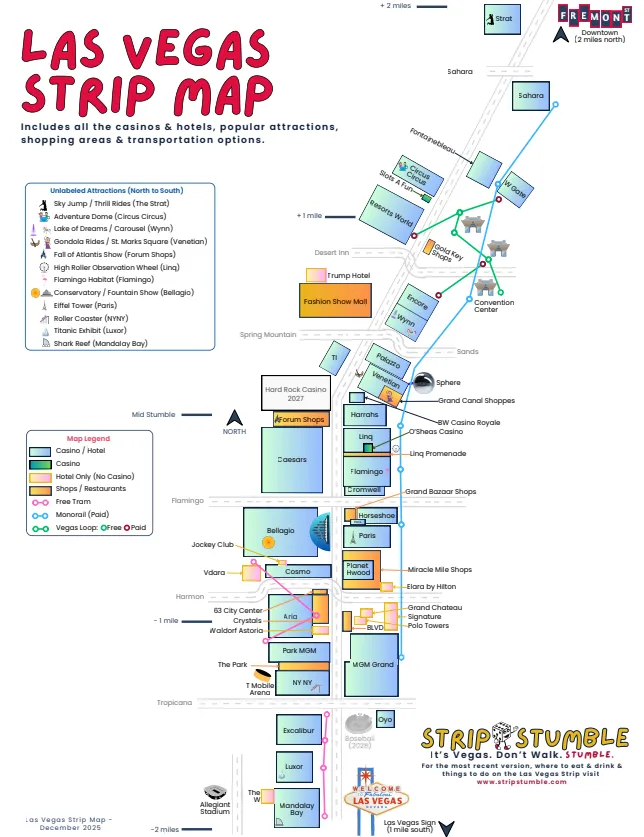
These are three independent, complimentary tram lines operated by major resorts on the West side of the Strip to facilitate movement between sister properties.
-
Core Stations:
-
Mandalay Bay – Luxor – Excalibur: Connects the three southernmost MGM properties.
-
Bellagio – CityCenter (Aria/Vdara) – Park MGM: Connects the center Strip to the south-central hub.
-
Mirage – Treasure Island: A simple point-to-point shuttle between these two resorts.
-
-
Pricing System: 100% Free.
-
How to Access: No tickets required. Simply follow the "Tram" signs inside the participating casinos.
-
Operating Hours: Typically 10:00 AM to 12:00 AM (Midnight) daily. Schedules may vary slightly by property and event days.
-
Pros & Cons:
-
✅ Pros: Entirely free; clean and air-conditioned; bypasses sidewalk crowds.
-
❌ Cons: Limited coverage; stations are tucked away inside casinos; wait times can be 10–15 minutes.
-
-
Best For: Families with kids, travelers staying on the West side, and those looking to save money while avoiding the heat.
-
Practical Tips: The trams are "short cuts," but you still have to walk through the casinos to reach them. Wear comfortable shoes!
2.2 Las Vegas Monorail (East Side - Paid)
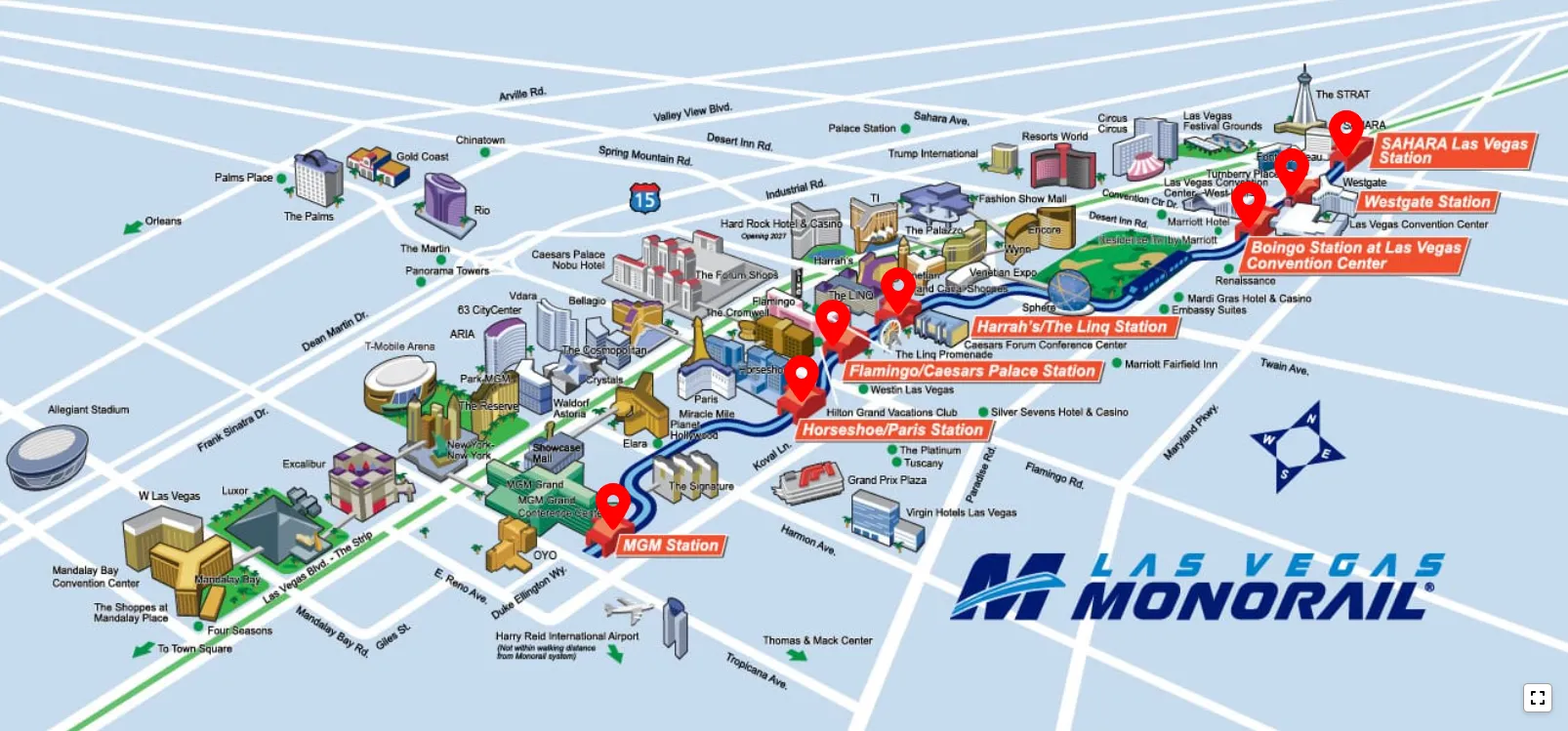
The Monorail runs an elevated 3.9-mile route along the East side of the Strip.
-
South, Center, and North Clusters:
-
South End: Starts at MGM Grand, providing a gateway to the southern cluster.
-
Center Section: Stops at Horseshoe/Paris, Flamingo/Caesars Palace, and Harrah's/The LINQ. This is the busiest section for tourists.
-
North End: Connects to the Las Vegas Convention Center, Westgate, and finishes at the Sahara.
-
- Tickets: single ride:$6, 24-hour ride $15, 2-day ride $26, 3-day ride $32, 4-day ride $39, 5-day ride $47, 7-day ride $62. Buy e-ticket online & enjoy discount.
-
Pros & Cons:
-
✅ Pros: Fast and reliable; ignores all street traffic; perfect for reaching the Convention Center.
-
❌ Cons: Expensive for short hops ($5+ per ride); stations are located at the very back of the hotels, requiring long indoor walks.
-
-
Best For: Convention attendees, guests staying at East-side resorts, and people heading to the Sahara/North Strip area.
-
Practical Tips: Buy a 24-hour or multi-day pass if you plan to use it more than twice. Single-ride tickets are poor value. Also, be prepared for the "Vegas Walk"—getting from the street to the Monorail platform can take 10 minutes.
3. Point-to-Point: Rideshare & Taxis
While the bus and monorail are excellent for general exploration, there are times when you need the speed and privacy of a direct ride. Whether you're rushing to catch a headline show, traveling with heavy luggage from the airport, or navigating the city after a long night out, rideshare and taxis provide the most flexible door-to-door service in Las Vegas.
3.1 Uber and Lyft in Las Vegas
Rideshare is the gold standard for flexible travel in Vegas, offering on-demand service through your smartphone.
-
Peak Hours & Surge Pricing: Expect significant price hikes (2x-3x) during peak nightlife hours (10 PM – 2 AM), Raiders home games at Allegiant Stadium, major conventions (like CES), and immediately after a residency show ends.
-
Pickup & Drop-off Logistics:
-
The "No Street Pickup" Rule: Las Vegas law prohibits rideshare vehicles from stopping on the Strip sidewalk.
-
Finding the Zone: Every resort has a designated Rideshare Lounge or Pickup Area. These are often located in the valet circle, a specific side entrance, or on the first level of the parking garage.
-
Navigation Tip: Follow the app’s instructions and look for "Rideshare" or "Uber/Lyft" signs inside the casino—do not exit via the main front door unless instructed.
-
-
Pros & Cons:
-
✅ Pros: Door-to-door convenience; transparent pricing (before you book); usually cleaner than taxis.
-
❌ Cons: Surge pricing can make it expensive; long wait times during exit crowds at venues.
-
-
Best For: Groups of 3 or more, evening transfers to fine dining, and travelers staying off-Strip.
-
Practical Tips: If the surge price is too high, wait 15 minutes or walk to the neighboring hotel's pickup point—prices can vary slightly between properties.
3.2 Taxis in Las Vegas
Taxis remain a vital part of Vegas transportation, especially for those who value speed and regulated pricing over app-based booking.
-
Is it worth it? Yes, primarily for airport arrivals. While usually 20-30% more expensive than Uber for general trips, the flat-rate system from the airport eliminates pricing anxiety.
-
Rules of the Road:
-
No Street Hail: Like rideshare, you cannot hail a cab on the Strip. You must go to the hotel’s valet or taxi stand.
-
Credit Cards: All Vegas cabs are required to accept cards, though a $3 fee is often added.
-
-
Airport Flat-Rate Zones: Taxis from LAS Airport to the Strip are divided into three zones to prevent "long-hauling":
-
Zone 1 (South Strip): $21 (e.g., Mandalay Bay, Luxor, Excalibur)
-
Zone 2 (Center Strip): $25 (e.g., MGM Grand, Bellagio, Caesars)
-
Zone 3 (North Strip): $30 (e.g., Wynn, Resorts World, Strat)
-
Note: Prices do not include the $2.00 airport fee or tip.
-
-
Pros & Cons:
-
✅ Pros: No app required; zero wait time at hotel taxi stands; fixed airport pricing.
-
❌ Cons: "Long-hauling" risk on non-airport trips; higher base cost; $3 card fee.
-
-
Best For: Airport transfers, travelers without smartphones, and those in a rush when the Uber wait is 15+ minutes.
-
Practical Tips: If you are not going to the airport, clearly tell the driver, "No tunnel, please," to ensure they take the shortest surface-street route to your destination.
4. Renting a Car in Las Vegas — Is It Worth It?
4.1 Renting a Car
Renting a car in Las Vegas is a strategic choice that depends entirely on your itinerary. While it offers unparalleled freedom for desert exploration, it can be a costly logistical headache if you plan to stay strictly within the resort corridor.
-
Is it worth it? Only if your plans include trips outside the "Tourist Bubble." For a pure Strip-based vacation, the costs of daily rental fees plus parking usually outweigh the convenience.
-
When you definitely need a car:
-
Nature Excursions: Red Rock Canyon, Hoover Dam, Valley of Fire, or the Grand Canyon.
-
Suburban Dining & Shopping: Visiting the Chinatown district on Spring Mountain Rd or the Premium Outlets.
-
Golfing: Transporting heavy clubs between the various world-class courses in the valley.
-
-
Pros & Cons:
-
✅ Pros: Absolute freedom of schedule; privacy; climate control; essential for group trips to nature parks.
-
❌ Cons: Heavy Strip traffic; expensive daily parking fees ($18–$35); navigating complex casino parking garages.
-
-
Best For: Families with small children/elderly, outdoor enthusiasts, and travelers staying in Vegas for 5+ days.
5. Walking the Las Vegas Strip — What You Should Know
Walking is the only way to truly experience the energy of Vegas, but it requires a serious strategy. Most tourists underestimate the physical toll of a simple "stroll" between hotels.
Why Distances Look Short but Take Longer
-
The "Mega-Resort" Illusion: Everything in Vegas is built on a massive scale. A casino that looks like it's "next door" may actually be half a mile away.
-
The Visual Trap: Because the buildings are hundreds of feet tall, your brain perceives them as closer than they are. What looks like a 5-minute walk is often 15-20 minutes of actual movement.
Heat, Footbridges, and Casino Walkways
-
The Desert Heat: From June to September, temperatures regularly exceed 100°F (38°C). Walking for 15 minutes outdoors can lead to rapid dehydration and heat exhaustion.
-
The Mandatory Footbridges: In many parts of the Strip, you cannot cross the street at ground level. You must use elevated pedestrian bridges equipped with escalators (which are frequently broken) and elevators. This adds significant time and distance to your trip.
-
The Casino Labyrinth: To get from the street to your destination, you often have to walk through a "maze" of slot machines, shops, and bars designed to keep you inside. There are rarely direct paths.
Practical Walking Tips
-
Hydration is Mandatory: Carry a reusable water bottle. Bottled water inside casinos can cost up to $5–$9.
-
Footwear over Fashion: While Vegas is about style, the "Strip Trek" will punish you for wearing heels or flip-flops. Wear supportive sneakers for the day and save the dress shoes for the Uber ride to dinner.
-
Night Walking is Better: Not only is it cooler, but the neon lights make the walk much more enjoyable.
-
Use the Indoor Cut-throughs: Learn which malls (like the Miracle Mile or Forum Shops) offer air-conditioned paths that parallel the Strip.
6. Other Transportation Options in Las Vegas
For those exploring specific areas like Downtown or looking for a more active way to see the city, Las Vegas offers several specialized transport services that are often overlooked by first-time visitors.
RTC Bike Share
Located primarily in the Downtown Las Vegas (DTLV) area, this is a great way to zip between the Arts District, Fremont Street, and local breweries.
-
How it works: You can rent classic or electric bikes from dozens of kiosks using the RTCPass app or a credit card at the station.
-
Pricing: Options include Single Ride ($4), 24-Hour Pass ($8), or 3-Day Pass ($10).
-
Best For: Short trips within the Downtown grid and tourists who want to explore the mural-filled Arts District without the wait for a bus.
Downtown Loop Shuttle
The Downtown Loop is a complimentary shuttle service that makes it easy to visit the most popular attractions in Old Vegas.
-
Route Highlights: Stops include the Fremont Street Experience, The Mob Museum, Las Vegas Academy of Arts, and the North Premium Outlets.
-
Pricing: 100% Free.
-
Best For: Tourists staying Downtown who want to save money on rideshare while visiting major cultural landmarks or shopping centers.
7. Common Transportation Mistakes in Las Vegas
Avoid these frequent pitfalls to save time, money, and your sanity during your trip.
Underestimating Walking Distances
This is the #1 mistake visitors make. Because properties like the Venetian or Caesars Palace are so massive, walking from the front door to the back pool can take 15 minutes alone. Never assume you can "just walk" to a dinner reservation at the hotel next door without leaving at least 25 minutes of buffer time.
Using Buses for Short Trips
The Deuce bus is excellent for long hauls (like Strip to Downtown), but it is a poor choice for moving between neighboring hotels. Due to frequent stops and heavy traffic, you can often walk 2-3 blocks faster than the bus can drive them. Save the bus for distances over 1.5 miles.
Ignoring Surge Pricing at Night
Vegas never sleeps, and neither does rideshare pricing. After midnight on weekends or immediately after a major concert at the T-Mobile Arena, Uber/Lyft prices can quadruple. If you see a $60 fare for a 2-mile trip, consider taking a taxi from the hotel line (which has fixed meter rates) or waiting 30 minutes in a lounge for the surge to drop.
8. Transportation Costs and Tickets in Las Vegas
Understanding the Las Vegas transportation cost is essential for budgeting your trip. While some options are free, others require pre-purchased tickets or specific mobile apps to access.
Which Transportation Options Require Tickets?
-
RTC Deuce Bus: Requires a pass (2-hour, 24-hour, or 3-day). You cannot ride for free.
-
Las Vegas Monorail: Requires a ticket for every passenger. Children under 5 ride free.
-
RTC Bike Share: Requires a digital or kiosk-based pass.
Where to Buy Tickets and Passes
-
Mobile Apps (Recommended):
-
rideRTC app: For all bus passes.
-
RTC Bike Share app: For bike rentals.
-
Monorail Website: You can buy digital tickets on your phone for a slight discount.
-
-
Physical Kiosks (TVMs):
-
Located at major Deuce bus stops and all Monorail stations. They accept cash and major credit cards.
-
-
On-Board (Cash Only):
-
Only available on the Deuce bus. You must have exact change, as drivers do not carry cash.
-
Free Transportation Options in Las Vegas
To maximize your budget, take advantage of these zero-cost transit options:
|
Service |
Area |
Notes |
|---|---|---|
|
Hotel Trams |
West Side Strip |
Free shuttles between MGM properties (Mandalay/Luxor/Excalibur) and Aria/Bellagio. |
|
Downtown Loop |
Downtown (DTLV) |
A free circular shuttle connecting major "Old Vegas" tourist spots. |
|
Airport Shuttles |
Off-Strip Hotels |
Many off-Strip hotels (like the Rio or Palms) offer free shuttles for their guests. |
|
Walking |
Everywhere |
The only 100% free way to see every inch of the neon lights. |
9. Quick Answer — What’s the Best Way to Get Around Las Vegas?
|
Category |
Best Choice |
Why? |
|---|---|---|
|
First-Time Visitors |
RTC Deuce Bus |
An $8 (24hr) pass covers the Strip & Downtown; low stress for beginners. |
|
Airport Arrival |
Flat-Rate Taxi |
Fixed zones ($21-$30) mean no "long-hauling" or app wait times. |
|
Strip Transit (No Car) |
Trams & Monorail |
Bypasses 100°F heat and heavy sidewalk traffic on both sides of the Strip. |
|
Night Out (Safety) |
Rideshare / Taxi |
Door-to-door convenience; safer and faster than buses after 10 PM. |
|
Budget Explorers |
Walking + Free Trams |
Combining free hotel shuttles with walking is the ultimate money-saver. |
Final Insider Tip:
Use the Pedestrian Bridges. Crossing the Strip at street level is physically impossible in most areas due to safety barriers. Always look for the glass-walled pedestrian bridges. They feature escalators and elevators, offering the safest (and often the only) way to cross from one side of the street to the other.
Wear comfortable shoes. No matter which transport you choose, a typical day in Vegas involves at least 10,000 to 15,000 steps. Your feet will thank you later!