Misfueling—pumping gasoline into a diesel tank or vice versa—is a high-stakes mistake that happens more often than most drivers realize, especially in the unique landscape of American gas stations. Whether it’s a result of fatigue, confusing nozzle colors, or the pressure of driving an unfamiliar rental car, the moments following this error are critical. This guide provides a clear, authoritative roadmap to help you navigate the technical, financial, and logistical challenges of misfueling, ensuring you make the right decisions to protect both your vehicle and your wallet.
What this guide will cover: This guide is designed for tourists, international students, rental car users, and new drivers. It provides a technical yet accessible breakdown of the risks, emergency steps, and financial implications of misfueling.
1. How Serious Is Putting the Wrong Fuel in Your Car?
A real-life scenario: misfueling at a U.S. gas station
Imagine you are on a long-awaited road trip across the American Southwest. You pull into a busy gas station in the middle of the night, exhausted. You grab the handle that looks familiar, pump a full tank, and only realize as you hang up the nozzle that the color-coding or the label wasn’t what you expected. This is a scenario thousands of drivers face every year in the United States.
Why this mistake is more common in the U.S.
Misfueling is surprisingly frequent in the U.S. due to several factors:
-
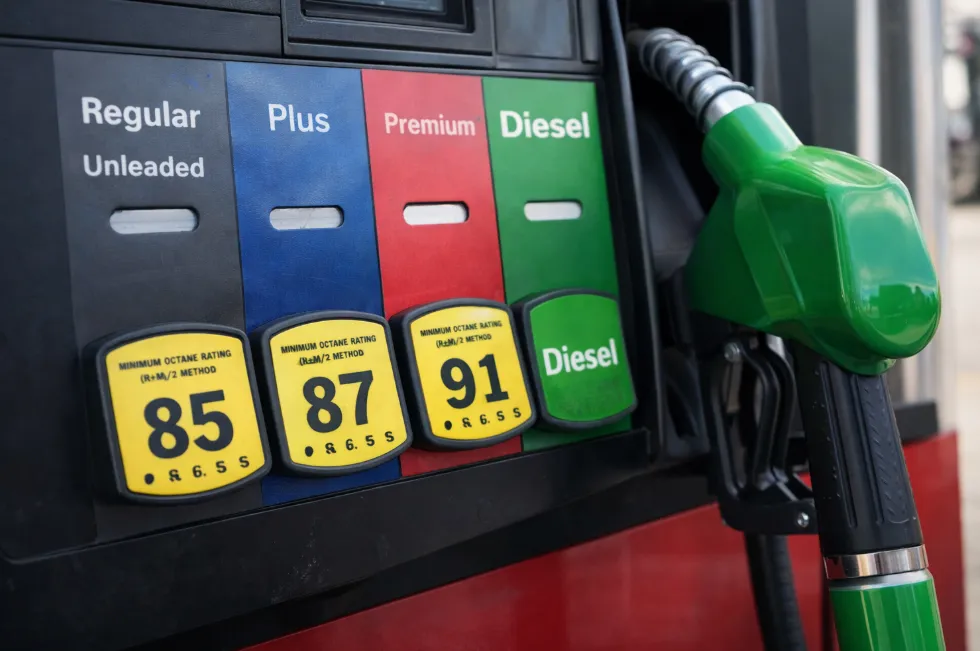
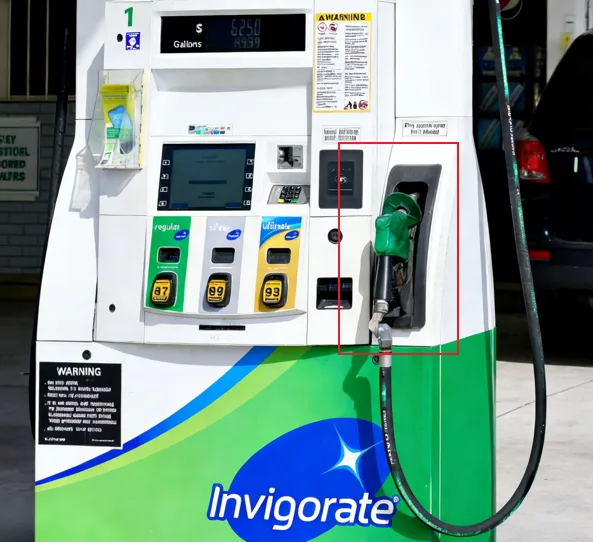
Non-standardized Diesel Pumps: Unlike some countries where diesel handles are always a specific color (like black or yellow), U.S. stations vary. While green is common for diesel, it isn't a federal law.
-
Octane Choices: The U.S. uses the AKI (Anti-Knock Index) rather than RON, leading to unfamiliar numbers like 85 or 87.
-
System Complexity: Many modern pumps integrate multiple fuel grades into a single nozzle, requiring the user to press a specific button after inserting the handle.
The key takeaway
The severity of this mistake is determined by a single action: Did you turn the key?
-
Not starting the engine: This usually results in a simple "drain and flush," costing a few hundred dollars.
-
Starting the engine: This circulates the contaminated fuel through the high-pressure system, potentially leading to thousands of dollars in damages.
How Much Damage Can Wrong Fuel Cause? (Cost Breakdown)
The financial impact scales exponentially the longer the engine runs.
-
Level 1: The "Lucky" Mistake (Ignition Off): $300 – $600. Includes a professional drain, tank cleaning, and disposal of contaminated fuel.
-
Level 2: The "Prime" Mistake (Ignition On, but not driven): $1,500 – $4,000. Requires flushing the entire fuel line system, replacing the fuel filters, and potentially cleaning the injectors.
-
Level 3: The "Catastrophic" Mistake (Driven until it stalls): $8,000 – $15,000+. This usually involves replacing the high-pressure pump, all fuel injectors, the common rail, and sometimes the entire engine block or exhaust treatment system.
2. Did You Start the Engine After Putting the Wrong Fuel In?
This is the "moment of truth" that determines your repair strategy. Your response must be honest and immediate. To understand the gravity, we must look at how each fuel behaves in the "wrong" environment.
2.1 Gasoline Car with Diesel – What Happens?
Severity Level: ⭐⭐⭐ (Moderate)
Putting diesel in a gas car is less common due to the nozzle size, but it is technically less destructive if caught early.
-
If NOT started: Because diesel is heavier and denser than gasoline, it sinks to the bottom of the tank. If you don't turn the key, the diesel remains localized. A simple drain and a fresh tank of high-octane gas will usually suffice.
-
If started briefly: Gasoline engines rely on spark plugs for ignition. Diesel requires high compression and heat to ignite. The engine will likely struggle to turn over, or it will "cough" and emit thick white or blue smoke as it tries to partially combust the heavy diesel oil.
-
If driven: As the concentration of diesel reaching the injectors increases, the spark plugs will become "fouled" (coated in unburned oil). The car will lose power, knock loudly, and eventually stall. The primary long-term risk here is to the Catalytic Converter, which can become clogged with soot.
2.2 Diesel Car with Gasoline – Why It’s More Dangerous
Severity Level: ⭐⭐⭐⭐⭐ (Critical / Catastrophic)
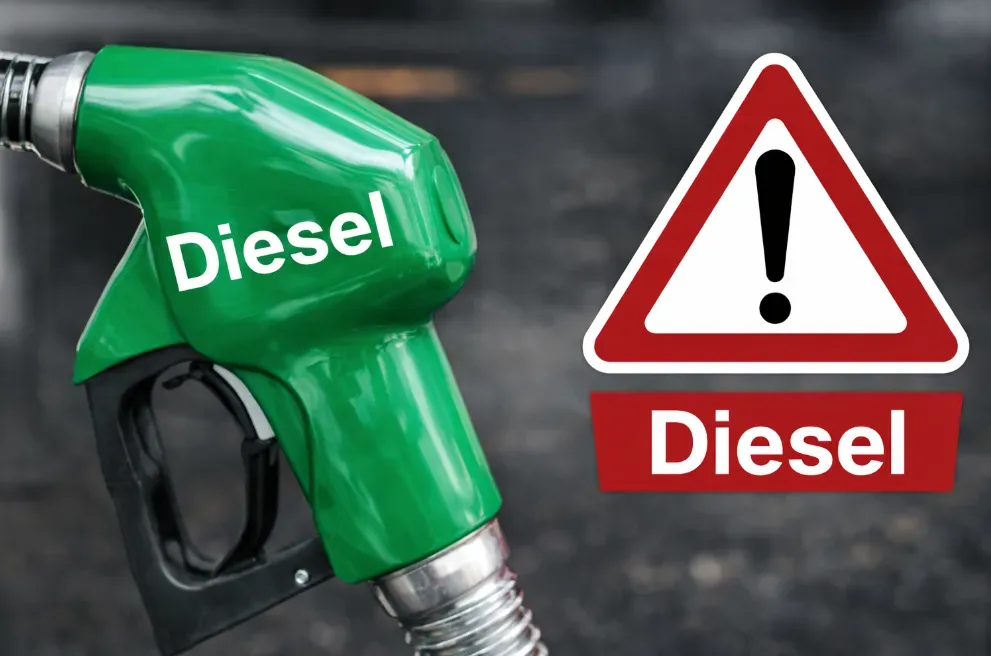
This is a critical emergency. Modern American diesel engines (like those in Ford PowerStroke, Chevy Duramax, or RAM Cummins trucks) use incredibly precise, high-pressure components.
-
The Immediate Threat: Gasoline acts as a solvent. It strips the lubrication from the high-pressure fuel pump (HPFP). Without lubrication, the pump's internal components begin to shed microscopic metal shards.
-
The "Delayed" Damage: Even if the car feels "fine" for the first five minutes, the gasoline is causing invisible damage. The injectors—which have openings thinner than a human hair—will be sandblasted by metal fragments from the dying pump.
-
The Result: Within miles, the engine will suffer from "catastrophic pump failure." If you see a "Water in Fuel" light or a "Glow Plug" warning light immediately after fueling, shut the engine off in the middle of the road if necessary.
2.3 Wrong Octane Fuel (85 vs 87 vs 91) – Is It a Big Deal?
Severity Level: ⭐ (Low / Minor)
In the U.S., you will often see 85 (mountain regions), 87 (Regular), 89 (Mid-grade), and 91/93 (Premium).
-
The General Rule: Most modern American cars use Electronic Control Units (ECUs) that can detect lower octane and retard the engine timing to prevent "knocking."
-
Is it safe? If you accidentally put 87 in a car that "prefers" 91, the car will run, but with slightly less power and lower fuel economy. You can drive it safely, but avoid towing heavy loads or aggressive "flooring" of the accelerator.
-
Exceptions: If your car explicitly states "Premium Fuel REQUIRED" (common in German imports like BMW or Mercedes), and you hear a persistent metallic "rattle" under acceleration, you should add an octane booster or drain half the tank and refill with 93.
2.4 Quick Self-Check Checklist
Use this list to provide accurate information to your mechanic or roadside assistance:
-
Was the key turned to "On" or "Accessory"? (This primes the fuel pump).
-
Did the engine actually fire up?
-
How many miles were driven? (Less than 1 mile is often "cleanable"; 5+ miles is usually "replacement" territory).
-
Are there new dashboard lights? (Check Engine, DPF, or limp-mode icons).
-
Is there a change in exhaust color or smell? (A strong smell of "paint thinner" or "kerosene" is a clear indicator of contamination).
3. Emergency Steps to Take Immediately After Misfueling
The moments following the realization of misfueling are high-stress. Follow this prioritized structure to minimize damage and protect your legal and financial interests.
Step 1: Absolutely No Ignition (The Most Critical Step)
The single most important rule is: Do not turn the key and do not press the 'Start' button.
-
The "Keyless" Trap: In many modern U.S. vehicles, simply opening the driver's door or pressing the brake pedal can engage the electronic fuel pump to "prime" the system. If you realized the mistake mid-pump, keep the key fob away from the vehicle.
-
Stay in 'OFF' Mode: Even turning to "Accessory" (to roll down windows or check mileage) can send the wrong fuel into the lines. Keep the car completely powered down.
Step 2: Seek On-Site Assistance and Report
Do not try to handle the situation in silence. Use the gas station's resources.
-
Alert the Attendant: Inform the station manager immediately. They can shut down the pump to prevent other accidents and provide "Oil-Dri" or sand if any fuel spilled during your realization.
-
The "Neutral" Move: Put the vehicle in Neutral (N) and, with the help of the attendant or a bystander, push the car away from the pump to a safe parking spot. This allows the gas station to continue operating and gives you a safe space to wait.
Step 3: Call for Professional Roadside Rescue
Do not attempt to drive to a nearby shop, even if it’s "just around the corner."
-
Specific Dispatch Language: When calling AAA or your insurance (e.g., Geico, Progressive), use these exact words: "I have a fuel contamination emergency. I put Gas/Diesel in a Diesel/Gas tank. I need a flatbed tow to a certified mechanic. The engine has NOT been started."
-
The Flatbed Requirement: Insist on a flatbed. Traditional tow trucks that lift two wheels can sometimes cause modern AWD systems to engage sensors that might trigger the fuel system.
Step 4: If You Already Started the Engine (Emergency Mitigation)
If you realized the mistake while driving or after idling, follow these "Firefighting" steps:
-
Immediate Shutdown: Pull over to a safe shoulder and kill the engine instantly. Do not wait for a "better" parking spot.
-
Hazards On: Use your hazard lights. If you have road flares or triangles (often in the trunk of U.S. rentals), set them up 50 feet behind the car.
-
Note the Symptoms: Quickly write down exactly when the car started acting up (e.g., "stuttered after 2 miles," "smoke from exhaust"). This helps the mechanic diagnose which parts are salvageable.
Step 5: Document Key Evidence
Misfueling often leads to insurance claims or disputes with rental agencies. You need a "paper trail."
-
Keep the Receipt: The gas station receipt is your most important document. It proves which pump you used and exactly how many gallons of the "wrong" fuel were added.
-
Photo Proof: Take a photo of the pump nozzle you used and the fuel door of your car. If the pump labeling was confusing or worn out, take a photo of that as well—it could help in a liability claim.
-
The "Misfuel Statement": Ask the tow truck driver or the initial mechanic to note "Misfueled - Engine Not Started" on their initial report if that is the case. This prevents insurance companies from claiming you were negligent by driving the car.
4. Repair Options Based on the Type of Wrong Fuel
The complexity and cost of repair depend entirely on how far the contaminated fuel traveled through your vehicle’s system. In the U.S., repair standards are strict, and most professional shops will follow a tiered protocol.
4.1 Tier 1: Professional Fuel Drain and Tank Flush
Scenario: You caught the mistake at the pump and NEVER turned the ignition.
-
The Process: The mechanic will use a specialized vacuum extraction machine or physically drop the fuel tank to remove all liquid. They will then wipe the interior of the tank if accessible and add 2–5 gallons of the correct fuel to "rinse" any remaining residue before a final drain.
-
Octane Correction: If the mistake was simply low-octane gas in a high-performance car, the "flush" may simply involve adding a professional-grade octane booster and topping off with 93 V-Power fuel.
-
Cost: $400 – $900. (Includes hazardous waste disposal fees for the contaminated fuel, which is strictly regulated in the U.S.).
4.2 Tier 2: Fuel Line Purge and Filter Replacement
Scenario: You turned the key to "On" or idled the car for a few seconds.
-
The Process: In addition to draining the tank, the technician must disconnect the fuel lines at the engine bay. They will "purge" the lines using pressurized correct fuel to ensure no contaminated mixture remains in the path to the engine.
-
Component Focus: The Fuel Filter is the primary casualty here. It acts as a sponge for contaminants and must be replaced immediately, as it likely contains the bulk of the "wrong" fuel.
-
Cost: $1,200 – $2,500. (Highly dependent on the labor rate of the state; California and New York shops often charge $180+/hour).
4.3 Tier 3: High-Pressure System Restoration (Diesel Specific)
Scenario: You drove the diesel vehicle until it began to sputter or knock.
-
The Critical Repair: The High-Pressure Fuel Pump (HPFP) is inspected for metal shavings (swarf). If shavings are found, the entire "Common Rail" system is contaminated.
-
Replacement List: Includes the HPFP, all fuel injectors, the fuel rail, and all high-pressure metal lines. These parts cannot be "cleaned"; they must be replaced with OEM (Original Equipment Manufacturer) parts to ensure the engine doesn't fail again in 500 miles.
-
Cost: $6,000 – $12,000+. This often leads to "Total Loss" insurance claims on older vehicles.
4.4 Post-Repair Monitoring
Regardless of the repair level, a reputable U.S. shop should perform a "Diagnostic Scan" to clear any error codes and check "Fuel Trim" data. You should expect a 20-30 mile test drive by the technician to ensure no "stuttering" occurs under load.
5. How to Repair in the U.S. Without Getting Scammed
Navigating the American automotive repair industry can be daunting, especially during an emergency. To ensure you receive fair pricing and quality work, you must understand your rights and the different types of service providers.
5.1 Dealership vs. Independent Repair Shops
Choosing where to tow your car is the first major financial decision.
-
The Dealership (Authorized Service Center):
-
Pros: They have specialized diagnostic software for your specific VIN, factory-trained technicians, and they use genuine OEM parts. If your car is under warranty, misfueling is almost never covered, but having a dealer perform the work ensures the rest of your warranty stays intact.
-
Cons: Labor rates are significantly higher ($150–$250 per hour). They are more likely to recommend "full system replacement" rather than cleaning, which can drive costs to the $10k+ range.
-
-
The Independent Shop (Local Mechanic):
-
Pros: Usually more willing to perform labor-intensive "cleaning and flushing" to save you money. Labor rates are lower ($90–$150 per hour).
-
Cons: They may lack the specialized computers needed to prime modern diesel fuel systems after a drain, and their work might not be recognized by a manufacturer if a future unrelated engine issue arises.
-
5.2 Your Legal Shield: The Written Repair Estimate
In the U.S., consumer protection laws vary by state (such as the Bureau of Automotive Repair in California or similar agencies elsewhere), but a few rules are universal:
-
The "Rule of 10%": Most states mandate that a shop cannot charge more than 10% (or a fixed amount like $50) over the original written estimate without your verbal or written consent for additional repairs.
-
Itemized Billing: Demand a breakdown of "Parts" vs. "Labor." If a shop refuses to provide an itemized quote before starting, do not let them touch your car.
-
The "Old Parts" Request: Legally, in many states, you have the right to inspect or keep the old parts that were replaced. Asking for the old fuel filter or high-pressure pump can deter a shop from claiming they replaced something they merely cleaned.
5.3 Common Scams and Red Flags
-
The "Engine is Blown" Scare: Some dishonest shops will tell you the entire engine needs to be replaced before they’ve even drained the tank. Unless the engine physically "seized" (meaning it won't rotate at all), it is almost always repairable through fuel system restoration.
-
Vague "Shop Supplies" Fees: While small fees for rags and cleaners are normal, any "miscellaneous" fee over $50 should be questioned.
-
Refusal of Outside Towing: If a shop insists you use their tow truck only, they might be trying to "trap" the car at their location with high storage fees while you decide on a repair.
5.4 Strategic Advice for International Drivers
If you are using a rental car (Hertz, Enterprise, etc.), call the rental company's emergency line first. While they may charge you high fees, attempting to "hide" the repair at a local shop can lead to massive "diminished value" lawsuits if the engine fails later and they trace it back to an unauthorized repair.
6. Is It Covered by Insurance?
The short answer is: It depends on your specific policy and the "intent" behind the error. In the U.S., insurance companies distinguish between mechanical wear-and-tear (not covered) and sudden accidental damage (potentially covered).
6.1 Does Comprehensive Insurance Cover Misfueling?
Most major U.S. insurers (State Farm, Allstate, Progressive, etc.) classify misfueling under Comprehensive Coverage, provided the policy includes "accidental loss."
-
The "Sudden and Accidental" Clause: Insurance usually covers damage that happens instantly due to a one-time error. If you can prove you accidentally grabbed the wrong handle, it is often treated similarly to hitting a pothole.
-
The Deductible Factor: If your repair cost is $600 and your deductible is $500, it is usually better to pay out of pocket to avoid a premium hike. However, for Level 3 damage ($8,000+), filing a claim is essential.
-
Exclusions: Some budget "Liability-only" policies will not cover misfueling. Additionally, if the insurer can prove you were aware of the mistake and continued to drive (ignoring warning lights), they may deny the claim based on "failure to mitigate damage."
6.2 Roadside Assistance and Towing Limits
Roadside assistance is a separate add-on and has strict limitations:
-
Towing: Most plans (like AAA Classic) cover towing up to 5 miles for free. In rural U.S. areas, you may need a "AAA Gold" or "Platinum" plan to cover the 50+ miles required to reach a specialized diesel mechanic.
-
Fuel Drain Services: While a few premium plans offer "on-site fuel drain" as an alternative to towing, the majority will only pay for the tow truck. You are still responsible for the mechanic’s labor to drain the tank.
-
Fuel Reimbursement: Roadside assistance will never reimburse you for the cost of the contaminated fuel or the replacement fuel.
6.3 Rental Cars and Credit Card "Hidden" Benefits
This is where many travelers get caught in a financial trap.
-
Rental Agency Policies: If you decline the rental company’s "Loss Damage Waiver" (LDW), you are 100% liable. Even if you did buy the LDW, many contracts list misfueling as an "Exclusion" or "Gross Negligence," meaning you might still be on the hook for the full $15,000 engine.
-
Credit Card Secondary Insurance: While cards like Chase Sapphire or Amex Gold provide rental car insurance, they almost always exclude "Mechanical Failure." Misfueling sits in a grey area. If you find yourself in this situation, do not admit fault on the phone until you have read your card's "Guide to Benefits."
-
Personal Auto Policy Overlay: If you have high-limit insurance on your personal car at home, it may "follow" you to the rental car. Call your agent before agreeing to the rental shop's estimate.
7. Common Wrong Fuel Mistakes — and What to Do Instead
When panic sets in at the gas station, many drivers rely on "old wives' tales" or dangerous shortcuts. Here are the most common mistakes and the professional alternatives.
7.1 "If the Car Still Runs, It Must Be Fine"
This is the most dangerous misconception.
-
The Reality: Modern diesel engines can sometimes run on a 20% gasoline mixture for a few miles before the fuel pump disintegrates. Just because the car isn't shaking yet doesn't mean metal shards aren't already being carved into your injectors.
-
What to do instead: Stop immediately. The cost of a $500 drain now is infinitely better than a $12,000 repair next week when the car finally dies on the highway.
7.2 "Adding the Correct Fuel Will Fix It" (The Dilution Myth)
Drivers often think that if they put 5 gallons of gas into a 25-gallon diesel tank, they can just "top it off" with 20 gallons of diesel to dilute the mistake.
-
The Reality: In high-pressure common rail (HPCR) systems, even a 1% gasoline contamination reduces the fuel's lubricity below the safety threshold. You are essentially "sandblasting" your engine from the inside out.
-
What to do instead: Never attempt to "dilute" the error. Any amount of gasoline in a diesel tank requires a full drain to be 100% safe.
7.3 "Fuel Additives Can Solve the Problem"
Some people believe that adding "Lubricity Improver" or "Cetane Boost" can neutralize gasoline in a diesel tank.
-
The Reality: Additives are designed to enhance the quality of correct fuel, not to change the chemical properties of a contaminated solvent like gasoline. They cannot prevent the solvent action of gasoline from stripping the oil film off your pump's internal rollers.
-
What to do instead: Save your money on additives and put it toward a professional tow.
7.4 "Siphoning the Fuel Yourself"
With the rise of YouTube tutorials, many attempt to siphon the tank using a garden hose or a cheap hand pump.
-
The Reality: Most modern American cars have "Anti-Siphon" valves or "Rollover" flaps in the filler neck that prevent a hose from reaching the fuel. You risk damaging these valves or leaving 2-3 gallons of contaminated fuel at the bottom of the tank, which is enough to cause damage. Furthermore, gasoline vapors are highly explosive; doing this in a public space is a massive safety risk.
-
What to do instead: Call a mobile fuel drain service or a shop with a professional vacuum extraction unit.
7.5 "Cleaning the Tank with Water or Household Cleaners"
In a desperate attempt to "clean" the tank after a drain, some might try to spray water or soap inside.
-
The Reality: Water is the "mortal enemy" of diesel injectors. Even a few drops of water can cause the injector tips to explode due to the intense heat and pressure.
-
What to do instead: Use only the correct fuel to rinse the tank. A professional "flush" uses fresh fuel to pick up any remaining contaminants.
8. How to Avoid Putting the Wrong Fuel in Your Car Again
Always Check the Fuel Type Before Pumping
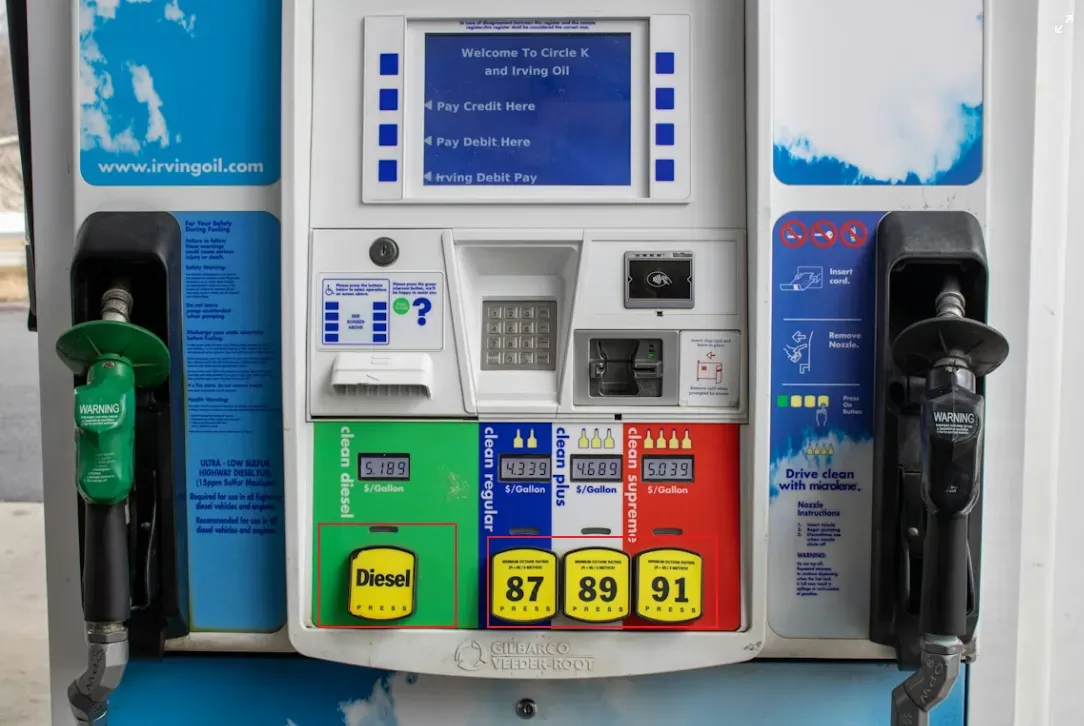
Develop a "Touch-and-Read" habit. Touch the button/nozzle and read the word ("Diesel" or "Unleaded") out loud before you pull the trigger.
Understanding U.S. Octane Numbers
-
87 (Regular): Standard for most cars.
-
89 (Plus): Rarely required, often a mid-grade blend.
-
91-93 (Premium): Required for high-performance or turbocharged engines.
Extra Tips for Rental Cars and New Drivers
-
Look for the Sticker: Most rentals have a sticker on the fuel door or the key tag.
-
Check the Tachometer: Diesel cars usually have a lower "Redline" (around 4,500 - 5,000 RPM) than gasoline cars (6,500+ RPM).
-
Misfuel Caps: You can buy a "Diesel Only" cap that physically prevents a gas nozzle from entering.
Disclaimer: This guide provides general information. Always consult your vehicle's owner manual and a certified mechanic for specific repair advice.