You’ve just touched down at John F. Kennedy International Airport (JFK) after a grueling long-haul flight. You’ve successfully navigated customs, reclaimed your overstuffed suitcases, and now, you face the final boss of your journey: Getting to Manhattan.
On paper, the distance is only about 15 to 20 miles. In reality, this stretch of road and rail represents one of the most complex transit corridors in the world. For first-time visitors, the sheer volume of choices—AirTrains, subways, commuter rails, yellow cabs, and app-based rides—can be overwhelming. Add two 50-pound suitcases and a carry-on into the mix, and a "cheap" transit option can quickly turn into a physical and mental nightmare.
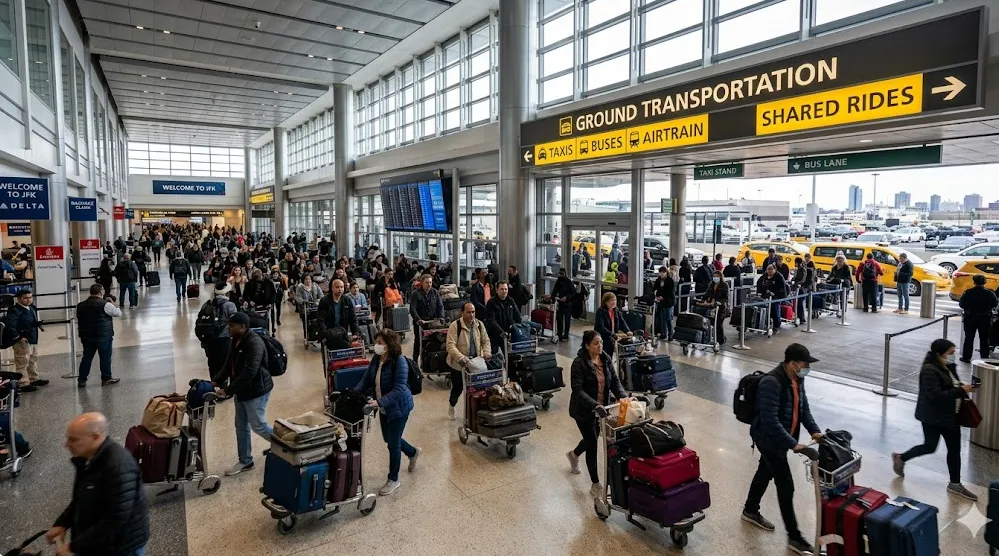
In this comprehensive guide, we aren't just looking at the fastest or cheapest ways to get into the city. We are focusing on the luggage-friendliness of each "path." Whether you are a budget-conscious student with a single backpack or a family of four with a mountain of gear, our goal is to help you choose the route that minimizes stress and maximizes comfort.
The Quick Takeaway: If you are traveling with heavy luggage, convenience and "door-to-door" service often outweigh a $10 savings. However, if you know the "pro paths" (like the LIRR), you can often find a perfect balance between cost and comfort.
📊 Quick Comparison of All 5 Options
Before we dive into the nitty-gritty details of each method, here is a high-level overview of how these five "paths" stack up against each other, specifically through the lens of a traveler with luggage.
|
Option |
Est. Time |
Est. Cost |
Transfers |
Luggage Difficulty |
Best For |
|---|---|---|---|---|---|
|
AirTrain + Subway |
60–90 min |
~$11.40 |
1–2 |
⭐⭐⭐⭐⭐ (Hard) |
Budget travelers / Light packers |
|
AirTrain + LIRR |
35–50 min |
$13.50–$19.25 |
1 |
⭐⭐ (Easy) |
Speed seekers / Mid-range budget |
|
45–90 min |
$70–$120+ |
0 |
⭐ (Very Easy) |
Heavy luggage / Door-to-door ease |
|
|
Yellow Cab |
45–90 min |
~$90 (Flat) |
0 |
⭐ (Very Easy) |
Families / Predictable pricing |
|
Shuttle Bus |
60–120 min |
$25–$40 |
0–1 |
⭐⭐⭐ (Moderate) |
Solo travelers / Non-rush hours |
Summary:
-
Best overall for luggage: Yellow Cab or Uber (Zero lifting required).
-
Cheapest option: AirTrain + Subway (But be prepared for stairs).
-
Best balance option: AirTrain + LIRR (Fastest rail link with decent space).
🧠 How to Choose the Best Option from JFK to Manhattan
Selecting your "path" shouldn't be a snap decision made while standing confused in the terminal. To make the right choice, you need to evaluate three critical factors:
1. How Much Luggage Are You Carrying?
This is the most important question. New York City’s infrastructure was built long before the era of four-wheeled spinner suitcases.
-
Light (1 carry-on): The world is your oyster. Take the subway.
-
Moderate (1 large suitcase + 1 personal item): Consider the LIRR for a smoother ride.
-
Heavy (Multiple large bags/Family): Do not attempt the subway. The physical toll of navigating turnstiles and non-functional elevators will ruin your first day in the city.
2. What Time Are You Arriving?
New York is the city that never sleeps, but its traffic certainly crawls.
-
Rush Hour (7 AM–10 AM / 4 PM–7 PM): Avoid cars at all costs. A taxi that takes 50 minutes at midnight can take 2 hours during the afternoon rush. In these windows, the train is your best friend.
-
Late Night (After 11 PM): Subway frequency drops significantly, and safety becomes a bigger concern for solo travelers. This is when a taxi or Uber becomes worth the premium.
3. Budget vs. Comfort
Are you trying to save every penny for Broadway tickets, or is your priority arriving at your hotel fresh and ready to explore?
-
If you choose the Subway, you are trading physical effort for cash.
-
If you choose a Taxi, you are paying for the luxury of not lifting your bags until you reach your hotel lobby.
🚇 AirTrain + Subway — Cheapest but Least Luggage-Friendly
If your primary goal is to save every possible dollar, the subway is your default "path." However, for those with multiple suitcases, this journey can be a Herculean task.
How It Works: The Step-by-Step
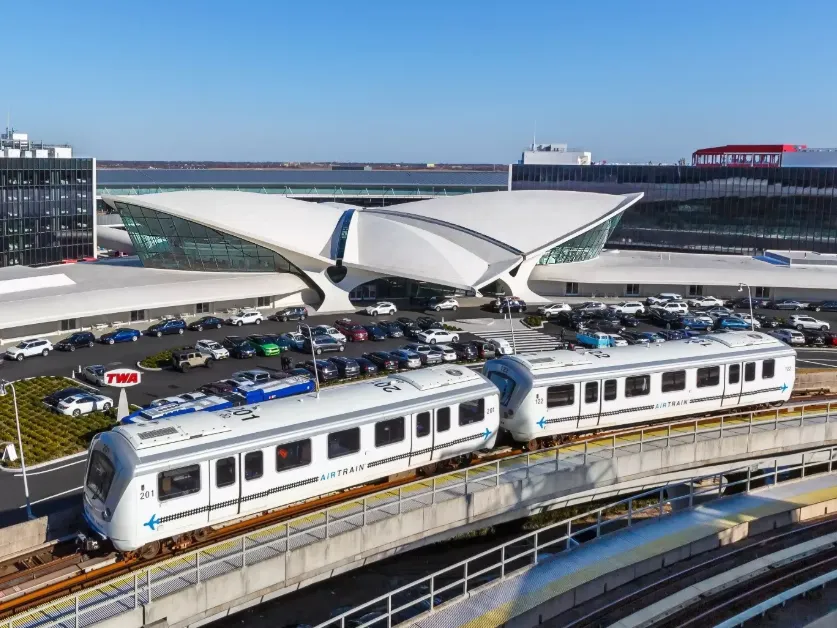
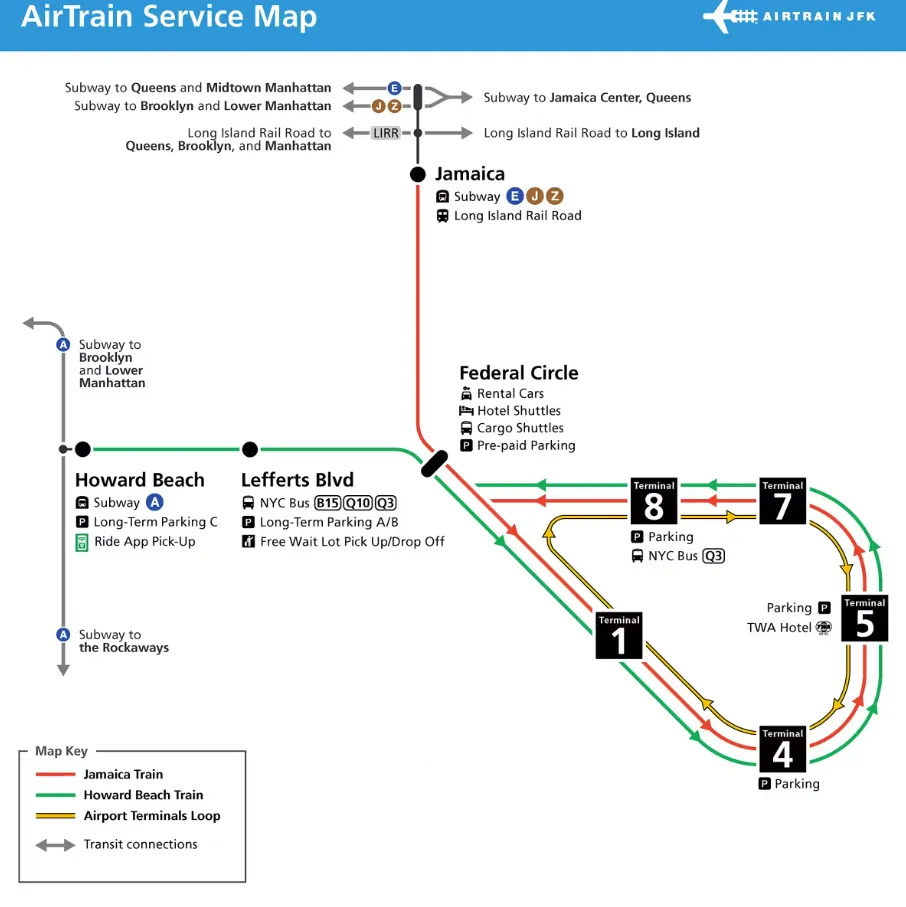
To use the subway, you must first take the JFK AirTrain (a driverless shuttle that connects all terminals).
-
Take the AirTrain toward Jamaica Station (red line).
-
Exit at Jamaica Station, pay your AirTrain fee at the gates, and follow signs for the Subway.
-
Board the E Train (Blue line) toward Manhattan. This line serves Midtown Manhattan and the Port Authority Bus Terminal. (Note: You can also take the AirTrain to Howard Beach for the A train, but Jamaica/E train is generally more frequent and serves more tourist-heavy areas.)
Where to Get Off in Manhattan
Knowing exactly where to exit the subway is crucial when you are lugging heavy bags. Here are the primary stops on the E Train:
-
Lexington Ave/53rd St: Ideal if your hotel is on the Upper East Side or in the East Midtown business district.
-
5th Ave/53rd St: Best for those staying near Rockefeller Center or luxury hotels along 5th Avenue.
-
7th Ave/53rd St: A short walk to Times Square and the Theater District.
-
42nd St–Port Authority Bus Terminal: The central hub for Times Square and West Side hotels. This station is massive, so prepare for long walks underground.
-
34th St–Penn Station: The stop for Madison Square Garden, Macy’s, and the Chelsea neighborhood.
-
World Trade Center: The final stop for those staying in Financial District (FiDi) or near the 9/11 Memorial.
The Cost & How to Pay (The OMNY System)
-
AirTrain Fee: $8.50
-
Subway Fare: $2.90
-
Total: $11.40 per person.
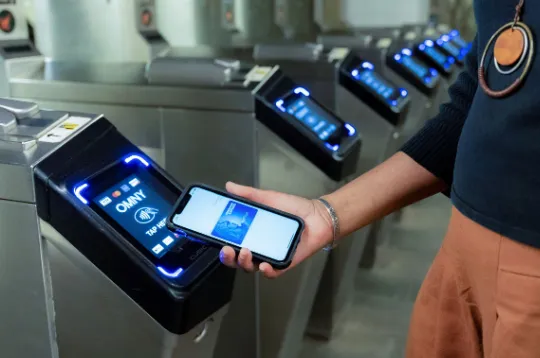
What is OMNY? OMNY (One Metro New York) is the MTA’s new contactless fare payment system. It allows you to pay your fare without ever touching a ticket machine or buying a physical card.
Where it Works:
-
Subway & Buses: OMNY is now fully active at every single subway station and on all MTA buses across the five boroughs.
-
AirTrain JFK: You can use OMNY to pay the $8.50 exit/entry fee at Jamaica and Howard Beach stations.
How to Use It for AirTrain & Subway: Simply tap your contactless credit/debit card, or your smartphone/smartwatch (Apple Pay, Google Pay, Samsung Pay), against the OMNY reader at the turnstile. When the screen says "GO," you’re all set. This is particularly helpful when your hands are full with luggage, as you don't need to dig through your wallet for a MetroCard.
Travel Time: 60 to 90 Minutes
While the trains themselves are relatively fast, the walking time between the AirTrain and the subway platform, plus the wait for a train, often pushes the total journey to over an hour.
Pros & Cons for Luggage Carriers
-
Pros: It is the most affordable way to reach the city; it operates 24/7; you bypass all highway traffic.
-
Cons: The "Staircase Factor." Many New York City subway stations are over a century old. While major hubs like Penn Station have elevators, many smaller stations only have narrow stairs or broken escalators. Dragging a 50lb bag up three flights of stairs in a crowded station is an experience you want to avoid.
Best For: Backpackers, students, and light packers with a "can-do" attitude.
🚆 AirTrain + LIRR — Best Balance of Speed and Comfort
If you want the reliability of a train but find the subway too "gritty" or difficult with bags, the Long Island Rail Road (LIRR) is the "Pro Move."
How It Works
Similar to the subway route, you take the AirTrain to Jamaica Station. However, instead of heading down to the subway tunnels, you stay on the upper level and head to the LIRR platforms.
-
Destination: You can now choose between Penn Station (West Side/Midtown) or the brand-new Grand Central Madison (East Side/Midtown).
-
Frequency: Trains run almost every 5–10 minutes during peak hours.
Where to Get Off in Manhattan (LIRR Hubs)
Unlike the subway, the LIRR only stops at two major hubs in Manhattan. Choosing the right one can save you an expensive taxi ride from the station:
-
Grand Central Madison (East Side): This is a brand-new, underground terminal. It is the best choice if you are staying in Midtown East, near the UN, or close to Grand Central Terminal. Note: It is deep underground, so allow an extra 10 minutes to reach the street level via the long escalators.
-
Penn Station (West Side): Located at 34th Street and 7th Avenue. This is the best stop for hotels in Chelsea, Hudson Yards, or near Madison Square Garden.
-
Frequency: Trains run almost every 5–10 minutes during peak hours.
The Cost: $13.50 – $19.25
-
AirTrain: $8.50
-
LIRR Ticket: $5.00 (CityTicket Off-Peak) to $10.75 (Peak).
-
Editor's Tip: On weekends, look for the "CityTicket" which offers a massive discount for trips within NYC.
Travel Time: 35 to 50 Minutes
The LIRR is a commuter rail, meaning it makes fewer stops and moves much faster than the subway. Once you leave Jamaica, you can be in the heart of Manhattan in just 20 minutes.
Why It’s Better for Luggage
-
Elevators: Jamaica Station to LIRR is fully ADA-accessible with reliable elevators.
-
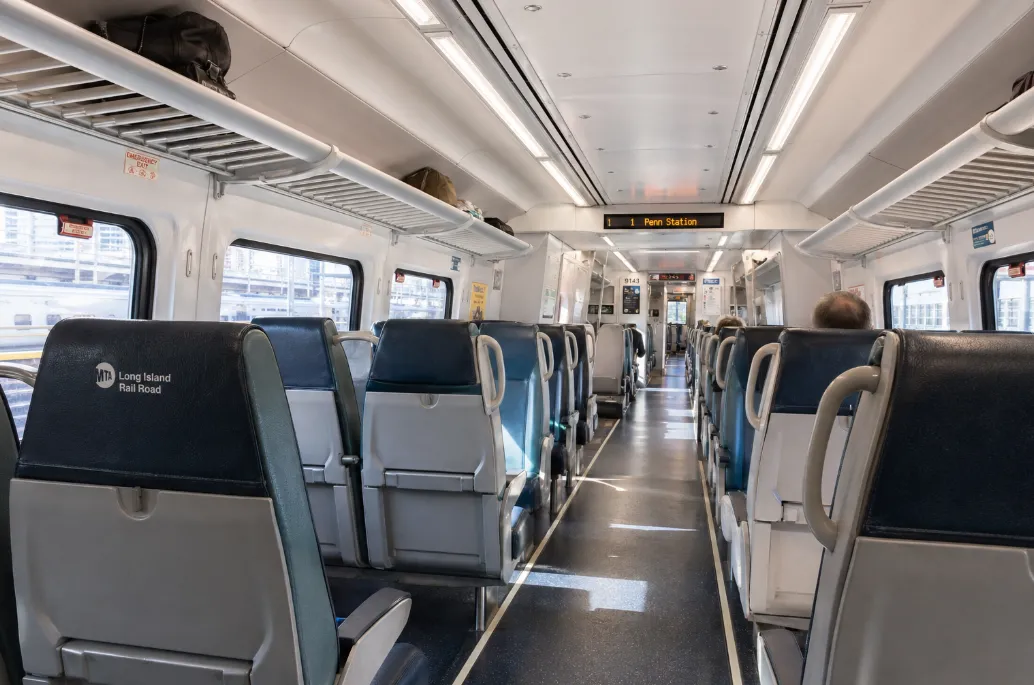
Dedicated Space: LIRR trains have overhead racks and more floor space. You won't feel like an obstacle to other passengers as you would on a cramped E train.
-
Safety & Comfort: The environment is cleaner, quieter, and feels more "premium" than the subway.
Best For: Solo travelers with 1-2 bags who want to reach Midtown quickly without spending $100 on a taxi.
💡 Pro Tips for Rail Travelers (The "Luggage Path" Secrets)
If you decide to take the train, keep these three "survival" tips in mind:
-
Avoid Rush Hour at All Costs: Between 4:00 PM and 7:00 PM, the E train and LIRR are packed with commuters. Trying to board a crowded train with two suitcases is not only physically difficult but will also earn you many "New York glares."
-
Check the MTA Elevator Website: Before you leave JFK, check
elevator.mta.info. If the elevator at your destination station is out of service, you might be stuck underground with no way to get your bags to the street. -
The "Empty Car" Trap: On the subway, if you see an empty car on a crowded train, do not enter it. There is usually a reason it’s empty (a broken AC or a very unpleasant smell). Stick to the cars with people.
🚗 Uber & Lyft — The Ultimate Door-to-Door Convenience
In the age of smartphones, calling an Uber or Lyft is the most intuitive "path" for many. It offers the luxury of a private vehicle that takes you from the JFK curb directly to your hotel lobby.
How It Works: The Pickup Process
Unlike many airports where cars pull up right outside the terminal, JFK has specific "Ride-App" pickup zones.
-
Follow the Signs: After collecting your luggage, follow the green signs for "Ride App" or "Ground Transportation."
-
The Terminal Shuffle: Depending on your terminal, you may need to take the AirTrain (for free) to a centralized parking lot to meet your driver.
-
Editor's Note: Terminals 5, 7, and 8 often require this extra step, which can be a bit of a hassle if you have four giant suitcases.
-
The Cost: $70 – $120+
-
Base Fare: Usually starts around $60-$70.
-
Tolls & Fees: JFK is surrounded by tolls. Expect to pay an additional $10-$20 for bridge and tunnel crossings.
-
Surge Pricing: During rainstorms or peak Friday afternoons, prices can skyrocket to $150 or more.
Why It’s Great for Luggage
-
Hands-Off Experience: Once you find your car, the driver will almost always help you load your bags into the trunk.
-
Size Choice: You can specifically order an UberXL or Lyft XL if you are traveling with a large group or an excessive amount of gear (like ski equipment or 5+ large bags).
Best For: Heavy luggage, families with small children, and those who prefer the familiarity of an app.
🚕 Yellow Cab — The Iconic, Flat-Fare "No Surprises" Path
The New York City Yellow Cab is as much a part of the landscape as the Empire State Building. For airport transfers, it remains one of the most reliable and transparent options.
How It Works: The Official Taxi Stand
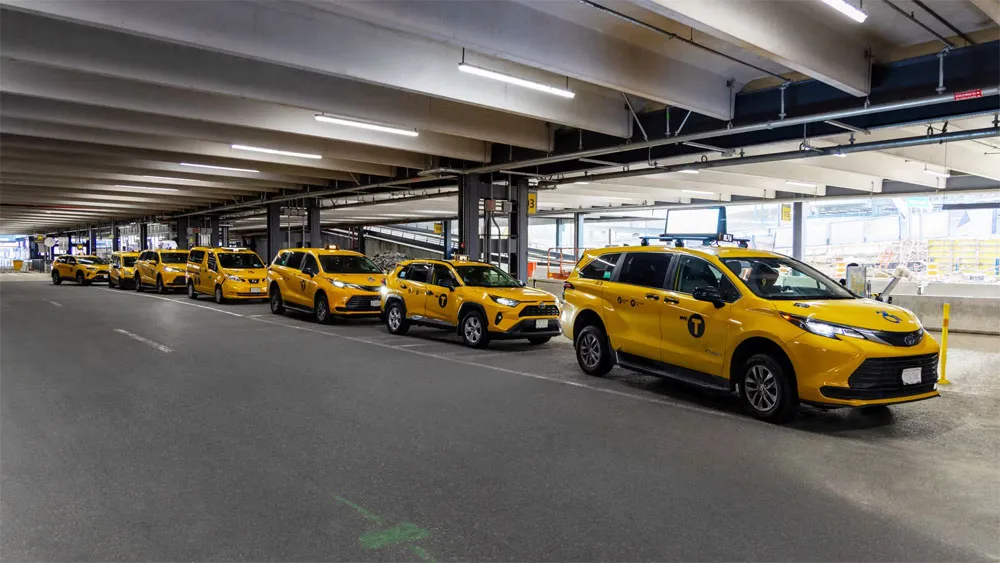
Ignore anyone inside the terminal offering you a ride. Go to the official Taxi Stand outside the arrivals hall. A dispatcher (often wearing a high-visibility vest) will assign you a cab. [Check taxis wait times]
The Cost: The "Flat Fare" Magic
Yellow Cabs operating from JFK to Manhattan use a Flat Fare system, which provides much-needed peace of mind.
-
Flat Rate: $70.00
-
Rush Hour Surcharge: $5.00 (Mon–Fri, 4 PM–8 PM)
-
NY State Surcharge: $1.75
-
Tolls: Variable (approx. $10-$15)
-
Tip: 15%–25% is standard ($15–$25)
-
Total: Usually ends up around $95–$110.
Travel Time: 45 to 90 Minutes
Just like Uber, taxis are at the mercy of New York traffic. If the Midtown Tunnel is blocked, your journey will be slow, but at least the fare won't keep ticking up like a regular meter.
Pros & Cons for Luggage Carriers
-
Pros: Zero walking. The taxi stand is right outside the door. No apps, no GPS confusion, and no surge pricing.
-
Cons: Most standard Yellow Cabs are sedans. If you have four people and six suitcases, you’ll have to wait for a "Van Taxi" (Sienna or NV200), which can take longer to arrive at the stand.
Best For: First-time visitors who want a simple, "old school" experience with predictable pricing.
🆚 Head-to-Head: Uber vs. Yellow Cab
So, which car should you choose?
|
Feature |
Yellow Cab |
|
|---|---|---|
|
Pricing |
Dynamic (Surge) |
Flat Fare (Fixed) |
|
Availability |
Requires App/Data |
Walk-up Service |
|
Vehicle Type |
Guaranteed XL if ordered |
Dependent on line luck |
|
Pickup Location |
Often requires a walk/shuttle |
Directly at the curb |
The "Path" Verdict:
-
Choose Uber/Lyft if you are arriving during off-peak hours and have a massive amount of luggage that requires a guaranteed large SUV (XL).
-
Choose a Yellow Cab if you are arriving during a busy time and want to avoid surge pricing, or if you simply want the most straightforward exit from the airport.
🚌 Bonus Path: The Airport Shuttle (The Middle Ground)
The shared shuttle bus (services like Go Airlink or ETS) offers a bridge between the high cost of a private car and the high effort of the subway.
How It Works
These are shared-ride vans that pick up multiple passengers from different terminals. You typically check in at the Ground Transportation desk in the arrivals hall. The driver groups passengers heading to similar neighborhoods and drops you off directly at your hotel or residence door.
Cost
-
Mid-range pricing: Expect to pay between $25 and $40 per person. While cheaper than a private car for a solo traveler, the math changes quickly if you are a group of three or more—at that point, a taxi is actually cheaper.
Travel Time
-
Longer duration: Because the van must drop off other passengers, your ride could take anywhere from 60 to 120 minutes. You are essentially taking a scenic tour of Manhattan hotels before reaching your own.
Pros
-
Cheaper than a taxi: Great for solo travelers looking to save $50.
-
Less effort than the subway: No stairs, no turnstiles, and no navigating the maze of Penn Station. The driver handles the heavy lifting of your bags into the van.
Cons
-
Waiting time: You may have to wait at the terminal for the van to fill up.
-
Multiple stops: Being the last person dropped off after a 10-hour flight can be incredibly frustrating.
Best For
-
Solo travelers who want door-to-door convenience on a budget.
-
Travelers not in a rush who don't mind a longer commute in exchange for comfort.
Tips
-
Book in advance: Online reservations often guarantee a seat and a slightly lower rate.
-
Confirm your drop-off: Make sure the driver knows exactly which hotel entrance you need, especially in busy areas like Times Square.
-
Tipping: A small tip ($3-$5) for the driver is customary if they handle your heavy luggage.
💡 Pro Tips for Traveling from JFK to Manhattan with Luggage
Before you commit to a "path," here are a few hard-earned tips from our editors who have navigated the JFK-to-Manhattan route hundreds of times:
-
🛑 CRITICAL PAYMENT WARNING (OMNY vs LIRR): While you can "Tap-to-Pay" with OMNY (smartphone or contactless card) for the AirTrain and the Subway, OMNY does NOT work on the LIRR. If you take the LIRR, you must purchase a separate ticket via the TrainTime App or a station kiosk. Scanning your phone at an OMNY reader will not count as a LIRR fare, and you could face a hefty fine or on-board surcharge.
-
Avoid the Subway with More Than One Large Suitcase: We cannot stress this enough. Even if a station has an elevator, there’s a 20% chance it’s out of service. Dragging 100+ lbs of gear up subway stairs is a recipe for a pulled muscle and a bad start to your trip.
-
The "Group of Three" Rule: If you are traveling in a group of three or four, a Yellow Cab or UberXL is almost always more cost-effective and infinitely more comfortable than buying four separate shuttle or LIRR tickets.
-
Late-Night Arrivals (After 11 PM): If you land late, skip the trains. Subway frequency drops to once every 20 minutes, and the platforms can feel isolated. A door-to-door car service is worth the extra $50 for safety and peace of mind.
-
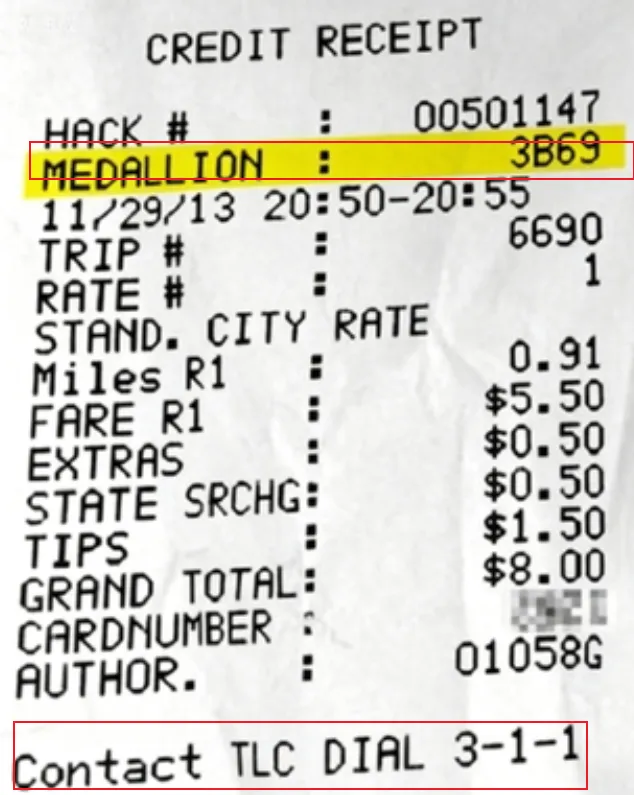
Keep Your Receipt: If you take a Yellow Cab, always ask for a printed receipt. It contains the taxi’s medallion number, which is essential if you accidentally leave a bag in the trunk.
🏆 Best Option by Scenario: Which Path is Yours?
Still undecided? Find the scenario that best describes your situation:
|
If you are... |
Recommended Path |
Why this is your best bet |
|---|---|---|
|
On a Tight Budget |
AirTrain + Subway |
At $11.40, it's unbeatable. Best for light packers staying near the E train. |
|
Hauling Heavy Luggage |
Uber XL / Yellow Cab |
Trunk space and curb-to-door service. You avoid every single staircase. |
|
In a Major Rush |
AirTrain + LIRR |
The most reliable way to beat the Van Wyck Expressway traffic. |
|
A First-Time Visitor |
Yellow Cab |
Iconic views of the skyline and a predictable flat-fare with no app needed. |
|
Traveling Solo & Want Ease |
Airport Shuttle |
Door-to-door convenience for half the price of a taxi, if you have time. |
❓ FAQ: Frequently Asked Questions
Q: Is there a flat rate for Uber/Lyft from JFK to Manhattan?
A: No. Unlike Yellow Cabs, Uber and Lyft use dynamic pricing. The price you see in the app is what you pay, but it can fluctuate wildly based on demand and traffic.
Q: Can I pay for the AirTrain with a credit card?
A: Yes! You can use any contactless credit/debit card or mobile wallet (Apple/Google Pay) at the OMNY readers. You no longer need to buy a physical MetroCard.
Q: Do I need to buy a ticket for the LIRR if I already tapped my phone at the AirTrain gate?
A: YES. Tapping your phone at Jamaica Station only pays for your exit from the AirTrain ($8.50). It does not cover your LIRR fare to Manhattan. You must use the MTA TrainTime app or a kiosk to buy a LIRR ticket before boarding.
Q: Do I need to tip my driver?
A: Yes, tipping is standard in New York. For Taxis and Ubers, 15%–20% is expected. For shuttle drivers who handle your bags, $2–$5 is a polite gesture.
Q: Is the subway safe at night?
A: Generally, yes, but it can be uncomfortable for tourists with lots of luggage. If it’s past midnight, we recommend taking a car or the LIRR, which feels more secure.
Q: How do I find the LIRR at JFK?
A: Take the AirTrain to Jamaica Station. After you pass through the exit gates, follow the overhead signs for "Long Island Rail Road." The ticket machines are located right before the platforms.
🏁 Final Thoughts
The "best" way to get from JFK to Manhattan isn't necessarily the cheapest or the fastest—it’s the one that fits your specific needs. If you're traveling light, embrace the local experience on the Subway. If you’re hauling your life in three suitcases, treat yourself to a Yellow Cab.
No matter which "path" you choose, welcome to the Greatest City in the World. Enjoy the ride!