The landscape of American transportation has shifted. By 2026, electric vehicles (EVs) have moved from a niche luxury to a mainstream reality on U.S. highways. However, as EV adoption has skyrocketed, so has the demand for public charging infrastructure. With rising electricity rates and the convenience of fast-charging networks often coming with a premium price tag, charging costs have officially become a top-tier concern for vehicle ownership.
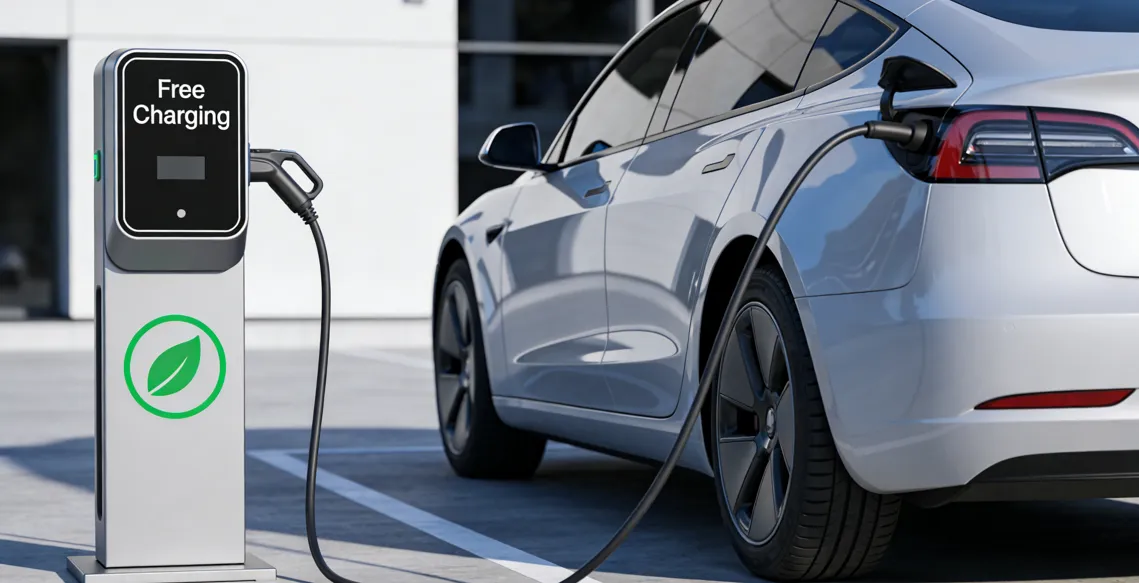
The good news? Free charging still exists. While the "gold rush" era of ubiquitous free power is tapering off, savvy drivers can still find thousands of locations across the country to top off their batteries without spending a dime.
Who this guide is for:
-
New EV owners looking to minimize their daily operating costs.
-
Tesla drivers searching for destination chargers or network promotions.
-
Road-trip travelers planning budget-friendly cross-country routes.
-
Apartment renters who lack home charging and need reliable community resources.
👉 Transition: The real question isn't whether free charging exists, but where you can actually find it reliably today.
1. Is Free EV Charging Really Available in the U.S.?
Yes, but it’s rarely a "no strings attached" utility. Understanding the type of free charging you're using will help you manage your expectations regarding speed and availability.
1.1 Types of Free Charging Stations
-
Complimentary Level 2 Chargers: These are the most common. They typically offer 3–7 kW of power, perfect for "top-offs" while you spend a few hours at a location.
-
Promotional Fast Chargers (DCFC): Occasionally, networks like Electrify America or EVgo offer free sessions during holidays or to celebrate new station openings.
-
Business-Sponsored Charging: Retailers provide power to keep you in their stores longer.
-
Workplace Charging Programs: Many tech hubs and progressive companies offer free charging as a modern employee benefit.
-
Government & Utility Pilot Programs: Local municipalities often provide free chargers in public lots to encourage EV adoption and meet climate goals.
1.2 Why Some Charging Stations Are Free
It’s rarely about charity; it’s about business strategy:
-
Customer Attraction: A grocery store knows that if you're charging, you're shopping. The $2 of electricity they give you often results in a $100 grocery bill.
-
Sustainability Branding: Corporations use free chargers to signal their commitment to ESG (Environmental, Social, and Governance) goals.
-
Incentive Programs: Many businesses receive government grants to install chargers on the condition that they remain free to the public for a set period.
💰 Annual Charging Cost Comparison (Estimated)
Based on 12,000 miles per year and average 2026 electricity rates.
|
Charging Method |
Avg. Cost per kWh |
Est. Annual Cost |
Best For... |
|---|---|---|---|
|
Public Free Charging |
$0.00 |
$0 |
Daily commuters & grocery shoppers |
|
Home Charging |
$0.18 - $0.25 |
$650 - $900 |
Overnight convenience |
|
Public Paid (Fast) |
$0.45 - $0.60 |
$1,600 - $2,200 |
Road trips & urgent needs |
👉 Transition: The real question isn't whether free charging exists, but where you can actually find it reliably today.
2. Best Places to Find Free EV Charging Stations Near You
To find free power, you need to know which businesses prioritize EV drivers. Here are the "High-Probability" zones:
2.1 Retail & Shopping Locations (Rating: ⭐⭐⭐⭐)
-
Shopping Malls: Large centers (like Westfield or Simon Malls) often host Volte or ChargePoint stations that are free for the first two hours.
-
Supermarkets: Look for Whole Foods, Meijer, and Hy-Vee. Many of these locations offer free Level 2 charging.
-
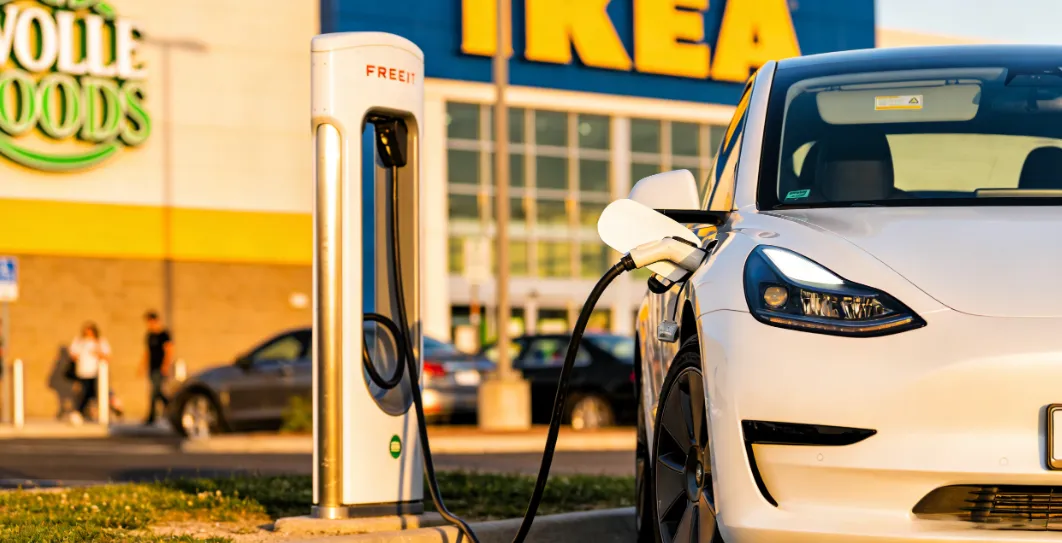
Big-Box Stores: IKEA and Kohl’s are famous for offering complimentary charging to shoppers.
2.2 Hotels & Hospitality Locations (Rating: ⭐⭐⭐⭐⭐)
-
Hotels Offering Guest Charging: Many Marriott, Hilton, and Hyatt properties offer "Destination Charging" where the cost is included in your stay.
-
Resorts & Casinos: In places like Las Vegas or Atlantic City, casinos use free charging as a "perk" to get you onto the gaming floor.
2.3 Workplaces & Universities (Rating: ⭐⭐⭐)
-
Office Campuses: Tech parks in California, Texas, and Washington are hubs for free employee charging.
-
Public Universities: Schools like UCLA, Texas A&M, and others often have free chargers near libraries or athletic centers.
2.4 Government & Community Locations (Rating: ⭐⭐⭐⭐)
-
Public Libraries: A classic spot for a slow, free charge while you catch up on work.
-
City Halls & Parks: Many "Green Cities" have installed chargers at recreational centers and public parks.
✅ Emphasize: Exact locations change frequently. A charger that was free yesterday might be pay-to-play tomorrow. Using apps is essential.
3. Best EV Charging Apps to Find Free Charging Stations
In 2026, the "treasure hunt" for free charging is won through data. While many networks are transitioning to paid models, these four digital tools remain the most effective weapons in an EV owner's arsenal for sniffing out $0 sessions.
3.1 PlugShare — The "Gold Standard" for Free Power
PlugShare is more than just a map; it is a community-driven database that remains the most reliable source for free charging.
-
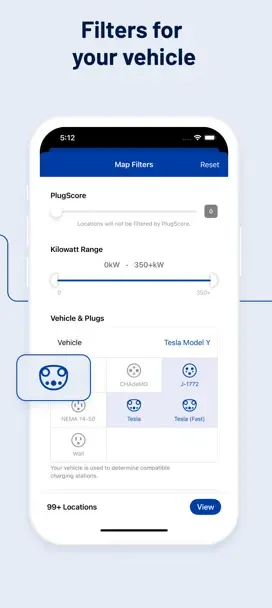
The "Free" Filter: Open the app -> Tap the Filter icon -> Scroll to "Payment" -> Select "Free". This will instantly hide thousands of paid Superchargers and Electrify America sites.
-
The Power of "Check-ins": Before driving 10 miles for a free plug, read the recent logs. Users frequently comment "Still free!" or "Now requires a store purchase."
-
Pro Tip: Look for the "Residential" toggle. Some generous homeowners share their private chargers for free (or for a small donation), which can be a lifesaver in rural areas.
3.2 Using ChargeHub to Locate Free Stations
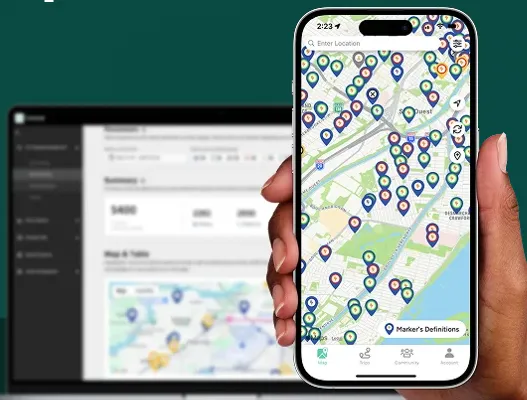
If PlugShare is the community hub, ChargeHub is the technical encyclopedia.
-
Cross-Network Visibility: It aggregates data from ChargePoint, Blink, Flo, and even small municipal networks that often fly under the radar.
-
Availability Radar: Use the "Color Coding" system to see which free chargers are currently occupied in real-time.
-
Pro Tip: Use the "Trip Planner" feature to specifically route your road trip through "high-density free zones," ensuring your stops align with public parks or libraries that offer complimentary Level 2 juice.
3.3 Shell Recharge (Formerly Volta) — The King of Ad-Supported Charging
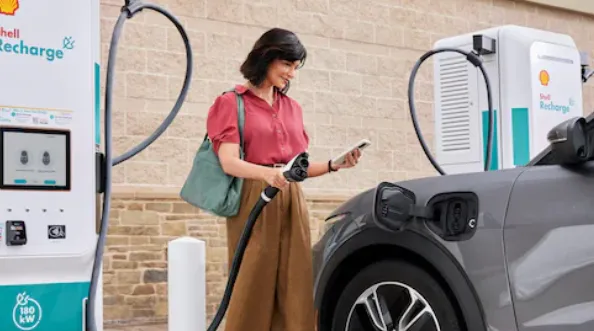
Volta revolutionized the industry by offering free charging funded by large digital screens displaying ads.
-
Finding 2-Hour Free Windows: Most Volta stations at shopping centers offer the first 2 hours of Level 2 charging for free.
-
High-Visibility Locations: These are usually located in the "prime" parking spots near the entrance of Whole Foods, Macy’s, or luxury malls.
-
Pro Tip: Download the Shell Recharge app to see if a specific Volta station is active. Even though Shell acquired Volta, they have maintained the free ad-supported tier at most premium retail locations.
3.4 Google Maps & Apple Maps — The "Hidden" Search Method
Both tech giants have integrated EV charging data, but finding the free ones requires a specific search strategy.
-
Keyword Strategy: Instead of searching "EV Charging," try searching "Free EV Charger" or "Complimentary EV Charging."
-
Verification via Photos: Tap on the location's photos. EV drivers often upload pictures of the charger screen. If you see "Session Cost: $0.00" in a photo from two weeks ago, it's a high-probability win.
-
Pro Tip: Add charging stops to your existing navigation. Google Maps now uses AI to suggest where you should charge based on your battery level, though you'll need to manually check the "Price" info in the location description.
4. Tesla Free Charging: What’s Still Available?
As a Tesla owner, your vehicle uses the North American Charging Standard (NACS). To unlock $0 sessions at non-Tesla stations, carrying the right hardware is non-negotiable.
4.1 Why Tesla Drivers Need Adapters
Most "destination" charging provided for free by small businesses, hotels, and local governments utilizes the universal J1772 plug. Without an adapter, your Tesla is physically barred from these resources. By investing in a few key adapters, you effectively double or triple the number of plugs you can use during your commute or road trip.
4.2 Common Adapter Types Explained
-
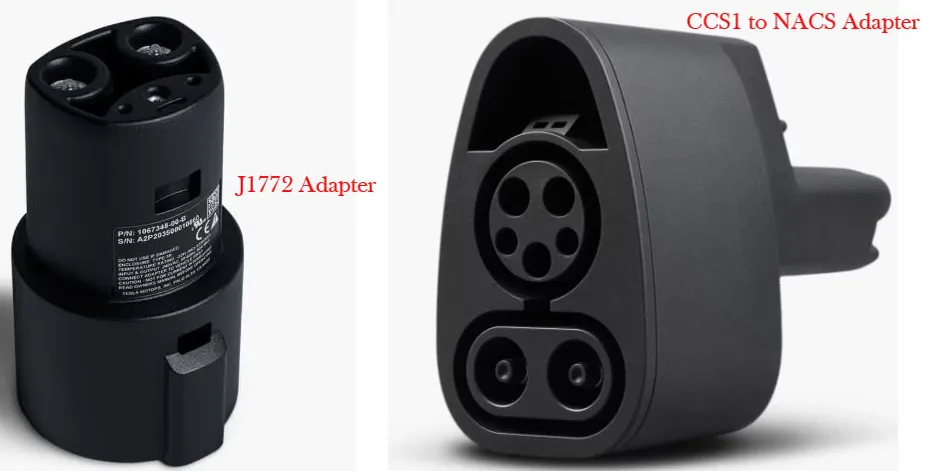
J1772 Adapter (The Essential): This is your gateway to Level 2 free charging. It converts the standard circular 5-pin plug found at most malls and libraries into a Tesla-compatible NACS plug.
-
Note: Most Teslas come with this in the trunk, but if you bought used, ensure you have one.
-
CCS1 to NACS Adapter (The Long-Haul Tool): While rare to find for free, some state-funded rest stops and utility "test sites" offer free CCS fast charging. This adapter allows your Tesla to utilize these non-Tesla DC Fast Chargers.
-
Check Compatibility: Ensure your Tesla is "CCS Enabled" in the software settings (Software > Additional Vehicle Information).
-
NACS to NACS Extension: Useful in scenarios where a free charger is blocked by an ICE (Internal Combustion Engine) vehicle, allowing you to park in an adjacent spot and still reach the plug.
4.3 Which Free Chargers Work With Tesla?
-
Public Level 2 Stations: Nearly 100% of free J1772 stations (ChargePoint, Blink, etc.) are compatible with your Tesla via the J1772 adapter.
-
Tesla Destination Chargers: These are often found at upscale hotels and vineyards. They are "Native NACS," meaning no adapter is required. Most are free for paying guests.
-
Third-Party Commercial Networks: Volta (Shell Recharge) units are primarily J1772. These are the most reliable source of free power for Tesla drivers in urban shopping districts.
4.4 Adapter Safety & Charging Speed Tips
-
Avoid "Off-Brand" Knockoffs: Free charging isn't worth a melted charge port. Only use UL-certified adapters or official Tesla equipment.
-
Monitor the Connection: When using a heavy CCS adapter, ensure the cable isn't putting too much downward tension on your charge port.
-
Manage Your Speed: Remember that most free charging via J1772 is limited to 32–48 Amps. Don't expect "Supercharger" speeds; these are meant for 2–4 hour sessions while you dine or shop.
5. How to Increase Your Chances of Charging Your EV for Free
Using free chargers requires a bit of "EV Etiquette" and strategy:
-
Always check recent user check-ins: If the last five people said "Broken," don't waste your time.
-
Understand parking time limits: Many free chargers have a 2-hour limit. Exceeding this can lead to tickets or "Idle Fees."
-
Charging Etiquette: Once you have enough range to reach your next destination, move your car. Don't "hog" a free charger if you're already at 90%.
-
Avoid Idle Fees: Some stations are free to charge but will charge you $1/minute if you stay plugged in after the battery is full.
-
Backup Charging Planning: Never arrive at a free charger with 1% battery. Always have enough "buffer" to reach a paid fast-charger if the free one is occupied or out of order.
⚠️ Editor's Pro Warning: The "Free Charging" Trap
Don't mistake free charging for free parking! Many drivers assume that because the electricity is free, they can leave their car plugged in all day.
The Reality: Most networks (especially ChargePoint and EVgo) implement Idle Fees. Once your battery reaches 100%, the station may begin charging you anywhere from $0.50 to $1.00 per minute if you don't move your vehicle. A "free" charge can quickly turn into a $60 bill if you stay for a movie or a long lunch after your car is full. Always set a phone alert for 10 minutes before your charge is estimated to finish.
6. FAQ About Free EV Charging in the United States
Q: Is free EV charging really free?
A: Usually, yes, but there's often a catch. While the electricity is $0.00, you may still need to pay for parking in a garage or mall lot. Always check if a minimum purchase at the business is required to validate your stay.
Q: Are free chargers slower than paid ones?
A: Almost always. Most free public chargers are Level 2, providing roughly 15–25 miles of range per hour. Free Level 3 (DC Fast Charging) is extremely rare and usually limited to promotional events or specific government pilot programs.
Q: Can non-Tesla cars use Tesla Destination Chargers for free?
A: It depends. Some Tesla Destination Chargers have "Magic Docks" or integrated J1772 plugs, while others require a Tesla-to-J1772 adapter. However, verify with the host (hotel/restaurant) if they allow non-Tesla guests to use them.
Q: How do I find free EV charging near me right now?
A: The fastest way is to use the PlugShare app and set the filter to "Free." You can also search Google Maps using the keyword "Complimentary EV charging" to see local results with user-uploaded photos.
Q: Do I need a specific account or app to use a free charger?
A: Often, yes. Even if the session cost is $0, networks like ChargePoint or Shell Recharge (Volta) may require you to tap your phone or card to "authorize" the session and unlock the plug.
Q: Is there a tax credit for using free public chargers?
A: No, federal tax credits (like the EV Charger Tax Credit under the Inflation Reduction Act) typically apply to the installation of home chargers or commercial hardware, not the electricity consumed during a public session.
Q: Can I charge for free if I live in an apartment with no plug?
A: Yes! Many apartment residents rely on "community charging" at local libraries, parks, or grocery stores. This is a great way to save on monthly fuel costs if your landlord hasn't installed EV infrastructure yet.
Q: Are free chargers reliable for long road trips?
A: We don't recommend relying solely on them. Free chargers are prone to being occupied or out of service due to high demand. Always treat free charging as a "bonus top-off" and have a paid fast-charging network as your primary backup plan.
7. Conclusion: The Future of Free EV Charging
In 2026, the era of "unlimited free fuel" is evolving. While the number of free stations isn't growing as fast as paid ones, they remain a vital resource for the budget-conscious driver. The key to success is preparation. By equipping yourself with the right apps (PlugShare/ChargeHub) and the necessary adapters, you can significantly lower your cost per mile.
As the market matures, expect a shift toward incentive-based charging—where you get free power in exchange for loyalty points or shopping at specific retailers.
Final Tip: Bookmark your favorite apps today and always check the reviews before you shift into Drive!