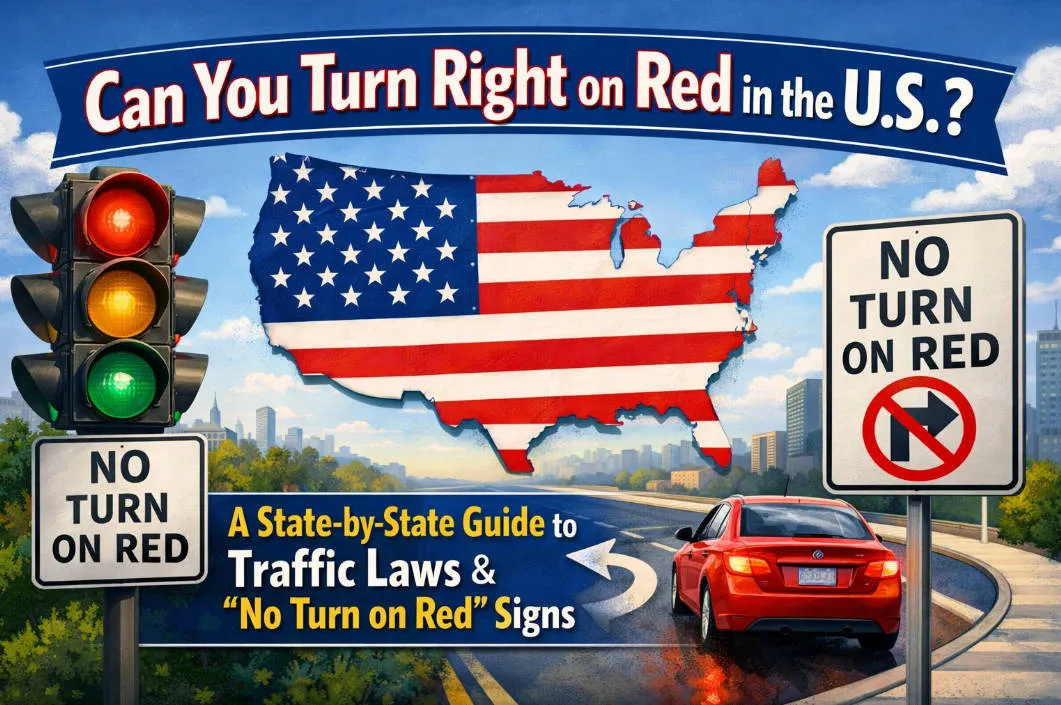
Driving in the United States offers a unique sense of freedom, but it also comes with a set of rules that can be confusing for those used to European or Asian traffic systems. One of the most common questions is: "Can I turn right at a red light?"
While the short answer is usually "Yes," the 2026 traffic landscape in America has become increasingly complex. With a nationwide push for "Vision Zero" (eliminating traffic fatalities), many major cities have significantly modified their "Right Turn on Red" (RTOR) policies. This guide provides a comprehensive breakdown of the rules you need to know to avoid heavy fines and ensure safety.
I. The General Rule: Stop, Yield, and Proceed
Since the energy crisis of the 1970s (intended to save fuel), the default law in all 50 U.S. states has been that drivers may turn right at a red light after coming to a complete stop, unless a sign prohibits it.
The "Golden Rule" of Right on Red
In most of the United States (excluding specific jurisdictions like New York City), turning right on a red light is permitted unless a sign prohibits it. However, it is never a "free" turn. You must follow these three steps in order:
1. The Full Stop
-
The Law: You must come to a complete cessation of movement behind the limit line or crosswalk.
-
Common Mistake: The "Rolling Stop." In 2026, many cities use automated enforcement cameras that trigger if your wheels don't stop moving entirely.
2. The Yield
-
Pedestrians: You must yield to anyone in the crosswalk, even if they haven't reached your lane yet.
-
Cross Traffic: You do not have the right of way. You must wait for a gap in traffic that allows you to turn without forcing oncoming cars to brake.
3. The Proceed
-
Once the way is clear and you've confirmed there is no "No Turn on Red" sign, you may complete your turn into the right-most lane.
⚠️ Pro-Tip for 2026 Drivers
Be extra cautious of Leading Pedestrian Intervals (LPIs). Many modern intersections now give pedestrians a 3–7 second "head start" with a walk signal before the vehicle light turns green. Always double-check your blind spot!
II. Understanding "No Turn on Red" (NTOR) Signs
In 2026, the complexity of "No Turn on Red" (NTOR) has increased significantly due to new infrastructure standards (MUTCD 11th Edition) and the rise of automated enforcement. Understanding these signs is no longer just about reading a board; it’s about recognizing different formats and technologies.
🛑 The Three Types of NTOR Signs in 2026
1. The Standard Regulatory Sign
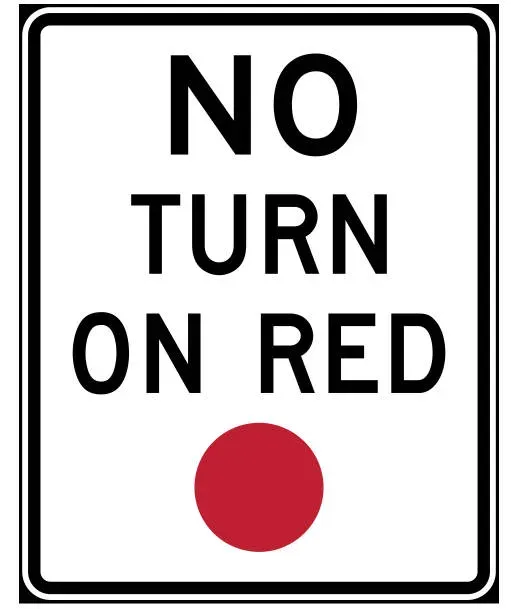
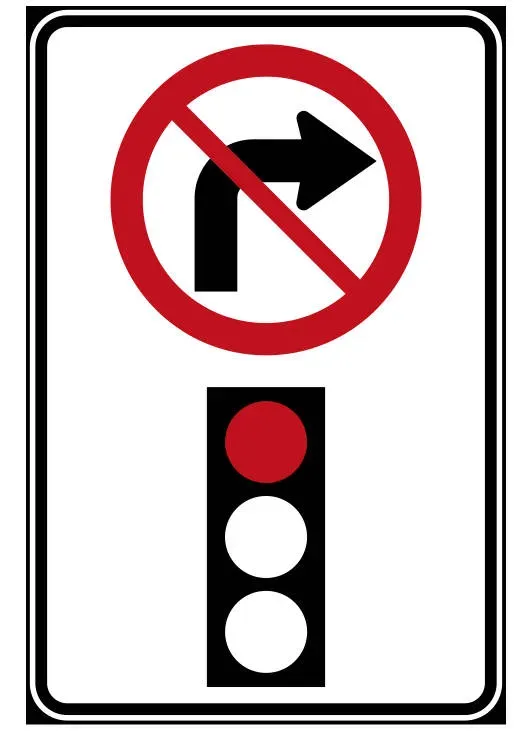
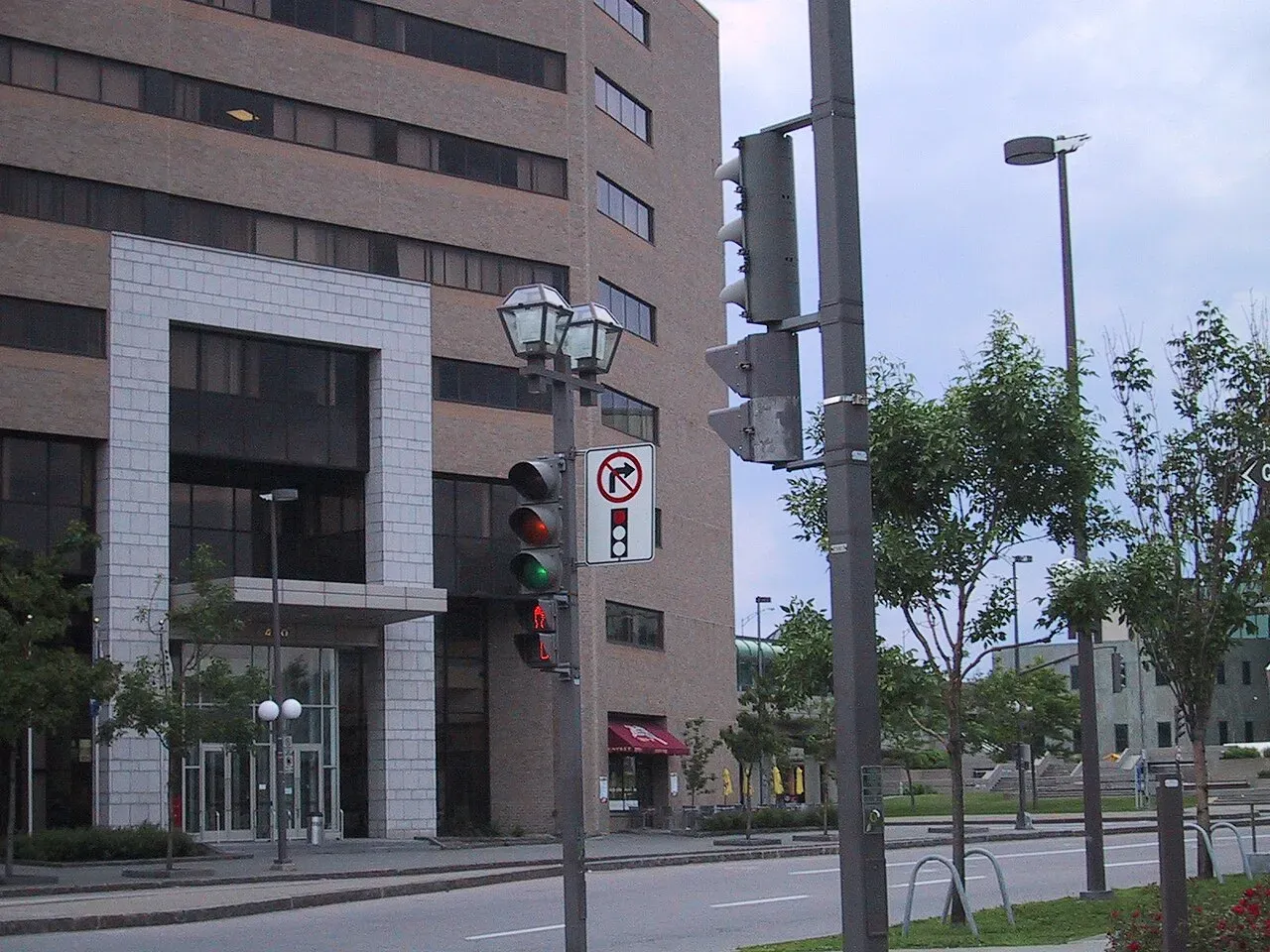
The most common sign remains the white rectangle with black text. Under the 2026 MUTCD (Manual on Uniform Traffic Control Devices) updates, these are now more standardized across state lines to reduce driver confusion.
-
Static Message: "NO TURN ON RED"
-
Symbolic Sign: A red circle with a right-pointing arrow and a slash through it.
-
Placement: Usually mounted next to the signal head or on the far-right corner of the intersection.
2. Variable/Electronic "Blank-Out" Signs
Many major cities (like San Francisco, Seattle, and Chicago) have moved to dynamic signage. These signs are "blank" or invisible until a specific condition is met.
-
How they work: The sign lights up only when a pedestrian pushes the crosswalk button or during high-traffic hours.
-
The Trap: If the sign is dark, you can turn. If it suddenly illuminates, you must stay stopped.
3. Conditional Plaques (The Fine Print)
In 2026, you will frequently see a main NTOR sign with a smaller "plaque" underneath. You must read both:
-
"When Pedestrians are Present": You may turn if the crosswalk is completely empty.
-
"Mon–Fri 7AM–7PM": The restriction only applies during rush hours.
-
"Except Small Vehicles": Often seen in industrial zones where only trucks are prohibited from turning.
🚦 New for 2026: The "Red Arrow" Rule
A significant point of confusion for many drivers is the Right Red Arrow.
-
In most states (e.g., California, Florida): You can still turn right on a Red Arrow after a full stop, unless a sign says otherwise.
-
The 2026 Trend: More states are adopting the "Red Arrow means Stop and Stay" rule. Check your specific state section below—if your state has adopted this, a red arrow is functionally the same as an NTOR sign.
⚠️ Driver Warning: Automated cameras in 2026 are now sensitive enough to detect if you cross the limit line before the sign becomes visible to your car's sensors. Always stop well behind the line to give yourself time to scan for all signage.
III. State-by-State Guide to Right Turn on Red Laws in 2026
🗺️ The 2026 National Landscape
As of February 2026, the U.S. is divided into three distinct legal "zones" regarding red light turns.
1. The "Default Prohibited" Zone (NYC & D.C.)
In these areas, you cannot turn right on red unless there is a specific sign that says "Right on Red Permitted."
-
New York City: The ban remains strictly city-wide across all five boroughs.
-
Washington, D.C.: A full ban went into effect on January 1, 2025. By early 2026, enforcement cameras are active at most major intersections.
2. The "Aggressive Restriction" Cities
These cities follow state laws (allowing right on red) but have blanketed their downtown cores with NTOR signs, making the turn practically illegal in high-pedestrian areas.
-
Atlanta, GA: As of early 2026, right turns on red are banned in Downtown, Midtown, and Castleberry Hill.
-
Seattle, WA: The city has moved to a "Default NTOR" policy for all new or updated traffic signals.
-
San Francisco, CA: Large swaths of the city, particularly the Tenderloin and SoMa districts, now have permanent NTOR signage.
3. The "Default Permitted" Zone (The Rest of the U.S.)
In the vast majority of the U.S. (e.g., Texas, Florida, Arizona), the rule remains: Stop, Yield, and Go—unless a sign says otherwise.
🚦 2026 State-by-State Highlights
| State/Territory | RTOR Allowed? | Key Differences/Exceptions | Red Arrow Rule | Notable 2026 Changes |
|---|---|---|---|---|
| Alabama | Yes | Standard rules; no statewide bans | Allowed | None |
| Alaska | Yes | Bans right on red arrow | Banned | LTOR from two-way streets allowed |
| Arizona | Yes | Standard | Allowed | None |
| Arkansas | Yes | Standard | Allowed | None |
| California | Yes | Bans right on red arrow; increasing city bans (e.g., San Francisco proposals) | Banned | Potential expansions in LA, Berkeley |
| Colorado | Yes | Bans right on red arrow; Denver considering bans | Banned | Denver RTOR restrictions in discussion |
| Connecticut | Yes | Standard | Allowed | None; bans LTOR entirely |
| Delaware | Yes | Standard | Allowed | None |
| Florida | Yes | Allows right on red arrow | Allowed | Standard; check for signs in urban areas |
| Georgia | Yes | Bans right on red arrow; Atlanta banning in downtown/midtown from 2026 | Banned | Atlanta ban effective 2026 |
| Hawaii | Yes | Honolulu bans on tourist roads | Allowed | None |
| Idaho | Yes | Standard | Allowed | LTOR from two-way allowed |
| Illinois | Yes | Chicago pushing restrictions | Allowed | Chicago may expand bans |
| Indiana | Yes | Indianapolis adding no-turn signs | Allowed | None |
| Iowa | Yes | Standard | Allowed | None |
| Kansas | Yes | Standard | Allowed | None |
| Kentucky | Yes | Standard | Allowed | None |
| Louisiana | Yes | Standard | Allowed | None |
| Maine | Yes | Bans right on red arrow | Banned | Bans LTOR in parts |
| Maryland | Yes | New red light cameras with $75 fines starting 2026 | Allowed | Enhanced enforcement |
| Massachusetts | Yes | Cambridge bans | Allowed | None |
| Michigan | Yes | Ann Arbor downtown ban | Allowed | LTOR from two-way allowed |
| Minnesota | Yes | Bans right on red arrow | Banned | None |
| Mississippi | Yes | Standard | Allowed | None |
| Missouri | Yes | Standard (except Kansas City LTOR exceptions) | Allowed | Bans LTOR except local |
| Montana | Yes | Standard | Allowed | None |
| Nebraska | Yes | Bans right on red arrow | Banned | None |
| Nevada | Yes | Bans right on red arrow | Banned | None |
| New Hampshire | Yes | Standard | Allowed | Bans LTOR in parts |
| New Jersey | Yes | Standard | Allowed | Bans LTOR entirely |
| New Mexico | Yes | Standard | Allowed | None |
| New York | Yes (statewide) | NYC bans RTOR except where signed; bans right on red arrow; school buses prohibited | Banned | NYC rule remains strict |
| North Carolina | Yes | Bans right on red arrow | Banned | Bans LTOR entirely |
| North Dakota | Yes | Standard | Allowed | None |
| Ohio | Yes | Standard | Allowed | None |
| Oklahoma | Yes | Standard | Allowed | None |
| Oregon | Yes | Allows right on red arrow | Allowed | LTOR from two-way allowed |
| Pennsylvania | Yes | Standard | Allowed | None |
| Rhode Island | Yes | Standard | Allowed | Bans LTOR in parts |
| South Carolina | Yes | Standard | Allowed | None |
| South Dakota | Yes | Standard | Allowed | Bans LTOR unless local ordinance |
| Tennessee | Yes | Standard | Allowed | None |
| Texas | Yes | Tyler intersection bans; no statewide changes | Allowed | Potential city expansions |
| Utah | Yes | Standard | Allowed | None |
| Vermont | Yes | Bans right on red arrow | Banned | None |
| Virginia | Yes | Bans right on red arrow | Banned | None |
| Washington | Yes | Seattle defaults to "No Turn on Red" at new signals | Allowed | Seattle expansions; LTOR from two-way allowed |
| West Virginia | Yes | Standard | Allowed | None |
| Wisconsin | Yes | Standard | Allowed | None |
| Wyoming | Yes | Standard | Allowed | None |
| District of Columbia (DC) | No (full ban) | Banned effective 2025; bans LTOR | Banned | Full enforcement in 2026 |
| Guam | Yes | Standard | Allowed | Bans LTOR |
| Puerto Rico | Yes | Bans right on red arrow | Banned | None |
⚠️ The "Red Arrow" Trap
The most common ticket for out-of-state drivers in 2026 involves Red Arrows.
-
The Divide: About 12 states (including California, Illinois, and New York) treat a Red Arrow as a "Protected Stop"—meaning you must stay stopped until the arrow turns green.
-
The Fine: In states like California, turning on a Red Arrow is often cited as "Running a Red Light," which can carry a fine exceeding $450 plus insurance points.
📑 2026 Checklist for Drivers
-
Assume "No" in City Centers: If you are in a dense urban core (Chicago, Boston, SF), assume a turn is illegal until you scan every corner for a sign.
-
Check for "Blank-Out" Signs: Many 2026 intersections use LED signs that only light up when a pedestrian is detected. If it’s dark, you’re clear; if it’s lit, stay put.
-
The "One-Way" Exception: In 38 states, you can turn Left on Red if you are turning from a one-way street onto another one-way street.
IV. Recent Changes and Trends in 2026
In 2026, the landscape of American traffic laws is undergoing its most significant shift since the 1970s. Driven by "Vision Zero" safety initiatives and a spike in pedestrian-involved accidents, the "Right on Red" rule is no longer the universal constant it once was.
Here are the key changes and trends that define driving in the U.S. in 2026:
🏙️ The "Default No" Revolution (Urban Center Bans)
The biggest trend in 2026 is the reversal of the "default" rule in major metropolitan areas. For decades, the rule was "go unless a sign says no." Now, in many cities, the rule is "stay unless a sign says go."
-
Washington, D.C.: As of January 1, 2025, D.C. officially became the first major city after New York to implement a city-wide ban. By 2026, signage has been installed at roughly half of all intersections, with a "no sign = no turn" philosophy spreading through the District.
-
Atlanta, GA: In a major 2026 shift, Atlanta has prohibited right turns on red in high-density areas including Downtown, Midtown, and Castleberry Hill to protect its growing population of pedestrians and cyclists.
-
Chicago, IL: While not a blanket ban yet, Chicago has dramatically expanded "No Turn on Red" zones in 2026, focusing on the Loop and areas near bike-share stations.
-
San Francisco & Seattle: These cities have moved toward a "Default NTOR" policy for all newly installed or upgraded traffic signals.
📸 AI & Automated Enforcement
In 2026, a police officer doesn't need to see you to give you a ticket. Automated enforcement has reached a new level of sophistication:
-
The "Rolling Stop" Trigger: Under new state laws like California's SB 720, cities are deploying cameras that use LiDAR to ensure vehicles come to a 100% stop for at least 0.5 to 1 second before the limit line.
-
Pedestrian Proximity Sensors: Modern cameras in 2026 can detect if a pedestrian is anywhere within the crosswalk—even if they are three lanes away—and will trigger a violation if you turn while they have the "Walk" signal.
-
Mailed Citations: Fines for these violations now typically range from $100 to $550, depending on the state, and are increasingly being used to fund transit and bike-lane improvements.
🚦 Smart Signage: "Blank-Out" Technology
The static metal sign is being replaced by Dynamic LED Blank-Out Signs. These are the most common "trap" for drivers in 2026:
-
How they work: The sign remains dark until a pedestrian pushes a crosswalk button or a sensor detects a cyclist. Once triggered, the "No Turn on Red" symbol illuminates.
-
The Catch: If you begin your turn while the sign is dark but it illuminates while you are in the intersection, you may still be caught by the camera if you didn't make a full stop first.
🚲 Protecting "Vulnerable Road Users"
2026 legislation across most states has introduced a new legal category: Vulnerable Road Users (VRUs).
-
Enhanced Penalties: If you make an illegal right turn on red and cause a "near-miss" or collision with a cyclist or pedestrian, the fines and license points are often doubled.
-
Leading Pedestrian Intervals (LPI): Most signals now give pedestrians a 3–7 second head start. Turning during this window is a major focus of 2026 enforcement.
💡 Summary Tip for 2026 Drivers
When in doubt, wait it out. In 2026, the cost of a "quick turn" is at an all-time high. If you are in an unfamiliar city center (especially on the East Coast or in California), assume that turning on red is prohibited unless you see a sign explicitly allowing it.
V. Related Rules: Left Turns on Red
While the "Right on Red" is common knowledge, the rules for turning Left on Red are often the most misunderstood part of the American driver's handbook. In 2026, as cities become more complex, knowing this "secret" rule can save you significant time—or a very expensive ticket.
🚦 The Universal Standard: One-Way to One-Way
In 42 states, it is legal to turn left on a red light under one very specific condition: you must be turning from a one-way street onto another one-way street.
Why is this allowed?
Because a left turn from a one-way to another one-way does not require you to cross any oncoming lanes of traffic. Legally, it is treated exactly like a right turn on red.
The "No-Go" List (States where Left on Red is BANNED)
As of 2026, the following jurisdictions prohibit left turns on red under any circumstances, even between two one-way streets:
-
Connecticut
-
Maine
-
Missouri (Except in Kansas City)
-
New Hampshire
-
New Jersey
-
North Carolina
-
Rhode Island
-
South Dakota
-
Washington D.C. (Ban fully active as of 2025/2026)
-
New York City (Strictly prohibited, though legal in upstate NY)
🌲 The "West Coast" Exception: Two-Way to One-Way
There are five "pioneer" states that allow an even more advanced maneuver. In these states, you can turn left on red from a two-way street onto a one-way street.
-
Alaska
-
Idaho
-
Michigan
-
Oregon
-
Washington (State)
⚠️ Legal Warning: Even in these states, you must yield to all oncoming traffic and pedestrians. Because you are crossing an oncoming lane to make this turn, the risk of a "Failure to Yield" ticket is extremely high if you misjudge the gap.
📋 How to Execute a Legal Left on Red in 2026
If you are in a state that permits it, follow this checklist to avoid an automated camera citation:
-
Check for "No Turn on Red" Signs: Many one-way intersections in 2026 now feature "Blank-Out" LED signs that prohibit this turn during peak hours.
-
The Full Stop: You must come to a dead stop behind the limit line.
-
Check the Arrow: If there is a Red Left Arrow, you must stay stopped in states like California or Illinois, regardless of whether the streets are one-way.
-
Yield to the "World": You have zero right-of-way. Yield to pedestrians, cyclists, and any cars that have a green light.
-
Turn into the Left-Most Lane: You must complete your turn into the lane closest to the left-hand curb.
💡 Pro-Tip for 2026
Because "Left on Red" is counter-intuitive to many drivers, expect the car behind you to honk—or the car across from you to be confused. In 2026, with the rise of AI-monitored intersections, if you aren't 100% sure of the local ordinance, it is always safer to wait for the green.
VI. Safety Tips and Best Practices for Drivers
In 2026, making a right turn on red is less about "beating the light" and more about navigating a high-tech environment designed to protect pedestrians and cyclists. With stricter enforcement and new vehicle technologies, following these best practices is essential for both safety and avoiding costly automated tickets.
🛡️ The "2026 Defensive Driver" Checklist
1. The "Dead Stop" is Non-Negotiable
-
The 3-Second Count: As many modern intersections now use LiDAR and AI-linked cameras, a "rolling stop" is an automatic trigger for a citation. Count to three after your vehicle has fully stopped before you even look for a gap in traffic.
-
Stop Behind the Line: Never "nose into" the crosswalk to get a better view. If your tires touch the white line while the light is red, sensors may register a violation.
2. Prioritize "Vulnerable Road Users" (VRUs)
-
The Second Look for Bicycles: In 2026, bike lanes are more common than ever. Always check your right-hand mirror and blind spot before turning. A cyclist or e-scooter may be approaching quickly from behind you.
-
Pedestrian Eye Contact: If a pedestrian is at the corner, wait. Even if they haven't stepped off the curb yet, 2026 "Leading Pedestrian Intervals" (LPIs) may give them a walk signal while you are still mid-turn.
3. Handle EVs and Hybrids with Care
-
The Silence Factor: If you are driving an Electric Vehicle, remember that pedestrians (especially those with visual impairments) cannot hear you. Be extra cautious in quiet residential areas or downtown cores.
-
Instant Torque: EVs accelerate faster than gas cars. Avoid the temptation to "zip" into a small gap in cross-traffic; a sudden burst of speed during a turn can lead to a loss of control or a side-swipe.
🚦 Smart Scanning: Where to Look
In 2026, your scan pattern should be Left-Center-Right-Left:
-
Left: Check for oncoming high-speed traffic.
-
Center: Check the "Blank-Out" sign (next to the signal) to see if a "No Turn on Red" message has suddenly illuminated.
-
Right: Check for pedestrians or cyclists entering the crosswalk from your own side.
-
Left (Again): One final check for a gap before you commit to the turn.
💡 Expert Pro-Tips
When in Doubt, Don't: You are never legally required to turn on red. if you feel the intersection is too busy, or if a driver behind you is honking, stay put. It is better to wait 60 seconds for a green light than to risk a $500+ ticket or a collision.
The U-Turn Trap: Always look at the traffic coming from the opposite side. If they have a green left-turn arrow, they may be making a U-turn into the same lane you are trying to enter. In almost every state, the U-turning vehicle has the right-of-way over a right-on-red turner.
VII. Frequently Asked Questions (FAQs)
Q1: Is right turn on red legal in every US state?
A: Yes, in all 50 states, but with exceptions like NYC's ban and DC's full prohibition.
Q2: What if there's a red arrow?
A: It depends—banned in 12 states, allowed in others like Florida.
Q3: Can I turn left on red anywhere?
A: Only in specific scenarios in 43 states; banned outright in 10.
Q4: What's the penalty for ignoring a "No Turn on Red" sign?
A: Fines vary ($100-$300 typically), plus points; cameras enforce in many areas.
Q5: Can I ever turn LEFT on a red light?
A: Yes, in 42 states, you can turn left on red if you are turning from a one-way street onto another one-way street.
Q6: Will I get a ticket for a "Rolling Stop" in 2026?
A: Highly likely. In 2026, many intersections use AI-powered cameras and LiDAR sensors. These systems are programmed to trigger if your vehicle's speed does not reach 0 mph for at least a full second. The "California Roll" is the most common reason for automated traffic fines this year.
Q7: Do pedestrians always have the right of way?
A: Yes. Pedestrians almost always have priority.
Q8: Are “No Turn on Red” signs enforced by cameras?
A: Yes, in many cities. Red-light and turn enforcement cameras are commonly used in Major cities, Downtown areas, School and pedestrian zones.
Traffic laws in the US are evolving to prioritize "Micro-mobility" (bikes and scooters). If you are driving in a busy metropolitan area in 2026 and are unsure of the local ordinance, the safest (and cheapest) choice is to wait for the green light.
Pro-Tip: If the driver behind you honks while you are waiting at a red light, you are NOT legally required to turn. If you feel the situation is unsafe or the signage is unclear, you have the right to remain stopped until the light changes.