If you are planning to drive in California, getting a valid California driver’s license is not optional—it’s required by law. This guide is designed for new immigrants, international students, and first-time drivers who want a clear, step-by-step explanation of the California DMV process.
From document preparation and written tests to road test strategies and license maintenance, this guide walks you through everything you need to know—without legal jargon or guesswork.


California Driver’s License Types Explained
Understanding which license you need is essential, as the requirements and driving privileges vary significantly between categories.
Class C Driver’s License (Standard)
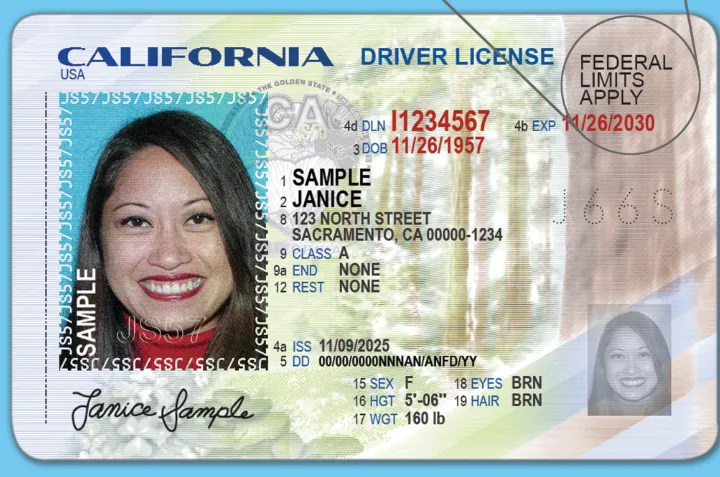
This is the most common license issued to adults (18+). It allows you to operate standard passenger vehicles, SUVs, and small trucks. Specifically:
-
Weight Limits: Vehicles with a Gross Vehicle Weight Rating (GVWR) of 26,000 lbs or less.
-
Towing: You may tow a single vehicle (like a small boat or trailer) weighing 10,000 lbs or less.
-
Vans: Passenger vans designed for 10-15 people (including the driver) for non-commercial ride-sharing.
Provisional License (Minors under 18)
Think of this as a "probationary" version of the Class C license for teenagers. It carries specific restrictions designed to ensure safety during the first year of driving:
-
The 12-Month Rule: For the first year, you cannot drive between 11 p.m. and 5 a.m., and you cannot transport passengers under 20 years old unless a licensed driver (25+) is in the passenger seat.
-
Automatic Transition: These restrictions automatically lift when you turn 18, provided you have no outstanding suspensions.
Endorsements and Specialized Permits
For those looking to operate something beyond a standard car, you will need to add an "Endorsement" to your Class C or apply for a different class:
-
Class M1/M2 (Motorcycles): Required for two-wheeled motor vehicles. M1 covers all motorcycles, while M2 is for motorized bicycles/mopeds.
-
Commercial (Class A/B): Required for large trucks, semi-trailers, or buses.
-
Special Authorizations: Includes permits for firefighting equipment, ambulances, or towing heavy RVs.
Before You Apply – California DMV Requirements and Preparation
Success at the DMV begins long before you step into the office. Proper documentation and a clear understanding of your eligibility are the most critical steps to ensure a one-visit approval and avoid the frustration of administrative delays.
Part 1: Hard Requirements – Age, Vision, and Physical Eligibility
Before gathering paperwork, ensure you meet the physical and legal baselines for operating a motor vehicle in California.
-
Age Requirements:
-
Adults (18+): Eligible for a standard Class C license. You must obtain an instruction permit first if never licensed.
-
Minors (15½ - 18): Must complete a DMV-approved Driver Education (30 hours) and Training (6 hours) program before applying for a permit.
-
Seniors (70+): Must renew in person and pass a mandatory vision test.
-
-
Vision Screening:
-
You must meet the visual acuity standard of 20/40 (with or without corrective lenses).
-
If you fail the wall-chart test at the DMV, you will need a "Report of Vision Examination" (DL 62) completed by an eye doctor.
-
-
Physical & Mental Health: You must disclose any conditions (e.g., epilepsy, diabetes) that might affect your ability to drive safely.
Part 2: Identification & Legal Status Documents (The Document Checklist)
To verify your identity and legal right to be in the U.S., you must bring original or certified copies of documents based on your specific status.
|
Applicant Status |
Proof of Identity & Legal Presence (Passport/Birth Cert/I-94) |
Social Security Number (SSN) Requirement |
Proof of Residency (1 Document Required) |
|---|---|---|---|
|
U.S. Citizens |
Valid U.S. Passport OR Certified Birth Certificate. |
Must provide SSN. |
Utility bill, Lease, or Bank statement. |
|
Permanent Residents |
Valid Green Card (I-551). |
Must provide SSN. |
Utility bill, Lease, or Bank statement. |
|
International Students (F-1/J-1) |
Foreign Passport + valid I-94 + valid I-20/DS-2019. |
If ineligible for SSN, sign an affidavit at the DMV. |
School enrollment letter or Lease. |
|
Work Visas (H-1B, L-1, etc.) |
Foreign Passport + valid I-94 + I-797 Approval Notice. |
Must provide SSN. |
Employment doc or Utility bill. |
-
Identity Verification Note: During your appointment, the DMV will take your thumbprint and a high-resolution photo for facial recognition processing.
Part 3: The REAL ID Upgrade – Extra Requirements
Real ID is an enhanced driver’s license or ID card that meets federal security standards. In California, you’ll need a Real ID to board domestic flights and access certain federal buildings. You can easily recognize it by the star in the top corner of the card.
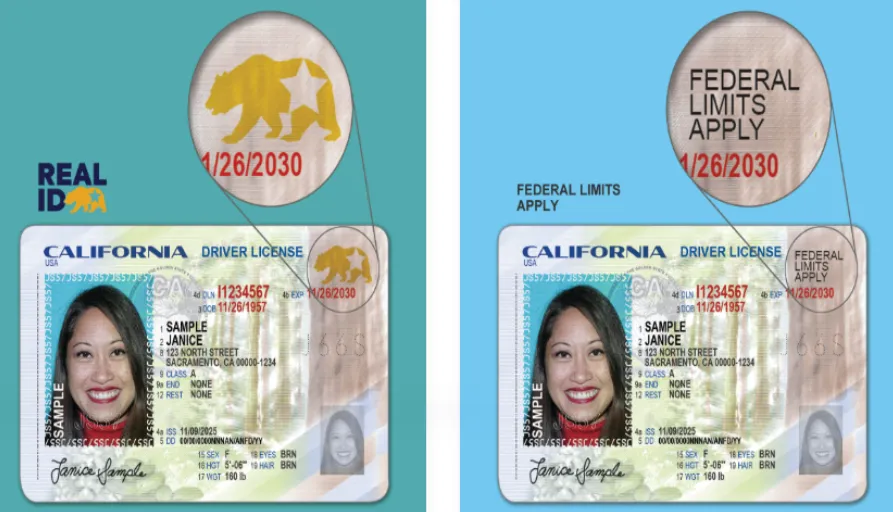
Since May 2025, a standard license is no longer enough for domestic flights. If you choose to upgrade to a REAL ID (marked with the gold bear and star), you must meet higher residency standards.
-
Dual Proof of Residency: Unlike the standard license which requires one document, the REAL ID requires two different documents showing your physical California address (e.g., a rental agreement AND a cell phone bill).
-
No PO Boxes: Both documents must display your physical street address.
-
Name Matching: Your name must be consistent across all documents. If your name has changed (marriage/divorce), you must bring legal proof of the name change.
-
Common Rejection Reasons: Most applicants fail this section due to name mismatches (e.g., "Mike" vs "Michael") or bringing documents older than 90 days. Ensure all documents are current.
California DMV Fees, Appointments, and Application Forms
Once you have gathered your documents, the next phase is the "Administrative Launch." You cannot simply walk in for a test without completing the prerequisites.
How to complete the DMV online application (DL 44) — Your First Step
The DMV "Service Advisor" tool is the best way to navigate this.
Before anything else, you must complete the DL 44 (Electronic Driver’s License and ID Card Application) online.
-
Create an Account: Visit the official DMV portal.
-
Accuracy is Key: Double-check your height, weight, and hair/eye color.
-
The Confirmation Code: Upon finishing, you will receive a code (e.g., "ABCD123"). This is the most important document. You will need it to "activate" your application when you arrive for your written test.
Making an Appointment for the "Knowledge Test"
While some DMV offices allow walk-ins, they are often placed at the end of the line. Making an appointment specifically for "Apply for an Original Driver’s License" is highly recommended.
-
Service Selection: When booking, choose the service that includes a knowledge test.
-
Confirmation: Save the QR code or appointment slip. This ensures you are seen at a specific time for document verification and your written exam.
-
Strategic Timing: Mid-week (Tues-Thurs) is best. Avoid the 1st and 30th of the month.
California DMV driver’s license fees (2025-2026)
In 2026, the application fee for an original Class C license is $45-$46.
-
Payment Timing: You pay this fee at the window after your documents are verified but before you are sent to the testing kiosk.
-
What the fee covers: Your payment is valid for 12 months. It allows for three attempts at the knowledge test and three attempts at the road test.
-
Retest Fees: If you fail the road test, there is a $7 retest fee for each subsequent attempt.
California DMV Written Test (Knowledge Test) and Learner’s Permit
Passing the written test is your first major hurdle. Before you sit down for the exam, use this checklist to ensure you are ready for the process and the permit requirements.
Written Test & Permit Readiness Checklist
-
[ ] Handbook Mastery: Have you read the 2026 Handbook at least twice?
-
[ ] Practice Score: Are you consistently scoring 95% or higher on diverse practice apps?
-
[ ] Confirmation Code: Do you have your DL 44 online application confirmation code?
-
[ ] Identity Docs: Do you have your originals (Passport/Green Card/I-20)?
-
[ ] Appointment: Is your appointment confirmed (or do you have a walk-in strategy)?
-
[ ] Vision: If you wear glasses/contacts, do you have them with you?
-
[ ] Payment: Do you have your $46 fee ready?
How to Study for the California DMV Written Test
California Driver Handbook (official)
This is your most reliable resource. For 2026, pay special attention to the "Laws and Rules of the Road" and "Safe Driving" sections. The handbook is updated annually to reflect new legislation (like bicycle safety distances and lane splitting rules).
Online practice tests and apps
Don't rely on just one app. Use multiple sources to ensure you aren't just memorizing specific question wording. Aim for a consistent 95% score on practice exams. Many apps now offer "Marathon Modes" which are excellent for 2026 preparation. [CA DMV Sample Driver’s License Knowledge Tests]
Language options for the written test
The California DMV offers the test in over 30 languages. If you choose a non-English version, you will still be required to identify common English road signs (Stop, Yield, etc.).
California DMV Written Test Process Explained
The Workflow at the DMV Office
-
Check-in: Provide your appointment QR code and your DL 44 confirmation code.
-
Verification & Fee: A clerk will check your identity documents, take your thumbprint, and collect the $46 fee.
-
Vision & Photo: You will pass a quick vision test and have your official license photo taken.
-
The Kiosk: You will be directed to a touchscreen terminal to take the test.
Online Knowledge Test (Remote Option)
As of 2026, many can take the test at home before visiting the DMV.
-
Proctoring: You must use a computer with a webcam.
-
Post-Test: If you pass online, you still must make an appointment to visit a DMV office to provide fingerprints, take a photo, and finalize your permit.
Number of questions, passing score, and retakes
-
Adults (18+): 36 questions. You can miss up to 6.
-
Minors (under 18): 46 questions. You can miss up to 8.
-
Retakes: You get 3 attempts per application fee.
What Happens After You Pass the Written Test
Scenario A: Adults (18 Years and Older)
If you are 18 or older, the process is streamlined once you pass the knowledge test:
-
Immediate Issuance: You will receive your paper Instruction Permit at the DMV window immediately after passing the test.
-
No Mandatory Wait: Unlike minors, there is no legal requirement to hold your permit for 6 months. You can schedule your Behind-the-Wheel road test as soon as you feel confident and an appointment is available.
-
Practice Requirements: While not legally mandated to log specific hours, it is highly recommended to practice with a licensed driver (25+) before attempting the road test.
Scenario B: Minors (Under 18 Years Old)
If you are under 18, you must follow a stricter "Provisional" path:
-
The 6-Month Holding Period: You must hold your instruction permit for at least 6 months before you are eligible to take the road test.
-
Driver Training Validation: Your permit is not valid for driving until you have had your first professional lesson and the instructor has signed the permit.
-
Practice Logs: You must complete 50 hours of supervised driving (with a licensed driver 25+), including 10 hours of night driving. A parent or guardian must sign your permit certifying this was completed. [supervised-driving-log-pdf] [parent-teen-driving-contract-pdf]
-
Driver Education Completion: You must ensure your behind-the-wheel training (6 hours with a professional school) is finished and documented.
General Learner’s Permit Restrictions (All Ages)
Regardless of age, the Instruction Permit carries these non-negotiable rules:
-
Supervision: You must be accompanied by a licensed driver who is at least 25 years old. They must be in a position to take control of the vehicle if necessary.
-
Zero Tolerance: You cannot have any measurable amount of alcohol or drugs in your system.
-
Mobile Devices: Using a handheld cell phone (including for GPS) is strictly prohibited while driving on a permit.
-
Validity: Your permit is valid for one year from the date you paid your application fee.
California DMV Road Test (Behind-the-Wheel Test) Explained
How to Prepare for the California DMV Road Test
[Schedule Your Behind-the-Wheel Drive Test]
Vehicle requirements for the road test
Your car must be in perfect working order.
-
Safety Equipment: Functional turn signals (front and back), brake lights, and hazard lights. The horn must be audible from 200 feet.
-
Visibility: The windshield must provide an unobstructed view. Cracks in the driver's line of sight are an immediate disqualification.
-
Safety Tech (2026 Rule): You cannot use backup cameras or automated parking sensors to assist you. If your car has these, the examiner will require you to look over your shoulder and use your mirrors traditionally. Tesla Autopilot or FSD must be fully disabled.
Choosing the best DMV test location
Some offices are notorious for heavy traffic or difficult intersections. San Luis Obispo or Lompoc are often cited as calmer locations compared to the high-stress environments of Santa Monica or San Francisco (Lombard St).
Using your own car vs a driving school car
If using your own car, you must be familiar with where the controls are (defroster, parking brake, lights). Driving school cars are popular because they are often newer, compact, and "DMV-standard."
Should you take professional driving lessons?
Even "good" drivers can fail for small technicalities (like not moving your head enough during mirror checks). One or two "mock test" sessions with a local driving instructor can be invaluable to learn the specific route quirks of your chosen DMV.
What to Expect on the California DMV Road Test Day
Required Documents Checklist for Test Day
Before you head to the DMV for your appointment, ensure you have these items ready:
-
[ ] Instruction/Learner's Permit (Original): The DMV will not accept photocopies.
-
[ ] Appointment Confirmation: Digital or printed confirmation of your road test time.
-
[ ] Proof of Vehicle Insurance: A printed copy of the current insurance card for the car you are using.
-
[ ] Vehicle Registration Card: A valid registration document for the vehicle.
-
[ ] Driving Practice Log: (Only for applicants under 18) Certification of the 50 hours of practice.
-
[ ] Accompanying Adult: A licensed driver at least 25 years old with their valid driver's license.
-
[ ] Operational Vehicle: A car that is mechanically sound with two sets of keys (recommended).
- [ ] Check-In: Arrive at least 15-30 minutes early. If you are late, your appointment will be canceled
Pre-drive vehicle safety check (The "Circle Walk")
Before moving, the examiner will stand outside and ask you to demonstrate:
-
Left/Right turn signals and Brake lights.
-
Emergency/Hazard lights.
-
Windshield wipers and Defroster.
-
Arm Signals: Left turn (arm straight out), Right turn (arm up), Stop/Slow (arm down).
Common road test routes and maneuvers
-
Intersections: You will be judged on your "scanning" (left, right, left again).
-
The "Curb Reverse": You will be asked to pull over to the curb and reverse in a straight line for about 3 car lengths. Rule: You must look over your right shoulder while backing up; relying solely on mirrors is a point deduction.
-
Bicycle Lanes: When turning right, you must enter the bike lane within 200 feet of the intersection (if dashed). Failing to do so or "hooking" the turn across the lane is a major error.
Communicating with the DMV examiner
The examiner will use standard commands like "At the next intersection, turn left." They are not allowed to trick you into doing something illegal. Keep your answers brief ("Yes, sir/ma'am") and stay focused on the road.
California DMV Road Test Scoring and Results
How the road test is scored
The score sheet has about 30+ items.
-
Minor Errors: 1 to 15 are allowed.
-
Points: Common deductions include "Poor mirror use," "Steering control" (one-handed driving), and "Inadequate signaling."
Automatic fail actions (Critical Driving Errors)
One of these and the test is over:
-
Intervention: The examiner has to touch the steering wheel or use the dual-brake to avoid a collision.
-
Striking an Object: This includes the curb (even a "nudge" while parking).
-
Traffic Violations: Running a red light or stop sign, or speeding in a school zone.
-
Dangerous Maneuver: Forcing another driver to swerve or brake hard because of your action.
How and when you receive your results
The examiner will discuss your performance while still in the car. They will hand you the score sheet. If you pass, you go inside to get your temporary license.
What Happens After You Pass the California DMV Road Test
Congratulations! Passing the road test is a major milestone. However, the work doesn't stop once you step out of the car. There are immediate administrative steps to follow and specific protocols for receiving your official credentials. The following sections detail what to expect in the hours, days, and weeks following your successful exam.
Temporary paper driver’s license
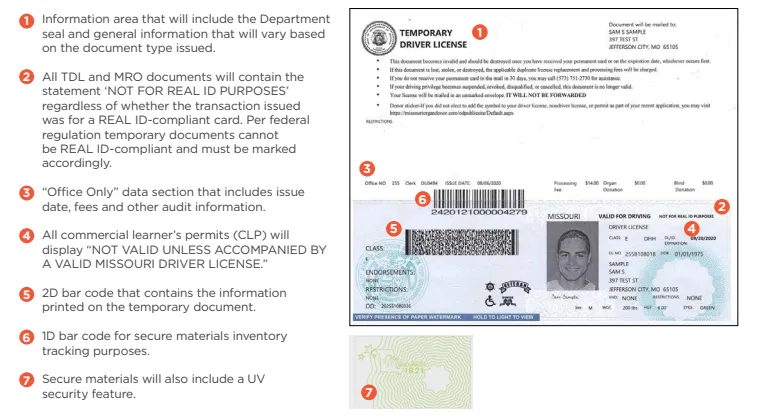
Once the examiner congratulates you, they will sign your permit or issue a paper document known as the Interim Driver License.
-
For Adults (18+): The examiner will typically sign your instruction permit and direct you to the window where a clerk will issue your Interim Driver License.
-
For Minors (Under 18): After passing, you must go back inside with your sponsoring driver. The clerk will verify your 50-hour practice log (if not done previously) and ensure all provisional requirements are met. You will then be issued a Provisional Interim License, which officially allows you to drive alone, subject to the 12-month restrictions (no passengers under 20 and no driving between 11 PM – 5 AM).
-
Common Rules for Both:
-
Immediate Use: This paper is your legal license. You can drive alone starting the second you leave the DMV.
-
Limitations: It is not a valid photo ID for domestic air travel or entering age-restricted venues. You must carry another form of photo ID (like your passport) alongside it.
-
Duration: It is typically valid for 60 to 90 days. If your physical card hasn't arrived by day 60, call the DMV.
-
Activating your California Digital Driver’s License (mDL)
In 2026, California has fully launched the CA DMV Wallet app.
-
Setup: Once you pass, you can log into the app. Your digital license usually becomes available within 24-48 hours, even before the physical card arrives.
-
Acceptance: While it works for law enforcement in CA and at select TSA checkpoints (like LAX and SFO), you are still legally required to carry the physical card once it arrives.
When you receive your physical license card
The "real" plastic card is manufactured in a secure facility and mailed to the address on your application.
-
Timeline: Expect it in 2 to 4 weeks.
-
Tracking: You can check the "Driver's License Status" on the DMV portal. If it shows "Issued," it means it is in the mail.
-
Check the Details: As soon as it arrives, verify your name spelling, birthdate, and REAL ID star. If there is an error made by the DMV, they will usually replace it for free if reported within 30 days.
Choosing to be an Organ Donor and Voter Registration
During your application, you had the chance to opt into:
-
Organ Donor Program: If you chose "Yes," a small pink dot will appear on your license. This is a legally binding commitment to donate organs upon death.
-
Voter Registration: Under the "Motor Voter" law, your information is sent to the Secretary of State. You will receive a separate confirmation from your county elections office within a few weeks.
California driver’s license validity period
-
Standard Term: 5 years.
-
Expiration: It almost always expires on your birthday. Mark your calendar! The DMV sends a renewal notice, but you are legally responsible for renewing it even if the notice is lost in the mail.
California Driver’s License Tips for New Immigrants and International Students
Obtaining a driver's license as a non-U.S. citizen involves navigating additional layers of federal and state regulations. This section provides tailored advice for students and visa holders to help bridge the gap between their immigration status and California's driving requirements.
Immigration Status–Specific DMV Considerations
Navigating the DMV as a non-U.S. citizen requires extra attention to "Legal Presence" documents. The DMV verification system (SAVE) must confirm your status before a license is issued.
International students (F-1 / J-1)
-
The "10-Day Rule": Do not rush to the DMV the day you land. Wait at least 10 days after your entry into the U.S. to allow the DHS systems to update your record.
-
SEVIS Status: Ensure your DSO (Designated School Official) has marked your SEVIS record as "Active." The DMV cannot verify your I-20 if it is still in "Initial" status.
-
Document Checklist: Valid Passport, F-1 Visa, most recent I-94 (print from the CBP website), and your I-20.
Work visa holders (H-1B, L-1, O-1, H-4)
-
The I-797 Trap: If you have an extension of stay pending, bring your original I-797 Receipt Notice. However, be aware that "pending" cases often trigger secondary verification, which can take 3-6 weeks.
-
Spouses (H-4/L-2): Even if you don't have an SSN, you are eligible for a license. You will need to sign a "Social Security Number Ineligibility" affidavit at the DMV counter.
Permanent residents (Green Card holders)
-
Expired Green Cards: If your physical card is expired but you have a valid I-90 receipt or an I-551 stamp in your passport, these are acceptable proofs of legal presence.
License expiration linked to immigration status
In California, your license is "Limited Term" (LT) if your legal presence is temporary.
-
Expiration Date: Your license will expire on the same day your legal stay ends (e.g., the "Program End Date" on your I-20).
-
Grace Periods: The DMV does not usually include the 60-day grace period for F-1 students in the license validity. You must renew your license as soon as you receive an OPT EAD card or a new I-20.
Using a Foreign Driver’s License in California
Many immigrants arrive with years of driving experience. While California is welcoming, the rules for transitioning are strict.
Can you drive with a foreign license?
-
Visitors/Tourists: Yes, you can drive with a valid license from your home country as long as it is valid. An International Driving Permit (IDP) is recommended if your license is not in English, but it is not a standalone document.
-
New Residents: Once you establish residency (rent an apartment, start a job, enroll in school), California law requires you to get a CA license within 10 days.
Do you need to retake written or road tests?
-
No Reciprocity: Unlike some states, California does not swap foreign licenses (except for certain diplomatic cases). Everyone from a foreign country must pass both the Written Knowledge Test and the Behind-the-Wheel Road Test.
-
Chinese/Foreign License Value: Bringing your original foreign license is still helpful! It can sometimes be used to waive certain "new driver" insurance surcharges, and the DMV clerk will need to see it to verify your driving history.
Transition period rules and misconceptions
-
"I have an IDP, so I'm fine": This is a common myth. If you are a resident, the IDP does not exempt you from getting a CA license.
-
Car Insurance: Most U.S. insurance companies will only cover you on a foreign license for a very short period (30-90 days). To get a competitive "resident" rate, you need a CA Driver's License number.
Practical Tips for Newcomers
-
Proving Residency without Utility Bills: If you are subletting or living with roommates and don't have utility bills, the DMV accepts:
-
Bank statements (even from digital banks like Revolut or Wise, if the address is CA).
-
Cell phone bills.
-
Official school transcripts or enrollment letters.
-
USPS Change of Address confirmation.
-
-
The "AB 60" Option: If you are unable to provide proof of legal presence, you may be eligible for an AB 60 License. This allows you to drive legally in California regardless of immigration status, though it is marked "Federal Limits Apply" and cannot be used for REAL ID purposes.
DMV Tips, Common Mistakes, and Recovery Strategies
Common California DMV Written Test Mistakes
The written test is not just a test of memory, but a test of attention to detail.
-
Overthinking: The questions are literal. Don't look for "tricks." DMV questions are usually very straightforward; if you feel like the question is a "trap," you're likely overthinking it.
-
Ignoring Signs: Study the shapes and colors of signs, not just the words. Many questions provide only a blank shape (like an octagon or inverted triangle) and ask you to identify its meaning.
-
Failing to look for 'Except': Read the full question to see if it asks for what is not allowed. About 20% of errors are caused by missing the words "Except" or "Not."
-
Numerical Confusion: Don't mix up speed limits for different situations (e.g., School Zone vs. Residential) or following distances (3-second rule).
-
Best Answer Logic: Sometimes all three options look correct, but you must choose the one that is "safest" or "legally prioritized." For example, when a green light turns on, you should confirm the intersection is clear before proceeding, rather than just accelerating immediately.
Top Reasons People Fail the California DMV Road Test
Road test failures often result from a list of "safety awareness" rather than poor driving skills.
The most common automatic fail actions
-
Stop Signs (California Roll): Rolling stops (not coming to a 100% complete dead stop). You must feel the vehicle "settle" and mentally count to 3.
-
Blind Spots (The Exaggerated Look): Not physically turning your head to look over your shoulder during lane changes. Just looking in the mirrors is not enough; the examiner needs to see a clear head movement.
-
Speed: Driving too slow (obstructing traffic) or slightly over the limit. In a School Zone, you must strictly follow the 25 mph limit even if no students are present.
-
Lane Possession: Failing to enter the correct lane after a turn (left turn into the leftmost lane, right turn into the rightmost lane).
-
Bicycle Lane Violation: Not merging into the dashed bicycle lane before making a right turn.
Soft Errors (Points Deduction)
-
Braking Too Early/Late: Unsmooth braking or braking too early, causing a traffic obstruction.
-
One-Handed Steering: Both hands must be on the wheel unless shifting gears or operating controls.
-
Inadequate Scanning: Failing to look left and right when passing through an intersection.
What to Do If You Fail a California DMV Test
Failing is not the end of the world; it is part of the learning process to get your official license.
How to retake the written test
-
You can usually retake the test the same day (if time permits) or come back another day.
-
Review your mistakes immediately; the feedback sheet will indicate which knowledge areas you missed.
How to reschedule the road test
-
Cooling-off Period: You must wait at least 14 days (two weeks) before retaking the test. This time is legally required for targeted practice.
-
Mindset Adjustment: Don't let one failure discourage you. Many experienced drivers fail because they underestimate the specific rules.
Waiting periods and additional fees
-
The retest fee for each road test attempt is $7.
-
If you fail any part of the test (Written or Road) three times, your $45 application fee is forfeited, and you must restart the entire process.
Switching DMV test locations (The Strategy)
-
Rural vs. Urban: If you feel overwhelmed at a high-traffic urban office (like Santa Monica or San Francisco), consider a quieter suburban office (like Hemet or Simi Valley).
-
Route Research: Search for "Test Route" videos for specific offices on social media or YouTube to perform mock runs in the area beforehand.
California Driver’s License Renewal and Address Changes
When your license expires
California licenses usually expire on your birthday and are valid for 5 years.
-
Grace Period: California has no grace period. Once expired, you cannot drive legally.
-
Late Fees: There is usually no extra fee for late renewal, but driving with an expired license can lead to heavy fines or vehicle impoundment if stopped by police.
How to renew a California driver’s license
Depending on your driving record and age, you have several renewal options:
1. Online Renewal (Most Recommended)
You can usually renew online if:
-
Your license is not suspended or restricted.
-
Your address has not changed (or was changed at least 10 days prior).
-
Your do not need to take a written or road test.
-
Your are under 70 years of age.
-
Procedure: Visit the DMV website, enter your DL number and SSN, pay the renewal fee ($45 in 2026), and your new card will arrive in 2-4 weeks.
2. In-Person Renewal
You must visit a DMV office if:
-
Age 70+: California law requires drivers 70 and older to renew in person and take a vision test.
-
Photo Update: If your photo is out of date (usually every 10-15 years).
-
REAL ID Transition: If you want to upgrade from a standard license to a REAL ID.
3. Renewal by Mail
If you receive a "Renew by Mail" notice from the DMV, you can fill out the form and mail it back with a check.
How to update your address with the DMV
By law, you must notify the DMV of an address change within 10 days.
1. Online Change of Address (COA)
This is the fastest method. Submit the request via the DMV website to update your driving record and vehicle registration automatically.
-
Note: The DMV will not automatically mail a new card. If you want a card showing the new address, you must pay roughly $35 for a "Duplicate License."
2. DMV Kiosk (Self-Service)
Many supermarkets (like Safeway or Albertsons) have DMV kiosks. You can update your address and print vehicle registration tags immediately, though the physical DL card must still be mailed.
3. Physical Card vs. Record Only
A common mistake for beginners is thinking the process is over after updating online.
-
Record Only: Only the database is updated. Your card shows the old address. It is legal as long as the record matches when checked by police.
-
New Card: If you need the license as proof of address (e.g., for opening a bank account), it is recommended to pay for a new physical card.
Appendix – Official California DMV Resources and Links
To ensure you receive the most up-to-date and accurate information, here are key links to the official California DMV website:
California DMV Official Website: https://www.dmv.ca.gov/
California Driver Handbook: https://www.dmv.ca.gov/portal/driver-handbooks/ (The one and only official study material)
DMV Office Locations and Appointment Tools:
Office location search: https://www.dmv.ca.gov/portal/locations/
Driving test appointment link: https://www.dmv.ca.gov/portal/appointments/select-appointment-type/ (A driving test appointment is required; please schedule in advance.)
Real ID Required Documents Checklist: https://www.dmv.ca.gov/portal/driver-licenses-identification-cards/real-id/real-id-checklist/
Safe driving! Remember, the DMV is there to ensure everyone on the road is prepared. With this guide, you’re already halfway there.