Many travelers believe that crossing the United States requires a massive bankroll. While inflation has hit certain sectors, 2026 offers more "sharing economy" tools and digital resources than ever before. Whether you are earning a modest monthly salary or a student on a break, crossing the 3,000 miles from New York to California is entirely possible for under $70 a day.
This guide will break down the logistics of the "American Dream" on a "Backpacker's Reality."
I. Pre-Trip Planning: Start Smart, Spend Less
This is arguably the most critical phase of your journey. In 2026, the difference between a $2,000 cross-country epic and a $5,000 budget disaster lies entirely in your preparation. To keep your daily spend under $65, you need to front-load your logic before you ever hit the road.
Here is how to engineer your trip for maximum savings:
1. Visa & Entry Preparation: The New Costs
In 2026, entry requirements have become more digitized and slightly more expensive.
-
ESTA (Visa Waiver Program): If you are from a VWP country, the ESTA fee is now $40.27. Apply at least 72 hours before departure via the official CBP website. It’s valid for two years, so it's a solid investment for multiple entries.
-
Standard B1/B2 Visas: For those needing a full visa, the application fee remains roughly $185. Factor this into your "Pre-Trip" costs separate from the $2,000 "On-the-Road" budget.
-
Proof of Funds: US Customs may ask for proof of "sufficient funds." While you’re on a budget, having a bank statement showing at least $3,000–$4,000 (even if you don't intend to spend it all) will make your entry much smoother.
2. The "Directional" Strategy: West vs. East
The direction of your travel dictates your major costs.
-
Go West to East: In 2026, car rental companies and campervan brands (like Jucy or Escape) often offer $1-a-day relocation deals for vehicles that need to be moved from the West Coast (LA/SF) back to the East (NYC/Florida) following the spring migration.
-
The Southern Arc: Sticking to the I-10 or I-40 routes through the South (AZ, NM, TX) is 15-20% cheaper for fuel and food than the "Northern Route" through the expensive Great Lakes region.
3. Timing the 2026 Market
-
The Sweet Spot: Aim for September to October. Gas prices in 2026 are forecasted to dip to a national average of $2.83/gallon by December, but the October window offers the best balance of low fuel costs and perfect hiking weather.
-
Avoid "The Surge": Stay off the road during the July 4th week and Memorial Day weekend. National Park crowds and "surge pricing" on apps will eat 10% of your budget in a single weekend.
4. Digital Essentials & Passes: The 2026 Toolkit
-
America the Beautiful Pass ($250 for Non-Residents): Crucial Update: As of January 1, 2026, the price for non-US residents has increased to $250. While steep, it covers your entire vehicle for every National Park. Given that individual park "Non-Resident Fees" can now reach $100 per person, this pass pays for itself if you visit just three major parks.
-
GasBuddy & iOverlander: These remain the "Big Two" for finding the cheapest fuel and free legal "stealth" camping spots.
-
TooGoodToGo: Use this in cities like Denver, Austin, and Nashville to score $5 "Surprise Bags" of restaurant-quality food at the end of the day.
5. The "Gear Minimalist" Rule
Every pound of weight in your bag or car costs you in fuel or convenience.
-
The "Kitchen in a Bag": Pack a small camping stove and a filtered water bottle (like a Grayl). Avoiding $4 bottled waters and $10 fast-food breakfasts will save you approximately $450 over 30 days.
-
Layering over Luggage: US weather in 2026 is increasingly volatile. Pack high-performance layers (Merino wool) rather than heavy jackets to save space and avoid "oversized bag" fees on domestic low-cost carriers like Breeze or Avelo.
6. Travel Insurance: The Safety Net
Do not skimp here. US healthcare costs in 2026 are astronomical.
-
Budget Pick: Look for Allianz "OneTrip Emergency Medical" or World Nomads. Expect to pay around $80–$120 for a month of coverage.
-
Tip: Ensure your policy includes "Medical Evacuation" and "Rental Car Damage Protection," as the latter can save you $15–$30 per day in "optional" insurance at the rental counter.
7. Budget Allocation (The 30-Day Breakdown)
To stay under $2,000, you are looking at a $66/day limit.
| Category | Monthly Total | Daily Avg | Strategy |
| Transport | $800 | $26.60 | Fuel (split with a buddy) or Greyhound/Amtrak sales. |
| Food/Drink | $600 | $20.00 | Grocery stores + "TooGoodToGo" app bags. |
| Accommodation | $400 | $13.30 | 20 nights free camping/couchsurfing; 10 nights hostel. |
| Parks/Fun | $200 | $6.60 | Amortized cost of the National Park Pass. |
The 2026 Reality Check: In 2026, the "Sharing Economy" is your best friend. Don't look for hotels; look for "Driveway Surfing" communities or public land (BLM) camping. If you can master the art of sleeping for free, the $2,000 budget is not just possible—it’s comfortable.
II. Transportation: Getting Around Without a Gold Mine
In 2026, the cost of gas and car rentals has remained a major hurdle for budget travelers. However, the American landscape is also more connected than ever. To cross 3,000 miles without breaking your $2,000 bank, you need to choose your "chariot" wisely.
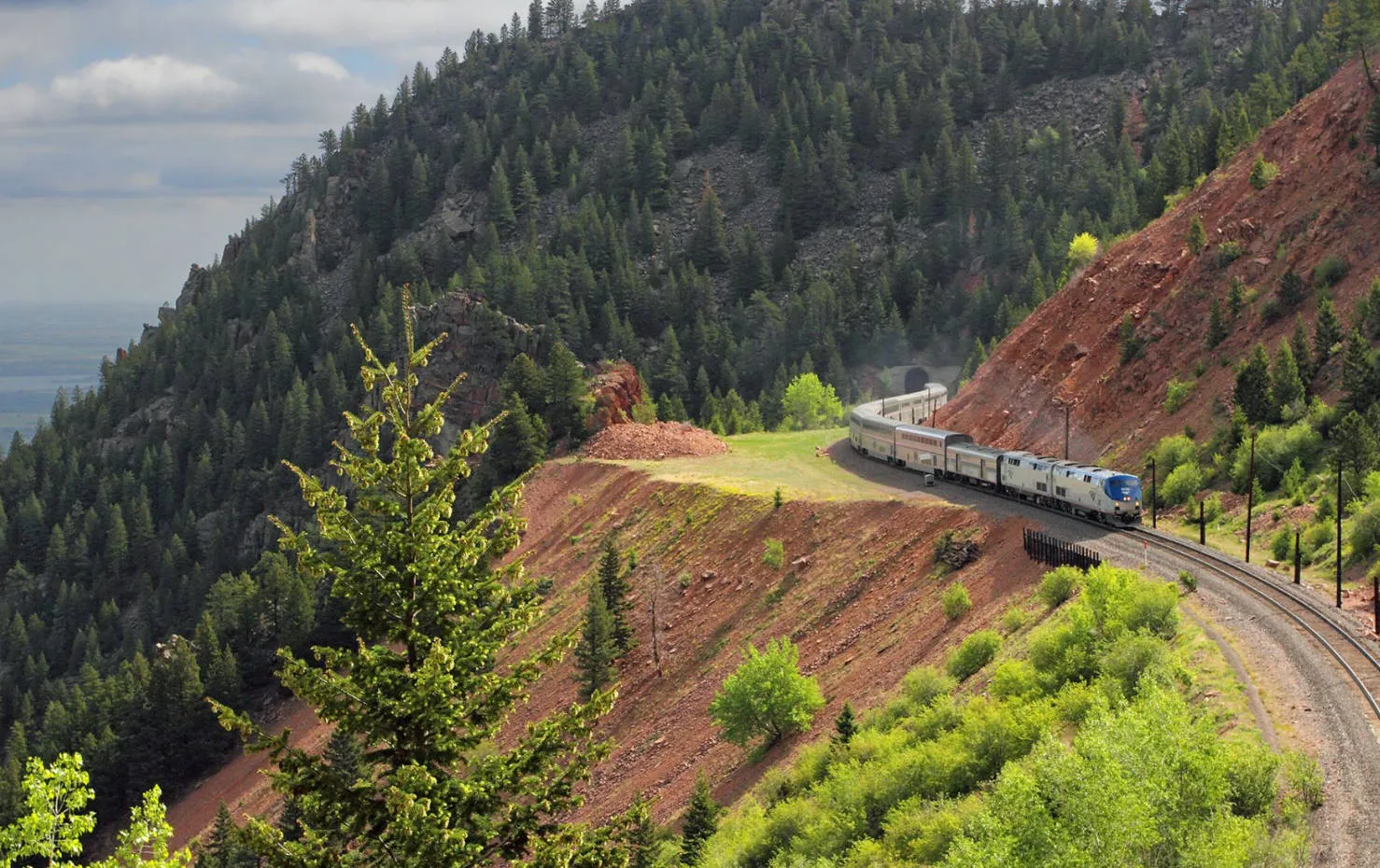
1. The Amtrak "Life Hack": The USA Rail Pass
If you want to see the Rockies and the Sierras without touching a steering wheel, this is your best bet.
-
The Deal: In 2026, the Amtrak USA Rail Pass typically retails for $499, but keep an eye out for the "Adventure Awaits" sales (often in January or June) where it drops to $250.
-
The Rules: It gives you 10 segments of travel over 30 days. A "segment" is any time you board and then leave a train.
-
Pro Tip: Use your segments for long, overnight hauls (e.g., Chicago to Emeryville on the California Zephyr). Not only do you cover massive ground, but you also save on a night’s accommodation by sleeping in Amtrak's wide, reclining coach seats.
2. The Bus: Greyhound, FlixBus, and Megabus
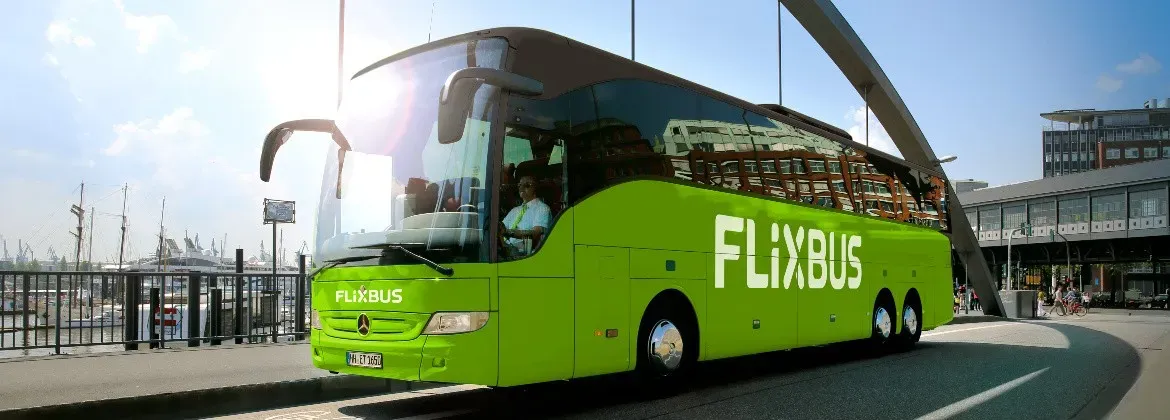
The bus remains the undisputed champion of low-cost travel, with tickets occasionally starting as low as $10–$20 for shorter city-to-city hops.
-
Greyhound & FlixBus: These two have merged their booking platforms, making it easier to find routes. A cross-country ticket (NYC to LA) generally hovers around $250.
-
The Downside: It’s grueling. Limit bus travel to segments under 8 hours to avoid "traveler burnout."
-
Safety Tip: In 2026, always book the "Reserved Seating" option (usually $5–$10 extra) to ensure you aren't left standing or separated from your gear.
3. Road Tripping: Rental Relocations & Turo
If you have your heart set on a road trip, avoid traditional airport rentals.
-
Relocation Deals: Check sites like Hertz or Transfercar. Rental companies often need vehicles moved from one city to another and will rent them to you for $1 a day. You usually have a set number of days and a mileage limit, but it’s the ultimate budget win.
-
Turo (The Airbnb of Cars): For local exploration, Turo is often 30% cheaper than Hertz or Enterprise. Look for "Economy" listings—older, fuel-efficient Toyotas or Hondas that owners are happy to rent for $35/day.
4. Domestic Flights: The Southwest Advantage
Sometimes, a 40-hour bus ride isn't worth the $40 savings.
-
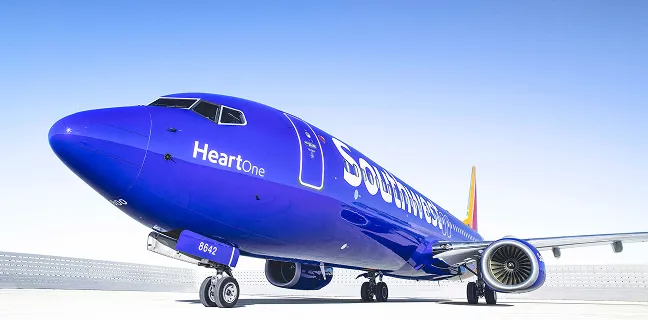
Baggage Hack: In a world of rising fees, Southwest Airlines remains the backpacker's hero in 2026, still offering two free checked bags.
-
The "Spirit" Trap: Budget carriers like Spirit or Frontier might show a $29 ticket, but by the time you add a backpack fee (often $50+ in 2026), it’s more expensive than a full-service carrier. Always check the "all-in" price.
5. Fuel Management: Beating the 2026 Pump
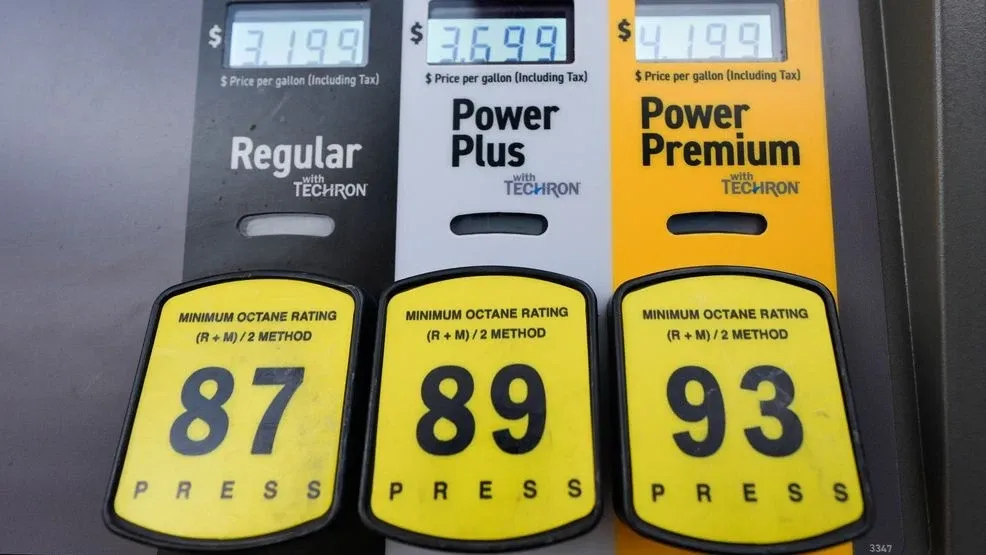
Gas prices in 2026 average around $3.11/gallon, but this varies wildly by state.
-
The "Gas Tax" Map:
-
Expensive: California ($4.60+), Washington, and Oregon.
- Cheap: Oklahoma, Mississippi, and Texas ($2.60–$2.70).
-
-
Strategy: Never fill up right at a National Park entrance or in the middle of a major city. Use the GasBuddy app to find "Price Islands"—small towns just off the highway where gas is significantly cheaper.
6. Ridesharing: Long Distance & Local
-
Uber/Lyft: Use these sparingly. In 2026, "Wait & Save" options are your friend, but for long distances, they will kill your budget.
-
Carpooling (Facebook Groups/Reddit): Search for "USA Ride Share" groups. Many students and travelers post their routes and look for people to split gas. This is a great way to meet locals while keeping transport costs under $15/day.
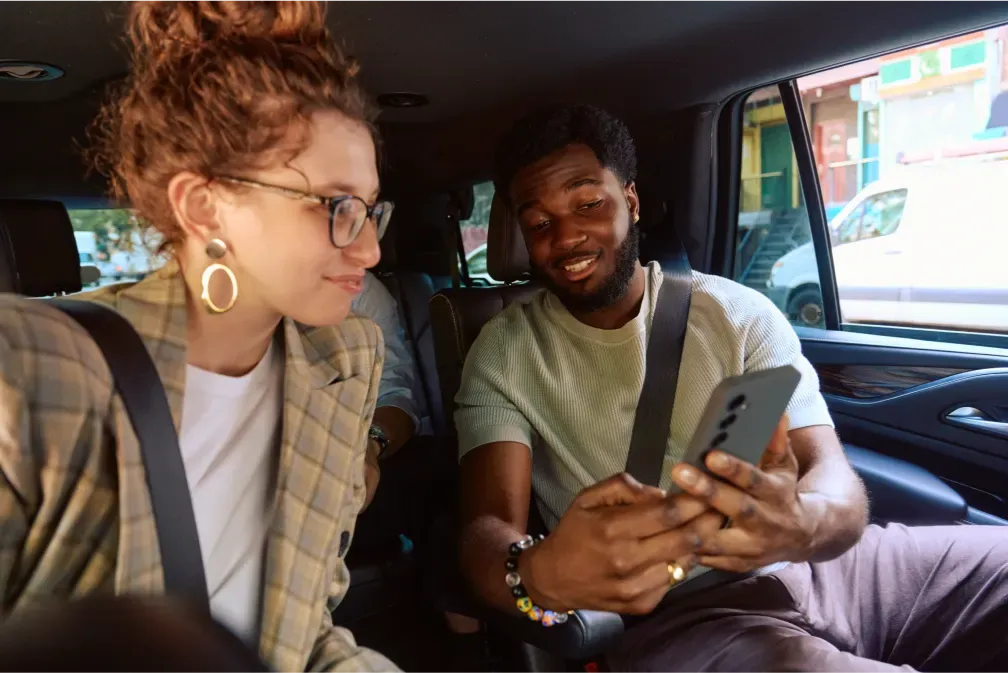
7. Intra-city Commuting: Shared Bicycles & Scooters
Once you arrive in a city, don't touch an Uber unless it's an emergency.
-
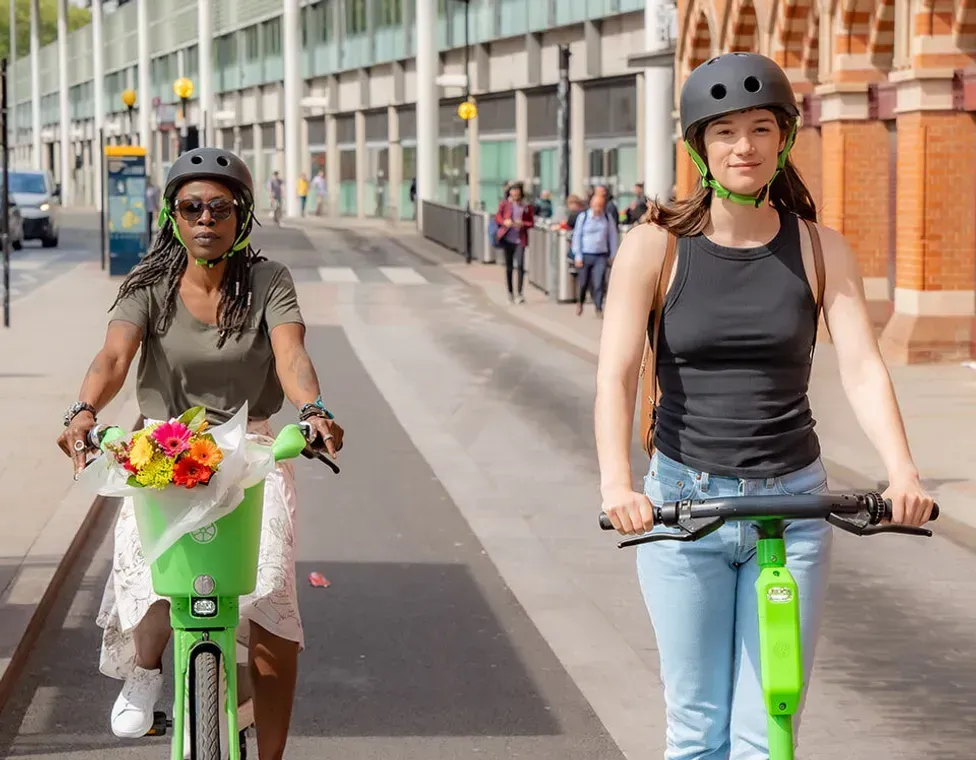
Shared Mobility: In 2026, most US cities (Austin, Denver, DC) have integrated bike-share programs (like Citi Bike, Bird or Lime).
-
The Budget Move: Buy a 24-hour or 3-day "Explorer Pass" for the local bike-share. It usually costs around $12–$15 and gives you unlimited 30-minute rides. It’s faster than the bus in heavy traffic and keeps your daily "Fun/Misc" budget intact.
Transport Spend Comparison (Projected 2026)
| Method | Cost Range | Best For... |
| Amtrak Rail Pass | $499 | Epic scenery & saving on hotels. |
| FlixBus/Greyhound | $10–$80 | Short, city-to-city hops. |
| Relocation Deals | $1/day + fuel | Crossing 3–4 states for almost nothing. |
| Turo | $40/day | Day trips to National Parks from a hub city. |
The "Backpacker’s Golden Rule": Slow travel is cheap travel. The faster you try to move across the country, the more you will pay. If you have 30 days, use the train. If you have 14 days, you'll likely have to fly a segment or two using budget carriers like Southwest (who still offer two free checked bags in 2026!).
III. Accommodation: Where to Sleep for Free (or Cheap)
If transportation is the engine of your trip, accommodation is the fuel. In 2026, the average US hotel room has climbed to $180/night—a price that would kill your $2,000 budget in just 11 days. To survive a month, you need to master the "Sleep Spectrum," shifting between free wilderness spots and strategic urban beds.
1. The "Public Land" Secret: BLM & National Forests
This is the holy grail for budget travelers. About 40% of all land in the West is managed by the Bureau of Land Management (BLM) or the US Forest Service.
-
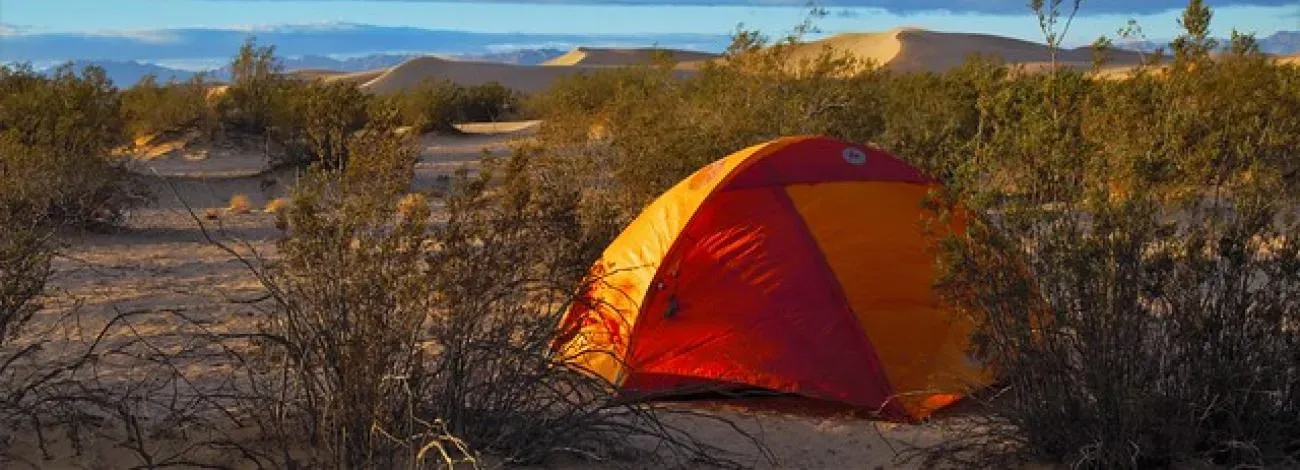
Dispersed Camping: In 2026, you can still camp for free on most BLM land for up to 14 days. Use the iOverlander app to find these spots—they won't have toilets or water, but the views are million-dollar.
-
The "2026 Rule": Many popular areas near National Parks (like Moab or Joshua Tree) now require a "Free Permit" obtained via Rec.gov to manage crowds. Always check the app before you pull over.
2. Urban Survival: The "Big Box" Bedroom
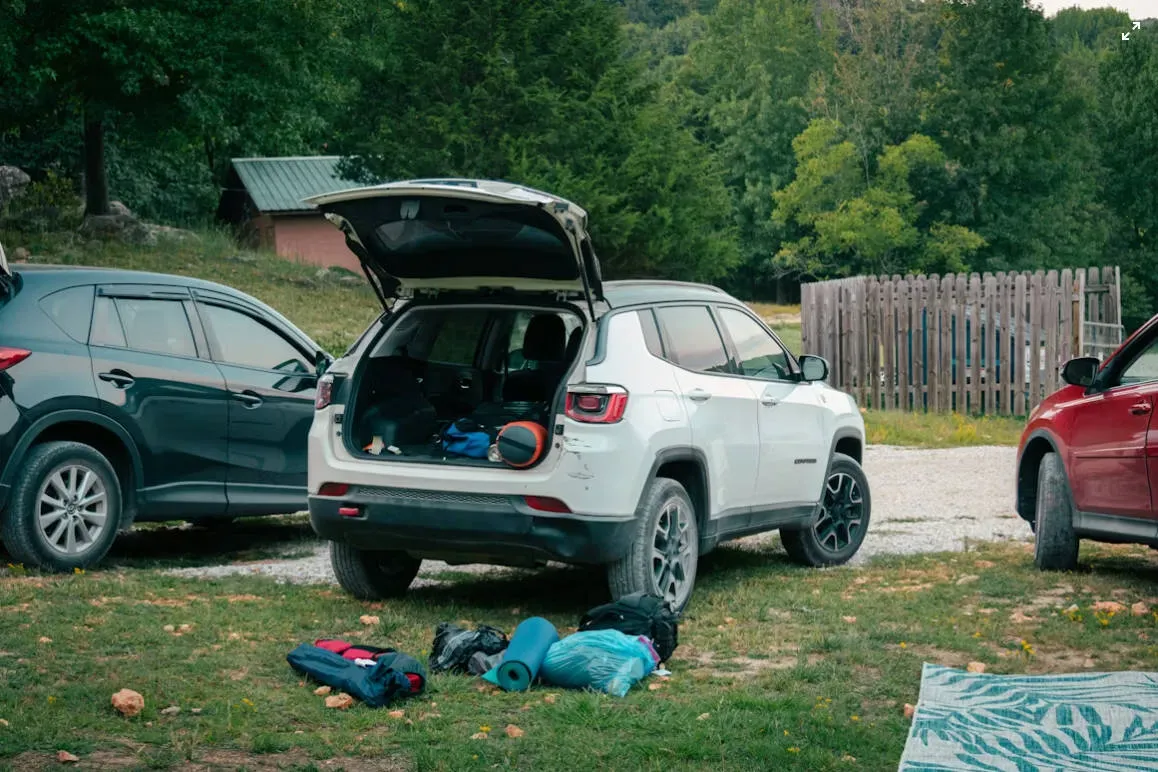
If you are between cities and need a safe place to park and sleep in your vehicle:
-
Cracker Barrel: In 2026, this is the most reliable option. Most locations explicitly allow overnight parking for one night. Bonus: You can get a massive $12 breakfast in the morning.
-
Walmart & Cabela’s: While many Walmarts have banned overnighting due to local laws, Cabela’s and Bass Pro Shops remain very backpacker-friendly. Always go inside and ask the manager for permission—it's the "Golden Rule" of the road.
-
Casino Camping: In states like Nevada and Mississippi, many casinos allow free RV/van parking in hopes you’ll spend $10 at the slots.
3. Hospitality Communities: Beyond Couchsurfing
The original Couchsurfing now has a monthly fee, but the "Free Spirit" of 2026 lives on elsewhere:
-
BeWelcome & Couchers.org: These are non-profit, 100% free alternatives. Hosts are often former backpackers who just want to hear your travel stories.
-
Trustroots: Perfect if you have a specific subculture (hitchhikers, cyclists, musicians). It’s built on trust and is an excellent way to find a free couch in expensive cities like NYC or SF.
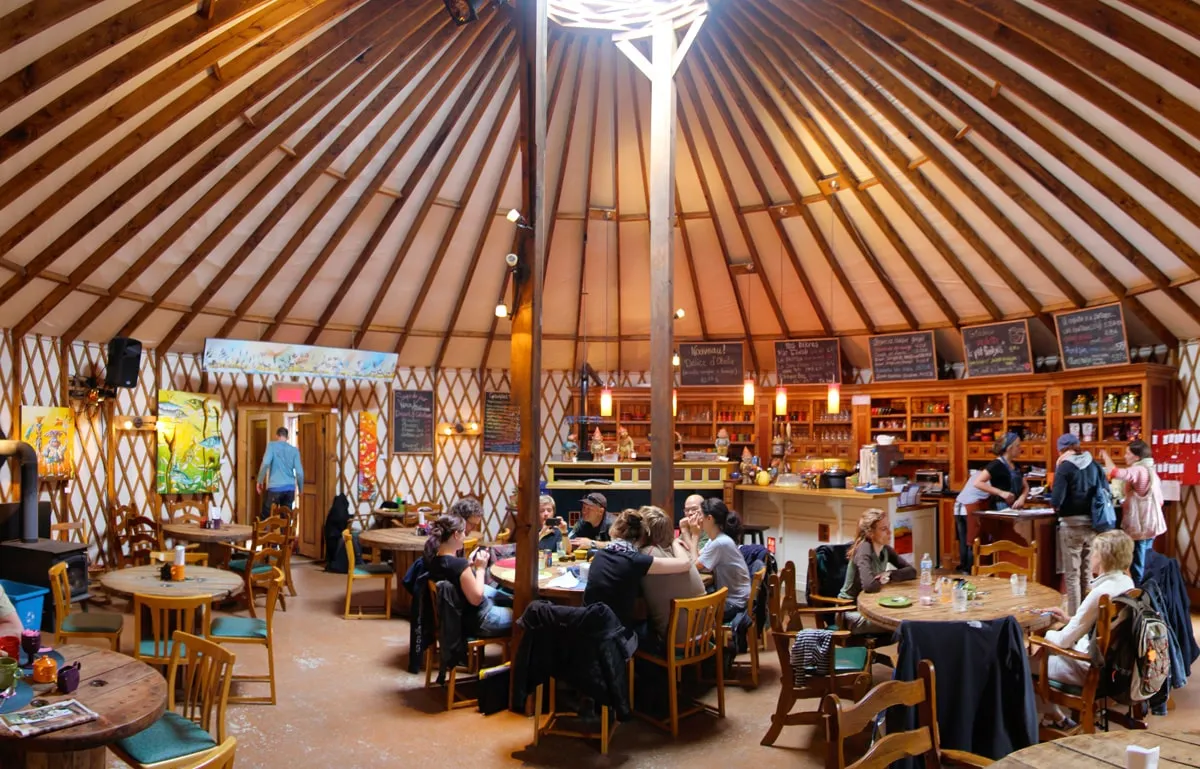
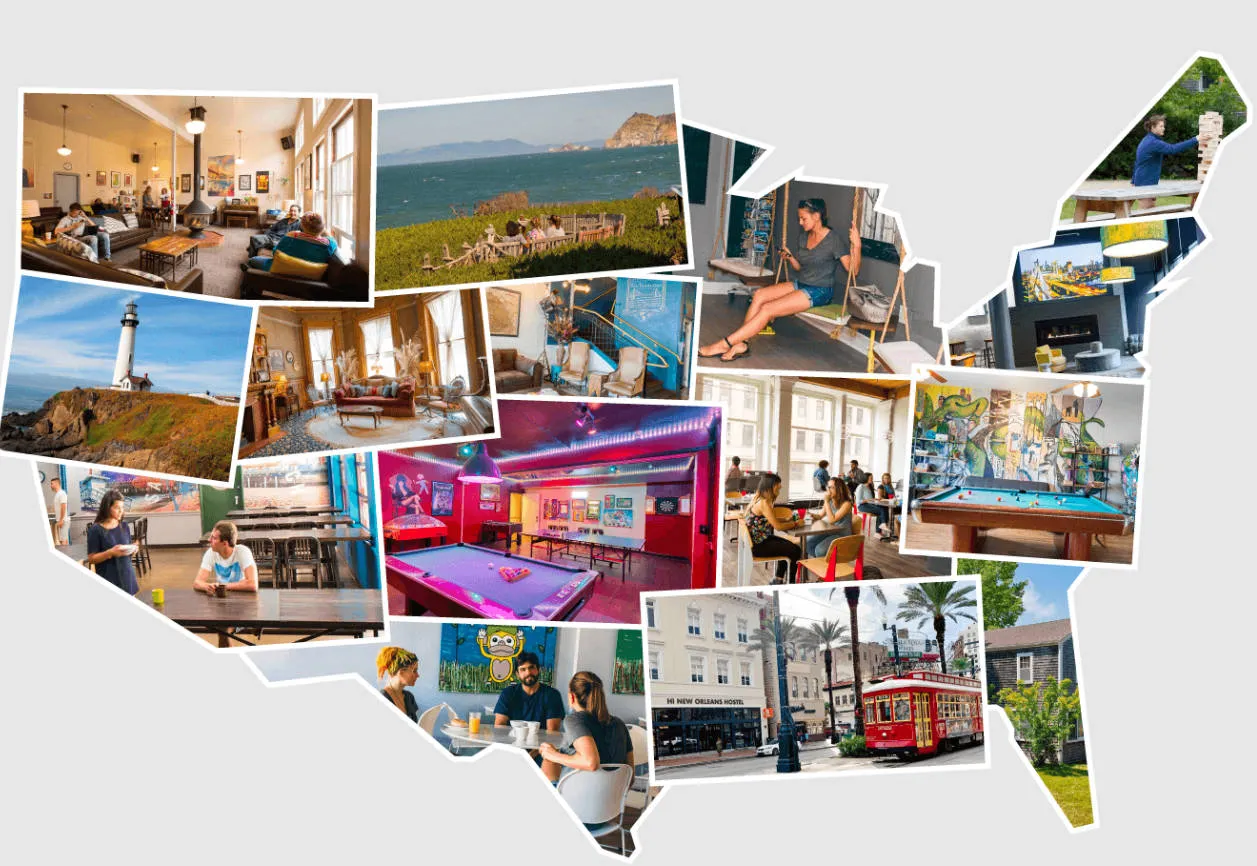
4. Strategic Hostels: HI USA
When you absolutely need a shower and a real bed, stick to the HI USA (Hostelling International) network.
-
Why HI? They are non-profits and generally maintain higher safety and cleanliness standards than "party hostels."
-
Summer 2026 Tip: Many universities (like the University of Utah or NYU) rent out dorm rooms to travelers during the summer months (June–August). Prices are often $40–$60/night, which is a steal for a private room in a major city.
5. The "Relocation" & "House Sitting" Hacks
-
TrustedHousesitters: If you can commit to staying in one city for 5–7 days, this is a game-changer. You watch someone’s cat; you get a luxury house for free. Note: There is an annual membership fee (~$129), but it pays for itself in two nights.
-
Boondockers Welcome: For about $79/year, you get access to thousands of private property owners who let you park on their land for free.

Accommodation Cost-Benefit (Monthly Strategy)
| Type | Frequency | Cost | Comfort |
| BLM/National Forest | 12 nights | $0 | Low (No showers) |
| Cracker Barrel/Walmart | 8 nights | $0 | Medium (Safe/Light) |
| Hostels/Dorms | 6 nights | $270 | High (Social/WiFi) |
| BeWelcome/Friends | 4 nights | $0 | High (Local Intel) |
| Total Monthly Spend | $270 | Savings: $1,730+ |
The 2026 Pro Tip: Never arrive at a "free" spot after dark. In 2026, security is tighter and spots fill up faster. Aim to be parked and "settled" by 7:00 PM. If you’re in a city, look for Planet Fitness—a $15/month "Black Card" membership gives you access to clean showers and high-speed WiFi across the entire country.
IV. Food: Eat Well Without Going Broke
In 2026, food inflation has turned the classic American "value meal" into a luxury. A standard fast-food combo now averages $12–$18, and even a morning latte can set you back $7. To stay under your $2,000 total budget, you must treat food as a logistical mission, not an impulse.
Here is how to eat like a king on a $20-a-day backpacker budget.
1. The "Big Three" Budget Grocers
Forget Whole Foods or even standard regional supermarkets. In 2026, these are your shrines of savings:
-
ALDI: The undisputed champion. Private-label staples (bread, peanut butter, pasta) are often 30–40% cheaper than anywhere else.
-
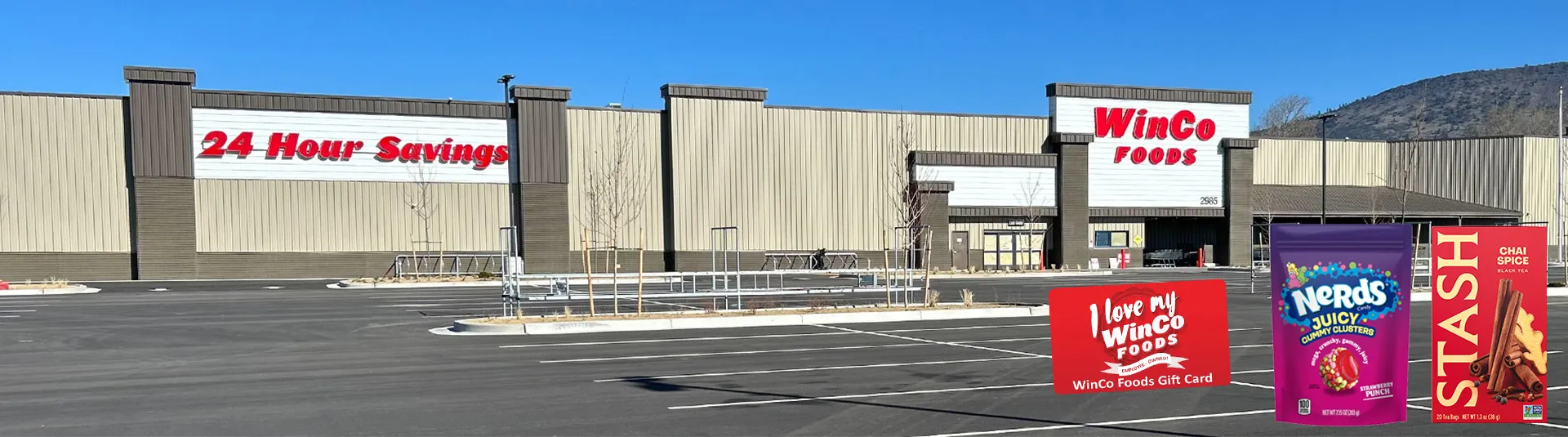
WinCo Foods: If you are in the West or Midwest, this employee-owned giant is a backpacker's paradise. Their bulk bins allow you to buy exactly 100g of trail mix or 2 cups of rice, preventing waste and saving money.
-
Lidl: Dominating the East Coast, Lidl offers high-quality European-style meats and cheeses at prices that beat Walmart.
2. The "TooGoodToGo" Revolution
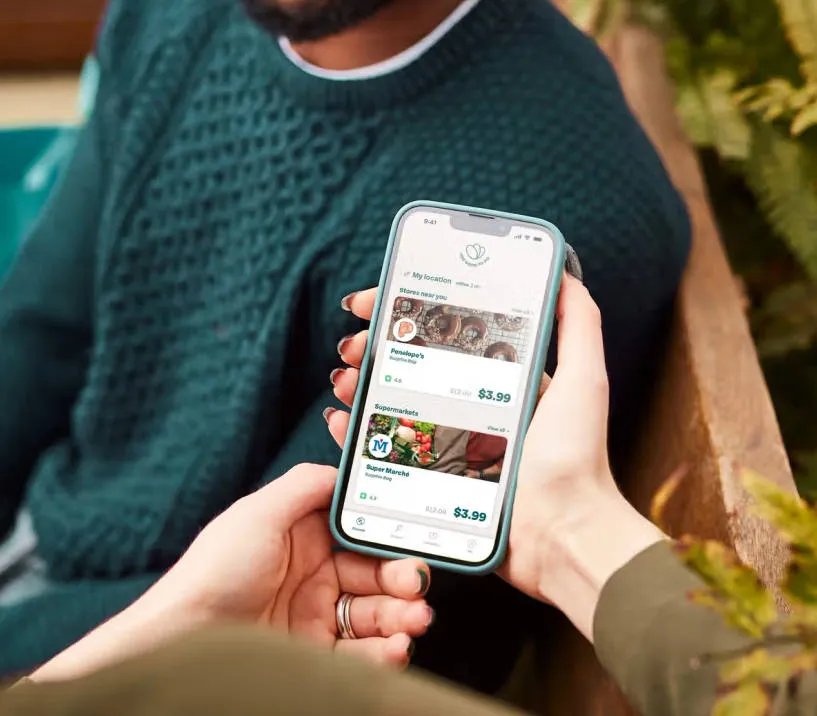
By 2026, the TooGoodToGo app has expanded to every major US city (and many mid-sized ones like Asheville or Boise).
-
How it works: Restaurants and bakeries sell "Surprise Bags" of leftover food at the end of the shift for $4.99–$6.99.
-
The Win: A single bag from a bagel shop or cafe can often provide two full meals. It’s the best way to eat "restaurant quality" food on a backpacker's dime.
3. The "No-Cook" Road Library
Fuel for your body shouldn't always require a stove. If you're crossing the plains of Nebraska, keep these "shelf-stable" essentials in your passenger seat:
-
Tortillas > Bread: They don't get crushed, they last longer in heat, and they are more calorie-dense.
-
Tuna/Chicken Pouches: In 2026, these "tear-and-eat" pouches are everywhere. They require no can opener and no draining—perfect for a roadside protein hit.
-
The "Rotisserie Hack": Almost every US grocery store sells a hot rotisserie chicken for $5–$8. Buy one, shred it, and you have protein for sandwiches, salads, and wraps for three days.
4. Hydration: The $300 Saving
In 2026, a bottle of water at a gas station costs $2.50–$3.50.
-
The Math: If you buy two a day, you'll spend nearly $200 a month just on water.
-
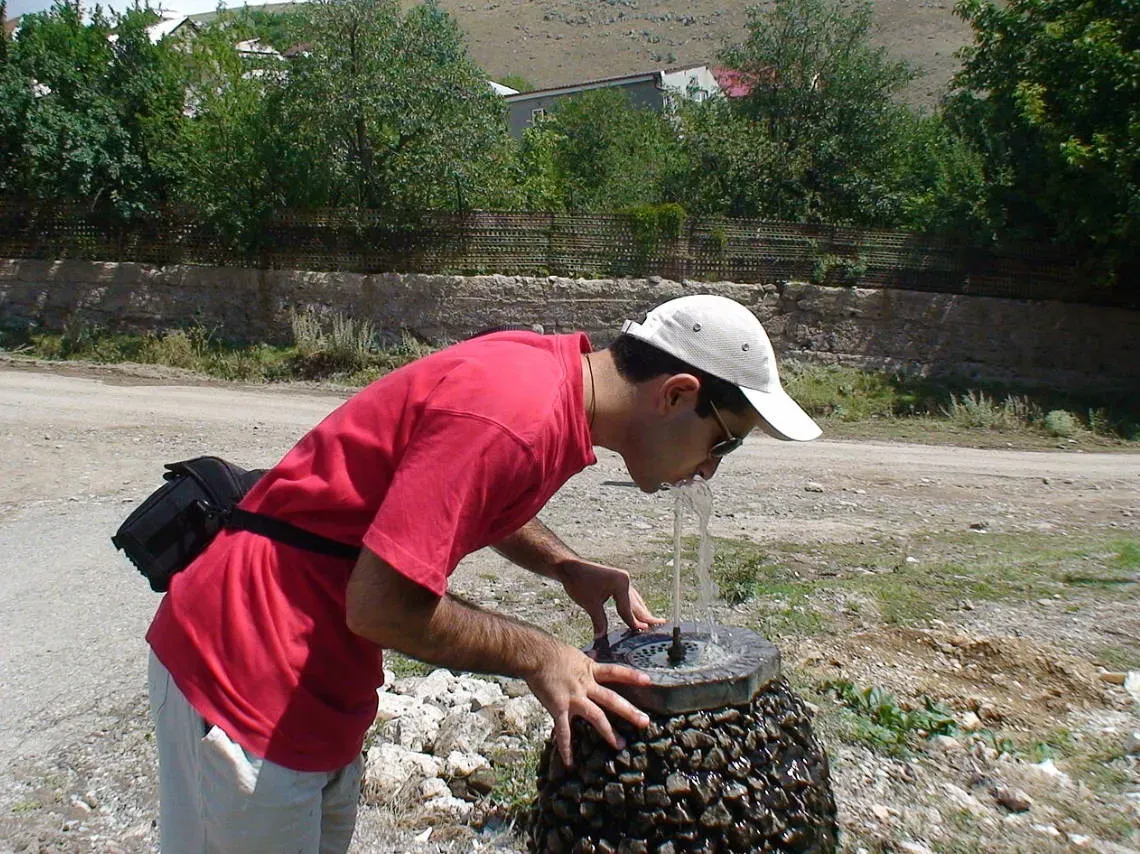
The Fix: Carry a 1-gallon refillable jug and a filtered water bottle (like a LifeStraw or Grayl). Use the "Refill" app to find free water stations in parks and libraries.
-
Coffee: Switch to "steeped" bags or instant coffee. A $10 tin of high-quality instant coffee replaces $150 worth of Starbucks runs.
5. Dining Out: The "Social" Splurge
You didn't come to America just to eat beans in a parking lot. When you do go out, do it strategically:
-
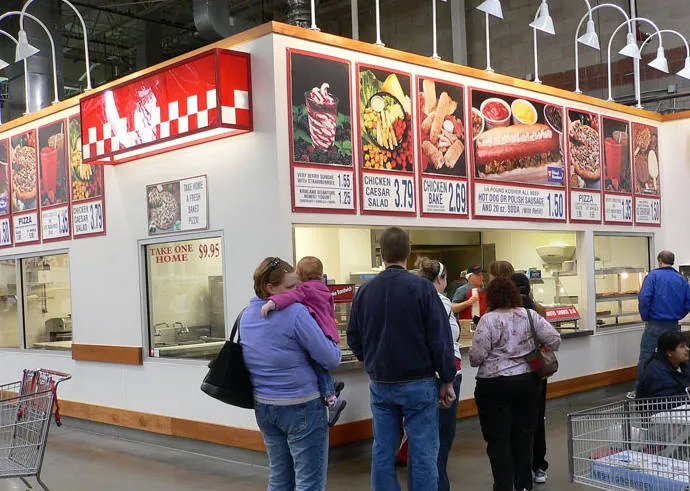
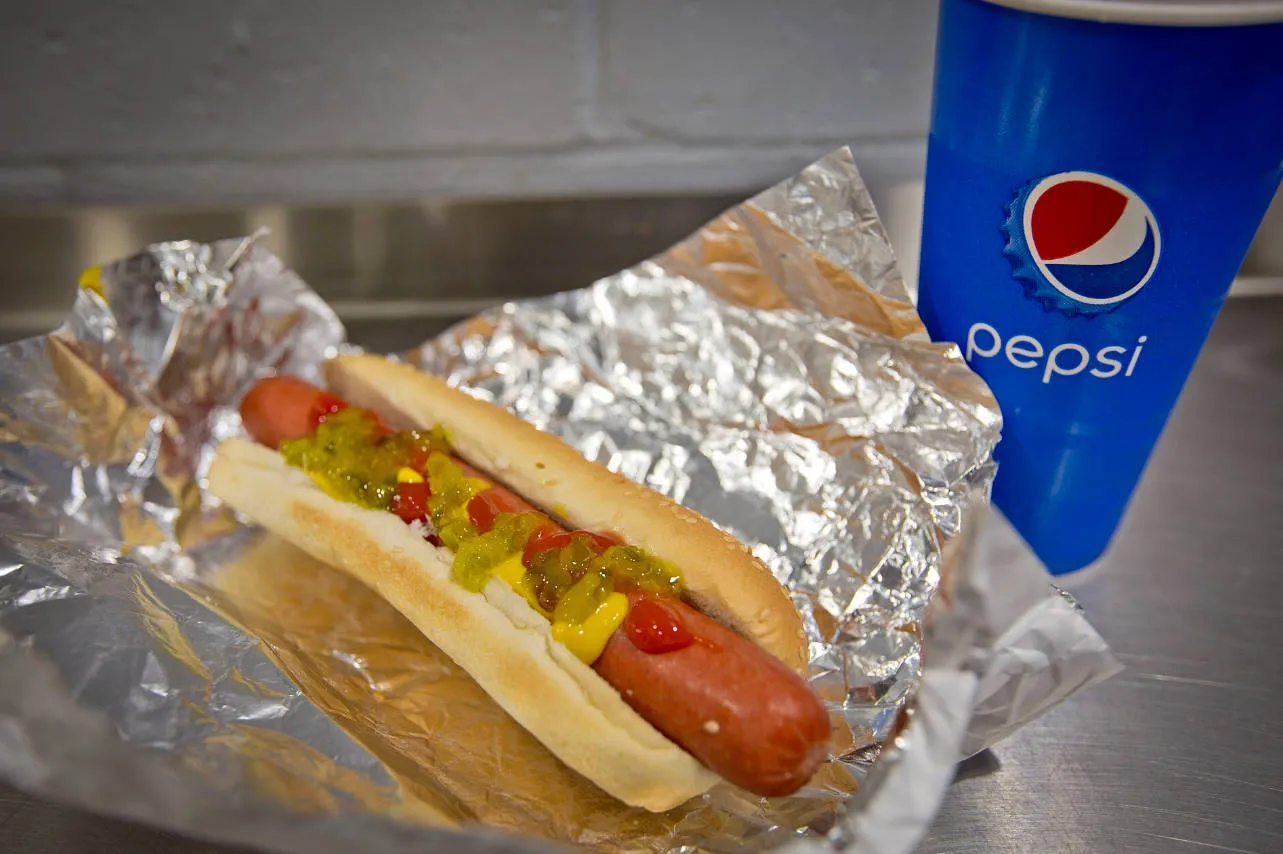
Costco Food Court: You don't need a membership to access many outdoor food courts. The $1.50 Hot Dog & Soda combo is still the most famous inflation-buster in 2026.
-
Lunch Specials: If you want a "sit-down" meal, do it between 11:00 AM and 2:00 PM. Dinner prices in the US are typically 30% higher for the exact same portions.
-
Tipping Culture: Remember that in 2026, the standard expected tip is 18–22%. Factor this into your budget—or stick to "Counter Service" spots where tipping is optional.
Sample Daily Meal Plan ($18.50 Total)
| Meal | What You’re Eating | Estimated Cost |
| Breakfast | Oatmeal with peanut butter + DIY coffee | $1.50 |
| Lunch | Two tuna & veggie tortillas + an apple | $4.00 |
| Dinner | TooGoodToGo "Surprise Bag" (e.g., Pizza or Thai) | $6.00 |
| Snacks | Bulk-bin trail mix + string cheese | $3.00 |
| Drink | Refillable water + 1 gas station soda treat | $4.00 |
V. Attractions & Activities: Enjoy America for Free
The biggest myth in 2026 is that "American entertainment" means expensive theme parks and $100 concert tickets. If you are strategic, your entertainment budget can stay near zero, leaving your funds for fuel and food.
Here is how to experience the best of the USA without spending a dime.
1. The National Park "Loophole" (2026 Rules)
The National Park Service (NPS) has implemented an "America-First" pricing structure in 2026.
-
For US Residents: There are 8 official Fee-Free Days in 2026 (including President’s Day, Flag Day/President Trump’s Birthday on June 14, and the NPS 110th Birthday on August 25). On these days, entry is $0.
-
For Non-Residents: Be warned—the America the Beautiful Pass now costs $250 for non-residents, and 11 "high-traffic" parks (like Zion and Yosemite) now charge a $100 nonresident surcharge.
-
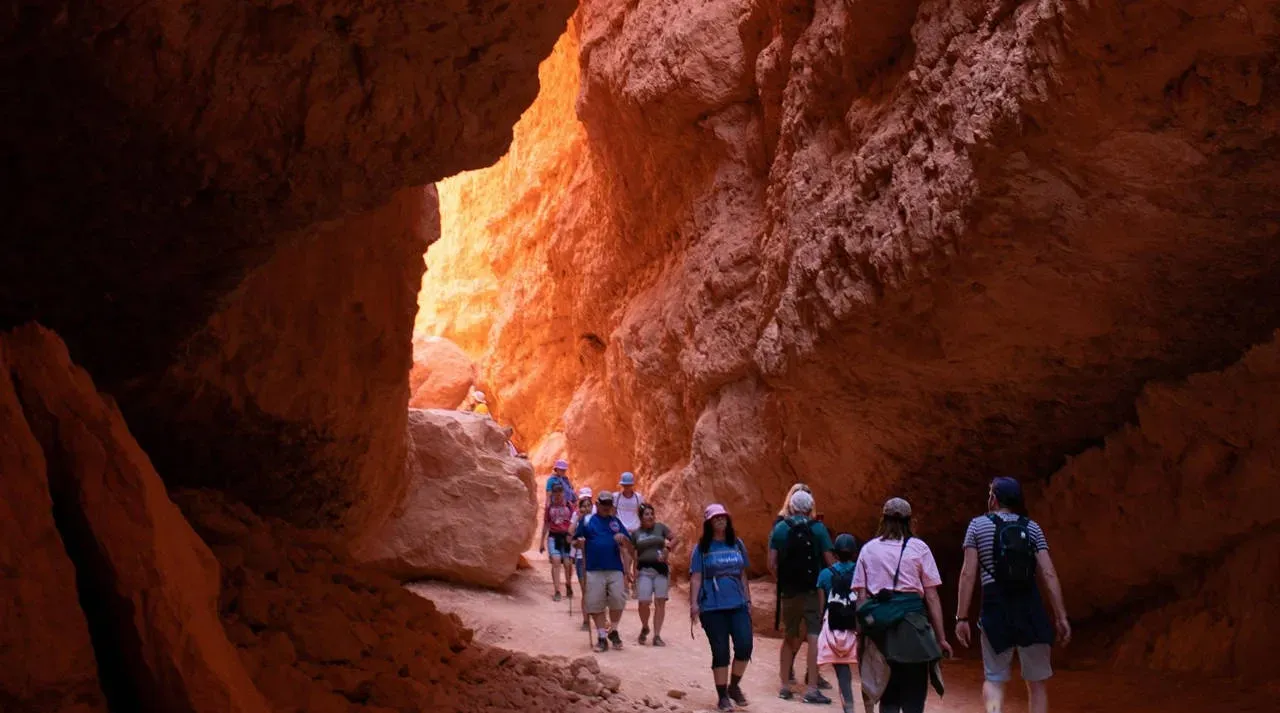
The Budget Hack: Focus on National Forests and National Monuments. Locations like the Blue Ridge Parkway, Newberry National Volcanic Monument, and Gulf State Park offer world-class scenery for free or a fraction of the cost of the "Big Name" parks.
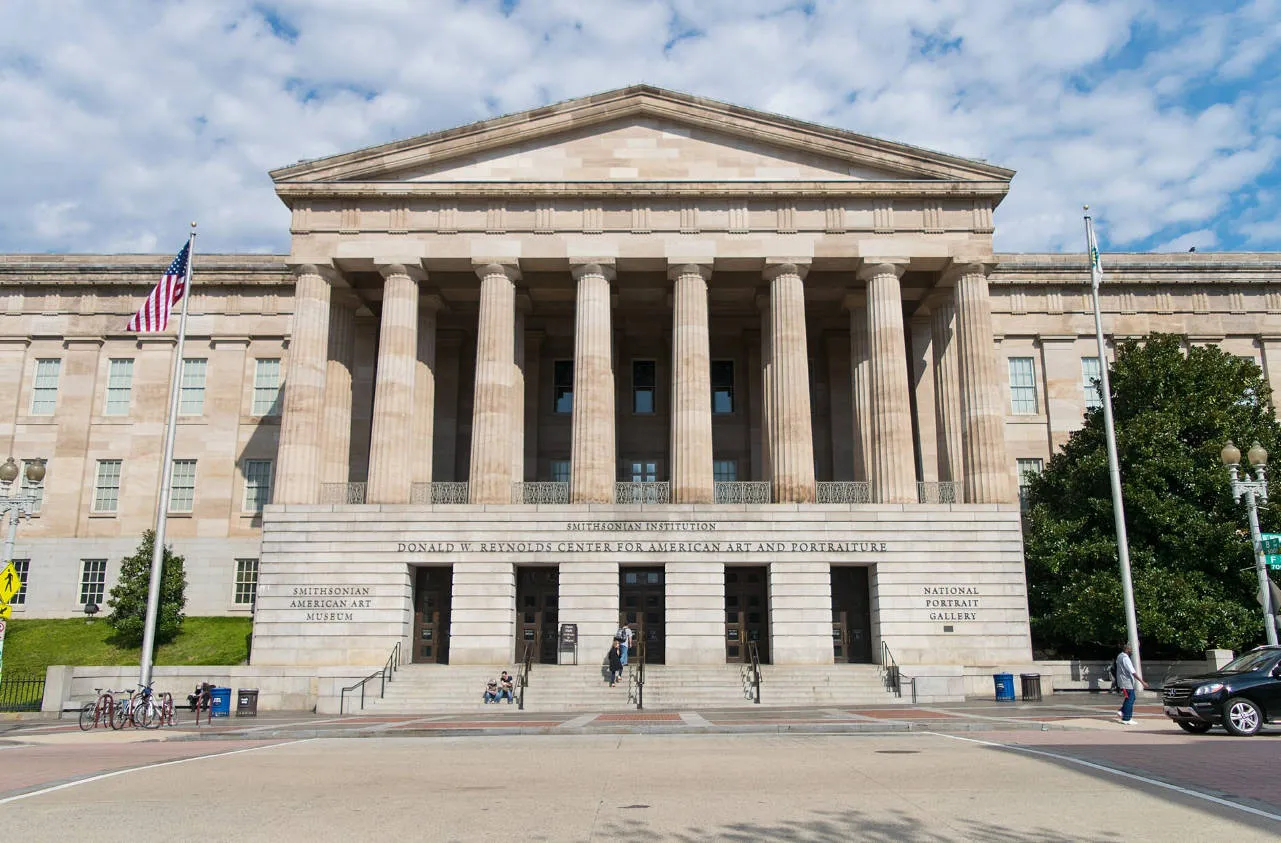
2. The "Smithsonian Standard" in DC
If your route takes you through the East Coast, Washington, D.C. is your budget sanctuary.
-
All 21 Smithsonian museums (including the Air & Space Museum and the Zoo) are 100% free.
-
The 2026 Catch: Due to high demand, most now require a "Timed Entry Pass." These are free but must be booked weeks in advance on your phone.
3. Museum Hacking: The First Weekend Rule
If you have a Bank of America or Merrill credit/debit card, the "Museums on Us" program is still active in 2026.
-
The Perk: Free general admission to over 225 cultural institutions (like the Met in NYC or the Art Institute of Chicago) on the first full weekend of every month.
-
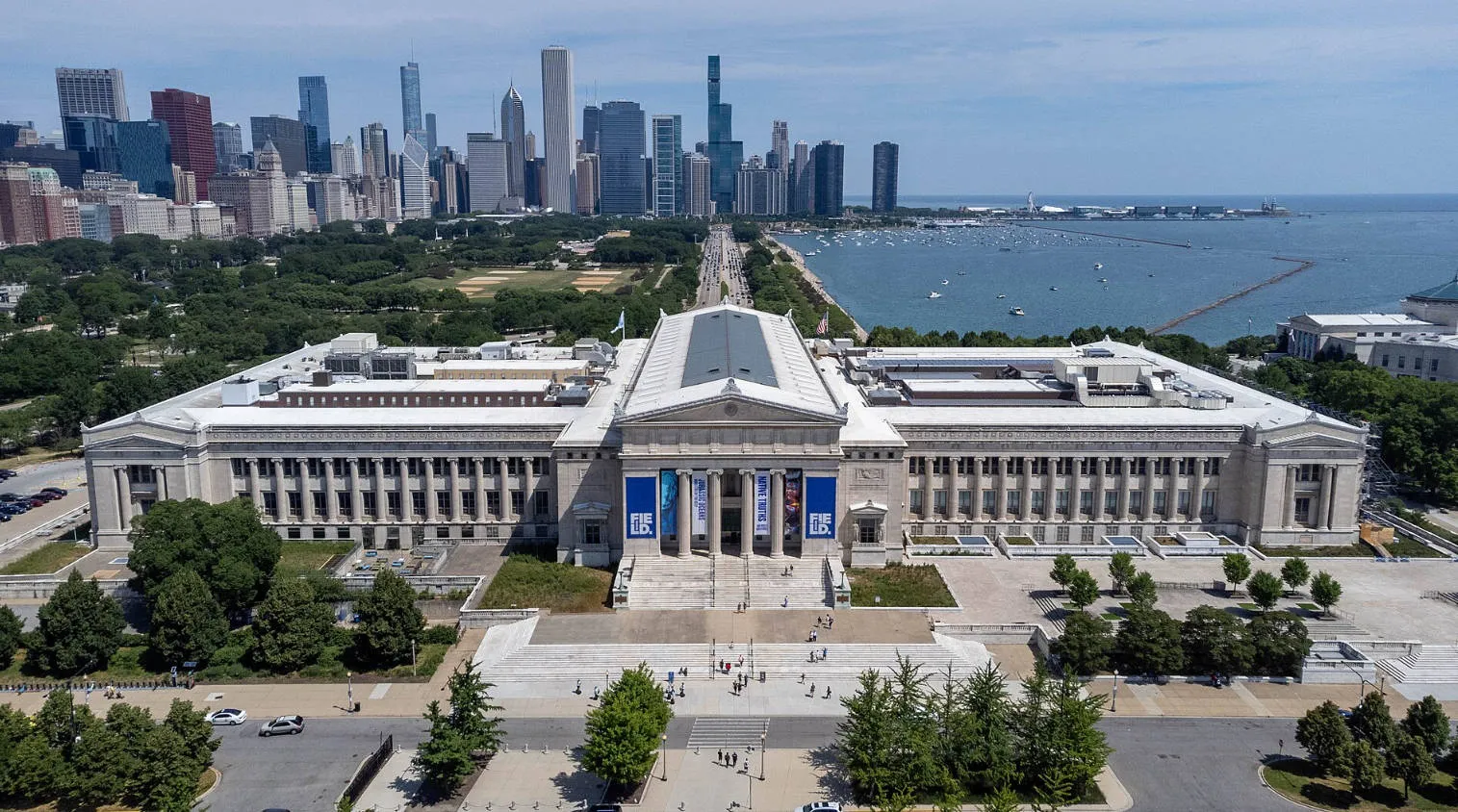
Other Cities: Many world-class museums have a "Free Day." For example, the Field Museum in Chicago is free for Illinois residents every Wednesday, and many SF museums offer "Community Free Days"—check their websites 48 hours before you arrive.
4. The "Free Walking Tour" Culture
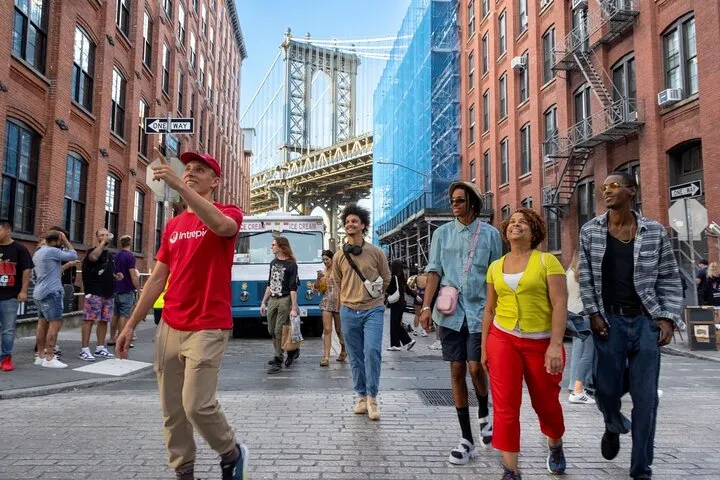
In cities like Savannah, New Orleans, and Boston, skip the $50 bus tours.
-
The Hack: Look for "Free Tours by Foot." These are tip-based walking tours led by locals. You get the same history and ghost stories for a $5–$10 tip instead of a $40 ticket.
-
Savannah/Charleston: These cities are "living museums." Simply walking the historic squares or The Battery costs nothing and provides better photos than any paid attraction.
5. Public Spectacles & Street Beats
-
Nashville: You don't need to pay a cover charge to hear world-class music. Walk down Broadway; the "Honky Tonks" have live music from 10:00 AM until 3:00 AM with no entry fee (just buy one cheap drink or tip the band a few dollars).
-
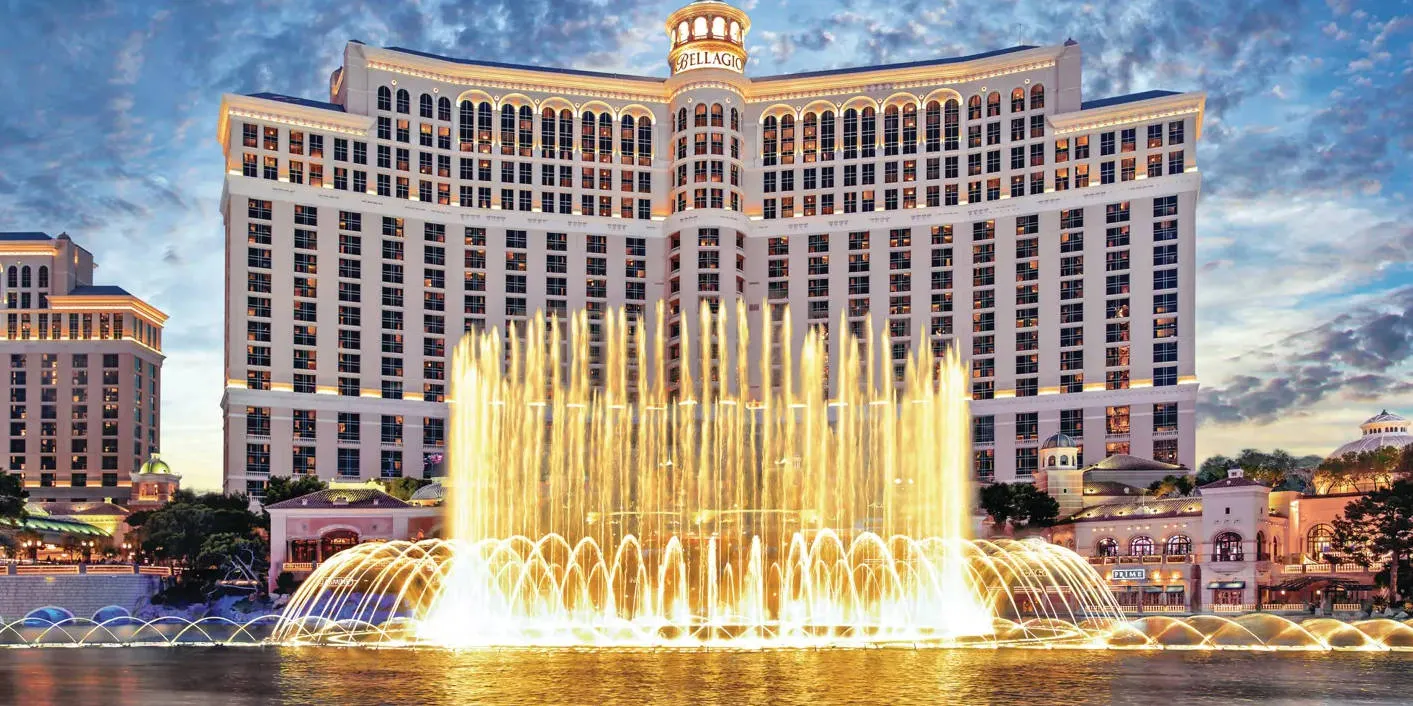
Las Vegas: The Bellagio Fountains, the Mirage Volcano (if still active), and the Fremont Street Experience are the best free shows in the world.
-
Stargazing: Use the Dark Site Finder app. Crossing the Nevada or Arizona desert? Pull over on BLM land. In 2026, with the help of a free sky-map app, the Milky Way is the most spectacular (and free) show on Earth.
Activity Cost Comparison (Typical Day)
| Category | The "Tourist Trap" | Cost (2026 Est.) | The "Backpacker Alternative" | Cost |
| NYC Views | Empire State Building | $49.00 | Staten Island Ferry (Passes Statue of Liberty) | $0 |
| National Parks | Grand Canyon (Non-Resident) | $100.00 | Sedona / Red Rock State Park | $5.00 |
| Wildlife | SeaWorld / Large Aquariums | $95.00 | La Jolla Cove, CA (Wild seals & sea lions) | $0 |
| Museums | The Met / MoMA (NYC) | $30.00 | The Smithsonian (DC) / Free Museum Days | $0 |
| History | Paid "Ghost Tours" | $45.00 | Free Tours by Foot (Tip-based) | $5–10 |
| Live Music | Ticketed Concerts | $120.00 | Nashville Broadway (Honky Tonk hopping) | $0* |
2026 Pro Tip: Libraries are the "backpacker’s VIP lounge." In 2026, major city libraries (like the Seattle Central Library) offer free high-speed fiber WiFi, clean restrooms, air conditioning, and often "Culture Passes" you can check out to visit local attractions for free.
VI. Smart Travel Tips: Digital Tools & Safety
To cross the USA for under $2,000 in 2026, your smartphone is more than just a camera—it is your navigator, your financial controller, and your lifeline. In an era of AI-driven travel, these digital strategies will save you hundreds of dollars and keep you safe on the open road.
1. The 2026 Digital Survival Kit
Data is the currency of the modern backpacker. Do not rely on "hunting for Wi-Fi" in rural America.
-
The eSIM Revolution: Physical SIM cards are nearly obsolete. Use apps like Airalo or Holafly to install a US-based eSIM before you land. In 2026, a 30-day "Unlimited Data" plan costs roughly $40–$60.
-
Offline Maps (The No-Signal Life): Crossing the Nevada desert or the Rockies? You will lose signal. Download "Offline Maps" on Google Maps for your entire route.
-
AI Trip Assistants: Use tools like GuideGeek (via WhatsApp) or Roam Around. These 2026 AI tools can instantly find "free parking within 5 miles of my location" or "cheapest grocery store open now," saving you hours of manual searching.
2. Essential Apps for the $2,000 Budget
-
iOverlander & Sēkr: The "Bibles" for free camping. They list updated 2026 spots for stealth camping, free showers, and potable water fill-ups.
-
GasBuddy: Essential for finding "Price Islands"—small towns where gas is up to $0.50 cheaper per gallon.
-
Noonlight: A vital safety app. If you feel unsafe while solo-hiking or urban exploring, hold the button. If you release it and don't enter your pin, it automatically pings your GPS location to local emergency services.
-
Splitwise: If you are traveling with a partner, this is the only way to ensure nobody goes over the daily $66 limit.
3. Safety on the Road: Physical & Digital
-
The "Grey Man" Strategy: Avoid looking like a high-value target. Don't leave expensive gear (laptops, cameras) visible in your car. In 2026, "smash-and-grab" thefts in major hubs like San Francisco or Denver remain a risk for out-of-state plates.
-
Vehicle Safety: If you are "car-camping," always sleep with your keys in the same spot and the driver’s seat clear. If you need to leave a spot quickly at 2 AM, you shouldn't be hunting for your keys.
-
Digital Scams: Be wary of "Free Public Wi-Fi" in major airports or bus terminals. Use a VPN (like ClearVPN) to protect your banking info while booking your next hostel.
4. The "Check-In" Protocol
-
STEP (Smart Traveler Enrollment Program): Even for domestic travelers, this government service provides real-time weather and safety alerts (vital for the 2026 wildfire/hurricane seasons).
-
Location Sharing: Give one trusted person back home access to your Google Maps "Live Location" or Life360. Set a "Deadman’s Switch" rule: "If you don't hear from me for 48 hours, here is my last known itinerary."
5. Health & Emergencies
-
Planet Fitness "Black Card": For $25/month, you get a nationwide "home base." It's not for working out; it's for 24/7 access to clean showers, massage chairs, and high-speed Wi-Fi in almost every US city.
-
Telehealth: Ensure your travel insurance includes a 24/7 Telehealth app. In 2026, a simple "Urgent Care" visit for a minor infection can cost $250+ out of pocket. Solving it via a $20 video call saves your budget.
2026 Digital Toolbox Summary
| Tool Type | Recommendation | Why You Need It |
| Connectivity | Airalo / Nomad (eSIM) | Constant GPS and emergency access. |
| Safety | Noonlight / Life360 | Peace of mind for solo travelers. |
| Logistics | iOverlander / Sēkr | Finding $0 beds and free showers. |
| Finance | Splitwise / Revolut | Tracking the $20/day food limit. |
Pro Tip: In 2026, many National Parks and remote trailheads use what3words for emergencies. Download the app; it gives every 3-meter square on Earth a unique three-word address, allowing rescuers to find you in a forest even if you can't describe your location.
VII. Sample 15-Day Budget Itinerary (Under $2000)
This 15-day itinerary focuses on the Amtrak USA Rail Pass ($499) as your primary engine. By using overnight trains as your "moving hotels," you save on accommodation and cover massive distances efficiently.
The "Transcontinental Rail-Hike" Blueprint
-
Total Budget: ~$1,200 – $1,500 (Leaving $500+ for emergencies/flights).
-
Transport: Amtrak Rail Pass (10 segments) + Local Transit/Bikes.
-
Strategy: Sleep on the train for 6 nights; use Hostels/BLM for 8 nights.
| Day | Location | Activity | Stay | Cost (Est.) |
| 1-2 | New York City | Walk the High Line & Central Park. | Hostelling International | $120 |
| 3 | En Route | Lake Shore Limited to Chicago. | On Train | $0* |
| 4 | Chicago | Lakefront Trail bike ride & Bean. | Hostel / Friend | $60 |
| 5-6 | The Plains | California Zephyr (The most scenic leg). | On Train | $0* |
| 7-8 | Denver / Rockies | Bus to Boulder/Estes Park; Hike. | Free Camping (BLM) | $40 |
| 9 | Utah Deserts | Arches/Canyonlands (via Green River). | iOverlander Spot | $30 |
| 10 | The Sierras | Crossing the Donner Pass by rail. | On Train | $0* |
| 11-12 | San Francisco | Golden Gate Bridge & Musée Mécanique. | Hostel (Dorm) | $130 |
| 13 | Coast Starlight | Hugging the Pacific Coast to LA. | On Train | $0* |
| 14-15 | Los Angeles | Griffith Observatory & Santa Monica. | Budget Hostel | $110 |
Transport costs are covered by the initial $499 Rail Pass purchase.
15-Day Expense Breakdown (2026 Prices)
-
Fixed Transport: $499 (Amtrak Pass) + $60 (Local Metro/Bikes) = $559
-
Accommodation: 4 Nights Hostel ($320) + 6 Nights Train ($0) + 4 Nights Camping ($20) = $340
-
Food: $25/day avg (ALDI groceries + 3 "TooGoodToGo" bags) = $375
-
Attractions: National Park Pass ($80–$250) + Tips for Free Tours = $180
-
Total Project Cost: $1,454
Why this works in 2026:
-
The "Moving Hotel" Hack: By spending 6 out of 14 nights in a reclining Amtrak seat, you delete $1,000+ in hotel costs from your budget.
-
Avoided Fuel Surge: As of April 2026, gas prices have spiked past $4.00/gallon nationally (over $5.80 in California). Avoiding a car rental saves you from the most volatile expense of 2026.
-
Low-Cost Hubs: Starting in the East and ending in the West allows you to "splurge" on food in cheaper Midwestern cities like Chicago and Denver before hitting the high-cost California coast.
Backpacker's Warning: In 2026, Amtrak segments fill up 2–3 weeks in advance for popular routes like the California Zephyr. Book your 10 segments on the Amtrak app the moment you buy the pass.
VIII. Frequently Asked Questions (FAQ)
Q1: Is the USA safe for backpackers?
A: Yes, but stay alert in big cities.
Q2: Is $2,000 really enough for a 30-day trip in 2026?
A: Yes, but it requires "Extreme Budgeting." In 2026, the average traveler spends roughly $120–$150 per day. To stick to your $66/day limit, you must:
-
Sleep for free at least 20 out of 30 nights (Couchsurfing, BLM land, or overnight trains).
-
Avoid major sit-down restaurants (stick to the $20/day grocery rule).
-
Use a rail pass or fuel-split with others rather than renting a private car solo.
Q3: What is the deal with the new 2026 National Park fees?
A: As of early 2026, the National Park Service introduced a two-tier pricing system.
-
Non-US Residents: Entry fees for "Crown Jewel" parks (Yellowstone, Yosemite, etc.) can be as high as $100 per person.
-
The Hack: If you are an international traveler, the $250 "America the Beautiful" Pass is now mandatory for a budget trip. It breaks even after just three major parks.
Q4: How do I handle tipping on a backpacker budget?
A: Tipping is the "hidden tax" of America. In 2026, the expected tip for sit-down service is 18–22%.
-
The Budget Strategy: Eat at "Counter Service" spots (like Chipotle, food trucks, or bakeries) where tipping is appreciated but not mandatory. This saves you $10–$15 per day.
Q5: Is "Stealth Camping" in a car legal in 2026?
A: It’s a grey area. Many cities (especially in California and the Pacific Northwest) have passed stricter "No Overnight Parking" ordinances.
-
Where to go: Use the iOverlander app to find vetted 2026 spots. Cracker Barrel remains the most reliable "legal" overnight parking for travelers. Avoid residential streets; stick to industrial zones or designated "Rest Areas."
Q6: What if I get sick? How do I avoid a $1,000 medical bill?
A: Never enter the US in 2026 without Travel Insurance. A single "Urgent Care" visit for a sprained ankle or a sinus infection can cost $300+ without coverage.
- Pro Tip: Use Telehealth services first. Many 2026 insurance plans offer a free video call with a doctor who can send a prescription to a local CVS or Walgreens, saving you the "Facility Fee" of a physical clinic.
Q7: How can I stay connected without expensive roaming?
A: Forget your home carrier. In 2026, the move is a Travel eSIM (like Airalo or Holafly). You can get 10GB of data for roughly $25, which is essential for using GPS, GasBuddy, and finding your next free campsite on the fly.
Conclusion: Crossing America isn't about how much money you have; it's about how much resourcefulness you possess. By leveraging relocation rentals, free BLM campsites, and grocery store meal prepping, you can experience the vast beauty of the United States for a fraction of the cost of a typical tourist.
The road is calling. Are you ready to answer?