Whether you’re planning to skim the waves on a high-speed jet ski, captain a luxury yacht, or take a cross-state road trip with a trailer in tow, there’s one thing you can’t leave at the dock: your Boating Card. In 2026, with water safety enforcement reaching unprecedented levels, this credential is your first line of defense against unexpected boardings and steep penalties. As we move into 2026, the rules of the water have become more standardized but also more strictly enforced.
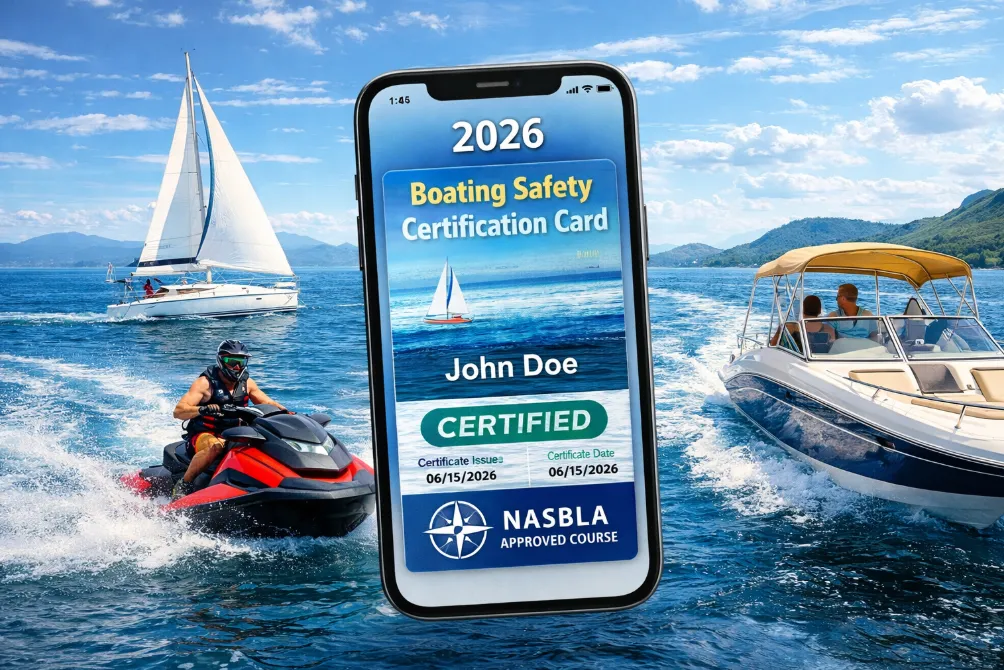
This guide is designed to navigate you through the latest regulations, ensuring you stay legal, safe, and stress-free on the water. With boating activity at an all-time high and a 15% increase in peer-to-peer rentals over the last year, understanding the "license" landscape is more critical than ever for seasoned mariners and weekend warriors alike.
1. What is a Boating Card? Types, NASBLA Certification & Legal Penalties
In the U.S., most people use the term "Boating License," but technically, most states issue a Boating Safety Education Certificate or a Boating Card. Unlike a driver’s license, which you renew every few years, most boating cards are valid for life once you pass the course. In 2026, the distinction between a "license" and a "safety card" is still a common point of confusion, but the legal weight behind them them has never been greater.
2.1 NASBLA Certification Explained
It is crucial to understand who actually "rules" the water you are on. In the U.S., boating safety is primarily managed at the State Level, while the federal government sets the overarching safety standards.
-
State-Level Certificate: Your Boating Card is a State-Level Certificate. It is issued by your state’s specific government agency, such as the Department of Natural Resources (DNR), the Fish and Wildlife Conservation Commission (FWC), or the State Police. For example, a card issued in Florida will carry the FWC logo, while one in Georgia will feature the DNR.
-
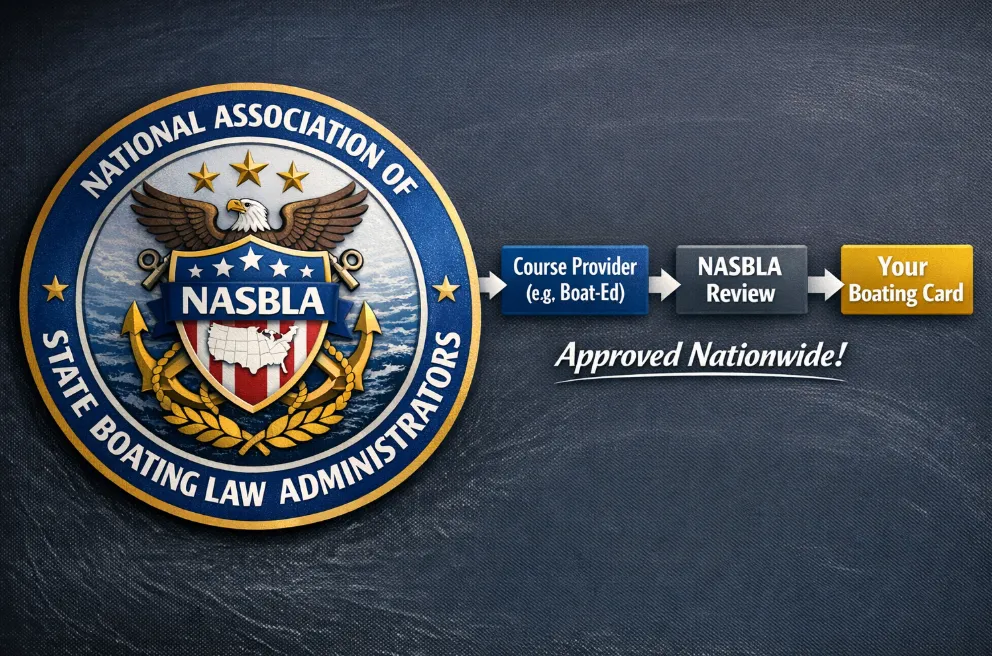
NASBLA vs. USCG: * NASBLA (National Association of State Boating Law Administrators): They are the non-profit organization that develops the national educational standards. They do not arrest you or patrol the water; they ensure that the "State-Level Certificate" you earn meets the national standard for reciprocity.
-
USCG (United States Coast Guard): As a federal agency under the Department of Homeland Security, the USCG enforces federal laws on "navigable waters" (oceans, coastal bays, and major interstate rivers). While they don't issue recreational boating cards, they recognize NASBLA-approved state cards during boardings and inspections.
-
-
Why it matters: A NASBLA-approved card is recognized in almost every state (reciprocity). This is your "passport" to American waters. If you take a non-approved local course, you might find your credentials are useless the moment you cross state lines into a neighboring jurisdiction.
-
The Landscape: In 2026, nearly 95% of reputable online courses are NASBLA-certified. However, with the rise of AI-generated scam sites, it’s critical to look for the "NASBLA Approved" shield before entering your credit card details. This certification ensures you've learned essential skills like right-of-way, sound signals, and emergency response.
2.2 Boating Card Types: Paper, Digital & Temporary
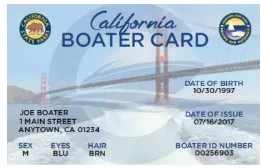
[[copyrightdbw.parks.ca.gov]]
Depending on your boating style—whether you own a boat, rent occasionally, or are a professional guide—you’ll encounter three main formats:
-
Paper/Plastic Certificates: The classic durable card. While "old school," many captains still prefer keeping a plastic card in their waterproof boat box. They don't run out of battery and are immune to screen glare in the bright midday sun.
-
Digital Certificates: This is the 2026 standard. Most states now integrate your boating credentials directly into "State Wallet" apps alongside your driver’s license. These often include a dynamic QR code that changes periodically to prevent fraud, allowing lake patrol to scan your status in seconds.
-
Temporary Cards: Often called "Rental Permits," these are valid for 30–90 days. They are the "instant gratification" option for vacationers. You can usually complete a 25-question "light" version of the safety course right at the dock and receive a PDF on your phone immediately.
2.3 Scope of the Card: One Card for All Recreational Vessels
A common question for new boaters is: "Do I need a different license for a Jet Ski than for a motorboat?" The answer is generally No.
Once you pass a NASBLA-approved boating safety course, you receive a single Boating Card that serves as proof of competency for all types of recreational motorized vessels. Whether you are operating a personal watercraft (PWC), a small speed boat, or a private yacht, this one card covers your legal requirements across various vessel categories.
|
Vessel Type |
Boating Card Required? |
Special Considerations (2026 Rules) |
|---|---|---|
|
Personal Watercraft (PWC) |
YES |
Mandatory for Jet Skis, Sea-Doos, and WaveRunners in nearly all states. |
|
Powerboats / Speedboats |
YES |
Required for any vessel propelled by machinery (outboard or inboard). |
|
Private Yachts (<65 ft) |
YES |
The standard Boating Card covers recreational yachts up to 65 feet. |
|
Sailboats (Engine Power) |
YES |
If the sailboat has an auxiliary engine, you must have a card when the motor is in use. |
|
Kayaks / Canoes / SUPs |
NO |
Not required for non-motorized, human-powered vessels. |
|
Houseboats / Pontoons |
YES |
Mandatory for these high-occupancy motorized leisure vessels. |
2.4 Legal Consequences of Unlicensed Boating
Operating without a card isn't just a "slap on the wrist" anymore; 2026 has seen a nationwide crackdown on "paperless" operators to reduce the spike in water accidents.
-
Civil Penalties (Fines): Fines have been adjusted for inflation. A first-time offense for not having your card on board now ranges from $150 to $500. If you don't actually possess a card at all, those fines can easily exceed $1,000.
-
Criminal Penalties: If you are involved in an accident or a BUI (Boating Under the Influence) incident and lack a license, you are looking at "Reckless Operation" charges. In states like Florida and California, repeat offenders can face jail time or have points added to their automobile driver’s license.
-
Insurance Risks: This is the silent killer for your bank account. Most marine insurance policies have a "Legal Operation" clause. If you crash your $80,000 wakeboard boat and weren't licensed, the insurance company can legally walk away from the claim. You’ll be on the hook for the boat repairs, environmental cleanup fees, and any medical bills for injured parties.
2. Boating License Requirements: Age, Exam, and Power Limits
2.1 Age Restrictions & Supervision Rules
Age requirements aren't just about the person at the wheel; they also dictate who must be standing next to them.
-
Standard Powerboat Rules: Generally, children under 12 cannot operate any vessel over 10 horsepower (HP). Between ages 12–15, most states allow operation only if the minor has their own NASBLA card and/or adult supervision.
-
PWC (Personal Watercraft, Jet Ski) Specific Age Limits: Rules for Personal Watercraft are significantly stricter due to high speed and maneuverability risks:
-
Absolute Minimum Age: In many states (e.g., Florida, Michigan), no one under 14 is allowed to operate a PWC under any circumstances.
-
Independent Operation: To operate a PWC alone, most jurisdictions require the operator to be at least 16 years old and hold a Boating Card.
-
The Supervision Clause: Youth aged 12–15 (depending on the state) may only operate a PWC if they are under the direct, onboard supervision of an adult (usually 18+ or 21+) who also holds a valid Boating Card.
-
-
The "Cut-Off" Dates: Most states use a rolling birthdate system. For example, in New York, as of 2025, all operators of motorized vessels must have a card regardless of age. In states like Texas, the "born after September 1, 1993" rule still applies.
-
Supervision Requirements: If a minor is operating, the supervisor must typically be 18+ or 21+ and—crucially—must also possess a valid boating card and be in a position to take immediate control of the vessel. In 2026, "active supervision" means the adult cannot be asleep or intoxicated in the cabin.
2.2 Exam Content & Modern Knowledge Standards
The 2026 curriculum has evolved to include more than just knot-tying. To pass, you must demonstrate proficiency in:
-
Digital Navigation & AIS: Modern exams now include sections on how to use Automatic Identification Systems (AIS) and digital chart plotters. You'll need to know why relying only on GPS can be dangerous.
-
The "Rules of the Road": This covers "Stand-on" vs. "Give-way" vessel status. You’ll learn that sailboats don't always have the right of way (especially when they are under engine power).
-
Emergency Scenarios: "Man Overboard" drills, cold water immersion (hypothermia) prevention, and how to use modern digital EPIRBs (Emergency Position Indicating Radio Beacons).
-
Study Commitment: Expect to spend 3 to 8 hours on the course material. Most online exams are open-book, but they are timed, requiring a 75% to 80% passing grade.
2.3 Power & Vessel Restrictions: Know Your Limits
Just because you have a card doesn't mean you can drive anything with an engine.
-
PWC (Personal Watercraft) Endorsements: In states like New Jersey and Connecticut, a standard boat card isn't enough for a Jet Ski; you need a specific PWC endorsement which requires additional training on "off-throttle steering" (the fact that you can't steer a Jet Ski if you let go of the gas).
-
Horsepower-to-Age Tiers: * Under 10 HP: Often requires no license for adults.
-
10–25 HP: The "entry-level" bracket; usually requires a basic safety card for everyone.
-
High-Performance (Over 250 HP): Some coastal states are introducing "High-Speed" endorsements for vessels capable of exceeding 50 mph, focusing on the physics of high-speed turns and wake jumping.
-
-
Vessel Length Constraints: A standard "Boating Card" typically covers recreational vessels up to 65 feet. Anything larger is entering "Commercial" or "Master" territory, requiring a full Merchant Mariner Credential from the USCG.
2026 Quick Reference: Regulations in Popular Boating Destinations
To help you stay compliant across state lines, here is a quick snapshot of current regulations and official resources in top boating hotspots:
|
Region / State |
Mandatory Requirement (Age/Birthdate) |
PWC Solo Age |
Min. HP for License |
Reciprocity (Accepts Out-of-State) |
Fines & Penalties (Est. Range) |
Official Source |
|---|---|---|---|---|---|---|
|
Florida |
Born after Jan 1, 1988 |
14+ |
>10 HP |
Yes (NASBLA) |
$150 - $500; BUI criminal charges |
|
|
California |
ALL motorized operators (by 2025) |
16+ |
Any motor |
Yes (NASBLA) |
$100 - $1,000; DL point risk |
|
|
New York |
ALL motorized operators |
14+ |
Any motor |
Yes (NASBLA) |
$100 - $500; Mandatory equipment impound |
|
|
Texas |
Born after Sept 1, 1993 |
13+ |
>15 HP |
Yes (NASBLA) |
$100 - $500; Class C Misdemeanor |
|
|
New Jersey |
ALL motorized operators |
16+ |
Any motor |
Yes (NASBLA) |
$200 - $500; Mandatory court appearance |
-
Vessel Length Constraints: A standard "Boating Card" typically covers recreational vessels up to 65 feet. Anything larger is entering "Commercial" or "Master" territory, requiring a full Merchant Mariner Credential from the USCG.
3. How to Get a Boating Card: Online, Classroom, or Exemptions
3.1 Verify Official NASBLA-Approved Courses
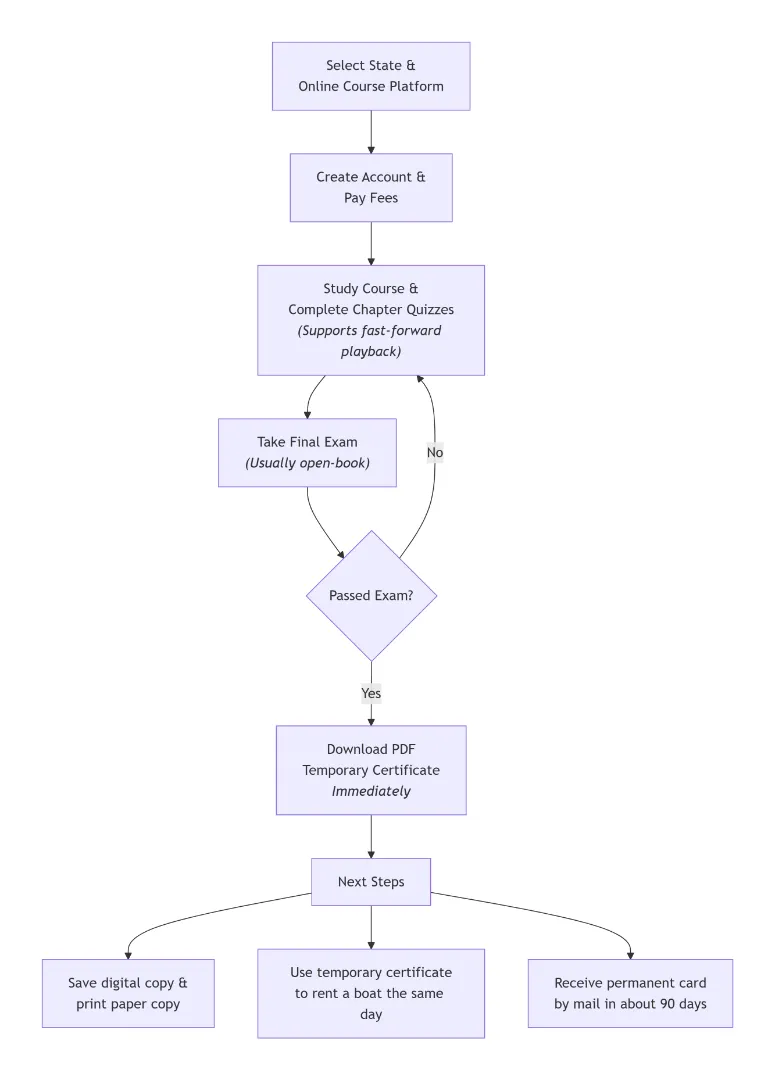
Unlike a car driver's license, obtaining a boating safety education identification card does not involve practical road tests; the core requirement is completing the education and demonstrating knowledge and competence. Therefore, the most common and convenient way to obtain a boating license is through a NASBLA-certified online self-study platform. You can complete the courses and exams anytime, anywhere, and receive a temporary certificate immediately upon passing.
Before committing your time or money, you must ensure your chosen course is state-authorized.
-
The "Checkmark" Test: Official providers like Boat-Ed, BoaterExam, and iLearntoboat will always feature a NASBLA shield and a "State Approved" seal on their homepage.
-
Avoid Scams: If a site promises a "National Boating License" in 5 minutes for $5 without an exam, it is a scam. These cards will not be accepted by the U.S. Coast Guard or state law enforcement.
- NASBLA Approved: Visit NASBLA official website [https://www.nasbla.org/education/taking-a-boat-course], search
Boating EducationorApproved Courses. -
Verification Tip: Most state DNR (Department of Natural Resources) websites maintain a list of approved online vendors. Search
[State Name] NASBLA Certified Providers.
Pro Tip: You could first check the state government's list. If the course is on the state list, it meets the state's legal requirements; if it also has NASBLA certification, then it meets the requirements for nationwide recognition.
3.2 Comparison: Online, Classroom, & Exemptions
| Category | Online Course | In-Person Class | Equivalency / Challenge Exam | Community College / Professional Association Course |
|---|---|---|---|---|
| Learning Format | Online, self-paced | Classroom-based, fixed schedule | Exam only | Structured classroom-based program |
| Certification Providers (Examples) | Boat Ed, BoatUS, Kalkomey, State Boater | US Power Squadrons (USPS), Red Cross, State-authorized DNR/FWC schools | State DNR/FWC official platforms | America’s Boating Club, Local Community Colleges, Private Instructors |
| Cost | Low ($30–$50 course fee + admin fees) | Medium ($50–$250 course fee + materials) | Very low ($10–$30 admin fee only) | Medium to High ($150–$500+) |
| Course Duration | 3–8 hours (self-paced) | 8–16 hours (fixed schedule) | None (exam only, 1–2 hours) | 16–30 hours (comprehensive learning) |
| NASBLA Approved | Yes (all major platforms) | Yes (usually) | State-approved | Yes (usually) |
| Instant Certificate / Print Option | Yes (temporary certificate available immediately) | Yes (after course completion) | Yes (immediate temporary certificate) | No (final certificate issued later) |
| Chinese / Multilingual Support | Partial (e.g., Boat Ed offers Chinese UI or subtitles) | Rare (usually English only) | No | Very limited |
| In-Person Instruction / Simulation | Online practice tests and simulations | Yes (instructor-led, some include practical simulation) | No | Yes (structured learning, may include hands-on practice) |
| Exam Content Coverage | Focused on passing state-specific laws and safety rules | Broader coverage with emphasis on real-world application | Focused on core state regulations | In-depth coverage of navigation, vessel maintenance, first aid, etc. |
| Best Suited For | Adults seeking speed, flexible timing, and basic English proficiency | Learners preferring traditional instruction, youth, or guided learning | Experienced boaters who only need legal certification | Advanced learners, future boat owners, and serious boating enthusiasts |
3.3 Temporary Boating Card: The "Vacationer's Savior"
-
Find the Rental Portal: Most major rental agencies provide a direct link to a state-approved temporary exam.
-
The "Short Course": Accelerated modules focusing strictly on "Rental Safety."
-
The Quiz: Usually 20–30 questions.
-
Validity: Typically expire in 14 to 90 days.
3.4 Registration and Process Tutorial for Popular Online Platforms (Ex. Boat Ed)
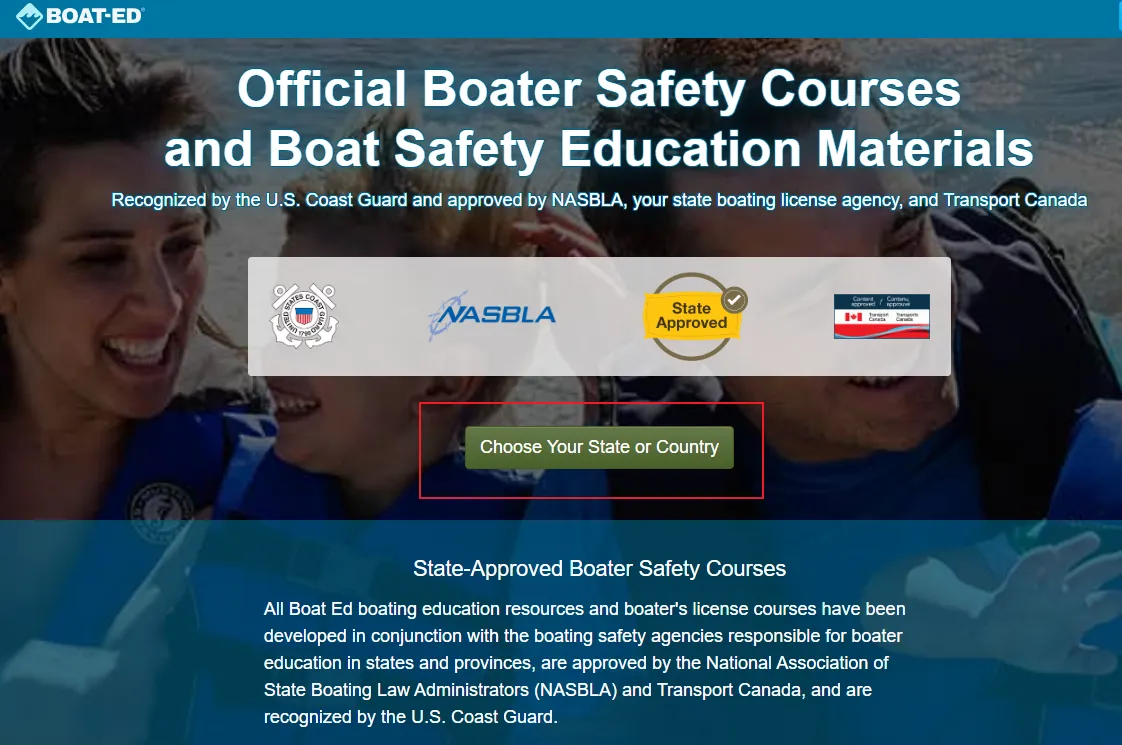
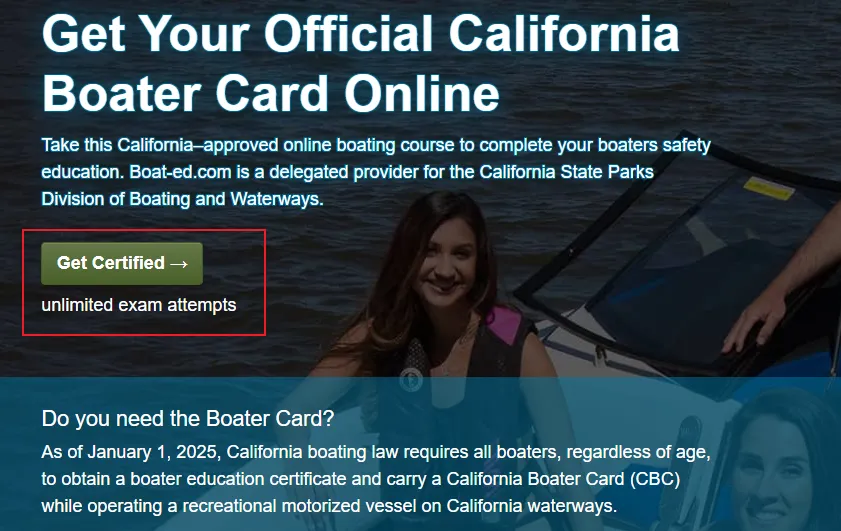
Step 1: Go to the website https://www.boat-ed.com/, click on ""Choose Your State or Country" on the homepage to select the state where you want to obtain your certification from the list. Then click "Get Certified".
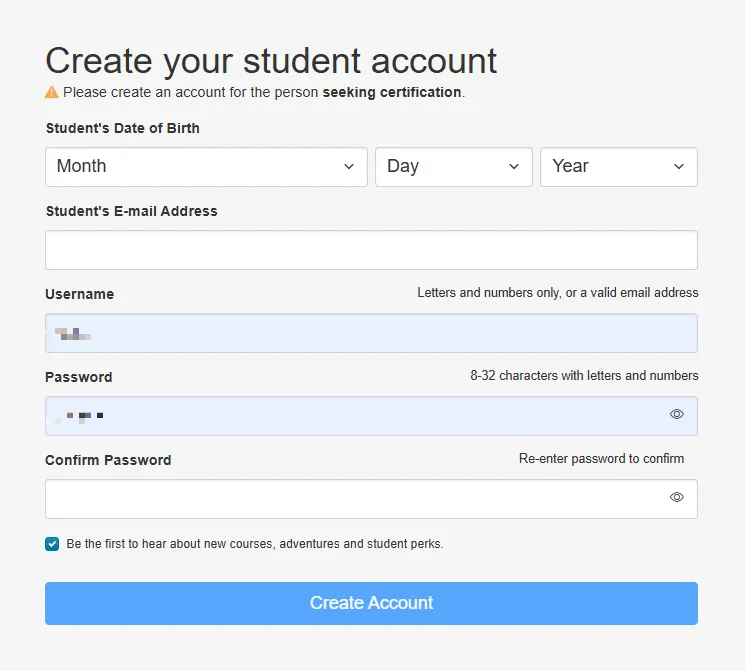
Step 2: create account
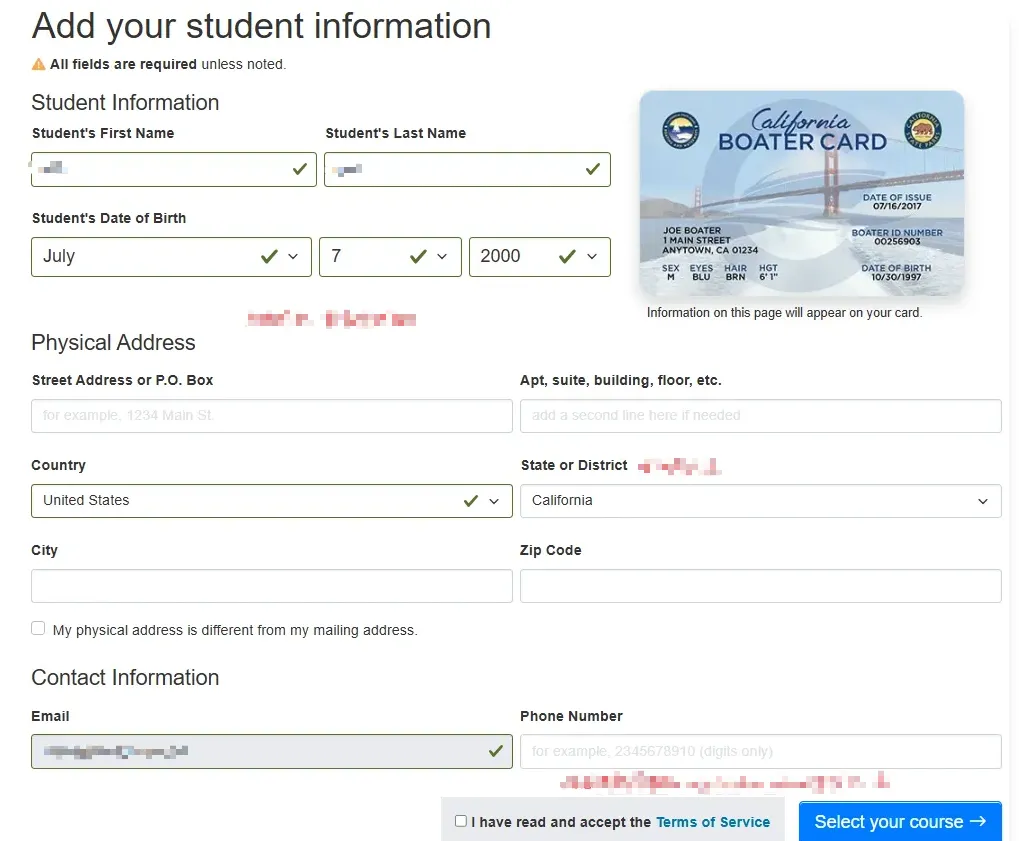
Step 3: Complete the basic address and other information, and carefully verify your legal full name and date of birth.
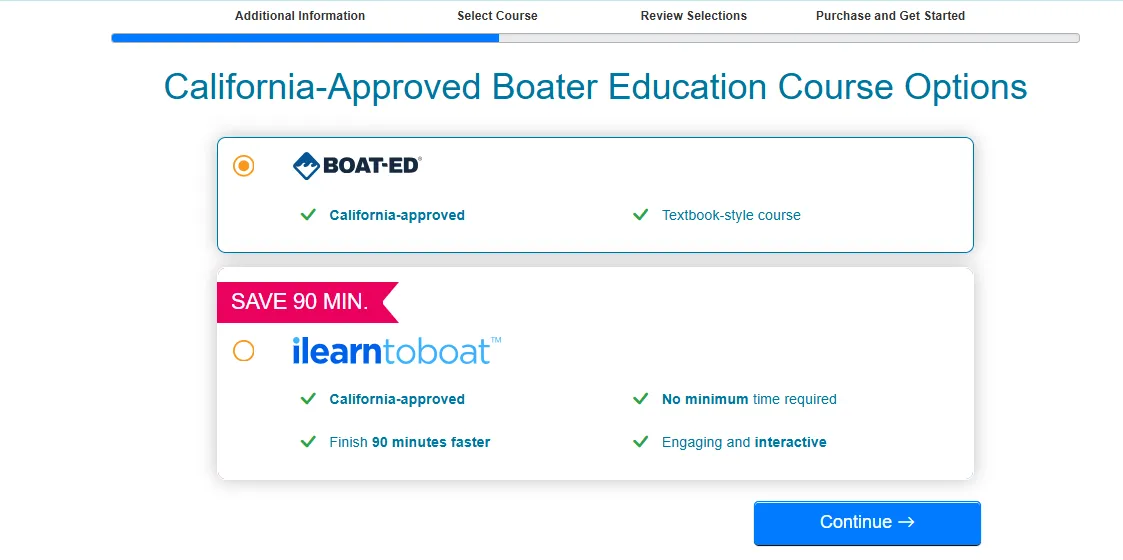
Step 4: Choose the online course which you prefer
Step 5: review your course items
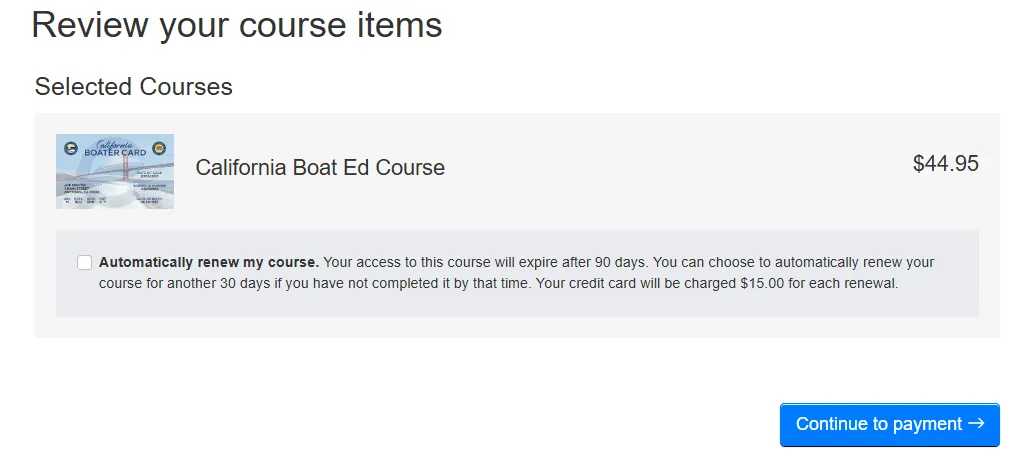
Step 6: purchase and get started
Step 7: Starting the learning modules. The course content is typically divided into 6-8 easy-to-understand modules, each containing interactive text, images, and videos designed to explain water safety, regulations, and basic navigation.
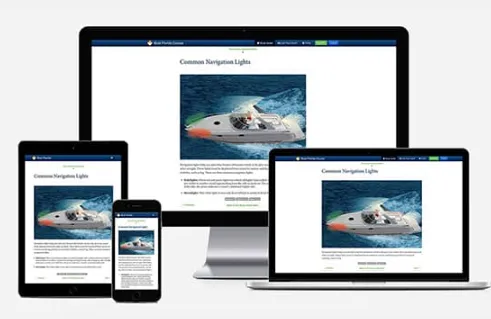
Step 8: Module Quizzes & Review. After completing each learning module, you will need to take a short quiz to reinforce your knowledge. If you do not pass the quiz, you can retake it immediately and review the material.
Step 9: Final Exam. After completing all modules, the final boating safety exam will be unlocked. The exam content is based on NASBLA standards and the specific regulations of your chosen state. A passing score of 75% - 80% is typically required.
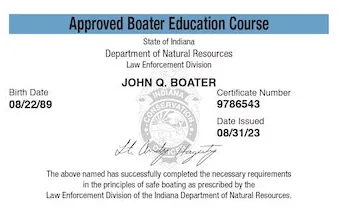
Step 10: Obtain Temporary Certificate. After passing the exam, the system will immediately generate your Temporary Certificate as a PDF file. Please be sure to print and sign it by hand. This printed copy is fully legally valid while you wait for your official plastic card to arrive (usually 3-4 weeks) and can be used for boating on the same day.
4. Key Knowledge Areas for Boating Card Exam
4.1 Safety Procedures & Emergency Response
-
PFD Mastery: Know the five types of USCG-approved life jackets.
-
Fire Safety: Mastering the P.A.S.S. method.
-
Emergency Maneuvers: "Man Overboard" recovery sequences.
4.2 U.S. Boating Laws & Federal Regulations
-
BUI (Boating Under the Influence): Federal blood alcohol limit is .08%.
-
Registration & Display: Understanding the "three-inch rule" for numbers.
-
Visual Distress Signals (VDS): Required signals for day vs. night.
4.3 Environmental & Wildlife Protection
-
"Clean, Drain, Dry": Preventing invasive species.
-
Marine Sanitation Devices (MSD): "No Discharge Zones" rules.
-
Wildlife Buffers: Distances for whales and manatees.
4.4 Navigation Rules & Aids to Navigation (ATON)
-
"Red Right Returning": Keep red markers on your right when heading upstream.
-
Stand-on vs. Give-way: Knowing who has the right of way.
-
Sound Signals: One short blast vs. five short blasts (Danger).
5. Interstate Recognition: U.S. Boating Card Reciprocity
5.1 Which States Recognize NASBLA Cards?
The Universal Standard: NASBLA cards are valid in all 50 states for visitors (typically <90 days).
5.2 The "Resident" Trap & Special State Rules
-
Residency: Moving to a new state usually requires getting a local card within 60 days.
-
Unique Waters: Alaska, Hawaii, and the Great Lakes have specific local requirements.
5.3 Steps if Your Card is Not Recognized
-
Check for the Logo: No NASBLA shield means no reciprocity.
-
The Instant Fix: Get a Temporary Rental Permit online.
6. Practical Tips: What Rentals & Boating Patrols Check
6.1 Rental Company Compliance Checks
-
The "Primary Operator" Verification: Name on the agreement must match the card.
-
Safety Gear Walkthrough: Verified fire extinguishers, ECOS, and PFDs.
-
Pre-Departure Briefing: Mandatory safety acknowledgment forms.
6.2 Boating Patrol & Law Enforcement (USCG, DNR, Police)
-
The Routine Safety Check: Patrols can stop you just to verify equipment.
-
BUI Enforcement: Breathalyzer tests are common; refusal leads to suspension.
-
Engine Cut-Off Switch (ECOS) Law: Must be worn if the boat is <26ft and at speed.
6.3 Tips for Carrying & Presenting Your Card
-
The "Two-Format" Rule: Physical card in the boat + digital copy on phone.
-
Digital Convenience: Apple/Google Wallet integration with offline mode.
-
The "Dry Bag" Essential: Keep docs in a clear waterproof pouch.
7. Boating Card Replacement, Renewal & Fees
While a Boating Card is often a "once-and-done" requirement, life events—losing a wallet, moving states, or changing your legal name—require you to interact with state records. In 2026, managing your credentials has shifted almost entirely to digital portals.
7.1 How to Replace a Lost Card
If your physical card disappears, do not panic, but do not operate your boat until you have a replacement (or at least a digital confirmation).
-
The Digital Search: Most states (like Florida, California, and Texas) allow you to search for your record using your Social Security Number and Date of Birth on the DNR website.
-
Instant Digital Replacements: In 2026, most states provide a PDF version for free or a nominal fee ($2–$5) that you can immediately download and save to your phone's wallet.
-
Ordering Plastic: If you want a durable plastic card, you can order it through your state’s official education vendor (e.g., Boat-Ed). The cost typically ranges from $10 to $25, and delivery takes 2–4 weeks.
7.2 Renewal Timeline & Validity Period
One of the best parts of the U.S. Boating Card system is that most cards never expire.
-
Lifetime Validity: Once you are certified in a NASBLA-approved state, your "Safety Education" doesn't expire. However, the physical card might need updating if your personal information changes.
-
The "Name Change" Requirement: If you change your name due to marriage or court order, you must update your boating record. This usually requires uploading a scan of your marriage certificate or court document to the state portal and paying a small administrative fee.
-
Refresher Recommendations: While not legally required in 2026, safety experts recommend retaking a course every 10 years to stay current with evolving laws like new AI-navigation rules or environmental protection mandates.
7.3 Fees & Expedited Processing
Managing the costs involves understanding that you are paying for both the education and the state administrative record.
-
Standard Online Course + Exam: $35–$55.
-
State Administrative Fee: $10–$20 (Some states include this in the course price, others charge it separately when you pass).
-
"Fast-Track" Processing: Some third-party vendors offer "Same-Day Reporting" for an extra $10. This ensures your data is sent to the state database immediately, allowing you to boat the same afternoon you pass.
-
Warning on "Ghost" Fees: Always use official links. Avoid sites that charge an ongoing "monthly membership fee" to keep your card active. Once you have your NASBLA card, you owe no recurring payments.
8. Boating License FAQ: Renting, Law Enforcement & Visitor Rules
Q: Can I Rent a Jet Ski Without a Boating Card?
A: Generally, no. You need a permanent NASBLA card or a Temporary Rental Certificate issued by the state. If you are visiting from out of state, ensure you carry a Non-resident boating permit if the destination state requires one specifically for tourists.
Q: Are Children Allowed to Operate Boats?
A: Only with strict age limits and adult supervision. For instance, the Florida boat rental age for operating a PWC is 14, but you must be 18 to actually sign the rental contract. If you are taking your child to rent a boat, remember to bring the parent's valid ID document to facilitate signing the agreement. Always check the specific "Age of Consent" for vessel operation in your local jurisdiction.
Q: Do International Visitors Need a Boating Card?
A: Yes. While some states recognize foreign licenses, most require you to obtain a temporary permit online before your trip. Carrying proof of your home country's competency certificate is highly recommended during USCG boardings.
Q: What are the Mandatory Safety Equipment Requirements for 2026?
A: Every motorized vessel must have USCG-approved life jackets for every passenger, a working fire extinguisher, and a sound-producing device (whistle or horn). In 2026, carrying a Safety equipment requirements checklist is mandatory for rentals.
Q: How Do I Find a NASBLA-Approved Boating Course Near Me?
A: Search for "NASBLA approved boating course" plus your state name. Portals like Boat-Ed and BoaterExam offer Official boating safety education that is recognized across state lines via reciprocity agreements.
Happy Boating! See you on the water in 2026!
Disclaimer: Regulations are subject to change by state agencies. Always verify with local law enforcement or the official state website (links provided above) before hitting the water.