1. Quick Start: Why Bus Travel in 2026?
In 2026, U.S. travel costs are at an all-time high. Whether you are an international student, a digital nomad, or a budget backpacker, the long-distance bus has evolved from a "last resort" into a tech-savvy, eco-friendly powerhouse.
1.1 The Reality Check: Myths vs. Facts
-
Safety: Modern buses use GPS tracking and onboard cameras; it's safer than the stereotypes suggest.
-
Comfort: Premium lines like RedCoach now offer more legroom than domestic first-class flights.
-
Convenience: Forget 2-hour TSA lines—bus stops are often right in the city center.
1.2 When to Choose the Bus
The bus is your "smartest" move for mid-range trips (3–8 hours), overnight "hotel-saver" routes, or last-minute dashes where flight prices have already spiked to $400+.
2. The Big Comparison: Bus, Plane, Train, or Car?
Choosing your mode of transport is a balance of "face value" price vs. hidden costs.
2.1 The Ultimate Transportation Showdown
|
Feature |
Bus (FlixBus/Greyhound) |
Plane (Major Airlines) |
Train (Amtrak) |
Driving (Rental/Own Car) |
|---|---|---|---|---|
|
Average Cost |
$20 – $80 |
$150 – $500+ |
$50 – $300 |
Gas + Fees |
|
Luggage |
2 Bags (Free) |
$30+ per bag |
2+2 (Free) |
Trunk Space |
|
City Access |
High (Downtown) |
Low (Outskirts) |
High (Downtown) |
High (But Parking!) |
|
Flexibility |
Moderate (Fixed Stops) |
Low (Strict Schedule) |
Moderate (Fixed Rails) |
Very High (Go Anywhere) |
|
Best For |
Budget & Mid-range |
Speed & Long-haul |
Comfort & Northeast |
Groups & Rural |
2.2 Summary: The Strategic Advantage of Bus Travel
The bus often wins on "Real Time" efficiency and logistical ease:
-
No Airport Friction: Bypass 2-hour security lines and expensive airport commutes.
-
City-to-City Precision: Depart and arrive in downtown hubs, saving on Uber/Lyft costs.
-
Last-Minute Value: While flights skyrocket days before departure, bus fares remain relatively stable and accessible.
2.3 Overview of Carrier Categories
Navigating the U.S. bus system requires knowing which "brand" fits your specific travel needs. By 2026, the market has matured significantly, offering everything from bare-bones budget rides to luxury business suites on wheels.
Before diving into specific brands, it is helpful to understand the three main tiers of bus travel in the U.S.:
-
Nationwide Networks: Best for long-distance transfers and reaching remote areas (e.g., Greyhound, FlixBus).
-
Regional Specialists: Focused on specific high-traffic corridors like the Northeast or Midwest, often offering higher reliability (e.g., Peter Pan, OurBus).
-
Premium & Luxury Lines: Designed for business travelers or those willing to pay more for "First Class" comfort (e.g., RedCoach).
3. Nationwide Carriers: The Broadest Network
These companies are the "Big Three" of American transit. They offer the most frequent departures and cover the greatest geographical area, though service quality can vary.
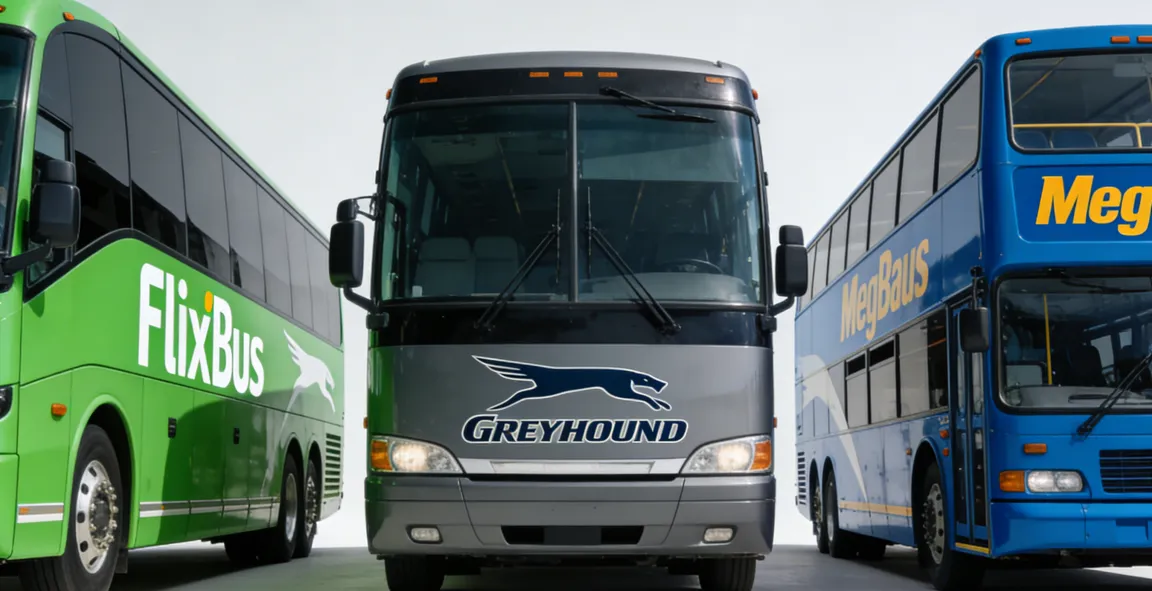
3.1 Greyhound (The Legacy Giant)
Greyhound remains the most recognizable name in U.S. bus travel. Since its acquisition by FlixBus, it has modernized its booking systems while maintaining its massive network of proprietary stations.
-
Note on the Merger: Greyhound is now part of the FlixBus Group. This means you will often see Greyhound trips listed on the FlixBus website and vice versa. The ticketing systems are fully integrated.
-
Facilities: Leatherette reclining seats, footrests, basic Wi-Fi (streaming often blocked), power outlets, and a climate-controlled cabin with overhead storage.
-
Stations: The only carrier with extensive private terminals. Facilities usually include vending machines, ticket counters, and waiting areas. Tip: Stay alert in late-night stations.
-
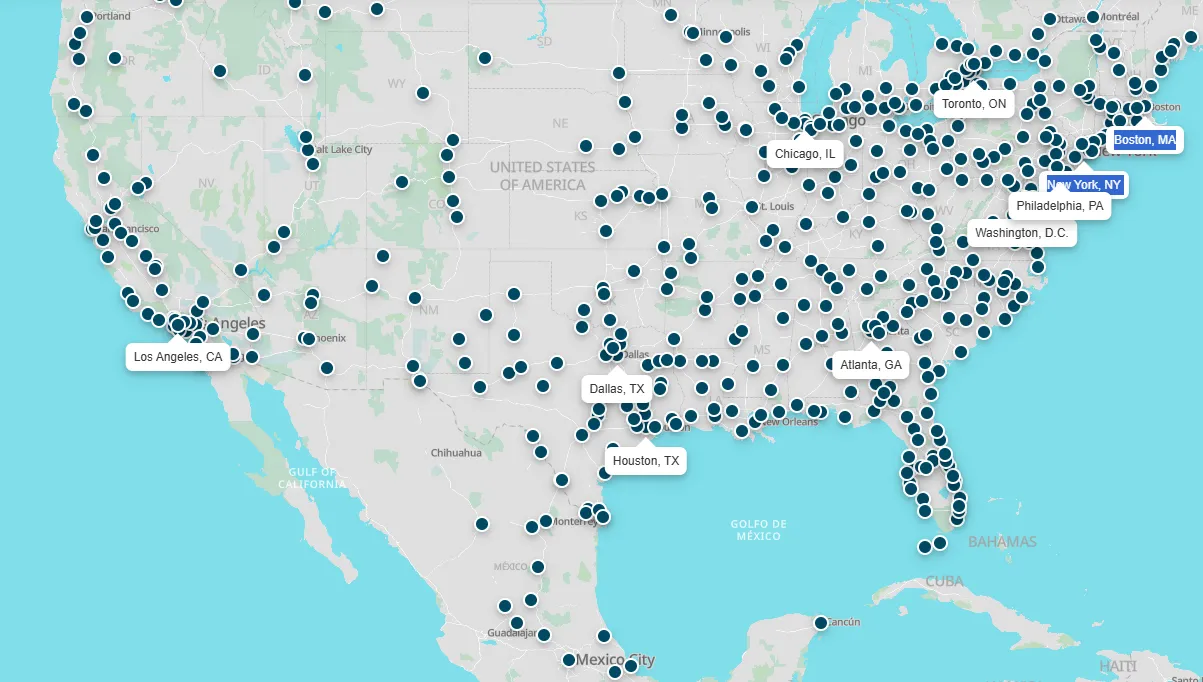
Routes: Covers the entire continental U.S., including remote rural stops and border crossings.
-
Prices: Tiered pricing. Economy (cheapest), Economy Extra (priority boarding), and Flexible.
-
Booking Channels: Official website, mobile app (best for real-time tracking), by phone 1-800-231-2222, 3rd-party platforms (Busbud/Wanderu) and physical ticket counters.
-
Refund & Change Policy: You can cancel your ticket up to 15 minutes before departure and get a full or partial refund in the form of a voucher.
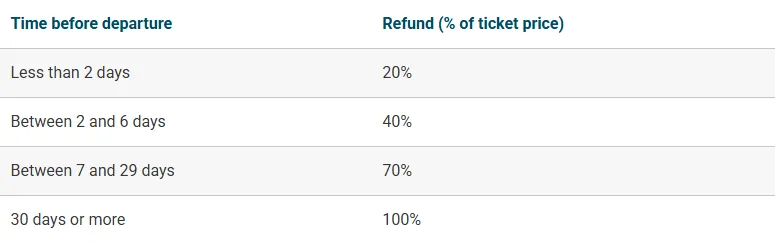 Image from Greyhound, Copyright by original author
 -
Luggage Policy: One 25lb carry-on and one 50lb under-bus bag included. Excess bags cost $20–$35.
-
Popular Routes: New York to Atlantic City, Los Angeles to Las Vegas, Dallas to Houston.
3.2 FlixBus (The Tech Disruptor)
FlixBus has revolutionized the market with a "platform" model, partnering with local charter companies to provide standardized, tech-friendly service.
-
Interoperability: Because FlixBus and Greyhound are under the same parent company, you may book a "FlixBus" ticket but find yourself boarding a blue Greyhound bus (or vice versa). Always check your boarding pass for the "Operated by" section.
-
Facilities: Newer fleet on average. High-speed Wi-Fi (data-capped), USB/Power ports, extra legroom (31-33 inches), and an onboard entertainment portal for movies.
-
Stations: A mix of major terminals and strategic curbside stops (like subway entrances).
-
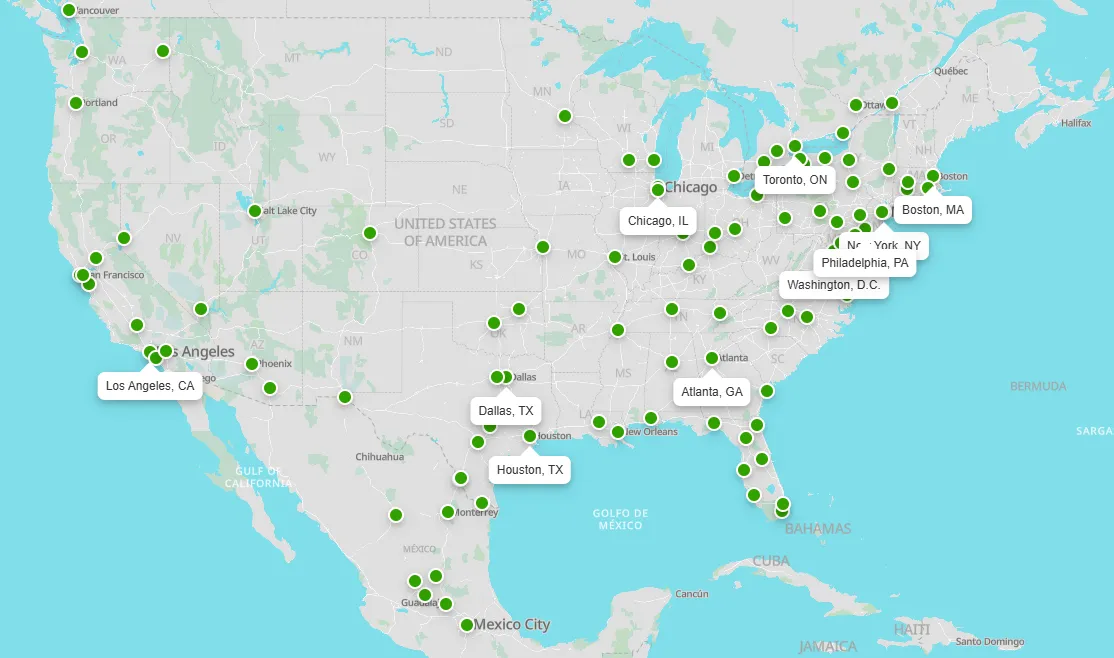
Routes: Heavy presence in California, Texas, the Northeast, and the Pacific Northwest.
-
Prices: Dynamic pricing model; tickets can be as low as $4.99 if booked weeks in advance.
-
Booking Channels: Best-in-class mobile app (Apple/Google Pay supported) and website.
-
Refund & Change Policy: You can cancel your ticket up to 15 minutes before departure and get a full or partial refund in the form of a voucher.
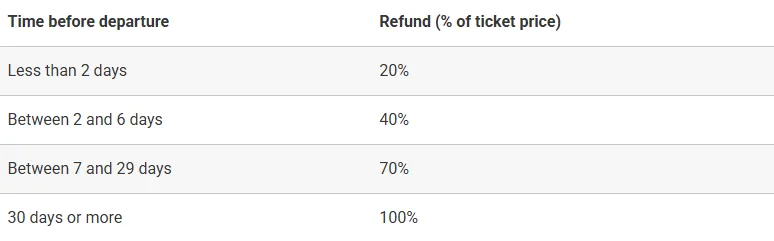 Image from Flixbus, Copyright by original author
 -
Luggage Policy: One carry-on bag with dimensions of 16 x 12 x 7 inches and a maximum weight of 25 lbs and one checked bag with dimensions up to 31 x 20 x 12 inches and a maximum weight of 50 lbs. . Additional bags can be added during booking for a small fee.
-
Popular Routes: San Francisco to Los Angeles, Phoenix to Las Vegas, Boston to NYC.
3.2 Megabus (The Budget King)
Known for its bright blue double-decker buses, Megabus focuses on high-capacity routes between major metropolitan hubs.
-
Facilities: Double-decker seating (reserve the top front for the best views), Wi-Fi, power outlets, and basic restrooms.
-
Stations: Primarily curbside. Warning: There is often no shelter, so check the weather before waiting.
-
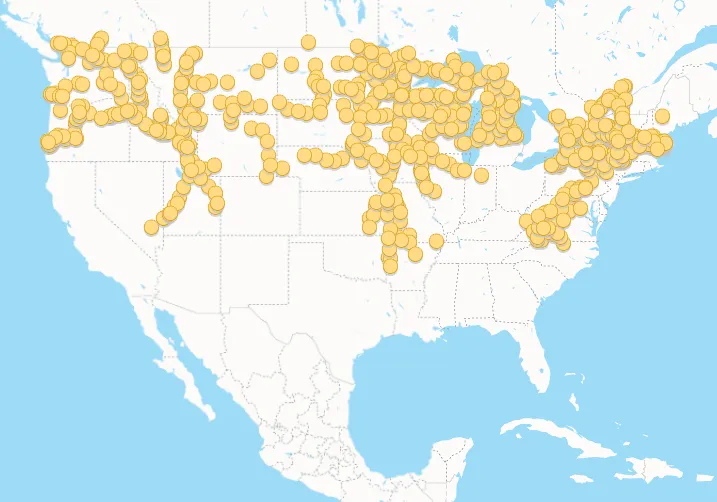
Routes: Strongest in the Midwest, South, and the Northeast.
-
Prices: The source of the legendary $1 fare. Average prices range from $20 to $60.
-
Booking Channels: Website and mobile app. Booking fee (~$3.99) applies per transaction.
-
Refund & Change Policy: Non-refundable. Megabus reservations can be traded in for another journey up to 3 hours before your original scheduled departure. For changed reservations, a trade-in fee applies: $3 if more than 24 hours before departure, $5 if 6–24 hours before, and $7.50 if 3–6 hours before. Additionally, a new reservation fee of $3.99 applies, or $7 if changed by phone.
-
Luggage Policy: One luggage + one carry-on bag. Luggage must not exceed 62 inches when adding the total exterior dimensions of the piece (length + width + height) and should not weigh more than 50 pounds.
-
Popular Routes: Philadelphia to NYC, Chicago to Indianapolis, Washington D.C. to NYC.
4. Northeast Corridor Premium Carriers
If you are traveling between D.C., NYC, and Boston, these carriers offer a significantly "cleaner" and more professional experience than the nationwide giants.
4.1 Peter Pan Bus Lines

-
Facilities: High-end interior finishes, guaranteed working Wi-Fi, power outlets at every seat, and consistent cleanliness.
-
Stations: Uses premium transit hubs like Port Authority (NYC) and South Station (Boston).
-
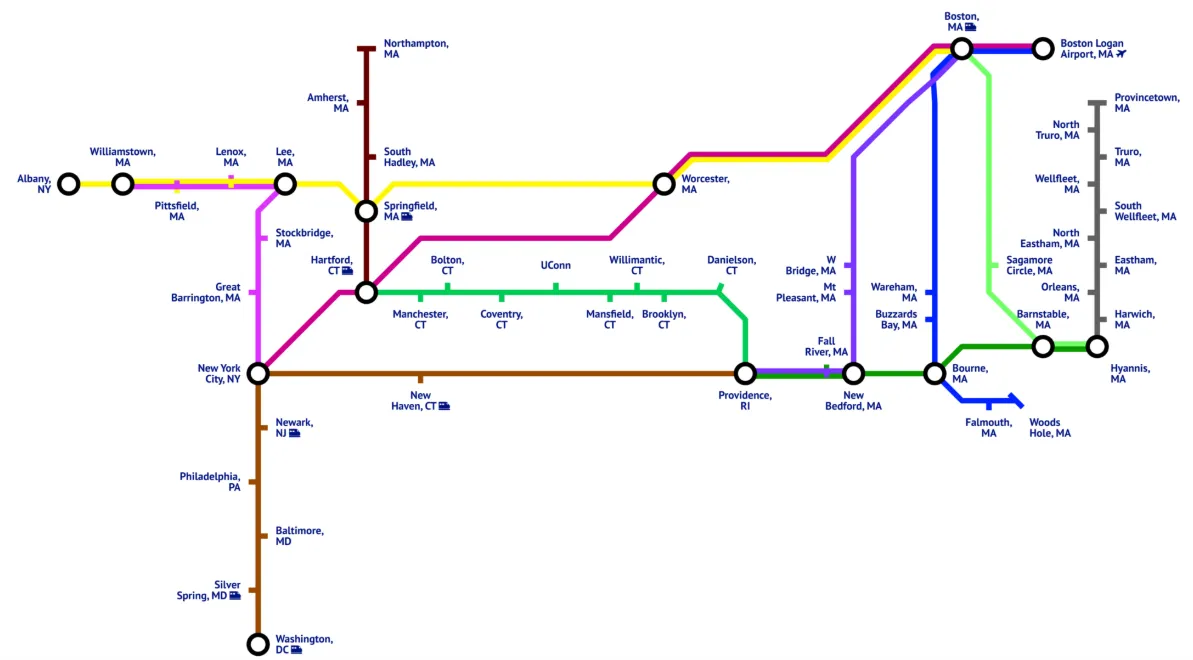
Routes: Extensive "spider-web" network throughout New England and the Mid-Atlantic.
-
Prices: Competitive with Greyhound but often with better service quality.
-
Booking Channels: Peterpanbus.com and "Peter Pan Perks" app for rewards.
-
Refund & Change Policy: Non-refundable but very flexible for rebooking (credit vouchers) if done 2 hours prior. There is a standard reissue fee of $10 per ticket to change plus any difference in the cost of the fare.
-
Luggage Policy: 1 carry-on (up to 25 pounds) and 1 checked bag (up to 50 lbs) free. Checked bag cannot exceed 62 inches when adding the total exterior dimensions of the piece (length + width + height).
-
Popular Routes: Boston to NYC, Springfield to NYC, Providence to Boston.
4.2 OurBus
-
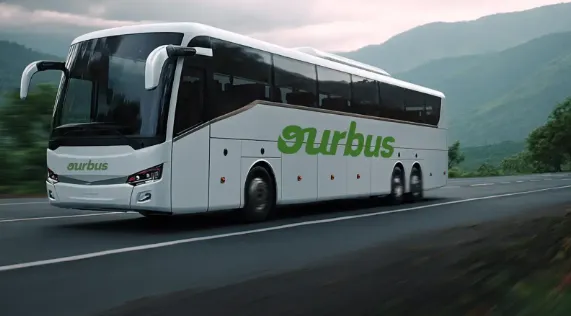
Facilities: Modern executive coaches, complimentary bottled water on many routes, high-speed Wi-Fi, and Sanitized-certified cabins.
-
Stations: Innovative "Suburban to City" model. Picks up at commuter lots or mall parking areas, avoiding crowded downtown stations.
-
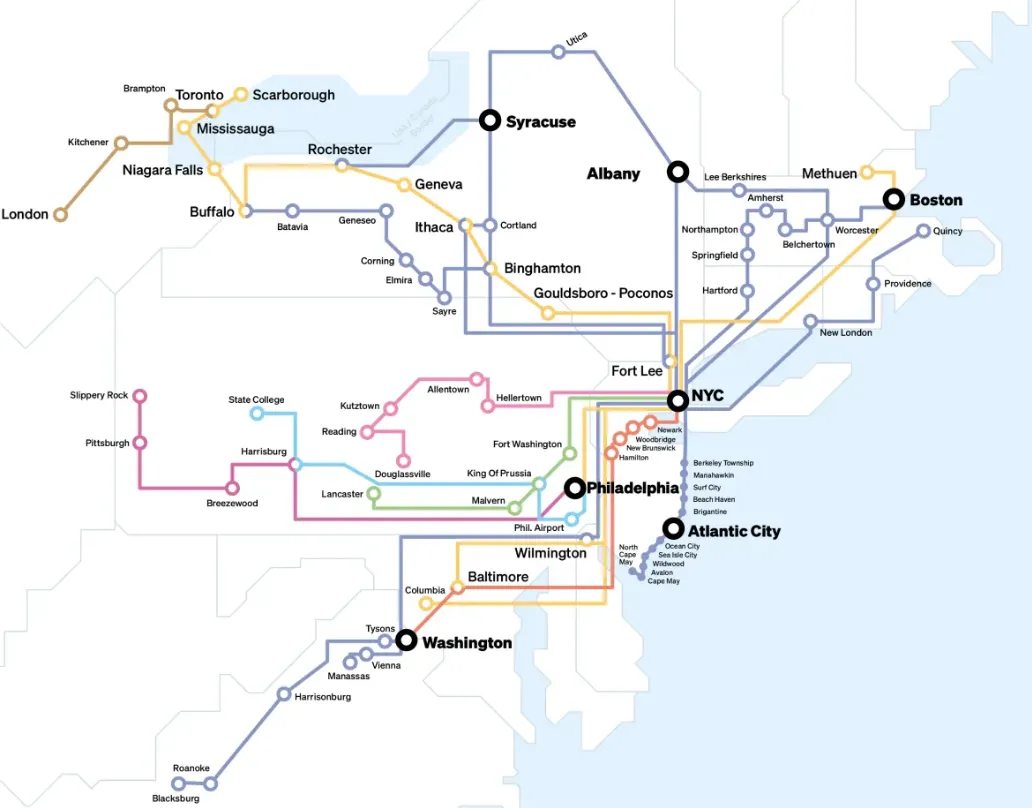
Routes: University-heavy routes (Cornell, Penn State) and the I-95 corridor.
-
Prices: Flat, transparent pricing. Usually around $30–$50.
-
Booking Channels: User-friendly app with a "Request a Stop" feature for popular demand; OurBus official website.
-
Refund & Change Policy: Industry-leading flexibility; cancel or reschedule for full credit up to 30 minutes before departure.
-
Luggage Policy: one suitcase (up to 50 lbs) in the cargo hold and one handbag that must fit on the traveller's lap.
-
Popular Routes: Ithaca to NYC, State College to Philadelphia, Syracuse to NYC.
4.3 Luxury & Executive Commuter Highlights
For travelers who prioritize privacy and professional environments, the Northeast Corridor features several high-end niche carriers:
-
The Jet (Ultra-Luxury): Offers the most premium experience on the Northeast Corridor. With only 14-16 seats per coach, it features motion-canceling gel seats, leg rests, and onboard attendant service. Note for 2026: As of February 3, 2026, The Jet has ceased its regular D.C. ↔︎ NYC scheduled service to transition its fleet toward private charters, special events, and seasonal summer routes.
-
Vamoose / BestBus / Go Buses (Efficient Commuting): These carriers cater specifically to the D.C. ↔︎ NYC and NYC ↔︎ Boston markets. Their primary advantage is the convenience of their pickup/drop-off locations, often situated in the heart of Midtown Manhattan, combined with a higher vehicle standard focused on business efficiency.
-
Trailways (Regional Interline): A long-standing heritage brand that often operates in coordination with Peter Pan in the Northeast. They provide highly reliable and consistent service, making them a steady choice for seasoned travelers who value traditional reliability.
5. Midwest & Regional Core Carriers
For many small towns in the American Heartland, these buses are the only form of public transit available.
5.1 Jefferson Lines (The Heartland Connection)
-
Facilities: Standard reclining seats, restrooms, Wi-Fi on most newer coaches, and outlets.
-
Stations: Often uses local "agencies" like gas stations or convenience stores in small towns.
-
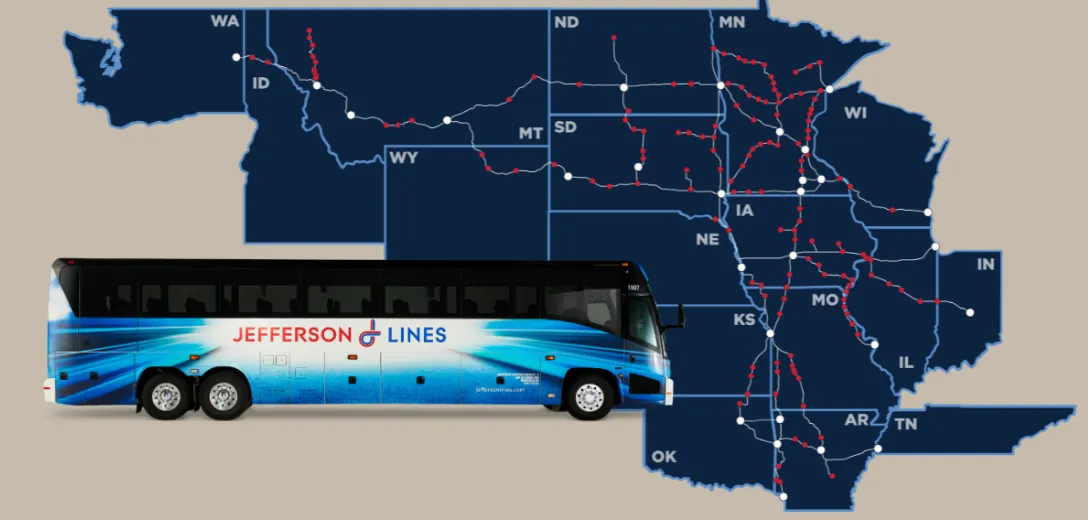
Routes: Spans 14 states from the Canadian border to the Gulf of Mexico.
-
Prices: Varies widely by distance; often cheaper than flying to small-town airports.
-
Booking Channels: Official website, local station agents or call Customer Care at 858-800-8898.
-
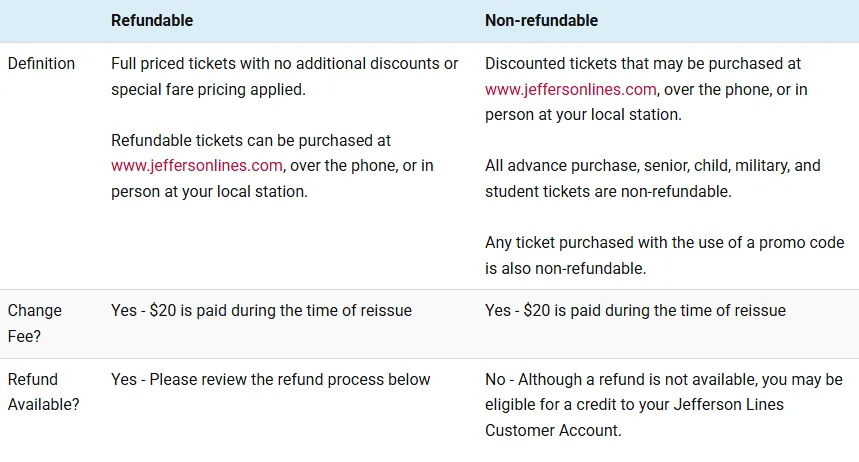
Refund & Change Policy: Non-refundable. Changes are permitted with a fee before the departure time.
-
Luggage Policy: 1 carry-on (maximum 25 lbs) and 1 checked bag (maximum50 lbs, 62 inches or less when adding length + width + height) free. Three additional bags are permitted at $20 each and are non-refundable. Maximum 5 bags per passenger.
-
Popular Routes: Minneapolis to Fargo, Kansas City to Des Moines, Oklahoma City to Dallas.
6. Southern / West Coast Specialty Carriers
These lines offer unique perks—from ultra-luxury seating to specialized service for Spanish-speaking communities.
6.1 RedCoach (The Luxury Specialist)
-
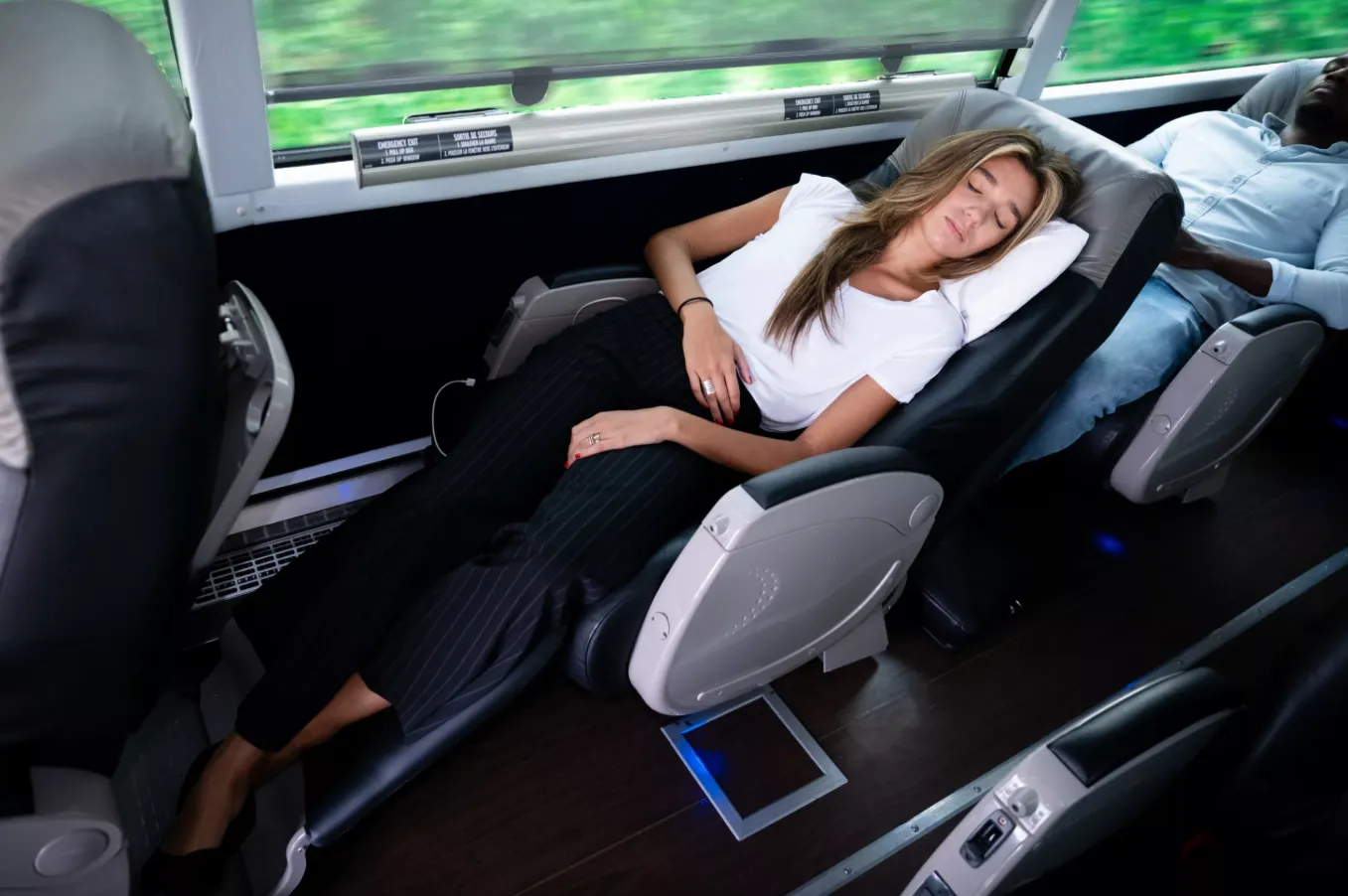
Facilities: Two classes—Business (38 seats) and First Class (21 seats). First class features 140-degree reclining seats that are almost lie-flat.
-
Stations: Luxury hubs at major airports (MIA, MCO) and premium mall parking areas.
-
Routes: Highly specialized network in Florida and Texas.
-
Prices: Premium. Expect to pay $60–$150, but it saves on a first-class flight.
-
Booking Channels: RedCoachUSA.com and Call Center at +1 (877) 733-0724, option 3.
-
Refund & Change Policy: You can change your ticket online without any fees, only paying the price difference if applicable. If you make changes over the phone or via SMS, there will be a $6 fee. Cancel your ticket and receive a voucher for the bus ticket value to use for later.No, changes and cancellations must be requested up to 3 hours before departure.
-
Luggage Policy: Generous allowance—up to 2 checked bags free on First Class tickets.
-
Popular Routes: Miami to Orlando, Houston to Austin, College Station to Dallas.
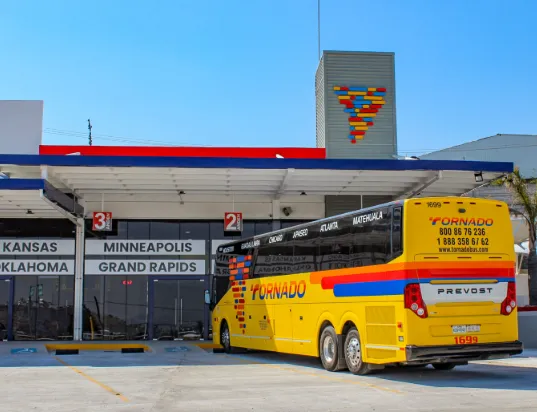
6.2 Tornado Bus (The Cross-Border Expert)
-
Facilities: Reliable, standard coach comfort. Staff are fully bilingual (English/Spanish).
-
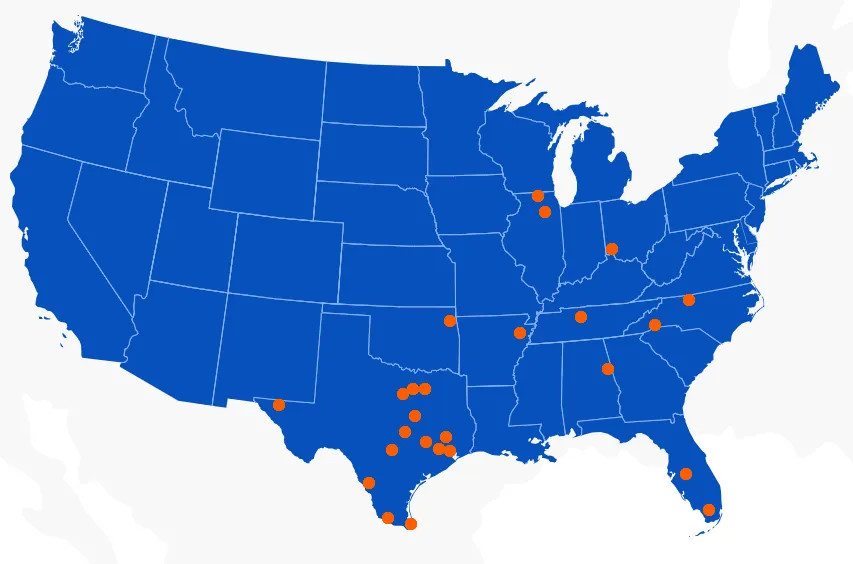
Stations: Dedicated "Tornado" centers in Hispanic neighborhoods, offering a familiar atmosphere.
-
Routes: Strong presence in the Southeast and West Coast, extending into Mexico.
-
Prices: Very affordable, with special "Amigo" group discounts.
-
Booking Channels: Website and many physical storefront agencies.
-
Refund & Change Policy: Limited refunds; changes are usually allowed within 24 hours.
-
Luggage Policy: 2 suitcases 40 pounds each for the lower compartment and one 15 pound carry on item.
-
Popular Routes: Dallas to Chicago, Atlanta to Houston, El Paso to Phoenix.
7. How to Find $1 or $5 Bus Tickets in the U.S.
In 2026, finding a ticket that costs less than a cup of coffee is a specialized skill. While the $1 fare is the "holy grail," $5 to $10 fares are much more attainable if you understand the industry's yield management systems.
7.1 The "Loss Leader" Logic: How $1 Tickets Actually Work
It's not a marketing scam, but it is a "loss leader" strategy. Companies like Megabus and FlixBus release a tiny inventory (usually 1 to 3 seats per bus) at the $1 or $4.99 price point.
-
Goal: To drive traffic to their websites and ensure no bus departs with empty seats.
-
The Jump: Once the $1 seats are sold, the algorithm immediately pushes the price to $15, $25, or $45 based on demand.
7.2 The 120-Day Rule: Timing Your Catch
The secret to ultra-low fares is the Booking Window. Most carriers release their schedules 90 to 120 days in advance.
-
First Come, First Served: The $1 seats are loaded the moment the schedule goes live.
-
The Sweet Spot: If you can’t book 4 months out, the next best window is 21 to 28 days before departure. Prices often hike significantly 14 days out, and again 7 days out.
7.3 Tuesday/Wednesday: The Low-Demand Advantage
Travel demand in the U.S. spikes on Fridays (weekend trips) and Sundays (returning students).
-
Mid-week Magic: You are 5x more likely to find a $5 ticket for a Tuesday or Wednesday departure.
-
Early Morning/Late Night: The "red-eye" buses or 5:00 AM departures are unpopular and frequently have unsold $1-$10 inventory.
7.4 The Competition Map: Where to Look
Price wars happen where multiple companies fight for the same passengers. You will almost never find a $1 ticket to a rural town in Nebraska, but you'll find plenty on these "War Zones":
-
The Northeast Triangle: NYC – Philadelphia – Washington D.C.
-
The California Corridor: Los Angeles – Las Vegas – San Francisco.
-
The Texas Triangle: Houston – Austin – Dallas.
7.5 Pro Tools for the Hunt: Aggregators and Alerts
Don't check every site manually. Use these "weaponized" travel tools:
-
Wanderu & Busbud: These are the "Kayak" of buses. They show FlixBus, Greyhound, and Peter Pan side-by-side.
-
Flash Sales: Follow FlixBus on Instagram or sign up for Megabus email alerts. They frequently drop "Promo Codes" for 20-50% off during slow seasons (January–February or September–October).
-
The "Incognito" Myth: Unlike airlines, bus sites rarely track cookies to raise prices, but using a private browser ensures you see the raw, unmanipulated "base fare."
8. What It’s Really Like to Travel by Long-Distance Bus in the U.S.
Traveling by bus is a unique social and physical experience. Unlike the sterile environment of an airplane, the bus is more "human"—for better or worse.
8.1 U.S. Bus Luggage Rules and Smart Packing Strategies
-
The "Valuables Rule": Always keep your passport, electronics, and cash in a small backpack that stays on your lap. Never put these in the overhead bin (where they can slide) or the luggage hold (where they are out of sight).
-
Luggage Tags: Most drivers won't give you a tag. Buy colorful, sturdy tags so your black suitcase stands out among 50 other black suitcases at the stop.
-
Size Matters: While weight is rarely checked, if your bag looks like it belongs on a cruise ship, you might be charged an "over-sized" fee of $20–$40.
8.2 Best Seats on Long-Distance Buses: Tactical Positioning
-
The "Social Front": The first 3 rows are typically reserved for elderly passengers or those who want to chat with the driver. It's the safest area but can be noisy.
-
The "Quiet Middle": Rows 5 through 10 are the "sweet spot"—away from the door's draft and the bathroom's odor.
-
The "Avoid Zone": Never sit in the last two rows. You will hear every flush, feel every bump in the road, and the seats often don't recline as far.
-
Window vs. Aisle: On overnight trips, the window seat lets you lean against the wall to sleep. On daytime trips, the aisle gives you easier access to stretch your legs.
8.3 Wi-Fi, Power Outlets, and Amenities: Reality Check
-
The Wi-Fi Gamble: Even if "Free Wi-Fi" is advertised, it is rarely fast enough for streaming or large downloads. It is best used for basic messaging (WhatsApp/WeChat) and maps.
-
Power Strategy: Outlets are often located under the seat or near the window. They can be loose; bring a rubber band or tape to keep your charger from falling out during vibrations.
-
Restrooms: They are for emergencies only. Think of it as a "chemical closet." Use the facilities at the station or rest stops whenever possible.
8.4 The "Bus Etiquette" and Interaction Boundaries
-
The Headphone Rule: This is the most important rule of American bus travel. Wearing headphones—even if they are off—is the universal signal for "I don't want to talk."
-
Interaction: Americans can be friendly but respect personal space. A simple "Hello" is fine, but avoid sharing deep personal details.
-
Eating Onboard: Avoid foods with strong smells (like fish, onions, or heavy spices). Stick to "clean" snacks like protein bars, nuts, or bottled water.
-
The "Layer" Method: American buses are either freezing cold (AC on max) or stiflingly hot. Wear layers (a hoodie and light jacket) so you can adapt.
8.5 Managing Long-Haul Fatigue
-
Sleep Kits: A neck pillow and an eye mask are non-negotiable for trips over 6 hours.
-
Hydration: The air on buses is very dry. Drink water, but pace yourself to avoid frequent bathroom trips.
9. Is It Safe to Take Long-Distance Buses in the U.S.?
The short answer is yes, but with a heavy dose of "street smarts." Security on American buses in 2026 relies more on technology and common sense than on a heavy police presence.
9.1 The "Intuition Rule" and Social Awareness
The most important tool for safety isn't a lock; it's your gut.
-
Trust Your Instincts: If someone makes you feel uncomfortable, move. You don't need a "polite" reason to change seats.
-
The "Driver Proximity" Strategy: If you are traveling alone or feel uneasy, sit within the first 4 rows. You are within the driver’s line of sight and earshot.
-
Scanning the Crowd: When boarding, briefly look at your fellow passengers. Most are students, workers, or families, but being aware of your surroundings helps you spot unusual behavior early.
9.2 Night Bus Safety: Surviving the Dark
-
The Backpack Anchor: When sleeping on a night bus, put one arm through the strap of your backpack or use it as a pillow. This makes it impossible for someone to move it without waking you.
-
Avoid "Deep Sleep" at Terminals: If your bus has a 1-hour midnight layover at a station, try to stay awake or set a vibrating alarm. These are the moments when unattended bags are most vulnerable.
-
Stay in the Light: If you get off at a rest stop at 3 AM, stay near the bus or inside the well-lit convenience store. Do not wander into the dark corners of the parking lot.
9.3 Station Safety: Identifying High-Risk Hubs
-
The "Internal Only" Rule: Major city hubs (like the Greyhound station in downtown L.A. or Port Authority in NYC) often have loiterers outside. Once you arrive, go directly inside the ticketed passenger zone.
-
The Curbside Check: For companies like FlixBus that use curbside stops, verify the stop location on Google Maps Street View beforehand. If it’s under a lonely bridge or in a dark alley, try to arrive by Uber/Lyft right before departure rather than waiting there for 30 minutes.
-
Baggage Claims: When the bus reaches a major stop, keep an eye out the window to ensure your under-bus luggage isn't accidentally taken by someone getting off early.
9.4 Specialized Safety Tips for Solo and Female Travelers
-
The "Virtual Buddy": Share your live location (via WhatsApp or Google Maps) with a friend.
-
Fake a Call: If someone is being overly intrusive, pretend to be on a call or mention that "my brother is picking me up at the station."
-
Avoid Overt Displays of Wealth: Keep expensive jewelry, high-end cameras, and thick rolls of cash hidden. The less you look like a "high-value target," the better.
9.5 When You Should Actually Avoid the Bus
While generally safe, there are times when the safety-to-cost ratio isn't worth it:
-
Extremely Tight Connections: If you have a 1-hour transfer in a rough neighborhood at midnight, any delay could leave you stranded in an unsafe area.
-
Medical Fragility: Buses can be bumpy and economies can be far apart. If you have a condition requiring immediate medical access, a plane or train is safer.
10. Delays, Cancellations, and Missed Buses in the U.S.
The reality of U.S. bus travel is that schedules are "ambitious goals" rather than firm promises. In 2026, while technology has improved tracking, road infrastructure remains the biggest source of uncertainty.
10.1 Why Long-Distance Buses Are Often Delayed
Unlike trains (which have tracks) or planes (which fly above traffic), buses are mercy to the American interstate system.
-
The "Chain-Reaction" Delay: On a 1,000-mile route, a 20-minute traffic jam in city #1 can become a 2-hour delay by city #5 because of driver mandatory rest breaks (ELD regulations).
-
Weather & Terrain: Snow in the Rockies or heavy rain in the South can halt buses for hours as drivers prioritize safety over schedules.
-
Maintenance Issues: If a bus has a mechanical failure, a replacement might have to be dispatched from a hub several hours away.
10.2 What Happens If Your Bus Is Canceled
Cancellation policies vary wildly by carrier.
-
Notification: In 2026, companies like FlixBus and OurBus are excellent at push notifications via their apps. Greyhound is improving but can still be hit-or-miss.
-
The "Automatic Rebooking" Trap: Many companies will automatically move you to the next available bus. If that bus departs 12 hours later, you are technically entitled to a refund, but you must explicitly request it.
-
Compensation Limits: Under U.S. law, bus companies are almost never required to pay for your hotel, meals, or alternative transport (like a flight) if they cancel due to weather or traffic. This is a crucial "hidden risk."
10.3 Missed the Bus? Grace Periods and Rebooking
-
The "15-Minute Rule": Most drivers will not wait even 60 seconds past departure time.
-
Economy vs. Flexible: If you have an Economy ticket and miss the bus, your ticket is usually void (worth $0). If you have a "Flexible" or "Economy Extra" fare, you can often rebook for the next trip for a small fee ($15–$20).
-
Same-Day Standby: Some Greyhound stations allow you to pay a "re-issue fee" to board a later bus on the same day if space is available, but this is at the agent's discretion.
10.4 Customer Service Reality: What to Expect
-
Digital vs. Human: OurBus and Peter Pan have the best human customer support (chat or phone). FlixBus relies heavily on automated "help centers" which can be frustrating during a crisis.
-
The Refund Struggle: Getting a cash refund back to your credit card is notoriously difficult and can take 2–4 weeks. Most companies will first try to offer you "Travel Credit" or a voucher.
-
Pro Tip: If a bus is delayed more than 2 hours, take a screenshot of the live tracker. This is your "evidence" for any future refund claim.
11. Final Verdict: Which Bus Carrier Should You Choose?
In 2026, the best carrier depends entirely on your specific travel priorities. Use this quick matching table to find your ideal ride:
11.1 Traveler Matchmaking Table
|
If your priority is... |
The Best Choice is... |
Why? |
|---|---|---|
|
Lowest Price Possible |
Megabus / FlixBus |
Aggressive dynamic pricing and the best chance for $1–$10 tickets. |
|
Ultimate Comfort (Texas/FL) |
RedCoach |
First-class seats that actually recline for sleeping on long routes. |
|
Punctuality & Customer Care |
OurBus |
Superior app support and 30-minute cancellation/change policy. |
|
Small Town / Rural Access |
Greyhound / Jefferson Lines |
Only carriers with the network reach to access the American Heartland. |
|
Student / University Travel |
OurBus / FlixBus |
Convenient stops at campus hubs and student-friendly amenities. |
|
Cross-Border (Mexico/US) |
Tornado Bus |
Fully bilingual staff and expertise in border crossing logistics. |
|
Executive / Business Travel |
Vamoose / BestBus |
Convenient Midtown NYC stops and a professional passenger base. |
|
The "Traditional" Reliability |
Peter Pan / Trailways |
Decades of service history and high-quality maintenance standards. |
11.2 Who Should Take the Bus?
The bus is ideal for budget-conscious travelers, digital nomads with flexible schedules, and those traveling between major city pairs (e.g., NYC to D.C.). It remains the most eco-friendly and cost-effective way to see the diverse landscape of the United States.
11.3 Who Should Avoid Bus Travel?
If you have an inflexible timeline (e.g., a wedding or business meeting within 2 hours of arrival), or if you are planning a cross-country trip over 24 hours without stopping, a flight or Amtrak’s sleeper car is a much more humane option.
11.4 Key Takeaways for 2026
-
Book early to catch the lowest fare tiers.
-
Use the apps for real-time tracking—it’s much more reliable than station announcements.
-
Keep valuables on your lap at all times.
-
Embrace the journey—it's a window into the "real" America that you miss from 30,000 feet.
Safe travels!