Traveling across the United States is an epic adventure, but let’s be honest: the logistics can be a nightmare. Unlike Europe, where a single train ticket might take you across three countries, the US relies on a complex web of domestic flights, long-haul buses, and a legendary (but often confusing) rail network.
If you are planning a trip in 2026, you don't need to open twenty different tabs for Amtrak, Greyhound, and Delta. You just need Rome2rio.
This guide provides a comprehensive, step-by-step walkthrough on how to use Rome2rio to orchestrate the perfect "Air-Land-Sea" combination for your American journey.
I. What is Rome2rio and Why Does it Matter in 2026?
1. What is Rome2rio?
At its core, Rome2rio is a multimodal travel search engine that answers one fundamental question: "How do I get from Point A to Point B?" Unlike standard booking sites that only focus on flights or car rentals, Rome2rio indexes over 47,000 train routes, 670 airlines, and thousands of bus and ferry lines across 240+ countries. In the US, it functions as a "super-aggregator," stitching together disparate transportation networks—Amtrak, Greyhound, regional shuttles, and even rideshares—into a single, cohesive itinerary.
2. Why Does it Matter in 2026?
As we navigate 2026, the US travel landscape has evolved, making Rome2rio more relevant than ever for three critical reasons:
-
The "Post-Flight" Era of Domestic Travel: With the 2026 expansion of high-speed rail corridors (like the Brightline in the Southeast and West) and the rising costs of short-haul domestic flights, travelers are looking for smarter overland alternatives. Rome2rio is the only platform that effectively compares a 4-hour flight (including TSA wait times) with a 5-hour high-speed train, often revealing that ground travel is both cheaper and more efficient.
-
Solving the "Last Mile" Problem: US infrastructure is notorious for its "last mile" gaps—getting from a major train station to a remote National Park or a small coastal town. Rome2rio’s 2026 updates now feature hyper-local integration, showing you exactly which local shuttle or regional bus picks up where your Amtrak train leaves off.
-
AI-Enhanced Efficiency: In 2026, the platform has integrated advanced AI to predict delays and price fluctuations. It no longer just shows you a static schedule; it analyzes real-time data to suggest "buffer zones" for connections, ensuring your cross-country journey doesn't fall apart due to a single delayed bus in Kansas.
-
Sustainability & Transparency: As "Slow Travel" becomes a dominant trend in 2026, Rome2rio’s CO2 emission filters allow users to prioritize low-carbon routes. It empowers you to see the environmental impact of a flight versus a coach or train journey across the Midwest, aligning your travel plans with modern eco-conscious values.
Pro Tip: In 2026, don't just use Rome2rio to find a route—use it to validate one. Before booking that "cheap" flight, run the same route through Rome2rio to see if a combination of rail and ride-share might save you $200 and three hours of airport security lines.
II. The 2026 Interface & Core Features: Your Travel Command Center
In 2026, Rome2rio has shed its skin as a "simple search engine" to become a predictive travel architect. The interface is cleaner, faster, and designed for a "mobile-first" generation that demands instant answers.
1. The "Unified Search" Bar (AI-Powered)
The 2026 search bar is no longer restricted to "From" and "To." It now understands natural language and contextual intent.
-
How it works: You can type "Cheapest way from Chicago to Nashville leaving after work Friday" or "Most scenic route from SF to Portland with EV charging." * The Core Benefit: The AI engine parses your constraints—time, budget, and preference—filtering out thousands of irrelevant options in milliseconds.
2. The Multimodal "Timeline View"
This is the heart of the 2026 update. Instead of a vertical list of disjointed options, Rome2rio now presents a Horizontal Timeline.
-
Visual Integration: It shows you the "hand-off" points. For example, it visualizes the 15-minute walk from your NYC hotel to Penn Station, the 3-hour Amtrak ride, and the 10-minute Lyft wait in Philly as one continuous ribbon.
-
Real-Time Overlays: In 2026, this timeline updates live. If your bus is stuck in I-95 traffic, the timeline shifts, and the "Next Step" (like your train connection) glows red if it’s at risk.
3. Key Core Features for 2026
| Feature | What it does in 2026 | Why it’s a Game Changer |
| The "Last-Mile" Bridge | Automatically adds local transit or rideshare costs to the total. | You see the real price of the trip, not just the ticket. |
| Carbon Footprint Tracker | Displays the CO_2 impact for every route option. | Essential for the eco-conscious traveler prioritizing rail over air. |
| "Book-in-App" (One-Tap) | Secure API links that let you buy Amtrak, Greyhound, and United tickets in one place. | No more juggling 5 different apps and passwords. |
| Offline "Ghost" Maps | Caches your entire route and local maps for areas with no signal. | Vital for the "Dead Zones" in the American West and National Parks. |
4. The 2026 Mobile App vs. Desktop
While the desktop version remains superior for complex, multi-city planning (thanks to the split-screen map/itinerary view), the 2026 Mobile App is your "In-Transit Pilot."
-
Haptic Alerts: Your phone vibrates differently for a "Gate Change" vs. a "Departure Warning."
-
Dynamic QR Wallet: The app automatically pulls your tickets from your email and displays the correct QR code based on your GPS location (e.g., showing your Amtrak ticket as you enter the station).
Power User Tip: Look for the "Efficiency Score" (a 1-10 rating) next to each route. In 2026, Rome2rio calculates this based on a formula of Price × Time × Stress Factor. A score of 9.5 usually means you’ve found the "sweet spot" of American travel.
III. Mastering the "Big Three" of US Long-Distance Travel
In 2026, the "Big Three"—Air, Rail, and Road—are no longer competing silos. Rome2rio’s greatest strength is its ability to "intermodalize" these three, allowing you to switch between them based on geography and real-time efficiency.
To conquer American distances, you must understand that the "best" mode of transport changes depending on which region you are traversing. Here is how to master the Big Three using Rome2rio’s 2026 toolkit.
1. The Rail Renaissance: Leveraging Amtrak & Brightline
2026 marks the first year the NextGen Acela and Amtrak Airo fleets are fully operational across the Northeast and Cascadia.
-
The Rome2rio Strategy: When searching routes like Boston to Philly or Miami to Orlando, use the "Station-to-Station" filter.
-
Pro Tip: Look for the "Amenities" icon in your search results. In 2026, Rome2rio pulls live data on 5G Wi-Fi availability and Quiet Car status, which are essential for digital nomads traveling the Northeast Corridor.
-
Regional Dominance: If you are in Florida or the West Coast, prioritize Brightline results—they often beat short-haul flights on total "Door-to-Door" time when you factor in security.
2. The Flight Factor: Integrating Low-Cost Carriers (ULCCs)
The US aviation market in 2026 is dominated by point-to-point "secondary" airports.
-
Hidden Airports: Rome2rio excels at finding flights into smaller hubs like Burbank (BUR) instead of LAX, or Islip (ISP) instead of JFK.
-
The "Fly-Drive" Hybrid: For the first time, Rome2rio’s 2026 algorithm suggests "Flight + One-Way Car Rental" combinations. If a flight to a major hub is $300 cheaper than a flight to your final rural destination, the app will calculate if renting an EV for the final 100 miles saves you both time and money.
-
Real-Time Booking: Use the "Fares Include Bags" toggle to avoid the 2026 "hidden fee" surge common among budget carriers.
3. The Modern Coach: Premium Buses & "The Jet"
Forget the gritty bus stations of the past. By 2026, the "Luxury Coach" segment has exploded.
-
Beyond Greyhound: Rome2rio now integrates premium lines like The Jet (NYC to DC) and Napaway (Sleeper buses in the South).
-
The Strategy: When your search results show a bus option, check the "Seat Class" tag. In 2026, many US coaches offer lie-flat beds and "Starlink-in-Motion" internet.
-
Intercity Links: Use the map view to see where the bus drop-off is. Often, a FlixBus will drop you in a city center, while a flight drops you 45 minutes away, making the bus the "hidden" winner for mid-range trips (200–400 miles).
The 2026 Comparison Matrix
| Mode | Best For... | Rome2rio "Secret" Feature |
| Rail | Northeast & Florida Corridors | Live Platform Tracking: Know exactly which track to stand on before the announcement. |
| Air | Transcontinental (e.g., NYC to SF) | TSA Wait Predictor: Rome2rio adds estimated security time to your "Total Travel Time." |
| Bus | Budget & Mid-Range (Midwest/South) | Eco-Label: Compare the carbon savings of a bus vs. a solo car rental. |
Note on 2026 Pricing: Be aware that "Dynamic Pricing" is at an all-time high. Rome2rio’s "Price Heat Map" feature now shows you if today’s displayed fare is "Fair," "High," or "Deal of the Week" based on historical 2025-2026 data.
IV. Step-by-Step Tutorial: Mastering the Rome2rio Workflow
Step 1: Execute a "Smart Search"
Forget searching for just cities. In 2026, Rome2rio’s engine is powerful enough to handle specific addresses, landmarks, or even GPS coordinates.
-
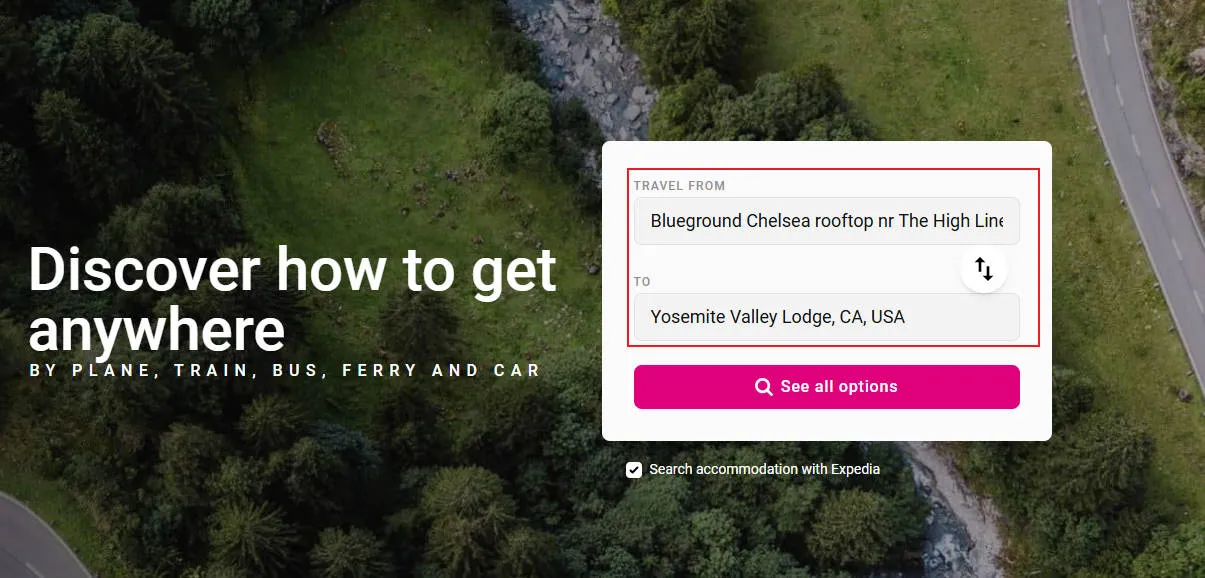
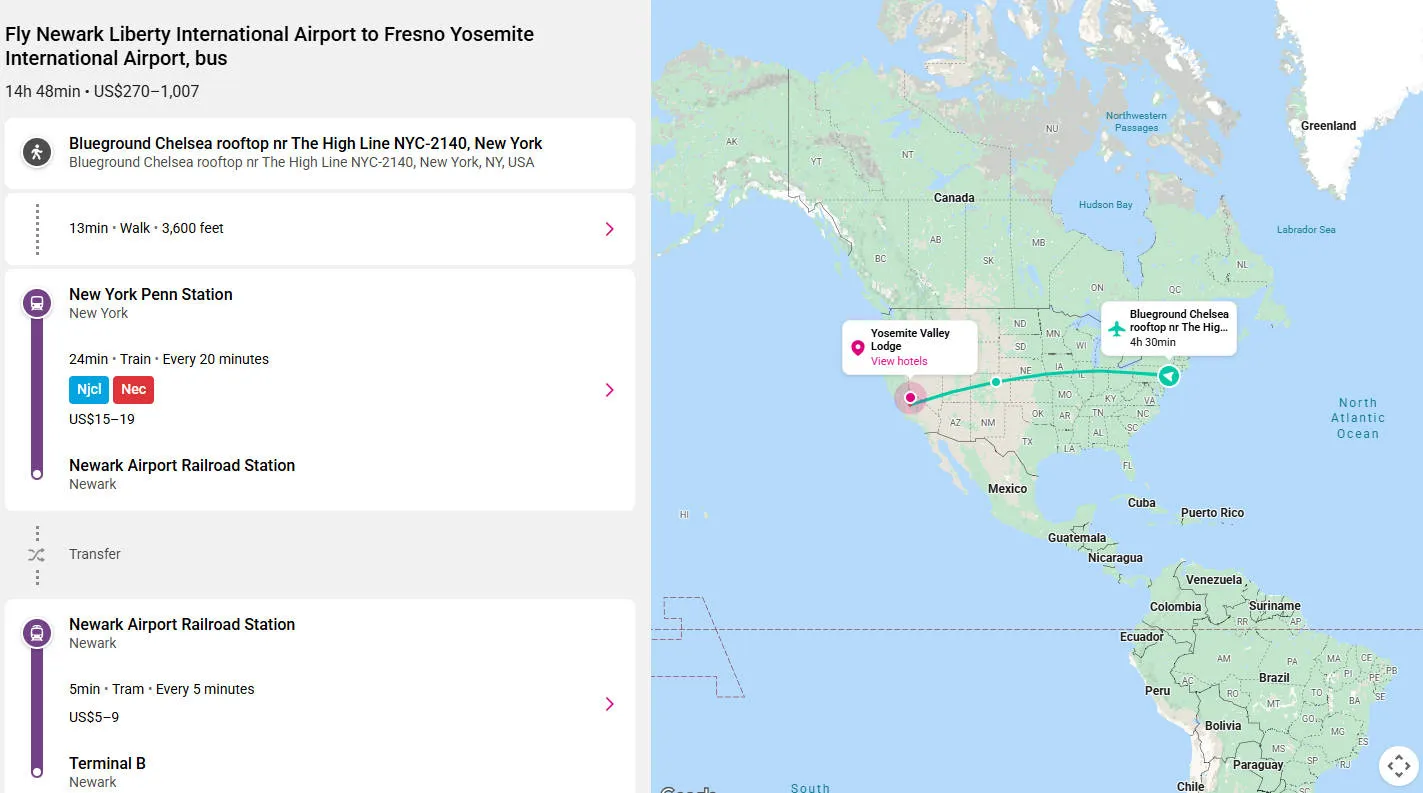
Action: Enter your exact starting point and final destination (e.g., "The High Line, NYC" to "Yosemite Valley Lodge").
-
The 2026 Advantage: The app will automatically calculate the "First Mile" (getting from your door to the station) and the "Last Mile" (getting from the rural drop-off to your hotel), providing a true door-to-door estimate.
Step 2: Navigate the "Multimodal Matrix"
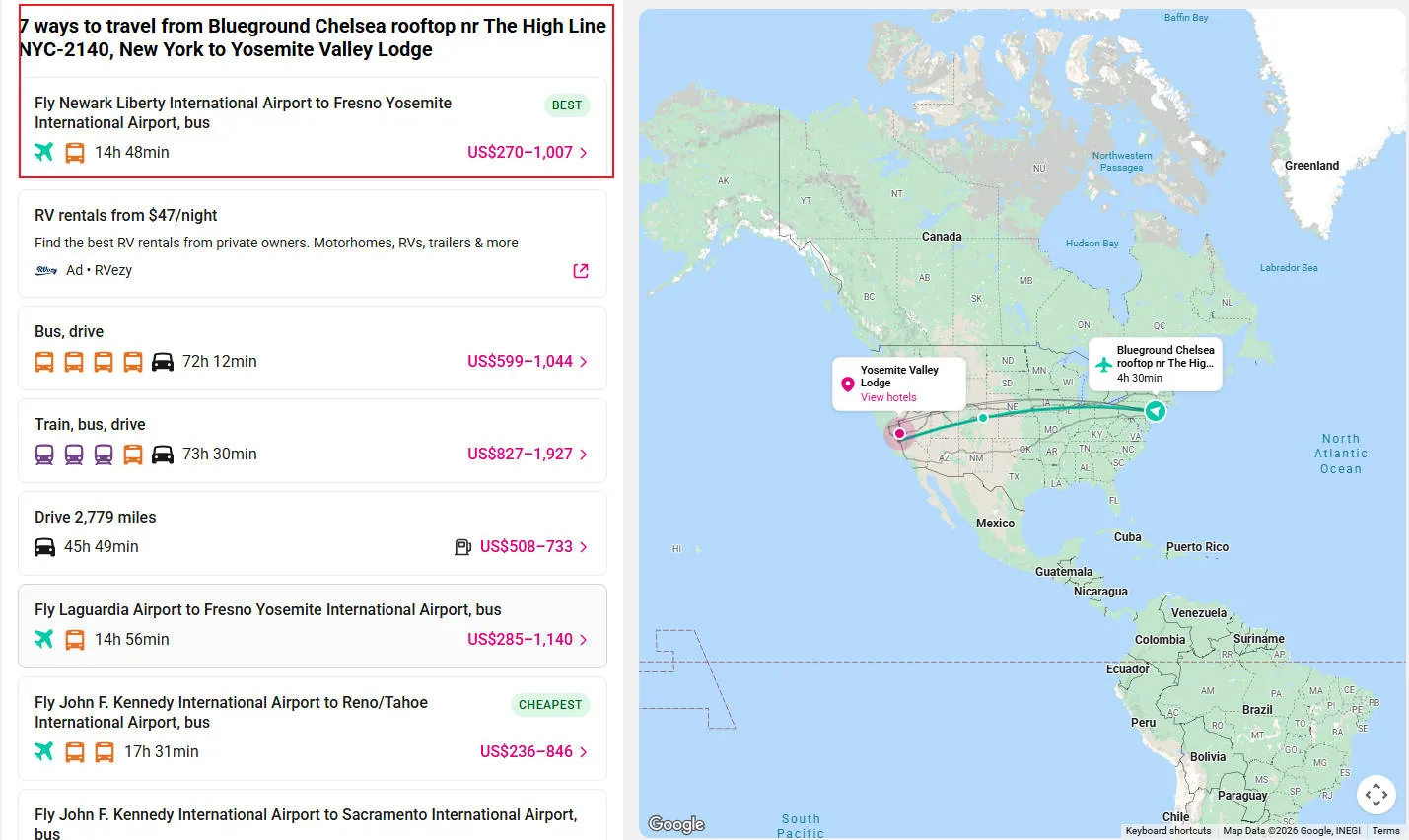
Once you hit search, you’ll see a list of travel combinations.
-
Compare Modes: Look at the icons. Rome2rio doesn't just show "Flight" or "Train"; it shows hybrid routes (e.g., Train + Rental Car or Flight + Bus).
-
Filter by Priority: Use the toggles at the top to sort by Cheapest, Fastest, or the AI-recommended Optimal route. In 2026, the "Optimal" tag is your best friend—it filters for routes with the highest reliability scores and best connection windows.
Step 3: Deep-Dive into Segment Details
Click on a specific route to expand its "Timeline View."
-
Check the Operator: Scroll down to the Operator Details. Here, you can see if the bus has Starlink Wi-Fi or if the train is one of the new Amtrak Airo models.
-
Live Timetables: In 2026, clicking a segment reveals live, real-time tracking. If the 4:00 PM Greyhound is running 20 minutes late, the app will adjust your entire arrival time automatically.
Step 4: Use the "Trip Planner" for Multi-City Journeys
Planning a grand tour? Don't search for each leg separately.
-
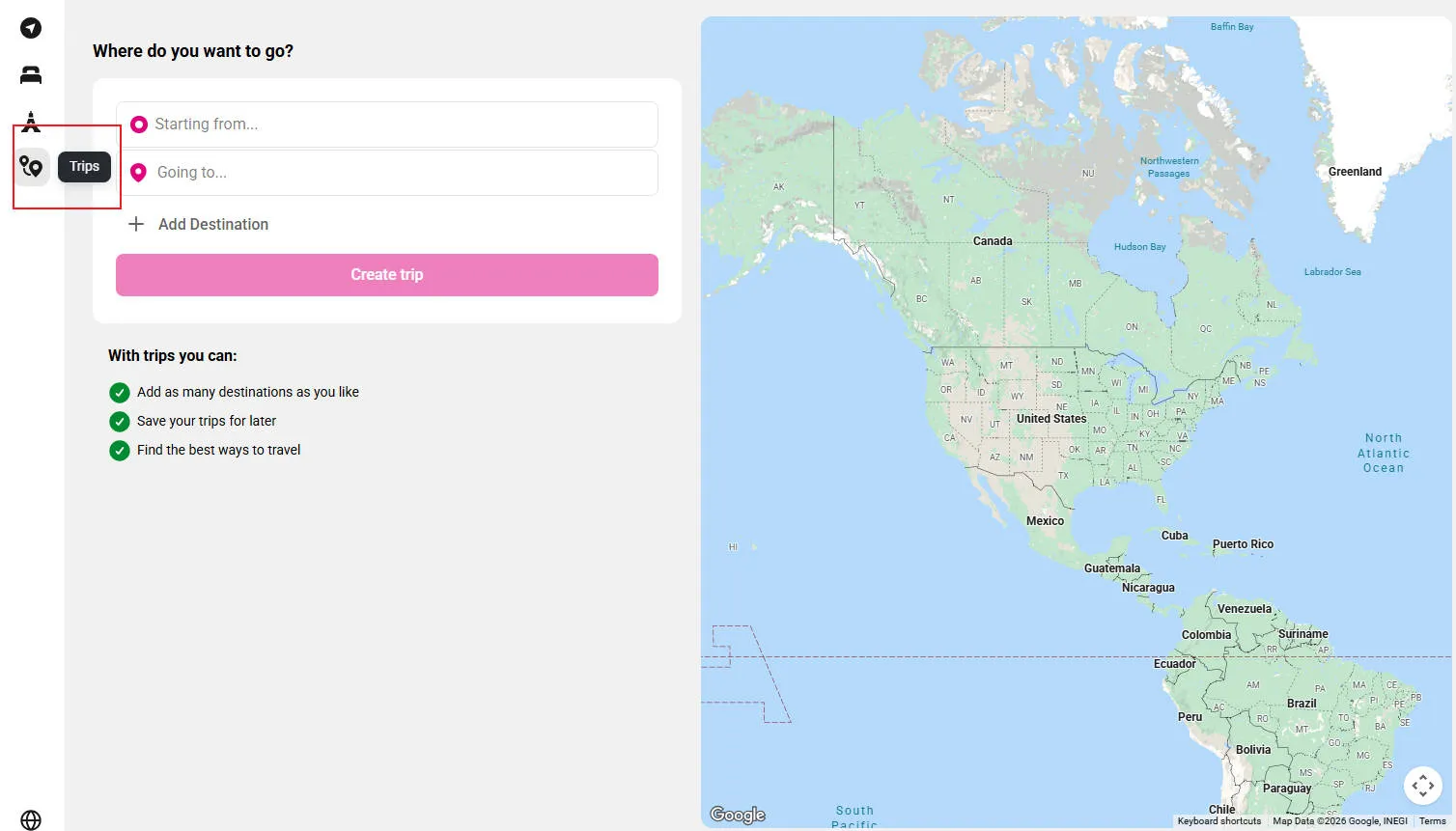
Action: Click the "Trip Planner" tab (usually a "+" or "Trips" icon). Add your 5 or 10 stops across the US.
-
Optimize: Hit the "Optimize Order" button. The AI will re-sequence your stops to ensure you aren't crisscrossing the country inefficiently, saving you hundreds in fuel or ticket costs.
Step 5: Secure Your Booking & Go Offline
Once you’ve found the perfect route:
-
One-Tap Booking: Look for the Pink "Book" buttons. These allow you to purchase tickets for Amtrak, major airlines, and most bus lines (FlixBus, Greyhound) without leaving the ecosystem.
-
Offline Save: This is the most critical step for the US West. Hit the "Save for Offline" button. This caches the maps and transit schedules so that even when you lose signal in a National Park, you still have your digital breadcrumbs.
2026 Pro Tip: Always look for the "Alt-Hub" suggestion. If flying into LAX is $500, Rome2rio might suggest a cheaper flight to Ontario (ONT) followed by a 45-minute regional rail link. It’s the "Secret Menu" of American travel.
V. Advanced Strategies for the "Power Traveler"
Standard A-to-B searching is for beginners. To master long-distance travel in 2026, you need to leverage Rome2rio’s sophisticated backend to solve the most common American travel headaches: the "Last Mile" gap and the complex multi-city itinerary.
1. Solving the "Last Mile" Bridge
The biggest hurdle in US travel isn't getting to Chicago; it's getting from the Chicago Amtrak station to a specific trailhead or a suburban business park.
-
The "Nearby" Feature: In the 2026 interface, use the "Explore Nearby" toggle. If your primary destination has no direct bus, Rome2rio will highlight the nearest "Transit Hub" (like a regional airport or a major park-and-ride) and suggest the best local shuttle or rideshare connection to close the gap.
-
Hyper-Local Integration: By 2026, Rome2rio has integrated thousands of niche regional providers—think the Salt Lake Express for Yellowstone access or the Cape Cod Regional Transit Authority. Always scroll past the "Big Names" (United/Amtrak) to find these local links that save you a $100 Uber fare.
2. The 2026 Trip Planner: Orchestrating Multi-Stop Odysseys
For those planning a "Cross-Country Tour," the 2026 Trip Planner is your greatest asset.
-
Dynamic Reordering: You can now drag and drop up to 15 destinations. The AI will automatically recalculate the most efficient order based on real-time transit schedules—not just distance.
-
The "Hybrid Stopover" Strategy: Use the planner to find "forced" layovers that are actually opportunities. If a flight from Seattle to Miami has a 6-hour layover in Dallas, Rome2rio will show you the exact DART rail line to take you into the city for a quick BBQ lunch and back, factoring in 2026 security wait times.
3. Filter Mastery: Customizing for Stress & Sustainability
In 2026, "efficiency" isn't just about speed; it's about your personal comfort and values.
-
The "Stress Filter": Sort your results by "Minimum Transfers." Across the US, a 10-hour direct bus is often preferable to a 6-hour journey involving three tight connections in cities with unreliable transit.
-
Carbon-Negative Routing: Use the CO2 Overlay to compare. In many 2026 corridors, choosing a high-speed rail leg over a "puddle jumper" flight reduces your trip's carbon footprint by up to 85%—a data point many 2026 travelers use for corporate travel reporting.
4. Pro Strategy: The "Ghost Search" for Dead Zones
Planning a trip to the Grand Canyon or the Appalachian Trail?
-
Pre-Caching: Use the "Save for Offline" feature. In 2026, this doesn't just save a static image; it caches the interactive map and the last known local shuttle schedule. When you lose 5G signal in the desert, you’ll still know exactly where the 4:15 PM shuttle is supposed to appear.
Power Traveler Checklist for 2026:
-
[ ] Validate the Hub: Is it cheaper to fly to a hub and take a "luxury coach" (e.g., Vonlane) the rest of the way?
-
[ ] Check the "Walking Leg": Does the route involve a 20-minute walk with luggage? If so, check for the "Integrated Rideshare" button to pre-book a pickup.
-
[ ] Sync with Calendar: Use the one-tap sync to push the entire multi-modal timeline to your Google or Apple Calendar.
VI. 2026 Pro-Tips: Saving Money and Time
In 2026, the mantra is: Data over Luck. While traditional "Tuesday booking" myths have faded, new strategies involving AI prediction and secondary hubs have taken their place. Here is how to keep your budget intact.
1. The "Gateway Hopping" Strategy
One of the most powerful 2026 travel hacks is Gateway Flexibility.
-
The Concept: Rome2rio often shows that flying from a major hub like EWR (Newark) or ORD (Chicago) is $300 cheaper than flying from your local regional airport.
-
The Pro Move: Don’t just look at the total price. Use Rome2rio to find a low-cost "feeder" bus or a regional rail link (like the Brightline or Amtrak Airo) to get you to that major hub. Even with the extra transit leg, the "Gateway Hop" can save a family of four over $1,000 on a transcontinental trip.
2. Mastering the "Price vs. Convenience" Matrix
Rome2rio’s 2026 interface now includes an "Efficiency Score" (S-Score). This is a weighted calculation of Cost + Time + Transfers.
-
The Trap: The "Cheapest" route often involves a 6-hour layover or a bus terminal that requires a $50 Uber to reach your hotel.
-
The Fix: Always look for the "Optimal" tag. In 2026, the "Optimal" route is often $20 more expensive than the cheapest but saves you 4 hours of idle time and $60 in "hidden" last-mile costs.
3. The "Sleeper" Advantage: Night Trains and Buses
With hotel prices in US cities hitting record highs in 2026, the Night Move has made a massive comeback.
-
Double Value: Rome2rio now highlights "Overnight" options with a moon icon. Booking a premium sleeper bus (like Napaway) or an Amtrak Viewliner roomette allows you to combine your transportation and accommodation costs into one.
-
Pro Tip: In 2026, these options are searchable by "Lie-Flat" filters, ensuring you actually get a night's sleep while crossing state lines.
4. Beat AI Dynamic Pricing
In 2026, airlines and bus companies use AI to hike prices the moment they detect high demand.
-
The "Incognito" Myth vs. Reality: While cookies matter less now, regional pricing matters more.
-
The Rome2rio Hack: Use the "Price Calendar" feature to view a 30-day heat map. Often, shifting your departure by just 6 hours (taking the 5:00 AM "Red-Eye" bus instead of the 11:00 AM peak coach) can drop the fare by 40%.
5. The 2026 "Subscription" Synergy
Many US carriers (Frontier, Alaska Air, Amtrak) now offer monthly travel passes.
-
Integration: Rome2rio allows you to toggle "Pass Holder" mode. If you own an Ameripass or a multi-ride rail pass, the app will show you "Zero-Dollar" routes for your specific segments, helping you maximize the ROI of your subscriptions.
| Goal | 2026 Strategy | Rome2rio Tool |
| Lowest Fare | Secondary Airport Search | "Expand Search Radius" (50-100 miles) |
| Time Saving | Avoid Hub Congestion | "Direct Routes Only" + "Priority Rail" |
| Sustainability | Low-Carbon Routing | "CO2 Emission Filter" |
| Avoid Fees | Personal-Item Only | "Fare Transparency" (Includes bag fees) |
Final 2026 Pro-Tip: Watch out for "Ancillary Creep." In 2026, the base fare is just the beginning. Use the Rome2rio "Total Cost" toggle to include estimated luggage fees and seat selection before you click "Book."
VII. Case Studies: Popular 2026 US Routes Decoded
To master Rome2rio in 2026, you must understand how to leverage the newest infrastructure—from high-speed rail rollouts to premium "hotel-on-wheels" buses.
Here is how to decode three of the most popular American corridors using the platform's advanced filters.
1. The Northeast Corridor: NYC to Washington D.C.
-
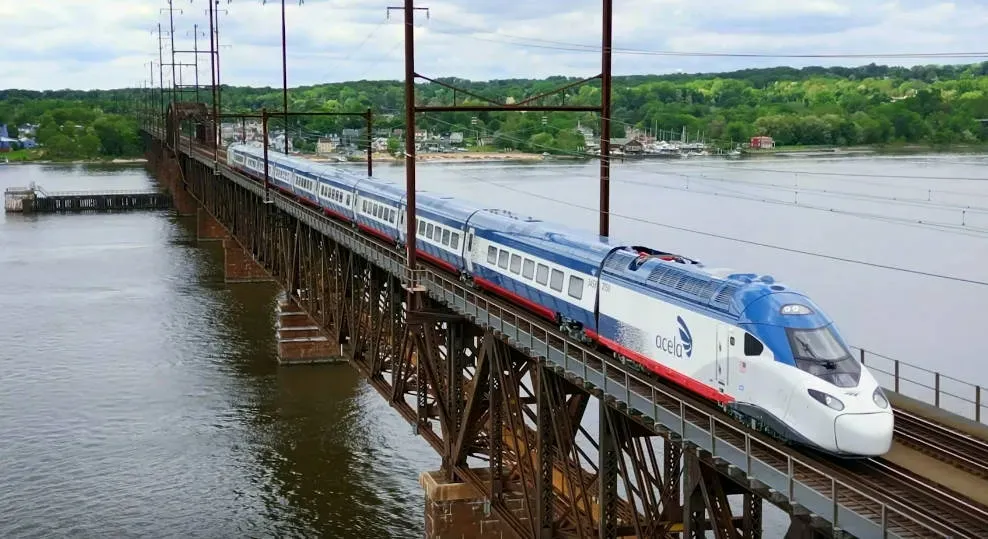
The 2026 Reality: The NextGen Acela fleet is now fully operational. With 28 new trainsets launched as of late 2025, capacity has increased by 27%.
-
The Rome2rio Strategy: * Filter by "NextGen": When searching this route, look for the "High-Speed" tag. The new Acela cuts the trip down to roughly 2 hours and 35 minutes with 5G Wi-Fi throughout.
-
The Budget Pivot: If Acela prices are peaked, use the "Bus + Subway" filter. Rome2rio will show you premium coaches like The Jet which, in 2026, offers motion-canceling seats that rival first-class air travel for a fraction of the Amtrak price.
-
2. The West Coast Wanderer: San Francisco to Los Angeles
-
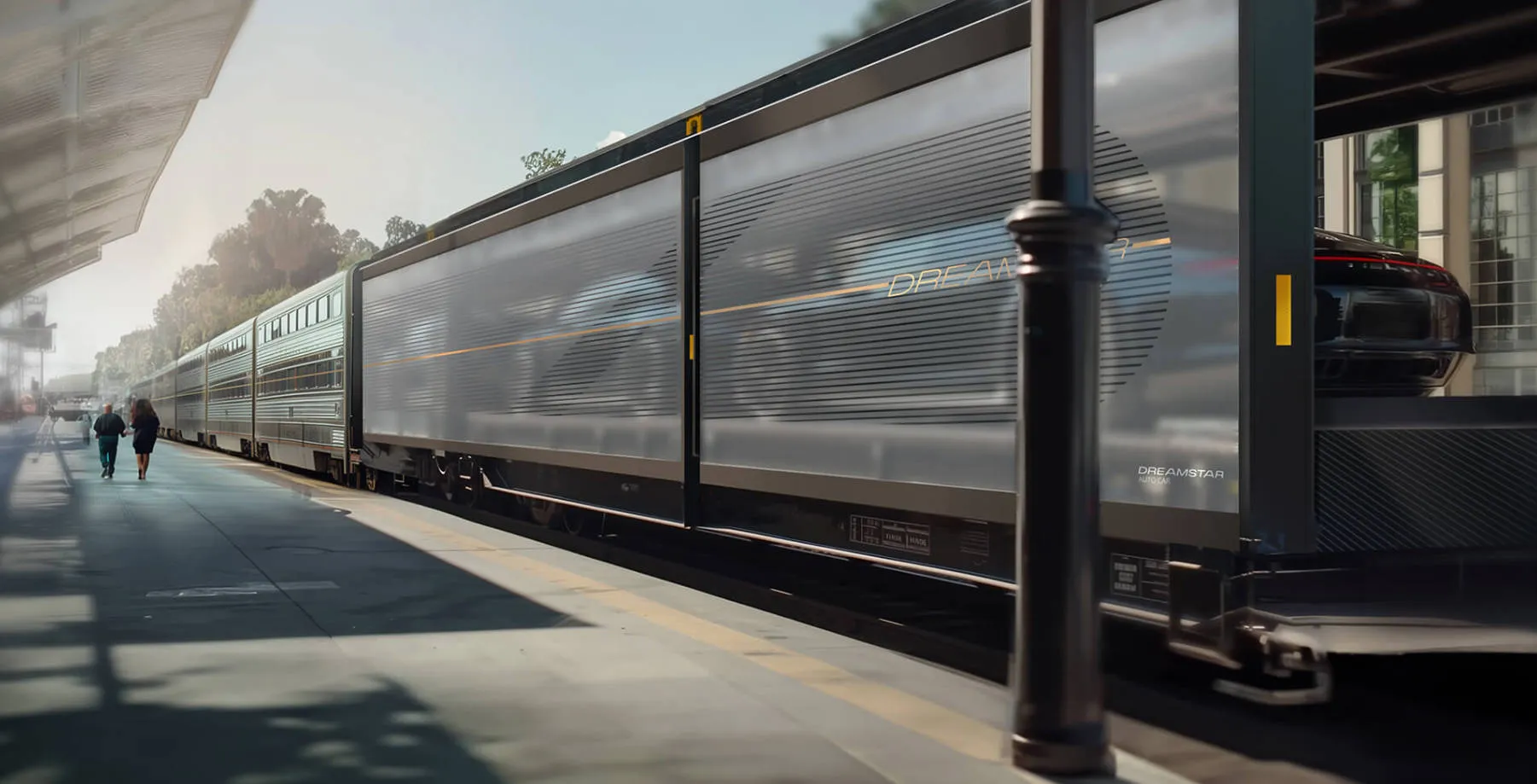
The 2026 Reality: While high-speed rail is still in the construction phase, 2026 has seen the rise of "slow travel" luxury. The Dreamstar Sleeper Train (the "hotel on rails") is the buzziest way to travel this corridor.
-
The Rome2rio Strategy: * The "Overnight" Toggle: Search for departures after 9:00 PM. Rome2rio now integrates Dreamstar’s lie-flat cabin options, allowing you to bypass a $300 hotel night in SF or LA.
-
The Flight Alternative: If you must fly, use the "Secondary Airport" filter to compare SFO→LAX against OAK→BUR (Burbank). In 2026, Burbank is the "power traveler" choice to avoid the massive congestion at LAX.
-
3. The Pacific Northwest: Seattle to Portland/Vancouver
-
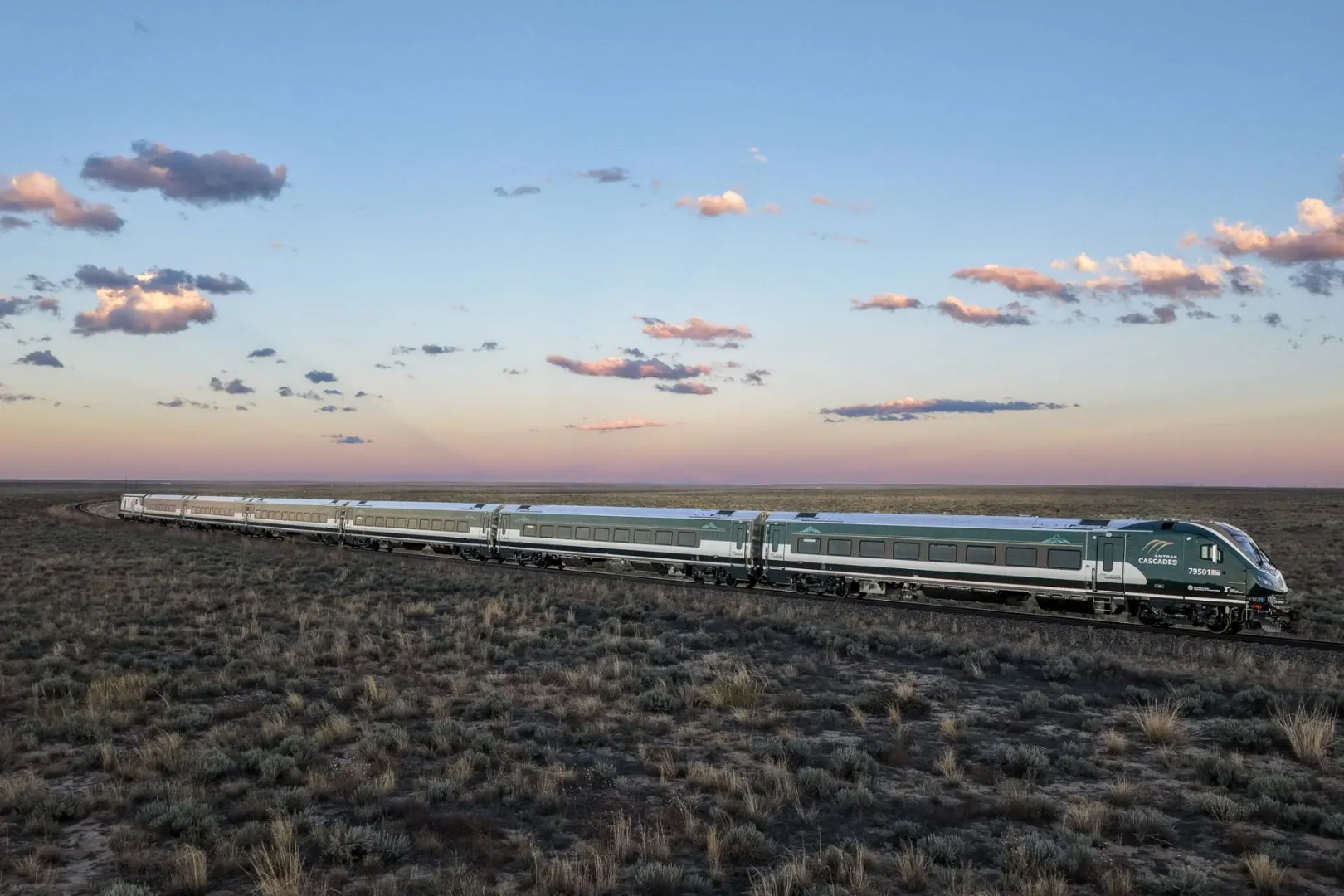
The 2026 Reality: This is the debut year for the Amtrak Airo trainsets. These state-of-the-art trains feature panoramic windows designed specifically for the scenic Cascades route.
-
The Rome2rio Strategy:
-
Scenic Routing: Use the "Panoramic" or "Airo" filter icons. Rome2rio’s 2026 update identifies which specific departures use the new equipment versus the older fleet.
-
Multi-Modal Combo: If you’re heading to Vancouver for a 2026 World Cup match, use the "Cross-Border Express" feature. Rome2rio will factor in real-time border wait times for buses vs. the "pre-cleared" rail status, often saving you two hours of idling at the Peace Arch.
-
Route Comparison at a Glance (2026 Data)
| Route | Mode | Travel Time | "Secret" Rome2rio Perk |
| NYC → DC | NextGen Acela | 2h 35m | Platform Live-Sync: Know your gate before the board flips. |
| SF → LA | Dreamstar Sleeper | 10h (Overnight) | Hotel-Saver: Combines transit + lodging in one fare. |
| Seattle → Portland | Amtrak Airo | 3h 15m | Tech-Filter: Guaranteed 110V outlets & USB-C at every seat. |
The 2026 World Cup Note: If you are traveling between host cities (like Kansas City to Dallas) during the tournament, Rome2rio’s "Event Mode" will automatically suggest shuttle links from stadiums to transit hubs that aren't on standard maps.
VIII. Troubleshooting & Essential Checklist
In 2026, even with the most advanced AI and infrastructure, long-distance travel across the US can still throw curveballs. This section ensures you stay ahead of the chaos with a practical troubleshooting guide and a pre-trip checklist.
1. Common 2026 Troubleshooting
-
"The App Shows a Route, but I Can’t Book It": In 2026, some regional "micro-transit" providers (like local canyon shuttles) don't have digital APIs.
-
The Fix: If the "Book" button is grayed out, look for the "Operator Website" link in Rome2rio. Often, these smaller carriers require a direct booking or are "pay-on-board" only.
-
-
"My Connection Time is Too Tight": 2026 traffic in major hubs like Atlanta or LA is more volatile than ever.
-
The Fix: Use the "Buffer Zone" filter in your settings. This tells Rome2rio to only show you connections with at least a 45-minute window for ground transport or 2 hours for flights.
-
-
"Price Discrepancies": If the price on the carrier’s site is higher than Rome2rio’s estimate.
-
The Fix: Check the "Fare Class" in the app. Rome2rio often defaults to "Basic Economy" or "Saver" rates. Toggle the "Includes 1 Checked Bag" filter to see the true price you’ll likely pay.
-
2. The 2026 "Smart Traveler" Checklist
Before you head out on a 1,000-mile journey, ensure you’ve checked these boxes:
-
[ ] Download Offline Data: Go to your Rome2rio Trip Planner and hit "Save for Offline." This caches the maps and schedule data for the "dead zones" in the Rockies or the Mojave Desert.
-
[ ] Check the "Equipment" Tag: For Amtrak or Brightline, confirm your train uses the NextGen/Airo fleet if you require 5G Wi-Fi for remote work.
-
[ ] Verify "Last Mile" Availability: If your destination is a rural town, check the Rome2rio "Transfer" section to see if Uber/Lyft actually operates there or if you need to pre-book a local "Dial-a-Ride."
-
[ ] Health & Safety Alerts: In 2026, some transit hubs have specific biometric or "Touchless ID" requirements. Ensure your Rome2rio profile is synced with your Digital Travel ID for faster boarding.
-
[ ] Power Check: US long-haul buses and trains are tech-heavy now, but "power-outage" spikes can happen. Always carry a 20,000mAh Power Bank (verified for 2026 airline carry-on standards).
IX. Frequently Asked Questions (FAQ)
Q1: Is Rome2rio free to use in 2026?
A: Yes. The core search and route-planning features remain free for all users. However, in 2026, Rome2rio has introduced a "Pro" tier ($4.99/mo) which removes ads, provides 24/7 AI-driven disruption alerts, and offers deep-link discounts on select US hotel and car rental bundles.
Q2: Can I book all my tickets directly on the platform?
A: Partially. While Rome2rio’s "One-Tap Booking" has expanded significantly in 2026 (covering most major airlines and Amtrak), for some regional US bus lines or niche shuttles, the app will still redirect you to the carrier’s official site.
Q3: How accurate are the price estimates?
A: In 2026, the platform uses predictive pricing algorithms. While the estimates are roughly 95% accurate, they are subject to "Live Fluctuations." The price you see is often a "from" price; always click through to the final checkout page to see the 2026 taxes and mandatory "tech fees" that some US carriers now apply.
Q4: Does Rome2rio work in "Offline Mode"?
A: Yes, but you must plan ahead. You can save specific itineraries to your "Offline Wallet." This will preserve the maps, departure times, and carrier contact info even when you are in "dead zones" like the middle of the Nevada desert or deep within a National Park.
Q5: Why is the "Optimal" route not the fastest?
A: Rome2rio’s 2026 "Optimal" tag balances three things: Time, Cost, and Stress. A route that is 30 minutes faster but requires three tight connections at Chicago O'Hare will likely be de-prioritized in favor of a slightly longer, direct train ride. In 2026, "Optimal" means the highest probability of arriving on time without a headache.
Conclusion: Your American Adventure Awaits
Navigating the United States doesn't have to be a logistical headache. By leveraging the 2026 updates of Rome2rio, you can visualize every mile of your journey—from the high-altitude flights over the Rockies to the coastal ferries of the Pacific Northwest.
Final Checklist before you go:
-
[ ] Download the Rome2rio App for offline route viewing.
-
[ ] Use the "Share Itinerary" feature to send your plan to your travel companions.
-
[ ] Book your Amtrak and long-distance bus tickets at least 3 weeks in advance for the best rates.
Safe travels across the Land of the Free!