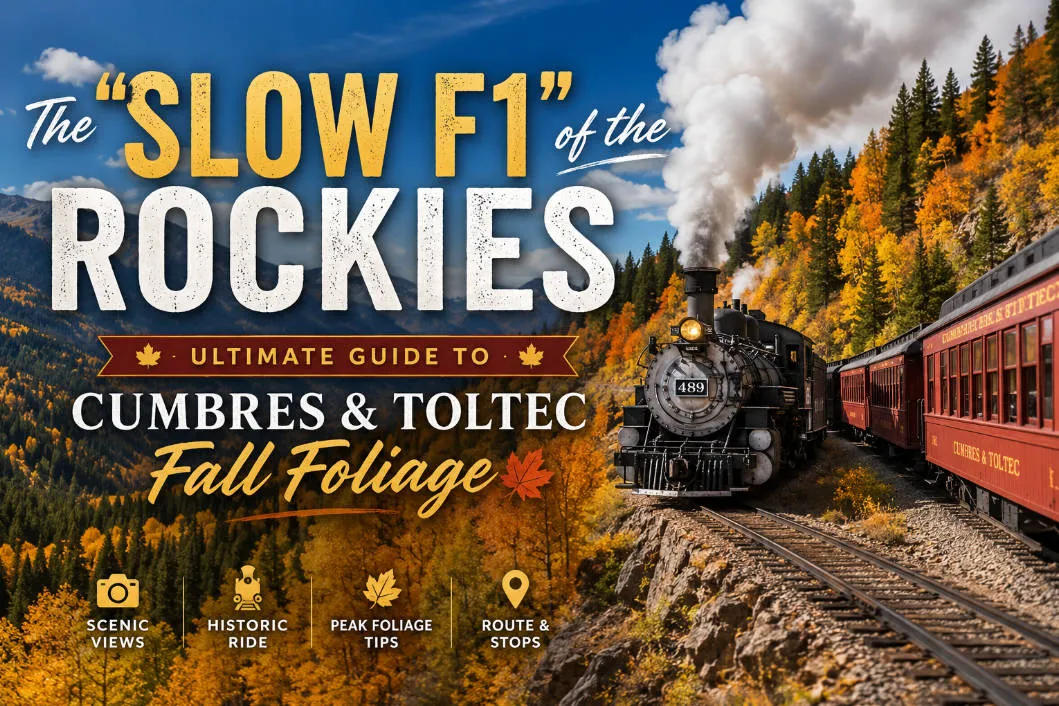
When autumn paints the Rocky Mountains in shades of molten gold and fiery crimson, most people hop into their SUVs. But those in the know? They board a living time machine.
Welcome to the Cumbres & Toltec Scenic Railroad (C&TSRR). This isn’t just a train ride; it’s a 64-mile immersive journey through a landscape inaccessible by car. Forget the high-speed thrills of a Formula 1 race—this is what we call the "Slow F1." It’s high-octane history moving at a pace that lets you breathe in the crisp mountain air and the scent of coal smoke.
If you’re planning your Autumn 2026 bucket list, grab a cider, and let’s dive into the most comprehensive guide to conquering these rails! 🎫✨
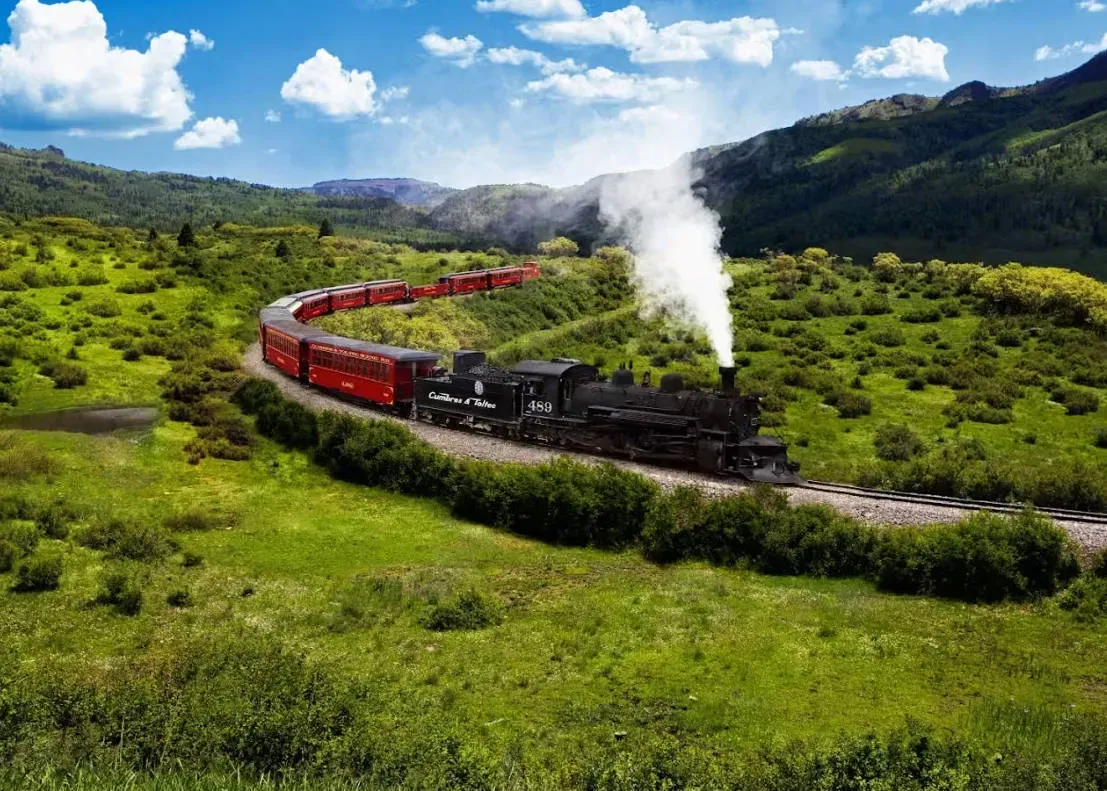
📍 What is the Cumbres & Toltec Scenic Railroad?
The Cumbres & Toltec Scenic Railroad (C&TSRR) is a historic narrow-gauge steam railway that runs through the mountains between Colorado and New Mexico in the United States.
It stretches about 64 miles (103 km) between the towns of Chama, New Mexico and Antonito, Colorado, crossing the state line multiple times as it climbs high into the Rocky Mountains.
🚂 1. Why it’s famous
- 🏔️ It crosses dramatic terrain including Cumbres Pass (10,015 ft / 3,048 m) and deep canyons like Toltec Gorge
- 🚂 It still uses authentic steam locomotives from the 1880s–1920s era
- 🛤️ It’s one of the longest, highest, and most preserved narrow-gauge railroads in North America
- 🏅 It’s recognized as a National Historic Landmark
🌄 2. What the ride is like
- Scenic journey through forests, alpine meadows, cliffs, and tunnels
- Often includes a stop at Osier, Colorado, where passengers get a hot meal
- Operates mainly from late spring to fall (May–October)
- Designed as a slow, immersive “time-travel” experience rather than fast transport
🏛️ 3. Historical background
Originally built in 1880 as part of the Denver & Rio Grande Western Railroad, it once carried passengers, mail, livestock, and mining goods through the Rockies. After freight service declined, the line was preserved and reopened as a scenic heritage railroad.
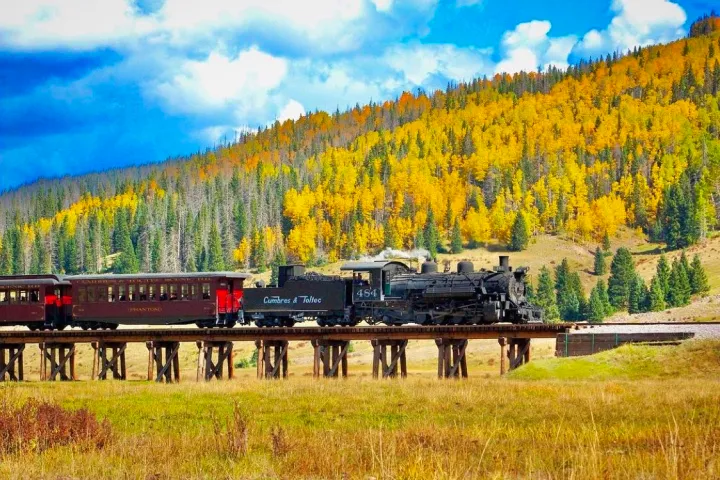
🍁 Why Fall is Pure Magic on the Cumbres & Toltec Scenic Railroad
Fall along the Cumbres & Toltec Scenic Railroad isn’t just “pretty”—it feels like the entire Rocky Mountain wilderness turns into a moving painting outside your window.
Here’s what makes it so special:
🎨 1. A full-color explosion in the high Rockies
The train climbs above 10,000 feet, where aspen forests dominate the landscape. In autumn:
- 🌳 Aspen trees turn glowing gold, orange, and neon yellow
- 🌲 Dark green pines create dramatic contrast
- 🌄 Red cliffs and brown canyon walls deepen the color palette
Because you’re moving slowly through changing elevations, the scenery shifts like a cinematic color timeline.
🚂 2. The slow train effect = more time to absorb the beauty
Unlike fast scenic drives, the train moves at a relaxed heritage pace. That means:
- You’re not rushing past viewpoints
- You get long, uninterrupted views of valleys and ridgelines
- Steam billowing from the locomotive adds a nostalgic, almost “time-travel” vibe
It’s not just sightseeing—it’s savoring the season.
🏔️ 3. Weather creates perfect “fall drama”
Fall in the Rockies brings:
- ❄️ Early snow dustings on peaks
- ☀️ Crisp, golden sunlight that makes leaves glow
- 🌬️ Clear mountain air with extreme visibility (you can see miles)
That contrast—gold leaves + white peaks + blue sky—is what photographers call “peak fall conditions.”
🌉 4. Iconic landscapes hit differently in autumn
Key sections like:
- Toltec Gorge 🪨
- Cumbres Pass 🏔️
- High alpine meadows 🌾
…become dramatically more colorful and layered in fall than any other season.
Every curve feels like a postcard.
📸 5. It’s one of North America’s most “photogenic trains”
The combination of:
- vintage steam locomotives 🚂
- untouched wilderness
- slow speed + open-air viewing
Makes it a dream for photography—especially when the aspens peak for just a few short weeks.
Fall here is magical because it’s not just about color—it’s about scale, altitude, motion, and nostalgia all happening at once. You’re not just looking at autumn—you’re riding straight through it.
🗓️ Best Time for Fall Foliage on the Cumbres & Toltec in 2026
Here’s the most accurate, data-backed timing for 2026, based on regional forecasts and historical patterns:
🎯 1. 2026 Peak Window (Most Likely)
September 25 – October 5, 2026
- This aligns with long-term patterns in the San Juan Mountains and along the railroad route
- Aspen forests typically peak late September to early October in this region
- The railroad itself also notes peak color usually falls around Sept 22 – Oct 5
👉 Bottom line:
If you want the highest probability of perfect golden aspens, aim for Sept 27 – Oct 3, 2026.
📅 2. 2026 Week-by-Week Breakdown
🟢 Sept 15 – Sept 22 (Early Season)
- First hints of yellow at high elevations
- Fewer crowds 👍
- Not yet “full gold”
👉 Good for: early travelers, flexible schedules
🟡 Sept 23 – Sept 30 (Rising Peak)
- Color spreads rapidly across mid-elevations
- Some sections already at peak
- Classic golden aspen tunnels begin
👉 Sweet spot begins here
🟠 Oct 1 – Oct 5 (Peak + Drama)
- Full spectrum: gold + orange + contrast with evergreens
- Possible light snow on peaks ❄️
- Most photogenic period
👉 Best overall experience
🔴 Oct 6 – Oct 12 (Late Season)
- Leaves start dropping, especially after wind
- Still beautiful, but more patchy
- Higher chance of cold weather or snow
🚂 3. Important 2026 Operating Context
- Fall season runs roughly late August → late October
- But peak color only lasts ~7–10 days in any one area
👉 That’s why timing matters so much.
🌦️ 4. 2026 Wildcards (What Could Shift Dates)
Even in 2026, expect ±3–5 days variation:
- 🌡️ Warm September → later peak
- ❄️ Early cold snap → earlier peak
- 🌧️ Wind/rain → shorter peak window
- 🏔️ Elevation differences → multiple “mini peaks” in one ride
If you're planning a once-in-a-lifetime ride in 2026:
🏆 Target: Sept 27 – Oct 3, 2026. This gives you the best odds of catching the Rockies at full golden intensity.
2026 Key Dates to Watch
| Date | Event/Significance | Foliage Status |
| Sept 20, 2026 | Equinox Weekend | High-elevation peaks begin to "ignite." |
| Sept 27, 2026 | The Prime Sunday | Expected historical peak for the Cumbres Pass summit. |
| Oct 10, 2026 | Centennial State Limited | Peak colors in the lower valleys and Toltec Gorge. |
| Oct 25, 2026 | Season Finale | Mostly "past peak" at the top, but moody and beautiful. |
🛤️ Route Guide: Which Direction Should You Choose on the Cumbres & Toltec?
Whether you go all-in (full route) or pick a shorter half-day ride, your choice shapes the entire experience—lighting, scenery, and how dramatic the journey feels.
Let’s break it down clearly. 👇
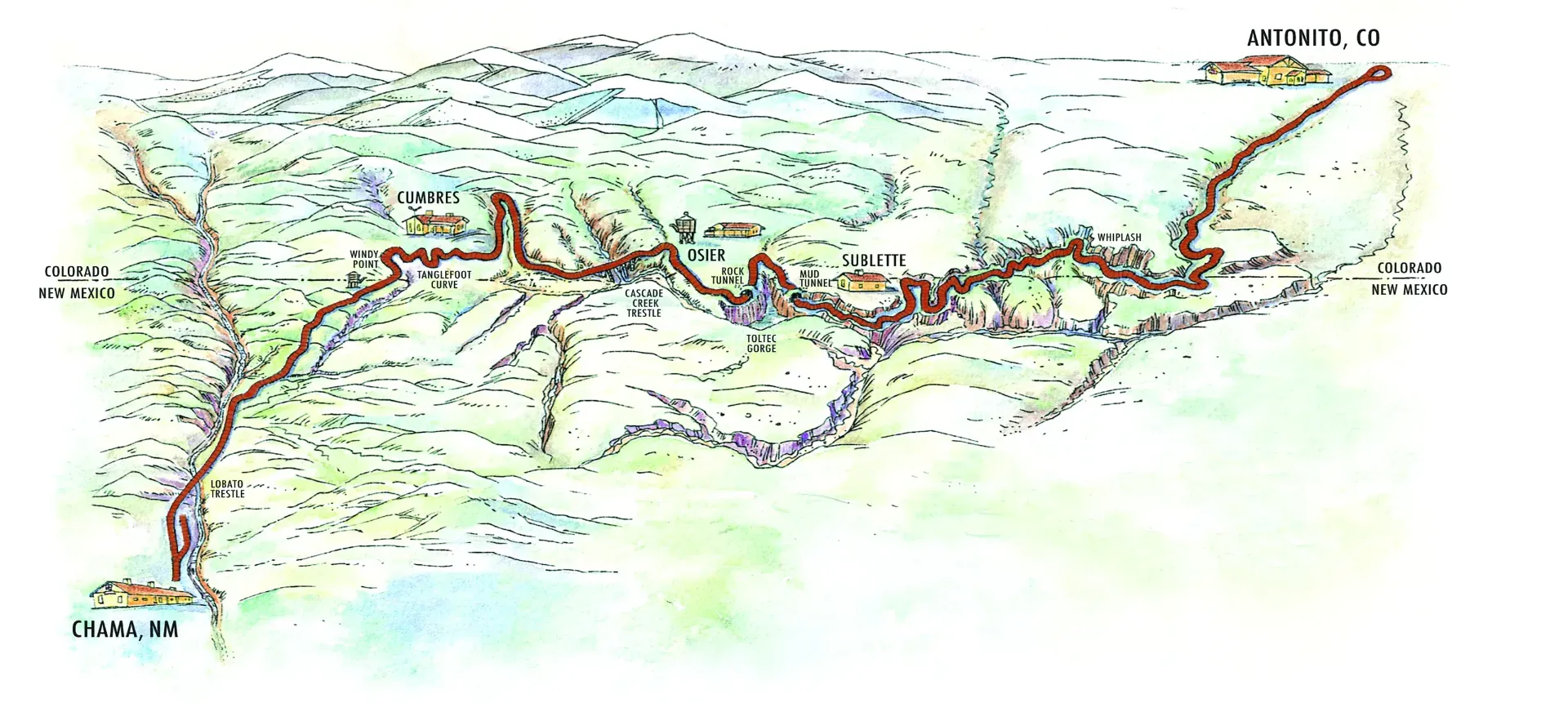
🚂 1. Full Route (Chama ⇄ Antonito) — The “Complete Experience”
⏱️ Duration: ~6–7 hours
🍽️ Includes: Lunch stop at Osier
🌟 Option A: Chama → Antonito (🏆 Best Overall)
Starting in Chama
Why it wins:
- 🌄 Morning light hits fall colors perfectly
- 🚂 Early climb to Cumbres Pass = dramatic steam + scenery
- 😮 You hit Toltec Gorge at the ideal moment (mid-journey wow factor)
Experience flow:
🌲 Forests → 🏔️ High pass → 🌉 Canyon cliffs → 🌄 Open valleys
👉 Feels like a perfectly paced movie with a climax.
🌄 Option B: Antonito → Chama (Underrated Alternative)
Starting in Antonito
Why choose it:
- 🌾 Starts with wide-open landscapes
- 🌉 Hits Toltec Gorge earlier (often quieter)
- 🌅 Ends with warmer afternoon light in the mountains
Experience flow:
🌄 Valleys → 🌉 Canyon → 🏔️ Climb → 🌲 Forests
👉 Feels like a slow immersion into the Rockies.
Full Route Verdict: 🏆 Chama → Antonito = best for first-timers, photographers, fall foliage.
🚂 2. Half-Day Routes (Perfect If You’re Short on Time)
If you don’t want a full-day commitment, these are surprisingly good—but not all segments are equal.
Why it’s the best short option:
- 🌲 Dense aspen forests (peak fall color zone)
- 🏔️ Climbs to Cumbres Pass (iconic section)
- 🚂 Most “classic steam train” moments
👉 You get ~70–80% of the best scenery in half the time.
🥈 Second Best: Antonito → Osier
Highlights:
- 🌉 Includes Toltec Gorge (major highlight!)
- 🌄 Wide valleys + canyon contrast
👉 More dramatic terrain, slightly less dense foliage early on.
⚠️ Less Ideal: Osier → Antonito ONLY
- Misses early forest climb
- Feels like “second half of a movie”
- Still beautiful—but not the strongest standalone segment
⚖️ Full vs Half-Day: Which Should You Pick?
| Type | Best For | Verdict |
|---|---|---|
| 🚂 Full Route | First-timers, photographers | 🏆 Ultimate experience |
| 🌲 Chama → Osier | Short trips, fall foliage focus | ⭐ Best half-day |
| 🌉 Antonito → Osier | Dramatic canyon lovers | 👍 Solid alternative |
🧭 Final Recommendation: If you’re planning your 2026 fall trip:
🏆 Go Full Route (Chama → Antonito) if you can
⭐ Go Chama → Osier if you’re short on time
Both will give you that unforgettable “golden aspen + steam train” magic.🍁🚂
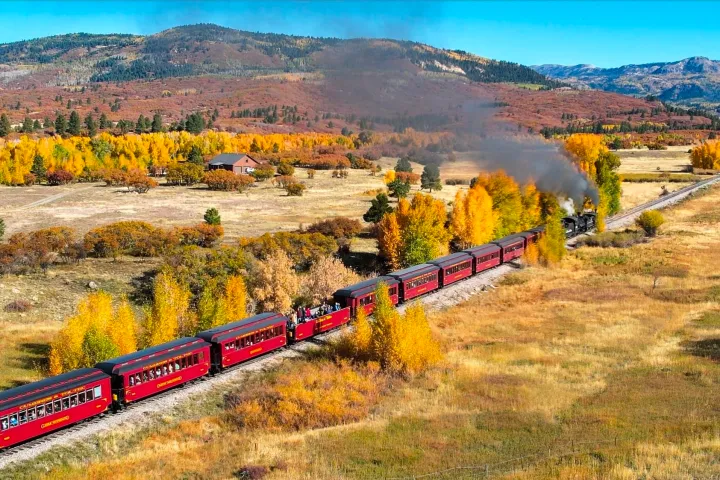
🎟️ Ticket Classes Explained: Cumbres & Toltec Scenic Railroad
On the Cumbres & Toltec Scenic Railroad, your ticket choice doesn’t just change comfort—it completely shapes how you experience the ride (views, flexibility, and even how “immersed” you feel).
Here’s a clear, no-BS breakdown. 👇
🚂 1. Coach Class (💰 Best Value)
🪑 What it’s like:
- Classic vintage train seating (bench-style or cushioned)
- Large windows you can open for photos 📷
- Access to shared open-air gondola cars
👍 Pros:
- 💵 Most affordable option
- 🚶 Easy to move between cars
- 🌬️ You can step outside for fresh air & unobstructed views
👎 Cons:
- ❌ No assigned luxury seating
- 🧑🤝🧑 Can get crowded during peak fall season
- 🍱 Meals not included (on some shorter routes)
👉 Best for: budget travelers, photographers who plan to move around.
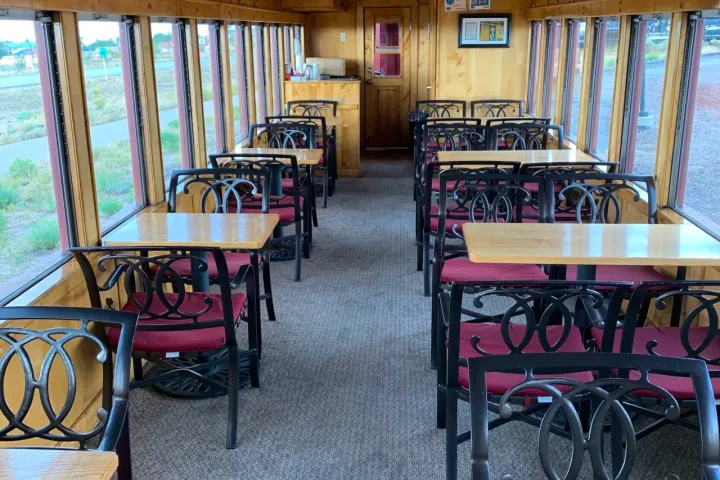
🌄 2. Deluxe / Parlor Class (⭐ Most Popular Upgrade)
🛋️ What it’s like:
- Padded, more spacious seating
- Often larger windows
- Some cars have tables or lounge-style setups
👍 Pros:
- 😌 More comfortable for a 6–7 hour ride
- 🍽️ Meals often included (especially full-route trips)
- 🧘 Less crowded, quieter environment
👎 Cons:
- 💲 Higher price
- 🚶 Still shared access to gondola (not private outdoor space)
👉 Best for: first-timers who want comfort + scenery balance.
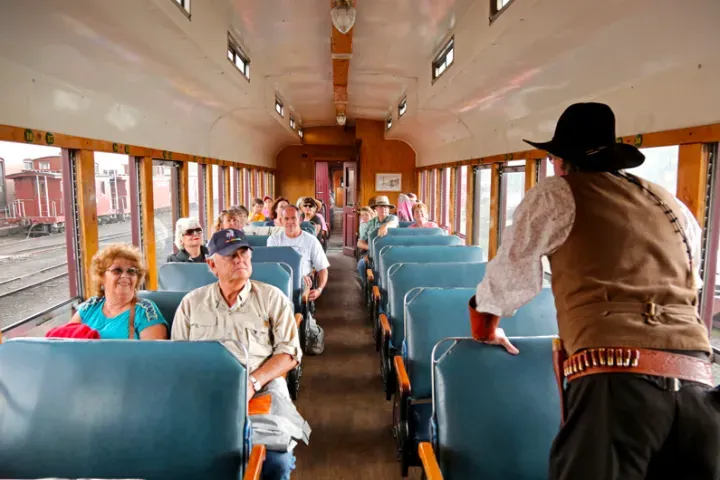
🥂 3. First Class / Parlor Premium (💎 Comfort + Service)
(Names vary slightly depending on the car)
🛋️ What it’s like:
- Oversized reclining seats
- Attendant service
- Complimentary snacks or drinks (sometimes alcohol 🍷)
👍 Pros:
- 🧑🍳 Higher-end service experience
- 🪟 Best indoor comfort
- 🎟️ Often includes priority boarding perks
👎 Cons:
- 💸 Expensive
- 🌬️ Still need to go to gondola for open-air photos
👉 Best for: couples, special occasions, “treat yourself” trips.
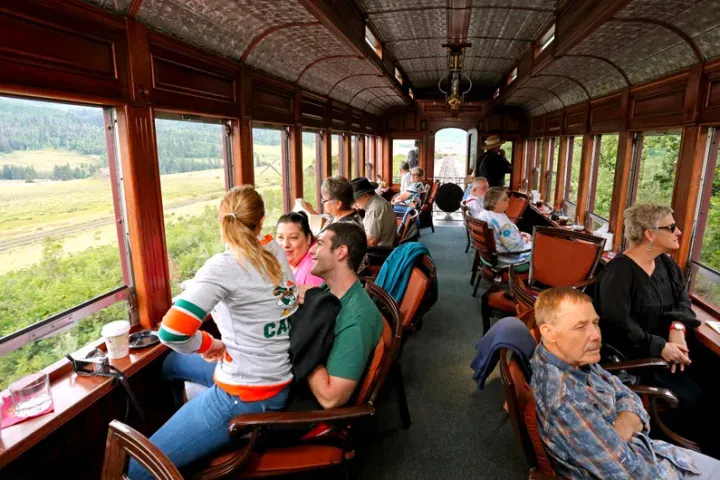
🌬️ 4. Open-Air Gondola (📸 Photographer’s Favorite)
🚃 What it’s like:
- Roofless or partially open car
- Bench seating, minimal barriers
- Wind, smoke, and full immersion
👍 Pros:
- 📷 Best possible views—no glass, no reflections
- 🚂 Feel the steam, hear the engine, smell the coal
- 🍁 Ultimate fall foliage experience
👎 Cons:
- 🌡️ Can be cold (especially at 10,000 ft!)
- 🌫️ Soot/ash from the locomotive is real
- 🪑 Limited comfort for long periods
👉 Best for: photographers, adventure lovers.
🧭 Final Take: Your seat matters—but your movement matters more.
🚂 The smartest riders don’t stay in one place—they rotate between comfort and open-air viewing.
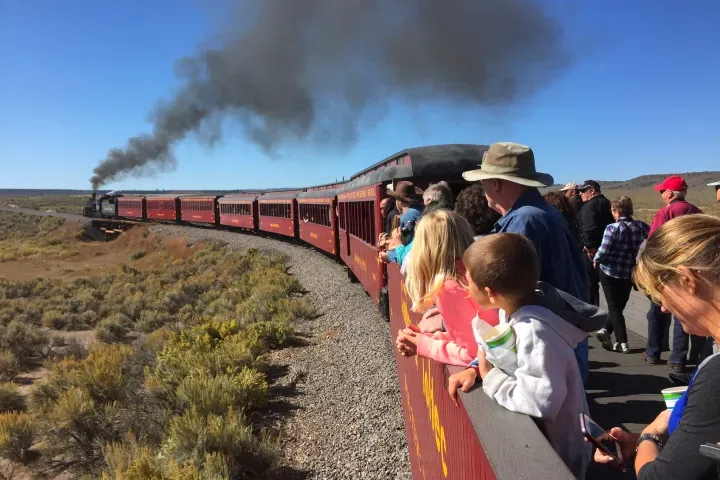
📸 Top 5 Photography Spots on the Cumbres & Toltec Scenic Railroad
The Cumbres & Toltec Scenic Railroad is basically a rolling photography studio during fall 🍁🚂. But some sections are dramatically better than others—especially for steam, foliage, cliffs, and cinematic Rocky Mountain views.
Here are the 5 absolute best photography spots along the route. 👇
🥇 1. Cumbres Pass — The Iconic Steam Shot
📍 Why it’s legendary
At over 10,000 ft, this is where the locomotive works hardest climbing the grade.
That means:
- 🚂 Massive steam plumes
- 🏔️ Epic mountain backdrop
- 🍁 Aspen forests everywhere
- ❄️ Possible snow-dusted peaks in late season
👉 This is the classic “calendar cover” shot.
📸 Best Tips
- Morning light is best from Chama → Antonito
- Stand in the gondola for smoke + curve shots
- Slight telephoto zoom works beautifully here
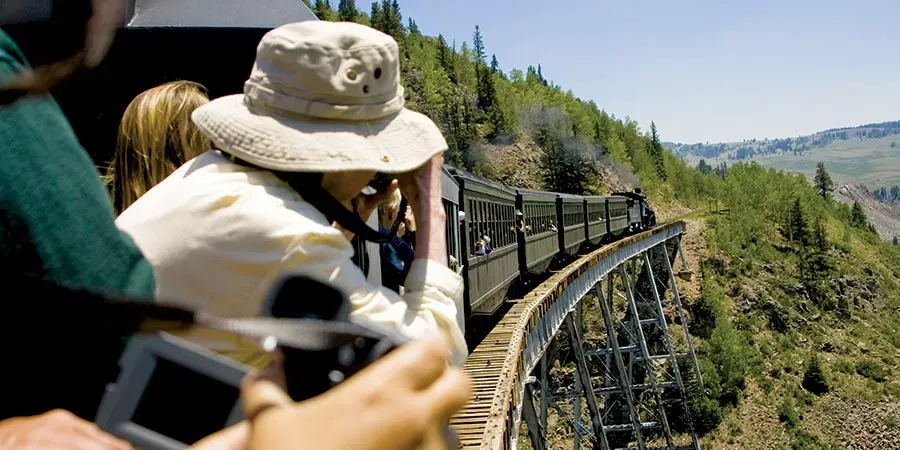
🥈 2. Toltec Gorge — The “Impossible Railroad” View
📍 Why it’s unforgettable
Near Toltec Gorge, the train clings to cliffs above deep canyon drops.
You get:
- 🌉 Wooden trestles
- 🪨 Sheer rock walls
- 😮 Dramatic perspective shots
👉 This is the most “how did they build this?!” section.
📸 Best Tips
- Wide-angle lens works best
- Shoot slightly forward along the train
- Great spot for storytelling compositions
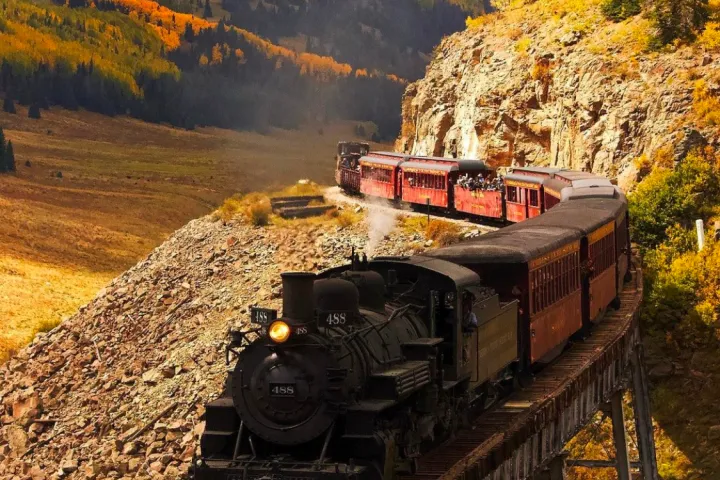
🥉 3. Lobato Trestle — The Classic Bridge Crossing
📍 Why photographers love it
This tall wooden bridge crossing feels straight out of the Old West.
Highlights:
- 🌉 Historic timber trestle
- 🚂 Full train visibility on curves
- 🌄 Beautiful valley framing
👉 One of the best places for “entire train in landscape” shots.
📸 Best Tips
- Look backward after crossing
- Midday lighting usually works fine here
- Slightly faster shutter helps freeze steam movement
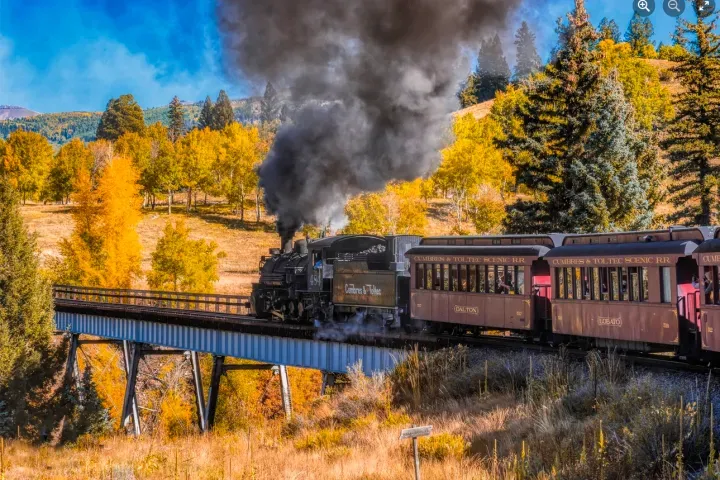
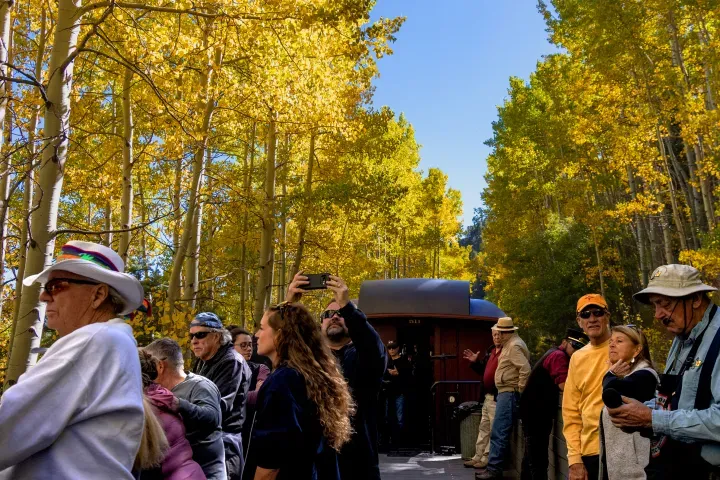
🌲 4. Aspen Forest Sections Near Osier
📍 Why it’s magical in fall
This is peak 🍁 golden tunnel territory.
- Dense glowing aspens
- Sunlight flickering through leaves
- Steam drifting through yellow forests
👉 Feels like riding inside a dream.
📸 Best Tips
- Shoot during golden hour if possible
- Slight underexposure preserves leaf detail
- Vertical compositions work especially well
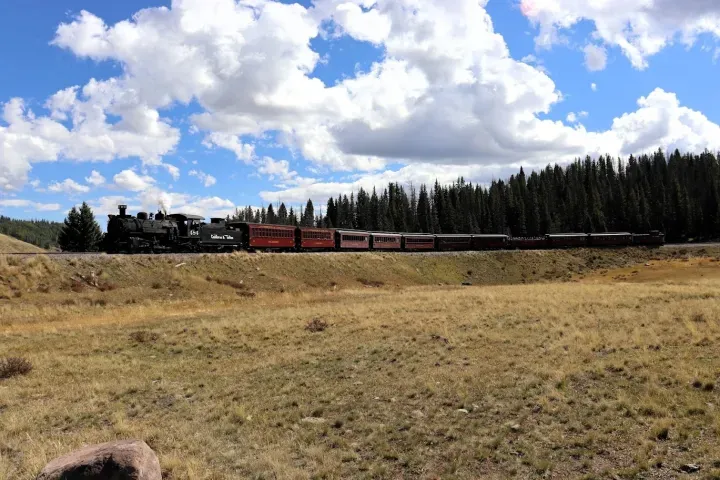
🌄 5. Wide Valleys Between Antonito & Osier
📍 Why it’s underrated
Many people focus only on forests—but these open landscapes create incredible scale.
You’ll capture:
- 🌾 Endless valleys
- 🚂 Tiny steam train against huge scenery
- ☀️ Dramatic afternoon lighting
👉 This is where the railroad feels truly “Western.”
📸 Best Tips
- Great for panoramic shots
- Afternoon light works best
- Include passengers for scale
🎒 6. Pro Photography Tips (VERY Important)
🚂 Bring these:
- 📷 Lens cloth (steam + soot happens!)
- 🔋 Extra battery (cold weather drains them fast)
- 🧥 Warm layers (gondola cars get chilly)
- 🕶️ Polarizer filter if you have one
🏨 Where to Stay + Perfect 3-Day Itinerary
One of the biggest mistakes people make is treating the train ride like a quick day trip.
Don’t.
This area sits deep in the southern Rockies, and the magic comes from turning it into a slow mountain getaway—especially during fall foliage season.
Here’s the ideal setup. 👇
📍 1. Where to Stay: 2026 Recommendations
| Accommodation | Style | Why Stay Here? |
| 🏅 Iron Rail Inn | The Railfan’s Choice | Literally steps from the Chama depot. You’ll wake up to the sound of the steam whistle and the smell of coal smoke. |
| 🥇 Chama River Bend Lodge | Riverside Retreat | Offers cabins right on the Rio Chama. Perfect for crisp autumn evenings by a fire pit with the sound of the water. |
| 🏩 Corkins Lodge | High-End Escape | Located beneath the stunning Brazos Cliffs. Best for those who want a "luxury wilderness" feel 15 minutes outside town. |
| 🏠 The Victorian B&B | Classic & Cozy | Famous for having the "best coffee in the West" and a wrap-around porch perfect for leaf-peeping. |
🗓️ 2. The 2026 "Gold Rush" Itinerary
Day 1: The Descent into History
-
Morning: Arrive in Chama and check in. Grab a "Railroad Burger" at a local cantina.
-
Afternoon: Visit the Chama Rail Yard. It’s an open yard, meaning you can walk around (carefully!) and watch the massive K-36 locomotives being serviced and turned on the "Wye" for the next day.
-
Evening: Drive 15 minutes south to the Brazos Cliffs Overlook. At sunset, these 2,000-foot granite faces glow purple and orange, framed by golden Aspens.
Day 2: The Main Event (The Full Ride)
-
8:30 AM: Check in at the Chama Depot.
-
The Journey: Take the Chama-to-Antonito train. You’ll tackle the 4% grade up Cumbres Pass immediately, hitting the peak foliage at 10,015 feet by mid-morning.
-
Lunch: Stop at Osier Station for the legendary turkey dinner (included in your ticket).
-
Afternoon: Descend through the Toltec Gorge—the most dramatic canyon views of the trip.
-
4:30 PM: Arrive in Antonito and board the luxury motorcoach for the 1-hour scenic drive back over the pass to Chama. You’ll get to see the foliage from the road perspective as the sun sets.
Day 3: The "Chaser" Adventure
-
Morning: Rent a 4WD or take a sturdy vehicle up Forest Service Road 116 (check 2026 local conditions first). This allows you to look down on the tracks from high ridges.
-
Midday: Picnic at the Cumbres Pass Summit. Since the train arrives here around 11:15 AM, you can time your lunch to watch the "Iron Horse" crest the hill amidst the gold trees.
-
Afternoon: Head north to Pagosa Springs (1 hour away) for a soak in the world's deepest geothermal hot springs to soothe those "train-vibration" muscles before heading home.
💡 2026 Insider Tip: Chama is a small village. During the 2026 Colorado 150th Anniversary events (especially around Oct 10th), restaurant wait times can be long. Make dinner reservations at least 48 hours in advance if you're staying in town during peak foliage weekends!
🎒 Packing Essentials & Pro Tips
The biggest surprise for many first-time riders? 🥶 “Wait…why is it THIS cold?!”
Even if lower elevations feel mild, the train climbs above 10,000 ft at Cumbres Pass, and conditions can change fast.
Here’s what you actually need. 👇
🧥 1. The "Three-Layer" Rule
The temperature can swing by as much as 15°C (30°F) between the Chama valley and the Cumbres Pass summit. 2026 weather patterns suggest a high probability of "sun-in-the-valley, snow-on-the-pass" days in early October.
-
Base Layer: Moisture-wicking (avoid cotton). High-altitude sun can be surprisingly warm when you are in the direct rays.
-
Insulation: A fleece or light down "puffy" jacket.
-
The Shell: A windbreaker or rain jacket. Even on a clear day, the wind chill on the open-air gondola at 10,000 feet is no joke.
-
The "Secret" Accessory: A buff or scarf. It protects your neck from the wind and can be pulled over your face if the engine produces a particularly heavy plume of coal smoke.
🛡️ 2. Essential Protection (The "Soot & Sun" Kit)
-
Protective Eyewear: This is mandatory for photographers. These are coal-fired engines; they emit "cinders" (tiny bits of unburnt coal). If you are in the gondola, wear sunglasses or clear safety glasses to prevent a cinder from ruining your trip.
-
Dark-Colored Clothing: Don't wear your favorite white sweater. A fine layer of coal dust is part of the authentic experience, and it’s much easier to brush off of dark denim or technical fabrics.
-
High-SPF Sunscreen: At 10,000 feet, the UV rays are brutal. You’ll burn in 20 minutes without protection, even if it feels cold.
-
Sturdy, Closed-Toe Shoes: Required for safety. The train platforms and the Chama rail yard are gravel and steel; flip-flops are a recipe for a twisted ankle.
📸 3. Gear & Tech
-
Lens Cloth & Rocket Blower: You will get coal dust on your lens. Do not wipe it with your shirt (it’s abrasive); blow it off first.
-
Extra Batteries: Cold air drains camera and phone batteries twice as fast. Keep your spares in an interior pocket close to your body heat.
-
Polarizing Filter: This is the "magic button" for fall foliage. it cuts the glare off the waxy Aspen leaves and makes the yellow "pop" against the deep blue Colorado sky.
💡 4. 2026 Pro-Tips for a Flawless Ride
-
Hydrate Early: High-altitude sickness is the only thing that can ruin this trip. Start drinking twice your normal water intake 24 hours before you arrive in Chama.
-
The "Gondola Shuffle": Don't stay in the gondola the whole time. Go out for the big "photo milestones" (Windy Point, Toltec Gorge), then retreat to your heated coach car to warm up and review your shots.
-
The Lunch Strategy: The lunch at Osier is a buffet. In 2026, it remains one of the best "train meals" in the world. Pro Tip: Go for the turkey and dressing, but save room for the homemade pie—it’s legendary among railfans.
-
The "Quiet" Car: If the gondola gets too crowded with photographers, the platforms between the cars often offer a more stable, quieter spot to record the rhythmic "clack-clack" of the narrow-gauge rails.
Final 2026 Warning: The October 10, 2026 "Centennial State Limited" will be a magnet for drone pilots and photographers. If you are "chasing" the train by car, please pull completely off Highway 17—the shoulders are narrow and the drop-offs are steep!
🚗 The “Ultimate Autumn” Road Trip Extension
Here’s the secret many travelers discover after riding the train:
The railroad is amazing…
but the surrounding Rockies in fall are just as spectacular. 🤯
If you already made it to northern New Mexico and southern Colorado, extending your trip into a scenic road adventure is absolutely worth it.
This is how you turn: “great train ride” into “legendary autumn road trip.”
🛣 1. The "Brazos & High Road" Loop (South of Chama)
-
The Drive: Head South on Hwy 84 toward Tierra Amarilla, then hook onto Hwy 64 toward Taos.
-
The Highlight: The Brazos Cliffs. In early October, these 2,000-foot sheer granite walls are framed by yellow cottonwoods.
-
Taos Stop: Continue to the High Road to Taos, a scenic byway passing through ancient Spanish land-grant villages like Chimayó.
-
2026 Bonus: Late September is the High Road Studio Tour, where local artisans open their mountain workshops to the public.
⭕ 2. The "Enchanted Circle" (East of Antonito)
-
The Drive: From the Antonito depot, head East into the San Luis Valley, then South to Questas to begin the 84-mile loop.
-
The Highlight: This route circles Wheeler Peak, the highest point in New Mexico. The section between Red River and Eagle Nest Lake offers some of the densest Aspen coverage in the state.
-
2026 Tip: Stop at the "Ghost Town" of Elizabethtown. The ruins of the gold-mining era look hauntingly beautiful against the autumn colors.
⛰ 3. The "Sand Dunes & Sangres" (North of Antonito)
-
The Drive: Drive 45 minutes North from Antonito to Great Sand Dunes National Park.
-
The Highlight: The contrast of the massive sand dunes against the snow-capped Sangre de Cristo Mountains. In fall, the cottonwoods along Medano Creek turn a brilliant fiery orange.
-
Adventure Mode: If you have a high-clearance 4WD, take the Medano Pass Primitive Road. It crosses the creek nine times and puts you deep into a wilderness of bighorn sheep and golden forests.
🛣️ 4. The "Ultimate 2026" Week-Long Circuit
If you want to see it all, follow this path:
-
Day 1-3: Chama (Rail yard + Cumbres & Toltec train ride).
-
Day 4: Drive Hwy 64 to Taos (Stop at the Rio Grande Gorge Bridge).
-
Day 5: Drive the Enchanted Circle (Red River/Angel Fire).
-
Day 6: Head North to Great Sand Dunes for sunset on the dunes.
-
Day 7: Return to Chama via the San Luis Valley, stopping at the Cumbres Pass roadside overlooks for one last look at the "Slow F1" from above.
💡 Pro Road Trip Tip: In 2026, Highway 17 (the road that parallels the tracks) will be busy with "train chasers." If you are driving to catch a photo of the train at Cumbres Pass, leave Chama at least 30 minutes before the train. Even though the train is slow, the mountain curves and tourist traffic can make it a tight race!
❓ Frequently Asked Questions (FAQ)
Q1: Do I need to book in advance for the 2026 season?
A: Absolutely. For fall foliage (late September to mid-October), trains often sell out 3–4 months in advance. Since 2026 coincides with Colorado’s 150th anniversary, expect even higher demand for special runs like the Centennial State Limited.
Q2: Is lunch included in my ticket?
A: Yes! Every full-day excursion includes a stop at Osier Station (9,637 ft) for an all-you-can-eat buffet. The 2026 menu features roast turkey, meatloaf, and legendary homemade pies, with gluten-free and vegan options available.
Q3: How do I handle the high altitude?
A: You’ll reach 10,015 feet at Cumbres Pass. To avoid altitude sickness, start hydrating 48 hours before your trip. Limit alcohol the night before, and if you feel lightheaded on the train, notify the onboard docent—they have oxygen available if needed.
Q4: Are there restrooms on the train?
A: Yes. Every passenger car has a basic restroom. There are also full facilities at the Chama and Antonito depots and at the Osier lunch station.
Q5: Can I bring my dog?
A: Only certified service animals are allowed on the train. For pet owners staying in Chama, there are local boarding options, but these fill up fast during the autumn rush.
Q6: What happens if it rains or snows?
A: The train runs rain, snow, or shine. In fact, a "dusting" of October snow on the golden Aspens is considered the "Holy Grail" shot for photographers. The indoor coaches are heated, so you can always retreat from the elements.
💬 Final Thoughts: The Cumbres & Toltec isn't just a commute; it's a love letter to a bygone era. In 2026, as the world moves faster and faster, there is something deeply rebellious and beautiful about choosing the Slow F1.
So, are you ready to hear the whistle blow? 🚂💨