📌 5 Quick Steps to Riding the NYC Subway
-
Use Google Maps: Type in your destination and select the "Transit" icon to find the exact train letter/number you need.
-
Check the Entrance Sign: Make sure the street-level sign says "Uptown" (heading North) or "Downtown" (heading South) depending on your destination.
-
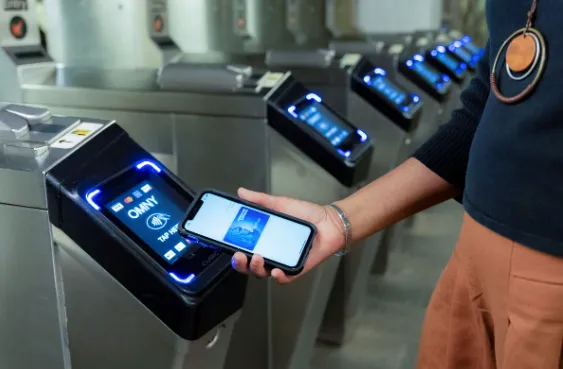
Tap to Pay: No ticket needed! Just tap your contactless credit card or phone (Apple Pay/Google Pay) at the OMNY screen on the turnstile.
-
Check the Platform: Look up at the digital signs to confirm the train letter/number and its destination.
-
Local vs. Express: Stick to "Local" trains (marked with circles on the map) if you aren't sure, as they stop at every single station.
Welcome to New York City! The NYC subway is one of the most powerful and extensive public transportation systems in the world. It runs day and night, connects four boroughs, and can take you almost anywhere in the city faster and cheaper than any other option.
At the same time, it’s completely normal to feel anxious about using it—especially if this is your first time in New York. The maps look complicated, the stations are busy, and the signs may feel overwhelming at first. Many visitors worry about getting lost, boarding the wrong train, or not understanding how payment works.
The good news is this: you do not need to be a local to use the NYC subway confidently.
This guide is written for complete beginners. It will walk you through everything step by step—from paying with OMNY, to choosing the right platform, to reading subway signs correctly. You’ll learn how the system works, what to expect, and what to do if something goes wrong.
By the end of this guide, you won’t just understand the NYC subway—you’ll feel comfortable using it.
Take a deep breath. You’ve got this.
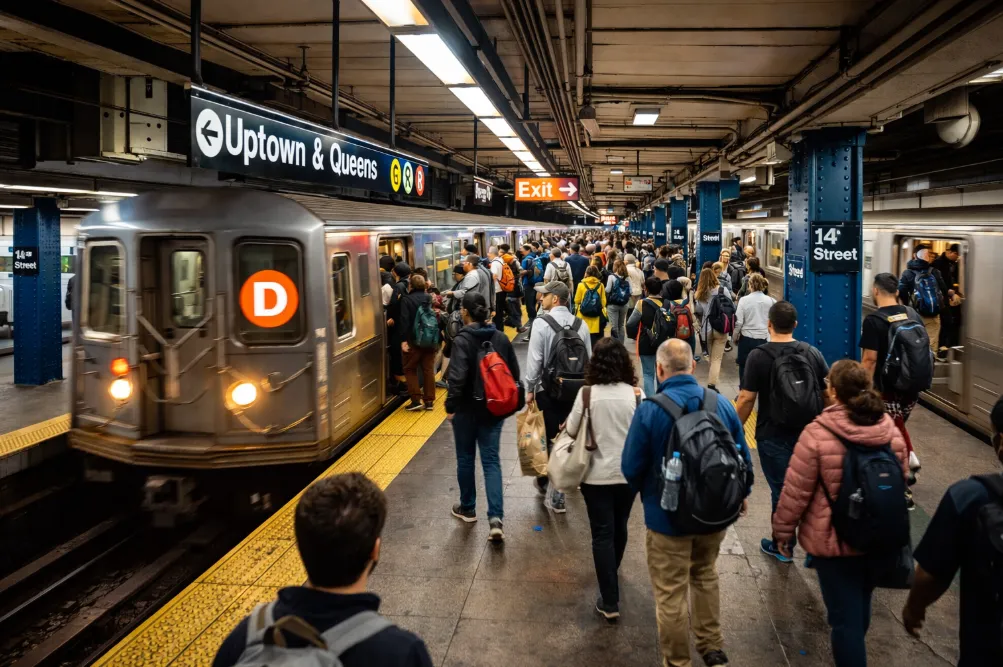
1. 🚇 The Basics: System Overview
Before you swipe or tap, let's understand the system's "personality" and the essentials of the MTA (Metropolitan Transportation Authority).
Who operates the subway? The New York City subway is operated by the Metropolitan Transportation Authority (MTA). You will see this blue and silver logo on every bus, train car, and station entrance.
How big is the system? It is one of the largest and most complex public transit systems in the world:
-
472 official stations: There are actually 472 official stations, meaning you are rarely more than a 10-minute walk from a subway entrance in most parts of the city.
-
24 subway lines: Identified by letters (A, C, E, etc.) and numbers (1, 2, 3, etc.). These lines are your primary way of navigating the city.
Extensive Coverage: The system covers four of the five boroughs—Manhattan, Brooklyn, Queens, and the Bronx. (Note: Staten Island has its own separate railway that is not physically connected to the main subway grid).
The 24/7 Myth: While it never closes, it changes "personality" at night (after 11 PM) and on weekends. A train that is your best friend at noon might not exist at 2 AM. Always expect maintenance reroutes during these times.
2. 💳 Paying the Fare: OMNY vs. MetroCard
New York is currently in a transition period. While the iconic MetroCard still exists, the contactless OMNY system is now the primary and easiest way to pay. As of January 1, 2026, you can no longer buy or refill a MetroCard.
Fare Comparison Table (2026 Rates)
|
Fare Type |
Cost |
Best For... |
How to Use |
|
Single Ride |
$3.50 or $3 (by OMNY) |
Everyone |
Tap credit card or phone (Apple/Google Pay) |
|
7-Day Fare Cap (OMNY) |
$35 |
Travelers staying 4+ days |
Automatically free after 12 taps (Mon-Sun) |
|
Pay-Per-Ride Card |
$3/ride |
No contactless card |
Swipe a physical MetroCard at the gate |
The fee for a new OMNY card will increase to $2 when the MetroCard is no longer accepted for fare payment later in 2026. OMNY cards are more durable and last for up to 5 years.
📱 How to Use OMNY: Tap and Go!
OMNY is the MTA’s contactless fare payment system. It is incredibly flexible and supports a wide range of payment methods—no more swiping magnetic stripes! You can "Tap and Go" using:
-
Contactless Credit/Debit Cards: Any card with the contactless symbol (including Mastercard, Visa, American Express, Discover, UnionPay, and JCB).
-
Smartphones & Wearables: Digital wallets like Apple Pay, Google Pay, and Samsung Pay via your phone or smartwatch.
-
Physical OMNY Card: A dedicated, refillable contactless card available at retail stores (like CVS/Walgreens) and OMNY vending machines.
OMNY is designed for speed. You don't need to unlock your phone or open an app if you have "Express Transit" mode set up.
-
Locate the Reader: Every turnstile has a glowing screen. Look for the OMNY logo.
-
The Tap: Simply hold your contactless card or your smartphone/watch near the screen.
-
Success Display: The screen will turn Green and display "GO".
-
Express Mode (iPhone/Apple Watch): You can pay without waking or unlocking your device. Just tap the top of your iPhone or the display of your Apple Watch on the reader.
-
Tracking Your Spend: You can create an account at
OMNY.infoto track your progress toward the $35 fare cap.
⚠️ Key Payment Rules (The OMNY Advantage)
-
The Fare Cap (Pros & Cons):
-
Pro: Tap and ride and you'll only pay for the subway and local bus rides you take up to a cap of $35 in a 7-day period, as long as you use the same OMNY Card, credit or debit card, or mobile device. If you ride express buses, you'll only pay $67 in a 7-day period for subway, local, and express bus rides. You don't need to commit to an "Unlimited" card upfront. If you ride 12 times in a week, the rest are free!
-
Con: The cap resets every Monday at midnight.
-
3. 🧬 Understanding Subway Lines and Services
This is the "DNA" of the system. In NYC, we don't just call them "The Blue Line." Understanding NYC subway routes is essential for a smooth trip.
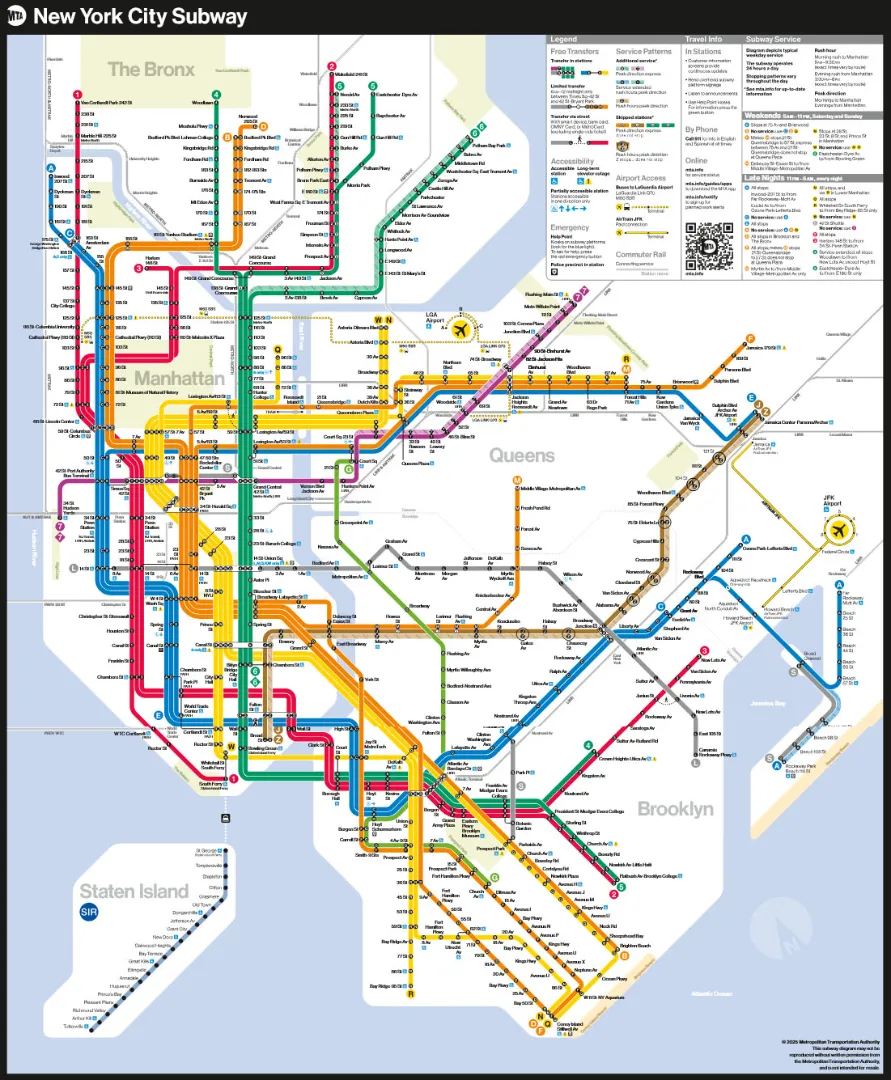
Click here to view HD New York Subway Map
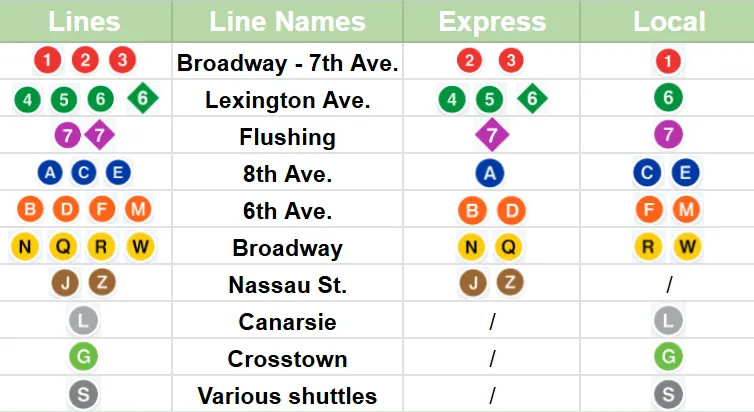
Lines vs. Trains
-
Lines: In NYC, a “line” usually refers to a specific physical track route named after a letter or number (e.g., the A line, the 1 line).
-
Shared Tracks: Unlike many other cities, multiple different "trains" can share the same track. For example, in Manhattan, the N, Q, R, and W trains all share the same platform at many stations.
-
Dynamic Behavior: The same train can behave differently depending on the time of day. A train that is "Express" during the hour might become "Local" at midnight.
Colors, Letters, and Numbers
-
Numbers (1–7): These lines generally serve the West Side and East Side of Manhattan.
-
Letters (A–Z): These usually run diagonally or across boroughs (connecting Manhattan to Brooklyn, Queens, or the Bronx).
-
The Color Rule: Colors indicate the Main Trunk Line in Manhattan (the "main street" the train uses), not individual routes. For example, the A, C, and E are all Blue because they all run under 8th Avenue, but they end up in completely different places in the other boroughs.
🔴Local vs. ⚪Express (Crucial Stopping Rules!)
On the NYC subway map, stations are marked with solid and hollow circles. A solid circle means the station is an express stop, where both express and local trains stop. A hollow circle means it is a local-only stop, where express trains do not stop. Understanding how Local and Express trains overlap is the most critical skill for a NYC rider.
-
Local Trains (⚪): These stop at every single station on the map.
-
Express Trains (⚫): These skip smaller, "local" stations to save time, stopping only at major hubs.
-
Circle vs. Diamond (Shapes Matter): On some lines (like the 6 or 7), you will see the number inside different shapes:
-
Circle (⭕): Indicates a Local train. It stops at every station.
-
Diamond (♦): Indicates an Express train. It skips stations to move faster.
-
Tip: Always check the shape on the side of the train or the station signs during rush hours.
-
-
The Universal Rule: Every Express stop is ALSO a Local stop.
-
If your train is a Local train, it will stop at both the "solid dot" stations and the "open circle" stations.
-
If your train is an Express train, it will skip all "solid dot" stations and only stop at the "open circle" (major) stations.
-
How to Check the Map:
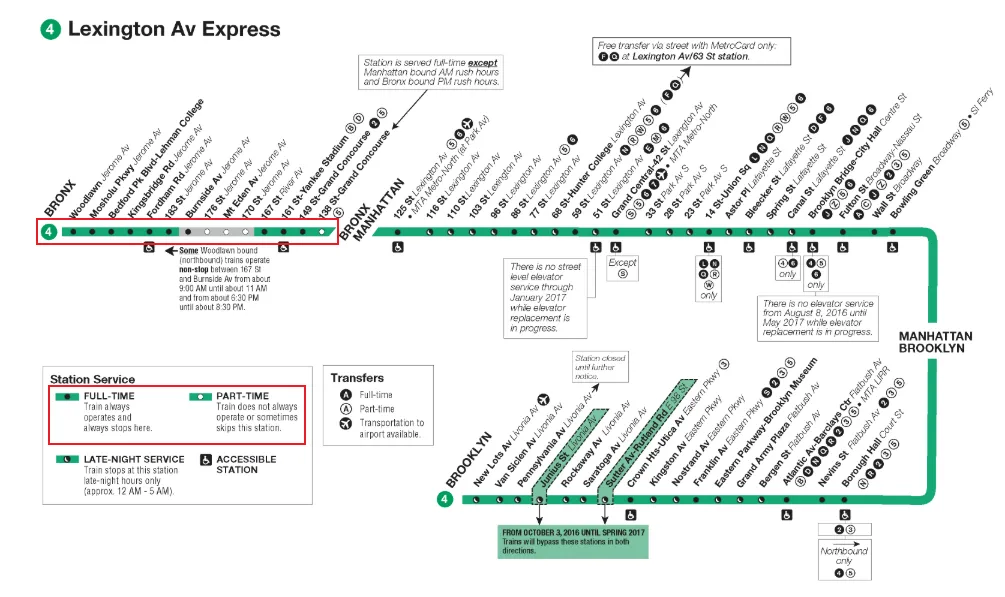 Image from new-york.metro-map.net, Copyright by original author
-
White/Open Circle (○): This is an Express station. All trains (Local and Express) stop here.
-
Black/Solid Dot (●): This is a Local station. Only Local trains stop here. Express trains will zoom past.
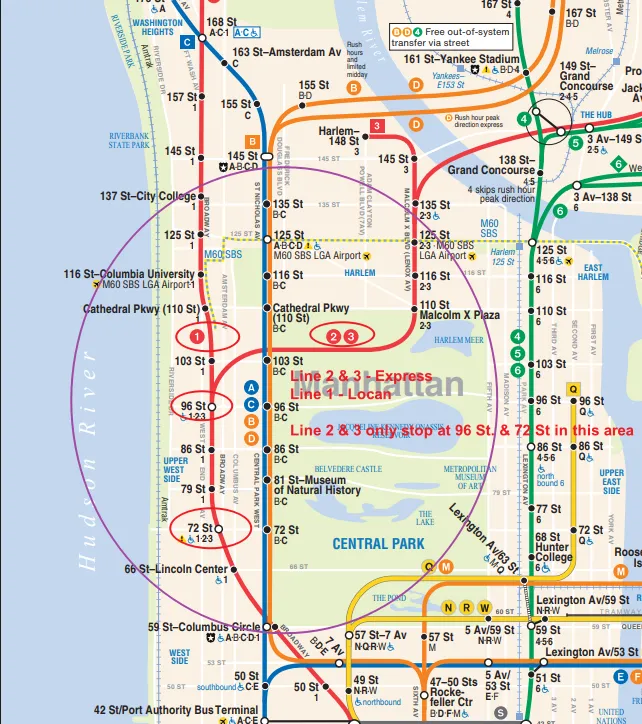
The "Oh No" Clause: What if I board an Express train by mistake?
If your destination is a "solid dot" station but you accidentally board an Express train:
-
Don't Panic: Stay on the train until the next Express stop (the next open circle on the map).
-
The Switch: Get off the Express train. Stay on the same platform (usually) and wait for the Local train heading in the opposite direction (if you've passed your stop) or the same direction (if you realized early).
No Extra Fare: As long as you don't exit the turnstiles, switching between Local and Express on the same platform is free.
Save Money on NYC, DC, and LA Metro Rides – Tickets, Routes, Tips & More
4. 🏮 Station Mastery: Recognizing Entrances
Don't just walk down the first staircase you see. NYC subway station signs are your best guide.
The Entrance Globes (The Lanterns)
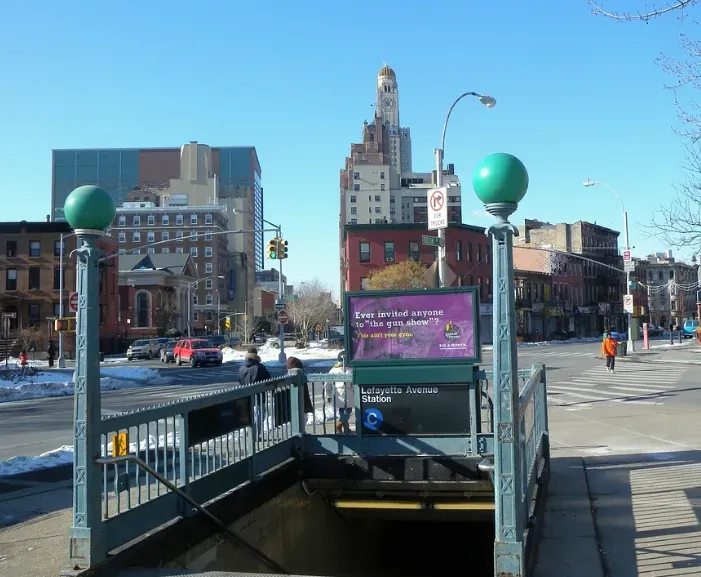
The colored globes outside an entrance tell you if you can actually get in:
-
Green Globes: This entrance is open 24/7. It has a turnstile where you can enter. There is no difference between a hemisphere of green and a completely green object.
-
Red Globes: These are often "Exit Only" or are closed during late-night hours. Save your energy—don't walk down unless you see a green light.
Reading the "Black Header" Sign
At every entrance, there is a black sign listing:
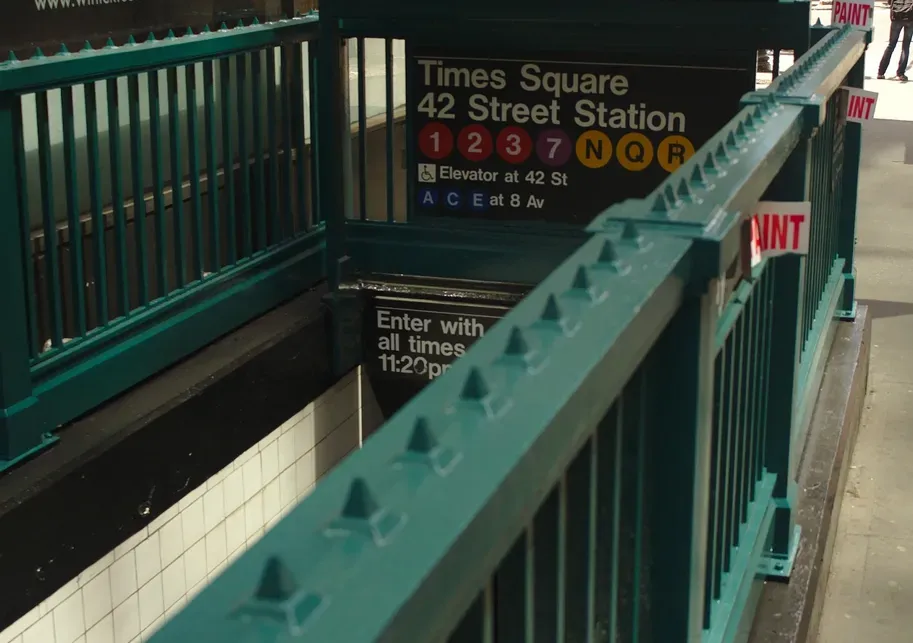
Using the image above as an example, let's explain how to understand the station entrance sign.
- Station Name: Times Square 42 Street Station
-
The Lines available: 1, 2, 3, 7, N, Q, R
-
If your need take the elevator to enter this station you need walk to 42 St.
- If you need to take the A/C/E subway lines, please walk to 8th Avenue.
The "Trap":
At most subway stations in Manhattan, if you enter through a street-level entrance for the wrong direction, there is no underground connection to the opposite platform.
The Cost of a Mistake: You will be forced to exit the station, cross the street, and re-enter from the opposite side. This means you will have to pay the fare again ($2.90)! Always double-check the sign before you tap.
Outside Manhattan: Directional signs will more frequently use specific neighborhood or borough names (e.g., "To Queens") instead of just Uptown/Downtown to help you navigate.
5. 🧭 Manhattan Direction Logic: Beyond "Left & Right"
In New York, everything is based on the compass or the borough.
Uptown vs. Downtown (The Manhattan Standard)
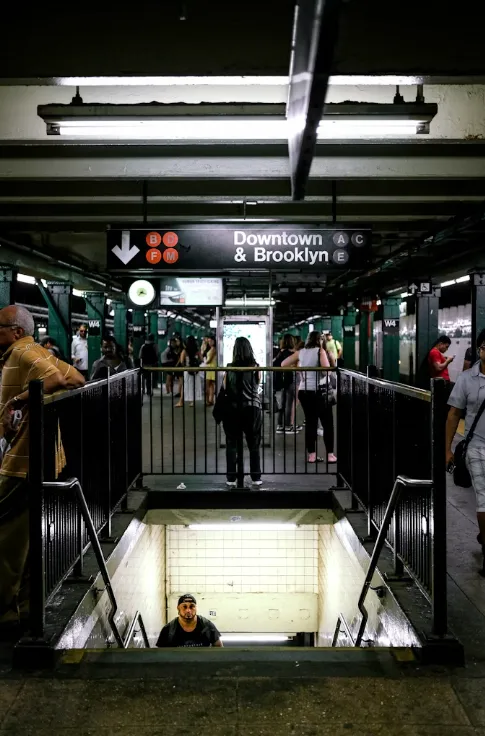
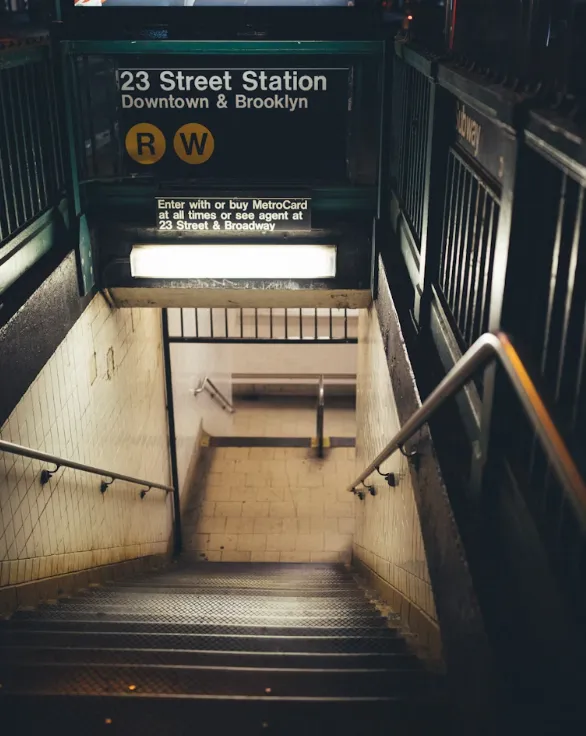
In Manhattan, the city is a grid, and directions are binary. These terms tell you where the train is heading relative to your current position:
-
Uptown: Heading North (towards higher street numbers, Central Park, Harlem, and potentially into The Bronx).
-
Downtown: Heading South (towards lower street numbers, Soho, WTC/Financial District, and potentially into Brooklyn).
-
Where this standard applies: Almost exclusively when you are inside Manhattan.
Beyond Manhattan: Borough-Bound Directions
Once the train leaves Manhattan, the "Uptown/Downtown" labels become confusing or disappear. Instead, directions are defined by the Borough the train is entering:
-
Manhattan-bound: No matter where you are in Brooklyn or Queens, if you want to go to the city center, look for this sign.
-
Brooklyn-bound / Queens-bound / Bronx-bound: Heading away from Manhattan towards those specific boroughs.
Reading Station Signs
Understanding these common signs is critical for navigating platforms and staircases:
-
"Uptown & The Bronx": Trains heading North through Manhattan.
-
"Downtown & Brooklyn": Trains heading South through Manhattan.
-
"Entrance Only": You can enter here, but it may not be a designated exit.
-
"Exit Only": Do not try to enter here; the turnstiles only turn one way (outward).
-
Terminating Stations: Trains also display their last stop (e.g., "To Flushing-Main St"). Always check your map to ensure your stop is "on the way" to that destination.
6. 🚶♂️ Riding the Subway: A 5-Step Guide
Step 1: Plan Your Trip
Don't rely on the physical maps in the station (they don't show real-time changes).
-
Apps: Use Google Maps or Citymapper. They will tell you exactly which entrance to use and if there are delays.
Step 2: Pay and Enter
Tap your phone at the OMNY screen. Wait for the green "GO" signal, then push through the turnstile. If you have a large suitcase, look for the "AutoGate" (the wide service gate). You still tap at the reader next to it, and the door will unlock.
Step 3: Choose the Correct Platform
Look for the overhead signs. Confirm two things:
-
The Letter/Number of your train.
-
The Direction it is heading.
-
If you are unsure, look at the "Next Train" clocks hanging from the ceiling.
Step 4: Boarding the Train
Wait behind the yellow line. Let passengers exit first. * Check the Side of the Car: Multiple lines often share the same track (e.g., the N, Q, R, and W all use the same platform in midtown). Always read the letter/number on the side of the train before stepping in.
Step 5: The Ride and Exiting
-
Safety Tip: Look for the Zebra Board (black and white stripes) on the ceiling/wall of the platform. This is where the Conductor is. If you're traveling alone late night, stand near this sign.
-
Exiting: When you arrive, follow the "Exit" signs. Larger stations (like Times Square) have many exits. Look for the specific street name on the sign (e.g., "Exit to 42nd St & 7th Ave") so you don't end up two blocks away from your destination.
- NYC Subway Safety Guide
Common Mistakes Recap
-
Entering the "Uptown Only" entrance when you needed Downtown.
-
Getting on an Express train when your stop is a Local stop. (Tip: Look for the white circles on the map; those are the only stops Express trains make熟记这一点).
-
Assuming the subway connects everywhere: Some transfers require walking long distances or even exiting and re-entering (check the map for "transfer" lines).
-
Ignoring Service Posters: Missing the yellow signs that explain weekend reroutes.
Exiting to Transfer: Exiting the turnstiles when an underground free transfer was available.
7. Service Changes, Delays, and Reroutes
Service changes are common, especially on weekends and late at night.
How to check service changes
-
MTA website or app: The most reliable source for live updates.
-
Google Maps: Usually reflects active reroutes in real-time.
-
Station posters: Look for bright yellow (planned work) or white (emergency) posters on platform columns.
What to do if your train is rerouted
-
Read platform announcements: Electronic signs will often display "Train Service Changed"
" or explain skipping stops. -
Ask station staff or fellow riders: Don't be afraid to ask, "Is this train going to xxx station?"
-
Follow posted alternatives: Look for directional arrows pointing to shuttle buses or alternative subway lines nearby.
8. 🎭 NYC Subway Culture & Etiquette
-
Move to the Center: Don't stand by the doors; move to the middle of the car so others can get in.
-
Empty Car Warning: If a car is empty while others are packed, DO NOT ENTER. It usually means the air conditioning is broken or there is a "hygiene emergency" inside.
-
No Signal: You will lose phone signal in the tunnels. Load your directions and maps before the train starts moving.
-
Etiquette: Don't eat "smelly" food, and always offer your seat to the elderly, pregnant, or disabled.
9. Frequently Asked Questions (FAQ)
Q: Is the NYC subway safe?
A: Yes, especially during busy hours. Late at night, stand near the Zebra Board where the conductor is located.
Q: Can I use OMNY for multiple people?
A: Yes, up to 4 people can tap in using the same device or card.
Q: How do I pay for the NYC subway in 2026?
A: You can pay using OMNY, New York City’s contactless payment system. Simply tap a contactless credit/debit card, smartphone, smartwatch, or an OMNY card at the turnstile. MetroCards are being phased out and are no longer recommended for new riders.
Q: Can I use a credit card or Apple Pay on the NYC subway?
A: Yes. The NYC subway accepts contactless credit and debit cards, as well as Apple Pay, Google Pay, and Samsung Pay, through OMNY. No ticket purchase is required in advance.
Q: What is the difference between local and express trains in NYC?
A: Local trains stop at every station, while express trains skip smaller stations and only stop at major ones. On subway maps, express stops are shown as solid circles, while local-only stops are hollow circles.
Q: Does the NYC subway run 24 hours?
A: Yes, the NYC subway operates 24/7, but service patterns may change late at night or on weekends. Some express trains run as local during off-peak hours.
Q: Can I transfer between subway lines for free?
A: Yes. OMNY and MetroCard allow free transfers within 2 hours between subway lines and buses.
Q: Can I bring luggage on the NYC subway?
A: Yes, you can bring luggage on the subway at no extra charge. If you have large suitcases, do not try to squeeze through the standard turnstile. Tap your payment method at the OMNY reader next to the wide "AutoGate" (service door), and the door will unlock for you to walk through easily.
Q: Are there restrooms in NYC subway stations?
A: While some major transit hubs (like Penn Station, Grand Central, and Fulton Center) have public restrooms, the vast majority of regular subway stations do not. It is highly recommended to use a restroom at a cafe or museum before entering the subway system.
Final Thoughts: The subway is the heartbeat of NYC. It’s loud, it’s crowded, but it’s the most efficient way to truly "see" New York. Don't be afraid to make a mistake—even locals take the wrong train sometimes
Related guide: New York Penn Station Transfer Guide