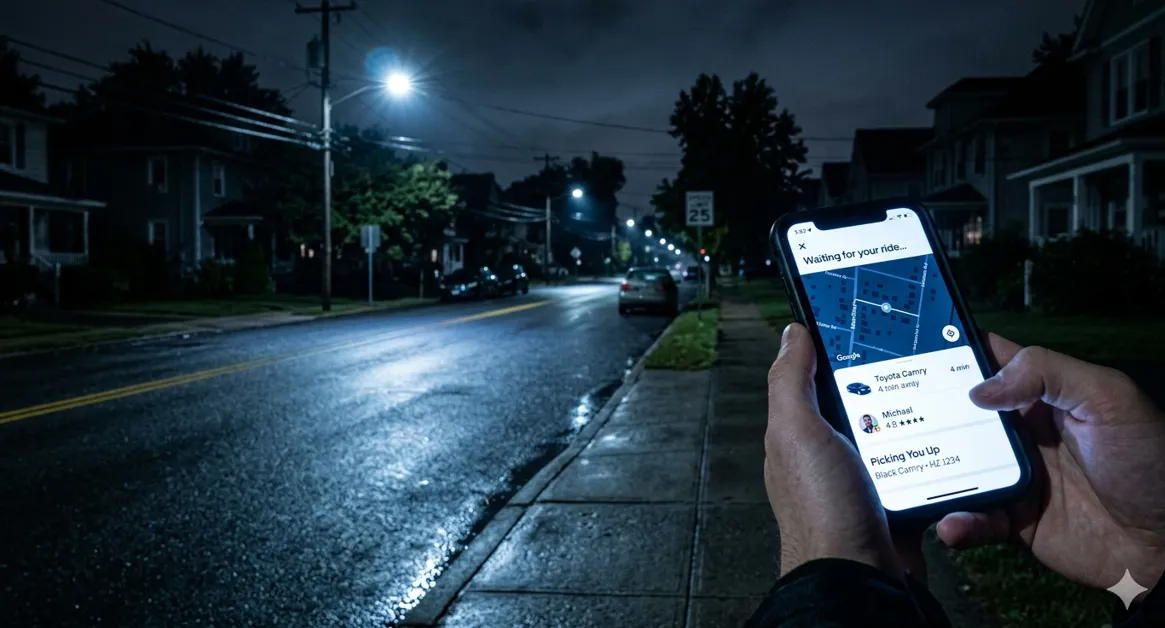
It’s 1:30 AM. You just stepped out of a late-night networking event in downtown Chicago, or perhaps you’ve finally cleared security at JFK after a grueling 14-hour flight. The air is biting, the streets are eerily quiet, and the nearest subway station feels like a gamble you’re not willing to take.
You open Uber. You see the little car icons circling the map. But as the app matches you with a driver, a familiar, cold shiver of anxiety flashes through your mind: Is this actually safe? Who is really behind that wheel?
In the silence of a sleeping American city, the distance between the curb and your front door can feel like miles. We’ve all been there—clutching our phones, scanning the darkness for a pair of headlights, hoping our intuition is as sharp as the situation demands. This guide isn't here to fearmonger; it’s here to arm you. Because in 2026, safety isn’t a matter of luck—it’s a protocol.
I. The Core Verdict: Systemic Safety vs. Individual Risk
Let’s lead with the facts: Statistically, using Uber or Lyft in the United States is remarkably safe. With millions of rides completed every day, the platforms have integrated sophisticated background checks, GPS tracking, and AI-driven monitoring. However, "statistically safe" is cold comfort if you happen to be the 0.1% exception.
The truth is, safety in the U.S. is fragmented. It is a variable determined by the intersection of three factors:
-
The Geometry of Location: High-crime "sketchy" areas vs. well-lit business districts.
-
Platform Discipline: Whether you actually use the safety tools provided (PIN, Share Trip).
-
Your Defensive Posture: How you present yourself to the driver and your level of environmental awareness.
The Golden Rule: You are not a "passenger" waiting for a ride; you are an active participant in your own transit security. This guide will show you how to transition from a "Soft Target" to a "Hard Target."
II. Risk Matrix: Understanding the Vulnerabilities
Before we dive into the protocols, we must identify the enemy. Risk during a midnight rideshare typically falls into four "Threat Buckets":
-
⚠️ Identity Deception: The "Ghost Ride." This is when a fraudulent driver—or a legitimate driver using a different vehicle—exploits the darkness to bypass your visual checks.
-
⚠️ Navigation Anomalies: A deliberate detour into desolate, low-signal industrial zones under the guise of "avoiding traffic." This is often a precursor to a more serious escalation.
-
⚠️ The "Last Mile" Gap: The vulnerability doesn't end when the car stops. The walk from the vehicle to your doorstep—especially in poorly lit neighborhoods—is a prime window for tailgating or robbery.
-
⚠️ Physiological "Victim Signaling": Extreme fatigue or alcohol consumption sends a subconscious signal to a predatory driver that your defenses are down and your reaction time is compromised.
III. The Manifesto: 10 Non-Negotiable Safety Protocols
To survive and thrive in the American urban landscape at night, you must adopt a "Zero-Trust" mindset. Execute these 10 tactical protocols for every single ride.
1. App-Only Bookings: Never "Hail" from the Street
The Logic: In the US, legitimate taxis are rare outside major hubs. Anyone pulling up and asking "Need a ride?" is an unregistered solicitor operating outside the legal and digital grid.
Tactical Detail: Even if they claim to be an off-duty Uber driver offering a discount, decline. Without the app’s GPS record and insurance coverage, you essentially vanish from the grid.
-
Pro Tip: Wait inside a hotel lobby or a well-lit business until the car is 2 minutes away. Never stand on a dark corner with your head down.
2. The "Triple-Check" Ritual: Plate, Model, Face
The Logic: Predators count on your eagerness to get out of the cold. Most "wrong car" incidents happen because of visual laziness.
Tactical Detail: Stand 3 feet away from the door and verify:
-
The License Plate: Match every digit.
-
The Vehicle: Correct make, model, and color.
-
The Driver: Match the photo ID. If the driver says, "I'm in a loaner car today," Cancel immediately. There are no exceptions for safety.
3. Execute the "Reverse Name Check"
The Logic: Asking "Are you John?" is a leading question. A predator can simply say "Yes."
Tactical Detail: Stand by the window and ask: "Who are you picking up?" A legitimate driver will have your name on their screen. This forces the driver to prove their identity before you compromise your safety by entering the vehicle.
4. Tactical Seating: The Back-Right "Power Seat"
The Logic: Sitting in front is too intimate and limits your defensive space. Sitting directly behind the driver limits your visibility of their actions.
Tactical Detail: Always sit in the back-right seat.
-
It creates maximum physical distance between you and the driver.
-
It allows you to monitor the driver's eyes and hands in the rearview mirror.
-
It ensures you exit on the curbside (sidewalk), avoiding live traffic during a quick departure.
5. Activate the "Digital Armor": PIN Verification
The Logic: Uber's PIN feature is the ultimate "Hard Handshake" that prevents identity theft.
Tactical Detail: Enable "Verify Your Ride" in settings. The driver cannot start the trip until you provide a 4-digit code. This ensures the digital and physical worlds are perfectly synced.
6. Share Your Live "Combat" Map
The Logic: Predatory behavior thrives on isolation. Once a driver knows you are being watched, the risk drops significantly.
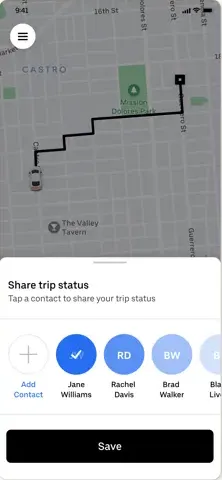
Tactical Detail: Use the "Share My Trip" feature to send your live location to 2-3 Trusted Contacts.
-
The "Psychological Deterrent": Make a fake (or real) phone call as you enter: "Hey, I'm in the Uber now, plate [XXXX], I'll be at the door in 10 minutes. See you then.
7. Maintain "Active Navigation"
The Logic: Do not trust the driver's GPS blindly. "Long-hauling" or intentional detours are red flags.
Tactical Detail: Keep your own Google Maps open. If the driver takes an unannounced turn, voice your concern immediately: "I noticed we're off the main route, where are we going?" Firmness signals that you are an alert, high-value target.
8. Set a High "Safety Floor" for Ratings
The Logic: Ratings are a crowdsourced warning system.
Tactical Detail: For midnight rides, your minimum threshold should be 4.85 stars. A driver with a 4.6 or 4.7 likely has complaints regarding "creepy behavior" or "unsafe driving." In the dead of night, don't be the person who tests their behavior.
9. Avoid "Shared" Rides after Dark
The Logic: Shared rides introduce a "wildcard" stranger into your closed environment.
Tactical Detail: The $5 savings is not worth the risk of being in a car with an unknown, potentially intoxicated or aggressive individual. Always opt for a private UberX or Lyft personal ride to maintain control over the environment.
10. The 50-Meter Scan: The Exit Strategy
The Logic: The ride isn't over when the wheels stop.
Tactical Detail: 200 meters before arrival, stop looking at your phone. Scan your doorstep and the surrounding street for suspicious loitering.
-
Pro Tip: Have your keys in your hand before the car stops. If someone is lingering near your gate, ask the driver to circle the block or drop you at a nearby 24-hour convenience store.
IV. Emergency Protocol: The "What-If" Plan
If the situation escalates—the driver refuses to stop, locks the doors, or begins harassment—you must switch from "Passive Observation" to "Active Crisis Management."
-
The Silent 911 Trigger (App Safety Toolkit): Both Uber and Lyft have a shield icon on the main screen. Tapping it connects you to a 24/7 ADT safety agent or directly to 911. The app automatically transmits your real-time GPS, car make/model, and plate number to the dispatcher—saving you from having to explain your location while under stress.
-
Text-to-911: In many US jurisdictions, you can text "911." This is vital if you cannot speak freely without alerting the driver. Text your location and the nature of the emergency clearly.
-
The "Mechanical Escape" override: Most modern vehicles in the US have a safety override. Even if the driver has activated the "Child Lock," rapidly pulling the interior door handle twice will often manually override the lock in many models.
-
Verbal De-escalation & Bluffs: If you feel the driver is testing boundaries, use the Authority Bluff: "My husband is a Sergeant at the 1st Precinct; he's tracking this ride and waiting at the door." Mentioning specific law enforcement details often acts as a massive deterrent.
V. Geographic Nuances: A Tale of Five Cities
American cities are not monolithic. Each has its own "safety rhythm" and specific risks you must adapt to.
-
New York City (NYC): The "Subway-to-Street" dead zone. NYC never sleeps, but certain areas in Brooklyn or the Bronx have "dead zones" where street lights are frequent but people are not. The Rule: If you are transferring from the subway to an Uber, stay inside the turnstiles until the driver is 1 minute away. Beware of "gypsy cabs" (unmarked black cars) that linger near subway exits.
-
Los Angeles (LA): The Zip Code Volatility. In LA, a wrong turn can take you from a million-dollar neighborhood to a high-crime corridor in seconds. The Rule: Check your destination's "Zip Code" safety rating. If you are headed to areas like Skid Row or South LA, insist on being dropped off directly inside a gated entrance or right at the lobby door.
-
Chicago: The "L" Station Isolation. Chicago’s "L" stations can be desolate at night. The Rule: Avoid setting your pickup point at the base of an elevated train station. Walk to a nearby 24-hour pharmacy (CVS/Walgreens) to wait in a brightly lit, high-traffic environment.
-
San Francisco / Bay Area: Smash-and-Grab Awareness. SF is notorious for "Bipper" culture (smash-and-grab thefts). The Rule: Never leave your bags on the seat next to you while the car is stopped at a red light. Keep your luggage on the floor or in the trunk. If the driver leaves the car for any reason, get out with your belongings.
-
Philadelphia / Atlanta: The Carjacking Factor. Certain metro areas have seen a rise in carjackings. The Rule: Sit in the back-right not just for driver safety, but to have the best 360-degree view of the exterior. If the driver is ambushed at a stoplight, being on the curbside gives you the fastest exit route to the sidewalk.
VI. The Midnight Survival Checklist (Save to Phone)
Before you step into any vehicle tonight, run through this mental (or physical) checklist:
-
[ ] PIN Enabled? (Hard digital handshake active)
-
[ ] Verification Done? (Plate, Model, Face match)
-
[ ] Reverse Name Check? (Driver said my name first)
-
[ ] Seating Position? (Back-right seat, curbside)
-
[ ] Map Open? (Google Maps tracking independently)
-
[ ] Live Location Shared? (Friends know where I am)
-
[ ] Keys in Hand? (Ready for the 50-meter doorstep dash)
VII. Conclusion: Awareness as Your Armor
Navigating American cities at night doesn't have to be a source of terror. The infrastructure of ridesharing is a marvel of modern convenience, but it requires a human touch—your awareness—to function safely.
Remember, a driver is a professional providing a service, but you are the commander of your own safety. By turning these 10 protocols into muscle memory, you stop being a "Soft Target" and become a traveler who is respected, protected, and—most importantly—home.
Stay alert. Stay safe. See you at your destination.
Disclaimer: This guide is based on safety best practices as of 2026. Always follow local law enforcement advice and trust your intuition above all else.