New England in autumn is not merely a destination; it is a seasonal phenomenon that defies description. As we look toward the 2026 foliage season, all biological and meteorological indicators point to a year of extraordinary intensity. Unlike previous seasons that may have been muted by late-summer droughts, 2026 is shaping up to be a "High-Saturation" year—a vintage year for what locals affectionately call "Leaf Peeping."
The Science of the "Red Factor"
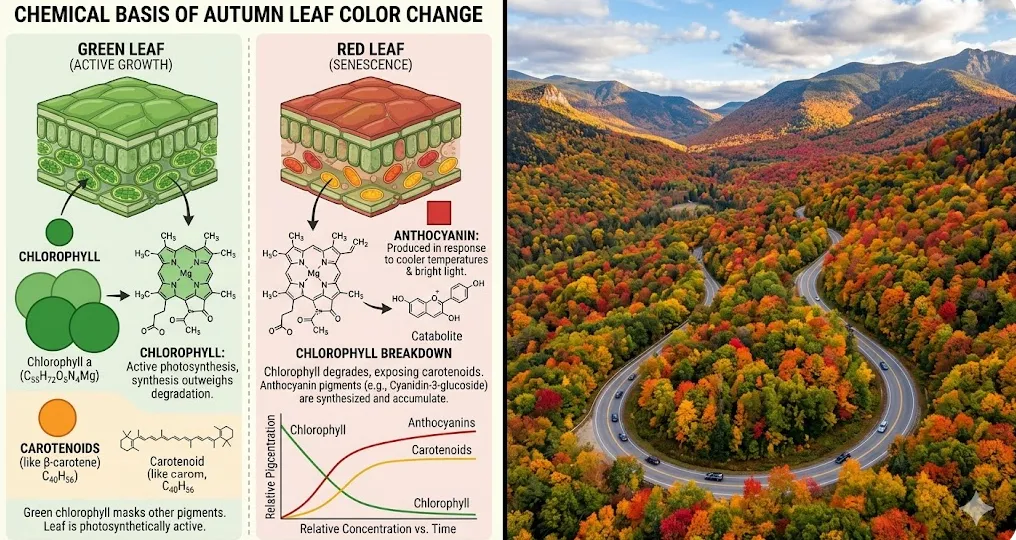
The brilliance of the 2026 season is rooted in the specific climate patterns of the preceding spring and summer. A healthy amount of rainfall in late May and June across Northern Vermont and New Hampshire has ensured that the forest canopy is robust and stress-free. When trees are healthy, they produce higher concentrations of anthocyanins—the pigments responsible for those fiery reds and deep purples that make the Sugar Maples of New England world-famous.
As we transition into the 2026 "Goldilocks" scenario—warm, sunny days followed by crisp, cool (but non-freezing) nights—the chlorophyll in the leaves breaks down efficiently, revealing the underlying carotenoids (yellows and oranges) while simultaneously supercharging the production of red pigments.
From the Canadian Border to the Atlantic Coast
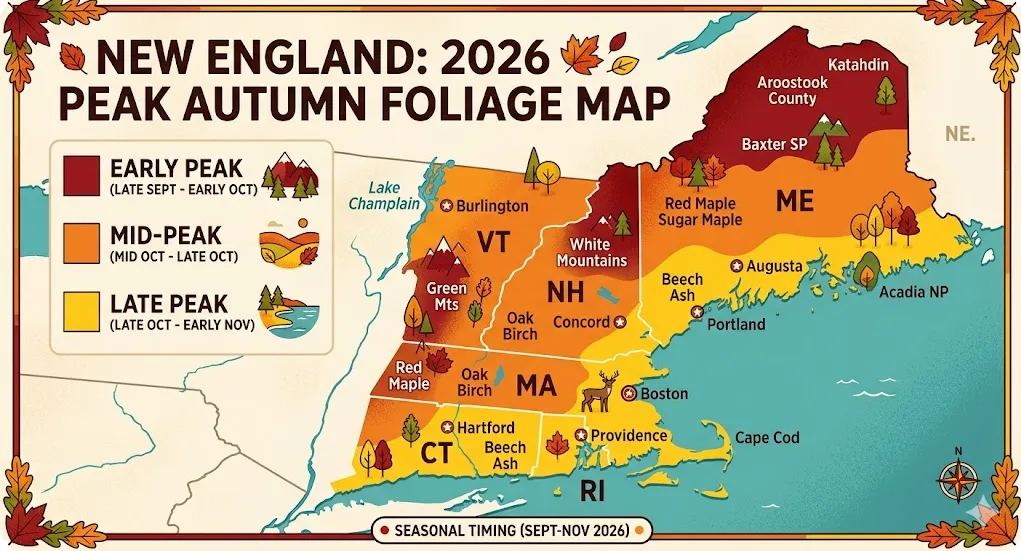
The 2026 "wave" of color will follow its traditional southward march, but with a slight twist due to the projected El Niño-to-La Niña transition. We expect a concentrated "Peak" window. The progression typically begins in the high-elevation "North Country" and bleeds down through the valleys of the Berkshires, finally settling into the coastal marshes of Rhode Island and Connecticut by early November.
Who is this Guide For?
Whether you are a Hardcore Leaf Peeper chasing the perfect sunrise at Artist’s Bluff, a Cider-Sipping Family looking for the best pumpkin patches in Woodstock, or a First-Time Road Tripper overwhelmed by the sheer scale of the region, this guide is your definitive 2026 playbook.
I. 2026 Peak Foliage Forecast: The "When" to Go
Timing is everything. Arrive three days too early, and the mountains are a stubborn green; three days too late, and a heavy rain might have stripped the branches bare. Based on current 2026 meteorological modeling, here is our predicted timeline for the "Peak" (the moment when at least 75% of the canopy has turned).
1. 2026 Peak Prediction Table (By Region)
|
Region / State |
Key Landmarks |
Estimated 2026 Peak Window |
|---|---|---|
|
Northern ME / NH / VT |
Moosehead Lake, Dixville Notch, Jay Peak |
Sept 26 – Oct 3 |
|
Central VT & White Mtns (NH) |
Stowe, Woodstock, Kancamagus Highway |
Oct 2 – Oct 12 |
|
Southern VT & Berkshires (MA) |
Manchester (VT), Mount Greylock, Lenox |
Oct 10 – Oct 20 |
|
Coastal Maine (Acadia) |
Bar Harbor, Jordan Pond, Ocean Drive |
Oct 14 – Oct 24 |
|
Southern MA & Connecticut |
Boston, Mystic (CT), Litchfield Hills |
Oct 22 – Nov 2 |
|
Rhode Island Coast |
Newport, Providence, Block Island |
Oct 28 – Nov 8 |
2. The Altitude Rule: Vertical Foliage
In 2026, we highly recommend travelers pay attention to the Vertical Gradient. For every 1,000 feet of elevation gain, the temperature drops significantly, often accelerating the foliage cycle by as much as a full week.
-
The Valley Strategy: If you find that the mountaintops in the Franconia Notch are already "Past Peak" (brown and leafless), do not despair. Simply drive down into the lower valleys or towards the lakeshores (like Lake Winnipesaukee), where the warmer water temperatures keep the surrounding trees in a "Peak" state for much longer.
3. Weather Disruptors: What Could Change the Plan?
While our forecast is data-driven, two major "Black Swan" events could disrupt the 2026 season:
-
The "Cold Snap": An early, severe frost in mid-September can "lock in" the colors prematurely or, in worst cases, kill the leaves before they reach full vibrancy.
-
The "Wind Event": A late-season tropical remnant or a Nor'easter can bring heavy winds. In the foliage world, we call these "Leaf-Strippers." Keep a close eye on the 48-hour wind forecast via apps like Windy.com.
4. How to Spot a "Delayed Season" in 2026
Early signs of a delay usually manifest in the Sugar Maples. If by September 20th the uppermost branches (the "crown") of the maples are still deep green rather than showing hints of burnt orange, expect the peak to shift 3-5 days later than the historical average. In 2026, we are currently seeing a "Standard to Slightly Lagging" start, which often leads to a more explosive and synchronized burst of color in October.
II: Strategic Route Planning – Navigating the Colors
Planning a foliage trip in 2026 requires more than just a GPS; it requires a strategy to outsmart the crowds and the changing canopy. As New England anticipates a record-breaking influx of visitors this year, your movement should be dictated by two factors: Altitude and Traffic Flow.
1. The North-to-South Logic
In 2026, the "Peak" is expected to travel southward at a rate of approximately 15-20 miles per day. For a 7-day trip, we recommend starting as far north as your schedule allows and "chasing" the color down. This ensures that even if you miss the peak in one town, you are likely to catch it in the next.
2. Avoiding the "Leaf Peeper" Gridlock
The infamous "Foliage Traffic" is real. In 2026, towns like Stowe (VT) and North Conway (NH) have implemented new traffic management plans.
-
The Weekday Advantage: If possible, schedule your drives through the Kancamagus Highway (NH) or Route 100 (VT) between Tuesday and Thursday.
-
The "Early Bird" Rule: To secure a parking spot at popular trailheads like Artist’s Bluff, you must arrive before 7:30 AM.
III: Three Iconic 2026 Road Trip Loops
Based on 2026 forest health reports, these three routes offer the highest probability of breathtaking vistas and authentic New England charm.
Route A: The Mountain Classics (Vermont & New Hampshire)
Best For: First-timers, mountain lovers, and photographers.
Duration: 4–6 Days
This is the "Holy Grail" of foliage routes. It combines the pastoral beauty of Vermont’s rolling hills with the rugged, granite peaks of New Hampshire.
-
The Vermont Leg (Route 100): Start in Waterbury and head north to Stowe. Route 100 is often called the most scenic road in America. Stop at the Cold Hollow Cider Mill for fresh donuts before driving the winding Smugglers' Notch (Route 108), where the cliffs are draped in neon-orange maples.
-
The New Hampshire Leg (The Kanc): Cross into New Hampshire and hit the Kancamagus Highway (Route 112). This 34-mile scenic byway has no gas stations or cell service—just pure, unadulterated wilderness.
-
2026 Must-Stop: Woodstock, VT. Visit the Sleepy Hollow Farm (Note: 2026 requires strict adherence to local parking ordinances here due to its viral popularity).
🍽️ The "Fall Flavor" Layer: Cider Donuts & Farm-to-Table
-
Must-Visit Stand: Cold Hollow Cider Mill (Waterbury, VT). You haven't experienced Vermont until you’ve had their legendary apple cider donuts, warm from the fryer.
-
Farm-to-Table Stop: Simon Pearce Restaurant (Quechee, VT). Dine overlooking a rushing waterfall and a covered bridge. The food is as spectacular as the glass-blowing studio downstairs.
-
The "Cider Tour": Stowe Cider. Grab a flight of seasonal hard ciders (try the "Apple Pie" flavor) after a day of hiking.
🏨 Lodging Recommendations: The "Where to Stay" Gap
-
Luxury: The Lodge at Spruce Peak (Stowe, VT). The only ski-in/ski-out luxury resort in Stowe with floor-to-ceiling mountain views.
-
Boutique: The Woodstock Inn & Resort (Woodstock, VT). Historic elegance in the heart of America’s prettiest village.
-
Budget (Satellite Hack): The Wayside Inn (Bethlehem, NH). A charming, affordable historic inn located just 15 minutes from the crowds of Franconia Notch.
Route B: Coastal Crimson & Acadia (Maine)
Best For: Seafood enthusiasts, sunrise chasers, and coastal hikers.
Duration: 5–7 Days
Maine offers a dramatic contrast where the deep blue of the Atlantic meets the fiery reds of the interior forests.
-
The Mid-Coast Drive: Follow Route 1 through charming towns like Camden and Rockport. Hike Mount Battie for a view where the "mountains meet the sea."
-
Acadia National Park: In 2026, Acadia continues its Vehicle Reservation System for Cadillac Summit Road. Ensure you book your sunrise slot at least 90 days in advance via Recreation.gov. [National Park Service (NPS.gov)]
-
The Secret Spot: Explore the Schoodic Peninsula. It’s the only part of Acadia on the mainland and offers the same stunning foliage with 70% fewer crowds.
🍽️ The "Fall Flavor" Layer: Lobster & Wild Blueberries
-
Must-Visit Stand: Jordan Pond House (Acadia NP). Famous for their "Popovers with Strawberry Jam." It’s an Acadia tradition since the 1890s.
-
Sea-to-Table Stop: The Highrange (Bar Harbor). Fresh-caught lobster with a side of local seasonal root vegetables.
-
Quick Bite: McLoons Lobster Roller (Spruce Head, ME). Arguably the best lobster roll in Maine, located on a quintessential working pier.
🏨 Lodging Recommendations
-
Luxury: Terramor Outdoor Resort (Bar Harbor, ME). Upscale "glamping" that lets you sleep under the stars in a heated luxury tent.
-
Boutique: 250 Main Hotel (Rockland, ME). A modern, art-focused boutique hotel with harbor views.
-
Budget (Satellite Hack): Under Canvas Acadia (Surry, ME). Located about 35 minutes from the park entrance, offering a more affordable way to stay in nature.
Route C: Culture, Arts & The Berkshires (Massachusetts)
Best For: Art lovers, slow travelers, and families.
Duration: 3–4 Days
If you prefer a mix of world-class museums and sophisticated autumn scenery, the Berkshires in Western Massachusetts is your 2026 winner.
-
The Mohawk Trail (Route 2): One of the oldest scenic roads in the US. Don't miss the Hairpin Turn for a 5-state view.
-
Art in Nature: Visit MASS MoCA or the Clark Art Institute. In October, the sprawling campuses of these museums become living galleries of fall color.
-
The Summit: Drive to the top of Mount Greylock, the highest point in Massachusetts. Legend has it that the view from the summit inspired Herman Melville to write Moby Dick.
🍽️ The "Fall Flavor" Layer: Orchard Picking & Fine Dining
-
Must-Visit Stand: Hilltop Orchards (Richmond, MA). Go for the "Pick-Your-Own" apples and stay for the cidery and scenic hiking trails.
-
Fine Dining Stop: Wheatleigh (Lenox, MA). An Italianate palazzo turned luxury hotel and restaurant—perfect for a high-end "Leaf Peeper" dinner.
-
Local Favorite: Red Lion Inn (Stockbridge, MA). Their "Widow’s Peak" pumpkin pie is the stuff of local legends.
🏨 Lodging Recommendations
-
Luxury: Canyon Ranch Lenox. A world-class wellness retreat set in a stunning historic mansion.
-
Boutique: Hotel on North (Pittsfield, MA). A quirky, design-forward hotel in a restored 19th-century building.
-
Budget (Satellite Hack): The Porches Inn at MASS MoCA (North Adams, MA). Modern, "industrial-chic" cottages located across from the world-famous art museum.
2026 Elevation & Timing Cheat Sheet for Routes:
|
Route |
Highest Point |
Peak Expectation (2026) |
|---|---|---|
|
Route A |
Mt. Washington (NH) |
Late Sept (Summit) / Early Oct (Base) |
|
Route B |
Cadillac Mtn (ME) |
Mid-to-Late October |
|
Route C |
Mt. Greylock (MA) |
Mid-October |
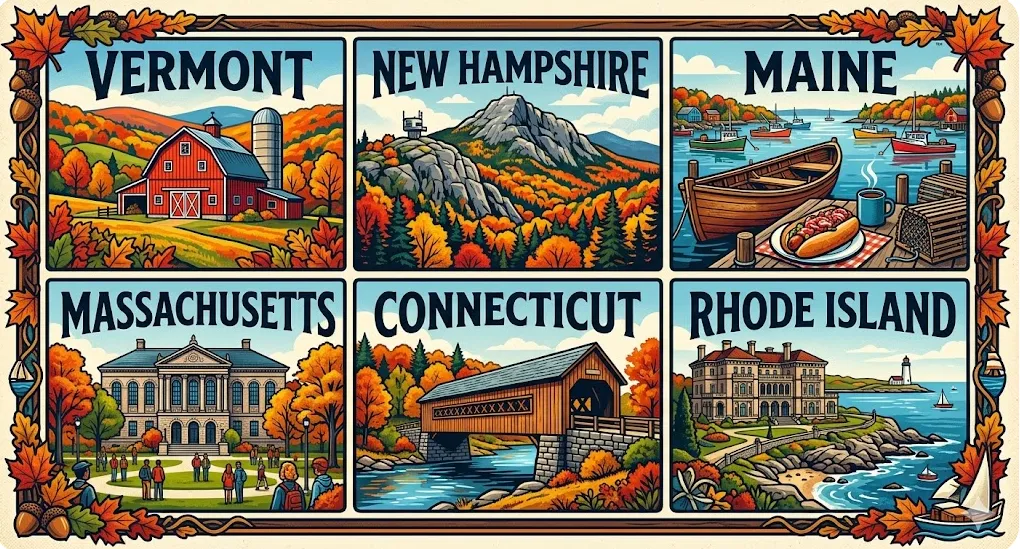
Part IV: 2026 State-by-State Foliage Quick Reference
For travelers with limited time, this "Cheat Sheet" summarizes the distinct character of each New England state during the 2026 foliage season.
|
State |
Primary "Vibe" |
Must-Visit Town |
Top Scenic Drive |
|---|---|---|---|
|
Vermont (VT) |
Pastoral, Rolling Hills, Red Barns |
Stowe |
Route 100 (The "Skier's Highway") |
|
New Hampshire (NH) |
Rugged Peaks, Glacial Lakes, Alpine |
North Conway |
Kancamagus Highway (RT 112) |
|
Maine (ME) |
Rocky Coasts, Lighthouses, Pines |
Bar Harbor |
Park Loop Road (Acadia NP) |
|
Massachusetts (MA) |
Intellectual, Artsy, Historic |
Stockbridge |
The Mohawk Trail (Route 2) |
|
Connecticut (CT) |
English Countryside, River Valleys |
Mystic |
Route 7 (Housatonic Valley) |
|
Rhode Island (RI) |
Gilded Age Mansions, Coastal Gold |
Newport |
Ocean Drive (The "Ten Mile Drive") |
🚨 2026 Overtourism Alert: Travel Sustainably
With 2026 expected to be a record-breaking year for tourism, iconic hubs like Stowe and Bar Harbor will face significant congestion. To ensure a better experience for both you and the local communities, consider these sustainable alternatives:
-
Instead of Stowe (VT): Try the Mad River Valley (Waitfield and Warren). You’ll find the same classic Vermont charm, historic covered bridges, and artisanal food scenes with 40% fewer crowds.
-
Instead of North Conway (NH): Explore Littleton or Sugar Hill. These towns offer stunning views of the White Mountains and famous "pancake houses" without the heavy bumper-to-bumper traffic of Route 16.
-
Instead of Bar Harbor (ME): Venture to the Blue Hill Peninsula or Deer Isle. These areas provide the rugged granite coastline and deep crimson foliage of Acadia but maintain a peaceful, seafaring soul.
The 2026 "Secret Spots" for Each State:
-
Vermont: Head to the Northeast Kingdom (NEK). It is wilder, less crowded, and turns color 5 days earlier than the rest of the state.
-
New Hampshire: Visit Dixville Notch. The view from the "Table Rock" is the most dramatic cliff-side foliage shot in the Northeast.
-
Maine: Blue Hill Peninsula. An artist's enclave that offers Acadia-level views without the crowds.
-
Massachusetts: Quabbin Reservoir. Thousands of acres of protected forest with zero commercial development.
Part V: 2026 Practical Travel Logistics & "Pro-Tips"
Planning the logistics for 2026 requires a focus on two things: Pre-booking and Inflation Management.
1. Accommodation Strategy: Beating the "Foliage Premium"
In 2026, hotel prices in "hub" towns like Stowe or Bar Harbor can easily exceed $500–$800 per night during peak weekends.
-
The "Satellite Town" Hack: Instead of staying in Stowe, look for lodging in Montpelier or Waterbury. Instead of North Conway, try Littleton or Gorham. You will save up to 40% while remaining within a 30-minute drive of major sights.
-
Booking Window: For 2026, the "Golden Window" for booking prime B&Bs is 6–9 months in advance.
2. The 2026 Layering Guide (Packing for the "Micro-Climates")
New England weather in October is notoriously unpredictable. In a single day, you can experience a 35°F (2°C) morning and a 65°F (18°C) afternoon.
-
Base Layer: Moisture-wicking synthetic or merino wool.
-
Mid-Layer: A light down vest or a high-quality fleece (Patagonia/LL Bean style is the local "uniform").
-
Outer Shell: Windproof and waterproof. A sudden rainstorm in the mountains can happen anytime.
-
Footwear: Waterproof hiking boots are essential if you plan on doing the "Artist’s Bluff" or "Beehive" trails.
3. Photography in 2026: Capture the Glow
-
The CPL Filter: If you bring only one piece of gear, make it a Circular Polarizer. It removes the glare from wet leaves and makes the reds/oranges "pop" against the blue sky.
-
Golden Hour vs. Blue Hour: Most tourists leave after sunset, but the "Blue Hour" (20 mins after sunset) is when the deep purples and oranges of the sky complement the foliage perfectly.
Part VI: The 2026 "Fall Survival" Checklist (Avoiding the Fails)
1. The "Respect Private Property" Warning
In 2026, many famous photography spots (like the Jenne Farm in VT) have introduced stricter trespassing rules. Never cross a fence or block a farmer’s driveway for a photo. Stick to designated roadside pull-offs.
2. 2026 Vehicle Permit Reminders
Check Recreation.gov for:
-
Acadia National Park: Cadillac Summit Road reservations.
-
White Mountain National Forest: Day-use fees at certain trailheads (bring $5 in cash for the "Iron Ranger" envelopes).
3. Digital vs. Physical
For digital nomads and those who need to share their journey in real-time, 2026 presents a unique challenge: modern needs meeting ancient, signal-blocking mountains.
-
Offline Maps are Mandatory: Cell service is non-existent on the Kancamagus Highway and deep within Smugglers' Notch. Download Google Maps or AllTrails maps for the entire region before leaving your hotel.
-
The Satellite Edge: If you are using a newer smartphone (like iPhone 14 or later), ensure your Satellite Emergency SOS is set up. For remote workers, consider a rental vehicle equipped with Starlink-in-Motion if you plan to "work from the woods."
-
Work-Friendly Hubs: If you need to attend a Zoom call, plan to be in Burlington (VT), Portsmouth (NH), or Portland (ME). These cities offer reliable 5G and high-speed fiber optics, unlike the mountainous "dead zones."
-
Power Check: Cold temperatures drain batteries faster. Bring a high-capacity power bank, especially if using your phone for navigation and photography simultaneously.
Part VII: Frequently Asked Questions (FAQ)
Q1: When is the absolute best week for 2026?
A: If you can only choose one window, lock in October 5th – October 12th. During this time, Central VT, the White Mountains (NH), and the Berkshires (MA) are most likely to be at or near "Peak" status simultaneously.
Q2: Is it dog-friendly?
A: Extremely. New England is one of the most pet-friendly regions in the US. Most state parks allow dogs on leashes. Many B&Bs in Stowe and Bar Harbor offer pet-specific packages, but always call ahead to confirm.
Q3: Can I fly a drone to capture the foliage?
A: It’s complicated. National Parks (like Acadia) are strict NO-DRONE zones. Many state parks and private farms also have bans. Always check the B4UFLY app and respect the quietude of the forest.
Q4: What if I miss the "Peak"?
A: Don't panic. If the mountains are "Past Peak," drive south or toward the coast. The coastal regions of MA, CT, and RI typically peak 10–14 days later than the mountains, offering a "second chance" for latecomers.
Q5: What should I wear to look good in photos?
A: To contrast with the red and orange leaves, wear neutral or cool tones like cream, navy blue, or forest green. Avoid wearing yellow or bright orange, as you will disappear into the background!
Q6: Are there moose?
A: Yes, especially in Northern NH and Maine. Be extremely careful driving at dawn or dusk. If you see a "Moose Crossing" sign, slow down—hitting a 1,000lb moose is a serious accident.
Conclusion: Catching the Magic
New England in the fall of 2026 is set to be a legendary season. While the science of climate and elevation provides a roadmap, the true magic lies in the unexpected—the sudden clearing of mist over Jordan Pond, the smell of woodsmoke in a Vermont village, or the perfect apple cider donut from a roadside stand.
Preparation is key, but flexibility is your best friend. Use this guide to build your foundation, but leave room for the unplanned detours. The leaves wait for no one, so pack your bags, grab your camera, and get ready for the road trip of a lifetime.
Happy Leaf Peeping!