Why the Tent Roofs Cause Delays, the Infamous Train Outage Hacks, and Rocky Mountain Blizzard Cheat Codes
Welcome to Denver International Airport (DEN)—locally known as DIA, famously crowned by a sea of glowing white fabric peaks, and notorious for being both a breathtaking gateway to the Rockies and a stressful transit puzzle.
Whether you are connecting between United flights on your way to the West Coast, flying Southwest to explore the Southwest, or heading international, DEN is almost impossible to avoid. In 2026, it remains one of the busiest airports on the planet.
But behind its stunning architecture lies a chaotic ecosystem of unpredictable mountain weather, a train system with a bit of a "personality," and enough conspiracy theories to fill a sci-fi novel. 👽
Don't panic! Grab your Colorado craft beer, pack your patience, and let's dive into the ultimate 2026 survival guide to navigating Denver Airport like a seasoned pro.
📌 Quick Survival Tips for Denver Airport (DEN)
-
Security Checkpoints: Use the newly renovated West Security if you have TSA PreCheck or CLEAR. The "DEN Reserve" line is discontinued as of 2026.
-
Skipping the Train: If you are flying out of Concourse A, do not take the underground train. Use the indoor glass Skybridge from the main terminal to bypass the crowds.
-
Beating Winter Delays: Book flights before 7:00 AM. Afternoon flights frequently get trapped in massive 45+ minute de-icing queues during snowstorms.
-
Best Layover Nap Spot: Head to the Concourse A Mezzanine level for the free, hidden "Rest & Recharge" area featuring recliners and outlets.
-
Getting Downtown: Do not take a $50 Uber. Take the RTD A Line Commuter Train from Level 1. It costs exactly $10 and gets you to Union Station in 37 minutes.
 [copyright:en.wikipedia.org,Murphpics]]
🎪 1. Why Is It Called the “Tent Airport”: The Architectural Legend
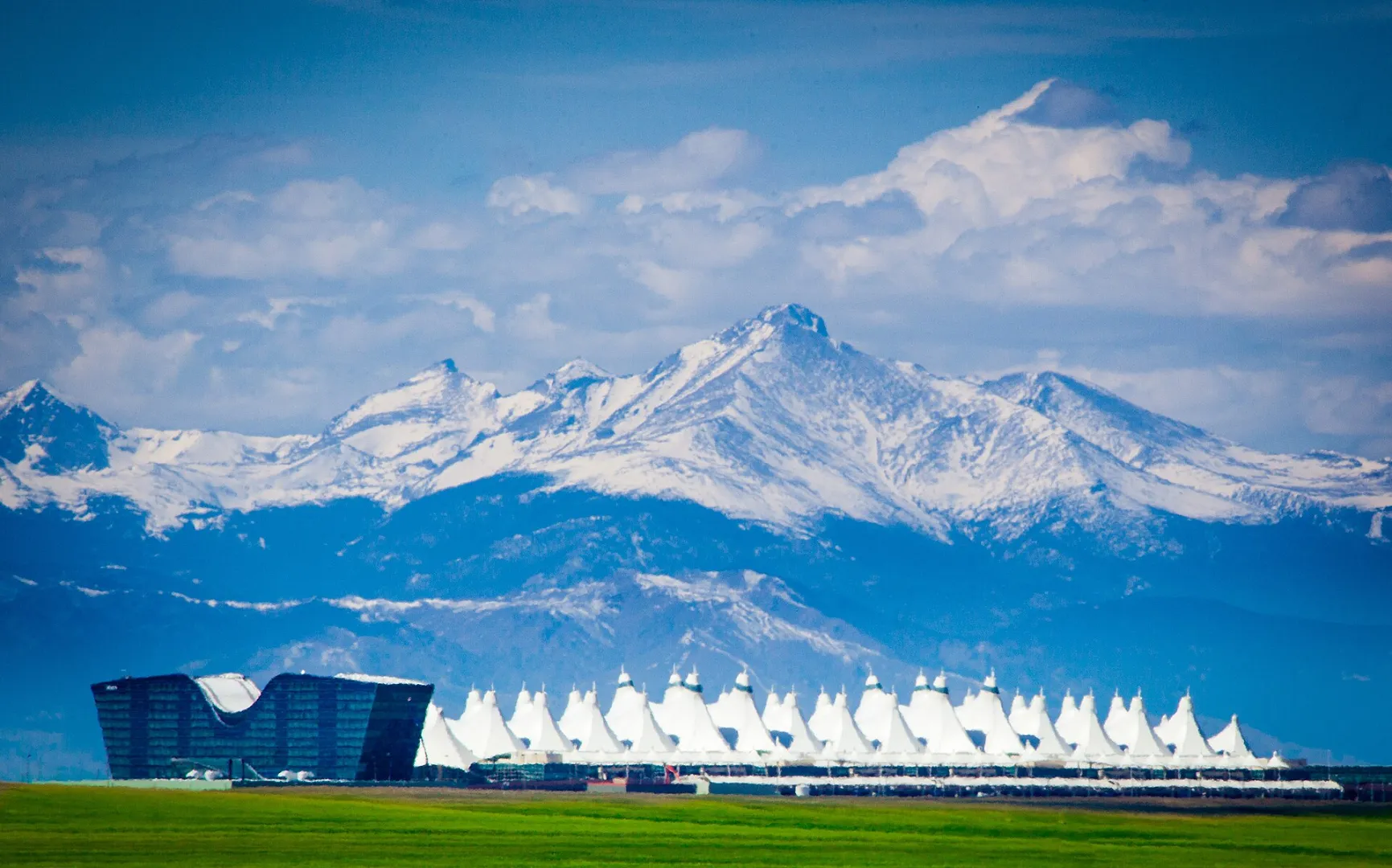
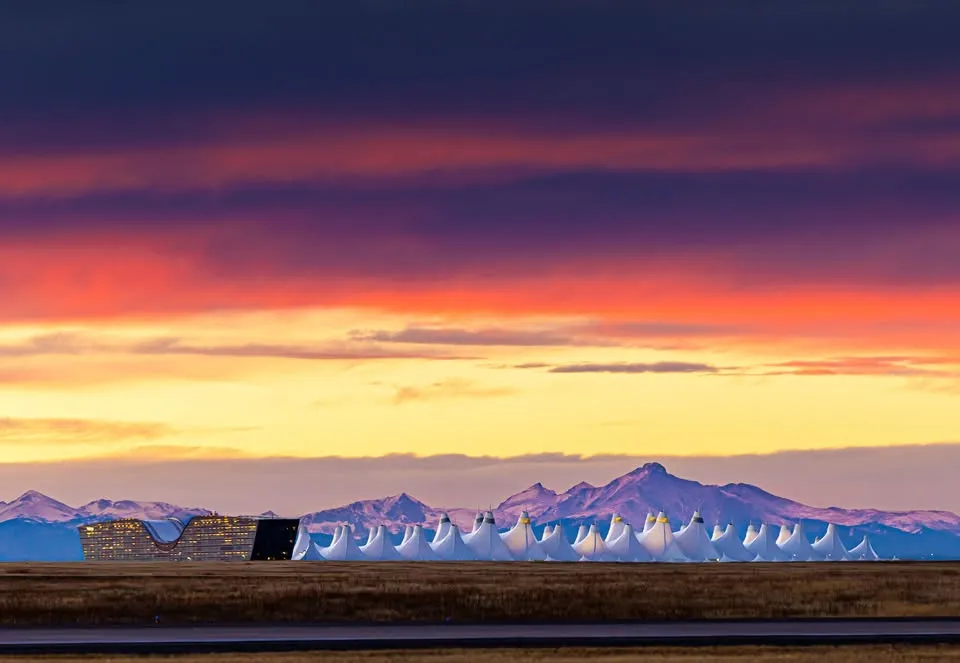
If you’ve ever flown into Denver, you’ve undoubtedly seen them: a sea of striking, brilliant white peaks rising dramatically against the backdrop of the Rocky Mountains. To the casual traveler, Denver International Airport (DEN) looks like a massive cluster of futuristic tents.
But this isn’t just a quirky design choice—it’s an award-winning architectural marvel with a fascinating backstory. Here is the legend, the science, and the secrets behind Denver’s famous "Tent Airport."
⛰ The Vision: From "Dull Box" to Rocky Mountain Peaks
When Denver decided to replace the aging Stapleton International Airport in the late 1980s, the city wanted something iconic. Enter architect Curtis Fentress. Given a tight deadline and a massive budget crisis, Fentress threw out the traditional "concrete box" airport blueprint.
Instead, he looked to the West for inspiration. The Teflon-coated fiberglass roof of the Jeppesen Terminal was designed to mimic:
-
The snow-capped peaks of the Rocky Mountains just a few miles away.
-
The traditional Native American teepees of the Great Plains that originally occupied the land.
When it opened, it was a radical departure from standard aviation design, instantly earning its global nickname: The Tent Airport.
🧩 The Engineering: More Than Just Pretty Fabric
Don't let the word "tent" fool you. This isn’t the kind of nylon tent you pitch in the woods. The roof of DEN is a triumph of structural engineering designed to handle Colorado's notoriously extreme weather:
-
The Material: The roof is made of two layers of Teflon-coated woven fiberglass that is thinner than a credit card but incredibly strong.
-
The Climate Control: In the summer, the white fabric reflects up to 90% of the sun's heat, keeping the massive terminal cool. In the winter, it absorbs just enough heat to help heavy Colorado snow slide right off.
-
Natural Light: The fabric is translucent, allowing the Jeppesen Terminal to be flooded with natural daylight, significantly cutting down the airport's energy consumption.
- 💡 Fun Fact: The entire roof is supported by 34 miles of steel cables and suspended from giant pylons. It is completely free-standing, creating the massive, open-air feeling you experience as soon as you walk inside.
👽 The Conspiracy Theories (Because, It's DEN)
You can't talk about the architecture of DEN without mentioning the internet's favorite internet rabbit hole. Because the "tents" resemble secret bunkers from above, and because the airport was notoriously over budget and delayed during construction, conspiracy theorists have had a field day.
Local lore jokes that the tent roof is actually concealing a massive underground bunker built by the Illuminati, a New World Order headquarters, or even aliens. While the airport officially laughs these rumors off (and even leans into them with funny marketing campaigns), the mysterious "Tent Airport" design remains a pop-culture legend.
 [copyright:en.wikipedia.org]]
🧐 2. Why the "Tent Airport" Always Gets Delayed: The Science & Geography
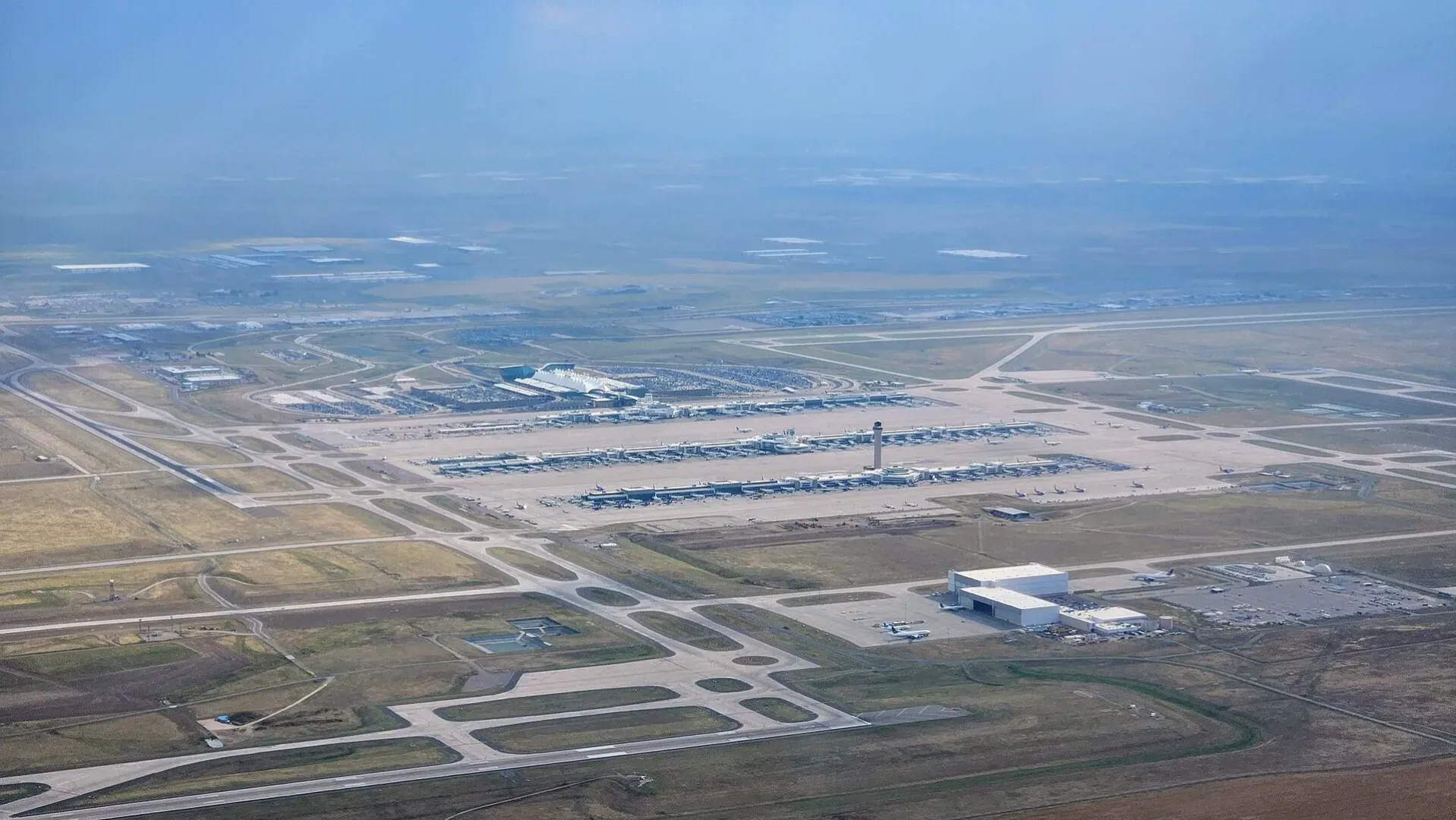
It is the ultimate traveler’s paradox: Denver International Airport boasts six massive runways, sits on a staggering 53 square miles of land (making it the largest airport in North America by land area), and enjoys over 300 days of Colorado sunshine a year.
Yet, if you fly through DEN frequently, you know that a dreaded text notification saying "Your flight has been delayed" feels almost inevitable.
Why is a modern, beautifully designed mega-hub so prone to bottlenecks? The answer lies in a volatile mix of high-altitude geography, unique atmospheric physics, and its own staggering success. Here is the real science behind why DEN is always delayed.
🆙 The High-Altitude Physics: Thin Air & "Density Altitude"
Denver isn't called the Mile High City for nothing. DEN sits at exactly 5,431 feet above sea level. At this altitude, the air is significantly thinner than it is at coastal airports like LAX or JFK.
This creates a major aerodynamic challenge: thin air means less lift.
-
To get a massive, fuel-heavy commercial jet airborne in thin air, planes must travel much faster down the runway to achieve takeoff.
-
Because they need more speed, they need longer runways. DEN actually features the longest commercial runway in North America (Runway 16R/34L, stretching a massive 16,000 feet) just to compensate for this.
-
In the heat of summer, an atmospheric phenomenon called high density altitude occurs. Warm air expands and becomes even thinner. When it gets hot, aircraft performance drops drastically, forcing airlines to space flights further apart or reduce aircraft weight—leading to instant cascading delays.
☁️ The Microclimate Chaos: "Upslope Fog" & Unpredictable Winds
Because DEN was built 25 miles east of downtown Denver to allow room for expansion, it sits squarely on the high plains. This geography subjects the airport to its own hostile microclimate, completely isolated from what the weather looks like in the city or the mountains.
-
The Summer Thunderstorm Trap: In the summer, the burning prairie heat collides with cool mountain air, brewing fierce, sudden afternoon thunderstorms. These storms bring erratic crosswinds and microbursts (sudden, violent downdrafts). If the wind shifts unpredictably, air traffic control must constantly change runway configurations, halting departures and forcing planes into holding patterns.
-
The "Upslope Fog" Blindspot: DEN is uniquely susceptible to upslope fog. When moist air moves in from the east and hits the rising terrain of the Rockies, it is forced upward, cools rapidly, and condenses. This blankets the runways in a thick, blinding fog that cuts visibility to near zero, forcing the FAA to slow ground operations to a crawl.
🔀 The Domino Effect of North America's "Connecting Hub"
Geography isn't just about weather—it's also about location. DEN sits dead center in the middle of the United States, making it the premier mega-hub for United Airlines, Southwest Airlines, and Frontier.
Because so many flights at DEN are connecting flights, the airport is hyper-sensitive to the "Domino Effect." If a morning storm delays a United flight in Chicago or Denver itself, that specific aircraft and its crew are late for their next three flights. Because DEN handles over 70 million passengers annually, a single 30-minute weather delay in the morning can ripple through the entire domestic flight grid by 4:00 PM.
👨👩👧👦 Growing Pains: Maximizing Capacity
DEN is victim to its own massive growth. The airport was originally designed to handle around 50 million passengers, but it is routinely shattering those projections. To keep up, the airport is undergoing massive, multi-year infrastructure upgrades (including major expansions to Peña Boulevard and overhauling baggage systems into future pedestrian walkways). Navigating around active construction zones on the tarmac means taxi times are longer, leaving very little margin for error when a storm does hit.
💡 The Survival Takeaway: When flying through DEN, a delay is rarely due to airline incompetence; it's usually physics and geography working against the schedule. Knowing this means you can plan ahead—which brings us to the ultimate tools for survival: navigating the terminals and beating the system.
 [copyright:www.facebook.com/denverinternationalairport]]
🚇 3. The Infamous Underground Train: Survival Tips & 2026 Updates
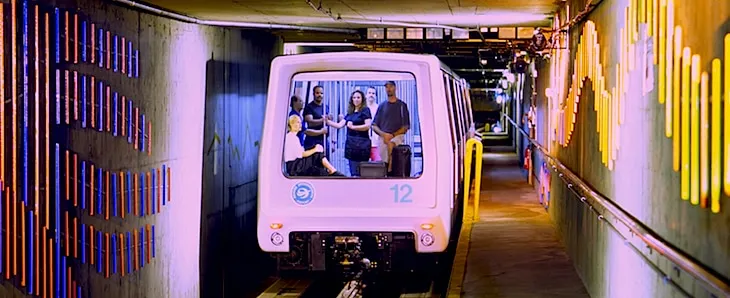
If the Jeppesen Terminal is the heart of DEN, the Automated Guideway Transit System (AGTS)—better known as the underground train—is its central nervous system.
For over three decades, this train has been a mandatory rite of passage. If your flight departs from Concourse B or C, you have had zero alternative but to descend into the airport’s belly, pack into a metallic tube like sardines, and pray there isn't a power glitch. When the train thrives, the airport flows. When it fails, thousands of travelers miss their flights in a matter of minutes.
Fortunately, 2026 is bringing massive, game-changing updates to this infamous transit bottleneck. Here is what you need to know to navigate the platform like a seasoned pro and what the future holds.
🚨 Breaking 2026 Update: The Ghost Tunnels Are Becoming Walkways!
For years, local rumors claimed the massive, dormant underground tunnels beneath the runways were built for Illuminati bunkers or a secret New World Order headquarters. The truth is much more mundane, yet far more exciting for travelers.
The city officially announced a massive $300 million to $700 million project to convert DEN's dormant underground baggage tunnels into pedestrian walkways.
The Reality Check: In the past year alone, the aging train system suffered a staggering 131 service disruptions, causing absolute gridlock in the terminal. The new walkways will finally provide a backup option, connecting Concourse A to B, and B to C.
While construction is slated to begin in 2027 (with a completion timeline around 2028–2029), the airport has also successfully rolled out 45 brand-new, lighter, and more energy-efficient Alstom Innovia train cars. This base fleet modernization has already bumped up passenger capacity by 1,700 people per hour, significantly cutting down platform wait times right now.
🏃♂️ Pro Tips for Surviving the Train Platform Today
Until the pedestrian walkways open, you are still locked into the "must-ride" train reality. Use these tactical insider hacks to save your sanity:
01. Skip the Train Entirely If You're on Concourse A
Many travelers automatically head down to the train station out of pure habit. Don't do it if your gate starts with an "A." Instead, look up and look for the signs for the Skybridge. Located on the north end of the Jeppesen Terminal, this massive glass indoor bridge allows you to walk directly from security straight into Concourse A. It takes about 4 to 6 minutes, offers a spectacular view of planes taxiing right beneath your feet, and keeps you entirely out of the basement crowds.
02. Master the "Far End" Boarding Strategy
When you descend the escalators from the security checkpoints, 90% of passengers instinctively halt and crowd around the very first train doors they see. This results in a massive human wall.
-
The Hack: Walk all the way to the far left or far right ends of the platform. The train cars at the extreme front and back of the track are almost always significantly less crowded, meaning you won’t have to fight your way on with three carry-on bags.
03. Know Your Landmarks (And the Iconic Chimes)
The DEN train is famous for its audio track—a robotic voice accompanied by whimsical, western-style synthesized chimes that play before the doors close.
-
Listen carefully to the announcements. The train moves in one continuous loop: Jeppesen Terminal (Baggage Claim/Security) ➡️ Concourse A ➡️ Concourse B ➡️ Concourse C.
-
If you miss your stop, don’t panic. Just stay on; the train will cycle back around in a matter of minutes.
04. The 20-Minute Buffer Rule
Because the train system is currently undergoing a massive AGTS Revitalization Program to upgrade track switches and signaling software, late-night and early-morning travelers may occasionally experience single-track operations (where trains share a single track, doubling wait times). Always factor an extra 20-minute buffer into your arrival schedule just in case the train is running at a reduced capacity.
❄️ 4. Winter Wonderland or Travel Nightmare? Snowstorm Hacks
Colorado is world-famous for its epic powder days, but what makes skiers rejoice makes air travelers weep. When a winter storm rolls off the Rocky Mountains and blankets the high plains, Denver International Airport transforms into a high-stakes battleground against Mother Nature.
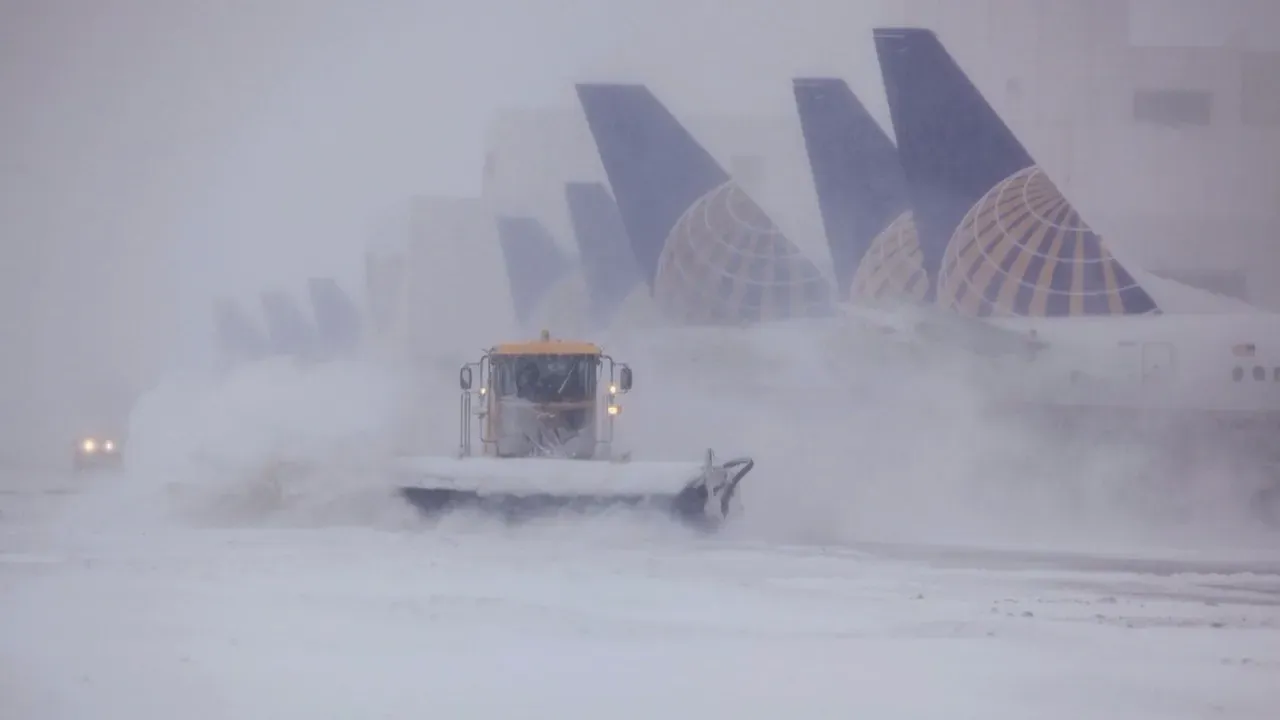
DEN actually boasts an award-winning snow removal team, armed with over 300 pieces of heavy machinery—including massive "multi-function" vehicles that plow, sweep, and blow snow off a runway all at the same time. In fact, they can clear an entire 16,000-foot runway in under 15 minutes.
But even with a world-class fleet, heavy snow and freezing visibility will slow a mega-hub to a crawl. If you find yourself flying through Colorado between October and April, you need a tactical winter playbook. Here are the battle-tested snowstorm hacks to survive a DEN blizzard.
🚨 The 45-Minute De-Icing Trap (And How to Time It)
A closed runway isn't usually what causes your winter delay at DEN; it's the de-icing queue. Before a plane can safely take off in freezing weather, it must be sprayed with hot glycol fluid to remove ice from the wings.
-
The Reality: DEN uses a series of massive, centralized de-icing pads (which have recently been expanded alongside the airport's massive Deicing Industrial Wastewater project to keep up with traffic). However, when every airline is trying to de-ice at the same time, planes stack up on the taxiways like cars on a jammed highway.
-
The Hack: If you see snow in the forecast, book the first flight of the morning (anytime before 7:00 AM). Morning aircraft have usually been parked overnight, and airlines prioritize getting their initial "wave" of fligh
-
ts out before the de-icing pads back up. By 11:00 AM during a storm, the tarmac queue can easily add 45 to 90 minutes to your travel time.
🆓 Activate the "Free Change" Rule Early
Do not wait until you are sitting at the gate watching wet snow pile up on the tarmac to take action. Major carriers at DEN (especially United and Southwest) are highly proactive when major winter storms are predicted.
✈️ Pro Tip: Look out for Weather Waivers. Airlines will typically issue these 24 to 48 hours before a major blizzard hits Colorado. A weather waiver allows you to change your flight to a day earlier or later completely free of charge, even if you booked a restrictive basic economy ticket. If a major storm is brewing, take the hint and move your flight before the airport shuts down.
👣 Track the "Incoming" Flight, Not Your Departure
When a blizzard hits, your airline app might stubbornly insist that your 4:00 PM departure is "On Time." Don't buy it.
Because DEN is a massive connecting hub, your plane has to arrive from somewhere else before you can board it. Use flight tracking apps like FlightRadar24 or FlightAware to type in your specific aircraft's tail number or track the incoming flight leg. If the incoming plane is currently stuck in a holding pattern over Nebraska or hasn't even left its origin city, go ahead and settle in—your flight is going to be delayed, regardless of what the gate monitor says.
⭕ Know the "Safe Zones" If You Get Stranded
If the worst happens and your flight is canceled, do not join the 200-person-long line at the gate customer service desk. Instead:
-
Call or Chat in the App Immediately: You will almost always get a customer service agent faster on the phone or through the airline's app chat feature than you will standing in line.
-
Find a "Sleep Zone": If you are stranded overnight and the nearby hotels are completely booked out, ditch the crowded, noisy gate areas. Head to Concourse A. Because Concourse A has a massive indoor pedestrian skybridge and a layout that allows for quieter, carpeted corners near the further gates (like the A60-A80 expansion wings), it is widely considered the most comfortable concourse for catching some shut-eye.
🕵️♂️ 5. Unlocking the Vault: DEN Layover Secrets
Whether you are trapped by a roaring Colorado blizzard or facing a planned four-hour gap between connections, a long layover at Denver International Airport doesn’t have to feel like a prison sentence.
While DEN is massive and undeniably chaotic at the surface, it is also packed with hidden sanctuaries, incredible local food, and unique amenities—if you know exactly where to look. Ditch the cold metal gate chairs and use these ultimate insider secrets to turn your next DEN layover into a premium experience.
🔌 The Hidden "Rest & Recharge" Sanctuary
Need to sleep or just escape the blaring terminal announcements? Skip the crowded main corridors and make a beeline for Concourse A.
-
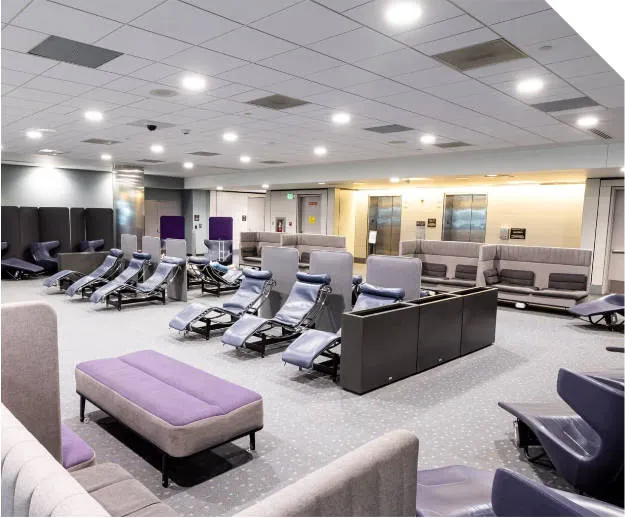
The Secret Location: Head to the Concourse A Mezzanine level. Here, you will find a dedicated, completely free Rest and Recharge Area.
-
The Vibe: This hidden architectural pocket is specifically designated as a quiet zone. It features comfortable, plush lounge chairs and dedicated recliners perfect for a nap, alongside a surplus of USB and standard charging outlets. Because it sits a level above the main passenger flow, 90% of travelers walk right past it without ever looking up.
💤 The 2026 Lounge Upgrade: The New Elite Escapes
If you have lounge access (via credit cards or airline status), DEN's lounge game has reached a whole new level of luxury.
-
The New Delta Sky Club (Concourse A): Freshly debuted on the 4th floor of Concourse A, this massive 13,000-square-foot oasis pays homage to Colorado with rugged stone accents and live-edge wood. It features a stunning premium bar inspired by Denver's historic Union Station and a cozy, ultra-quiet media room.
-
The Centurion Lounge (Concourse C): Located on the top floor, this American Express staple boasts a live action cooking station and—the ultimate travel luxury—complimentary craft beer tastings showcasing Colorado’s world-famous microbrew culture.
-
The United Clubs (Concourse B): As United's premier fortress hub, Concourse B features massive, newly renovated multi-story club spaces. If one is packed, walk down a few gates to the next; the newer West-side club is famously spacious.
🍜 Ditch the Fast Food: Where to Eat Like a Local
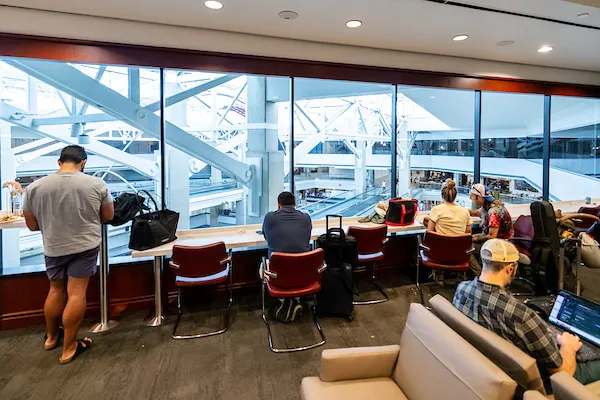
DEN has one of the best airport culinary scenes in the United States, heavily prioritizing Colorado-born restaurants over generic global chains. If you have time for a sit-down meal, skip the food court and head to these local legends:
| Concourse | Restaurant | Why It’s Worth the Walk |
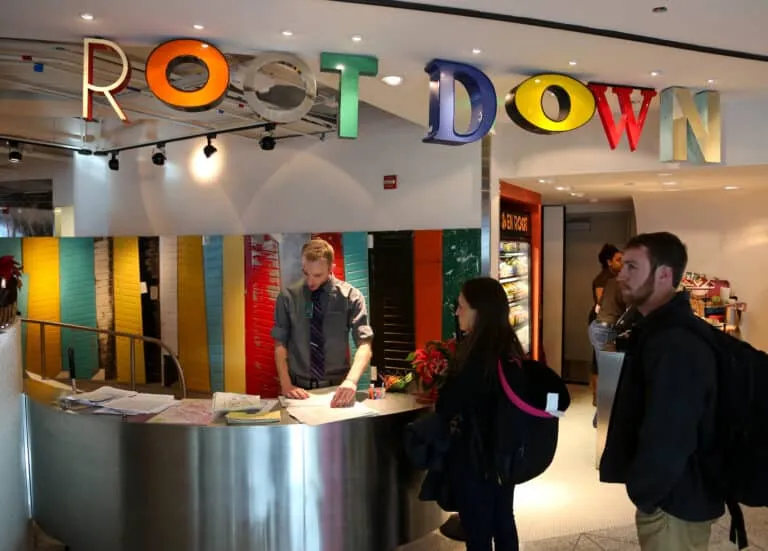
| Concourse A | Root Down | A local Denver cult-favorite. It serves incredible field-to-table seasonal comfort food, and it is hands-down the best spot in the airport for vegetarian, vegan, and gluten-free travelers. |
| Concourse A | Tocabe | An American Indian-owned gem featuring incredible fry bread, bison ribs, and indigenous-inspired bowls. Truly unique airport fare. |
| Concourse B | Elway’s Steakhouse | Named after Denver Broncos legend John Elway. If you want a high-end, premium Colorado steak and a great glass of Cabernet during a delay, this is your spot. |
| Concourse C | ChoLon | Famous in the Denver food scene for its legendary French Onion Soup Dumplings. A perfect fusion of Southeast Asian and European flavors. |
⛳ Need to Burn Energy? Try Virtual Fairways or Outdoor Decks
If you are feeling restless, DEN offers a few highly unorthodox ways to pass the time:
-
Golf DEN (Concourse A): Yes, you can actually work on your golf game during a flight delay. This hidden gem features state-of-the-art virtual golf simulators, complete with comfy lounge seating, snacks, and drinks.
-
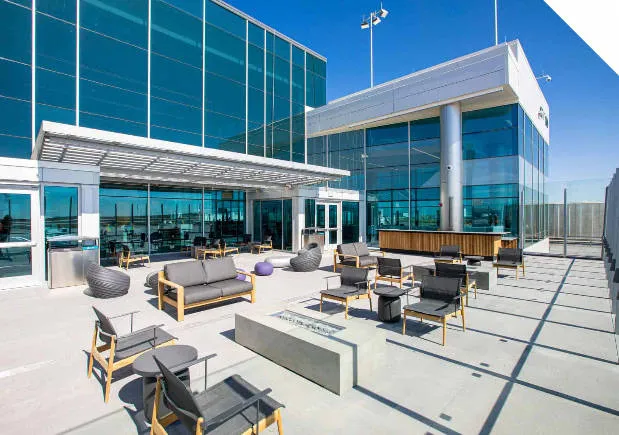
The Outdoor Patios (Concourses A, B, & C): Want a breath of genuine, crisp Colorado air without having to exit security? Head to the far ends of the concourses. DEN features stunning outdoor pet-relief and passenger patios. They feature cozy open-air seating, fire pits, and panoramic views of the tarmac against the Rocky Mountains—making it the ultimate spot to catch a Mile High sunset.

🐴 Play "Conspiracy Theory" Bingo
Finally, if you are stuck walking the concourses, take a moment to appreciate the airport's infamous, bizarre public art collection. DEN famously leans into its internet conspiracy theories. Look out for:
-
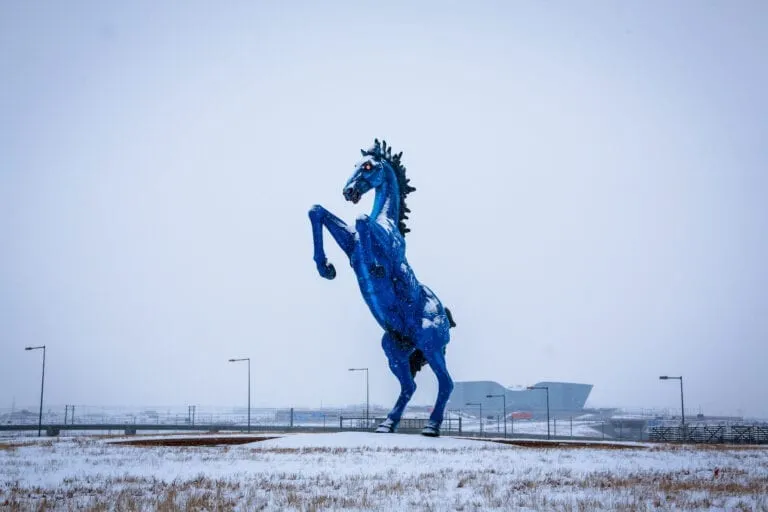
"Blucifer": The terrifying, 32-foot-tall blue Mustang sculpture with glowing red eyes standing guard outside the airport.
-
The Gargoyles: Sneaky bronze gargoyles (named "Notre Denver") that pop out of suitcases near the baggage claims to mock travelers.
-
The Murals: Provocative, vibrant murals throughout the terminal that internet sleuths swear contain hidden codes about the end of the world.
🗺️ 6. Concourse Mastery – A, B & C Gates Breakdown
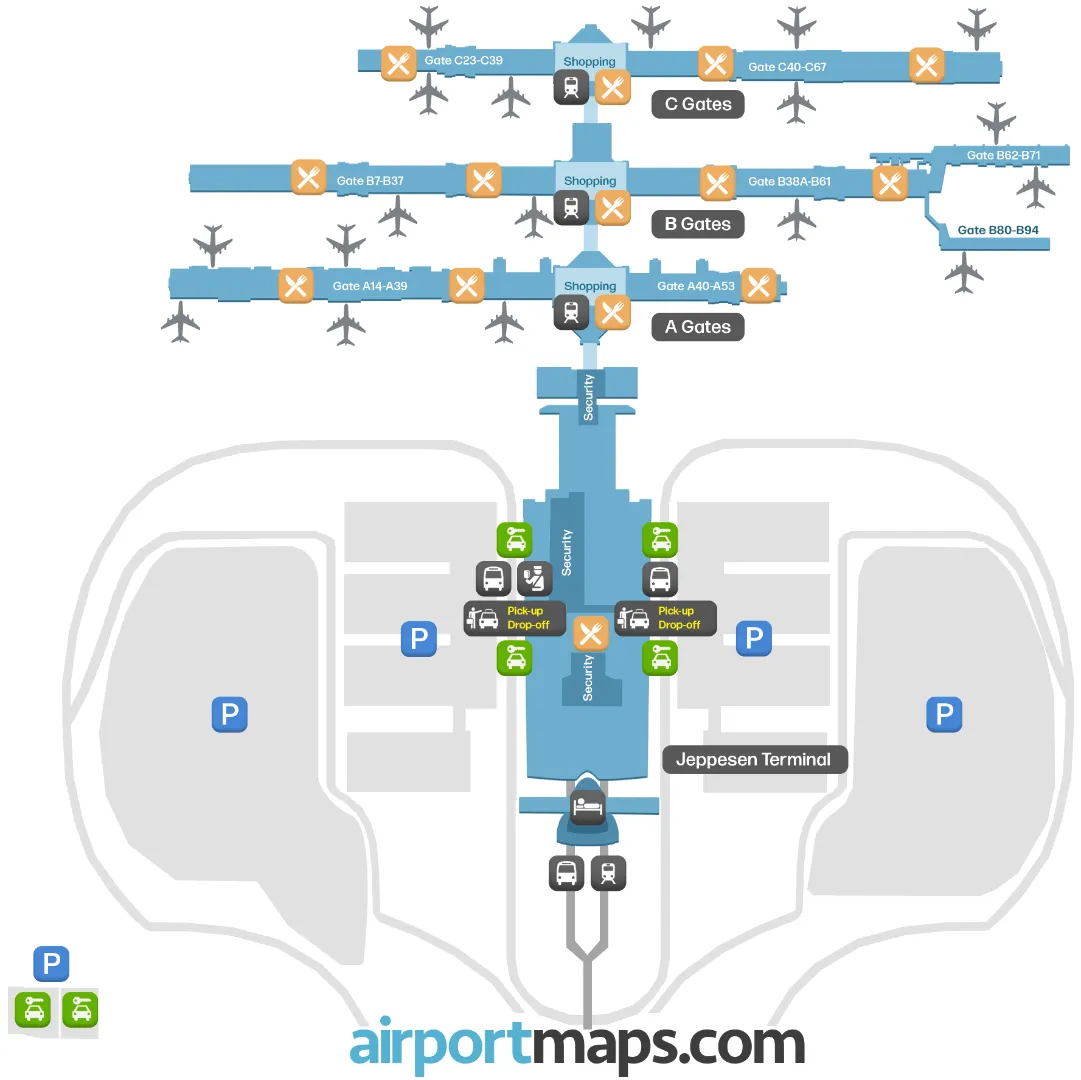
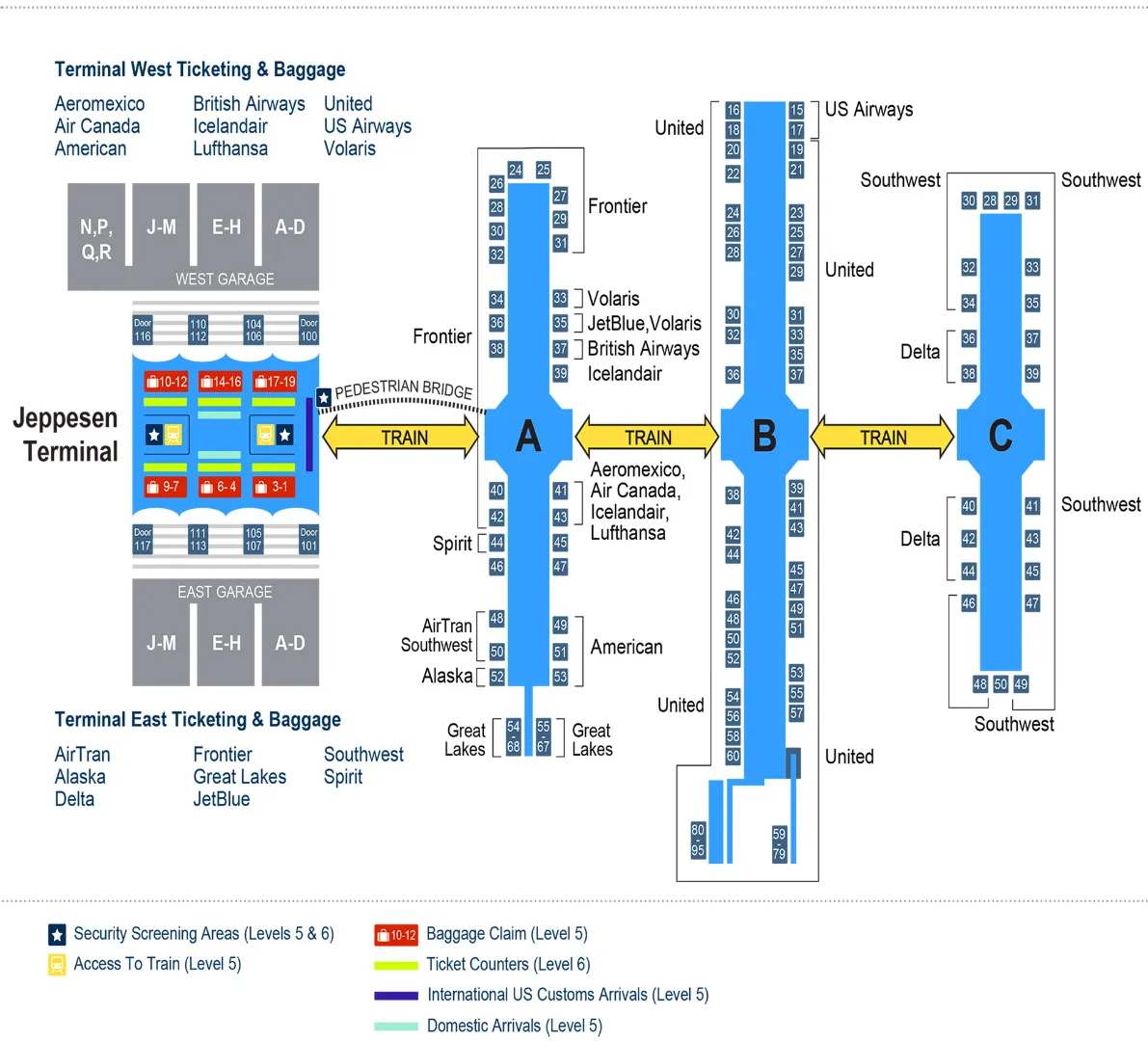
Think of Denver International Airport as a giant, hyper-efficient manufacturing plant for air travel. The layout is remarkably linear, consisting of three massive, parallel concourses: A, B, and C.
However, because DEN has added a whopping 39 new gates over the past few years to keep up with its massive passenger boom, these concourses are longer than ever. Walking from the central train station to the furthest newly expanded gate can easily take up to 15 minutes.
To make sure you never end up sprint-sweating to your boarding gate, here is the ultimate master breakdown of DEN’s concourse ecosystem.
✈️ Concourse A: The International & Low-Cost Hub
-
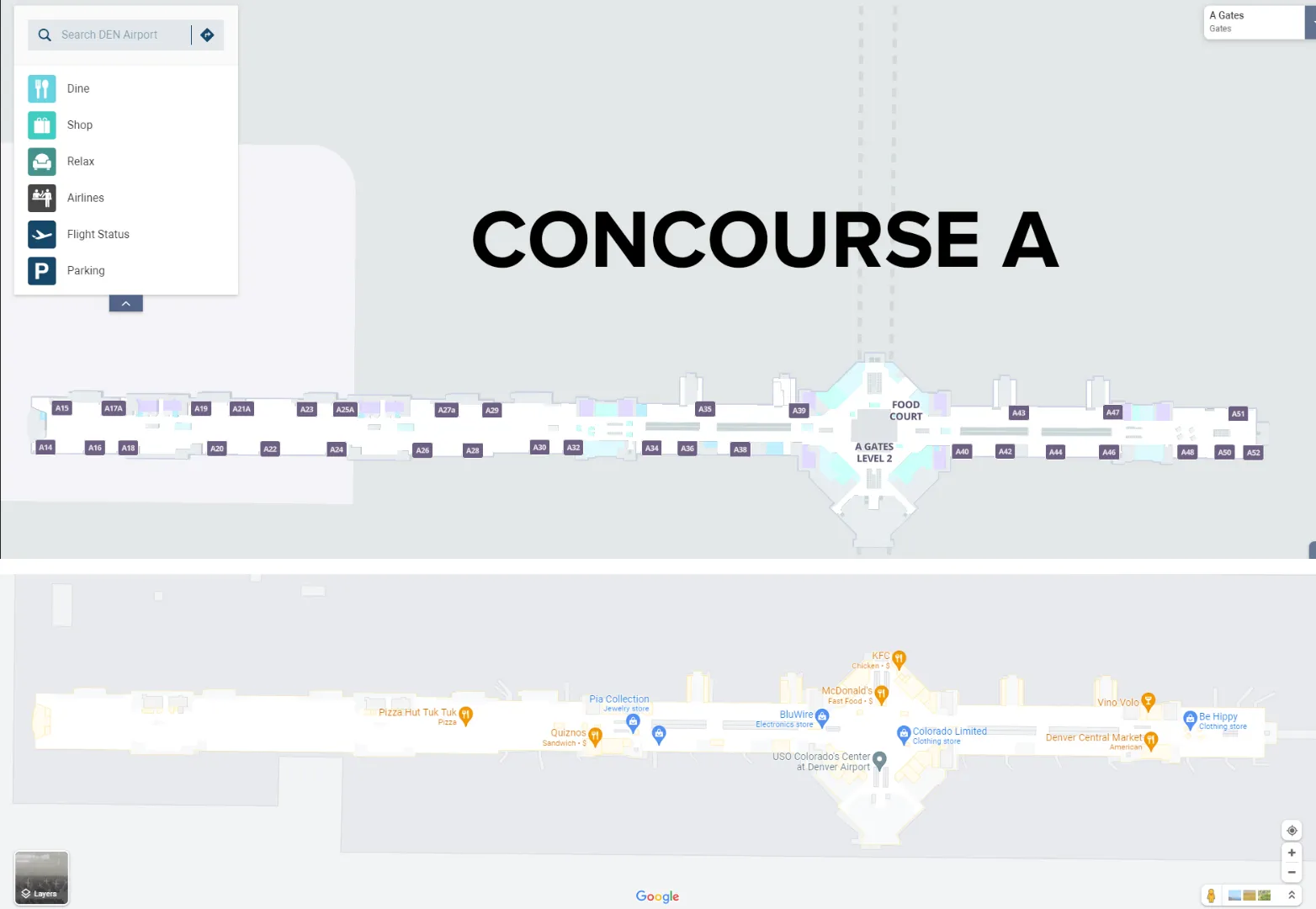
The Vibe: The most versatile, architecturally diverse, and rapidly expanding concourse in the airport.
-
Primary Airlines: Frontier Airlines (dominating the massive new ground-boarding facility), Delta Air Lines, JetBlue, American Airlines, and all international carriers (Lufthansa, British Airways, Air Canada, etc.).
🗺️ The Layout & Walking Times
Concourse A is split into East and West wings. Following the massive A-East Ground Load Facility expansion, Frontier passengers now utilize a massive 120,000-square-foot facility on the eastern edge.
-
Gates A26–A53 (Central & West): 5 to 10-minute walk from the train.
-
Gates A71–A84 (The Far East/Frontier Hub): Warning! It can take 12 to 15 minutes to reach these ground-boarding gates from the center. Factor this into your timeline.
🛠️ 2026 Transit Insider: Remember, Concourse A is the only concourse you can walk to directly from the main Jeppesen Terminal via the indoor glass Skybridge. If the underground train is experiencing a peak-hour crowd surge, use the bridge!
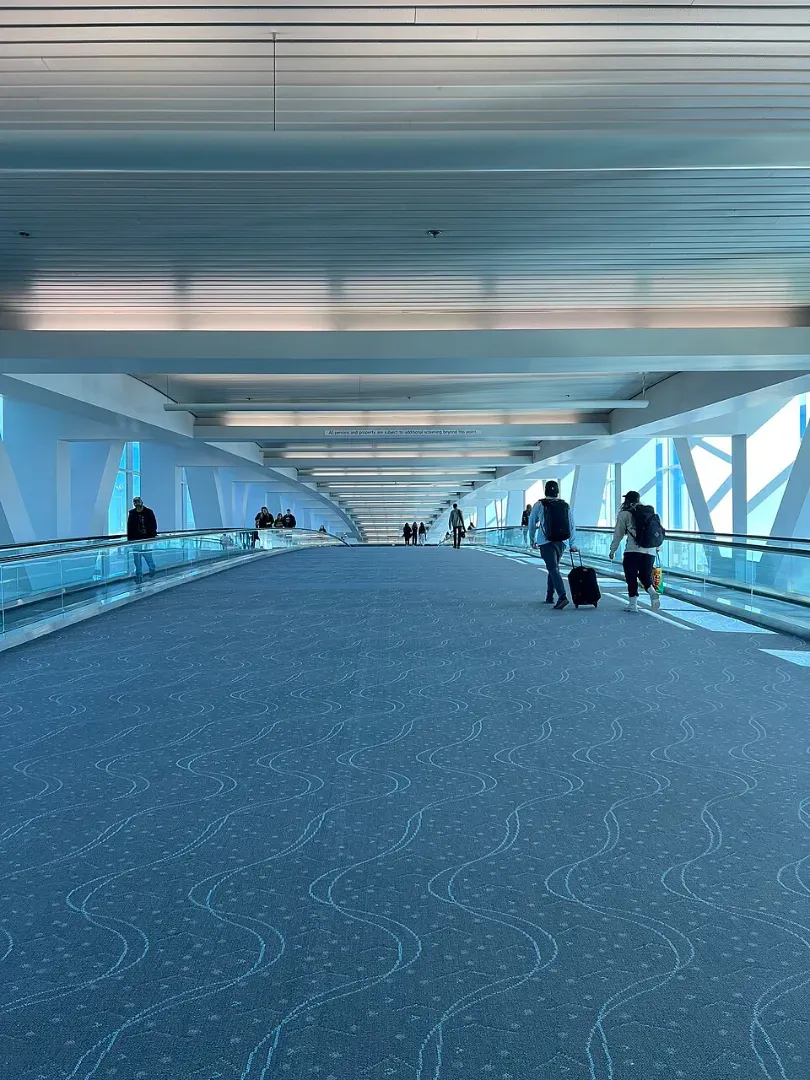
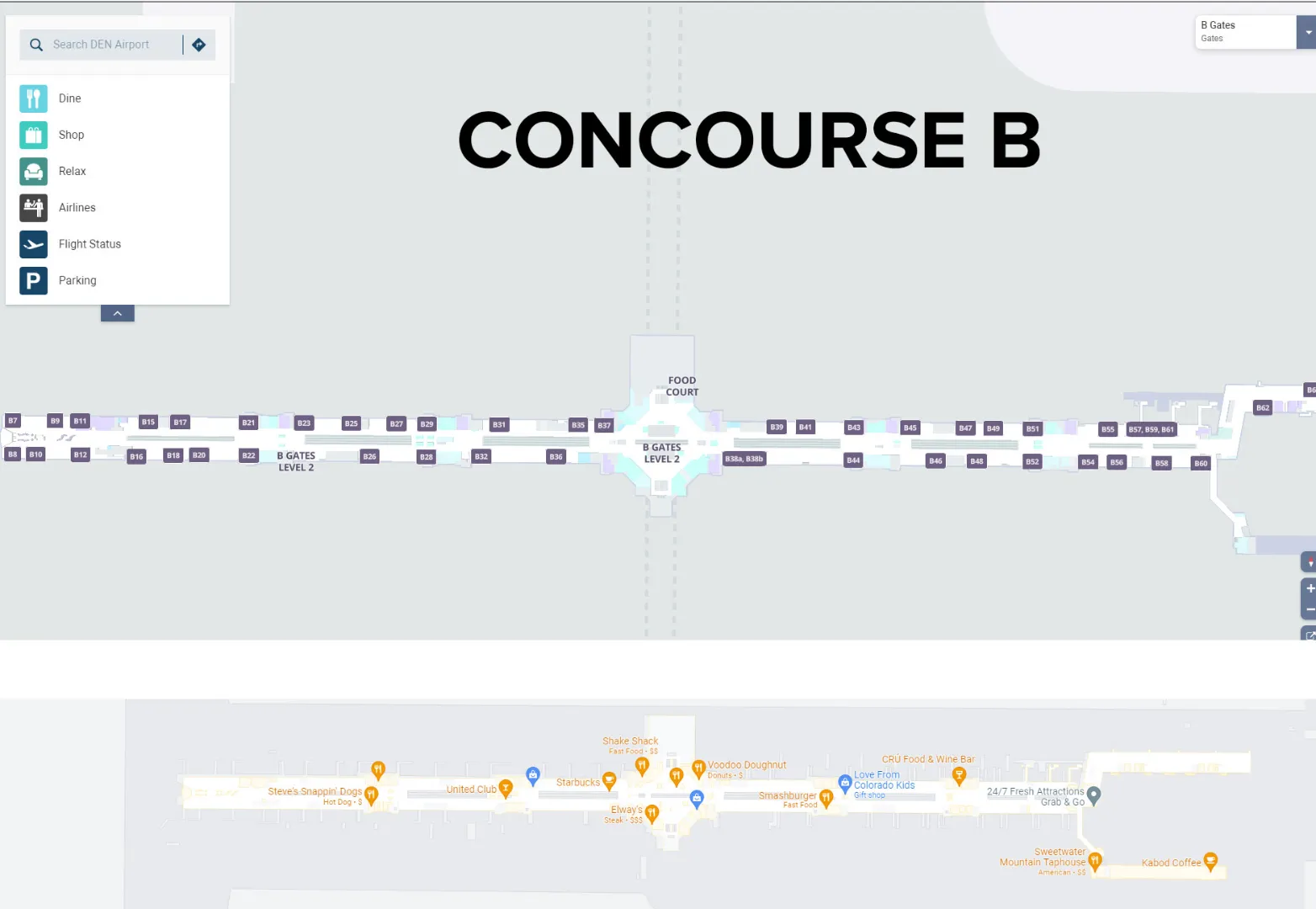
🛄 Concourse B: United Airlines’ Ultimate Fortress
-
The Vibe: High-octane, business-casual, and incredibly busy. Concourse B is effectively a self-contained city owned and operated by United Airlines.
-
Primary Airlines: United Airlines (and United Express).
🗺️ The Layout & Walking Times
Because United runs its premier global connecting hub out of B, this concourse is a massive, straight-line gauntlet that stretches nearly a mile from end to end.
-
Gates B31–B44 (The Center): Directly at the train exit.
-
Gates B7–B12 (Far West) & B62–B71 (Far East): These are the recently completed multi-story gate expansions. Walking here from the center takes a solid 13 to 15 minutes.
🤫 Concourse B Escape Hatch: Because it handles the highest volume of passengers, the central corridors are constantly jammed. If you need to navigate from one end to the other, use the lower-level passenger tunnels or walk along the window-side seating tracks rather than fighting the center-lane traffic.
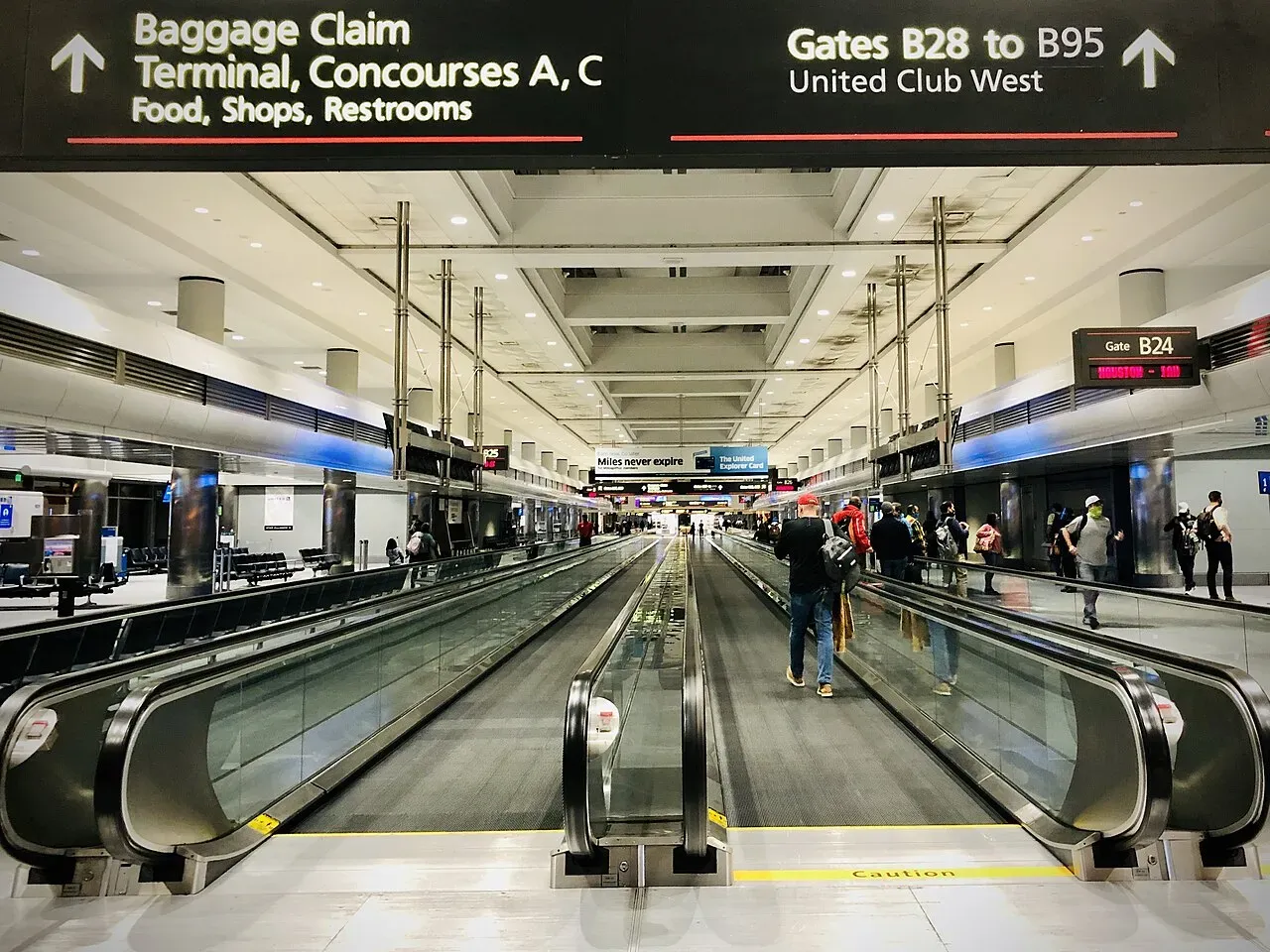
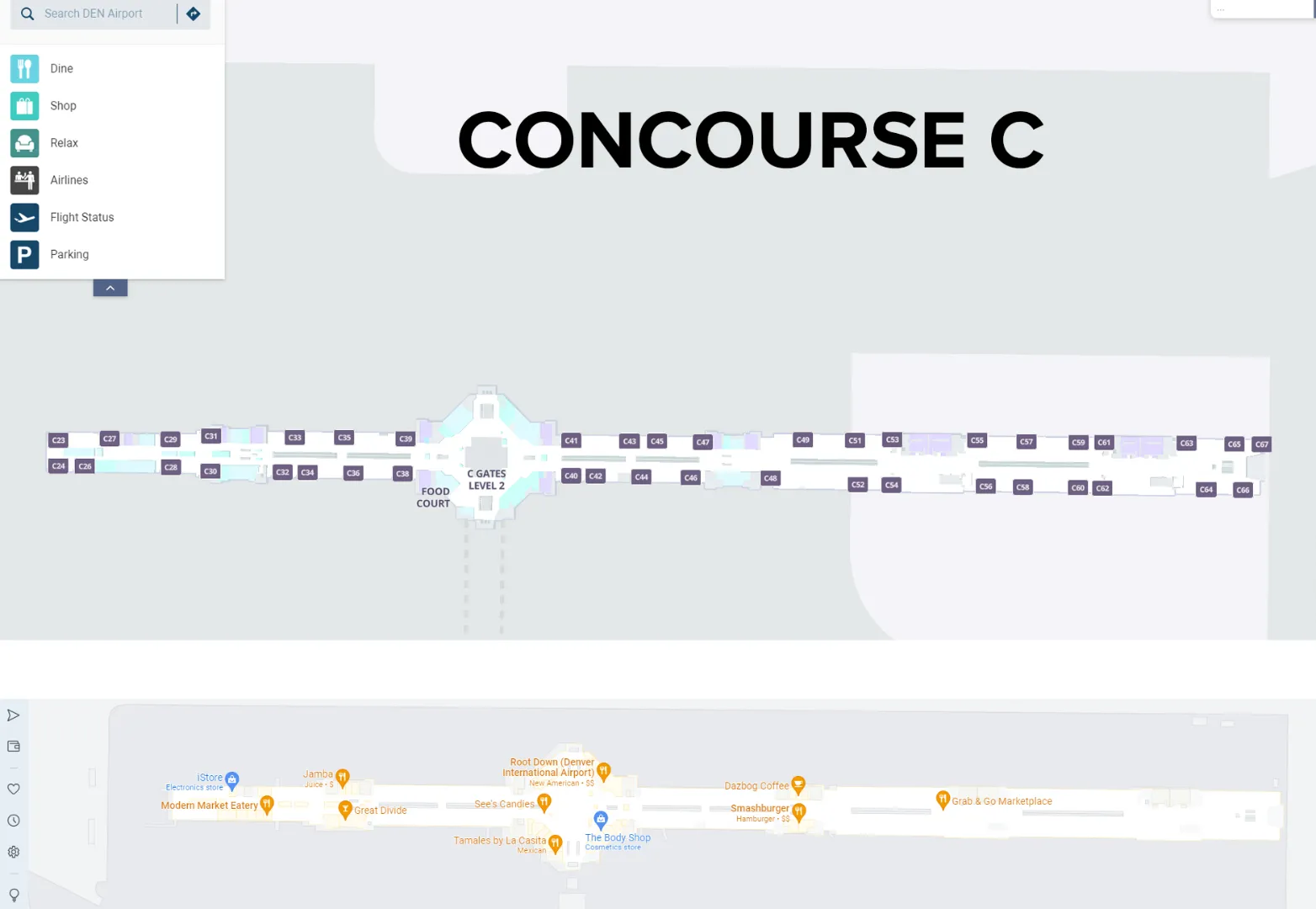
🎒 Concourse C: The Southwest & Leisure Expressway
-
The Vibe: Laid-back, family-heavy, and efficient. If you are flying out of C, you are almost certainly heading out on a domestic vacation.
-
Primary Airlines: Southwest Airlines (occupying over 90% of the gates) and Alaska Airlines (which recently relocated here).
🗺️ The Layout & Walking Times
Concourse C is beautifully streamlined but deceptive in length. Thanks to the C-East gate expansion, it handles hundreds of Southwest flights simultaneously.
-
Gates B40–B47 (The Center): Step right off the train and you're there.
-
Gates C23–C31 (Far West) & C63–C67 (Far East): Expect an 11 to 13-minute walk from the central train terminal.
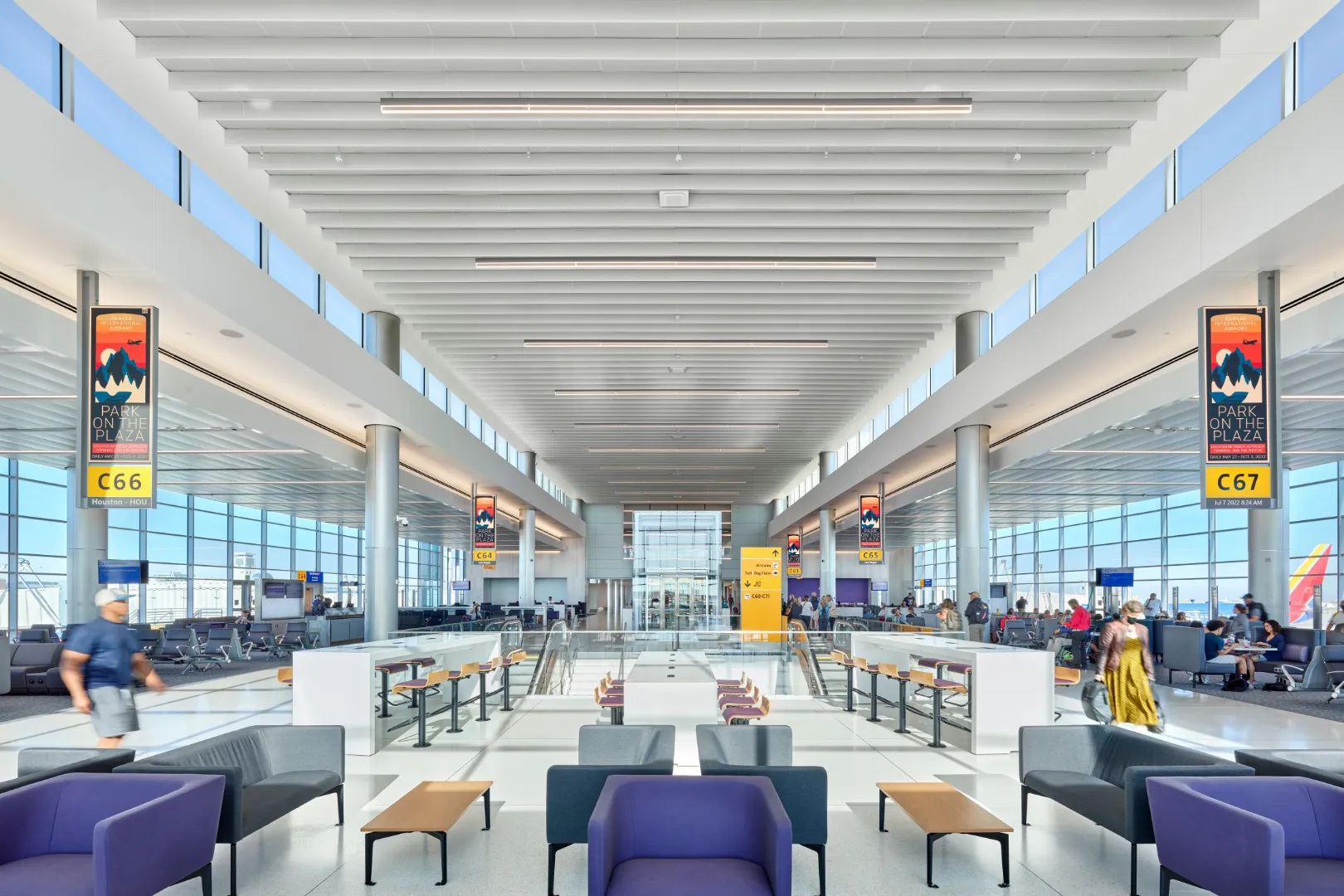
[NORTH]
▲
Concourse A: [A-West] ◄---(Center/Train)---► [A-East / Frontier Hub]
Concourse B: [B-West] ◄---(Center/Train)---► [B-East / United Hub]
Concourse C: [C-West] ◄---(Center/Train)---► [C-East / Southwest Hub]
▼
[SOUTH]
⏱️ The Ultimate DEN Gate Transit Cheat Sheet
Before you sit down for a meal or head to a lounge, use this quick-reference table to calculate exactly how much time you need to get to your gate from the Main Jeppesen Terminal Security Checkpoints:
| Your Destination Gate | Mode of Transit Required | Average Travel Time (Includes Train + Walking) |
| Gates A14 – A25 | Pedestrian Skybridge (or 1 Train Stop) | 8 to 10 minutes |
| Gates A71 – A84 (Frontier) | 1 Train Stop + Long Walk East | 15 to 18 minutes |
| Gates B31 – B44 (United Center) | 2 Train Stops + Short Walk | 10 to 12 minutes |
| Gates B7 – B12 / B62 – B71 | 2 Train Stops + Long Walk | 18 to 22 minutes |
| Gates C40 – C47 (Southwest Center) | 3 Train Stops + Short Walk | 12 to 15 minutes |
| Gates C23 – C31 / C63 – C67 | 3 Train Stops + Long Walk | 20 to 25 minutes |
💡 The Golden Rule for 2026: If your boarding pass lists a gate in the single digits (e.g., B7) or in the high 60s/70s/80s (e.g., A75, B65, C63), you are at the extreme tip of the airport's wings. Do not linger at the central food courts—start heading toward your gate as soon as boarding is announced!
🚕 7. Escaping the Airport – Into Denver or Back
Because Denver International Airport was built miles out on the high plains to allow for its massive 53-square-mile footprint, escaping the terminal and getting to the actual city of Denver can feel like a secondary journey. DEN is located roughly 25 miles from downtown.
If you have a layover longer than six hours, or if you’ve officially reached your destination, you have two primary choices: ride the rails or brave the asphalt. Here is how to navigate the transit corridor without emptying your wallet.
🚄 The Gold Standard: The RTD "A Line" Commuter Train
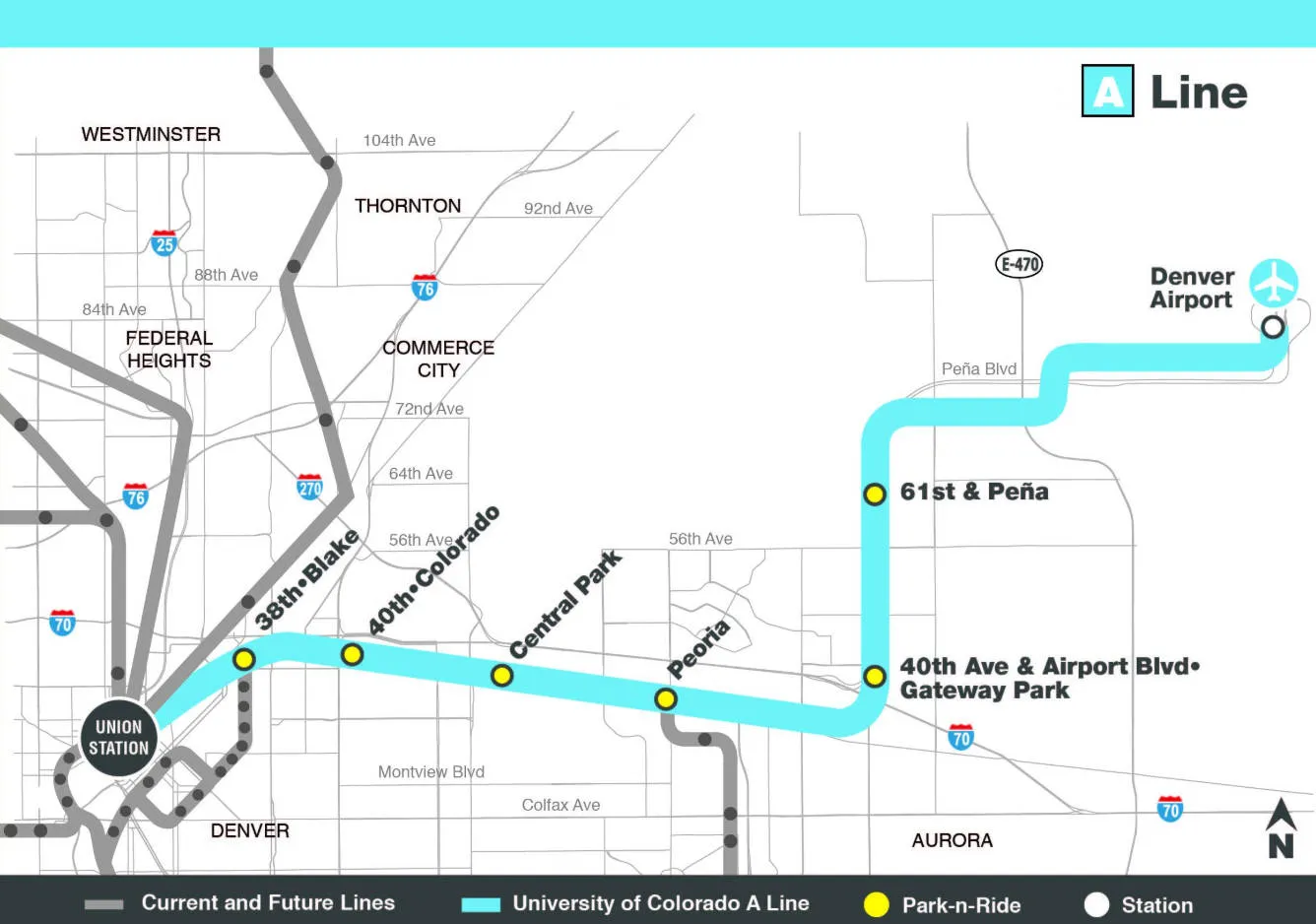
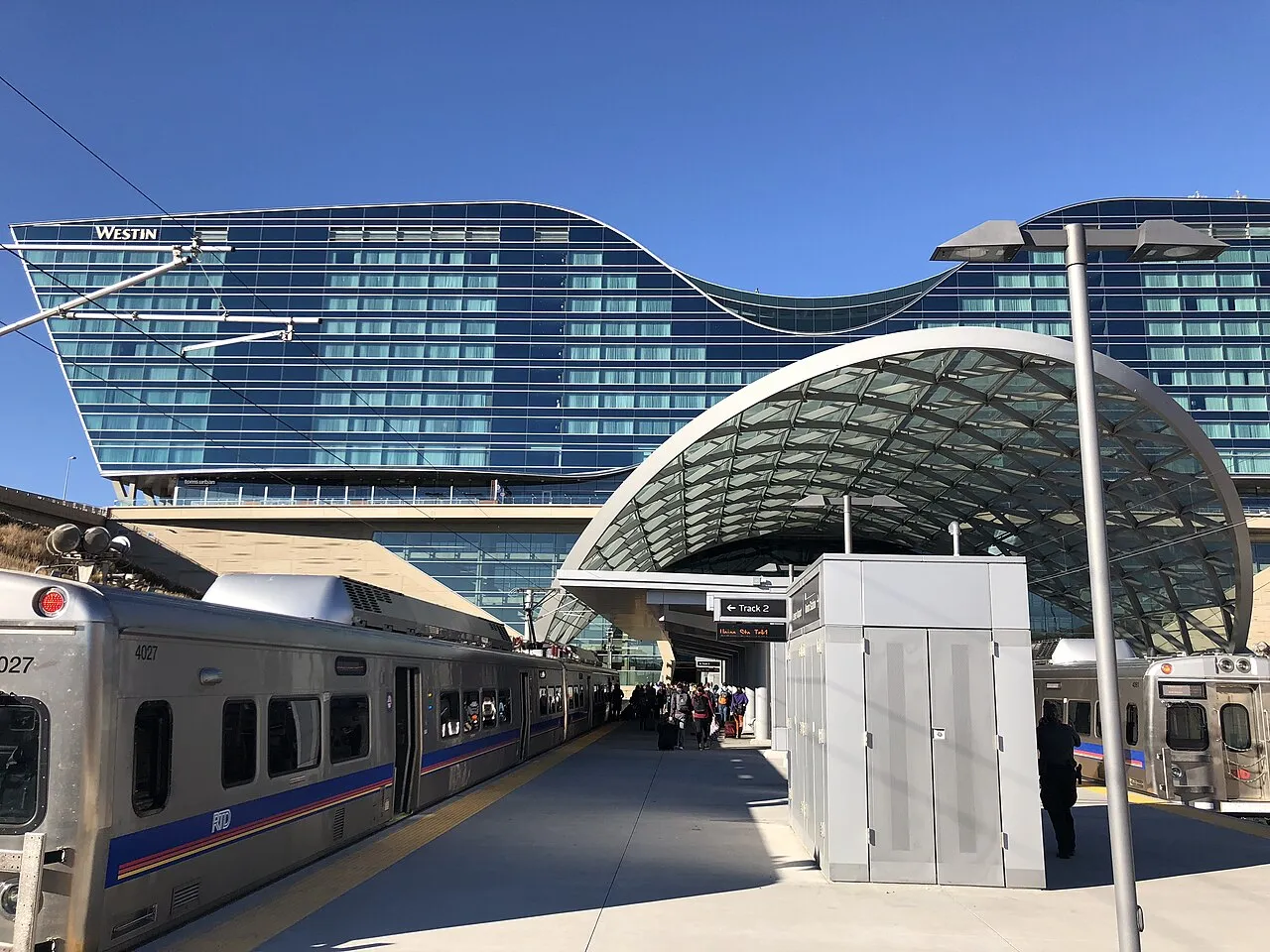
Hands down, the smartest, cheapest, and most traffic-proof way to get from DEN to downtown Denver is the RTD A Line (often called the "Train to the Plane").
-
Where to Catch It: Walk all the way to the south end of the main Jeppesen Terminal. Descend the massive escalator bank past the Westin Hotel down to Level 1. The train platform sits directly under the hotel.
-
The Destination: It takes exactly 37 minutes to travel from DEN straight into Denver Union Station in the heart of downtown's trendy LoDo neighborhood.
-
The Cost: A flat $10 Airport Day Pass gets you a one-way ticket into the city and serves as a universal pass for any other local Denver buses or light rail lines for the rest of that day.
📱 2026 Transit Update: RTD has fully rolled out Tap-n-Ride contactless payments. You no longer need to stand in line at the kiosks to buy a paper ticket. Simply tap your credit card, debit card, or mobile wallet (Apple Pay/Google Pay) directly on the platform validators before boarding. The system automatically calculates your fare and caps your spending at $10.
🚗 The Highway Grind: Rideshares, Taxis, & Peña Boulevard
If you have too much luggage to haul onto a train, or if your destination isn't near downtown, you’ll be heading out via Peña Boulevard—the lone highway connecting DEN to the rest of the world.
01. Uber & Lyft (Rideshare)
Rideshare pickup zones at DEN are highly regulated. You cannot simply walk out the front doors and call a car.
-
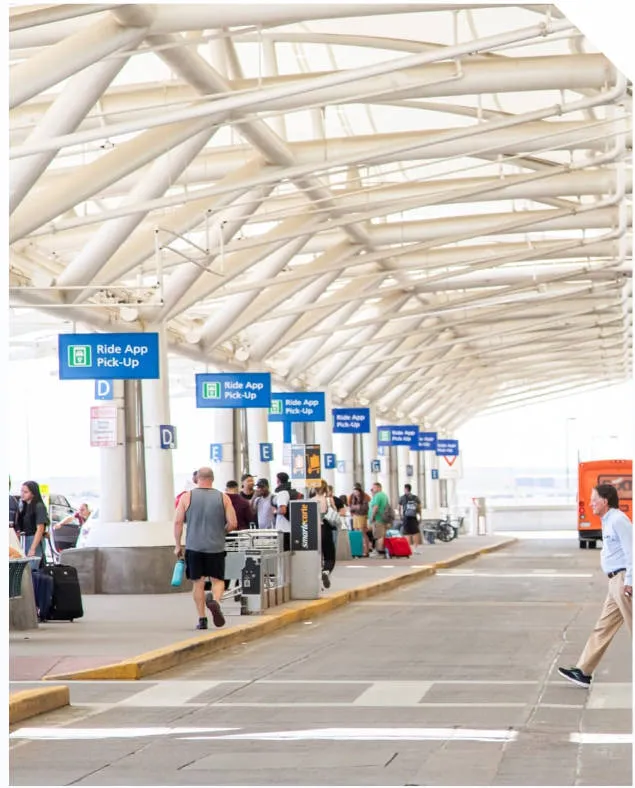
The Pickup Zone: Head to the main Jeppesen Terminal, exit through Level 5 (Baggage Claim), and step out into the designated pick-up lanes.
-
Which Side? Pay close attention to your airline's terminal side. Terminal East riders look for Lane 2, while Terminal West riders look for Lanes 2 and 3.
-
The Cost: A ride to downtown Denver typically ranges from $45 to $85+, depending entirely on surge pricing, weather, and time of day.
- Why Are Uber and Lyft So Expensive at Airports? Hidden Airport Fees & Ways to Save will help you save more.
02. The Great Peña Boulevard Bottleneck
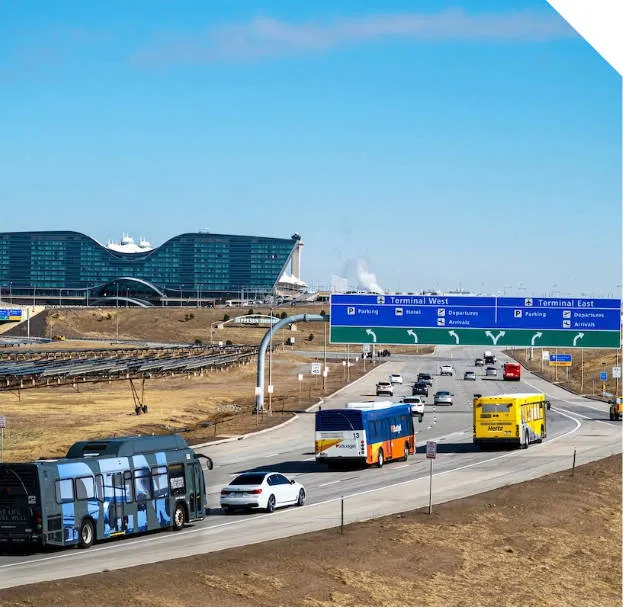
If you choose to take a car, beware: Peña Boulevard is a notorious traffic choke point. The highway is undergoing multi-year capacity expansions and safety overhauls to keep up with the airport's explosive growth.
-
During peak morning rush hours (6:30 AM – 9:00 AM) or Friday afternoon getaways, an unexpected backup on Peña can easily turn a 30-minute drive into a stressful 60-to-90-minute crawl.
-
If you are heading back to the airport in a rideshare during a snowstorm, double your estimated travel time. When the high plains winds pick up, Peña Boulevard frequently drops to single-lane pacing due to icy drifting.
⏱️ The Escape Verdict: Train vs. Car
| Feature | RTD A Line Train | Rideshare (Uber/Lyft) |
| Cost | $10.00 | $45.00 – $85.00+ |
| Travel Time | 37 minutes (Guaranteed) | 30 to 75+ minutes (Traffic dependent) |
| Frequency | Every 15 mins (6 AM - 8 PM) | On-demand |
| Best For | Budget travelers, solo flyers, going downtown | Families, heavy luggage, specific suburban locations |
📝 8. The Ultimate DEN Quick-Reference Checklist
Bookmark this section on your phone or print it out! When you are in the middle of a frantic Mile High transit, you don’t have time to re-read deep architectural analyses or complex meteorological guides.
Here is your one-minute, glance-and-go cheat sheet to executing a flawless transit at Denver International Airport.
⏱️ The Pre-Flight Timeline
-
The Arrival Window: Arrive at the airport exactly 2 hours before domestic flights and 3 hours before international flights. If a snowstorm is actively hitting the high plains, tack on an extra 45 minutes to account for crawling traffic on Peña Boulevard.
-
The ID Checklist: Ensure you have your REAL ID or passport ready.
🚨 New Identity Rule: Passengers without a valid REAL ID or acceptable government identification must pay a $45 fee to clear security using the modernized TSA ConfirmID verification system.
🛃 The Security Strategy (Post-Great Hall Overhaul)
Thanks to the fully operational, newly modernized East and West Security Checkpoints, standard TSA wait times have drastically dropped to under 15 minutes on average.
-
The Big Change: Because security is flowing so quickly now, the free "DEN Reserve" line is officially being discontinued as of June 27.
-
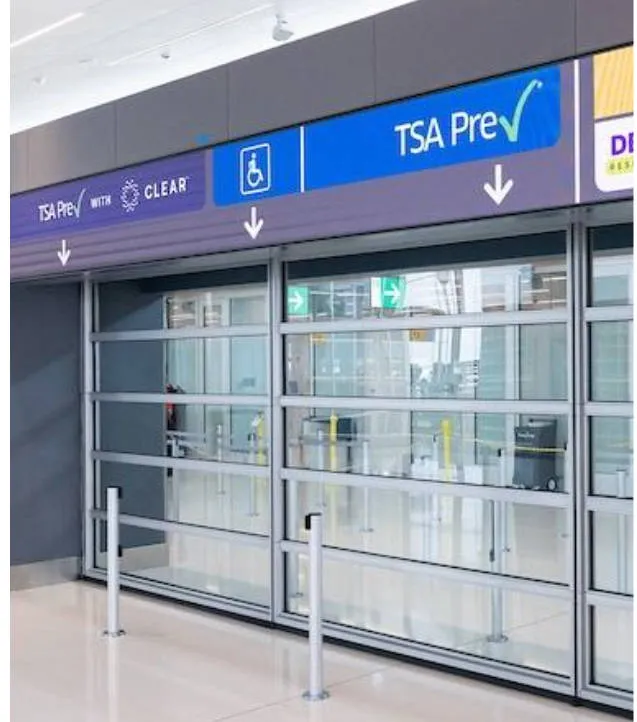
West Security: Your primary hub if you are using TSA PreCheck or CLEAR. (Open 3:00 AM – 8:00 PM Mon-Thu; 3:00 AM – 1:00 AM Fri-Sun).
-
East Security: Ideal for standard screening passengers, but features PreCheck lanes as well. (Open 3:00 AM – 1:00 AM daily).
🚇 The Train & Gate Protocol
-
Headed to Concourse A? Ditch the basement train platform entirely. Walk across the stunning A-Bridge Skybridge located at the north end of the Jeppesen Terminal. It’s a 5-minute walk that completely bypasses the train crowds.
-
Headed to Concourse B or C? Take the train, but walk to the far left or far right ends of the platform to board the less crowded front and back train cars.
-
The 15-Minute Wing Warning: If your gate number is at the extreme ends of the wings (e.g., A70s/80s, B10s, C60s), it takes a solid 12 to 15 minutes of pure walking after you get off the train. Start heading to your gate the moment your boarding group is called.

❄️ The Winter Weather Protocol
-
The 48-Hour Alert: If a blizzard is forecast for Denver, monitor your airline app 24 to 48 hours in advance for Weather Waivers that let you change your flight for free.
-
The Morning Advantage: Always book flights before 7:00 AM during the winter. You will beat the massive tarmac queues at the centralized de-icing pads.
-
The Sleeping Sanctuary: If you are stuck overnight, head to the Concourse A Mezzanine level for a hidden, quiet, completely free "Rest & Recharge" area with recliners and outlets.
🚄 The Downtown Escape Route
-
The Best Transit: Take the RTD A Line train from Level 1 beneath the airport Westin Hotel.
-
The Price & Time: It costs exactly $10.00 and takes 37 minutes to reach downtown Denver Union Station, completely bypassing any gridlock on Peña Boulevard.
-
How to Pay: Don't stand in line at the kiosk—simply use Tap-n-Ride by tapping your contactless credit card or mobile wallet directly at the platform validators before boarding.
❓ 9. Frequently Asked Questions (FAQ)
Q1: Is the "DEN Reserve" security line still available?
A: No, it is being retired. The airport officially announced that the free, reservation-based DEN Reserve system will close permanently on June 27, 2026. Because the newly renovated East and West security checkpoints are fully operational, average wait times have dropped to 5 minutes or less, making the reservation program obsolete. Traditional TSA PreCheck and CLEAR remain fully active.
Q2: Can you walk between concourses at DEN if you don't want to take the train?
A: Right now, you can only walk from the main Jeppesen Terminal to Concourse A via the indoor Skybridge. You cannot walk to Concourses B or C yet. However, the airport has approved a massive $300M+ infrastructure project to convert dormant underground baggage tunnels into pedestrian walkways to B and C. Construction is slated to wrap up around 2028–2029.
Q3: What is the absolute shortest layover time you should risk at DEN?
A: If you are booking a connecting flight through DEN, try to aim for a minimum of 60 minutes for domestic flights and 2 hours for international flights. Because the concourses are nearly a mile long and the train is a single point of failure, a 45-minute window leaves you zero room for error if your inbound flight gets delayed on the tarmac.
Q4: Which security checkpoint should I use: East or West?
A: Both checkpoints now feature modernized, high-efficiency screening lanes, but they target different travelers:
-
West Security: Best for United Airlines passengers (located on the West side of the terminal) and serves as the primary hub for TSA PreCheck and CLEAR.
-
East Security: Best for Southwest and Frontier passengers (East side of the terminal) and is optimized for standard screening, though it handles PreCheck as well.
Q5: Can you view "Blucifer" (the giant blue horse) from inside the airport?
A: Unfortunately, no. "Mustang" (popularly known as Blucifer) stands outside on Peña Boulevard. You will get a great look at his glowing red eyes out the window of your car or the RTD A Line train as you approach or leave the airport, but he is not visible from the indoor passenger terminals.
Q6: If my flight is canceled due to a snowstorm, will the airline pay for my hotel?
A: Generally, no. Under federal aviation rules, airlines are not legally required to provide hotel vouchers or compensation if a flight is canceled due to "Acts of God" like severe winter weather or air traffic control halts. This is why keeping an eye out for proactive weather waivers 24 to 48 hours before a storm hits is so critical—it allows you to rebook yourself out of harm's way for free.
Q7: Is Denver International Airport Really the Largest Airport in the U.S.?
A: Yes, by a landslide. Spanning a massive 53 square miles (34,000 acres), DEN is the largest commercial airport in the United States and all of North America by total land area. Globally, it sits as the second-largest airport in the world, eclipsed only by King Fahd International Airport in Saudi Arabia.
Q8: Is the Underground Train Reliable?
A: On paper, yes. In practice, it has become a major single point of failure. Statistically, DEN's automated underground train operates at a 99.9% uptime rate over the course of a year. However, because the train is the only way to reach Concourses B and C, that remaining 0.1% of downtime causes absolute catastrophic gridlock.
Q9: What's the Cheapest Way to Get From DEN to Downtown Denver?
A: The RTD "A Line" commuter train, hands down. For just $10.00, the "Train to the Plane" will take you directly from the airport platform (located on Level 1, underneath the Westin Hotel at the south end of the main terminal) straight into Denver Union Station in downtown Denver.
Q10: Can I Go Directly From DEN to Colorado Ski Resorts?
A: Yes, but not by train—you’ll be taking specialized mountain shuttles or charter vans directly from the terminal. Many first-time visitors assume that because Colorado is a world-class ski destination, there must be a train running straight from DEN into the mountains. Unfortunately, the local rail system only connects the airport to downtown Denver.
🏁 Conclusion: Mastering the Mile High Hub
Denver International Airport is undeniably an aviation titan. It is a place where cutting-edge architectural wonders coexist with chaotic weather patterns, and where sprawling terminal footprints meet the growing pains of a city firmly tracking toward 100 million annual passengers.
But as you’ve learned throughout this guide, DEN doesn’t have to be a travel nightmare.
Armed with the knowledge of why the airport faces delays, how to outsmart the underground train platform, and where to find the absolute best local food and quiet spots, you are no longer just another stranded passenger. You are a savvy traveler who knows how to bend the system to your advantage.
The next time you see those iconic white peaks rising up from the Colorado plains, you won't need to stress. Take a deep breath of that crisp, Mile High air, bypass the crowds using the Skybridge, grab a plate of French Onion Soup Dumplings, and navigate your transit like an absolute pro.
Safe travels, and we’ll see you on the flip side of the Rocky Mountains!
💬 Over to You!
What’s your ultimate Denver Airport survival story? Have you ever successfully survived a massive blizzard in the Jeppesen Terminal, or do you have a hidden layover spot we missed? Drop your best tips, hacks, and questions in the comments below—we’d love to hear your thoughts!
Related guide: Best Airport Transportation for International Students; DFW Airport Connection Guide